12 October 2026 – 18 October 2026
Housing Unrest and TAP Privatization Lead a Turbulent Week Across Portugal
Escalating frustration over living costs and housing affordability sparked nationwide demonstrations this week, marked by violent clashes in Porto and new government rent caps. Meanwhile, the country advanced major economic and social milestones, from Lufthansa securing a minority stake in TAP to parliament approving extended paid parental leave.
Lufthansa Selected to Buy Minority Stake in TAP
The Portuguese government selected Germany's Lufthansa Group to acquire a minority stake in national airline TAP Air Portugal (Transportes Aéreos Portugueses). Under the privatization plan, Lufthansa will pay €1.2 billion for a 44.9% holding with an option to reach 49.9%, while the Portuguese state retains 50.1% of the shares with 5% reserved for airline workers. Lufthansa stated that the agreement will support TAP's expansion while safeguarding its brand identity and strategic flight routes to North and South America.
Update: Lufthansa to Pay Upfront Deposit for TAP Acquisition
Under the Council of Ministers' (Conselho de Ministros) resolution, Lufthansa must provide bank guarantees and pay an upfront deposit of 2.5%, amounting to up to €30 million, to the Portuguese state this year. Lufthansa Chief Executive Officer Carsten Spohr also confirmed plans to establish Lisbon as a primary European hub for flights to Brazil, routing transit traffic through the Portuguese capital instead of Frankfurt, Zurich, or Munich.
Update: German Union Criticizes Price as Diplomats Back Deal
German pilots' union Vereinigung Cockpit criticized Lufthansa for paying an exceptionally high price for TAP's minority stake, contrasting with Portuguese and German foreign ministers who praised the agreement as a geostrategic success. Portuguese Foreign Minister Paulo Rangel said the partnership strengthens transatlantic connections, particularly to Latin America.

TAP Air Portugal is Portugal’s flag-carrier airline, founded on 14 March 1945 as Transportes Aéreos Portugueses. It began operations in 1946 with Lisbon–Madrid and quickly opened the long “Linha Aérea Imperial” to Angola and Mozambique, symbolically linking mainland Portugal to its overseas territories. TAP entered the jet age in the 1960s, became Europe’s first all‑jet airline in 1967, and rebranded as TAP Air Portugal in 1979. Nationalised after the 1974 Carnation Revolution, it went through cycles of partial privatisation and renationalisation, remaining a strategic state‑controlled company due to its role in connectivity, tourism, exports, and the Portuguese diaspora, especially to Brazil, Africa, and North America. Today TAP operates an all‑Airbus fleet from its Lisbon hub, marketing itself as a bridge between Europe, Africa, and the Americas and as a key economic and symbolic asset for Portugal.
The Council of Ministers (Conselho de Ministros) is Portugal’s national cabinet where the prime minister and ministers meet to approve government decisions, laws and emergency measures. In crises it can decide on declarations such as a state of calamity and the measures that follow; those decisions are then published in the Diário da República. Residents should note that a Council declaration can unlock national aid, resources and civil protection support for affected municipalities.
Thousands Protest High Living Costs and Housing Crisis Nationwide
Tens of thousands of demonstrators marched through Lisbon, Porto, and Coimbra to protest soaring living costs and escalating housing prices. Organised by the General Confederation of Portuguese Workers (Confederação Geral dos Trabalhadores Portugueses or CGTP), the protests called for higher wages to counter steep inflation and rents. In Lisbon, housing activists gathered at Rossio Square to establish an encampment, drawing attention to government policies and the country's housing shortage.
Update: Housing Activists Camp Overnight in Lisbon and Porto Squares
Protesters maintained overnight tent encampments in Lisbon's Rossio and Porto's Praça D. João I after demonstration permits expired at midnight, with police opting not to intervene. In Porto, demonstrators voted during an assembly to continue occupying the square, while emergency services extinguished a rubbish container that had been set on fire nearby.
Portugal’s house prices have risen faster than the EU average since 2020, and recent reports list Portugal among the countries with the largest price increases over that period. That stronger price growth has worsened affordability in Lisbon and Porto in particular, so prospective buyers and renters should check local indices and mortgage costs before deciding.

The General Confederation of the Portuguese Workers (CGTP – Confederação Geral dos Trabalhadores Portugueses) is Portugal’s largest trade-union confederation, grouping most unions in manufacturing, public services and many other sectors.
Founded clandestinely in 1970 as “Intersindical” under the dictatorship, it emerged publicly after the 1974 Carnation Revolution and was legalised in 1975. It has been central to virtually all major labour struggles since then, from defending collective bargaining and the 40‑hour week to leading general strikes against austerity and labour‑law rollbacks.
CGTP is historically close to the Portuguese Communist Party and has a class‑struggle, anti‑neoliberal profile, strongly critical of EU and government policies seen as undermining workers’ rights. It favours grassroots mobilisation and strikes over compromise, often refusing national social‑pact deals that the more centrist UGT is willing to sign.
In today’s Portugal, CGTP remains a key actor in wage bargaining, labour‑law debates and national protests; together with UGT it called the first joint general strike in years in December 2025, signalling its continuing capacity to organise mass action.
Clashes at Porto Housing Protest Leave Dozens Injured
A police operation to clear a housing protest camp in central Porto's Praça D. João I left at least 35 demonstrators injured early Thursday morning. Officers from the Public Security Police (Polícia de Segurança Pública or PSP) intervened to dismantle tents after issuing dispersal orders, prompting sharp criticism from housing rights movements who denounced excessive force. The government backed the police intervention as lawful, while civic activist movement Porta a Porta announced plans for a weekend encampment in Lisbon and nationwide demonstrations across 30 cities on November 14.
Update: Protesters Regroup at City Hall as Leaders Debate Crackdown
Housing demonstrators marched to Porto City Hall (Câmara Municipal do Porto) and later returned to Praça D. João I for a popular assembly. Protest organizers reported that injuries climbed to at least 37, with seven people hospitalized, while one police officer was also hurt. Porto Mayor Rui Moreira and Prime Minister Luís Montenegro defended the police action, while President of the Republic António José Seguro urged demonstrators to respect the law and pressed political parties to find practical housing solutions.
Update: Organizers Disperse Porto Housing Protest Over Infiltration Concerns
Organizers called an immediate end to the renewed gathering at Praça D. João I early Friday morning after reporting that outside groups had infiltrated the crowd. Housing rights activists said they alerted police after identifying individuals carrying knives who intended to cause disturbances, leading organizers to clear the square and call for a fresh mobilization on Saturday.
Porta a Porta (Door to Door) is a Portuguese grassroots movement advocating for housing rights and affordable accommodation. The group organizes public demonstrations across major cities such as Lisbon and Porto to demand rent caps, limits on evictions, and increased state investment in public housing. Their rallies frequently gather thousands of participants in central squares, reflecting widespread public concern over rising living costs.

- President of Portugal (since March 9, 2026)
- Party: Independent. Former leader of the Socialist Party (PS), Partido Socialista
- Center-left
António José Martins Seguro (born March 11, 1962, in Penamacor) is a lawyer, political scientist, and the current President of the Portuguese Republic, inaugurated on March 9, 2026 after winning the two-round presidential election in January–February 2026.
Career: He led Socialist Youth (1990–1994), served as MEP (1999–2001), was Minister Adjunct to PM António Guterres (2001–2002), and led the PS parliamentary group (2004–2005). Elected PS Secretary-General in 2011 with 68%, he led the opposition during Portugal's bailout era. In 2014, António Costa defeated him in party primaries by a landslide, prompting Seguro's resignation and a decade-long retreat from politics. He returned in 2025, launching the movement UPortugal and announcing his presidential candidacy in June. He received official PS backing in October 2025 and won the presidency in February 2026.
Political philosophy: Seguro positions himself as representing a "modern and moderate" left, advocating financial responsibility while opposing austerity. As President, he has emphasized institutional trust, efficient governance, and a collaborative relationship with the government while maintaining rigorous constitutional oversight.
Rui Moreira is an independent politician who has served as the Mayor of Porto (Presidente da Câmara Municipal do Porto) since 2013. A former businessman and president of the Porto Commercial Association (Associação Comercial do Porto), he leads Portugal's second-largest city without formal party membership, frequently backed by center-right coalitions. His administration has overseen major urban renewal, tourism expansion, and local transit projects in Porto.

The PSP (Polícia de Segurança Pública) is Portugal's national civilian police force, founded in 1867. Responsible for defending Republican democracy and safeguarding internal security and citizens' rights, the PSP polices major cities—Lisbon, Porto, Faro—and large urban areas, covering only 4% of Portugal's territory but roughly half the population. Led by a National Director under the Ministry of Internal Affairs, its approximately 21,500 officers handle preventive policing, crime investigation, public order, airport security, diplomatic protection, private security regulation, firearms licensing, and border control (since 2023).
PSP vs. GNR: The PSP is civilian with police-focused training and urban jurisdiction, while the GNR (Guarda Nacional Republicana) is military (gendarmerie) with military training, covering 96% of Portugal's rural and suburban territory. Both share core public safety missions but differ fundamentally in nature, training, and geographic responsibility.
Lisbon Metro Workers Announce Strikes for Late October
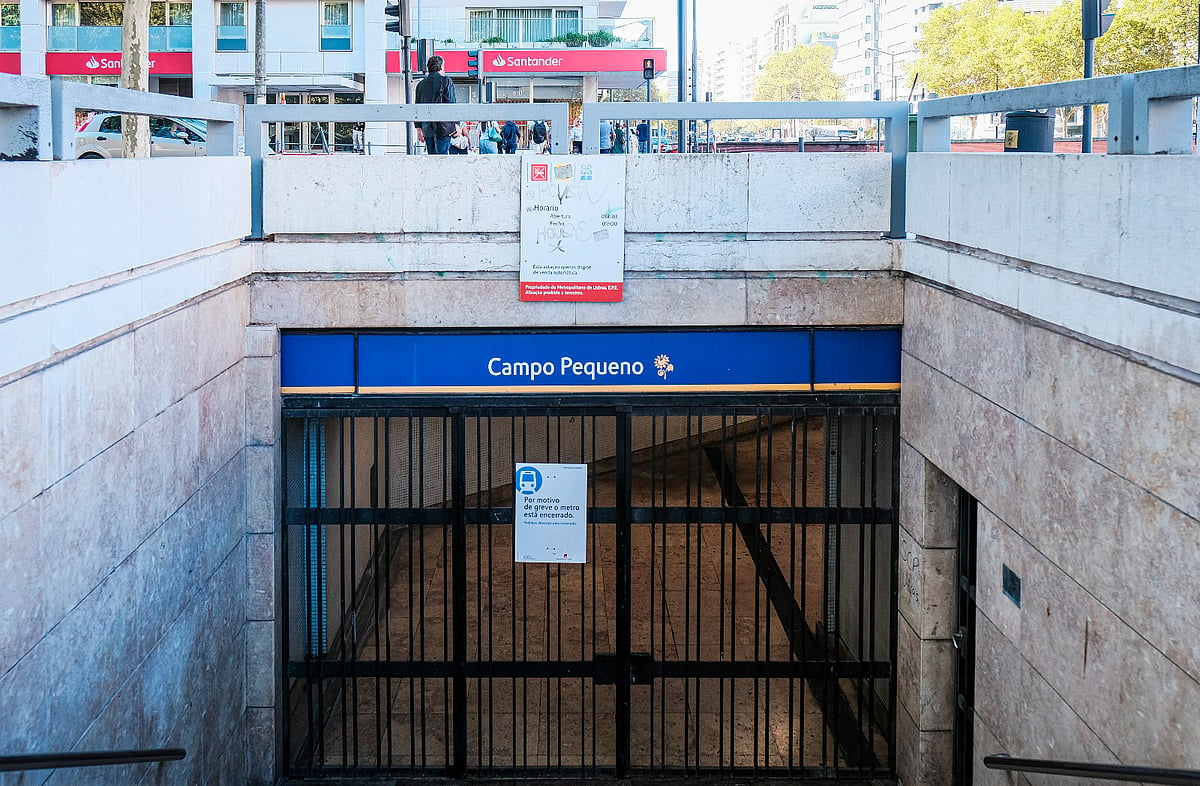
Labour unions representing Lisbon Metro (Metropolitano de Lisboa) workers issued strike notices for October 28 and 30, planning morning walkouts between 05:00 and 10:00. The industrial action stems from unaddressed disputes over working conditions and staffing at central operational command centers. The transport operator announced it will ask the Arbitration Court (Tribunal Arbitral) to mandate minimum service levels (serviços mínimos) to reduce disruption for morning commuters.
The Lisbon Metro (Metropolitano de Lisboa) is the company that runs the city's underground rail network across four lines and manages station maintenance and upgrades. The story notes conservation works at Marquês de Pombal station starting 26 January, so passengers should expect possible service changes and check the operator’s schedule.
Minimum service levels (serviços mínimos) are mandatory baseline operations that essential sectors, such as public transit and healthcare, must maintain during strikes. When unions and employers cannot agree on basic coverage, an independent arbitration court (Tribunal Arbitral) decides the required schedule. For daily commuters, this guarantees that reduced skeleton services operate rather than facing total network shutdowns.
Government Sets Rent Ceilings for Affordable Housing Scheme
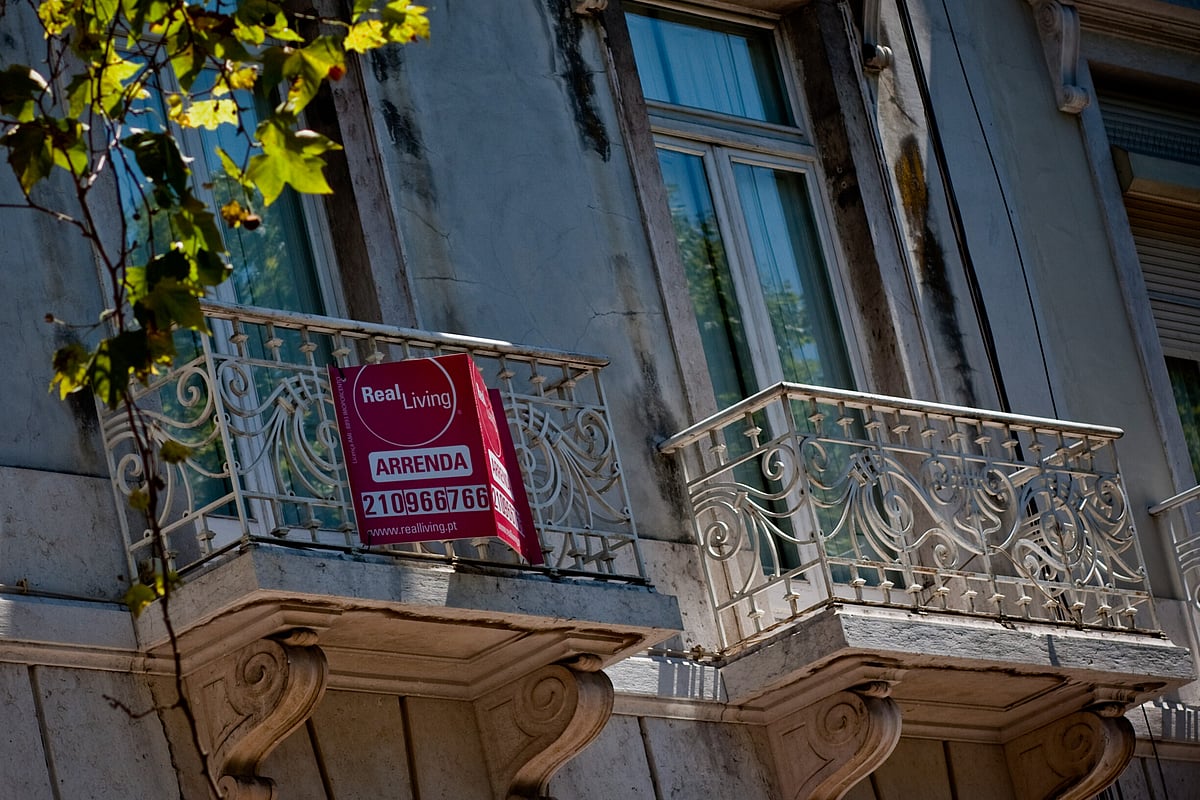
The government published regulations for the Simplified Affordable Rental Scheme (Regime Simplificado de Arrendamento Acessível), establishing maximum rent caps by municipality that allow property owners to qualify for full tax exemptions. Under the rules, landlords renting a studio apartment (T0) can charge up to €785 per month in Lisbon and €652 in Porto without paying taxes on the rental income. The scheme provides exemptions from both personal and corporate income taxes to encourage below-market residential leases.
Update: New Rules Set Nationwide Rent Ceilings and Scrap Effort Limit
Under the newly published ministerial order (portaria), rent ceilings across Portugal range between €224 and €2,066 depending on municipality and property type, with one-bedroom units (T1) in Lisbon capped at €1,000. The updated rules also eliminate the requirement that rents must not exceed a 35% household effort rate (taxa de esforço).
The Simplified Affordable Rental Scheme (Regime Simplificado de Arrendamento Acessível) is a state program that sets maximum rent limits for properties based on location and apartment size. Landlords who agree to charge rents within these government caps receive exemptions on personal income tax (IRS) applied to rental earnings. The initiative aims to expand the supply of long-term housing at rates roughly 20% below open market prices.
The INE housing price index (Índice de Preços da Habitação) tracks changes in residential property transaction prices across Portugal, published quarterly by the National Statistics Institute (INE). It covers both new and existing dwellings and breaks data down by region, property type, and buyer nationality.
The index is a key reference for policymakers debating housing affordability measures, for lenders assessing mortgage risk, and for buyers and investors tracking market trends. It has shown sustained price growth since 2015, with particularly sharp increases in Lisbon, Porto, and the Algarve driven by international demand, tourism, and housing shortages.
Related INE publications include monthly housing transaction data, rental indices, and construction statistics. Together, they provide the most comprehensive picture of Portugal's property market.
Porto Mayor Vows Relentless Response to Housing Encampment
Porto Mayor Pedro Duarte pledged that the city council (Câmara Municipal do Porto) will be relentless against any attempts to pitch tents in Praça D. João I, where activists established an encampment to protest housing unaffordability. Duarte asserted that the central square is not a campsite and warned that public demonstration rights cannot infringe upon broader civic freedom. He also criticized organizers, arguing that parts of the protest have goals unrelated to housing and seek to provoke disruption.
Update: Protesters Pitch Dozens of Tents Defying Porto Mayor
Protesters defied the mayor on Wednesday night, pitching more than 40 tents in Praça D. João I under the observation of the Public Security Police (Polícia de Segurança Pública or PSP). Demonstrators characterized the renewed camp as an act of political despair rather than leisure, maintaining that protests must disrupt civic leaders to highlight the housing crisis.
Pedro Duarte is the Mayor of Porto, elected in the most recent local elections. He leads the city's municipal government and is responsible for implementing local policies, such as the recent initiative to provide free public transport for residents.
The PSP (Polícia de Segurança Pública) is Portugal's national civilian police force, founded in 1867. Responsible for defending Republican democracy and safeguarding internal security and citizens' rights, the PSP polices major cities—Lisbon, Porto, Faro—and large urban areas, covering only 4% of Portugal's territory but roughly half the population. Led by a National Director under the Ministry of Internal Affairs, its approximately 21,500 officers handle preventive policing, crime investigation, public order, airport security, diplomatic protection, private security regulation, firearms licensing, and border control (since 2023).
PSP vs. GNR: The PSP is civilian with police-focused training and urban jurisdiction, while the GNR (Guarda Nacional Republicana) is military (gendarmerie) with military training, covering 96% of Portugal's rural and suburban territory. Both share core public safety missions but differ fundamentally in nature, training, and geographic responsibility.
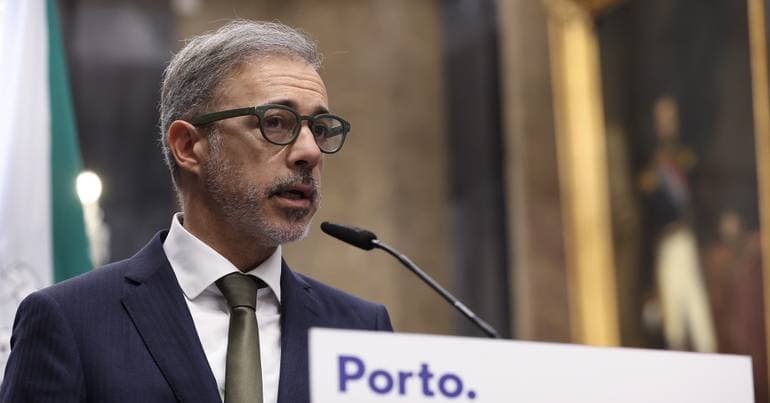
Internal Administration Ministry Shaken by Dismissal and Legal Allegations
Minister of Internal Administration (Ministro da Administração Interna) Luís Neves dismissed the ministry's secretary-general, Ricardo Carrilho, on Monday following internal disputes over emergency communications network SIRESP. Ricardo Carrilho alleged that the minister pressured him to commit illegal acts and claimed that administrative decision-making in the ministry is paralyzed. The Liberal Initiative (Iniciativa Liberal) called for an urgent parliamentary hearing with both officials, while Socialist Party figures criticized the government for creating institutional instability.
Update: Auditor Investigates SIRESP Contracts Following Official Dismissal
Ricardo Carrilho said his dismissal followed his refusal to approve an allegedly illegal €26 million payment to SIRESP. The General Inspectorate of Internal Administration (Inspeção-Geral da Administração Interna or IGAI) subsequently opened an inquiry into SIRESP contracts signed between April 2024 and May 2026.
Update: Ministry Denies Political Purge Following Secretary-General Dismissal
The Ministry of Internal Administration rejected accusations from Ricardo Carrilho that his removal was a political purge, attributing the dismissal to a breach of trust and operational disruptions. Liberal Initiative leader Mariana Leitão renewed calls for the resignation of Luís Neves, stating the dismissal caused severe institutional instability.
The SIRESP (Sistema Integrado de Redes de Emergência e Segurança de Portugal) is the national radio communications network used by emergency services, including police, firefighters, and medical responders. It ensures that different agencies can communicate securely and reliably during daily operations and large-scale emergencies, such as wildfires or public events.
Luís Neves will take office on Monday as Minister of Internal Administration. He graduated in law and has worked at the Judicial Police since 1995, where he served as coordinator of a national unit and developed a long career in criminal investigation.
IGAI stands for the Inspectorate‑General of Internal Administration (Inspeção‑Geral da Administração Interna), an independent oversight body that inspects police forces, civil protection and local administration for legality and performance. For expats dealing with police staffing or conduct issues, IGAI is the body unions and officials may ask to review problems and recommend changes.
Mariana Leitão is the president of the Liberal Initiative (Iniciativa Liberal), a liberal political party in Portugal. She is presenting a policy document titled "Lift Portugal - Build Now, Conquer the Future" to the prime minister, and her proposals could affect economic and regulatory reforms that residents and businesses should watch.
IMF Raises Portugal Growth Forecast but Warns on 2027 Inflation
The International Monetary Fund (Fundo Monetário Internacional or FMI) revised Portugal's gross domestic product (Produto Interno Bruto or PIB) growth forecast upward to 2.1% for this year and 1.9% for 2027 in its latest World Economic Outlook. However, the projections remain below the government's forecasts presented in the draft 2027 State Budget (Orçamento do Estado). The fund warned of persistent inflation and weaker growth among major European trading partners, complicating government fiscal targets.
The State Budget (Orçamento do Estado or OE) is Portugal's annual law that sets public spending, taxes and economic policy; the government prepares a draft and the Assembly of the Republic votes on it so the rules usually take effect from January 1. OE 2026 modestly strengthens tax measures linked to teleworking, which can change how home-office costs, employer contributions or deductions are treated and therefore matters for expats who work remotely from Portugal because it can affect net pay and tax reporting.
Lisbon Moves to Ban Shared Electric Scooters
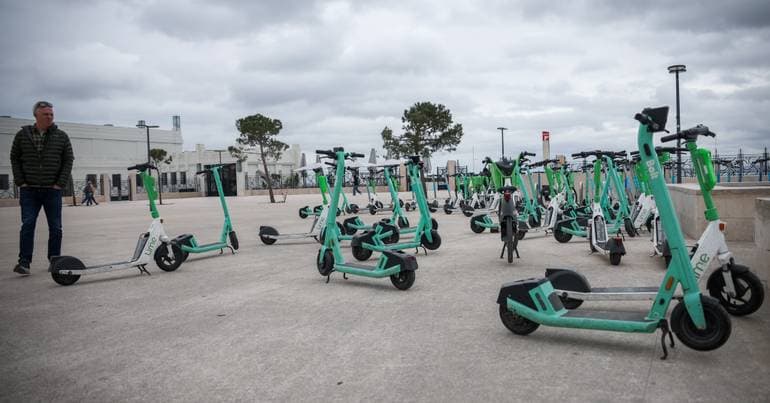
Lisbon Mayor Carlos Moedas announced plans to suspend and remove shared electric scooters from the capital, pointing to persistent safety complaints and cluttered pedestrian pavements. The proposal still requires formal approval by the Lisbon City Council (Câmara Municipal de Lisboa). While commercial scooter operators face an exit from the city, the municipal bike-sharing system Gira will remain in service and receive further fleet investments.
Update: Bolt Contests Ban as Operator Highlights Safety Record
Micro-mobility operator Bolt expressed regret over the lack of dialogue with municipal authorities, stating that only 0.5% of reported incidents in 2026 were serious. Bolt also pointed to police data showing that over half of fatal scooter accidents involved privately owned devices rather than commercial rental fleets.

Carlos Manuel Félix Moedas (born August 10, 1970, in Beja) is a civil engineer, economist, and center-right politician who has served as Mayor of Lisbon since October 2021. He earned degrees in civil engineering from Instituto Superior Técnico and an MBA from Harvard, working at Goldman Sachs and founding his own investment firm before entering politics. During Portugal's 2011-14 bailout, he served as Secretary of State coordinating Troika-mandated structural reforms. From 2014-19, he was European Commissioner for Research, Science and Innovation, managing €77 billion in research funding and designing the €100 billion Horizon Europe program. Moedas narrowly won Lisbon's mayoralty in 2021 with 34.3%, defeating Socialist incumbent Fernando Medina. Governing initially with a minority coalition, he implemented free public transport for youth and elderly residents, launched the "Unicorn Factory Lisboa" innovation hub attracting 82 tech companies and 16,000 jobs, and won Lisbon the 2023 European Capital of Innovation award. He was re-elected in October 2025 with 41.7%, securing eight of nine council seats. His significance lies in shifting Lisbon's political trajectory rightward after decades of Socialist governance, positioning the capital as a European tech hub while prioritizing housing development, carbon neutrality by 2030, and innovation-driven economic growth.
Parliament Approves Six-Month Paid Parental Leave for 2027
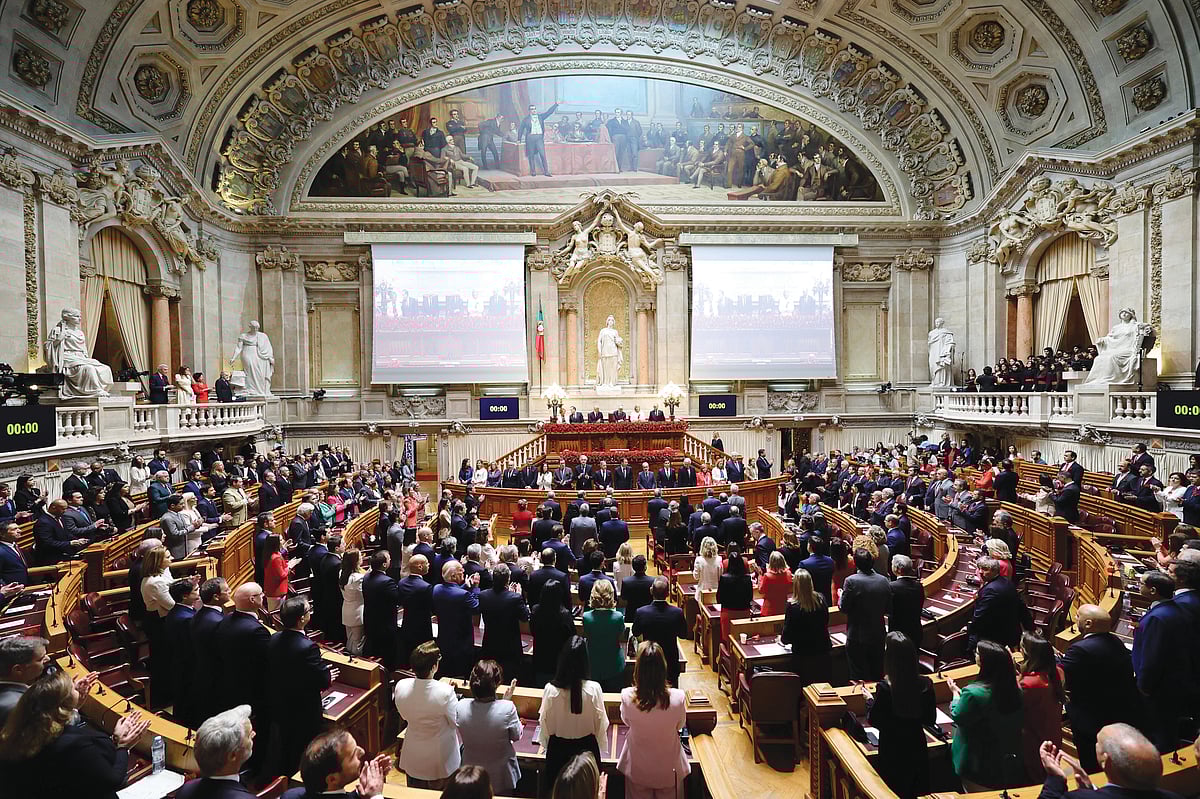
Parliament voted unanimously to extend fully paid parental leave (licença parental) to six months starting January 1, 2027, provided the time is shared between parents. The legislation, jointly proposed by the Social Democratic Party (Partido Social Democrata or PSD) and Socialist Party (Partido Socialista or PS), guarantees 100% wage replacement for 180 days. It also grants private sector employees with children up to 12 years old the right to request continuous working hours (jornada contínua), allowing a one-hour reduction in the workday with employer agreement.
Socialist Party (PS)
- Leader: José Luís Carneiro (since June 2025)
- Ideology: Center-left, Social democracy, pro-Europeanism
Portugal's other traditional major party suffered a historic collapse in the 2025 election, dropping from 78 to 58 seats and falling to third place for the first time in democratic history. The party was led by Pedro Nuno Santos from January 2024 until his resignation following the May 2025 defeat. José Luís Carneiro, a 53-year-old former Minister of Internal Administration known for his moderate positioning within the party, was elected unopposed as the new Secretary-General with 95% of votes in June 2025. The Socialist Party governed Portugal from 2015 to 2024, including an absolute majority from 2022 to 2024 under António Costa, who resigned in November 2023 amid a corruption investigation. The PS previously led the innovative "Geringonça" (contraption) coalition government from 2015-2019, a minority government supported by the Left Bloc and Portuguese Communist Party that reversed austerity measures and presided over economic recovery.

The Social Democratic Party ('Partido Social Democrata' or 'PSD') is a liberal-conservative political party in Portugal that is the leading partner of the The Democratic Alliance (AD) which is the country's ruling party, with Prime Minister Luís Montenegro.
The Social Democratic Party, despite its name, occupies the centre-right of Portugal's political spectrum. Luís Montenegro, who became Prime Minister in April 2024, leads Portugal's current minority government. The PSD has been one of Portugal's two dominant parties since 1974, having formed nine governments including four with absolute majorities. Montenegro, a former party leader from 1996-1999, was elected with the highest approval rating among party leaders at 10.7 points out of 20.
The Democratic Alliance is a centre-right coalition that includes the smaller CDS – People's Party, a Christian democratic party that has historically been the PSD's coalition partner. Together, they govern without a parliamentary majority, requiring case-by-case support from opposition parties to pass legislation.

- Leader: Luís Montenegro (Prime Minister)
- Ideology: Liberal conservatism, pro-Europeanism
- Coalition: Social Democratic Party (PSD) + CDS–People's Party (CDS-PP)
The Democratic Alliance (Aliança Democrática, AD) is a center-right coalition primarily composed of the Social Democratic Party (PSD) with 89 seats and the CDS–People's Party (CDS-PP) with 2 seats. Together, they form the current minority government under Prime Minister Luís Montenegro.
The PSD, despite its name, occupies the center-right of Portugal's political spectrum and has been one of Portugal's two dominant parties since 1974, having formed nine governments including four with absolute majorities. The CDS-PP is a smaller Christian democratic party that has historically been the PSD's coalition partner.
The AD coalition governs without a parliamentary majority, requiring case-by-case support from opposition parties to pass legislation. The coalition has imposed a cordon sanitaire against Chega, refusing formal cooperation with the far-right despite its parliamentary strength, which means it must negotiate with the PS or smaller parties to advance its legislative agenda.