
Latest news and stories about government policy in Portugal for expats and residents.
Público and CNN Portugal report analysts expect abstention to fall in this presidential election, citing two features of the race that typically increase participation — including stronger mobilisation among younger voters. The forecast suggests turnout could alter campaign calculations and the likelihood of a second round. Political observers and campaign teams should watch turnout patterns, particularly among young and first-time voters.
Update: Mid‑afternoon turnout data (45.51% by 16:00) reported by CNN Portugal and Expresso indicates participation is substantially higher than expected at this stage and is the strongest mid‑afternoon rate in about 20 years. Political strategists and journalists should watch whether higher participation changes the odds of a second round.
Abstention is when eligible voters choose not to vote; it is usually reported as the percentage of registered voters who do not cast a ballot. A falling abstention rate can change electoral outcomes and boost the perceived legitimacy of the result, so a predicted drop — including among younger voters — matters for how parties and candidates plan campaigning and turnout efforts.
Carlos Jalali is the coordinator of the Study Centre at the Francisco Manuel dos Santos Foundation (Fundação Francisco Manuel dos Santos), a Portuguese research organisation. He studies electoral behaviour and has commented on expectations for lower abstention in the current presidential vote.
The CNE is the National Election Commission (Comissão Nacional de Eleições), Portugal’s independent body that organises and oversees elections, publishes official turnout and results, and handles electoral complaints. Residents and voters should consult the CNE for authoritative results, turnout figures and guidance on voting rules during election periods.

Expresso and Observador report that, under constitutional rules, the successor to Marcelo Rebelo de Sousa will be sworn into office on 9 March — the same inauguration date used by his recent predecessors since 1986. The fixed date means the transfer of presidential duties is scheduled regardless of interim arrangements after the election. Those following the campaign or official ceremonies should note the 9 March timetable.

Electoral Mandate and Democratic Consensus:
Marcelo Rebelo de Sousa was elected President of Portugal on January 24, 2016, winning 52.0% of the vote in the first round—a decisive victory in a fragmented field. He campaigned as an independent, positioning himself as a unifying figure after years of austerity from Portugal's 2011–14 bailout, promising to repair political divisions and restore national confidence. His campaign emphasized moderation and cross-party consensus, a departure from his decades-long association with the center-right Social Democratic Party (PSD). Upon taking office on March 9, 2016, he suspended his party membership for the duration of his presidency.
His 2021 re-election proved extraordinary: Rebelo de Sousa secured 60.7% of the vote—the third-highest margin in Portuguese presidential electoral history since the 1974 Carnation Revolution. Historically, he became the first candidate ever to win in all 308 municipalities and the vast majority of parishes, ranging from 51.3% in Beja District to 72.16% in Madeira. This unprecedented sweep reflected his broad appeal across social, geographic, and ideological divides.
Constitutional Role and Crisis Leadership:
Portugal operates as a semi-presidential system where the president, while largely ceremonial, exercises meaningful influence over national security, foreign policy, and military affairs as Supreme Commander of the Armed Forces. Rebelo de Sousa leveraged this authority during Portugal's response to the COVID-19 pandemic. In March 2020, he requested parliamentary authorization for a state of emergency—the first nationwide declaration in 46 years of democratic history—to contain the crisis. He voluntarily quarantined after potential COVID-19 exposure in March 2020, and later tested positive in January 2021 while remaining asymptomatic. His measured handling of the pandemic, balancing public health with institutional continuity, contributed to his landslide 2021 re-election.
Diplomatic Engagement and International Presence:
Rebelo de Sousa has conducted extensive state visits representing Portugal's interests across diverse regions: the Vatican, Spain, Mozambique, Morocco, Brazil, Switzerland, Cuba, the United Kingdom, Greece, the United States, and Angola. A notable diplomatic highlight occurred in 2019 when he joined President Emmanuel Macron at the Bastille Day military parade in Paris, representing European military cooperation and the European Intervention Initiative. These engagements positioned Portugal as an active participant in global affairs, particularly regarding colonial history and Atlantic security partnerships.
Colonial Legacy and Historical Accountability:
During his presidency, Rebelo de Sousa has publicly supported making restitution and acknowledging abuses committed during Portugal's colonial history and the country's role in the Atlantic slave trade. This position marked a significant policy shift, as Portugal historically avoided confronting its imperial past compared to other European powers. His stance reflected evolving attitudes within Portuguese society toward historical accountability.
Controversies and Public Criticism:
Rebelo de Sousa's presidency has not been without controversy. In 2023, allegations emerged that he had intervened to expedite treatment for Brazilian twins with Zolgensma, an expensive rare disease medication, raising questions about presidential influence and potential corruption. These claims implicated his son and generated criticism across Portuguese political and media sectors. Additionally, in April 2024, Rebelo de Sousa made controversial remarks comparing the speed of Prime Ministers António Costa and Luís Montenegro using orientalist language that drew public rebuke. In August 2025, he called U.S. President Donald Trump a "Russian asset" at a PSD event, demonstrating his willingness to make provocative foreign policy statements.
Constitutional Constraints and Legacy:
Under Portugal's constitution, Rebelo de Sousa is barred from running for a third consecutive term, meaning his presidency concludes with elections scheduled for January 18, 2026. His decade-long tenure has established him as one of Portugal's most popular recent heads of state, characterized by broad consensus-building and institutional stability. Whether future presidents can replicate his cross-party appeal remains an open question for Portuguese democracy as it enters a new era.
A concise, analytical guide to voting in Sunday’s presidential election: who is eligible to vote, when polling stations are open, what you need to bring, whether you can use your own pen, what to do if you make a mistake on your ballot, and rules about bringing children or carers into the polling station. Also covers guidance for expat voters and common FAQs to help you vote confidently and correctly on election day.
Correio da Manhã reports a 53% increase in people receiving treatment for gambling addiction, signalling growing social and healthcare demand for support services. The rise may put additional pressure on treatment providers and social services; those affected or concerned about someone at risk should seek specialised help through local health channels. Residents relying on public health services should monitor availability of addiction support in their area.

The government has committed €110 million to support lithium extraction projects despite strong public opposition. Environmental groups describe the funding as a 'blank cheque' paid for by taxpayers, arguing it risks local ecosystems and undermines sustainability claims. The injection of public funds raises wider questions about fiscal priorities, state backing for critical minerals, regulatory oversight and democratic legitimacy amid popular resistance.

The Draghi Report's ambitions force Europe to confront uncomfortable realities: it is falling significantly behind global competitors. The analysis argues that the ‘race’ has been underway for years and that closing the gap requires urgent, active policy choices — including structural reforms, targeted investment and a renewed focus on competitiveness across the single market.

U.S. President Donald Trump announced tariffs on eight European countries tied to a dispute over Greenland, prompting President of the European Council, António Costa, and EU ambassadors to meet urgently on Sunday and leaders to promise a coordinated response. Brussels and several national leaders warned the measures threaten transatlantic relations; the European Parliament has signalled it will not advance a pending EU–US trade deal while tensions escalate. The political uncertainty could stall trade policy and affect exporters and markets; business owners and exporters should monitor developments closely.
Update: Multiple outlets (RTP, POLITICO Europe, ECO) report French President Emmanuel Macron pressed EU leaders to activate the bloc’s anti‑coercion instrument if Washington imposes the threatened surtaxes; the tool would require a qualified majority of member states to be deployed and is meant as a legal-political deterrent. Markets, exporters and import‑dependent businesses should monitor diplomatic developments and any concrete EU measures that could affect trade flows.

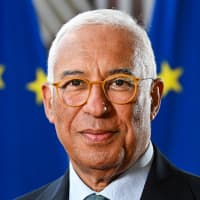
António Luís Santos da Costa (born July 17, 1961, in Lisbon) is a Portuguese lawyer and Socialist politician who served as Prime Minister of Portugal from 2015-2024 and currently serves as President of the European Council since December 1, 2024. After leading the Lisbon Municipal Assembly and practicing law, he was elected MEP (2004-2005) and entered parliament in 2002. He led the Socialist Party from 2014-2024, building unprecedented parliamentary coalitions with the Communist Party and Left Bloc (2015-2019) before winning an absolute majority in 2022. He resigned as PM in November 2023 following a corruption investigation, though subsequently cleared. The 27 EU member states elected him Council President in June 2024, making him the fourth full-time President and the first southern European socialist in that role.
Political Philosophy:
Costa represents moderate European social democracy, combining orthodox fiscal responsibility with progressive social investment. He prioritizes European integration, consensus-building, and pragmatic compromise over ideological confrontation. As Council President, he champions mediation between member states, improved EU inter-institutional relations, shorter decision-making processes, and regular visits to every EU capital to reconnect citizens with European institutions. His approach emphasizes "creative bridges" reconciling divergent interests while maintaining firmness on European values, particularly regarding Ukraine.
The term refers broadly to negotiations or arrangements between the European Union and the United States to manage tariffs, market access and trade disputes; there is no single comprehensive EU–US free-trade agreement, so relations are handled through sectoral deals, WTO rules and ad‑hoc talks. Tariffs or threats of tariffs (the recent row that prompted Brussels to warn about damage to transatlantic ties) can raise prices, disrupt supply chains and prompt coordinated EU responses or reciprocal measures, which is why EU capitals are sensitive to any escalation.
The EU anti‑coercion instrument is a tool the European Union agreed in 2021 that lets the bloc adopt targeted countermeasures (such as tariffs, trade restrictions or other trade-related measures) in response to economic pressure from third countries. Activating it in response to threats of U.S. tariff surcharges would allow the EU to coordinate a collective reaction that could affect trade flows, prices and businesses across member states.
Emmanuel Macron is the President of France, first elected in 2017 and re‑elected in 2022, and is associated with the centrist Renaissance movement. He is engaging European counterparts about using EU tools like the anti‑coercion instrument to respond to international trade threats.
In the EU Council context, a qualified majority means approval by at least 55% of member states representing at least 65% of the EU population (the standard since the Lisbon Treaty). It’s a higher threshold than a simple majority but lower than unanimity; decisions taken by qualified majority can authorise actions such as activating the EU’s anti‑coercion instrument, so businesses and travellers should watch Council votes when trade measures are at stake.

The European Council (Conselho Europeu) brings together EU heads of state or government to set the bloc’s overall political direction and priorities; it does not adopt ordinary legislation. Its president, Charles Michel, has chaired meetings since December 2019, and the Council’s political endorsement is important for major trade and investment deals, so those following EU policy should note its stance on agreements like the EU–Mercosur deal.

EU lawmakers say a proposed EU–US trade pact—intended to shield European exporters from heavy duties—is effectively on hold after the US announced tariffs on eight European countries in response to their opposition to Washington’s actions regarding Greenland. EU ambassadors have been summoned to an extraordinary meeting to discuss the diplomatic fallout and next steps, underscoring how escalating US threats risk derailing broader trade cooperation and raising the prospect of a wider economic and political rift.
Público summarises practical voting information for the presidential ballot: polling stations are open from 08:00 to 19:00 across Portugal and voters must bring a photo ID such as the national ID card (cartão de cidadão), citizen card/identity document (BI), passport or driving licence. Voters can confirm their polling location via the electoral register (recenseamento.pt), by sending SMS to 3838 or contacting the official helpline. Residents who are unsure where to vote should check recenseamento.pt before heading to the polls.
Update: By 16:00 official figures cited by CNN Portugal put turnout at about 45.51% — the fastest participation rate at that hour since 2006 — and multiple outlets note more than 11 million voters were called to the polls today with 11 candidates on the ballot. Polling stations opened at 08:00 in mainland Portugal and Madeira, with the Azores starting an hour later; candidates and party leaders repeatedly urged citizens to vote. Voters and volunteers should expect extended coverage and local queuing at busy sections.
The Cartão de Cidadão (Citizen Card) is Portugal’s national identity card, introduced in 2007, used for in‑person ID and many online public services; it contains your civil identity data and supports digital authentication and signatures. It is issued to Portuguese citizens—foreign residents use a residence permit for ID—so non‑citizen expats should keep their passport and residence card for official matters.
recenseamento.pt is the official Portuguese website for checking and updating voter registration and finding your assigned polling station ahead of elections; it lets voters confirm their registration status and address on the electoral roll. Voters planning to vote in Portugal (or Portuguese citizens abroad who register via consulates) should check the site before election deadlines to avoid problems like being turned away or casting a null vote.
The electoral register (Portuguese: recenseamento eleitoral) is the official list of people eligible to vote in Portugal; the final update showed 11,039,672 registered voters for the 18 January election, 174,662 more than in the 2021 presidential election. That number matters because it determines turnout percentages, seat calculations and whether campaigns target domestic versus overseas voters — expats need to check their registration status if they plan to vote from abroad.

The Finance Minister will be at next week's annual meeting of the World Economic Forum in Davos, and will use the presence of policymakers and investors to 'sell' the progress the national economy has made in recent years. In remarks to ECO, Joaquim Miranda Sarmento highlights this year's event theme, ...

Portugal faces a mixed outcome from the EU–Mercosur trade agreement. Export-oriented sectors such as wine, olive oil and cheese see expanded market access to Argentina, Brazil, Paraguay and Uruguay as growth opportunities, while domestic meat and rice producers fear increased competition, downward price pressure and quota-driven market disruption. The deal thus creates winners and losers within Portugal’s agricultural and food industries, highlighting the need for safeguards, support measures and sectoral adaptation strategies.
Update: The trade agreement between the European Union and Mercosur is due to be signed this Saturday. The impending signature has intensified debate in Portugal: wine, olive oil and cheese sectors are positioning to capture growth in the four South American markets, while meat and rice producers renew warnings about heightened competition, downward price pressure and quota effects. Stakeholders are pressing for concrete safeguards, transitional support and clear implementation timetables to mitigate adjustment costs and protect sensitive domestic producers.

A press roundup reporting an increase in foreign doctors in Portugal — though not being brought into the SNS (Portuguese National Health Service) — and coverage that Spain is acting as a stumbling block to Mário Centeno’s prospects at the European Central Bank (ECB).
Portuguese Prime Minister António Costa defended the EU–Mercosur agreement as a historic deal and rejected European criticism as based on a “totally wrong perception”. Costa framed the pact as both a trade and an investment agreement, arguing it does not simply favour Europe. His remarks come after the 27 EU member states reached a qualified majority to approve the accord; Brazil’s president Jair Bolsonaro? No — the content states Brazil’s president Luiz Inácio Lula da Silva will not attend the signing ceremony in Paraguay as the long-delayed pact moves into the ratification phase in Europe.
Update: Diário de Notícias reports that António Costa will attend the signing ceremony in Asunción and reiterated that concerns about farmers’ opposition are misplaced, saying the agreement includes safeguards for European agriculture.
Update 2: Additional coverage quotes Costa saying criticisms rest on a “completely wrong perception” and using the image of the EU and Mercosur “building bridges” rather than raising barriers; RTP and Expresso note he continues to portray the pact as both trade and investment, emphasising expected benefits for Portuguese exporters.

António Luís Santos da Costa (born July 17, 1961, in Lisbon) is a Portuguese lawyer and Socialist politician who served as Prime Minister of Portugal from 2015-2024 and currently serves as President of the European Council since December 1, 2024. After leading the Lisbon Municipal Assembly and practicing law, he was elected MEP (2004-2005) and entered parliament in 2002. He led the Socialist Party from 2014-2024, building unprecedented parliamentary coalitions with the Communist Party and Left Bloc (2015-2019) before winning an absolute majority in 2022. He resigned as PM in November 2023 following a corruption investigation, though subsequently cleared. The 27 EU member states elected him Council President in June 2024, making him the fourth full-time President and the first southern European socialist in that role.
Political Philosophy:
Costa represents moderate European social democracy, combining orthodox fiscal responsibility with progressive social investment. He prioritizes European integration, consensus-building, and pragmatic compromise over ideological confrontation. As Council President, he champions mediation between member states, improved EU inter-institutional relations, shorter decision-making processes, and regular visits to every EU capital to reconnect citizens with European institutions. His approach emphasizes "creative bridges" reconciling divergent interests while maintaining firmness on European values, particularly regarding Ukraine.


The European Council (Conselho Europeu) brings together EU heads of state or government to set the bloc’s overall political direction and priorities; it does not adopt ordinary legislation. Its president, Charles Michel, has chaired meetings since December 2019, and the Council’s political endorsement is important for major trade and investment deals, so those following EU policy should note its stance on agreements like the EU–Mercosur deal.

Mercosur is the South American trade bloc (Southern Common Market) whose main founding members are Argentina, Brazil, Paraguay and Uruguay. An EU–Mercosur trade agreement — which the story says may be approved and signed soon — would reduce tariffs and open markets on both sides, affecting agricultural and industrial trade flows and therefore prices and business opportunities relevant to residents and companies in Portugal.

RTP (Rádio e Televisão de Portugal) is Portugal's state-owned public service broadcaster, operating since 1935 (radio) and 1957 (television). It runs 8 television channels (including RTP1, RTP2, RTP3) and 7 radio stations (Antena 1, 2, 3), plus international services reaching Portuguese diaspora worldwide. Funded by a broadcasting tax on electricity bills and advertising revenue, RTP serves as Portugal's cultural reference, providing quality news, education, and entertainment. Its archive represents "irreplaceable heritage in Portuguese collective memory", and it pioneered online streaming with RTP Play in 2011. RTP connects "Portugal and the Portuguese to themselves, to each other, and to the world"
Reporting from Público finds many emigrants must travel hundreds of kilometres to reach Portuguese diplomatic missions to vote, using consulates (consulados) for passports, citizen cards and electoral participation. The piece profiles voters who combine document services and ballots at consular posts and highlights the travel burden for residents abroad who lack nearby polling locations. Those living overseas should check their designated consulate and travel plans well ahead of polling days.
A consulate is a local office representing a foreign country in a city outside the capital that provides consular services such as passport renewal, notary services, help for citizens in distress and often handles voting arrangements for nationals abroad. For example, Brazilians in Portugal commonly use Brazilian consulates (or the embassy) to register and vote in elections, so check which consular district covers your address before you travel to vote.

Many emigrants are effectively disenfranchised because presidential voting is strictly in person, forcing citizens abroad to travel hundreds of kilometres to reach polling stations. As a result, abstention among the diaspora consistently exceeds 90%. The practical burdens—time, cost and mobility—raise equity and representation concerns, skew electoral participation towards residents and those with resources to travel, and may distort mandates. The situation highlights a policy trade‑off between electoral integrity and accessibility and strengthens arguments for reforms such as postal ballots, expanded consular voting, secure electronic options or mobile polling. Any reform would need to weigh logistical complexity, security and public trust against the democratic imperative to include citizens abroad.

The EU–Mercosur agreement will create clear winners and losers in agriculture: EU wine and olive oil producers stand to gain improved access and competitive opportunities, while beef, rice, sugar and honey are likely to face the greatest pressure from increased imports and tariff concessions. Farmers warn of 'unfair competition' and say small family farms risk bankruptcy unless safeguard clauses are rigorously enforced, with transparent monitoring, clear trigger mechanisms and targeted support measures. The agreement therefore raises political and policy questions about enforcement, compensation and the protection of vulnerable rural sectors.

With the Eurogroup set to choose the ECB vice-president on Monday, former Portuguese central bank governor Mário Centeno—one of two front-runners—says there remains a lack of alignment among major EU countries. Speaking to PÚBLICO, Centeno urges reaffirmation of the reasons for his candidacy and signals that political negotiations, policy priorities and regulatory direction will be decisive in the appointment. The comments frame the contest as both a balance-of-power and policy-choice moment for the ECB’s future leadership.

New proposals would create a two-tier EU that allows states to obtain membership while curbing some voting or decision-making rights. Supporters argue the model eases enlargement and protects institutional efficiency, while critics — including prospective members — say it risks unequal treatment, weakened solidarity and long-term fragmentation of the Union.

On the penultimate day of a Porto‑focused campaign, Mendes — the candidate backed by the PSD and CDS — intensified calls for voters to concentrate their ballots next Sunday, warning that the result must not be left to chance. He framed the vote as decisive for who will occupy Belém and criticised the broader presidential campaign as lacking substantive policy ideas, arguing it is time to end an empty contest and consolidate support behind a clear alternative. The intervention underlines a tactical push for vote consolidation and a critique of opponents’ absence of coherent presidential proposals.
The presidential campaign skirted constitutional debate, focusing on policy and partisan positioning more suited to a head-of-government race than a head-of-state contest. António José Seguro — the Socialist-backed candidate — presents himself as the moderate alternative and argues the Constitution need not be revised, only respected; meanwhile Luís Montenegro will run as his party’s candidate. The piece argues the Republic needs a president who acts as a moderator, respects institutional limits and upholds the separation of powers.

A DN/Aximage poll finds Socialist candidate Seguro leading Ventura by 20 percentage points in a hypothetical second-round (run-off) contest. Commentary in the piece highlights tactical voting for Seguro to block the right, the extreme or the current government, warns that a Ventura vs Cotrim run-off would be damaging for the right, and reports Ventura dismissing calls for Montenegro’s backing while claiming stronger polling levels.
Admiral Gouveia e Melo has urged a change in health leadership, saying the Government should resign if it cannot resolve systemic problems in the healthcare system. He accuses the State of failing across the board, criticises missed deadlines for delivering results and calls for accountability and urgent action to protect patients and medical services. The remarks frame the crisis as a leadership and policy failure with direct implications for care delivery and public confidence.

European Commissioner for Defence and Space Andrius Kubilius conducted his first official visit to Portugal, meeting Defence Minister Nuno Melo and Education Minister Fernando Alexandre to discuss defence and space policy. He signalled that SAFE funds could reach the Portuguese government in the coming weeks or months, prompting analytical questions about budget timing, allocation between defence and civil space programmes, and coordination between national ministries and EU institutions. The visit underlined the need for clear planning to integrate incoming EU funding with Portugal’s defence and space policy priorities.

David Pontes argues that the so-called elections for the presidencies of the CCDRs are a façade: party leaders pick office-holders behind closed doors, depriving voters and local stakeholders of genuine choice. The editorial contends this practice undermines democratic legitimacy, concentrates power within party machines and weakens accountability in regional policy, and calls for transparent, competitive selection procedures and broader electoral reform.

A proposal to create 'Social Golden Visas' — a fast-track residency pathway modelled on investor golden visas but targeted at people with urgent social needs. Analytically, the policy could deliver rapid legal protection and access to services for vulnerable migrants and expats, but it requires clear eligibility criteria, safeguards against abuse, and alignment with broader immigration and welfare systems to avoid unintended consequences.

Compete will launch a clean-up operation to revoke PT2030 support for projects that were approved but have not started implementation within three months. The review aims to free up EU funding tied to non-executed projects; affected business owners should expect revocation letters beginning in February. The move signals a stricter enforcement of grant timelines and should prompt beneficiaries either to commence work promptly or risk losing allocated support, allowing funds to be reallocated to active projects.

The EU's new Entry-Exit System (EES) — which now obliges over a third of non‑EU nationals entering the Schengen area to submit extra personal and biometric data — has provoked a standoff between airports and Brussels. Airports warn of operational strain, higher costs and longer processing times amid limited staff and technical readiness; EU institutions argue the measure is necessary to improve border security, migration management and traveller rights. The dispute highlights tensions between security aims, data‑protection concerns and practical implementation challenges that could affect expats, short‑term visitors and airlines alike.

The European Commission confirmed that President Ursula von der Leyen will sign the EU–Mercosur free trade agreement on Saturday 17 January, after the EU approved advancement of the deal despite objections from France, Hungary and Poland. Supporters argue the pact will boost exports and deepen ties with South America, while farmers and some domestic political actors warn of negative impacts on agriculture and standards. The move has been framed by some commentators as a rare act of multilateral diplomacy amid broader geopolitical tensions.

During a tense election campaign swing through Ovar, São João da Madeira and Lamego, AD-backed candidate Marques Mendes publicly challenged Health Minister Ana Paula Martins to “show up and explain” mounting problems in the National Health Service, notably failings in emergency departments. Mendes, accompanied by two ministers and supported at events by Porto mayor Rui Moreira, pressed for direct public explanations as the health portfolio becomes a campaign battleground; the minister already has a public engagement scheduled. Elsewhere on the campaign trail, André Ventura “survived” an incident in Aveiro—famously described as a "chuva de cavacas"—and later thanked supporters in Viseu's so-called “Cavaquistão,” underscoring how confrontational moments and popular gestures are shaping voter perceptions. The episodes highlight healthcare policy and political accountability as central issues in the race and illustrate how personalised campaign incidents are influencing public debate.


Portugal Resident •

TLDR News EU •

Portugal Resident •


Portugal Resident •

Portugal Resident •