Latest news and stories about regulation in Portugal for expats and residents.
This time, it's not an economic crisis worrying the incoming President. It's the political trenches that delay consensus and reforms, and the uncertainties of an international order adrift.

The agreement was finalised in Asunción, Paraguay, after 25 years of negotiations, in the presence of Ursula von der Leyen and António Costa.

Abner Ivan and his wife, Natália Marinho, travelled to Portugal at the invitation of the Óbidos International Chocolate Festival but were barred from entry at Lisbon Airport.

The European Commission and the European Council regard approval of the Mercosur deal as a historic moment, but the agreement is far from consensual. Divisions among member states persist, and the European Parliament, which will have to ratify the proposal, is still seeking majorities.

More than one hundred premises were inspected across the country in a GNR operation that led to the seizure of alcoholic drinks, cigarettes and gambling machines.

The signing of the agreement opens the door to the world’s largest free-trade area, covering more than 700 million consumers. Negotiations began 25 years ago. There are still constraints in the health sector.

In a nationwide operation dubbed Operation “Mariposa” (Operação Mariposa), the GNR (Guarda Nacional Republicana) reported seizures including 70 litres of alcoholic beverages, 7,800 cigarettes, 3.2 kg of nicotine pouches, 202 g of cannabis and five gaming machines. Authorities said the operation targeted illicit supply chains and illegal gaming points across multiple districts. Local businesses and consumers should expect continued inspections in the coming weeks as investigations proceed.

The GNR (Guarda Nacional Republicana) is Portugal's national gendarmerie—a military police force founded in 1911, with origins dating to 1801. With over 22,600 personnel, GNR patrols 94-96% of Portuguese territory, covering rural areas, medium towns, and highways. Members are military personnel subject to military law, responsible for public order, customs, coastal control, environmental protection (SEPNA), firefighting/rescue (GIPS), border control, and ceremonial guards. GNR vs. PSP: The PSP (Polícia de Segurança Pública) is Portugal's civilian police force, covering major cities (Lisbon, Porto, Faro) and large urban areas—only 4% of territory but roughly half the population. PSP handles airport security, diplomatic protection, and private security regulation. Both share core missions (public order, crime prevention), but differ in nature: GNR is military with military training; PSP is civilian with police-focused training.

The agreement with Mercosur may still face obstacles in the European Parliament's ratification process during 2026.

Last week, the 27 member states of the European Union reached a qualified majority to approve the agreement.

The EU–Mercosur agreement will create clear winners and losers in agriculture: EU wine and olive oil producers stand to gain improved access and competitive opportunities, while beef, rice, sugar and honey are likely to face the greatest pressure from increased imports and tariff concessions. Farmers warn of 'unfair competition' and say small family farms risk bankruptcy unless safeguard clauses are rigorously enforced, with transparent monitoring, clear trigger mechanisms and targeted support measures. The agreement therefore raises political and policy questions about enforcement, compensation and the protection of vulnerable rural sectors.

Private‑hire drivers plan to alternate switching off Uber and Bolt apps during morning peak hours between 19 and 24 January in a protest organised by the Somos TVDE civic movement. Organisers say drivers will still be free to work but will turn off one platform at a time to disrupt supply and press for clearer regulation; they accuse the platforms of operating like sector employers. Commuters and those booking rides in peak mornings next week should expect possible delays or reduced availability.
TVDE refers to app‑based private‑hire ride services; the acronym stands for Transporte em Veículos Descaracterizados a partir de Plataforma Eletrónica and covers drivers working for platforms like Uber and Bolt. Drivers are using temporary app shutdowns as a protest over what they say is inadequate regulation and working conditions, so commuters who rely on ride‑hailing during peak hours should expect possible service disruptions next week.
Somos TVDE (We Are TVDE) is a civic movement and drivers’ organisation representing TVDE drivers that organises collective actions and campaigns for stronger regulation, better pay and working conditions. It is coordinating the alternating shutdowns of Uber and Bolt apps in morning peak hours, so those using app‑based taxis should be aware of potential reduced availability and plan alternatives.

With the Eurogroup set to choose the ECB vice-president on Monday, former Portuguese central bank governor Mário Centeno—one of two front-runners—says there remains a lack of alignment among major EU countries. Speaking to PÚBLICO, Centeno urges reaffirmation of the reasons for his candidacy and signals that political negotiations, policy priorities and regulatory direction will be decisive in the appointment. The comments frame the contest as both a balance-of-power and policy-choice moment for the ECB’s future leadership.

Reporting says the Government is monitoring negotiations between Galp and Spain’s Moeve on a deal that would combine parts of their assets and create two new platforms, with ministers stressing strategic energy assets and national energy sovereignty are at stake. Officials are watching to ensure any transaction protects critical infrastructure and interests. Entrepreneurs and energy-sector observers should be aware that a deal could affect local supply chains, jobs and investment decisions in the coming months.
Galp is Portugal’s integrated energy company operating in fuel, natural gas, electricity retail, refining and upstream activities, and it supplies households and businesses across the country. For expats, issues at Galp—such as recent billing disruptions—can mean unexpected large utility bills or service problems, so check your account, contact the supplier and keep billing records.
Moeve is a Spanish energy company that, as of January 2026, has been in talks with Portugal's Galp about combining parts of their assets and creating two new business platforms; the Portuguese government says it is monitoring the negotiations because the transaction could involve strategic assets tied to national energy sovereignty. People watching energy supply, regulation or prices should note that large cross‑border asset reorganisations can change ownership, investment decisions and regulatory oversight.

Galp customers have received large, delayed bills—some reported above €500—after months without regular billing; the Energy Services Regulatory Authority has registered around 80 complaints and reminds the company it must offer payment plans and may be required to compensate affected consumers. The disruption stems from billing interruptions dating back to September and the regulator is pressuring remedies. Expats with Galp accounts should review recent invoices, request instalment plans from the company and register complaints with the regulator if needed; keep proof of bills and communications.
Galp is Portugal’s integrated energy company operating in fuel, natural gas, electricity retail, refining and upstream activities, and it supplies households and businesses across the country. For expats, issues at Galp—such as recent billing disruptions—can mean unexpected large utility bills or service problems, so check your account, contact the supplier and keep billing records.
The Energy Services Regulatory Authority (Entidade Reguladora dos Serviços Energéticos or ERSE) is Portugal’s regulator for electricity, gas and fuel markets, responsible for licensing, tariffs and consumer protection. ERSE handles consumer complaints (it received about 80 complaints in the recent Galp case), can investigate billing disputes and impose sanctions, so it’s the authority to contact for unresolved energy issues.

The EU's Entry-Exit System will require more non-EU nationals entering Schengen to provide extra personal data at arrival and departure; outlets say more than a third of non-EU arrivals will be affected. The change may alter arrival procedures at airports and could lengthen border checks for some travellers. Non-EU expats and visitors should check ID and documentation requirements ahead of travel and expect possible longer processing at Portuguese airports.
The Entry-Exit System (Sistema de Entrada e Saída) is an EU border-register that records biometric data (fingerprints and a facial image) and travel details for short-stay non‑EU travellers, replacing passport stamping and creating a searchable entry/exit record. According to recent reporting, the new rules now require over a third of non‑EU nationals entering Schengen to provide this extra data at the border; the aim is to improve security and migration tracking, but travellers should be prepared to submit biometrics at kiosks or border control and ensure their travel documents are valid. For expats and visitors this usually means slightly longer checks on arrival/departure and more robust digital records of your travel history.

Lisbon's municipal authority has proposed banning alcohol consumption in public streets from 11pm, with proposed fines of up to €3,000 that could also be applied to establishments. Framed as a measure to reduce nuisance and improve public safety, the proposal raises questions about enforceability, proportionality and the potential economic impact on nightlife and hospitality. Separately, Le Monde reports Emmanuel Macron accusing Donald Trump of 'breaking with international rules', underscoring a parallel debate about norms and accountability on the international stage.

Galp and Moeve have entered detailed talks to combine their refining operations and filling-station networks, a complex transaction that is likely to be lengthy and closely scrutinised. The Portuguese Communist Party has already criticised the proposed deal and the government will have a role in the approval process, raising political as well as regulatory stakes. The transaction will test Brussels’ evolving approach to competition and regulation in the energy sector, with implications for pricing, investment and market structure in Portugal.

A proposed measure in a housing-supply package due for a parliamentary vote this Friday would make the absence of a required licence a ground for invalidating property sales. Analytically, the change could introduce significant legal uncertainty for buyers, sellers, lenders and conveyancers, risk delaying transactions and cooling market activity unless clear transitional rules and enforcement guidance are set out. Stakeholders will be watching for details on compliance requirements, liability allocation and any safeguards to avoid unintended disruption to the housing market.

Companies are increasingly sensitive to competition issues as competition law enters a phase of expectation and apparent transformation, according to Sara M. Rodrigues, senior associate and co-ordinator of Eversheds Sutherland’s Competition, Trade and Foreign Investment Department. Rodrigues warns that investigations have ongoing consequences and that regulators — and firms — must recognise that processes do not end with the initial investigation conclusion, heightening the need for robust compliance, legal preparedness and attention to reform and enforcement trends.

The Socialist Party (PS) parliamentary group will table an amendment this Wednesday to allow the previous and new electric mobility regimes — the latter published in August — to operate in parallel. Socialist deputy Pedro (quoted) says the proposal lets 'whoever wants to remain with the previous model stay' and those who prefer the new framework move to it, effectively offering regulated choice rather than a forced transition. Analytically, the move aims to protect operators and consumers from disruptive change and preserve investment and service continuity, but it also risks prolonging regulatory complexity and creating uncertainty for long-term EV policy and market signalling.

In response to an ERS warning about diagnostic delays, the association of private hospitals says it has the capacity to meet the SNS’s demand but is urging the Government to guarantee the resources, contracts and regulatory clarity needed to mobilise that capacity. The claim highlights a policy tension over using private provision to reduce diagnostic backlogs while ensuring adequate public funding and oversight.

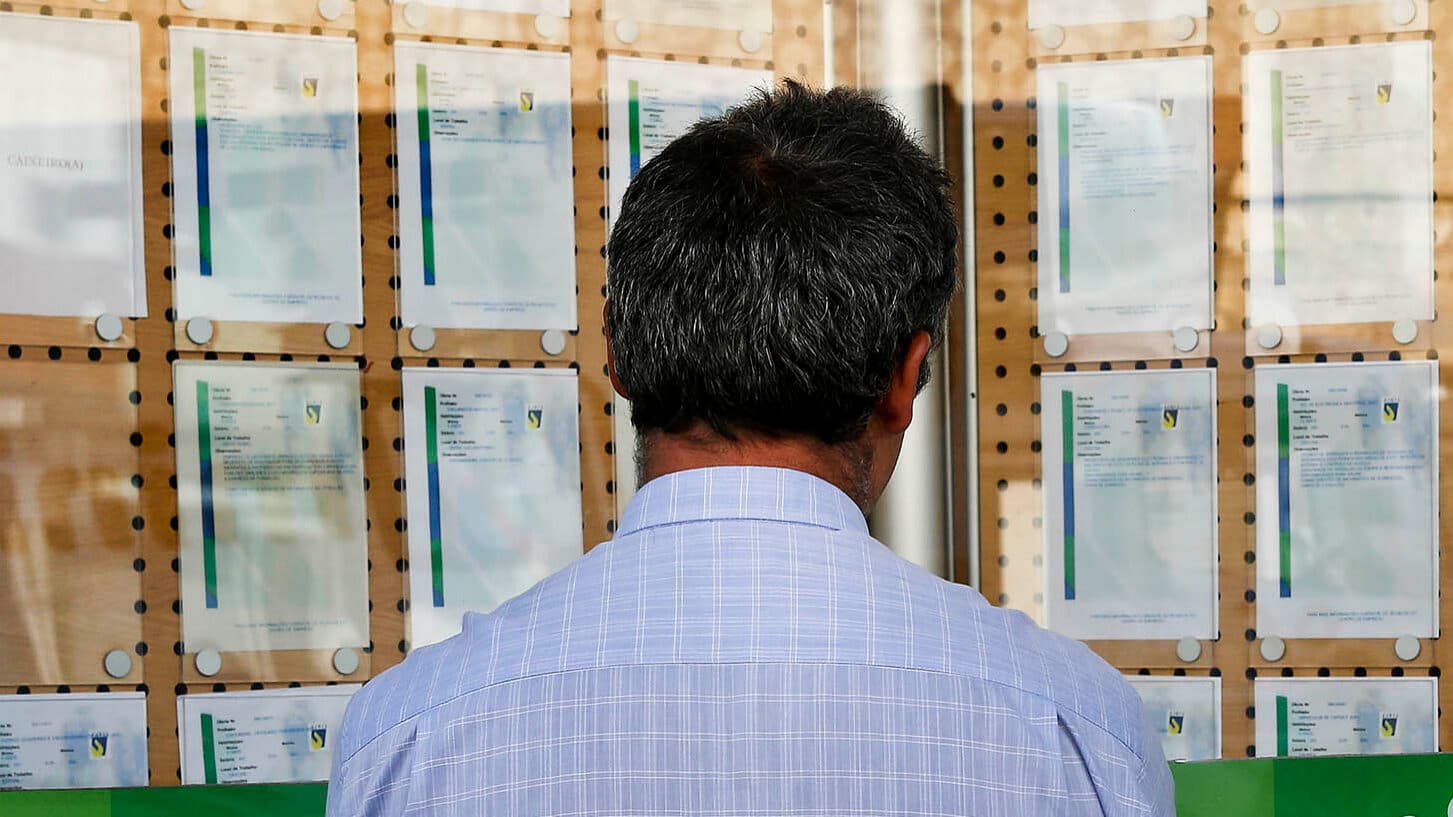
Maria de Fátima Carioca argues that Portugal needs a substantial overhaul of its labour legislation, saying flexibilisation of labour relations is unavoidable but must not undermine social protections. She warns the proposed new law is not a magic wand for boosting wages — structural reform is required alongside measures to safeguard workers. Her remarks come as the Government prepares a wide-ranging review of labour rules and the social safety net.

Justice is a central theme in the campaign of the five leading presidential candidates ahead of the 18 January election. Proposals range from Luís Marques Mendes’s call for structural reform, faster proceedings and cross‑institutional pacts to modernise courts, to competing ideas on statutes of limitations and the scope of presidential intervention in judicial matters. The debate frames trade‑offs between efficiency and safeguards, and highlights the need for parliamentary and judicial buy‑in to implement meaningful legal and procedural change.

A wave of policy and market changes due to take effect in 2026 will raise the cost of housing for Portuguese households and alter incentives across the sector. Measures affecting rents, mortgage lending rules and tax treatment of construction and property are set to impact owners, tenants and prospective buyers, with knock-on effects for affordability, market dynamics and the state budget. The package will reframe public incentives and regulatory risk for investors and households alike, requiring households and professionals to reassess financing, renting and development decisions.

Thirteen years after the US fund Lone Star used a strategy to monetise a state-backed bank stake in Portugal (Novo Banco) — reportedly pocketing about €5bn while exiting without major penalties — South Korea intervened to stop the same playbook from succeeding at a Korean bank backed by public support. The episode highlights divergent regulatory outcomes across jurisdictions: stronger Korean safeguards and political scrutiny protected the public interest and state budget, while Portuguese arrangements enabled a lucrative, low-accountability exit for a private investor. The contrast underscores how supervision, takeover rules and fiscal exposure shape investor returns and public risk in cross-border bank restructurings.

From 2026, new cars will be fitted with additional safety equipment mandated by regulators to reduce road accidents. The measures should lower collisions and casualties and could bring long‑term savings in insurance and healthcare, but they will increase manufacturers’ costs and are likely to push up new‑car prices. Policymakers will need to balance public‑safety benefits against affordability, using tools such as subsidies, tax incentives, phased implementation or targeted support to lessen the impact on lower‑income buyers.

Prime Minister Luís Montenegro uses his customary 1 January Jornal de Notícias article to renew a call for labour reform, urging a ‘winning mentality’ and changes to employment law and regulation. Framed as necessary for competitiveness and job creation, the piece signals his policy priorities and aims to steer public and political debate toward deregulation and legal adjustments. It functions both as a policy pitch and as political positioning ahead of upcoming labour‑market discussions.