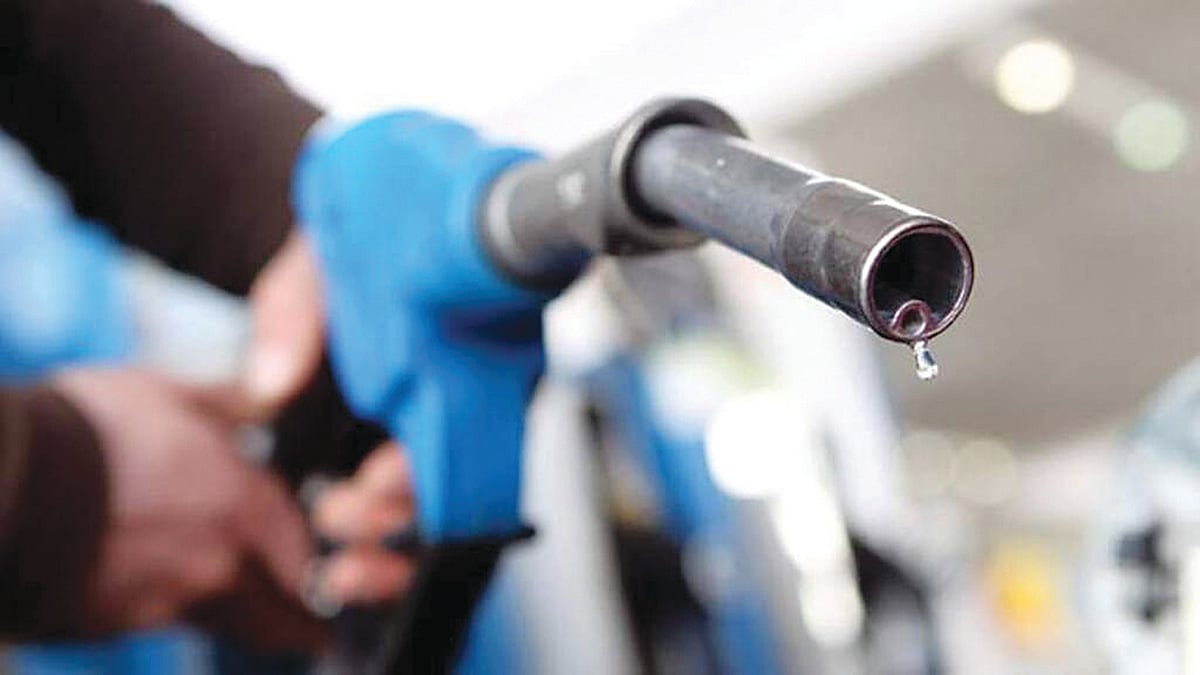
Prime Minister Luís Montenegro has promised to use regulatory power to prevent fuel price speculation as costs at some stations again exceed two euros per liter. Energy Minister Maria da Graça Carvalho stated that while the market is tense, Portugal has not yet reached an 'energy emergency' that would trigger more drastic measures. Drivers should note that the government plans to release 10% of strategic oil reserves to help stabilize the market, though taxi federations are already requesting extraordinary support.
Government monitors fuel prices as barrier of two euros returns
Thursday, 12 March 2026AI summary
Context & Explainers

- Prime Minister, Portugal: 2024 - Present
- Party: Social Democratic Party (PSD)
Luís Filipe Montenegro Cardoso de Morais Esteves (born February 16, 1973, in Porto) is a Portuguese lawyer and center‑right politician who has served as Prime Minister of Portugal since April 2, 2024. A long‑time member of the Social Democratic Party (PSD), he is the leading figure of the post‑Troika generation of Portuguese conservatives. Montenegro was elected to the Assembly of the Republic in 2002 for the Aveiro district and remained an MP for 16 years, becoming PSD parliamentary leader from 2011 to 2017 during the bailout and austerity period under Prime Minister Pedro Passos Coelho. He was a prominent defender of strict austerity measures, arguing in 2014 that “the life of the people is no better, but the life of the country is a lot better,” a phrase that has followed his public image since. After an unsuccessful leadership bid against Rui Rio in 2020, Montenegro won the PSD leadership in 2022. He then forged the centre‑right Democratic Alliance (PSD–CDS‑PP and allies), which won a plurality of seats in the 2024 legislative election. Refusing to partner with the far‑right Chega, which he has called “often xenophobic, racist, populist and excessively demagogic,” he formed a minority government as head of the XXIV Constitutional Government on April 2, 2024. His first government fell in March 2025 after a no‑confidence vote linked to a conflict‑of‑interest affair, but fresh elections saw the Democratic Alliance increase its seat share, allowing Montenegro to return as prime minister leading the XXV Constitutional Government. His importance to Portugal lies in attempting to re‑center the traditional centre‑right after the crisis years, defending liberal‑conservative economics and EU alignment while drawing a sharp line against formal cooperation with the radical right, thus shaping how Portuguese democracy manages its new multi‑party era.
- Minister of Environment and Energy (2024–present)
- Party: Social Democratic Party (PSD), Partido Social Democrata
- Background: Mechanical engineer, academic, former MEP
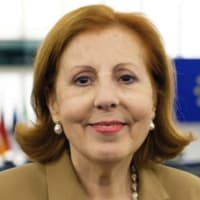
Maria da Graça Carvalho (born 1955) is a Portuguese engineer and politician serving as Minister of Environment and Energy in the AD government. She holds a PhD in mechanical engineering and had a distinguished academic career at Instituto Superior Técnico, specializing in energy systems and building physics.
She served as a Member of the European Parliament (2009–2024), where she focused on research policy, innovation funding (Horizon 2020/Europe), and energy policy. Before entering politics, she was a scientific advisor to European Commission President José Manuel Barroso.
As Environment Minister, she oversees Portugal's energy transition, renewable energy expansion, water resources management, climate adaptation, and environmental regulation — portfolios that are central to issues like wildfire prevention, coastal erosion, and meeting EU climate targets.
4 sources
- These are the most expensive and cheapest petrol stations in the countryCNN Portugal ·
- Energy Minister: “An emergency is when prices rise by 70%, we are not there yet”Dinheiro Vivo ·
- Taxis request support in the face of rising fuel pricesObservador ·
- Excesses, injustices, imbalances and other doubtsDiário de Notícias ·