Healthcare, SNS, insurance, and medical services.
CNN Portugal examines the benefits and risks of following psychologists and therapists on social media, noting credibility, professional boundaries and ethical limits to online advice. Experts recommend checking credentials, avoiding self‑diagnosis from posts and seeking in‑person or emergency help when necessary. Those using social channels for mental‑health information should treat online content as supplementary and contact qualified professionals for personal care.

Correio da Manhã reports a 53% increase in people receiving treatment for gambling addiction, signalling growing social and healthcare demand for support services. The rise may put additional pressure on treatment providers and social services; those affected or concerned about someone at risk should seek specialised help through local health channels. Residents relying on public health services should monitor availability of addiction support in their area.

Hospital de São José in Lisbon mistakenly handed a family's coffin the wrong body; the error was discovered moments before a planned wake and the hospital has opened an internal inquiry. Reports identify the deceased and note an identification bracelet mismatch; the case has drawn extra attention because the family is related to public figure Manuel Luís Goucha. Those arranging funerals or dealing with hospital paperwork should expect the inquiry and any procedural follow‑up from the hospital.

Hospital de São José is a major public hospital in central Lisbon, part of the Centro Hospitalar Universitário de Lisboa Central (CHULC), that provides emergency, inpatient and specialist care to the capital region. Because it is one of Lisbon’s principal hospitals, incidents such as the reported mistaken release of the wrong body draw national scrutiny and can raise concerns about procedures for patient and post‑mortem identification; patients and families using Lisbon hospitals should be aware of their rights and complaint channels.

National surveillance shows fewer influenza cases and a drop in intensive‑care admissions, according to the public health institute Dr Ricardo Jorge (Instituto Nacional de Saúde Doutor Ricardo Jorge). However, authorities warn that overall 'excess mortality' remains above typical seasonal levels, indicating the picture is improving but still worrying in aggregate. Those relying on public healthcare should remain vigilant for local updates and follow NHS guidance if they become ill.
The National Institute of Health Ricardo Jorge (Instituto Nacional de Saúde Ricardo Jorge or INSA) is Portugal's public health institute responsible for epidemiological surveillance, reference laboratories, research and technical guidance for the health system. INSA plays a central role in testing, tracking infectious diseases and issuing scientific advice used by the government and the Serviço Nacional de Saúde, so its findings often shape public-health measures and travel or testing guidance.
Excess mortality is the number of deaths above what would be expected based on historical averages (commonly a multi‑year baseline), and it captures deaths directly and indirectly caused by events like epidemics, heatwaves or healthcare disruptions. Portugal’s public health institute INSA (Instituto Nacional de Saúde Doutor Ricardo Jorge) monitors excess mortality to see the broader impact of seasonal illnesses and other stresses on the health system, so a drop in flu cases does not automatically mean overall mortality has returned to normal. Those following public‑health trends should note excess‑mortality figures because they show the pandemic and other factors’ continuing effect on population health.

Reporting shows the two maternity units with the highest birth volumes in Portugal are private hospitals, a shift linked to a national rise in caesarean sections. The data indicate Portugal's overall caesarean rate has reached record highs, while within the National Health Service the Alfredo da Costa Maternity Hospital remains the busiest public maternity. Expectant parents should compare care models and discuss delivery plans with their providers.
Update: Público confirms that higher birth volumes in the private sector are associated with the rise in caesarean deliveries and echoes national headlines that the caesarean rate is at a record high; the article does not report immediate changes to policy or hospital practice.
The Alfredo da Costa Maternity Hospital (Maternidade Alfredo da Costa) is Lisbon’s main public maternity centre and the busiest maternity within Portugal’s SNS (Serviço Nacional de Saúde). For residents and expectant parents it is a key referral hospital for high‑risk pregnancies and neonatal care and often handles more births and complex cases than other public units.
A caesarean section (C‑section) is a surgical delivery in which a baby is born through incisions in the mother’s abdomen and uterus rather than by vaginal birth. It has higher medical risks and a longer recovery than most vaginal births; the World Health Organization advises an approximate 10–15% population rate, while many countries and private‑sector providers record substantially higher rates, which affects costs and care choices for patients.

A press roundup reporting an increase in foreign doctors in Portugal — though not being brought into the SNS (Portuguese National Health Service) — and coverage that Spain is acting as a stumbling block to Mário Centeno’s prospects at the European Central Bank (ECB).
When formal care breaks down, patients improvise — a situation that cannot become the normal operating mode of a health system. The piece examines the risks of self-medication and improvised care, and highlights research suggesting diagnostic and outcome disparities — for example, people with colour-vision deficiency and bladder cancer were 52% more likely to die within 20 years of diagnosis — to argue for better access, diagnostics and system-level solutions.


Portugal Resident •
NASA conducted its first-ever medical evacuation from the International Space Station on Wednesday, returning four crew members — an astronaut who required medical care and three colleagues — to Earth. The agency has not identified the ill astronaut or disclosed the medical issue. The operation highlights the rarity and seriousness of on‑orbit medical events and will likely prompt scrutiny of crew medical protocols, emergency preparedness and how and when astronauts are evacuated versus treated aboard the station.
Portuguese reporting indicates a sharp rise in monthly fees at some care homes — increases of roughly €500 — driven largely by a persistent labour shortage and higher operating costs. The hikes are prompting families to withdraw elderly relatives, intensifying pressure on informal care networks and raising equity and access concerns for vulnerable patients. Economically, the trend highlights how rising labour costs and constrained staffing can be passed directly to users in minimally regulated markets, with implications for social policy, funding models and workforce recruitment/retention. Separately, French coverage notes a demobilisation of farmers’ protests in Paris, underscoring a wider context of labour and sectoral tensions across services and primary production.

Portuguese reporting indicates a sharp rise in monthly fees at some care homes — increases of roughly €500 — driven largely by a persistent labour shortage and higher operating costs. The hikes are prompting families to withdraw elderly relatives, intensifying pressure on informal care networks and raising equity and access concerns for vulnerable patients. Economically, the trend highlights how rising labour costs and constrained staffing can be passed directly to users in minimally regulated markets, with implications for social policy, funding models and workforce recruitment/retention. Separately, French coverage notes a demobilisation of farmers’ protests in Paris, underscoring a wider context of labour and sectoral tensions across services and primary production.

A new study from the Karolinska Institute strengthens evidence that Epstein–Barr virus (EBV), the common cause of glandular fever, can trigger an immune response that damages the brain and may contribute to the development of multiple sclerosis (MS). The research supports the hypothesis that EBV infection is a key environmental driver of MS, a chronic inflammatory neurological disease affecting nearly three million people worldwide, in which the immune system attacks the central nervous system.
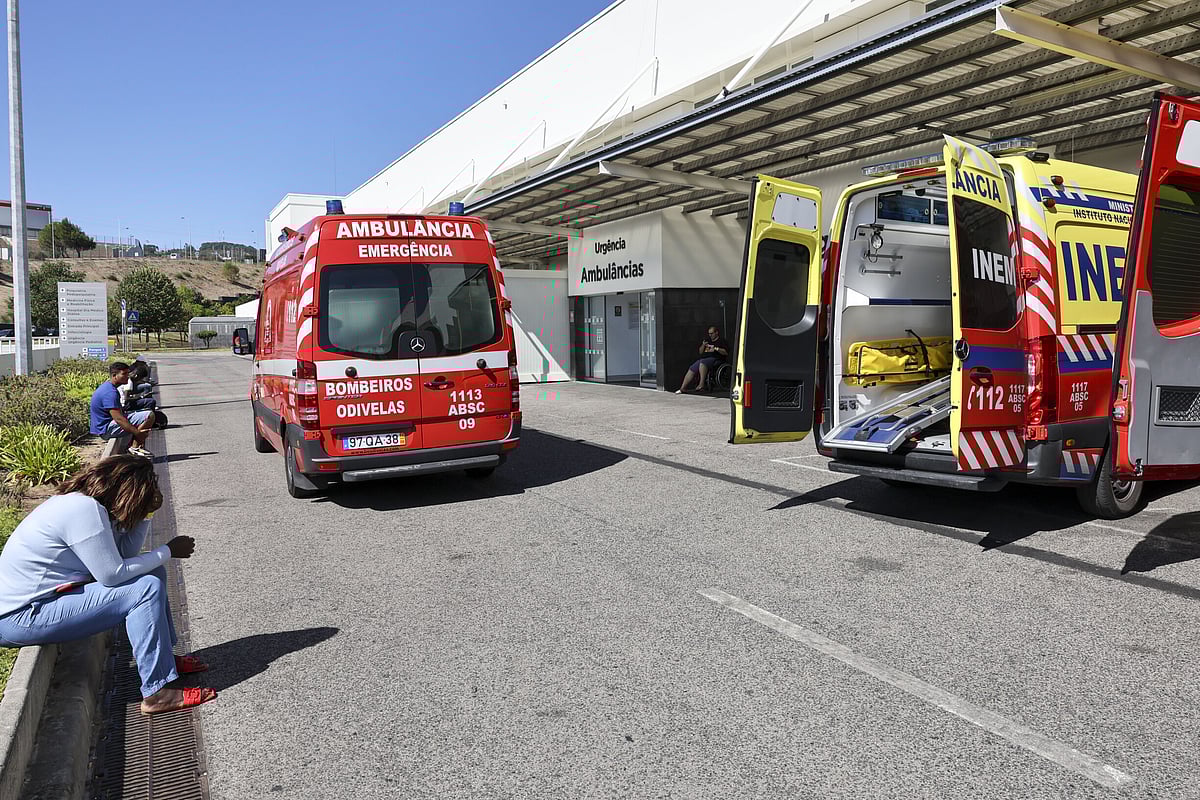
Despite repeated technical assessments, confirmed financial capacity and clear structural proposals, the SNS and INEM keep failing to deliver timely emergency responses. This analysis points to implementation gaps — weak governance, fragmented coordination between national and regional bodies, staffing shortages and poor resource allocation — rather than lack of solutions; the result is delayed care that harms patients (including expats) and undermines public wellbeing. Addressing the problem requires transparent accountability, an independent audit of operational bottlenecks, data-driven redistribution of resources and political commitment to implement already-defined reforms.

Rising costs of medicines are a primary barrier to healthcare for the most disadvantaged, forcing some patients to cancel appointments and tests for lack of funds. This creates widening inequalities in health outcomes and places additional strain on services; addressing the problem requires policy responses such as targeted subsidies, improved coverage, price regulation and better access to affordable medicines.

In 2025, 14.26% of people reported not seeking healthcare when needed, reflecting significant access barriers in Portugal. More than half of the poorest households cannot afford all prescribed medication, while over 50% of initial consultations in the National Health Service (SNS) occur outside the appropriate timeframe. These findings point to intersecting problems of affordability and timeliness that disproportionately affect low-income groups and signal the need for targeted policy responses to improve medication coverage, reduce waiting times and strengthen primary-care access.