Latest news and stories about emergency services in Portugal for expats and residents.
Observador reports two people were shot in the Casal da Boba area of Amadora; details on motive and injuries are limited in initial coverage. Police activity and investigations are expected as authorities piece together the incident; residents in the area should expect an increased security presence and follow local updates. Those living nearby should avoid the scene and monitor local media for official information.

Porto's Clérigos Tower (Torre dos Clérigos) was partially evacuated on Friday after a short circuit in a battery caused a small fire on an upper floor; emergency services say the alert was raised around 12:41 and the situation was resolved with no reported injuries. City sources told Lusa the incident was contained quickly and the monument has since reopened or been secured. Visitors and residents near the monument should follow local directions if emergency crews are present.
Clérigos Tower (Torre dos Clérigos) is an 18th‑century Baroque bell tower in Porto, designed by Nicolau Nasoni and completed in the 1760s; it stands at about 75 metres and is one of the city’s best‑known landmarks. Because it is a major tourist attraction, any safety incident—like the reported battery fire and partial evacuation—can temporarily close the site and affect visitors and nearby businesses, so tourists and Porto residents should check for local advisories before planning a visit.

Fifteen mainland Portugal districts are under a yellow warning for snow and sea swell until 18:00. Authorities and emergency services are monitoring conditions and advising the public to take precautions against disruption to transport and coastal hazards.

Multiple outlets warn of persistent rain and rough seas with waves up to 5.5 metres and orange-level alerts in several coastal districts; authorities advise following local safety guidance and expect disruption to coastal travel and maritime activities. The alerts emphasise flood and coastal-surge risk in exposed areas and recommend avoiding unnecessary travel near the shore. Residents should be aware of local civil-protection instructions and avoid coastal promenades and small-boat activity while warnings are in force.

IPMA is the Portuguese Institute of the Sea and Atmosphere (Instituto Português do Mar e da Atmosfera), the national agency for weather, marine forecasts and climate monitoring. Residents should watch its forecasts and warnings during storms, heatwaves or cold snaps because IPMA issues official advisories used by services, transport operators and local authorities.
Emergency associations argue that a single command structure in the Civil Protection law would centralise decision‑making during major incidents, reducing confusion between municipal, regional and national responders and improving the speed and efficiency of operations. They say this clearer hierarchy would help volunteers and professional services coordinate on the front line, which is why they want that change included before the health framework law is finalised.

Reporting examines cases where the National Institute for Medical Emergency (Instituto Nacional de Emergência Médica) — INEM — failed to arrive in time, adding to concerns about pre-hospital response amid broader pressure on emergency services. The piece links ambulance and response delays to current strains across the system rather than isolated incidents. Those relying on urgent medical care should note potential delays and ensure they understand local emergency procedures and alternative routes to care.

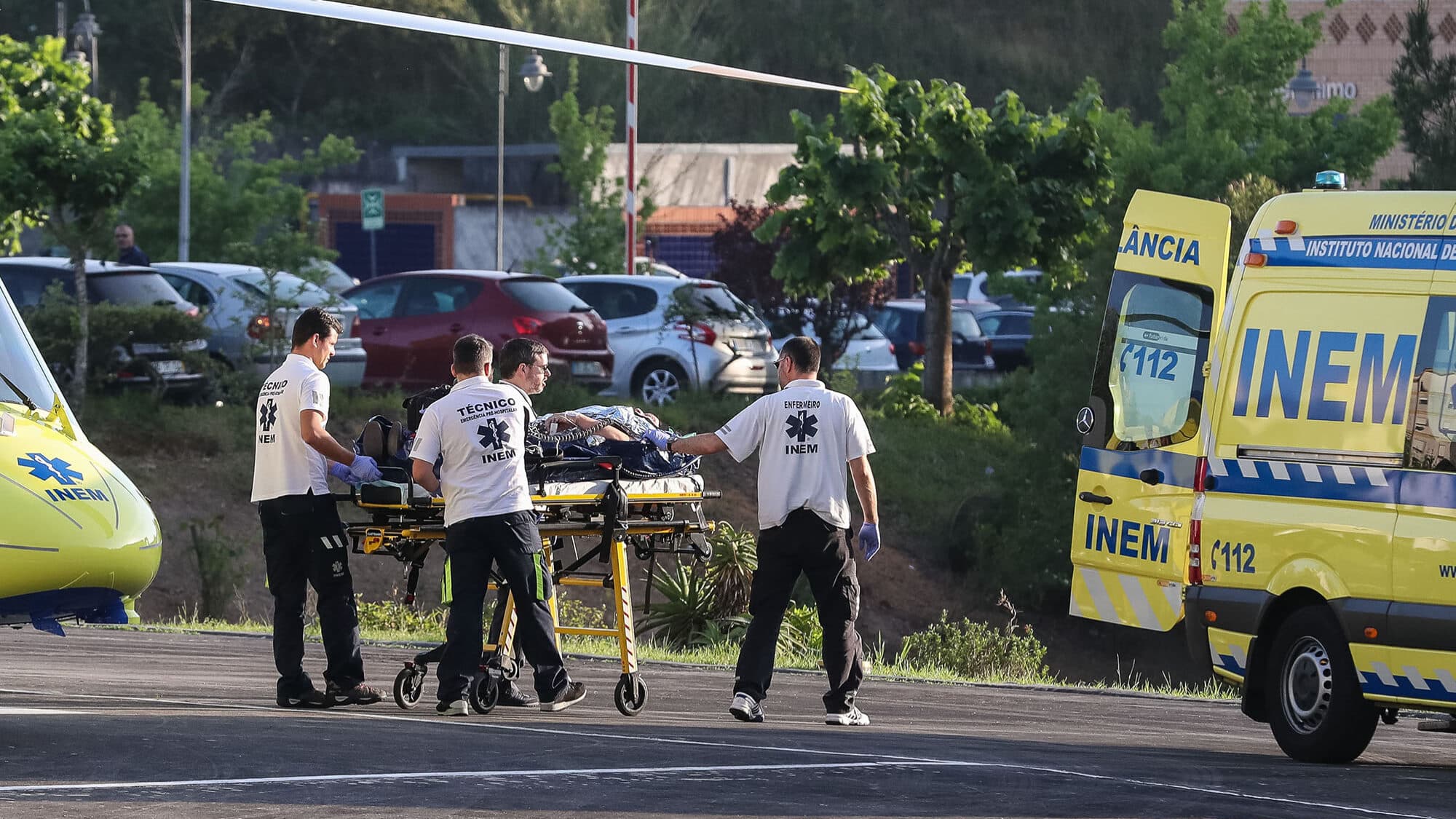
The National Institute of Medical Emergency (Instituto Nacional de Emergência Médica), known as INEM, coordinates Portugal’s pre-hospital emergency care, ambulance dispatch and medical response to 112 calls. It matters to expats because INEM is responsible for ambulance response times and on-scene care — incidents like the reported three-hour wait in Seixal can trigger investigations, affect public confidence and influence how quickly you can expect help in an emergency.

Three representative firefighters' associations have requested an urgent audience with the Prime Minister and parliamentary groups to present proposals for the sector, rejecting responsibility for current pre-hospital emergency problems and urging structural changes. Associations call for a single command structure and say the Framework Law on Civil Protection (Lei-Quadro da Proteção Civil) should be approved before the Framework Law on Health. Those relying on emergency response should note the sector is pressing for legal and organisational changes that could affect response arrangements and local coordination.
The Framework Law on Civil Protection (Portuguese: Lei‑Quadro da Proteção Civil) is a proposed law that sets the national structure, roles and command arrangements for disaster prevention, response and recovery across state, municipal and volunteer bodies. Associations want it approved quickly because it defines coordination and command during crises, so passing it would clarify responsibilities for frontline responders and potentially speed emergency action for residents.

Reportage says the new Civil Protection law has been finalised and is expected to enter into force this year, marking a legislative update to how disasters and civil emergencies are managed. Outlets note the law's timing is politically sensitive given calls from firefighters for prioritisation and structural changes in emergency command. Residents in areas prone to wildfires or floods should watch for new local procedures and official guidance once the law is published.
Emergency associations argue that a single command structure in the Civil Protection law would centralise decision‑making during major incidents, reducing confusion between municipal, regional and national responders and improving the speed and efficiency of operations. They say this clearer hierarchy would help volunteers and professional services coordinate on the front line, which is why they want that change included before the health framework law is finalised.
Civil Protection director José Manuel Moura has ruled out any illegality in the ad-hoc reinforcement of eight ambulances organised by the Portuguese Firefighters' League over the weekend. After meetings with INEM and the Firefighters' League, Moura attributed the dispute to a communication failure by the League and said the situation created a misunderstanding that must not recur. He insisted that ANEPC (Civil Protection) should be formally involved in future emergency operations to ensure coordination and public safety.

A fire at the Torre Sénior care home in Santo Tirso forced the evacuation of about 40 residents overnight; firefighters extinguished the blaze and authorities reported no injuries. Residents were triaged by teams from the Portuguese National Institute of Medical Emergency (Instituto Nacional de Emergência Médica or INEM) and temporarily housed in a municipal pavilion while the cause is investigated. Those with relatives in care homes should contact the facility for status updates and next steps; local councils handle temporary placements for evacuated residents.

The National Institute of Medical Emergency (Instituto Nacional de Emergência Médica), known as INEM, coordinates Portugal’s pre-hospital emergency care, ambulance dispatch and medical response to 112 calls. It matters to expats because INEM is responsible for ambulance response times and on-scene care — incidents like the reported three-hour wait in Seixal can trigger investigations, affect public confidence and influence how quickly you can expect help in an emergency.

Civil Protection says the premises are being evacuated.

Emergency departments and hospitals are experiencing significant difficulty admitting patients presenting with respiratory problems, creating bottlenecks in patient flow and raising concerns about care delays and safety. The situation appears driven by high demand for acute respiratory care combined with constrained inpatient capacity, staffing pressures and infection-control requirements that limit bed availability. This strain on emergency and hospital services risks longer waits, compromised care coordination and wider impacts on public health and system resilience unless capacity or operational responses are implemented.

The PSP union has written to the Inspectorate-General of Internal Administration (Inspeção-Geral da Administração Interna or IGAI), copying the Ministry of Internal Administration and the PSP National Directorate, warning of staff shortages and an ageing, exhausted, demotivated police force and requesting an urgent meeting. The union framed the problem as deteriorating human-resources management that risks operational capacity. Expats should be aware staffing pressures could affect routine police responsiveness in some areas and may prompt recruitment or deployment changes in coming weeks.

The PSP (Polícia de Segurança Pública) is Portugal's national civilian police force, founded in 1867. Responsible for defending Republican democracy and safeguarding internal security and citizens' rights, the PSP polices major cities—Lisbon, Porto, Faro—and large urban areas, covering only 4% of Portugal's territory but roughly half the population. Led by a National Director under the Ministry of Internal Affairs, its approximately 21,500 officers handle preventive policing, crime investigation, public order, airport security, diplomatic protection, private security regulation, firearms licensing, and border control (since 2023).
PSP vs. GNR: The PSP is civilian with police-focused training and urban jurisdiction, while the GNR (Guarda Nacional Republicana) is military (gendarmerie) with military training, covering 96% of Portugal's rural and suburban territory. Both share core public safety missions but differ fundamentally in nature, training, and geographic responsibility.
IGAI stands for the Inspectorate‑General of Internal Administration (Inspeção‑Geral da Administração Interna), an independent oversight body that inspects police forces, civil protection and local administration for legality and performance. For expats dealing with police staffing or conduct issues, IGAI is the body unions and officials may ask to review problems and recommend changes.

The Portuguese Institute for the Sea and Atmosphere (Instituto Português do Mar e da Atmosfera or IPMA) has placed eleven mainland districts under a yellow weather warning for occasionally heavy rain and strong winds until the early hours of Tuesday, with wind gusts reported up to 90 km/h and rough seas warned for Madeira and the Azores. Districts named include Viana do Castelo, Braga, Porto, Lisbon, Setúbal, Leiria, Aveiro and others; warnings run until about 09:00 in some reports. Expats should expect travel and local disruption, check public-transport updates and secure outdoor items; coastal and island travel may be more affected.

IPMA is the Portuguese Institute of the Sea and Atmosphere (Instituto Português do Mar e da Atmosfera), the national agency for weather, marine forecasts and climate monitoring. Residents should watch its forecasts and warnings during storms, heatwaves or cold snaps because IPMA issues official advisories used by services, transport operators and local authorities.

A yellow warning (aviso amarelo) from IPMA signals potentially dangerous weather conditions (the lowest of three levels: yellow, orange, red) that may cause local disruption. For expats it means be alert—expect slower travel and take common‑sense precautions—but it is not usually an immediate emergency level.

Successive administrative integrations have eroded the distinct identity and operational autonomy of hospitals within Portugal’s National Health Service (SNS). The creation of sprawling Local Health Units (ULSs) — some with budgets exceeding €1 billion — has not been matched by adequate management capacity, leaving facilities ill-equipped to coordinate care, manage resources or respond to demand spikes. The dysfunction manifests in visible emergency problems — overcrowded trolleys, delayed ambulances and stressed staff — and points to a need for targeted governance, management investment and policy reform to restore operational effectiveness and protect patient care.

The National Authority for Emergency and Civil Protection (Autoridade Nacional de Emergência e Proteção Civil or ANEPC) has opened an inquiry into an ambulance 'task force' set up by the Portuguese Firefighters’ League (Liga dos Bombeiros Portugueses or LBP), calling the operation illegal and 'marginally created'. ANEPC told Lusa it will investigate whether the reinforcement complied with rules for pre-hospital rescue operations. Expats relying on emergency services should note the inquiry could affect availability of volunteer-run ambulance support in some areas while regulators review the operation.
Update: Multiple outlets report the LBP rejects ANEPC's claim, saying the temporary task force was set up to bolster pre-hospital cover and lamenting a lack of dialogue; the League named four ambulances from Ajuda, Cabo Ruivo, Camarate and Cascais brigades as part of the reinforcement. Coverage shows a clear disagreement between the regulator (ANEPC) and the LBP about legality and procedure — the probe may lead to operational changes while authorities review compliance with pre-hospital rescue rules. Expats should be aware volunteer-led ambulance support may be disrupted in some areas during the inquiry.
The Portuguese Firefighters' League (Liga dos Bombeiros Portugueses) is a national, non-governmental association that represents and coordinates many of Portugal’s fire brigades—particularly volunteer corps—and advocates for training, equipment and fire-safety policy. It frequently engages with government and the media on emergency-response standards and resource needs, so expats should know it can influence local fire services, public safety campaigns and how mutual aid is organised in their municipality.
ANEPC is the National Authority for Emergency and Civil Protection (Autoridade Nacional de Emergência e Proteção Civil). It is the state body that coordinates civil-protection planning, emergency response and oversight of fire and rescue services across Portugal, and it has authority to investigate operations it deems irregular — which is why it can open an inquiry into the LBP’s ambulance task force. For expats, ANEPC issues national alerts, guidance on evacuations and rules that affect volunteer and professional emergency responders in your area.

Regional reports say all medical emergency ambulances in the Algarve were halted again due to staffing shortages, leaving pre-hospital response reduced across the region. Local outlets highlight the stoppage stems from a lack of human resources rather than equipment, raising concerns for timely ambulance response, particularly during a winter health surge. Expats and visitors in the Algarve should be aware of possible delays and consider local health centre (centro de saúde) contacts for non-life-threatening problems and private transport plans for urgent care.
Update: National coverage confirms the stoppage recurred this weekend, with regional services attributing the pause to workforce shortages rather than technical faults. Sources advise residents and visitors to use their local health centre contacts for triage and to plan alternatives for urgent transport; the situation underlines a regional variation in emergency response capacity that may affect travel and weekend plans in the Algarve.
CNN Portugal spent time inside CODU, INEM’s medical call centre in Lisbon and found a centre under sustained pressure where high call volumes demand rapid, accurate triage and careful deployment of ambulances and other rescue resources. The report examines how operators prioritise calls, the protocols guiding decision-making, and the operational strain of matching limited resources to urgent needs.

Rising influenza activity is increasing admissions to intensive care and placing growing pressure on emergency departments. Health authorities warn the epidemic has not yet peaked, and the country is experiencing higher-than-expected mortality for the season, raising concerns about healthcare capacity and the potential need for surge planning and resource prioritisation.

The Portuguese Firefighters' League (LBP) has established a weekend task force of four additional ambulances to bolster pre-hospital emergency response and ease pressure on hospitals. The emergency vehicles — drawn from the Ajuda, Cabo Ruivo, Camarate and Cascais brigades — will be based at the LBP headquarters, while a commander will be on permanent duty at CAASO (Centre for Operational Monitoring and Support) to coordinate operations. The deployment is a targeted, short-term capacity boost intended to improve response times during busy periods and provide centralised operational oversight.

Beja Hospital’s obstetrics and gynaecology emergency service will be closed overnight due to a shortage of doctors, operating from 20:00 on Saturday until 08:00 on Sunday and again from 20:00 on Sunday until 08:00 on Monday. The closures are attributed to an inability to complete the rota, raising concerns about patient access to urgent maternity and gynaecological care and potential pressure on neighbouring services. An accompanying opinion notes systemic failings in emergency logistics — exemplified by ambulances held up by missing stretchers — as symptomatic of wider incompetence in healthcare operations.
Liberal Initiative MP Joana Cordeiro criticises both the PSD and PS administrations for offering identical, short-term responses — announcing purchases of ambulances and hospital beds — after three deaths were linked to delays in emergency response. She argues the measures are reactive and cosmetic rather than addressing systemic failures in emergency services, resource allocation and management, and calls for structural reforms, improved oversight and accountability to restore patient safety and public confidence.

PSD MP Miguel Guimarães welcomed the announcement to purchase 245 ambulances, saying it will allow INEM to increase its response capacity across multiple locations, notably Greater Lisbon and Setúbal. Analytically, the investment should improve coverage and potentially reduce response times in high-demand areas, but its effectiveness will depend on deployment strategy, crew availability and integration with existing emergency services. Close monitoring of allocation and operational metrics will be required to ensure the intended gains in emergency healthcare delivery are realised.

The prime minister announced what was described as “the largest investment in ambulances in over a decade” — 275 new vehicles — less than 36 hours after three citizens were reported to have died while waiting for care. Critics have called the timing “strange” and labelled the move demagoguery, arguing it risks masking systemic negligence in emergency services rather than addressing deeper policy and resourcing failures in healthcare and public safety. The episode has intensified calls for transparent planning, independent oversight and comprehensive reforms to emergency medical services rather than one-off equipment purchases.

Carlos Enes of CNN Portugal examines recurring, serious failings in Portugal’s emergency response system, arguing that political and union attacks on INEM distract from patient safety. He urges giving INEM operational authority, requiring ULS hospitals to free trolleys and beds, and restoring clinical judgement as the primary guide for urgent care, while calling for systemic changes to protect public health.

President Marcelo Rebelo de Sousa has promulgated the government’s health reform while formally requesting improvements to three related decree-laws. His interventions focus on the decree-law that centralises emergency services regionally and on the new regime for hiring locum doctors, where he identified unclear requirements and potential incompatibilities. The request for clarification signals legal and policy concerns that could prompt amendments, highlighting tensions between centralised emergency planning and the need for a flexible medical workforce.

The coordinator of INEM’s Workers’ Committee acknowledged failings in how minimum-service requirements were communicated during the late‑2024 strike, saying the institution’s president had conveyed that minimum services were not required during overtime hours. The admission raises operational and public‑safety concerns, highlights potential legal and labour‑relations implications, and underscores the need for clearer protocols, stronger internal communication and contingency planning to protect emergency healthcare delivery during industrial action.

Almost a year after the minister warned of unacceptable A&E waiting times, there has been no meaningful improvement. Persistent delays point to systemic strain on emergency services, heighten risks to patient safety and wellbeing, and indicate a need for urgent policy and resource interventions rather than repeated warnings.

El Nacional reports that Donald Trump pressed Venezuela’s interim government for total control of the country’s oil resources — a demand with clear geopolitical and economic consequences that raises questions about sovereignty, access to revenues and the role of external actors in a fragile political transition. Separately, Jornal Público’s analysis shows that between 2019 and 2024 some 75 per cent of drivers who died with alcohol in their system had blood-alcohol levels meeting the threshold for a criminal offence, spotlighting enforcement gaps, road-safety policy failures and the need for improved prevention and data collection. Taken together, the items illustrate linked governance challenges: contested control over strategic resources on one hand, and systemic public‑safety and criminal‑justice issues on the other.

Road fatalities and related casualties cost an estimated €1.5 billion in 2025, while overall road casualty levels have effectively returned to 2016 figures. The year saw more collisions and a rise in injuries, maintaining pressure on emergency services and the healthcare system and undermining public safety. Economically, the persistent casualty rate represents a significant indirect and direct cost that acts as a negative indicator for public finances and productivity. The pattern suggests a need for renewed, targeted prevention measures, enhanced enforcement and investment in safer infrastructure to reverse the trend and reduce both human and fiscal costs.

A man has been remanded in custody after a 9-year-old boy died and a 14-year-old was injured when a shotgun allegedly discharged accidentally in the Bela Vista neighbourhood. Authorities say the weapon belonged to a family member; investigators remain on the scene and the case is being examined for possible criminal negligence and safety lapses, prompting questions about firearm storage and emergency response protocols.

Marques Mendes urged the President and the Government not to stall a bill establishing regional obstetric emergency departments, saying he hopes they decide before he assumes the Presidency on 9 March to avoid it becoming one of his first decisions in office.

The PSP (Public Security Police) have identified around 30 people after shots were fired with prohibited weapons in Lisbon. A targeted operation — involving Rapid Intervention Teams and Traffic Division units — ran from 22:00 Friday to 02:00 Saturday; no incidents were recorded and no arrests were made. Enquiries and investigations remain ongoing as police follow up on those linked to the discharges.

On Saturday the obstetrics and gynaecology emergency departments at the hospitals in Abrantes, Setúbal and Portimão, and the obstetrics emergency department in Vila Franca de Xira, will be closed. The Setúbal emergency department reopens on Sunday.

The three decree-laws centre on new rules for hiring locum doctors, regional emergency services, and the management system to tackle waiting lists.


Portugal Resident •