Latest news and stories about expat wellbeing in health in Portugal for expats and residents.
A forum on social prescribing will bring together health and cultural professionals, universities and community workers to discuss innovative models of care and the outcomes of a project incubated in Braga.

CNN Portugal examines the benefits and risks of following psychologists and therapists on social media, noting credibility, professional boundaries and ethical limits to online advice. Experts recommend checking credentials, avoiding self‑diagnosis from posts and seeking in‑person or emergency help when necessary. Those using social channels for mental‑health information should treat online content as supplementary and contact qualified professionals for personal care.

International Laughter Day is observed this Sunday.

The presenter revealed that her most recent test results are still “all incredible”.

A feature examining persistent myths about autism and the ongoing difficulties autistic people face when confronted with resistance and prejudice in society, services and workplaces.

An emigrant recounts the emotional struggle after relocating from the United States to Europe, saying they cried a lot and initially believed they would never be able to settle in.

A press roundup reporting an increase in foreign doctors in Portugal — though not being brought into the SNS (Portuguese National Health Service) — and coverage that Spain is acting as a stumbling block to Mário Centeno’s prospects at the European Central Bank (ECB).
From where she is, Candy knows she will only leave to go to heaven. But when the music comes into her room — in Joana and Rute's voices and instruments — a new joy makes her forget where she is and why.

Members of the Music in Hospitals project work in pairs and move around healthcare units with instruments made from everyday objects or hospital materials.

He is one of 564 foreign health professionals working at ULS São José. He chose Lisbon for its safety and quality of life. He says that here he feels he can grow and gain experience.

National surveillance shows fewer influenza cases and a drop in intensive‑care admissions, according to the public health institute Dr Ricardo Jorge (Instituto Nacional de Saúde Doutor Ricardo Jorge). However, authorities warn that overall 'excess mortality' remains above typical seasonal levels, indicating the picture is improving but still worrying in aggregate. Those relying on public healthcare should remain vigilant for local updates and follow NHS guidance if they become ill.
The National Institute of Health Ricardo Jorge (Instituto Nacional de Saúde Ricardo Jorge or INSA) is Portugal's public health institute responsible for epidemiological surveillance, reference laboratories, research and technical guidance for the health system. INSA plays a central role in testing, tracking infectious diseases and issuing scientific advice used by the government and the Serviço Nacional de Saúde, so its findings often shape public-health measures and travel or testing guidance.
Excess mortality is the number of deaths above what would be expected based on historical averages (commonly a multi‑year baseline), and it captures deaths directly and indirectly caused by events like epidemics, heatwaves or healthcare disruptions. Portugal’s public health institute INSA (Instituto Nacional de Saúde Doutor Ricardo Jorge) monitors excess mortality to see the broader impact of seasonal illnesses and other stresses on the health system, so a drop in flu cases does not automatically mean overall mortality has returned to normal. Those following public‑health trends should note excess‑mortality figures because they show the pandemic and other factors’ continuing effect on population health.

When formal care breaks down, patients improvise — a situation that cannot become the normal operating mode of a health system. The piece examines the risks of self-medication and improvised care, and highlights research suggesting diagnostic and outcome disparities — for example, people with colour-vision deficiency and bladder cancer were 52% more likely to die within 20 years of diagnosis — to argue for better access, diagnostics and system-level solutions.

A new study from the Karolinska Institute strengthens evidence that Epstein–Barr virus (EBV), the common cause of glandular fever, can trigger an immune response that damages the brain and may contribute to the development of multiple sclerosis (MS). The research supports the hypothesis that EBV infection is a key environmental driver of MS, a chronic inflammatory neurological disease affecting nearly three million people worldwide, in which the immune system attacks the central nervous system.
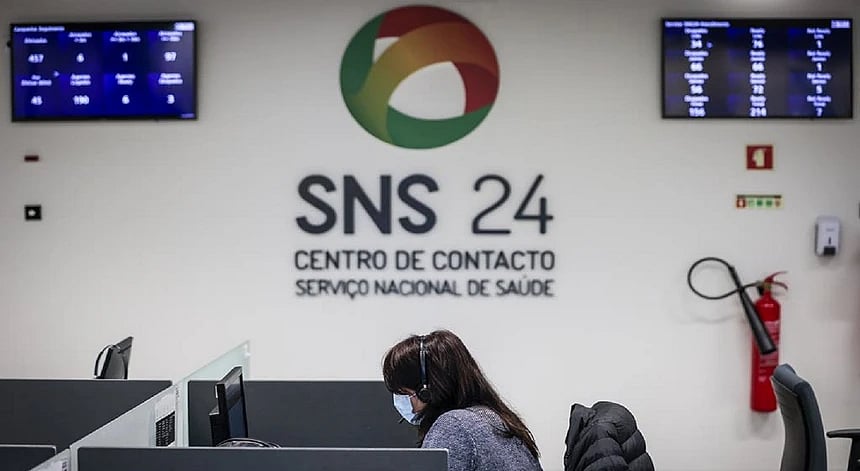
Despite repeated technical assessments, confirmed financial capacity and clear structural proposals, the SNS and INEM keep failing to deliver timely emergency responses. This analysis points to implementation gaps — weak governance, fragmented coordination between national and regional bodies, staffing shortages and poor resource allocation — rather than lack of solutions; the result is delayed care that harms patients (including expats) and undermines public wellbeing. Addressing the problem requires transparent accountability, an independent audit of operational bottlenecks, data-driven redistribution of resources and political commitment to implement already-defined reforms.

Admiral Gouveia e Melo has urged a change in health leadership, saying the Government should resign if it cannot resolve systemic problems in the healthcare system. He accuses the State of failing across the board, criticises missed deadlines for delivering results and calls for accountability and urgent action to protect patients and medical services. The remarks frame the crisis as a leadership and policy failure with direct implications for care delivery and public confidence.

A study from Nova SBE finds 51.85% of respondents said they had self-medicated at some point, with higher rates among young people, those with more education and people without a family doctor (médico de família). Researchers warn self-medication is commonly used for mental-health issues and can be risky for people with chronic conditions if not discussed with a clinician. Those relying on regular prescriptions should ensure continuity with a registered family doctor and bring medication lists to appointments.

A new report finds episodes of illness rising particularly among younger people in Portugal, contributing to an overall increase in the number of people falling ill while persistent barriers to accessing the SNS (Serviço Nacional de Saúde) remain high. The data suggest growing pressure on primary and urgent care, uneven access driven by geographic, capacity and administrative constraints, and possible underlying drivers such as changing infection patterns, mental‑health needs and disruptions to routine care. The report calls for targeted policy responses to expand capacity, improve outreach to younger cohorts and reduce practical barriers to care, and for more granular analysis to identify regional and demographic causes.

Parliament approved a Statute for Older People that consolidates rights—priority in queues, protection from violence and the right to age at home—but commentators say it largely compiles existing rules without providing enforcement tools, clear carer regulation or pay for carers. Observers call it an improvement but warn it may not change on-the-ground care without implementation measures. Expats caring for elderly relatives should not expect immediate new benefits and should follow guidance from local health and social services on available support.
The Statute for Older People is a legal framework that gathers rights for older adults—such as protection from violence, priority access to certain services and support to age at home—but critics say it largely compiles rights without strong enforcement tools. For expats with older relatives in Portugal, it sets helpful standards but you may still need to engage local social services, health providers or legal advice to ensure those rights are realised.

Rising influenza activity is increasing admissions to intensive care and placing growing pressure on emergency departments. Health authorities warn the epidemic has not yet peaked, and the country is experiencing higher-than-expected mortality for the season, raising concerns about healthcare capacity and the potential need for surge planning and resource prioritisation.

The government has signed a formal negotiation agreement with the National Federation of Doctors (FNAM) and said it will continue seeking consensus with health professionals. The move opens structured talks aimed at resolving labour and service delivery issues in the medical sector, signalling a willingness to engage on healthcare policy and doctors’ demands rather than imposing unilateral measures.

Beja Hospital’s obstetrics and gynaecology emergency service will be closed overnight due to a shortage of doctors, operating from 20:00 on Saturday until 08:00 on Sunday and again from 20:00 on Sunday until 08:00 on Monday. The closures are attributed to an inability to complete the rota, raising concerns about patient access to urgent maternity and gynaecological care and potential pressure on neighbouring services. An accompanying opinion notes systemic failings in emergency logistics — exemplified by ambulances held up by missing stretchers — as symptomatic of wider incompetence in healthcare operations.
Almost a year after the minister warned of unacceptable A&E waiting times, there has been no meaningful improvement. Persistent delays point to systemic strain on emergency services, heighten risks to patient safety and wellbeing, and indicate a need for urgent policy and resource interventions rather than repeated warnings.

Researchers have shown that a dried drop of fingertip blood—collected via a simple finger-prick—can reveal biomarkers associated with Alzheimer’s disease, offering a less invasive, more accessible route to early diagnosis. Improving and validating blood-based tests remains a key research challenge to ensure sensitivity, specificity and clinical applicability compared with current invasive or costly methods.

In this analytical opinion piece Miguel Esteves Cardoso contends that our bodies often cope and recover on their own. He examines tendencies to overreact and overmedicalise everyday symptoms, arguing for measured self-care, patience and perspective—an approach especially pertinent to expatriates adjusting to different health norms.

CTT said the suspension of the reimbursement service for the Mobility Allowance for residents in the Azores and Madeira is due to 'reasons beyond the company's control'.
The Portuguese president says he will soon sign into law the legislative measures for the National Health Service (SNS) that were returned to the Government for reconsideration.

Live update (3h): President Marcelo has returned several decree-laws (diplomas) on the health sector to the Government, asking for improved formulations rather than vetoing the measures outright. The Government says it will identify opportunities to refine the texts and will not abandon the reform agenda; the move delays implementation and creates scope for legal, political and technical adjustments to the planned healthcare reforms.