Latest news and stories about government policy in health in Portugal for expats and residents.
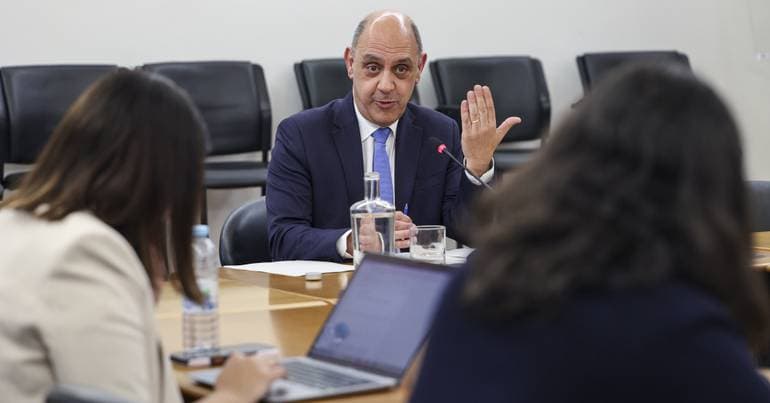
The meeting is expected to include André Gomes, the new president of FNAM.

Correio da Manhã reports a 53% increase in people receiving treatment for gambling addiction, signalling growing social and healthcare demand for support services. The rise may put additional pressure on treatment providers and social services; those affected or concerned about someone at risk should seek specialised help through local health channels. Residents relying on public health services should monitor availability of addiction support in their area.

A press roundup reporting an increase in foreign doctors in Portugal — though not being brought into the SNS (Portuguese National Health Service) — and coverage that Spain is acting as a stumbling block to Mário Centeno’s prospects at the European Central Bank (ECB).

On a day packed with campaign events, the presidential candidate renewed his appeal for votes from both the left and the right, positioning himself as the solution against 'extremisms'. 'The campaign ends today, but our work does not,' he told supporters.
Seguro asks voters to support sending the health sector and state schools to a second round (run-off).

Marques Mendes argues that his candidacy is the only one that can defeat populism and experimentalism. Meanwhile, Seguro raises the issue of healthcare on the final day of the campaign.

Experts warn that in certain Portuguese municipalities the population and workforce would shrink so drastically without immigrants that essential services and local economies — including health and social care, agriculture, construction and municipal services — could break down, leaving communities unable to function normally.

Three people died while awaiting assistance from INEM (National Institute of Medical Emergency); the Council of State weighs in on the war in Ukraine and the crisis in Venezuela; sexual harassment and Cotrim de Figueiredo's gaffe; many street rallies and campaign meetings; the appearance of Luís Montenegro attempting to save Marques Mendes; and an opinion piece by Cavaco Silva on the contest...

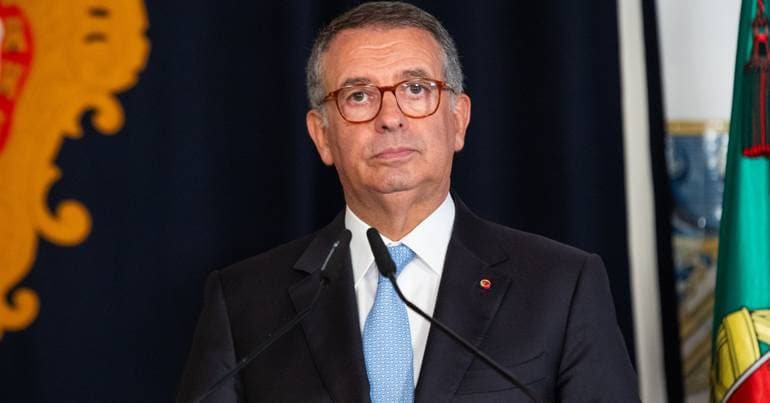
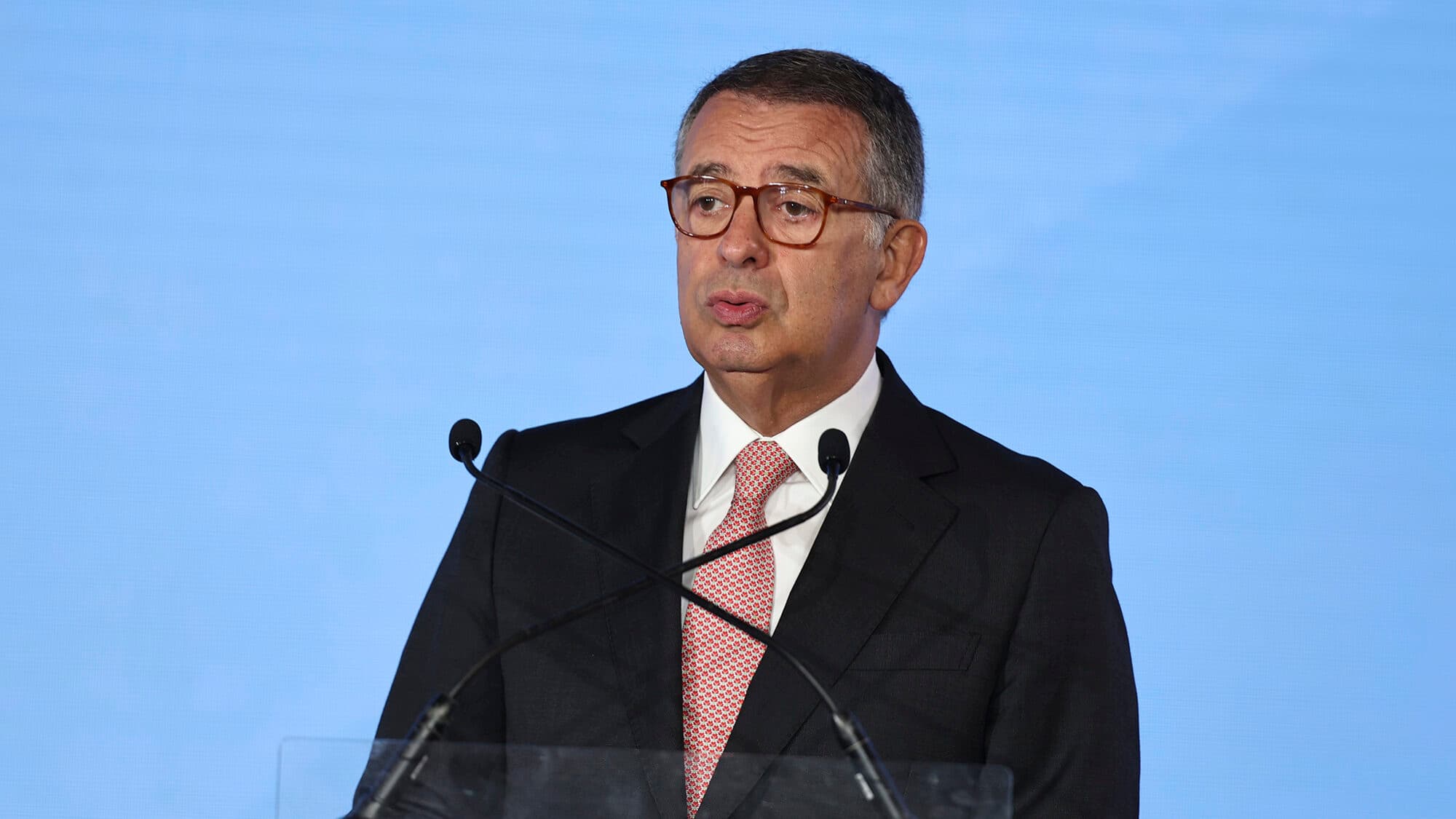
Admiral Gouveia e Melo has urged a change in health leadership, saying the Government should resign if it cannot resolve systemic problems in the healthcare system. He accuses the State of failing across the board, criticises missed deadlines for delivering results and calls for accountability and urgent action to protect patients and medical services. The remarks frame the crisis as a leadership and policy failure with direct implications for care delivery and public confidence.

Parliament approved a Statute for Older People that consolidates rights—priority in queues, protection from violence and the right to age at home—but commentators say it largely compiles existing rules without providing enforcement tools, clear carer regulation or pay for carers. Observers call it an improvement but warn it may not change on-the-ground care without implementation measures. Expats caring for elderly relatives should not expect immediate new benefits and should follow guidance from local health and social services on available support.
The Statute for Older People is a legal framework that gathers rights for older adults—such as protection from violence, priority access to certain services and support to age at home—but critics say it largely compiles rights without strong enforcement tools. For expats with older relatives in Portugal, it sets helpful standards but you may still need to engage local social services, health providers or legal advice to ensure those rights are realised.

Press reviews report the Portuguese state has paid about €1.5 million in compensation to prisoners since 2016, while roughly 854 compensation claims remain pending, with individual awards noted in reports between about €12,000 and €144,000. The figures underline ongoing legal and human-rights concerns over prison conditions and backlog in resolving claims. Expats working in social services, law or advocacy should watch for potential reforms and budgetary consequences as the justice system responds to mounting claims.

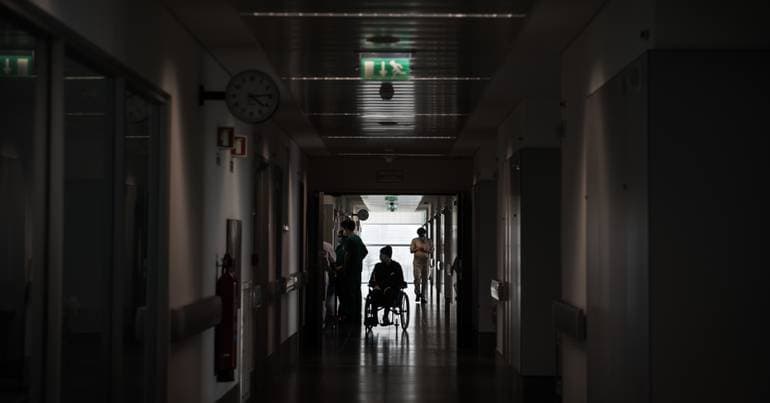
Successive administrative integrations have eroded the distinct identity and operational autonomy of hospitals within Portugal’s National Health Service (SNS). The creation of sprawling Local Health Units (ULSs) — some with budgets exceeding €1 billion — has not been matched by adequate management capacity, leaving facilities ill-equipped to coordinate care, manage resources or respond to demand spikes. The dysfunction manifests in visible emergency problems — overcrowded trolleys, delayed ambulances and stressed staff — and points to a need for targeted governance, management investment and policy reform to restore operational effectiveness and protect patient care.

During a tense election campaign swing through Ovar, São João da Madeira and Lamego, AD-backed candidate Marques Mendes publicly challenged Health Minister Ana Paula Martins to “show up and explain” mounting problems in the National Health Service, notably failings in emergency departments. Mendes, accompanied by two ministers and supported at events by Porto mayor Rui Moreira, pressed for direct public explanations as the health portfolio becomes a campaign battleground; the minister already has a public engagement scheduled. Elsewhere on the campaign trail, André Ventura “survived” an incident in Aveiro—famously described as a "chuva de cavacas"—and later thanked supporters in Viseu's so-called “Cavaquistão,” underscoring how confrontational moments and popular gestures are shaping voter perceptions. The episodes highlight healthcare policy and political accountability as central issues in the race and illustrate how personalised campaign incidents are influencing public debate.

André Ventura, born January 15, 1983, is a lawyer, academic, and Portugal's most prominent far-right leader. He founded Chega ("Enough") in 2019 after his PSD mayoral campaign attacked the Romani community. Chega surged from 1.3% in 2019 to 22.8% in May 2025, becoming parliament's second-largest party and making Ventura Leader of the Opposition.
His platform emphasizes immigration restrictions, law-and-order policies, constitutional reform, and contains inflammatory anti-Romani rhetoric that has triggered multiple discrimination convictions and investigations. Politically classified as far-right by international media, Ventura cultivates alliances with European far-right figures including Marine Le Pen and Santiago Abascal.
He announced his 2026 presidential candidacy, polling at 18% alongside independent Admiral Gouveia e Melo. His rise ended Portugal's 50-year resistance to far-right parties.

Presidential candidate André Pestana said Portugal should prioritise domestic social and environmental needs rather than increased defence spending, declaring he does not want “a single euro more for NATO”. He argues the fight should be against low wages and pensions, environmental degradation and the deterioration of public services, and proposes that funds currently transferred to private health providers be redirected into the National Health Service (SNS), claiming a large share of the state health budget is going to private companies.

The government has signed a formal negotiation agreement with the National Federation of Doctors (FNAM) and said it will continue seeking consensus with health professionals. The move opens structured talks aimed at resolving labour and service delivery issues in the medical sector, signalling a willingness to engage on healthcare policy and doctors’ demands rather than imposing unilateral measures.

The Socialist Party (PS) will submit a bill titled “Coming Home” to Parliament proposing the creation of transitional residences aimed at reducing social institutionalisation. The policy seeks to shift care from large institutions to local, secure accommodation that supports reintegration, bridging healthcare and housing needs. Analytically, the measure could advance deinstitutionalisation and community-based care, but its success will depend on funding, local delivery capacity, regulatory safeguards and clear pathways to permanent housing.

The prime minister announced what was described as “the largest investment in ambulances in over a decade” — 275 new vehicles — less than 36 hours after three citizens were reported to have died while waiting for care. Critics have called the timing “strange” and labelled the move demagoguery, arguing it risks masking systemic negligence in emergency services rather than addressing deeper policy and resourcing failures in healthcare and public safety. The episode has intensified calls for transparent planning, independent oversight and comprehensive reforms to emergency medical services rather than one-off equipment purchases.

President Marcelo Rebelo de Sousa has promulgated the government’s health reform while formally requesting improvements to three related decree-laws. His interventions focus on the decree-law that centralises emergency services regionally and on the new regime for hiring locum doctors, where he identified unclear requirements and potential incompatibilities. The request for clarification signals legal and policy concerns that could prompt amendments, highlighting tensions between centralised emergency planning and the need for a flexible medical workforce.

Marques Mendes urged the President and the Government not to stall a bill establishing regional obstetric emergency departments, saying he hopes they decide before he assumes the Presidency on 9 March to avoid it becoming one of his first decisions in office.

CTT said the suspension of the reimbursement service for the Mobility Allowance for residents in the Azores and Madeira is due to 'reasons beyond the company's control'.
The Portuguese president says he will soon sign into law the legislative measures for the National Health Service (SNS) that were returned to the Government for reconsideration.

The three decree-laws centre on new rules for hiring locum doctors, regional emergency services, and the management system to tackle waiting lists.

Jornal de Notícias reports that at least 108 people were intentionally murdered in 2025, marking the highest number of homicides since 2018. Separately, the President of the Republic returned three decree-laws to the Government that sought to implement reforms in the health sector, a move with legal and political implications for emergency services, public safety and ongoing healthcare policy changes. These developments highlight rising concerns about violent crime alongside contested attempts to reshape healthcare governance.

Live update (3h): President Marcelo has returned several decree-laws (diplomas) on the health sector to the Government, asking for improved formulations rather than vetoing the measures outright. The Government says it will identify opportunities to refine the texts and will not abandon the reform agenda; the move delays implementation and creates scope for legal, political and technical adjustments to the planned healthcare reforms.

Presidential candidate António José Seguro says Portugal urgently needs to restore a sense of community and expects a “peaceful change” in 2026. His remarks frame the election as a moment for social cohesion rather than confrontation. At the same time, opposition figure Luís Montenegro is pitching a concrete programme of reforms focused on health, education and housing — signalling a policy-driven contest in which property and public services will be central issues.

Today the terms of ten boards of directors of Local Health Units (ULS) across Portugal come to an end, including the board at Hospital de São José. Rosa Valente Matos, who has led São José for six years, said she was not given any justification for the decision not to renew her mandate. The SNS administration confirmed several appointments will not be renewed and noted that the São José post was awarded to a PSD-affiliated figure; its 18:00 bulletin also included an analysis of possible developments in conflicts in Eastern Europe and the Middle East, framing the personnel changes within wider political and policy considerations.


Portugal Resident •