Latest news and stories about government policy in finance in Portugal for expats and residents.
The government has committed €110 million to support lithium extraction projects despite strong public opposition. Environmental groups describe the funding as a 'blank cheque' paid for by taxpayers, arguing it risks local ecosystems and undermines sustainability claims. The injection of public funds raises wider questions about fiscal priorities, state backing for critical minerals, regulatory oversight and democratic legitimacy amid popular resistance.

The Draghi Report's ambitions force Europe to confront uncomfortable realities: it is falling significantly behind global competitors. The analysis argues that the ‘race’ has been underway for years and that closing the gap requires urgent, active policy choices — including structural reforms, targeted investment and a renewed focus on competitiveness across the single market.

The EU has responded firmly to President Trump’s announcement of tariffs on several European countries over the Greenland dispute, expressing solidarity with Denmark and warning of a “dangerous spiral” that could damage transatlantic relations and even lead to suspension of parts of the trade agreement with the US. France, Sweden and the UK have rejected intimidation and pledged a coordinated European response, while the President of the European Council is coordinating a joint position and EU leaders have convened an emergency meeting to weigh diplomatic, economic and political options.

EU lawmakers say a proposed EU–US trade pact—intended to shield European exporters from heavy duties—is effectively on hold after the US announced tariffs on eight European countries in response to their opposition to Washington’s actions regarding Greenland. EU ambassadors have been summoned to an extraordinary meeting to discuss the diplomatic fallout and next steps, underscoring how escalating US threats risk derailing broader trade cooperation and raising the prospect of a wider economic and political rift.
The Finance Minister will be at next week's annual meeting of the World Economic Forum in Davos, and will use the presence of policymakers and investors to 'sell' the progress the national economy has made in recent years. In remarks to ECO, Joaquim Miranda Sarmento highlights this year's event theme, ...

Portugal faces a mixed outcome from the EU–Mercosur trade agreement. Export-oriented sectors such as wine, olive oil and cheese see expanded market access to Argentina, Brazil, Paraguay and Uruguay as growth opportunities, while domestic meat and rice producers fear increased competition, downward price pressure and quota-driven market disruption. The deal thus creates winners and losers within Portugal’s agricultural and food industries, highlighting the need for safeguards, support measures and sectoral adaptation strategies.
Update: The trade agreement between the European Union and Mercosur is due to be signed this Saturday. The impending signature has intensified debate in Portugal: wine, olive oil and cheese sectors are positioning to capture growth in the four South American markets, while meat and rice producers renew warnings about heightened competition, downward price pressure and quota effects. Stakeholders are pressing for concrete safeguards, transitional support and clear implementation timetables to mitigate adjustment costs and protect sensitive domestic producers.

A press roundup reporting an increase in foreign doctors in Portugal — though not being brought into the SNS (Portuguese National Health Service) — and coverage that Spain is acting as a stumbling block to Mário Centeno’s prospects at the European Central Bank (ECB).
Portuguese Prime Minister António Costa defended the EU–Mercosur agreement as a historic deal and rejected European criticism as based on a “totally wrong perception”. Costa framed the pact as both a trade and an investment agreement, arguing it does not simply favour Europe. His remarks come after the 27 EU member states reached a qualified majority to approve the accord; Brazil’s president Jair Bolsonaro? No — the content states Brazil’s president Luiz Inácio Lula da Silva will not attend the signing ceremony in Paraguay as the long-delayed pact moves into the ratification phase in Europe.
Update: Diário de Notícias reports that António Costa will attend the signing ceremony in Asunción and reiterated that concerns about farmers’ opposition are misplaced, saying the agreement includes safeguards for European agriculture.
Update 2: Additional coverage quotes Costa saying criticisms rest on a “completely wrong perception” and using the image of the EU and Mercosur “building bridges” rather than raising barriers; RTP and Expresso note he continues to portray the pact as both trade and investment, emphasising expected benefits for Portuguese exporters.

António Luís Santos da Costa (born July 17, 1961, in Lisbon) is a Portuguese lawyer and Socialist politician who served as Prime Minister of Portugal from 2015-2024 and currently serves as President of the European Council since December 1, 2024. After leading the Lisbon Municipal Assembly and practicing law, he was elected MEP (2004-2005) and entered parliament in 2002. He led the Socialist Party from 2014-2024, building unprecedented parliamentary coalitions with the Communist Party and Left Bloc (2015-2019) before winning an absolute majority in 2022. He resigned as PM in November 2023 following a corruption investigation, though subsequently cleared. The 27 EU member states elected him Council President in June 2024, making him the fourth full-time President and the first southern European socialist in that role.
Political Philosophy:
Costa represents moderate European social democracy, combining orthodox fiscal responsibility with progressive social investment. He prioritizes European integration, consensus-building, and pragmatic compromise over ideological confrontation. As Council President, he champions mediation between member states, improved EU inter-institutional relations, shorter decision-making processes, and regular visits to every EU capital to reconnect citizens with European institutions. His approach emphasizes "creative bridges" reconciling divergent interests while maintaining firmness on European values, particularly regarding Ukraine.

The European Council (Conselho Europeu) brings together EU heads of state or government to set the bloc’s overall political direction and priorities; it does not adopt ordinary legislation. Its president, Charles Michel, has chaired meetings since December 2019, and the Council’s political endorsement is important for major trade and investment deals, so those following EU policy should note its stance on agreements like the EU–Mercosur deal.

Mercosur is the South American trade bloc (Southern Common Market) whose main founding members are Argentina, Brazil, Paraguay and Uruguay. An EU–Mercosur trade agreement — which the story says may be approved and signed soon — would reduce tariffs and open markets on both sides, affecting agricultural and industrial trade flows and therefore prices and business opportunities relevant to residents and companies in Portugal.
RTP (Rádio e Televisão de Portugal) is Portugal's state-owned public service broadcaster, operating since 1935 (radio) and 1957 (television). It runs 8 television channels (including RTP1, RTP2, RTP3) and 7 radio stations (Antena 1, 2, 3), plus international services reaching Portuguese diaspora worldwide. Funded by a broadcasting tax on electricity bills and advertising revenue, RTP serves as Portugal's cultural reference, providing quality news, education, and entertainment. Its archive represents "irreplaceable heritage in Portuguese collective memory", and it pioneered online streaming with RTP Play in 2011. RTP connects "Portugal and the Portuguese to themselves, to each other, and to the world"

Diário de Notícias and Correio da Manhã report the Portuguese government describes the long‑running EU–Mercosur agreement as an economic opportunity, while domestic producers and farming groups urge Brussels to proceed cautiously to protect local sectors. The coverage highlights continuing divisions over market access, environmental and regulatory safeguards after 25 years of negotiation. Exporters and agricultural businesses should monitor EU negotiations and any safeguards that may affect competitive conditions.

Mercosur is the South American trade bloc (Southern Common Market) whose main founding members are Argentina, Brazil, Paraguay and Uruguay. An EU–Mercosur trade agreement — which the story says may be approved and signed soon — would reduce tariffs and open markets on both sides, affecting agricultural and industrial trade flows and therefore prices and business opportunities relevant to residents and companies in Portugal.

Mercosur is the South American trade bloc (Southern Common Market) whose main founding members are Argentina, Brazil, Paraguay and Uruguay. An EU–Mercosur trade agreement — which the story says may be approved and signed soon — would reduce tariffs and open markets on both sides, affecting agricultural and industrial trade flows and therefore prices and business opportunities relevant to residents and companies in Portugal.

With the Eurogroup set to choose the ECB vice-president on Monday, former Portuguese central bank governor Mário Centeno—one of two front-runners—says there remains a lack of alignment among major EU countries. Speaking to PÚBLICO, Centeno urges reaffirmation of the reasons for his candidacy and signals that political negotiations, policy priorities and regulatory direction will be decisive in the appointment. The comments frame the contest as both a balance-of-power and policy-choice moment for the ECB’s future leadership.

The Recuperar Portugal mission structure said the eighth payment request under the Recovery and Resilience Plan (PRR) — submitted to Brussels in November 2025 — is expected to be paid in February. The announcement gives a tentative timeline for a tranche of EU funds that support national investments under the PRR framework. Project managers and local authorities awaiting PRR cashflows should note the projected month and prepare for administrative steps tied to the payment.
The Recovery and Resilience Plan (Plano de Recuperação e Resiliência) is Portugal's national programme under the EU's NextGenerationEU to fund reforms and investments after COVID‑19; the plan includes roughly €16.6 billion in grants plus about €2.7 billion in loans approved in 2021. Payments are tied to specific milestones and targets — which the government said it is politically committed to meet — so missed milestones can delay projects and funding that affect public works, contractors and local services.
Recover Portugal (Recuperar Portugal) is the national mission structure set up to coordinate, monitor and manage Portugal's implementation of the Recovery and Resilience Plan, including preparing payment requests to the European Commission. The mission said the eighth payment request submitted in November 2025 is expected to be paid in February 2026, so businesses, contractors and municipalities waiting for PRR funds should follow its announcements.

The Government said it is aware of contextual, geopolitical and structural risks to meeting the milestones and targets of the Recovery and Resilience Plan (Plano de Recuperação e Resiliência or PRR) but insisted it remains politically committed to mitigating those risks. Officials framed the challenges as linked to complexity rather than a lack of will, and said they will work to keep projects on track. Taxpayers and recipients of PRR-funded services should note the risk of delays or slower roll-out of projects tied to the plan.
The Recovery and Resilience Plan (Plano de Recuperação e Resiliência) is Portugal's national programme under the EU's NextGenerationEU to fund reforms and investments after COVID‑19; the plan includes roughly €16.6 billion in grants plus about €2.7 billion in loans approved in 2021. Payments are tied to specific milestones and targets — which the government said it is politically committed to meet — so missed milestones can delay projects and funding that affect public works, contractors and local services.

Confagri — the confederation representing Portuguese agriculture interests — told media the government's upbeat stance on the EU‑Mercosur agreement is premature and urged more public and private investment in the agri‑food sector to protect producers. Observador and RTP report Confagri wants safeguards and support so domestic farmers can compete if the trade deal advances. For expats in agri‑business or rural areas: watch later announcements on subsidies, market access and support programmes which can affect regional economies and local services.

Mercosur is the South American trade bloc (Southern Common Market) whose main founding members are Argentina, Brazil, Paraguay and Uruguay. An EU–Mercosur trade agreement — which the story says may be approved and signed soon — would reduce tariffs and open markets on both sides, affecting agricultural and industrial trade flows and therefore prices and business opportunities relevant to residents and companies in Portugal.
Confagri is the national confederation that represents agricultural cooperatives in Portugal, acting as a trade association and lobby for producers in policy, investment and trade discussions. Its caution about the EU–Mercosur agreement matters because Confagri speaks for cooperatives that produce food and export goods—its calls for more investment or safeguards can influence government responses, funding priorities and market rules that affect prices and rural jobs.

RTP (Rádio e Televisão de Portugal) is Portugal's state-owned public service broadcaster, operating since 1935 (radio) and 1957 (television). It runs 8 television channels (including RTP1, RTP2, RTP3) and 7 radio stations (Antena 1, 2, 3), plus international services reaching Portuguese diaspora worldwide. Funded by a broadcasting tax on electricity bills and advertising revenue, RTP serves as Portugal's cultural reference, providing quality news, education, and entertainment. Its archive represents "irreplaceable heritage in Portuguese collective memory", and it pioneered online streaming with RTP Play in 2011. RTP connects "Portugal and the Portuguese to themselves, to each other, and to the world"

Compete will launch a clean-up operation to revoke PT2030 support for projects that were approved but have not started implementation within three months. The review aims to free up EU funding tied to non-executed projects; affected business owners should expect revocation letters beginning in February. The move signals a stricter enforcement of grant timelines and should prompt beneficiaries either to commence work promptly or risk losing allocated support, allowing funds to be reallocated to active projects.

The European Commission president will sign the EU–Mercosur trade agreement on Saturday, 17 January, the EU confirmed. The deal is expected to lower trade barriers between the EU and South American Mercosur countries; coverage focuses on the formal signature rather than implementation details. For expats in Portugal, the immediate effect will be minimal day-to-day, but the agreement could influence prices, imports and export opportunities over time.

Mercosur is the South American trade bloc (Southern Common Market) whose main founding members are Argentina, Brazil, Paraguay and Uruguay. An EU–Mercosur trade agreement — which the story says may be approved and signed soon — would reduce tariffs and open markets on both sides, affecting agricultural and industrial trade flows and therefore prices and business opportunities relevant to residents and companies in Portugal.

European Commission President Ursula von der Leyen will travel to New Delhi at the end of January for the EU–India summit with the explicit aim of finalising a long‑sought EU–India trade agreement. Having concluded the Mercosur talks, von der Leyen says the Commission is working intensively to wrap up negotiations, a move with significant economic and geopolitical implications for EU trade policy and relations with India.

The Portuguese government has assured that there are few Portuguese in Iran and that it is monitoring the situation and assisting nationals where necessary. Two Portuguese nationals have asked for help to leave Iran because of the violence, according to some reports; a protest took place outside the Iranian embassy in Lisbon. For expats with family in Iran, check travel advice and contact consular services if needed.
Update: Latest outlet reports confirm two Portuguese nationals have formally asked for assistance to leave Iran and the government says it is following the situation closely; media coverage also highlights protests in Lisbon by members of the local Iranian‑Portuguese community. Expats with relatives in the region should monitor official travel advice and consider contacting Portuguese consular channels if they need direct help or information.

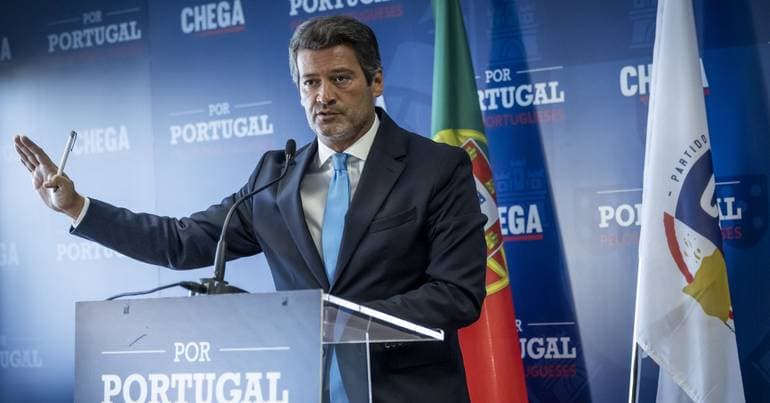
Presidential candidate André Pestana said Portugal should prioritise domestic social and environmental needs rather than increased defence spending, declaring he does not want “a single euro more for NATO”. He argues the fight should be against low wages and pensions, environmental degradation and the deterioration of public services, and proposes that funds currently transferred to private health providers be redirected into the National Health Service (SNS), claiming a large share of the state health budget is going to private companies.

A housing package has been approved in principle, covering a set of fiscal measures alongside a separate proposal to simplify planning permission. The combined measures are intended to stimulate the property market by altering tax/incentive settings and speeding development approvals, but key details — specific fiscal instruments, implementation timelines and regulatory safeguards — remain to be finalised. The ultimate impact will hinge on policy design, resourcing of planning authorities and market response.

The executive director of AM48 — a property developer managing over €220m in assets — says the housing package has been well received by the sector but warns that there are insufficient financial instruments to enable companies to deliver the programme. She welcomes the government's policy direction but highlights a gap in project financing that could limit implementation and investment. Without targeted credit lines, risk-sharing mechanisms or incentives for private developers, market momentum may stall despite positive policy measures. Strengthening specific financing tools and public–private cooperation is needed to translate the package into completed housing projects.

Nuno Leal, co‑CEO of Doutor Finanças, says the tax measures in the government’s housing plan — due to be debated in Parliament on Friday — should help increase supply in the market. He concedes the package tends to favour property owners and landlords but considers it “relatively balanced”, noting the measures are centred on those who hold property while aiming to ease supply constraints. The assessment focuses on likely effects on rental supply and owner incentives rather than specific legislative detail.

Economist Vera Gouveia Barros argues that the most effective element of the Construir Portugal programme is tax relief on rentals, citing an ‘almost mechanical effect’ from a proposed 10% autonomous IRS rate for rents up to €2,300. She suggests this tax cut will directly influence rent levels and landlord behaviour, with likely quick transmission into the market. However, the package omits a dedicated room‑rental option — a gap that could limit lower‑cost housing supply and options for students, workers and expats. Barros’ analysis implies policymakers should pair fiscal incentives with targeted measures for small‑unit and shared accommodation and monitor market adjustments to avoid unintended rent inflation or supply imbalances.

The prime minister announced what was described as “the largest investment in ambulances in over a decade” — 275 new vehicles — less than 36 hours after three citizens were reported to have died while waiting for care. Critics have called the timing “strange” and labelled the move demagoguery, arguing it risks masking systemic negligence in emergency services rather than addressing deeper policy and resourcing failures in healthcare and public safety. The episode has intensified calls for transparent planning, independent oversight and comprehensive reforms to emergency medical services rather than one-off equipment purchases.

During a heated parliamentary debate, Prime Minister Luís Montenegro warned that moderation in residential property prices — for both buying and renting — is inevitable after what he described as recent 'risky measures.' He framed the policy changes as drivers of a market correction, signalling likely cooling pressures on affordability and activity in Portugal’s housing market and prompting renewed scrutiny of government housing and economic policy.

The latest episode of the weekly podcast 'Ao trabalho!' examines lingering uncertainty over tuition fee refunds and the implications for pay awards that recognise qualifications. Finance Minister Joaquim Miranda Sarmento’s response on the pay-award question is discussed alongside fast-moving items on labour policy, employment law and the state budget, with analysis of what these developments mean for workers and expats. The short, under-five-minute episode aims to distil key takeaways and policy consequences for those following workplace rights and public spending.

The State’s €1,550 million fund to guarantee up to 100% housing finance for young people is almost fully committed: €1,460 million (94%) has already been allocated to banks, leaving under €90 million available for future distributions. The near-exhaustion of the guarantee reduces headroom for new beneficiaries and shifts pressure onto banks and policy makers to consider whether to broaden, renew or restrict the scheme, with implications for the housing market and public finances.

Data from the Ministry of Labour, provided to ECO, shows companies have withdrawn more than €120 million from the Labour Compensation Fund (FCT), with the bulk of disbursements used to finance worker training. Employers can still claim roughly €517 million from the fund before the deadline at the end of the year, signalling significant ongoing demand and potential pressure on FCT resources. The pattern of withdrawals highlights how firms are reallocating statutory employer liabilities towards upskilling and may have implications for labour policy and fund sustainability.

The newly elected leadership of the National Association of Portuguese Municipalities (ANMP) has formally presented its congress resolutions to the Government, raising detailed concerns about the draft law on local finances and the wider decentralisation process. The ANMP is seeking clarifications and safeguards to protect municipal budgets and competences, clearer arrangements for funding decentralisation, and secure access for municipalities to European funds under the next EU programming framework.
The article analyses a surge in national defence innovation driven by a €5.8 billion SAFE loan—the largest single investment in the Armed Forces—positioning defence as a strategic area for both European and national investors. Key growth areas include drones, satellites and aircraft, with emphasis on R&D, dual‑use technologies and strengthened aerospace supply chains that can create jobs and boost exports. The piece examines how procurement reform, public‑private partnerships and targeted skills development are needed to translate investment into sustained industrial capacity and economic impact. It concludes that coherent policy and sustained funding will be essential to maximise technological and economic returns.


TLDR News EU •


Portugal Resident •