
Latest news and stories about investment in finance in Portugal for expats and residents.
Investing in multiple funds and strategies does not guarantee better results. A simple portfolio helps reduce mistakes and keep up with the market over time.

The first tranche of Defence loans from the European Commission is expected to arrive in Portugal in March. The European Council still needs to give the green light, but overall the country could access €5.8 billion.
The Draghi Report's ambitions force Europe to confront uncomfortable realities: it is falling significantly behind global competitors. The analysis argues that the ‘race’ has been underway for years and that closing the gap requires urgent, active policy choices — including structural reforms, targeted investment and a renewed focus on competitiveness across the single market.

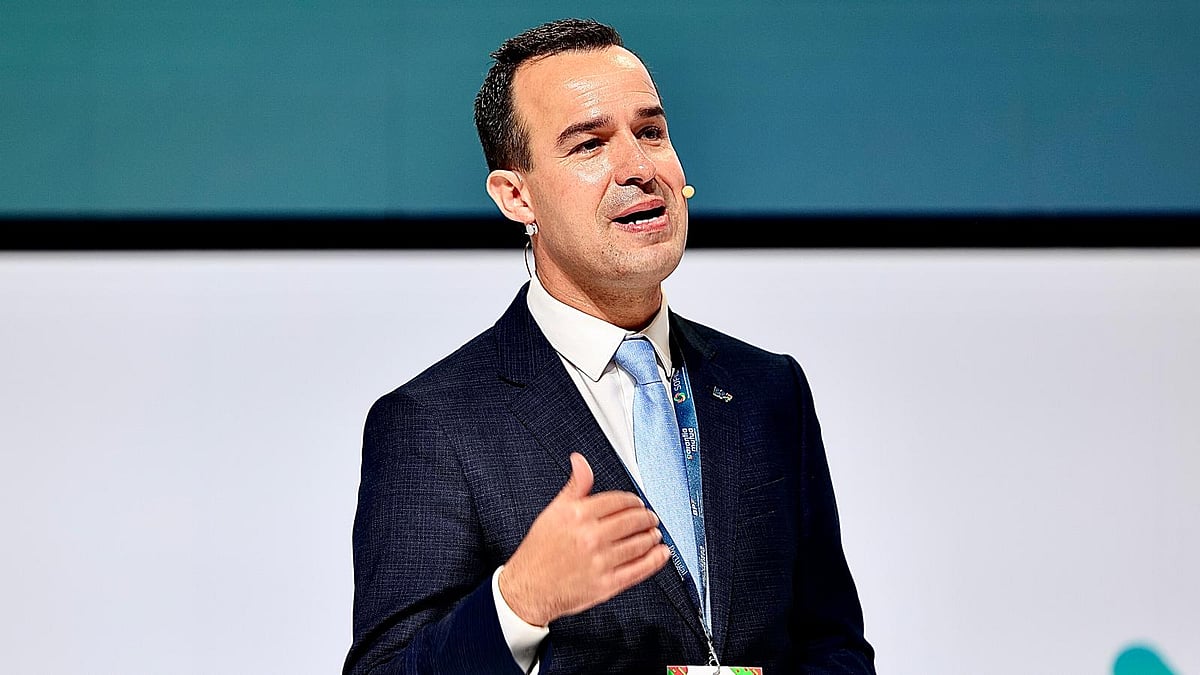
The Finance Minister will be at next week's annual meeting of the World Economic Forum in Davos, and will use the presence of policymakers and investors to 'sell' the progress the national economy has made in recent years. In remarks to ECO, Joaquim Miranda Sarmento highlights this year's event theme, ...

Portuguese Prime Minister António Costa defended the EU–Mercosur agreement as a historic deal and rejected European criticism as based on a “totally wrong perception”. Costa framed the pact as both a trade and an investment agreement, arguing it does not simply favour Europe. His remarks come after the 27 EU member states reached a qualified majority to approve the accord; Brazil’s president Jair Bolsonaro? No — the content states Brazil’s president Luiz Inácio Lula da Silva will not attend the signing ceremony in Paraguay as the long-delayed pact moves into the ratification phase in Europe.
Update: Diário de Notícias reports that António Costa will attend the signing ceremony in Asunción and reiterated that concerns about farmers’ opposition are misplaced, saying the agreement includes safeguards for European agriculture.
Update 2: Additional coverage quotes Costa saying criticisms rest on a “completely wrong perception” and using the image of the EU and Mercosur “building bridges” rather than raising barriers; RTP and Expresso note he continues to portray the pact as both trade and investment, emphasising expected benefits for Portuguese exporters.

António Luís Santos da Costa (born July 17, 1961, in Lisbon) is a Portuguese lawyer and Socialist politician who served as Prime Minister of Portugal from 2015-2024 and currently serves as President of the European Council since December 1, 2024. After leading the Lisbon Municipal Assembly and practicing law, he was elected MEP (2004-2005) and entered parliament in 2002. He led the Socialist Party from 2014-2024, building unprecedented parliamentary coalitions with the Communist Party and Left Bloc (2015-2019) before winning an absolute majority in 2022. He resigned as PM in November 2023 following a corruption investigation, though subsequently cleared. The 27 EU member states elected him Council President in June 2024, making him the fourth full-time President and the first southern European socialist in that role.
Political Philosophy:
Costa represents moderate European social democracy, combining orthodox fiscal responsibility with progressive social investment. He prioritizes European integration, consensus-building, and pragmatic compromise over ideological confrontation. As Council President, he champions mediation between member states, improved EU inter-institutional relations, shorter decision-making processes, and regular visits to every EU capital to reconnect citizens with European institutions. His approach emphasizes "creative bridges" reconciling divergent interests while maintaining firmness on European values, particularly regarding Ukraine.

The European Council (Conselho Europeu) brings together EU heads of state or government to set the bloc’s overall political direction and priorities; it does not adopt ordinary legislation. Its president, Charles Michel, has chaired meetings since December 2019, and the Council’s political endorsement is important for major trade and investment deals, so those following EU policy should note its stance on agreements like the EU–Mercosur deal.

Mercosur is the South American trade bloc (Southern Common Market) whose main founding members are Argentina, Brazil, Paraguay and Uruguay. An EU–Mercosur trade agreement — which the story says may be approved and signed soon — would reduce tariffs and open markets on both sides, affecting agricultural and industrial trade flows and therefore prices and business opportunities relevant to residents and companies in Portugal.

RTP (Rádio e Televisão de Portugal) is Portugal's state-owned public service broadcaster, operating since 1935 (radio) and 1957 (television). It runs 8 television channels (including RTP1, RTP2, RTP3) and 7 radio stations (Antena 1, 2, 3), plus international services reaching Portuguese diaspora worldwide. Funded by a broadcasting tax on electricity bills and advertising revenue, RTP serves as Portugal's cultural reference, providing quality news, education, and entertainment. Its archive represents "irreplaceable heritage in Portuguese collective memory", and it pioneered online streaming with RTP Play in 2011. RTP connects "Portugal and the Portuguese to themselves, to each other, and to the world"
Portuguese exports to the four Mercosur countries amount to just 1.3% of the country’s total, with Brazil alone representing 95% of that small share. With a market of nearly 300 million people, Portuguese business leaders view the bloc as largely unexplored terrain offering significant scope for export diversification, new investments and deeper trade ties — particularly beyond Brazil — but realising this opportunity will require targeted commercial strategies and stronger economic engagement across Mercosur members.

The Development Bank has budgeted €4 billion in guarantees to finance construction, refurbishment and support for housing cooperatives aimed at delivering more affordable homes, according to reporting on the plan. Observers note the measure fills a recent policy gap after a year with few sector‑specific supports and is intended to leverage private lending. Those looking for affordable purchase or cooperative housing should monitor forthcoming programme details and application windows.
The Development Bank in Portugal refers to the state-backed development institution, Banco Português de Fomento (Portuguese Development Bank), which provides financing tools, guarantees and co-investment for strategic public-interest projects. In the housing context it can issue guarantees and support loans for construction or refurbishment of affordable homes and for housing cooperatives, so budgeted sums from the bank directly affect affordable housing schemes.

The Canadian rating agency DBRS left Portugal's credit rating unchanged at its recent review and kept the outlook stable, citing continued fiscal progress and a path to a budget surplus in 2025. Outlets note this follows DBRS's upgrade to 'A (high)' last year and is consistent with other recent assessments of Portuguese public finances. Borrowers, investors and anyone monitoring mortgage or bond markets should see this as a sign of continued credit stability.
DBRS Morningstar is a Canadian credit-rating agency that assesses sovereign and corporate creditworthiness; its ratings influence investor confidence and borrowing costs. In January 2025 DBRS upgraded Portugal to A (high) with a stable outlook, kept that rating in a July 2025 review, and most recently chose not to change it — a signal that creditors see Portugal’s finances as relatively solid.

ECO reports the Euribor moved higher for the three‑ and six‑month tenors while the 12‑month rate fell; the three‑month rose to 2.033%, the six‑month to 2.143% and the 12‑month stood at 2.248%. These short‑term oscillations can influence variable‑rate mortgages and refinancing costs in the weeks ahead. Mortgage holders and prospective buyers should check loan indexation clauses and lender notices for immediate impacts.
Euribor (Euro Interbank Offered Rate) is the benchmark interest rate at which European banks lend to one another and is widely used as the reference for variable‑rate mortgages in Portugal. Changes affect monthly payments directly: the recent figures reported were 2.034% (3‑month), 2.104% (6‑month) and 2.255% (12‑month), so a rising Euribor typically increases costs for borrowers with tracker or variable loans.

Dinheiro Vivo reports that buying a house in metropolitan and tourist areas in Portugal can be up to seven times more expensive than elsewhere, with Lisbon averaging around €650,000 and other hot spots like Madeira and Faro also well above national norms. The data underline stark regional price divergence that affects affordability and relocation choices. Those searching for housing should factor in significant local premiums and consider suburban or inland alternatives.
Housing prices in Portugal are highest in Lisbon and many coastal areas (notably parts of the Algarve), often two to three times more expensive than interior regions, while Porto and other coastal cities sit in between and inland areas can be much cheaper. Nationally the typical price per square metre is lower than the EU median, while Lisbon is pricier than most Portuguese regions but still generally cheaper than central Paris or London, so prospective buyers should compare city, coastal and interior markets before deciding.

The Recuperar Portugal mission structure said the eighth payment request under the Recovery and Resilience Plan (PRR) — submitted to Brussels in November 2025 — is expected to be paid in February. The announcement gives a tentative timeline for a tranche of EU funds that support national investments under the PRR framework. Project managers and local authorities awaiting PRR cashflows should note the projected month and prepare for administrative steps tied to the payment.
The Recovery and Resilience Plan (Plano de Recuperação e Resiliência) is Portugal's national programme under the EU's NextGenerationEU to fund reforms and investments after COVID‑19; the plan includes roughly €16.6 billion in grants plus about €2.7 billion in loans approved in 2021. Payments are tied to specific milestones and targets — which the government said it is politically committed to meet — so missed milestones can delay projects and funding that affect public works, contractors and local services.
Recover Portugal (Recuperar Portugal) is the national mission structure set up to coordinate, monitor and manage Portugal's implementation of the Recovery and Resilience Plan, including preparing payment requests to the European Commission. The mission said the eighth payment request submitted in November 2025 is expected to be paid in February 2026, so businesses, contractors and municipalities waiting for PRR funds should follow its announcements.

The Government said it is aware of contextual, geopolitical and structural risks to meeting the milestones and targets of the Recovery and Resilience Plan (Plano de Recuperação e Resiliência or PRR) but insisted it remains politically committed to mitigating those risks. Officials framed the challenges as linked to complexity rather than a lack of will, and said they will work to keep projects on track. Taxpayers and recipients of PRR-funded services should note the risk of delays or slower roll-out of projects tied to the plan.
The Recovery and Resilience Plan (Plano de Recuperação e Resiliência) is Portugal's national programme under the EU's NextGenerationEU to fund reforms and investments after COVID‑19; the plan includes roughly €16.6 billion in grants plus about €2.7 billion in loans approved in 2021. Payments are tied to specific milestones and targets — which the government said it is politically committed to meet — so missed milestones can delay projects and funding that affect public works, contractors and local services.

A market report highlights Lisbon — especially historic centre parishes such as Santa Maria Maior, Santo António and Misericórdia — consolidating as a European option for North American buyers, with foreign demand concentrated in central neighbourhoods. Consultants say the trend reflects both lifestyle demand and investor interest, which can push prices and reduce rental stock in prime areas. Those seeking housing in Lisbon should note increased competition in central districts and check neighbourhood supply if relocating or investing.

Reporting says the Government is monitoring negotiations between Galp and Spain’s Moeve on a deal that would combine parts of their assets and create two new platforms, with ministers stressing strategic energy assets and national energy sovereignty are at stake. Officials are watching to ensure any transaction protects critical infrastructure and interests. Entrepreneurs and energy-sector observers should be aware that a deal could affect local supply chains, jobs and investment decisions in the coming months.
Galp is Portugal’s integrated energy company operating in fuel, natural gas, electricity retail, refining and upstream activities, and it supplies households and businesses across the country. For expats, issues at Galp—such as recent billing disruptions—can mean unexpected large utility bills or service problems, so check your account, contact the supplier and keep billing records.
Moeve is a Spanish energy company that, as of January 2026, has been in talks with Portugal's Galp about combining parts of their assets and creating two new business platforms; the Portuguese government says it is monitoring the negotiations because the transaction could involve strategic assets tied to national energy sovereignty. People watching energy supply, regulation or prices should note that large cross‑border asset reorganisations can change ownership, investment decisions and regulatory oversight.

TAP is investing €20 million to build a new aircraft maintenance hub and hangar in Porto, a project due to take two years and expected to create about 200 jobs. The move is intended to increase the carrier’s maintenance self-sufficiency, reduce outsourcing and boost operational autonomy as the airline undergoes privatisation, while Porto’s network will be strengthened with services to Terceira, Praia, Tel Aviv and an enhanced link to Boston.

Confagri — the confederation representing Portuguese agriculture interests — told media the government's upbeat stance on the EU‑Mercosur agreement is premature and urged more public and private investment in the agri‑food sector to protect producers. Observador and RTP report Confagri wants safeguards and support so domestic farmers can compete if the trade deal advances. For expats in agri‑business or rural areas: watch later announcements on subsidies, market access and support programmes which can affect regional economies and local services.

Mercosur is the South American trade bloc (Southern Common Market) whose main founding members are Argentina, Brazil, Paraguay and Uruguay. An EU–Mercosur trade agreement — which the story says may be approved and signed soon — would reduce tariffs and open markets on both sides, affecting agricultural and industrial trade flows and therefore prices and business opportunities relevant to residents and companies in Portugal.
Confagri is the national confederation that represents agricultural cooperatives in Portugal, acting as a trade association and lobby for producers in policy, investment and trade discussions. Its caution about the EU–Mercosur agreement matters because Confagri speaks for cooperatives that produce food and export goods—its calls for more investment or safeguards can influence government responses, funding priorities and market rules that affect prices and rural jobs.

RTP (Rádio e Televisão de Portugal) is Portugal's state-owned public service broadcaster, operating since 1935 (radio) and 1957 (television). It runs 8 television channels (including RTP1, RTP2, RTP3) and 7 radio stations (Antena 1, 2, 3), plus international services reaching Portuguese diaspora worldwide. Funded by a broadcasting tax on electricity bills and advertising revenue, RTP serves as Portugal's cultural reference, providing quality news, education, and entertainment. Its archive represents "irreplaceable heritage in Portuguese collective memory", and it pioneered online streaming with RTP Play in 2011. RTP connects "Portugal and the Portuguese to themselves, to each other, and to the world"

A Lisbon Administrative and Tax Court ruled in favour of Banco de Portugal in a test case brought by international funds (including names reported such as BlackRock and PIMCO) challenging the BES resolution, dismissing compensation claims that exceeded €2 billion. The ruling clears the central bank of the claims in this case and reduces a legal overhang for regulators and public finances, though other suits may persist. For expats in finance or holding Portuguese-linked securities, the decision matters for market confidence and signals lower immediate risk of a large central-bank payout related to BES.
Banco de Portugal is Portugal’s central bank, founded in 1846, responsible for banking supervision, financial stability and representing Portugal within the European System of Central Banks. For expats, it matters because it regulates banks and financial resolutions, influences monetary and payment rules, and can be involved in legal disputes with international investors.
The BES resolution was the August 2014 intervention by Banco de Portugal that split Banco Espírito Santo into a ‘good bank’ (transferring viable assets to what became Novo Banco) and a ‘bad bank’ holding toxic assets, with shareholders and many bondholders taking losses. The move aimed to stabilise the financial system but later led to legal claims from international funds and long-running litigation.

Compete will open five funding calls in January for large companies, accounting for roughly one third of the programme’s corporate allocation under Portugal 2030, the agency’s president told ECO dos Fundos. The calls come with strengthened support rates aimed at accelerating project implementation and unlocking private investment. For large firms, the tranche presents a concentrated opportunity to secure EU-backed grants that could expedite capital expenditure, support job-creating projects and align corporate investment with Portugal 2030 priorities. The measure also signals an administrative push to deploy funds faster, with potential sectoral and regional impacts depending on application uptake and award conditions.

Compete will launch a clean-up operation to revoke PT2030 support for projects that were approved but have not started implementation within three months. The review aims to free up EU funding tied to non-executed projects; affected business owners should expect revocation letters beginning in February. The move signals a stricter enforcement of grant timelines and should prompt beneficiaries either to commence work promptly or risk losing allocated support, allowing funds to be reallocated to active projects.

Presidential candidate André Pestana argues that funds currently routed to private healthcare providers should instead be invested in the NHS. He says greater NHS investment would strengthen health professionals' careers and deliver practical improvements — for example, better ambulances available sooner — reducing reliance on private sector services.
The executive director of AM48 — a property developer managing over €220m in assets — says the housing package has been well received by the sector but warns that there are insufficient financial instruments to enable companies to deliver the programme. She welcomes the government's policy direction but highlights a gap in project financing that could limit implementation and investment. Without targeted credit lines, risk-sharing mechanisms or incentives for private developers, market momentum may stall despite positive policy measures. Strengthening specific financing tools and public–private cooperation is needed to translate the package into completed housing projects.

The prime minister announced what was described as “the largest investment in ambulances in over a decade” — 275 new vehicles — less than 36 hours after three citizens were reported to have died while waiting for care. Critics have called the timing “strange” and labelled the move demagoguery, arguing it risks masking systemic negligence in emergency services rather than addressing deeper policy and resourcing failures in healthcare and public safety. The episode has intensified calls for transparent planning, independent oversight and comprehensive reforms to emergency medical services rather than one-off equipment purchases.

Galp and Moeve have entered detailed talks to combine their refining operations and filling-station networks, a complex transaction that is likely to be lengthy and closely scrutinised. The Portuguese Communist Party has already criticised the proposed deal and the government will have a role in the approval process, raising political as well as regulatory stakes. The transaction will test Brussels’ evolving approach to competition and regulation in the energy sector, with implications for pricing, investment and market structure in Portugal.

Companies are increasingly sensitive to competition issues as competition law enters a phase of expectation and apparent transformation, according to Sara M. Rodrigues, senior associate and co-ordinator of Eversheds Sutherland’s Competition, Trade and Foreign Investment Department. Rodrigues warns that investigations have ongoing consequences and that regulators — and firms — must recognise that processes do not end with the initial investigation conclusion, heightening the need for robust compliance, legal preparedness and attention to reform and enforcement trends.

JP Morgan analysts Aditya Chordia and Matteo Mamprin assign a roughly 50% probability that Moody’s will upgrade Portugal’s sovereign credit rating at its scheduled review in May, putting an upgrade within about four and a half months. The bank’s view reflects an assessment that Portugal’s improving economic fundamentals, fiscal position and lower borrowing costs have materially strengthened its credit profile, reducing downside risks. An upgrade as soon as May would tighten financing spreads, reinforce investor confidence and mark another step in Portugal’s long post‑crisis recovery; market participants should monitor sovereign metrics and rating signals in the run‑up to the review.

The National Institute of Statistics (INE) will reassess in March the classification of Novobanco's dividends, potentially allowing that income to be recognised in last year’s national accounts. If reclassified to count towards the previous budget balance, the adjustment could provide an extra boost to help the Portuguese Government meet or exceed its 0.3% surplus target for 2025. The move would alter headline fiscal metrics, affect timing of revenue recognition in national accounts, and carry implications for public finance reporting, investor perceptions and future treatment of similar banking transactions.

The article analyses a surge in national defence innovation driven by a €5.8 billion SAFE loan—the largest single investment in the Armed Forces—positioning defence as a strategic area for both European and national investors. Key growth areas include drones, satellites and aircraft, with emphasis on R&D, dual‑use technologies and strengthened aerospace supply chains that can create jobs and boost exports. The piece examines how procurement reform, public‑private partnerships and targeted skills development are needed to translate investment into sustained industrial capacity and economic impact. It concludes that coherent policy and sustained funding will be essential to maximise technological and economic returns.

Julien Jarjoura, an investor based in Switzerland, has acquired Claire’s European business, preserving roughly 200 jobs in Portugal and maintaining the brand’s retail footprint across Europe. The purchase effectively separates the continental operation from insolvency proceedings affecting Claire’s in the United States, the United Kingdom and Ireland, stabilising local employment and stores while broader group restructuring and creditor processes continue.

Despite public reticence from Virgílio Lima, the Mutualist Association has reportedly decided not to reappoint Pedro Leitão as CEO of Banco Montepio after his mandate expired at the end of last year. The bank is said to have settled on José Azevedo Pereira — a former director — as the successor. The move signals a leadership change at Banco Montepio that will shape its strategic direction and investor and member relations going forward.

Buenavista Equity Partners, an investor in Portuguese language-technology startup Unbabel, has filed a legal challenge to the sale that transferred control of the company to US firm TransPerfect. The fund lodged the action a few days before Christmas, according to public records on the Citius portal cited by ECO. The court filing formally disputes the transaction and brings the acquisition into the judicial realm, potentially affecting the deal's implementation.

Real-time analytical coverage of financial markets and economic developments on 6 January, including market moves, key data releases and macro indicators. Commentary focuses on consumer confidence and cost pressures, investor sentiment and flows, implications for investors and expat households, and the significance of today’s indicators for policy and markets.

After Portugal’s Tekever became a unicorn, 2026 looks set to remain a liquid year for investors despite geopolitical uncertainties that are reshaping financial markets. Venture capital will continue to favour AI startups, but a growing emphasis on dual‑use and defence‑adjacent technologies means investors will weigh strong commercial upside against ethical, regulatory and geopolitical risks. The year will therefore be defined by opportunities for tech and defence crossover, active deal‑making, and increased scrutiny from policymakers and funds alike.

Time is the investor’s most powerful and underappreciated ally: by favouring patience and discipline it smooths short-term errors, magnifies successful decisions through compounding and reduces the need for frequent market timing. Adopting a long-term horizon, appropriate risk management and consistent investing habits lets individuals — including expats with cross-border financial challenges — harness tempo and time to improve outcomes. The article explains why time beats timing, how compounding and volatility smoothing work, and practical steps for long-term personal and expatriate investing strategies.
Portugal’s stock market posted its strongest annual performance since 2009, driving an aggregate increase of more than €2.5 billion in the value of the country’s largest stock-market fortunes. Broad gains across most listed shares lifted prominent families — notably the Azevedo family — and highlighted the market’s role as an economic indicator for investors and expats. The move suggests improved investor confidence and greater wealth concentration among major shareholders, with implications for portfolio strategies and domestic capital flows in 2025.

Thirteen years after the US fund Lone Star used a strategy to monetise a state-backed bank stake in Portugal (Novo Banco) — reportedly pocketing about €5bn while exiting without major penalties — South Korea intervened to stop the same playbook from succeeding at a Korean bank backed by public support. The episode highlights divergent regulatory outcomes across jurisdictions: stronger Korean safeguards and political scrutiny protected the public interest and state budget, while Portuguese arrangements enabled a lucrative, low-accountability exit for a private investor. The contrast underscores how supervision, takeover rules and fiscal exposure shape investor returns and public risk in cross-border bank restructurings.


Portugal Resident •