
Latest news and stories about state budget in Portugal for expats and residents.
The first tranche of Defence loans from the European Commission is expected to arrive in Portugal in March. The European Council still needs to give the green light, but overall the country could access €5.8 billion.
The government has committed €110 million to support lithium extraction projects despite strong public opposition. Environmental groups describe the funding as a 'blank cheque' paid for by taxpayers, arguing it risks local ecosystems and undermines sustainability claims. The injection of public funds raises wider questions about fiscal priorities, state backing for critical minerals, regulatory oversight and democratic legitimacy amid popular resistance.

The case dates back to 2017. The driver of a tracked vehicle died after the vehicle he was operating rolled over while combating a forest fire that had broken out near Cardal.

The amount is budgeted to provide guarantees for financing the construction and renovation of affordable homes and housing co-operatives. Over the past year there were no supports aimed at the sector.

The Canadian rating agency DBRS left Portugal's credit rating unchanged at its recent review and kept the outlook stable, citing continued fiscal progress and a path to a budget surplus in 2025. Outlets note this follows DBRS's upgrade to 'A (high)' last year and is consistent with other recent assessments of Portuguese public finances. Borrowers, investors and anyone monitoring mortgage or bond markets should see this as a sign of continued credit stability.
DBRS Morningstar is a Canadian credit-rating agency that assesses sovereign and corporate creditworthiness; its ratings influence investor confidence and borrowing costs. In January 2025 DBRS upgraded Portugal to A (high) with a stable outlook, kept that rating in a July 2025 review, and most recently chose not to change it — a signal that creditors see Portugal’s finances as relatively solid.

Contacted by Lusa, an INEM source denied that the monthly supplement payment of about €140 to the military personnel concerned is overdue, stating that the transfers “were made on 19 December”.

Report on the measure of applying 0% VAT and its purported lack of effect on the State Budget (OE), and how food access and affordability differ across a country with growing economic divisions.

The two presidential candidates who progress to a possible second round will be able to declare higher campaign spending, but the law does not envisage an increase in the state subsidy.

In a statement, the party lists three projects that will no longer be carried out, citing the 'manifest incompetence of the Regional Government (PSD/CDS–PP).'


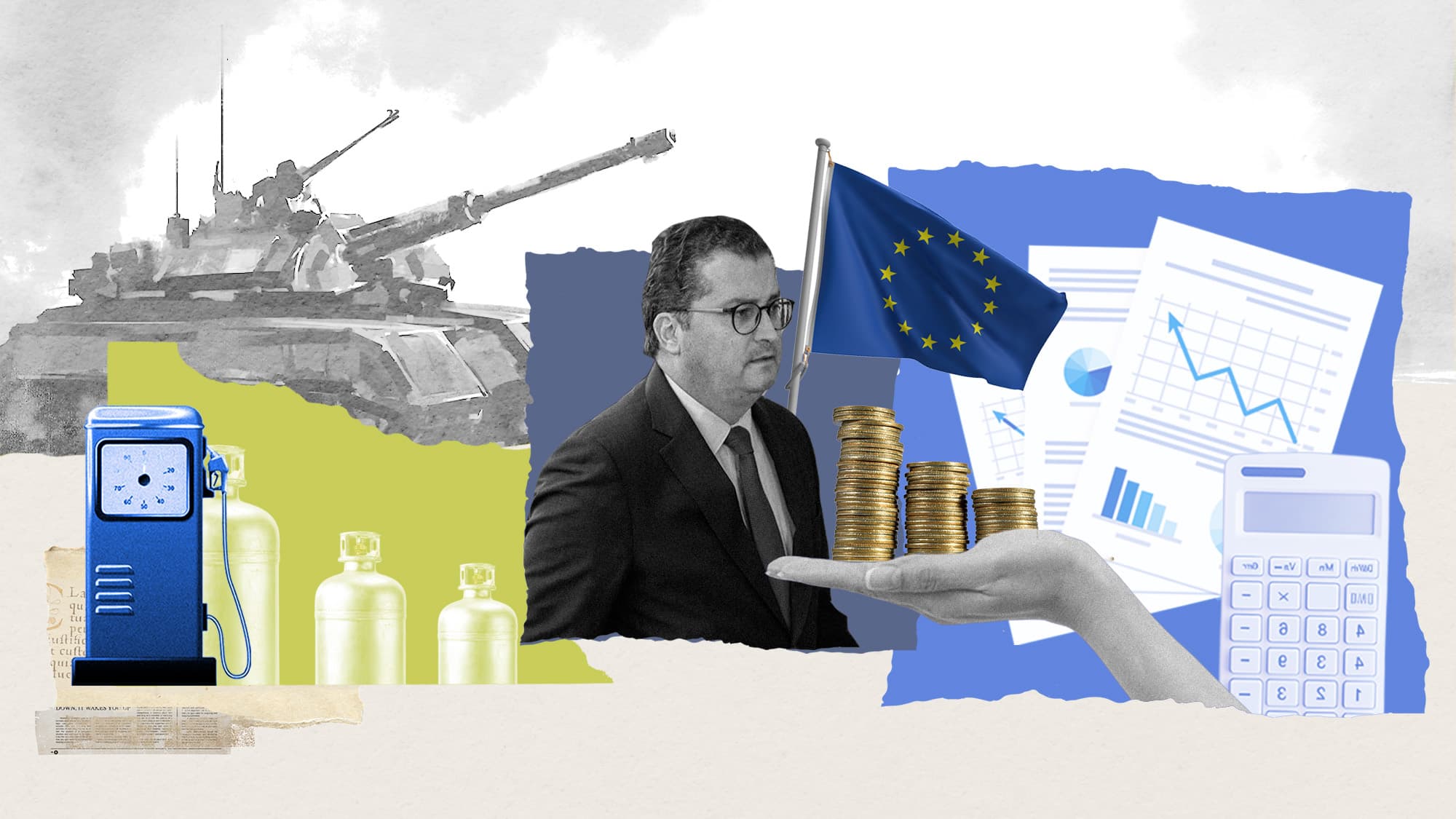
European Commission President Ursula von der Leyen has called for the Council of the EU to rapidly approve Portugal’s defence spending plan that would unlock about €5.8 billion in favourable loans after a preliminary Brussels approval under the SAFE framework. Coverage notes the funds are earmarked to strengthen national defence capabilities and will move to the Council for formal sign‑off. The approval would accelerate procurement and investment in defence-related projects; contractors and regions expected to host works should watch for tender and consultation notices.

Ursula Gertrud von der Leyen (born October 8, 1958, in Brussels, Belgium) is a German physician and politician serving as President of the European Commission since December 1, 2019, becoming the first woman to hold this office. She previously served as Germany's Minister of Defense (2013-2019) and held cabinet positions in family, labour, and social affairs under Chancellor Angela Merkel. Re-elected in July 2024 with 401 votes for a second term until 2029, Forbes named her the world's most powerful woman in 2022, 2023, 2024, and 2025. Relationship with Portugal:

Von der Leyen approved Portugal's Recovery and Resilience Plan in June 2021—the first among 27 EU member states—worth €16.6 billion to "profoundly transform the economy". In a 2025 tribute to Portugal's 40 years in the EU, she declared "Your Fado, your destiny, is right here at the heart of Europe," praising Portugal's renewable energy leadership, infrastructure transformation, and ocean protection. She highlighted Portugal's potential in lithium processing and AI startups while advocating for removing obstacles to economic growth. She also promoted energy interconnections like the Bay of Biscay project linking France-Spain, addressing Iberian energy isolation.

The Recuperar Portugal mission structure said the eighth payment request under the Recovery and Resilience Plan (PRR) — submitted to Brussels in November 2025 — is expected to be paid in February. The announcement gives a tentative timeline for a tranche of EU funds that support national investments under the PRR framework. Project managers and local authorities awaiting PRR cashflows should note the projected month and prepare for administrative steps tied to the payment.
The Recovery and Resilience Plan (Plano de Recuperação e Resiliência) is Portugal's national programme under the EU's NextGenerationEU to fund reforms and investments after COVID‑19; the plan includes roughly €16.6 billion in grants plus about €2.7 billion in loans approved in 2021. Payments are tied to specific milestones and targets — which the government said it is politically committed to meet — so missed milestones can delay projects and funding that affect public works, contractors and local services.
Recover Portugal (Recuperar Portugal) is the national mission structure set up to coordinate, monitor and manage Portugal's implementation of the Recovery and Resilience Plan, including preparing payment requests to the European Commission. The mission said the eighth payment request submitted in November 2025 is expected to be paid in February 2026, so businesses, contractors and municipalities waiting for PRR funds should follow its announcements.

The Government said it is aware of contextual, geopolitical and structural risks to meeting the milestones and targets of the Recovery and Resilience Plan (Plano de Recuperação e Resiliência or PRR) but insisted it remains politically committed to mitigating those risks. Officials framed the challenges as linked to complexity rather than a lack of will, and said they will work to keep projects on track. Taxpayers and recipients of PRR-funded services should note the risk of delays or slower roll-out of projects tied to the plan.
The Recovery and Resilience Plan (Plano de Recuperação e Resiliência) is Portugal's national programme under the EU's NextGenerationEU to fund reforms and investments after COVID‑19; the plan includes roughly €16.6 billion in grants plus about €2.7 billion in loans approved in 2021. Payments are tied to specific milestones and targets — which the government said it is politically committed to meet — so missed milestones can delay projects and funding that affect public works, contractors and local services.

European Commissioner for Defence and Space Andrius Kubilius conducted his first official visit to Portugal, meeting Defence Minister Nuno Melo and Education Minister Fernando Alexandre to discuss defence and space policy. He signalled that SAFE funds could reach the Portuguese government in the coming weeks or months, prompting analytical questions about budget timing, allocation between defence and civil space programmes, and coordination between national ministries and EU institutions. The visit underlined the need for clear planning to integrate incoming EU funding with Portugal’s defence and space policy priorities.

The Portuguese government has assured that there are few Portuguese in Iran and that it is monitoring the situation and assisting nationals where necessary. Two Portuguese nationals have asked for help to leave Iran because of the violence, according to some reports; a protest took place outside the Iranian embassy in Lisbon. For expats with family in Iran, check travel advice and contact consular services if needed.
Update: Latest outlet reports confirm two Portuguese nationals have formally asked for assistance to leave Iran and the government says it is following the situation closely; media coverage also highlights protests in Lisbon by members of the local Iranian‑Portuguese community. Expats with relatives in the region should monitor official travel advice and consider contacting Portuguese consular channels if they need direct help or information.

Presidential candidate André Pestana said Portugal should prioritise domestic social and environmental needs rather than increased defence spending, declaring he does not want “a single euro more for NATO”. He argues the fight should be against low wages and pensions, environmental degradation and the deterioration of public services, and proposes that funds currently transferred to private health providers be redirected into the National Health Service (SNS), claiming a large share of the state health budget is going to private companies.

The Portuguese government approved construction of the new Central Hospital of the Algarve with a maximum budget of €426.6 million spread over 27 years and an annual cap of €50 million. Operations are expected to begin in 2031. The financing structure signals a long-term public investment approach with potential fiscal and timeline risks to monitor, while promising a significant upgrade to regional healthcare infrastructure.

The latest episode of the weekly podcast 'Ao trabalho!' examines lingering uncertainty over tuition fee refunds and the implications for pay awards that recognise qualifications. Finance Minister Joaquim Miranda Sarmento’s response on the pay-award question is discussed alongside fast-moving items on labour policy, employment law and the state budget, with analysis of what these developments mean for workers and expats. The short, under-five-minute episode aims to distil key takeaways and policy consequences for those following workplace rights and public spending.

The State’s €1,550 million fund to guarantee up to 100% housing finance for young people is almost fully committed: €1,460 million (94%) has already been allocated to banks, leaving under €90 million available for future distributions. The near-exhaustion of the guarantee reduces headroom for new beneficiaries and shifts pressure onto banks and policy makers to consider whether to broaden, renew or restrict the scheme, with implications for the housing market and public finances.

The National Institute of Statistics (INE) will reassess in March the classification of Novobanco's dividends, potentially allowing that income to be recognised in last year’s national accounts. If reclassified to count towards the previous budget balance, the adjustment could provide an extra boost to help the Portuguese Government meet or exceed its 0.3% surplus target for 2025. The move would alter headline fiscal metrics, affect timing of revenue recognition in national accounts, and carry implications for public finance reporting, investor perceptions and future treatment of similar banking transactions.

The newly elected leadership of the National Association of Portuguese Municipalities (ANMP) has formally presented its congress resolutions to the Government, raising detailed concerns about the draft law on local finances and the wider decentralisation process. The ANMP is seeking clarifications and safeguards to protect municipal budgets and competences, clearer arrangements for funding decentralisation, and secure access for municipalities to European funds under the next EU programming framework.
A wave of policy and market changes due to take effect in 2026 will raise the cost of housing for Portuguese households and alter incentives across the sector. Measures affecting rents, mortgage lending rules and tax treatment of construction and property are set to impact owners, tenants and prospective buyers, with knock-on effects for affordability, market dynamics and the state budget. The package will reframe public incentives and regulatory risk for investors and households alike, requiring households and professionals to reassess financing, renting and development decisions.

Thirteen years after the US fund Lone Star used a strategy to monetise a state-backed bank stake in Portugal (Novo Banco) — reportedly pocketing about €5bn while exiting without major penalties — South Korea intervened to stop the same playbook from succeeding at a Korean bank backed by public support. The episode highlights divergent regulatory outcomes across jurisdictions: stronger Korean safeguards and political scrutiny protected the public interest and state budget, while Portuguese arrangements enabled a lucrative, low-accountability exit for a private investor. The contrast underscores how supervision, takeover rules and fiscal exposure shape investor returns and public risk in cross-border bank restructurings.

São José Almeida argues that political stability in Portugal in 2026 is not guaranteed: the next occupant of Belém Palace may refuse to follow Marcelo Rebelo de Sousa’s de facto rule that a rejected State Budget should automatically lead to elections. That shift in presidential interpretation would alter the incentives around budget votes, policy-making and election timing, introducing renewed uncertainty into the political landscape.

Luís Marques Mendes has the most expensive campaign and António José Seguro is the most optimistic in estimating the subsidy to be received. Gouveia e Melo expects to receive €700,000 and Ventura €400,000.

The government will introduce compulsory Physical Education for 1st‑cycle pupils in public schools from the next school year, affecting around 330,000 children. The Budget Law commits to hiring the teachers needed to deliver the measure but does not specify how much will be invested or the number of weekly hours to be allocated. The lack of detail raises implementation questions — recruitment timelines, teacher training, regional distribution, and fiscal impact — and creates uncertainty about curriculum time and equity of provision across schools.


Portugal Resident •