Is zero VAT the (only) solution to mitigate rising food prices?
Available evidence suggests that the most effective social protection policies in the food sector are those that increase food supply or directly support the most vulnerable groups.

Latest news and stories about economic policy in Portugal for expats and residents.
Available evidence suggests that the most effective social protection policies in the food sector are those that increase food supply or directly support the most vulnerable groups.

While participating in a demonstration against US attacks on Iran, the communist and Bloco leaders converged on what the reaction to the price hike crisis, resulting from the conflict in the Middle East, should be.

“It was necessary for the Government to openly control fuel prices and set price caps on essential goods,” stated the party coordinator, José Manuel Pureza.

The BE/Azores stated today that it will present an urgent legislative initiative in the regional parliament to prevent fuel price increases in the region, due to the conflict in the Middle East.

Fuel prices are rising, putting pressure on the entire supply chain. Members of Parliament Rui Afonso (Chega), Miguel Costa Matos (PS) and Inês Sousa Real (PAN) advocate for the return of 0% VAT.

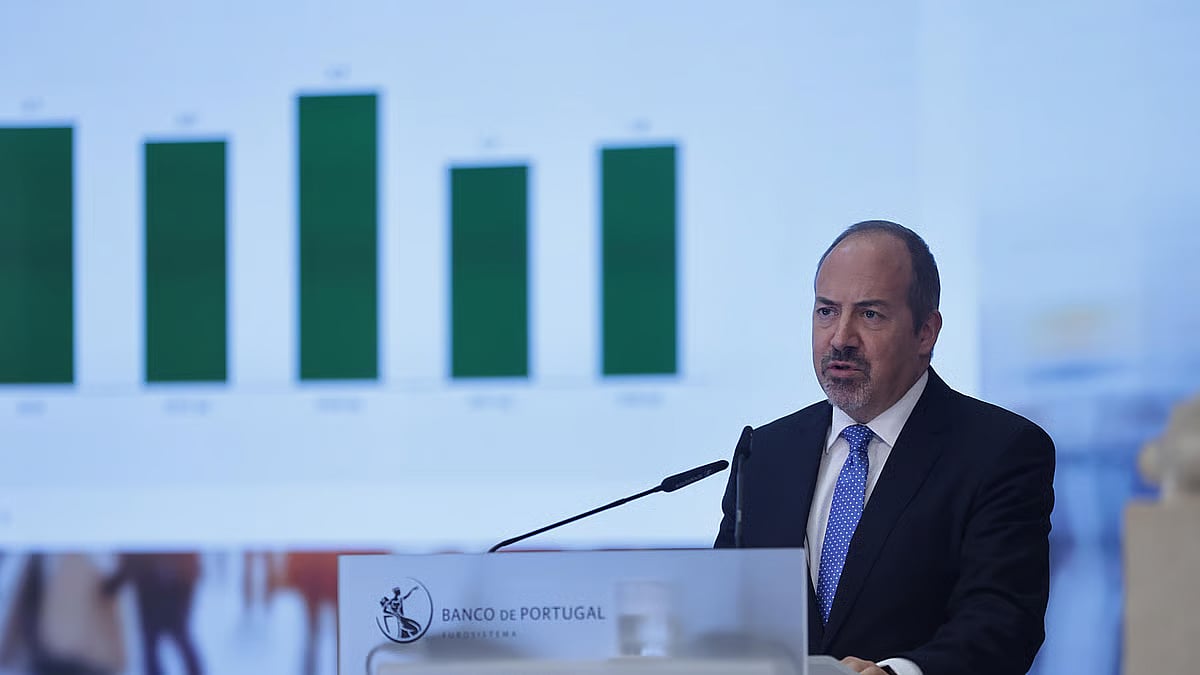
Centeno leaves the Banco de Portugal after 20 years and having reached an agreement on his departure. He is expected to dedicate himself to university teaching now.

The former governor will teach at the University of Miami, in the USA, as a visiting professor.

Mário Centeno's long career at the Bank of Portugal has come to an end. After more than two decades as a staff member of the institution – having served as Governor between 2020 and 2025 – he signed the agreement this week that allows him to retire, ceasing his work at the bank. As ECO has learned, Centeno has already...

Portugal has recently reduced fuel taxes to help curb rising fuel prices, responding to ongoing economic pressures.

Portugal has reduced fuel taxes to help limit rising fuel prices, addressing recent economic pressures related to energy costs.

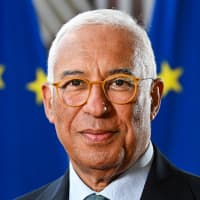
European Council President António Costa has invited UN Secretary-General António Guterres to attend next week’s EU leaders' summit. The meeting will focus on the war in Iran and its global economic repercussions, alongside European competitiveness. This marks a high-profile collaboration between the two former Portuguese prime ministers on the international stage. Residents should note that the summit's outcomes may influence future EU economic policy and energy security.

António Luís Santos da Costa (born July 17, 1961, in Lisbon) is a Portuguese lawyer and Socialist politician who served as Prime Minister of Portugal from 2015-2024 and currently serves as President of the European Council since December 1, 2024. After leading the Lisbon Municipal Assembly and practicing law, he was elected MEP (2004-2005) and entered parliament in 2002. He led the Socialist Party from 2014-2024, building unprecedented parliamentary coalitions with the Communist Party and Left Bloc (2015-2019) before winning an absolute majority in 2022. He resigned as PM in November 2023 following a corruption investigation, though subsequently cleared. The 27 EU member states elected him Council President in June 2024, making him the fourth full-time President and the first southern European socialist in that role.
Political Philosophy:
Costa represents moderate European social democracy, combining orthodox fiscal responsibility with progressive social investment. He prioritizes European integration, consensus-building, and pragmatic compromise over ideological confrontation. As Council President, he champions mediation between member states, improved EU inter-institutional relations, shorter decision-making processes, and regular visits to every EU capital to reconnect citizens with European institutions. His approach emphasizes "creative bridges" reconciling divergent interests while maintaining firmness on European values, particularly regarding Ukraine.
António Guterres is the Secretary-General of the United Nations and served as the Prime Minister of Portugal from 1995 to 2002. A member of the Socialist Party (Partido Socialista), he also led the UN Refugee Agency for a decade before taking the top UN post in 2017. Those living in Portugal should note that he remains a highly respected figure whose international influence often brings global attention to Portuguese diplomatic priorities.

There are 'no structural effects yet' on the economy from the skyrocketing fuel prices. This guarantee is given by the Minister of Economy, who assures that the Government is 'measuring' the impacts with 'constant attention'. Castro Almeida, in an interview with Rádio Observador, says that the current support measures for diesel will be extended...

As we all know, free trade is a positive thing. Consumers can choose between goods and services from all over the world, competition ensures innovation and lower prices – and the state benefits from taxes and economic growth. However, this system only works if everyone plays by the same rules. Subsidies, unilateral tariffs or...

The European Commission contradicts Lisbon: tax cuts on fuels are not one-off expenses and are not exempt from EU budgetary rules.

The European Commission clarified this Wednesday that energy sector subsidies, in light of the impact of the conflict in the Middle East, are not usually considered extraordinary, contrary to the Portuguese government's position. 'Energy support measures, such as the reduction of excise duties on energy products, are not normally considered extraordinary,' it specified.

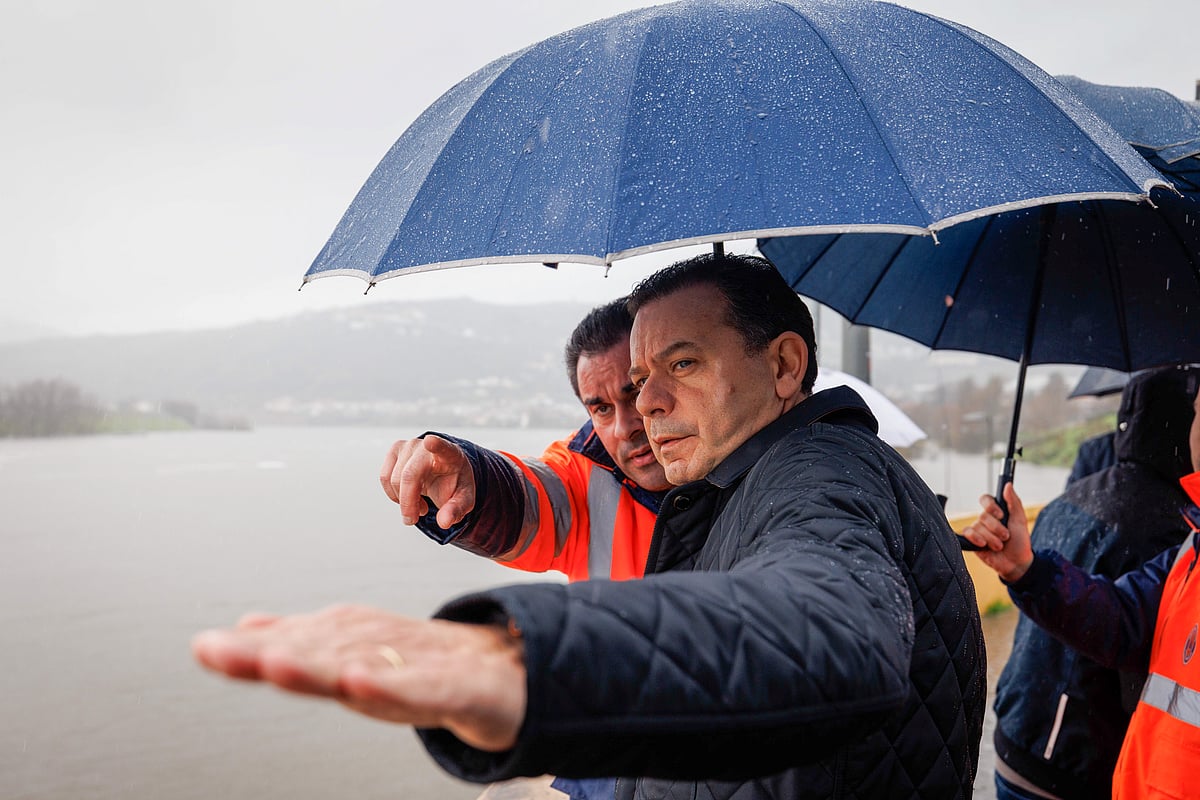
Portugal had 1.56 million tonnes of physical oil and petroleum product reserves in the final quarter of last year, according to data from ENSE. Prime Minister Luís Montenegro announced that Portugal will release 10% of its strategic oil reserves to increase supply and help contain fuel prices, joining an International Energy Agency agreement to release 400 million barrels globally following the closure of the Strait of Hormuz.

The country is joining the agreement of IEA member states, which have collectively decided to release 400 million barrels of oil from strategic reserves into the markets.

The public debt must continue to fall, said the Minister of Finance.

The AEFEP Summit, which in recent days transformed the Faculty of Economics of the University of Porto into an important epicentre for national political and economic debate, brought to the fore on its final day one of the most decisive issues for our collective future: the consolidation of a two-speed Europe. The closing session, led by...

The Minister of Economy stated this Tuesday that there is no 'fetish' regarding economic growth or budget balance figures, emphasizing that the Government will aim for positive results while prioritizing people. Manuel Castro Almeida noted that the focus remains on maintaining balanced public accounts, but stressed that the Government will not sacrifice solidarity with people and businesses affected by recent calamities to achieve this at any cost. He added that the Government is monitoring the impact of recent bad weather to prevent structural damage to the economy.
Chega plans to propose the reinstatement of zero VAT on essential goods, a measure they aim to limit until the end of the year. Additionally, the party is advocating for further government action to reduce fuel taxes.

The energy transition is a critical issue that must be prioritized in economic, industrial, and climate policy discussions. It is essential for sustainable development and addressing climate change.

Economist Filipe Garcia emphasizes the necessity for changes in tax collection to finance the PTRR, suggesting that without adjustments, funding will need to come from increased taxes or cuts in other areas.

This analytical piece compares the positions of presidential candidates Fernando Seguro and André Ventura across seven key areas — from the economy and public safety to defence and foreign policy — highlighting how their different approaches would shape the role of the President in Belém. It argues that the next President will remain central to Portuguese political life through veto powers, constitutional defence, international representation and command of the armed forces, and suggests that courage, more than left‑or‑right alignment, is the decisive quality for voters to weigh in this campaign.