5 October 2026 – 11 October 2026
Portugal Navigates Budget Politics and Housing Protests as Tax Relief Looms
Political stability looks assured as the opposition pledges to let the 2027 State Budget pass, bringing income tax cuts and expanded rental deductions. However, social friction is mounting on the streets, with widespread demonstrations over the escalating housing crisis alongside student unrest regarding tuition fees. Expats and residents alike should expect upcoming fiscal changes amid an increasingly tense debate surrounding the nation's rising cost of living.
Government Prepares 2027 Budget With Income Tax Cuts
Finance Minister Joaquim Miranda Sarmento is set to deliver the 2027 State Budget (Orçamento do Estado) proposal to parliament, featuring personal income tax (Imposto sobre o Rendimento de Pessoas Singulares or IRS) bracket adjustments indexed to inflation. The proposal includes a minimum €60.52 salary raise for civil servants (funcionários públicos) and an increase to the Solidarity Supplement for the Elderly (Complemento Solidário para Idosos). Initial parliamentary passage is expected after the Socialist Party (Partido Socialista or PS) announced plans to abstain.
Update: Budget Delivered as PS Confirms Initial Abstention
Finance Minister Joaquim Miranda Sarmento presented the proposal targeting a 0.1% surplus and debt reduction to 84.5% of economic output. The PS confirmed it will abstain in the initial general vote, but said it will press for guarantees on storm damage recovery and the Recovery and Resilience Plan (Plano de Recuperação e Resiliência or PRR) during specialty committee debates.
- Minister of State and Finance (2024–present)
- Party: Social Democratic Party (PSD), Partido Social Democrata
- Background: Economist, university professor (ISEG)
Joaquim Miranda Sarmento is Portugal's Finance Minister in the AD government led by Luís Montenegro. An economist and professor at ISEG (Lisbon School of Economics & Management), he served as PSD parliamentary group leader before joining the government.
As Finance Minister, he oversees the state budget, tax policy, public debt management, and fiscal relations with the EU. His decisions on tax brackets, IRS withholding tables, housing incentives, and public spending directly affect residents' cost of living and investment climate.
Health cards are private membership or discount schemes sold by companies that offer access to consultations, tests or reduced fees at private clinics; they are not the public health service. The Socialist Party (Partido Socialista or PS) has proposed regulation to increase transparency and protect consumers from misleading marketing or unexpected charges.
The PRR (Plano de Recuperação e Resiliência) is Portugal's national program under the EU's NextGenerationEU recovery fund, worth approximately €22.2 billion — roughly €16.6 billion in grants plus €5.6 billion in loans. Approved in 2021, it funds reforms and investments across housing, digital transition, climate action, healthcare, and public administration.
Payments from the European Commission are tied to specific milestones and targets. Missed deadlines or incomplete reforms can delay disbursements, affecting public works, infrastructure projects, and social programs that depend on PRR funding.
The PRR is one of the largest investment programs in Portugal's recent history and touches areas from affordable housing construction to hospital modernization, school renovation, and green energy transition. Progress is monitored by the European Commission through regular reviews.

Thousands Protest Across Portugal Over Soaring Housing Costs
Thousands of people demonstrated in Lisbon, Porto, Braga, and Aveiro to protest rising living expenses and unaffordable housing. Organized by the civic platform “Não dá mais para viver assim” (We can no longer live like this), demonstrators marched through central avenues demanding rent caps, price controls, and an expansion of public housing. The demonstrations coincided with data from the National Statistics Institute (Instituto Nacional de Estatística or INE) showing residential construction costs rose 7.5% year-on-year in August.
Portugal’s house prices have risen faster than the EU average since 2020, and recent reports list Portugal among the countries with the largest price increases over that period. That stronger price growth has worsened affordability in Lisbon and Porto in particular, so prospective buyers and renters should check local indices and mortgage costs before deciding.
The INE housing price index (Índice de Preços da Habitação) tracks changes in residential property transaction prices across Portugal, published quarterly by the National Statistics Institute (INE). It covers both new and existing dwellings and breaks data down by region, property type, and buyer nationality.
The index is a key reference for policymakers debating housing affordability measures, for lenders assessing mortgage risk, and for buyers and investors tracking market trends. It has shown sustained price growth since 2015, with particularly sharp increases in Lisbon, Porto, and the Algarve driven by international demand, tourism, and housing shortages.
Related INE publications include monthly housing transaction data, rental indices, and construction statistics. Together, they provide the most comprehensive picture of Portugal's property market.
Socialist Party Backs Abstention on 2027 State Budget
The National Commission of the Socialist Party (Partido Socialista or PS) agreed to abstain on the 2027 State Budget (Orçamento do Estado), clearing the way for the government's fiscal plan to pass. Party President Carlos César and Secretary-General José Luís Carneiro cited institutional responsibility amid global economic instability, while stressing that the party does not endorse the draft's economic direction. The PS announced plans to present amendment proposals during committee debates to address household costs for fuel, electricity, and groceries.
Health cards are private membership or discount schemes sold by companies that offer access to consultations, tests or reduced fees at private clinics; they are not the public health service. The Socialist Party (Partido Socialista or PS) has proposed regulation to increase transparency and protect consumers from misleading marketing or unexpected charges.
José Luís Carneiro is a Portuguese politician and member of the Socialist Party (Partido Socialista or PS). He served as the Minister of Internal Administration (Ministro da Administração Interna) from 2022 to 2024 and currently holds a seat in the Assembly of the Republic (Assembleia da República).
Montenegro Defends Cohesion Funds at European Parliament
Prime Minister Luís Montenegro addressed the European Parliament in Strasbourg to advocate for Portugal's priorities in the upcoming European Union multiannual budget. Montenegro pushed back against calls from larger member states for spending cuts, arguing that cohesion funds must remain protected. The negotiations coincide with European Council President António Costa's goal to finalize the financial framework by the end of the year.
Update: Montenegro Backs António Costa and Warns of Living Costs
During his address in Strasbourg, Prime Minister Luís Montenegro also expressed support for António Costa to remain as European Council President to ensure institutional stability. Montenegro called for coordinated European Union measures to address housing shortages and rising living costs, warning that economic hardship risks driving voters toward far-right populism.

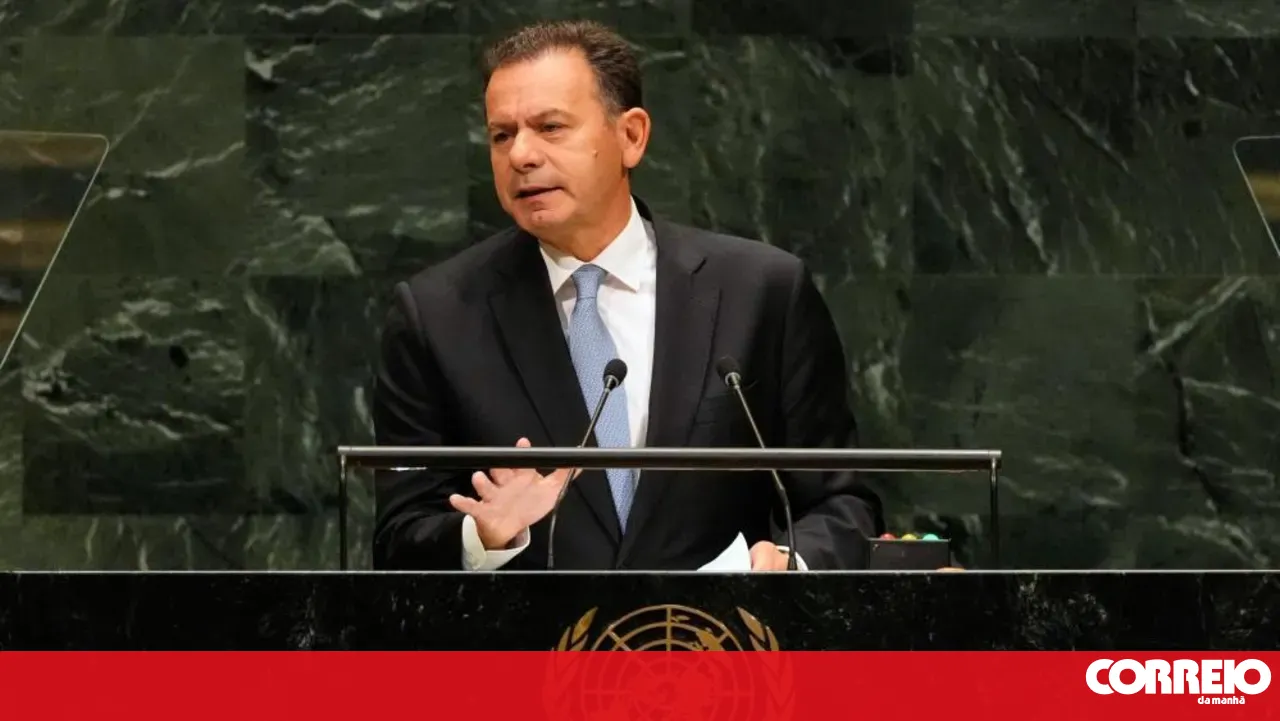
- Prime Minister, Portugal: 2024 - Present
- Party: Social Democratic Party (PSD)
Luís Filipe Montenegro Cardoso de Morais Esteves (born February 16, 1973, in Porto) is a Portuguese lawyer and center‑right politician who has served as Prime Minister of Portugal since April 2, 2024. A long‑time member of the Social Democratic Party (PSD), he is the leading figure of the post‑Troika generation of Portuguese conservatives. Montenegro was elected to the Assembly of the Republic in 2002 for the Aveiro district and remained an MP for 16 years, becoming PSD parliamentary leader from 2011 to 2017 during the bailout and austerity period under Prime Minister Pedro Passos Coelho. He was a prominent defender of strict austerity measures, arguing in 2014 that “the life of the people is no better, but the life of the country is a lot better,” a phrase that has followed his public image since. After an unsuccessful leadership bid against Rui Rio in 2020, Montenegro won the PSD leadership in 2022. He then forged the centre‑right Democratic Alliance (PSD–CDS‑PP and allies), which won a plurality of seats in the 2024 legislative election. Refusing to partner with the far‑right Chega, which he has called “often xenophobic, racist, populist and excessively demagogic,” he formed a minority government as head of the XXIV Constitutional Government on April 2, 2024. His first government fell in March 2025 after a no‑confidence vote linked to a conflict‑of‑interest affair, but fresh elections saw the Democratic Alliance increase its seat share, allowing Montenegro to return as prime minister leading the XXV Constitutional Government. His importance to Portugal lies in attempting to re‑center the traditional centre‑right after the crisis years, defending liberal‑conservative economics and EU alignment while drawing a sharp line against formal cooperation with the radical right, thus shaping how Portuguese democracy manages its new multi‑party era.
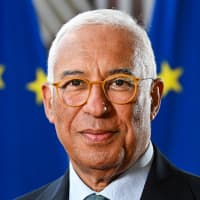
- President of the European Council (since Dec 2024)
- Former Prime Minister of Portugal (November 2015 – April 2024)
- Party: Socialist Party (PS) Partido Socialista
- He is of Portuguese and Indian (Goan) descent
António Luís Santos da Costa (born July 17, 1961, in Lisbon) is a Portuguese lawyer and Socialist politician who served as Prime Minister of Portugal from 2015-2024 and currently serves as President of the European Council since December 1, 2024. After leading the Lisbon Municipal Assembly and practicing law, he was elected MEP (2004-2005) and entered parliament in 2002. He led the Socialist Party from 2014-2024, building unprecedented parliamentary coalitions with the Communist Party and Left Bloc (2015-2019) before winning an absolute majority in 2022. He resigned as PM in November 2023 following a corruption investigation, though subsequently cleared. The 27 EU member states elected him Council President in June 2024, making him the fourth full-time President and the first southern European socialist in that role.
Political Philosophy:
Costa represents moderate European social democracy, combining orthodox fiscal responsibility with progressive social investment. He prioritizes European integration, consensus-building, and pragmatic compromise over ideological confrontation. As Council President, he champions mediation between member states, improved EU inter-institutional relations, shorter decision-making processes, and regular visits to every EU capital to reconnect citizens with European institutions. His approach emphasizes "creative bridges" reconciling divergent interests while maintaining firmness on European values, particularly regarding Ukraine.
PS Pledges Budget Abstention to Avoid National Political Crisis
The Socialist Party (Partido Socialista or PS) confirmed it will abstain during the parliamentary vote on the 2027 State Budget (Orçamento do Estado), allowing the bill to pass. Socialist parliamentary leader André Moz Caldas said the party wants to prevent a political crisis and ensure the state avoids operating under emergency monthly twelfths (duodécimos) in January 2027. The leadership stated it would only change its stance if unexpected measures appear in the final proposal.
Update: Carneiro Reaffirms Budget Abstention Ahead of National Commission Meeting
Socialist Party Secretary-General José Luís Carneiro reiterated that the party will maintain its abstention on the budget proposal to keep the country from falling into political instability. José Luís Carneiro said he expects no surprises from the government and warned that pension cuts or tax increases would remain unacceptable. The PS National Commission (Comissão Nacional) will convene in Lisbon on Saturday to formally assess the decision.
José Luís Carneiro is a Portuguese politician and member of the Socialist Party (Partido Socialista or PS). He served as the Minister of Internal Administration (Ministro da Administração Interna) from 2022 to 2024 and currently holds a seat in the Assembly of the Republic (Assembleia da República).
Health cards are private membership or discount schemes sold by companies that offer access to consultations, tests or reduced fees at private clinics; they are not the public health service. The Socialist Party (Partido Socialista or PS) has proposed regulation to increase transparency and protect consumers from misleading marketing or unexpected charges.
Students Plan Lisbon Protest Over Unfreezing Tuition Fees
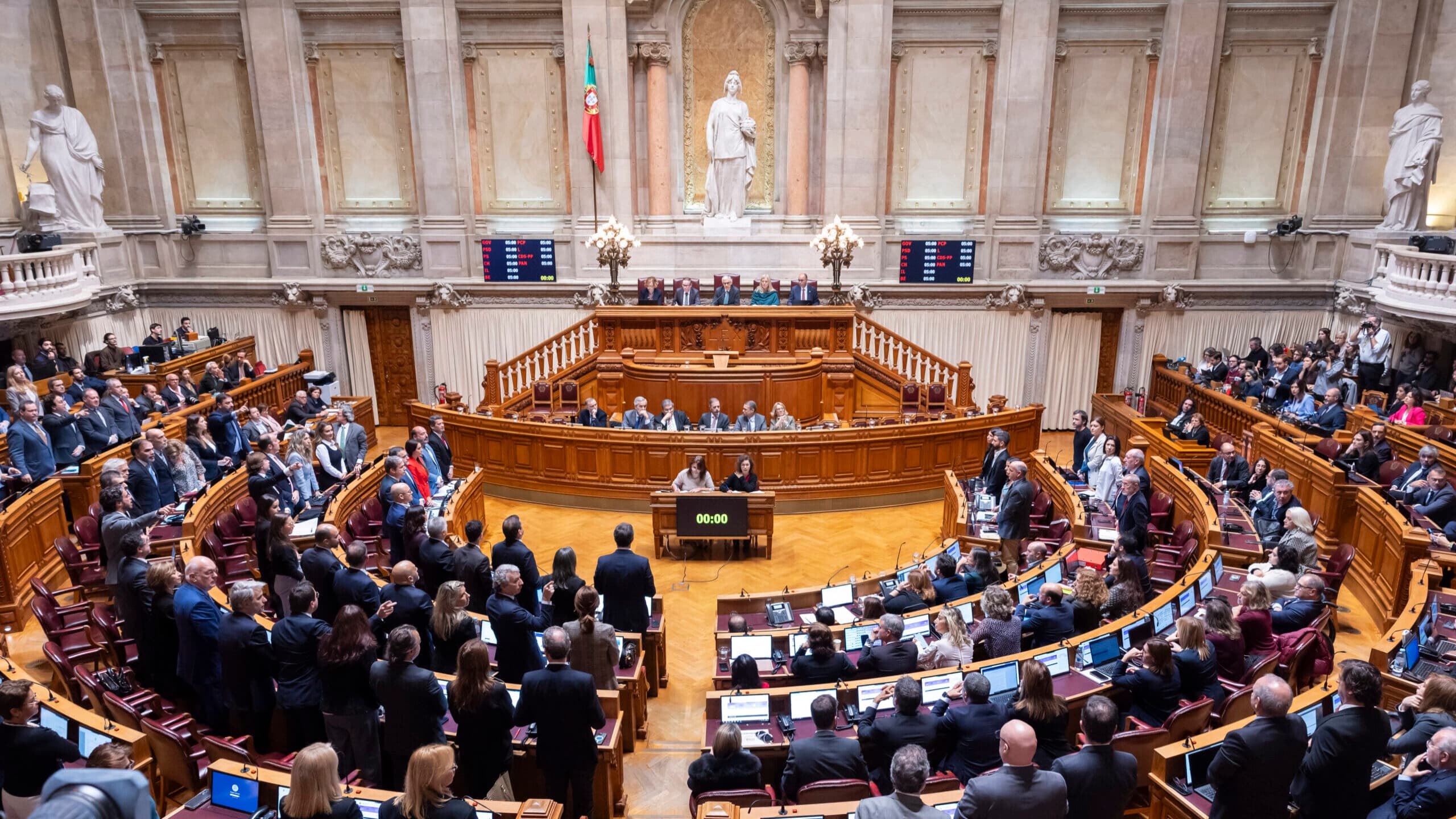
Student associations from five higher education institutions called a demonstration in Lisbon on October 21 to protest the proposed unfreezing of university tuition fees (propinas). The draft 2027 State Budget ends the €697 annual cap on undergraduate degrees in place since 2020, indexing tuition fees to inflation starting in the 2027/2028 academic year. Protesters plan to gather outside the government headquarters at Campus XXI to oppose the fee increases.
Propinas are tuition fees charged to students attending public higher education institutions in Portugal. Public undergraduate fees have been frozen at a maximum limit of €697 per academic year for seven consecutive years. International students residing from outside the European Union typically pay separate, higher tuition rates set independently by each university.
State Budget Increases Tenant Rental Tax Deductions to €1,000
Tenants will be able to deduct up to €1,000 in housing rent from their personal income tax (Imposto sobre o Rendimento de Pessoas Singulares or IRS) in 2027, up from the current €900 limit. The government proposal maintains tax exemptions on workplace productivity bonuses up to 6% of annual base pay for companies raising salaries by 4.5%. The draft budget also updates the threshold for the high-earner solidarity surcharge (taxa de solidariedade), linking it to the ninth tax bracket.
Update: Budget Expands IRS Relief and Cuts Corporate Tax Rate
Finance Minister Joaquim Miranda Sarmento detailed additional tax measures in the draft budget, proposing a 3.88% update to IRS brackets and rate cuts across the first six brackets. The proposal also reduces the corporate income tax (Imposto sobre o Rendimento das Pessoas Coletivas or IRC) rate by one percentage point, raises the annual subsistence threshold to €13,580, and provides a €50 monthly pension increase.
Portugal’s house prices have risen faster than the EU average since 2020, and recent reports list Portugal among the countries with the largest price increases over that period. That stronger price growth has worsened affordability in Lisbon and Porto in particular, so prospective buyers and renters should check local indices and mortgage costs before deciding.
- Minister of State and Finance (2024–present)
- Party: Social Democratic Party (PSD), Partido Social Democrata
- Background: Economist, university professor (ISEG)
Joaquim Miranda Sarmento is Portugal's Finance Minister in the AD government led by Luís Montenegro. An economist and professor at ISEG (Lisbon School of Economics & Management), he served as PSD parliamentary group leader before joining the government.
As Finance Minister, he oversees the state budget, tax policy, public debt management, and fiscal relations with the EU. His decisions on tax brackets, IRS withholding tables, housing incentives, and public spending directly affect residents' cost of living and investment climate.
The corporate income tax (Imposto sobre o Rendimento das Pessoas Coletivas or IRC) is a tax levied on the profits of companies operating in Portugal. It applies to both resident entities and non-resident entities with income generated within the country.

Portugal reports a suspected case of fraud involving European Union funds
Authorities are investigating a potential misuse of EU financial resources within the country.
Government Demands Pensioners Refund Overpaid Benefits After IT Error
Minister of Labour Maria do Rosário Palma Ramalho announced that the state has legal grounds to recover overpaid pension benefits from nearly 3,000 retirees following a software calculation error at the Caixa Geral de Aposentações (CGA). The administrative mistake led to an average overpayment of €93.31 per month for civil service pensions awarded between May and August. The ministry stated that affected pensioners will be allowed to select their preferred repayment method for returning the excess funds.
Update: Unions Challenge Pension Repayments With Ombudsman Complaint
Trade unions filed a formal complaint with the Ombudsman (Provedoria de Justiça) to halt the clawback of funds scheduled for this month. Labor representatives also warned that affected pensioners are preparing legal challenges in administrative courts to block the state's recovery efforts.
Maria do Rosário Palma Ramalho is the Minister of Labor, Solidarity, and Social Security (Ministra do Trabalho, Solidariedade e Segurança Social) in the current government led by Prime Minister Luís Montenegro. She is a legal expert and former member of the board of the Bank of Portugal (Banco de Portugal).
The Caixa Geral de Aposentações (CGA) is Portugal's public sector retirement fund, managing pensions for civil servants hired before 2006. State employees hired after that date are enrolled in the standard Social Security (Segurança Social) system instead. The institution oversees retirement and disability benefits for hundreds of thousands of former public-sector workers, including teachers and administrative staff.
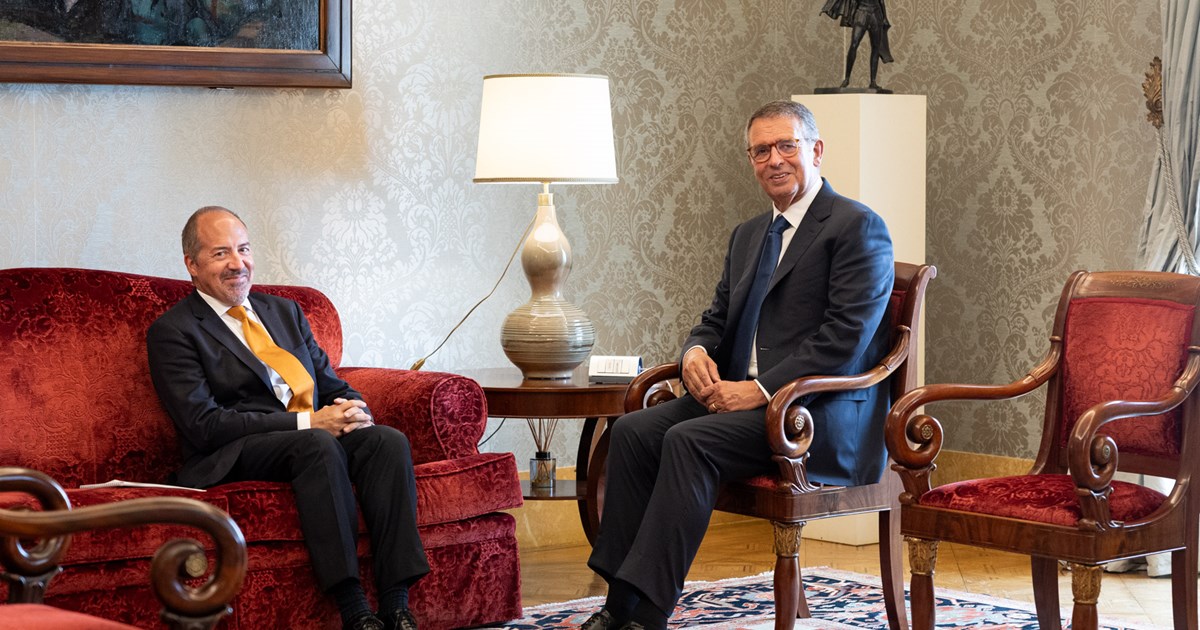
President of the Republic received the Governor of the Bank of Portugal
The President held an official meeting with the Governor of the Bank of Portugal.