7 September 2026 – 13 September 2026
Portugal Faces Social Unrest Amid Economic Reforms and Security Concerns
This week saw a surge in public protests targeting both economic policies and judicial transparency, while the government announced new tax cuts and pension bonuses to address cost-of-living pressures. Meanwhile, authorities are managing rising security concerns following a tragic crime in Lagos and ongoing negotiations with police unions.
Caretaker arrested for murder of foreign couple in Lagos
The Judiciary Police (Polícia Judiciária or PJ) arrested a 45-year-old caretaker in Lagos on suspicion of murdering the foreign business couple he worked for. The victims, aged 79 and 62, were found in a cistern on their property, with authorities reporting the crime involved extreme violence. The suspect is now in preventive detention (prisão preventiva).

The PJ (Polícia Judiciária) is Portugal's national criminal investigation police agency, founded in 1945. Operating under the Ministry of Justice and supervised by the Public Ministry (prosecutors), the PJ is a "higher criminal police body" specializing in serious and complex crimes. Mission: The PJ assists judicial and prosecuting authorities by investigating terrorism, organized crime, homicide, kidnapping, drug trafficking, corruption, cybercrime, financial crime, and money laundering. It conducts forensic examinations, operates Portugal's Interpol and Europol liaison offices, and maintains specialized units including the National Counterterrorism Unit and National Anti-Corruption Unit. Difference from PSP/GNR: While PSP (civilian urban police) and GNR (military rural police) focus on preventive policing, public order, and investigating minor crimes, the PJ exclusively handles serious crime investigation requiring specialized technical and scientific expertise. PSP and GNR report to the Ministry of Internal Affairs; PJ reports to the Ministry of Justice. PJ officers receive higher pay and prestige but face greater operational risk.
Preventive detention (prisão preventiva) is a court-ordered measure that keeps a suspect in custody before trial when a judge decides there is a real risk they might flee, tamper with evidence, or pose a danger to others. It is temporary and not a conviction; in the recent case five of the 37 alleged members were ordered to await the investigation in preventive detention by the Central Criminal Investigation Court. Those detained should request a lawyer and can seek consular assistance if they are foreign nationals, while family or lawyers can ask the court to review or lift the measure.

Minister schedules police negotiations amid protest threats
Minister of Internal Administration Luís Neves has summoned Public Security Police (Polícia de Segurança Pública or PSP) unions and National Republican Guard (Guarda Nacional Republicana or GNR) associations for negotiation meetings on September 17 and 29. The ministry stated the meetings aim to address career restructuring and special supplements, despite recent announcements of a nationwide protest cycle by police structures.
Update: Police unions demand focus on core negotiation issues
Two major police unions, the Portuguese Police Union and the National Police Union, have publicly demanded that Minister of Internal Administration Luís Neves prioritize substantive negotiation topics. The unions argue that previous agreements have served only as distractions and insist that the upcoming meetings must address the issues that truly matter to the force.

The GNR (Guarda Nacional Republicana) is Portugal's national gendarmerie—a military police force founded in 1911, with origins dating to 1801. With over 22,600 personnel, GNR patrols 94-96% of Portuguese territory, covering rural areas, medium towns, and highways. Members are military personnel subject to military law, responsible for public order, customs, coastal control, environmental protection (SEPNA), firefighting/rescue (GIPS), border control, and ceremonial guards. GNR vs. PSP: The PSP (Polícia de Segurança Pública) is Portugal's civilian police force, covering major cities (Lisbon, Porto, Faro) and large urban areas—only 4% of territory but roughly half the population. PSP handles airport security, diplomatic protection, and private security regulation. Both share core missions (public order, crime prevention), but differ in nature: GNR is military with military training; PSP is civilian with police-focused training.

The PSP (Polícia de Segurança Pública) is Portugal's national civilian police force, founded in 1867. Responsible for defending Republican democracy and safeguarding internal security and citizens' rights, the PSP polices major cities—Lisbon, Porto, Faro—and large urban areas, covering only 4% of Portugal's territory but roughly half the population. Led by a National Director under the Ministry of Internal Affairs, its approximately 21,500 officers handle preventive policing, crime investigation, public order, airport security, diplomatic protection, private security regulation, firearms licensing, and border control (since 2023).
PSP vs. GNR: The PSP is civilian with police-focused training and urban jurisdiction, while the GNR (Guarda Nacional Republicana) is military (gendarmerie) with military training, covering 96% of Portugal's rural and suburban territory. Both share core public safety missions but differ fundamentally in nature, training, and geographic responsibility.
Luís Neves will take office on Monday as Minister of Internal Administration. He graduated in law and has worked at the Judicial Police since 1995, where he served as coordinator of a national unit and developed a long career in criminal investigation.
Political parties clash over fuel tax and economic policy
Tensions escalated between the Socialist Party (Partido Socialista or PS) and Chega following accusations regarding fuel tax relief. José Luís Carneiro of the PS accused Chega of deceiving the public, while André Ventura rejected the claims and alleged that the PS is blocking tax reduction measures. Meanwhile, the Portuguese Communist Party (Partido Comunista Português or PCP) criticized both parties for failing to address the profits of major economic groups.
José Luís Carneiro is a Portuguese politician and member of the Socialist Party (Partido Socialista or PS). He served as the Minister of Internal Administration (Ministro da Administração Interna) from 2022 to 2024 and currently holds a seat in the Assembly of the Republic (Assembleia da República).
Health cards are private membership or discount schemes sold by companies that offer access to consultations, tests or reduced fees at private clinics; they are not the public health service. The Socialist Party (Partido Socialista or PS) has proposed regulation to increase transparency and protect consumers from misleading marketing or unexpected charges.
António Filipe is a politician from the PCP (Partido Comunista Português) who, in this story, acknowledged that his election results fell short and said the party would join forces to oppose what it called a 'serious threat to democracy'. His remarks indicate the PCP intends to be active in post-election alliances rather than withdrawing from national debates. Voters and those following left-wing politics should pay attention to his and the PCP's next moves.
Education Minister orders probe into school enrollment refusals
Minister of Education Fernando Alexandre has ordered an investigation into reports that some schools refused student enrollments despite having available vacancies. The state system continues to face significant challenges, with hundreds of pupils still without a place and schools relying heavily on overtime hours to manage teacher shortages.
Update: Parents demand action as school placement crisis continues
Parents across the country have formed an informal group to protest the ongoing lack of school placements for their children, particularly affecting families relocating or transitioning from private to public education. Some parents are now calling for presidential intervention and considering legal action, arguing that the government's investigation is arriving too late to address the immediate needs of affected students.
Fernando Alexandre is the Minister of Education, Science, and Innovation in Portugal's current government, which took office in April 2024. An economist by training, he previously served as a Secretary of State and is now responsible for managing the national school system and university funding. He recently sparked debate by suggesting that university tuition fees should be adjusted to account for inflation.
Chega questions government links to energy grid operator
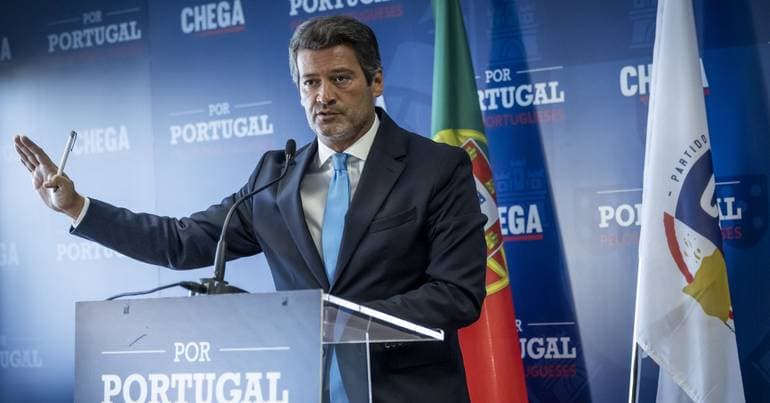
André Ventura, leader of the Chega party, has formally requested information from the government regarding potential conflicts of interest involving officials and the electricity grid operator, REN. Ventura is seeking to determine if any government members hold shares in the company and if such interests were properly declared during recent decision-making processes.

André Ventura, born January 15, 1983, is a lawyer, academic, and Portugal's most prominent far-right leader. He founded Chega ("Enough") in 2019 after his PSD mayoral campaign attacked the Romani community. Chega surged from 1.3% in 2019 to 22.8% in May 2025, becoming parliament's second-largest party and making Ventura Leader of the Opposition.
His platform emphasizes immigration restrictions, law-and-order policies, constitutional reform, and contains inflammatory anti-Romani rhetoric that has triggered multiple discrimination convictions and investigations. Politically classified as far-right by international media, Ventura cultivates alliances with European far-right figures including Marine Le Pen and Santiago Abascal.
Protesters march to Prime Minister's home in Espinho
Around 80 people marched to the residence of Prime Minister Luís Montenegro in Espinho on September 12 to protest rising fuel prices and the cost of living. Organized by local entrepreneurs, the demonstration was blocked by police before reaching the home, with organizers demanding urgent financial relief from the government.

- Prime Minister, Portugal: 2024 - Present
- Party: Social Democratic Party (PSD)
Luís Filipe Montenegro Cardoso de Morais Esteves (born February 16, 1973, in Porto) is a Portuguese lawyer and center‑right politician who has served as Prime Minister of Portugal since April 2, 2024. A long‑time member of the Social Democratic Party (PSD), he is the leading figure of the post‑Troika generation of Portuguese conservatives. Montenegro was elected to the Assembly of the Republic in 2002 for the Aveiro district and remained an MP for 16 years, becoming PSD parliamentary leader from 2011 to 2017 during the bailout and austerity period under Prime Minister Pedro Passos Coelho. He was a prominent defender of strict austerity measures, arguing in 2014 that “the life of the people is no better, but the life of the country is a lot better,” a phrase that has followed his public image since. After an unsuccessful leadership bid against Rui Rio in 2020, Montenegro won the PSD leadership in 2022. He then forged the centre‑right Democratic Alliance (PSD–CDS‑PP and allies), which won a plurality of seats in the 2024 legislative election. Refusing to partner with the far‑right Chega, which he has called “often xenophobic, racist, populist and excessively demagogic,” he formed a minority government as head of the XXIV Constitutional Government on April 2, 2024. His first government fell in March 2025 after a no‑confidence vote linked to a conflict‑of‑interest affair, but fresh elections saw the Democratic Alliance increase its seat share, allowing Montenegro to return as prime minister leading the XXV Constitutional Government. His importance to Portugal lies in attempting to re‑center the traditional centre‑right after the crisis years, defending liberal‑conservative economics and EU alignment while drawing a sharp line against formal cooperation with the radical right, thus shaping how Portuguese democracy manages its new multi‑party era.
Immigration agency reports drop in formal complaints
The Agency for Integration, Migration and Asylum (Agência para a Integração, Migrações e Asilo or AIMA) reports that formal complaints against the agency have halved compared to 2024. Despite this, the union representing migration technicians has questioned the data, suggesting that the figures may not fully reflect the current state of service delivery and the agency's ongoing workload.
Temporary residence is a limited residence permit that allows non‑EU nationals to live in Portugal for a set period (commonly one year, renewable) for study, work or other reasons. The Agência para a Integração, Migrações e Asilo (AIMA) launching an online form means eligible students who also work can apply or regularise their status more easily through AIMA’s process rather than only via consular services.
Protest highlights judicial handling of child abuse cases
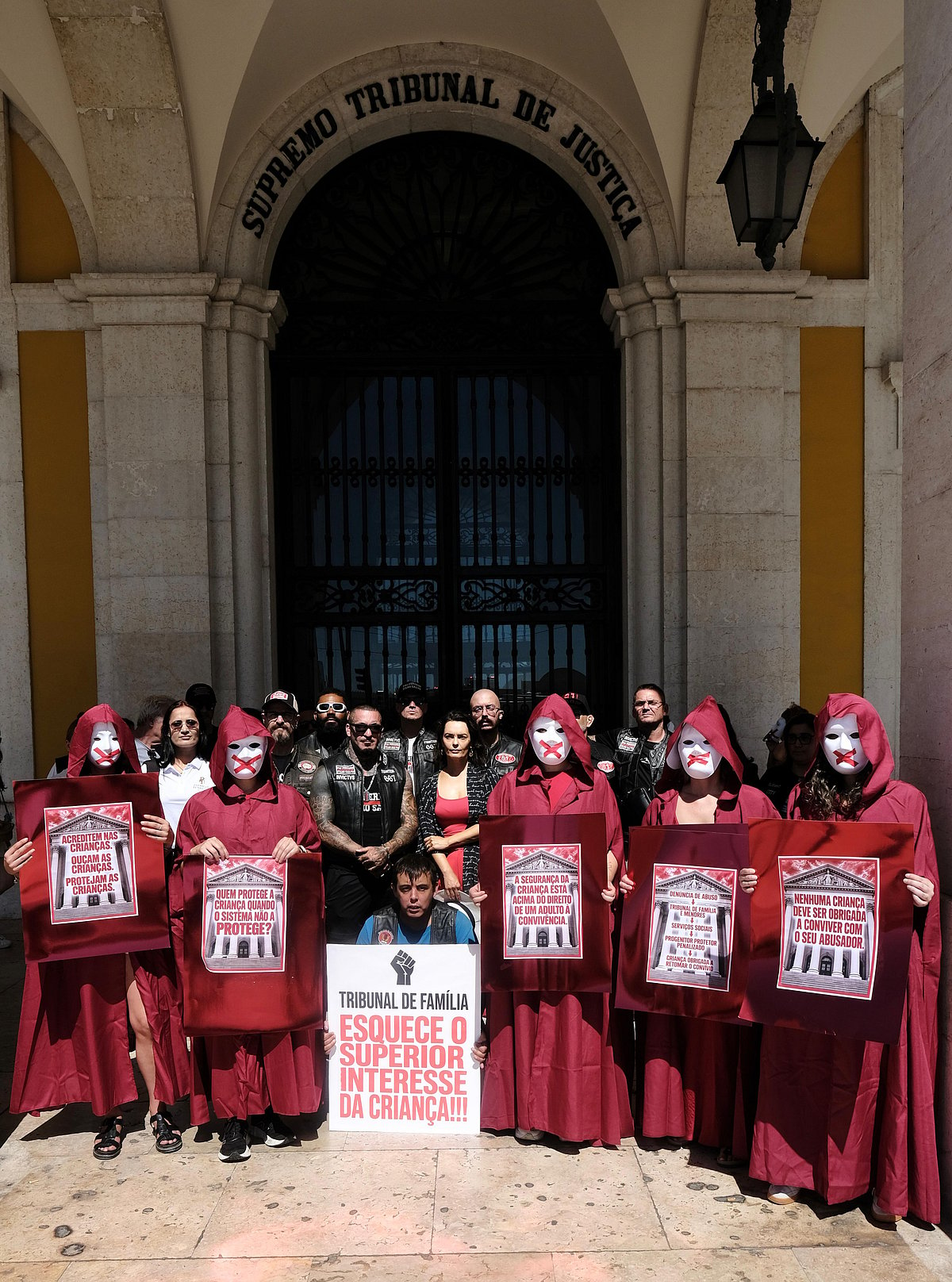
Demonstrators gathered in Lisbon and Porto this Saturday to protest the judicial system's treatment of child abuse and domestic violence victims. Organized by the Women's Movement, participants criticized the systematic devaluation of abuse reports and the practice of mandating contact between child victims and their alleged abusers in civil guardianship cases.
Government announces tax cuts and pension bonuses
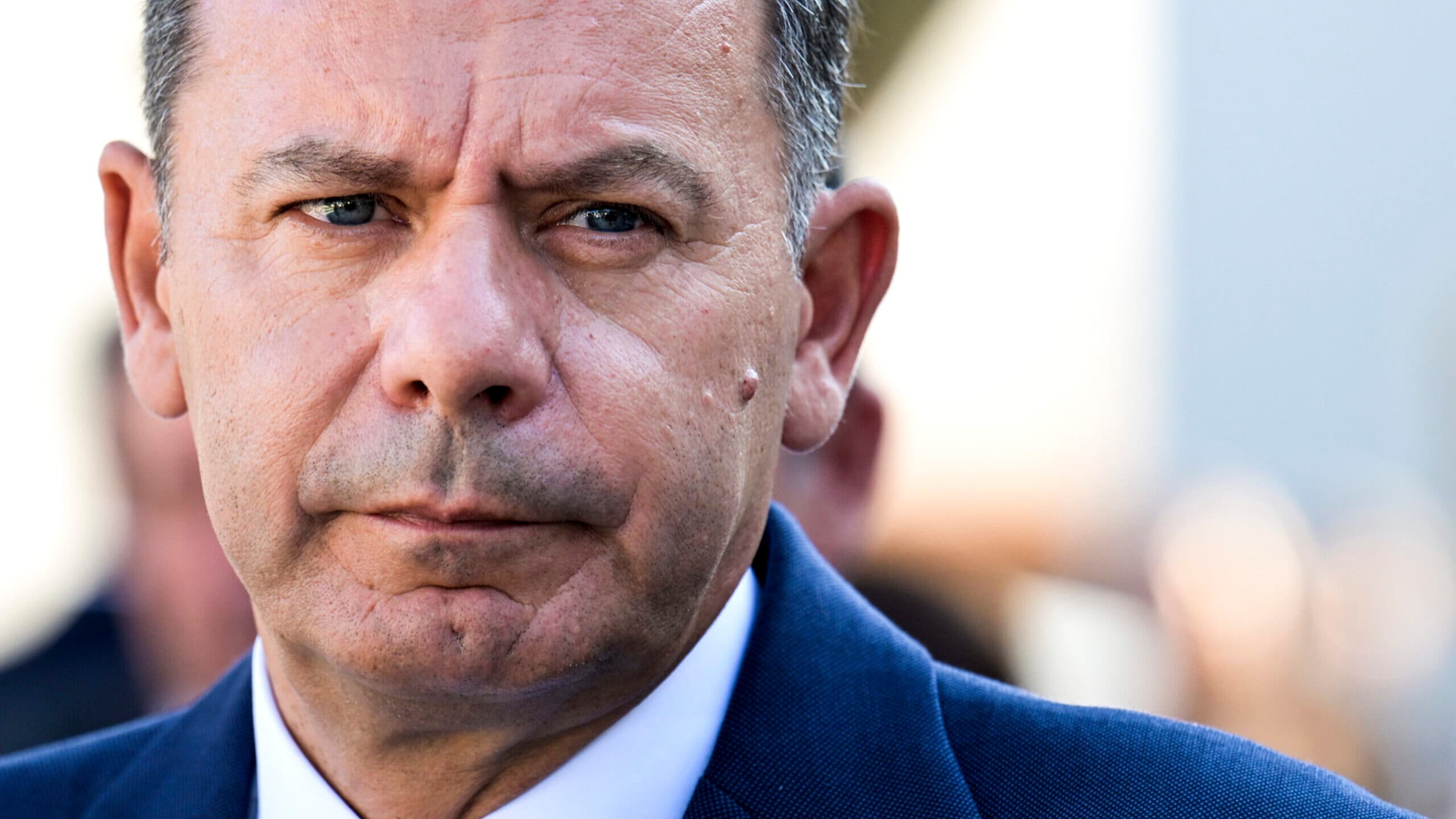
Prime Minister Luís Montenegro announced a reduction in income tax (Imposto sobre o Rendimento das Pessoas Singulares or IRS) for the first six income brackets, effective this November. Additionally, the government will provide an extraordinary supplement to pensioners receiving up to 1,611 euros. These measures, valued at 400 million euros for tax relief, are expected to be approved by the Council of Ministers this Thursday.
Update: Parliament rejects no-confidence motion against government
Parliament has officially rejected a no-confidence motion brought by the Chega party against the government. Despite the political tension, Prime Minister Luís Montenegro successfully defended his administration's stability, while the government confirmed that the Minister of Internal Administration will remain in his position.
- Prime Minister, Portugal: 2024 - Present
- Party: Social Democratic Party (PSD)
Luís Filipe Montenegro Cardoso de Morais Esteves (born February 16, 1973, in Porto) is a Portuguese lawyer and center‑right politician who has served as Prime Minister of Portugal since April 2, 2024. A long‑time member of the Social Democratic Party (PSD), he is the leading figure of the post‑Troika generation of Portuguese conservatives. Montenegro was elected to the Assembly of the Republic in 2002 for the Aveiro district and remained an MP for 16 years, becoming PSD parliamentary leader from 2011 to 2017 during the bailout and austerity period under Prime Minister Pedro Passos Coelho. He was a prominent defender of strict austerity measures, arguing in 2014 that “the life of the people is no better, but the life of the country is a lot better,” a phrase that has followed his public image since. After an unsuccessful leadership bid against Rui Rio in 2020, Montenegro won the PSD leadership in 2022. He then forged the centre‑right Democratic Alliance (PSD–CDS‑PP and allies), which won a plurality of seats in the 2024 legislative election. Refusing to partner with the far‑right Chega, which he has called “often xenophobic, racist, populist and excessively demagogic,” he formed a minority government as head of the XXIV Constitutional Government on April 2, 2024. His first government fell in March 2025 after a no‑confidence vote linked to a conflict‑of‑interest affair, but fresh elections saw the Democratic Alliance increase its seat share, allowing Montenegro to return as prime minister leading the XXV Constitutional Government. His importance to Portugal lies in attempting to re‑center the traditional centre‑right after the crisis years, defending liberal‑conservative economics and EU alignment while drawing a sharp line against formal cooperation with the radical right, thus shaping how Portuguese democracy manages its new multi‑party era.
André Ventura, born January 15, 1983, is a lawyer, academic, and Portugal's most prominent far-right leader. He founded Chega ("Enough") in 2019 after his PSD mayoral campaign attacked the Romani community. Chega surged from 1.3% in 2019 to 22.8% in May 2025, becoming parliament's second-largest party and making Ventura Leader of the Opposition.
His platform emphasizes immigration restrictions, law-and-order policies, constitutional reform, and contains inflammatory anti-Romani rhetoric that has triggered multiple discrimination convictions and investigations. Politically classified as far-right by international media, Ventura cultivates alliances with European far-right figures including Marine Le Pen and Santiago Abascal.
Yellow weather warnings issued for heat across Portugal
The Portuguese Institute for Sea and Atmosphere (Instituto Português do Mar e da Atmosfera or IPMA) has issued yellow warnings for high temperatures across several districts in mainland Portugal and Madeira. The alerts, which remain in effect until Monday, highlight a persistent period of heat that has also increased the risk of wildfires in many municipalities.
A red warning is the highest alert level issued by Portugal's weather agency, the Portuguese Institute for the Sea and the Atmosphere (Instituto Português do Mar e da Atmosfera or IPMA), used when conditions pose a very high risk to life and property. Under a red warning authorities may close roads, suspend transport and advise people to avoid coastal and flood‑prone areas, so follow civil protection instructions during the Friday–Saturday storm period.

Luís Montenegro kept two trump cards, which he used today in the motion of no…
Vasco Rosendo, Economics editor at CNN Portugal, states that the Government deliberately postponed the announcement of the pension bonus and the income tax cut until this Tuesday.

Portugal to Implement Income Tax Cuts Starting in November
The Portuguese government is set to roll out a new income tax reduction beginning this November. The adjustment aims to provide financial relief to taxpayers through updated withholding tax tables.
Not even government support stopped the sharp increase: petrol reaches its highest price since June…
Diesel is also reaching high prices. On Monday, the price stood at 2.104 euros per litre, the highest value since 8 April of this year, when it reached 2.145 euros.