19 October 2026 – 25 October 2026
Portugal Faces Massive Housing Protests as Price Growth Leads the European Union
Tens of thousands took to the streets across Lisbon and Porto this week to protest soaring living costs, clashing with police over public encampments as new data revealed Portugal leads the EU in post-2020 house price growth. The mounting public pressure has forced the government to signal openness to renegotiating rent laws with the opposition amid heightened security monitoring of public demonstrations.
Thousands Protest Across Portugal Demanding Affordable Housing
Thousands of demonstrators marched through Lisbon, Porto, Coimbra, and other cities on Saturday to demand government action against surging housing costs and planned rental lease reforms. In Lisbon, protesters marched down Avenida da Liberdade toward Praça do Rossio, where activists from the Lisbon Encampment (Acampada de Lisboa) planned to re-pitch tents following a popular assembly vote.
Minister of Internal Administration Luís Neves called the protests legitimate and peaceful, stating there is no standoff between the government and civic movements. The Public Security Police (Polícia de Segurança Pública or PSP) deployed officers along the march routes to manage traffic disruptions and said they would prioritize dialogue with demonstrators.
Praça do Rossio, officially named Praça Dom Pedro IV, is a central square in downtown Lisbon's Baixa district. It has functioned as a public meeting space and transport center since the Middle Ages, often hosting protests, rallies, and civic gatherings. The square is recognized for its wave-patterned Portuguese paving (calçada portuguesa), twin bronze fountains, and central monument to King Pedro IV.
Luís Neves will take office on Monday as Minister of Internal Administration. He graduated in law and has worked at the Judicial Police since 1995, where he served as coordinator of a national unit and developed a long career in criminal investigation.

The PSP (Polícia de Segurança Pública) is Portugal's national civilian police force, founded in 1867. Responsible for defending Republican democracy and safeguarding internal security and citizens' rights, the PSP polices major cities—Lisbon, Porto, Faro—and large urban areas, covering only 4% of Portugal's territory but roughly half the population. Led by a National Director under the Ministry of Internal Affairs, its approximately 21,500 officers handle preventive policing, crime investigation, public order, airport security, diplomatic protection, private security regulation, firearms licensing, and border control (since 2023).
PSP vs. GNR: The PSP is civilian with police-focused training and urban jurisdiction, while the GNR (Guarda Nacional Republicana) is military (gendarmerie) with military training, covering 96% of Portugal's rural and suburban territory. Both share core public safety missions but differ fundamentally in nature, training, and geographic responsibility.
The municipal police (Polícia Municipal) is a local administrative enforcement service operated by municipal councils in select Portuguese cities, notably Lisbon and Porto. Unlike national forces such as the Public Security Police (Polícia de Segurança Pública or PSP), municipal officers primarily focus on local bylaws, parking and traffic control, public space surveillance, and licensing checks. They do not investigate criminal offenses, though officers in Lisbon and Porto are drawn from PSP personnel and carry service firearms.
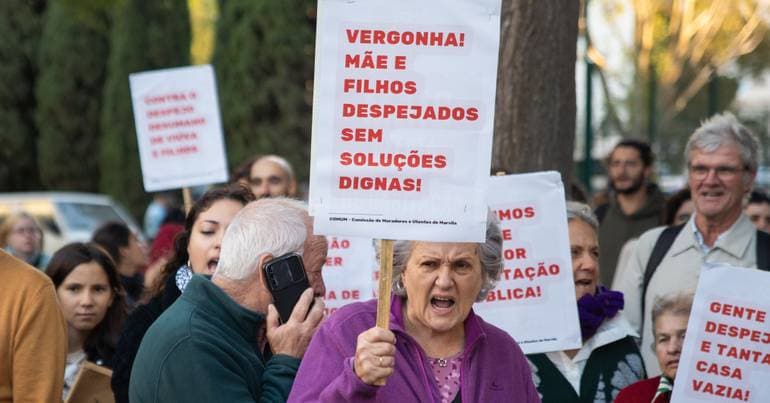
Housing Protesters Reclaim Squares Following Police Evictions Across Portugal
Thousands of housing rights demonstrators returned to central squares in Lisbon, Porto, Coimbra, and Évora on Tuesday night, vowing to continue demonstrations hours after police dismantled protest camps. In Lisbon's Rossio square, participants voted by a show of hands to re-erect tents in defiance of government warnings. The overnight rallies followed an early-morning operation in which the Public Security Police (Polícia de Segurança Pública or PSP) confiscated 228 camping structures and detained 55 people for disobedience. The detainees were formally designated suspects (arguidos) and released before scheduled court appearances. Internal Administration Minister Luís Neves warned that unauthorized occupations of public space had ended, while Lisbon Mayor Carlos Moedas defended the original clearance after the King D. Pedro IV statue suffered vandalism.
Luís Neves will take office on Monday as Minister of Internal Administration. He graduated in law and has worked at the Judicial Police since 1995, where he served as coordinator of a national unit and developed a long career in criminal investigation.

Carlos Manuel Félix Moedas (born August 10, 1970, in Beja) is a civil engineer, economist, and center-right politician who has served as Mayor of Lisbon since October 2021. He earned degrees in civil engineering from Instituto Superior Técnico and an MBA from Harvard, working at Goldman Sachs and founding his own investment firm before entering politics. During Portugal's 2011-14 bailout, he served as Secretary of State coordinating Troika-mandated structural reforms. From 2014-19, he was European Commissioner for Research, Science and Innovation, managing €77 billion in research funding and designing the €100 billion Horizon Europe program. Moedas narrowly won Lisbon's mayoralty in 2021 with 34.3%, defeating Socialist incumbent Fernando Medina. Governing initially with a minority coalition, he implemented free public transport for youth and elderly residents, launched the "Unicorn Factory Lisboa" innovation hub attracting 82 tech companies and 16,000 jobs, and won Lisbon the 2023 European Capital of Innovation award. He was re-elected in October 2025 with 41.7%, securing eight of nine council seats. His significance lies in shifting Lisbon's political trajectory rightward after decades of Socialist governance, positioning the capital as a European tech hub while prioritizing housing development, carbon neutrality by 2030, and innovation-driven economic growth.
The PSP (Polícia de Segurança Pública) is Portugal's national civilian police force, founded in 1867. Responsible for defending Republican democracy and safeguarding internal security and citizens' rights, the PSP polices major cities—Lisbon, Porto, Faro—and large urban areas, covering only 4% of Portugal's territory but roughly half the population. Led by a National Director under the Ministry of Internal Affairs, its approximately 21,500 officers handle preventive policing, crime investigation, public order, airport security, diplomatic protection, private security regulation, firearms licensing, and border control (since 2023).
PSP vs. GNR: The PSP is civilian with police-focused training and urban jurisdiction, while the GNR (Guarda Nacional Republicana) is military (gendarmerie) with military training, covering 96% of Portugal's rural and suburban territory. Both share core public safety missions but differ fundamentally in nature, training, and geographic responsibility.
Police Disperse Housing Protest Encampments in Lisbon and Porto
The Public Security Police (Polícia de Segurança Pública or PSP) intervened in Lisbon's Rossio square and Porto's Praça D. João I early Sunday to clear tent encampments set up by housing rights demonstrators. The intervention followed nationwide demonstrations on Saturday that drew thousands to the streets to protest soaring rents and property prices. Police removed tents and dispersed crowds after demonstrators refused orders to vacate the public squares.
The PSP (Polícia de Segurança Pública) is Portugal's national civilian police force, founded in 1867. Responsible for defending Republican democracy and safeguarding internal security and citizens' rights, the PSP polices major cities—Lisbon, Porto, Faro—and large urban areas, covering only 4% of Portugal's territory but roughly half the population. Led by a National Director under the Ministry of Internal Affairs, its approximately 21,500 officers handle preventive policing, crime investigation, public order, airport security, diplomatic protection, private security regulation, firearms licensing, and border control (since 2023).
PSP vs. GNR: The PSP is civilian with police-focused training and urban jurisdiction, while the GNR (Guarda Nacional Republicana) is military (gendarmerie) with military training, covering 96% of Portugal's rural and suburban territory. Both share core public safety missions but differ fundamentally in nature, training, and geographic responsibility.
Mariana Leitão is a Portuguese politician and the parliamentary leader of the Liberal Initiative (Iniciativa Liberal). Elected to the Assembly of the Republic (Assembleia da República) in 2022, she leads her party's legislative group and advocates for free-market economic policies, tax reductions, and public-sector reform. She serves as one of the party's primary spokespersons on national housing, fiscal, and regulatory issues.
Police Clear Housing Protest Camps in Lisbon and Porto
The Public Security Police (Polícia de Segurança Pública or PSP) moved in early Tuesday to dismantle housing protest encampments in Lisbon's Rossio Square and central Porto. Officers in Lisbon gave demonstrators five minutes to vacate before handcuffing and arresting several people who refused to leave, while protesters in Porto voluntarily took down their tents. Activists had pitched tents to protest soaring rents and demand affordable housing, planning actions leading up to an Iberian housing strike on 11 November. Organizers previously reported dozens of injuries following an earlier police intervention in Porto, which prompted warnings from authorities that public encampments would not be permitted indefinitely.
The PSP (Polícia de Segurança Pública) is Portugal's national civilian police force, founded in 1867. Responsible for defending Republican democracy and safeguarding internal security and citizens' rights, the PSP polices major cities—Lisbon, Porto, Faro—and large urban areas, covering only 4% of Portugal's territory but roughly half the population. Led by a National Director under the Ministry of Internal Affairs, its approximately 21,500 officers handle preventive policing, crime investigation, public order, airport security, diplomatic protection, private security regulation, firearms licensing, and border control (since 2023).
PSP vs. GNR: The PSP is civilian with police-focused training and urban jurisdiction, while the GNR (Guarda Nacional Republicana) is military (gendarmerie) with military training, covering 96% of Portugal's rural and suburban territory. Both share core public safety missions but differ fundamentally in nature, training, and geographic responsibility.
Portugal’s house prices have risen faster than the EU average since 2020, and recent reports list Portugal among the countries with the largest price increases over that period. That stronger price growth has worsened affordability in Lisbon and Porto in particular, so prospective buyers and renters should check local indices and mortgage costs before deciding.

Government Signals Openness to Negotiate Rent Laws With Socialists
Housing and Infrastructure Minister Miguel Pinto Luz announced that the government is open to reviewing rental legislation with the Socialist Party (Partido Socialista or PS), while Social Democratic Party (Partido Social Democrata or PSD) Vice-President Alexandre Poço confirmed readiness to negotiate complementary housing solutions across party lines. The opening follows calls from President António José Seguro for a broad cross-party agreement between the PSD-led government and opposition parties. Speaking in Lisbon, Seguro warned that the country faces a severe housing shortage that requires political cooperation rather than impasse as nationwide debates and protests intensify.

- President of Portugal (since March 9, 2026)
- Party: Independent. Former leader of the Socialist Party (PS), Partido Socialista
- Center-left
António José Martins Seguro (born March 11, 1962, in Penamacor) is a lawyer, political scientist, and the current President of the Portuguese Republic, inaugurated on March 9, 2026 after winning the two-round presidential election in January–February 2026.
Career: He led Socialist Youth (1990–1994), served as MEP (1999–2001), was Minister Adjunct to PM António Guterres (2001–2002), and led the PS parliamentary group (2004–2005). Elected PS Secretary-General in 2011 with 68%, he led the opposition during Portugal's bailout era. In 2014, António Costa defeated him in party primaries by a landslide, prompting Seguro's resignation and a decade-long retreat from politics. He returned in 2025, launching the movement UPortugal and announcing his presidential candidacy in June. He received official PS backing in October 2025 and won the presidency in February 2026.
Political philosophy: Seguro positions himself as representing a "modern and moderate" left, advocating financial responsibility while opposing austerity. As President, he has emphasized institutional trust, efficient governance, and a collaborative relationship with the government while maintaining rigorous constitutional oversight.

The Social Democratic Party ('Partido Social Democrata' or 'PSD') is a liberal-conservative political party in Portugal that is the leading partner of the The Democratic Alliance (AD) which is the country's ruling party, with Prime Minister Luís Montenegro.
The Social Democratic Party, despite its name, occupies the centre-right of Portugal's political spectrum. Luís Montenegro, who became Prime Minister in April 2024, leads Portugal's current minority government. The PSD has been one of Portugal's two dominant parties since 1974, having formed nine governments including four with absolute majorities. Montenegro, a former party leader from 1996-1999, was elected with the highest approval rating among party leaders at 10.7 points out of 20.
The Democratic Alliance is a centre-right coalition that includes the smaller CDS – People's Party, a Christian democratic party that has historically been the PSD's coalition partner. Together, they govern without a parliamentary majority, requiring case-by-case support from opposition parties to pass legislation.

Socialist Party (PS)
- Leader: José Luís Carneiro (since June 2025)
- Ideology: Center-left, Social democracy, pro-Europeanism
Portugal's other traditional major party suffered a historic collapse in the 2025 election, dropping from 78 to 58 seats and falling to third place for the first time in democratic history. The party was led by Pedro Nuno Santos from January 2024 until his resignation following the May 2025 defeat. José Luís Carneiro, a 53-year-old former Minister of Internal Administration known for his moderate positioning within the party, was elected unopposed as the new Secretary-General with 95% of votes in June 2025. The Socialist Party governed Portugal from 2015 to 2024, including an absolute majority from 2022 to 2024 under António Costa, who resigned in November 2023 amid a corruption investigation. The PS previously led the innovative "Geringonça" (contraption) coalition government from 2015-2019, a minority government supported by the Left Bloc and Portuguese Communist Party that reversed austerity measures and presided over economic recovery.

Portugal Leads European Union in House Price Growth Since 2020
Portugal registered a 41.5% surge in housing prices between 2020 and 2025, the steepest increase in the European Union, according to newly released data from statistical database Pordata. Property prices have risen 81.9% since 2010, while an OECD report identified Portugal as the member state where purchasing a home is most difficult relative to local earnings, with social housing accounting for just 1% of total stock.
In response to worsening affordability, Porto City Council announced plans to quadruple affordable municipal housing and raise the municipal property tax (Imposto Municipal sobre Imóveis or IMI) by up to ten times on vacant homes. The worsening conditions have sparked demonstrations across Lisbon and Porto, reinforced by Bank of Portugal (Banco de Portugal) data showing the richest 10% of households now own 40% of residential real estate wealth.
Banco de Portugal is Portugal's central bank, founded in 1846. It is a member of the European System of Central Banks (ESCB) and the Eurosystem, working alongside the European Central Bank (ECB) to implement monetary policy in the euro area.
Its main functions include supervising banks and financial institutions, ensuring financial stability, managing Portugal's gold and foreign currency reserves, and producing economic research and statistics. It also operates the payment systems infrastructure and issues banknotes.
Banco de Portugal is led by a Governor — currently Mário Centeno (since 2020) — who also sits on the ECB's Governing Council. For residents, the central bank matters because it regulates the banks they use, sets macroprudential rules (such as mortgage lending limits), and provides a complaints mechanism for banking disputes.
The municipal property tax (Imposto Municipal sobre Imóveis), known as IMI, is an annual tax on property ownership calculated from the property’s taxable value, with the exact rate set by each municipality. For expats who own property, IMI is a recurring local cost that can vary by location and is often central to policy discussions about housing affordability.
Portugal’s house prices have risen faster than the EU average since 2020, and recent reports list Portugal among the countries with the largest price increases over that period. That stronger price growth has worsened affordability in Lisbon and Porto in particular, so prospective buyers and renters should check local indices and mortgage costs before deciding.
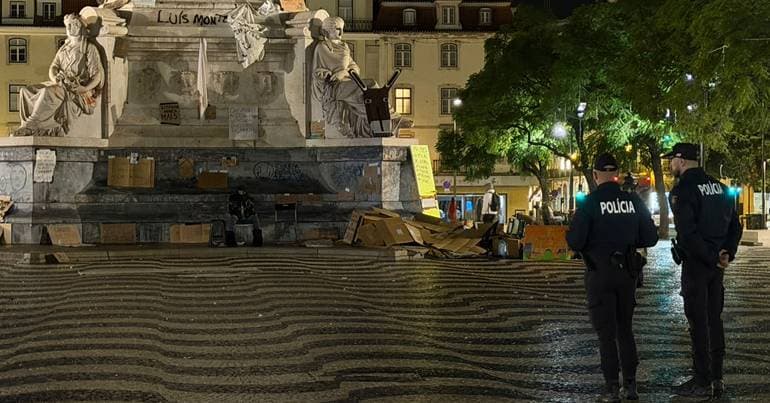
Portugal Monitors European Terror Alert Targeting Public Demonstrations
The Internal Security System (Sistema de Segurança Interna or SSI) is closely monitoring a counter-terrorism alert originally detected by Spanish authorities regarding Islamic State threats against public demonstrations in Europe. Intelligence reports indicate jihadist platforms have encouraged attacks against police officers and protesters in several countries, including Portugal, France, and Italy. Portuguese security forces confirmed they are evaluating the threat as large street protests continue across Lisbon and Porto.
Opposition Criticizes Government Response to Housing Chief Remarks
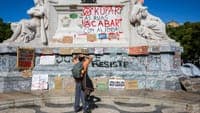
Liberal Initiative (Iniciativa Liberal or IL) leader Mariana Leitão has criticized Prime Minister Luís Montenegro for inaction during a week of housing unrest, following controversial statements by Institute for Housing and Urban Rehabilitation (Instituto da Habitação e da Reabilitação Urbana or IHRU) President Benjamim Pereira. Pereira drew sharp public criticism after questioning whether young people today are willing to make the sacrifices previous generations made to buy a home, comments he later described as unfortunate.
Leitão said the government is failing to release vacant state-owned properties onto the market. Socialist Party leader José Luís Carneiro also called Pereira's remarks regrettable, while noting that any decision on his position rests entirely with Montenegro.

- Prime Minister, Portugal: 2024 - Present
- Party: Social Democratic Party (PSD)
Luís Filipe Montenegro Cardoso de Morais Esteves (born February 16, 1973, in Porto) is a Portuguese lawyer and center‑right politician who has served as Prime Minister of Portugal since April 2, 2024. A long‑time member of the Social Democratic Party (PSD), he is the leading figure of the post‑Troika generation of Portuguese conservatives. Montenegro was elected to the Assembly of the Republic in 2002 for the Aveiro district and remained an MP for 16 years, becoming PSD parliamentary leader from 2011 to 2017 during the bailout and austerity period under Prime Minister Pedro Passos Coelho. He was a prominent defender of strict austerity measures, arguing in 2014 that “the life of the people is no better, but the life of the country is a lot better,” a phrase that has followed his public image since. After an unsuccessful leadership bid against Rui Rio in 2020, Montenegro won the PSD leadership in 2022. He then forged the centre‑right Democratic Alliance (PSD–CDS‑PP and allies), which won a plurality of seats in the 2024 legislative election. Refusing to partner with the far‑right Chega, which he has called “often xenophobic, racist, populist and excessively demagogic,” he formed a minority government as head of the XXIV Constitutional Government on April 2, 2024. His first government fell in March 2025 after a no‑confidence vote linked to a conflict‑of‑interest affair, but fresh elections saw the Democratic Alliance increase its seat share, allowing Montenegro to return as prime minister leading the XXV Constitutional Government. His importance to Portugal lies in attempting to re‑center the traditional centre‑right after the crisis years, defending liberal‑conservative economics and EU alignment while drawing a sharp line against formal cooperation with the radical right, thus shaping how Portuguese democracy manages its new multi‑party era.

- Leader: Mariana Leitão (since July 2025)
- Ideology: Classical liberalism, economic libertarianism
Founded in 2017, the Liberal Initiative advocates for reduced state intervention, tax simplification, labor market liberalization, and secular liberalism under the motto "Less State, More Freedom". The party gained its first parliamentary seat in 2019 and now holds 9 seats. Mariana Leitão, 42, became the party's first female leader in July 2025 after Rui Rocha resigned following disappointing 2025 election results. Leitão previously served as parliamentary leader and has been announced as the party's candidate for the 2026 presidential election. The party explicitly rejects alliances with both far-left and far-right parties, positioning itself as the "only alternative" that won't negotiate with extremes.
Mariana Leitão is a Portuguese politician and the parliamentary leader of the Liberal Initiative (Iniciativa Liberal). Elected to the Assembly of the Republic (Assembleia da República) in 2022, she leads her party's legislative group and advocates for free-market economic policies, tax reductions, and public-sector reform. She serves as one of the party's primary spokespersons on national housing, fiscal, and regulatory issues.
Miguel Pinto Luz is Portugal’s Minister of Infrastructure and Housing and a senior figure in the PSD. His portfolio covers roads, rail (including the Lisbon–Porto high-speed line), airports and housing policy. Before joining the government he was deputy mayor of Cascais.
IHRU is the national Institute for Housing and Urban Rehabilitation (Instituto da Habitação e da Reabilitação Urbana). It manages public housing and urban renewal programmes and runs property offers and application processes — for example the T0–T5 homes listed in Almada, Amadora, Caldas da Rainha, Lisbon, Porto and Vila Nova de Gaia with applications open until 9 February — so residents should check eligibility and how to apply.
Housing Demonstrators Set Up Tents Across Lisbon and Porto
Protesters demanding affordable housing set up tent encampments in Lisbon's Rossio square and Porto's Praça D. João I following weekend demonstrations over living costs. Minister of Infrastructure and Housing Miguel Pinto Luz said he understands the pain of demonstrators but noted that government measures need time to produce results. Ombudsman (Provedora de Justiça) Luísa Neto also requested official records regarding police actions against protesters in Porto to evaluate whether the intervention respected the constitutional right to assemble.
Update: Protesters Defy Police Orders to Maintain Housing Encampments
Housing demonstrators in Lisbon and Porto voted to prolong their encampments until 31 December despite warnings from the Public Security Police (Polícia de Segurança Pública or PSP) that unauthorized overnight camping violates public assembly rules. In Porto, organizers refused private municipal meetings and invited Pedro Duarte to speak directly with them in Praça D. João I. In Lisbon, police warned campers in Rossio after midnight that remaining in the square could constitute disobedience, though officers refrained from immediate eviction.
Miguel Pinto Luz is Portugal’s Minister of Infrastructure and Housing and a senior figure in the PSD. His portfolio covers roads, rail (including the Lisbon–Porto high-speed line), airports and housing policy. Before joining the government he was deputy mayor of Cascais.
The PSP (Polícia de Segurança Pública) is Portugal's national civilian police force, founded in 1867. Responsible for defending Republican democracy and safeguarding internal security and citizens' rights, the PSP polices major cities—Lisbon, Porto, Faro—and large urban areas, covering only 4% of Portugal's territory but roughly half the population. Led by a National Director under the Ministry of Internal Affairs, its approximately 21,500 officers handle preventive policing, crime investigation, public order, airport security, diplomatic protection, private security regulation, firearms licensing, and border control (since 2023).
PSP vs. GNR: The PSP is civilian with police-focused training and urban jurisdiction, while the GNR (Guarda Nacional Republicana) is military (gendarmerie) with military training, covering 96% of Portugal's rural and suburban territory. Both share core public safety missions but differ fundamentally in nature, training, and geographic responsibility.
Cyberattack Exposes Personal Data of Portuguese Firefighters
A cyberattack has compromised the National Registry of Portuguese Firefighters (Recenseamento Nacional de Bombeiros Portugueses or RNBP), exposing the personal records of approximately 60,000 firefighters. The National Authority for Emergency and Civil Protection (Autoridade Nacional de Emergência e Proteção Civil or ANEPC) confirmed that hackers accessed and copied sensitive data, including citizen card numbers, tax identifiers, social security details, and health service records. ANEPC suspended the platform and advised regional commands and firefighters to maintain high vigilance against fraud and phishing attempts.
The National Emergency and Civil Protection Authority (Autoridade Nacional de Emergência e Proteção Civil or ANEPC) oversees disaster planning, emergency operations, and civil protection across mainland Portugal. Operating under the Ministry of Internal Administration, the agency coordinates the national firefighting network and issues warnings for severe weather, floods, and wildfires. Residents and visitors rely on ANEPC bulletins and SMS alerts for evacuation instructions and safety notices during extreme climate events.