27 July 2026 – 2 August 2026
Portugal Navigates Wildfire Crisis, Airport Developments, and New Financial Regulations
Northern Portugal battles devastating wildfires as emergency crews gain control, while national infrastructure remains in focus with new airport environmental submissions and border control disruptions in Lisbon. Meanwhile, the government implements stricter mortgage debt-to-income limits and addresses regional migration pressures, even as officials navigate ongoing political controversies.
EU leaders call emergency meeting over Ceuta migration crisis
European Union leaders have called for an emergency videoconference of interior ministers this Tuesday to address the illegal entry of tens of thousands of migrants into the Spanish exclave of Ceuta. While most migrants have returned to Morocco, the situation has sparked a diplomatic rift, with 22 EU leaders criticizing Spanish Prime Minister Pedro Sánchez for his migration policies. Italy has temporarily suspended the Schengen Area, and several nations are reinforcing border surveillance.
Update: Portugal rejects Schengen suspension amid Ceuta migration crisis
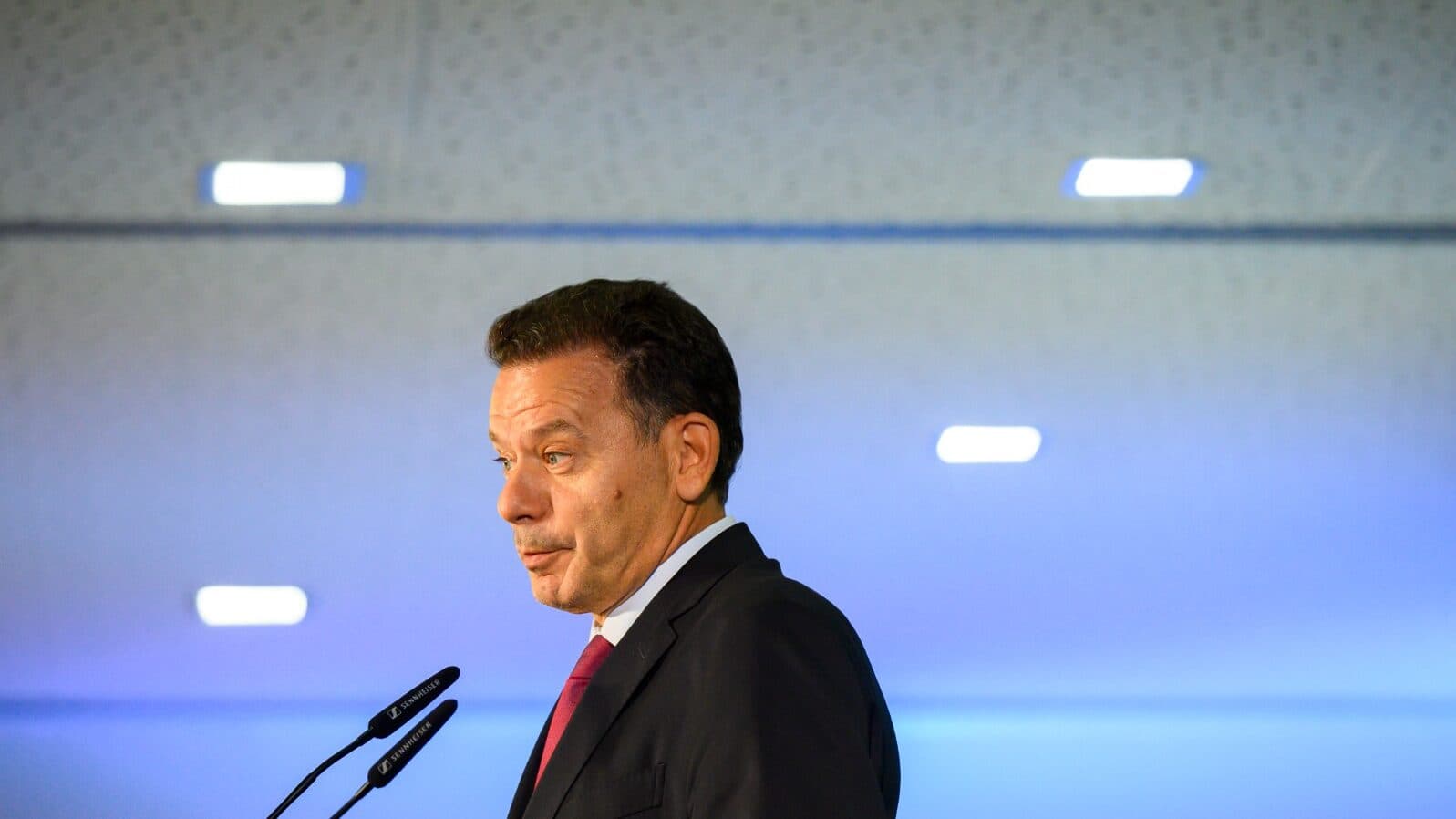
Prime Minister Luís Montenegro has joined the call for an emergency EU meeting but explicitly rejected the suspension of the Schengen Area. Montenegro advocates for a balanced approach to migration management that prioritizes regulation and humanism over more restrictive border measures.

- Prime Minister, Portugal: 2024 - Present
- Party: Social Democratic Party (PSD)
Luís Filipe Montenegro Cardoso de Morais Esteves (born February 16, 1973, in Porto) is a Portuguese lawyer and center‑right politician who has served as Prime Minister of Portugal since April 2, 2024. A long‑time member of the Social Democratic Party (PSD), he is the leading figure of the post‑Troika generation of Portuguese conservatives. Montenegro was elected to the Assembly of the Republic in 2002 for the Aveiro district and remained an MP for 16 years, becoming PSD parliamentary leader from 2011 to 2017 during the bailout and austerity period under Prime Minister Pedro Passos Coelho. He was a prominent defender of strict austerity measures, arguing in 2014 that “the life of the people is no better, but the life of the country is a lot better,” a phrase that has followed his public image since. After an unsuccessful leadership bid against Rui Rio in 2020, Montenegro won the PSD leadership in 2022. He then forged the centre‑right Democratic Alliance (PSD–CDS‑PP and allies), which won a plurality of seats in the 2024 legislative election. Refusing to partner with the far‑right Chega, which he has called “often xenophobic, racist, populist and excessively demagogic,” he formed a minority government as head of the XXIV Constitutional Government on April 2, 2024. His first government fell in March 2025 after a no‑confidence vote linked to a conflict‑of‑interest affair, but fresh elections saw the Democratic Alliance increase its seat share, allowing Montenegro to return as prime minister leading the XXV Constitutional Government. His importance to Portugal lies in attempting to re‑center the traditional centre‑right after the crisis years, defending liberal‑conservative economics and EU alignment while drawing a sharp line against formal cooperation with the radical right, thus shaping how Portuguese democracy manages its new multi‑party era.
The Schengen Area is a zone comprising 29 European countries that have officially abolished all passport and border control at their mutual borders. It allows for the free and unrestricted movement of people, goods, and services, functioning as a single jurisdiction for international travel purposes (Espaço Schengen).
TAP flight returns to Lisbon following in-flight emergency
A TAP Air Portugal flight bound for Curitiba, Brazil, returned to Lisbon on Saturday after the captain declared an emergency. The Airbus A330 experienced a suspected depressurization issue at 30,000 feet, prompting a descent to 10,000 feet and a fuel-dumping maneuver before landing safely. No injuries were reported among those on board.

Environmental study for new airport submitted to authorities
The airport operator ANA | VINCI Airports has submitted the final Environmental Impact Study for the new Luís de Camões Airport to the Portuguese Environment Agency (Agência Portuguesa do Ambiente or APA). The 5,000-page report, developed over 18 months by more than 60 experts, evaluates impacts on water resources, noise levels, air quality, and socioeconomics.
The APA (Agência Portuguesa do Ambiente) is Portugal's central environmental authority, responsible for environmental policy, climate action, water resources, waste management, and coastal protection. It operates under the Ministry of Environment and Energy.
APA manages Portugal's water resources including river basins, dam operations, and flood risk planning. It monitors air and water quality, oversees waste treatment facilities, manages the national emissions trading scheme, and leads Portugal's climate adaptation strategies.
The agency is particularly prominent during flood events, as it controls dam discharges and coordinates water management across Portugal's major rivers. APA also processes environmental impact assessments and licenses for projects affecting natural resources.

Firefighters gain control over major blazes in northern Portugal
Emergency teams have brought several significant wildfires under control, including a major blaze in Mesão Frio and another in Valpaços. While the fire in Valpaços consumed nearly 16,000 hectares and destroyed 20 homes, authorities continue to monitor the areas to prevent potential flare-ups. Additional fires in Vila Nova de Gaia and other regions were also contained without posing risks to local populations.

Wildfires devastate northern crops and threaten homes
Wildfires in the Valpaços, Mirandela, and Vinhais regions have caused significant damage, destroying vineyards, olive groves, and homes. While firefighting efforts are progressing favorably in some areas, the first seven months of 2026 have already seen over 5,700 rural fires, the highest figure in four years. The Valpaços City Council is currently seeking a declaration of a state of calamity (estado de calamidade) from the government to address the losses.
Update: Valpaços wildfire now under control after massive destruction
The wildfire that began in Valpaços last Tuesday is now considered controlled and is in the resolution phase. The blaze consumed over 16,000 hectares across 14 municipalities, damaging 20 houses and forcing the relocation of residents.
A state of calamity (situação de calamidade) is the highest level of civil emergency Portugal can declare under its Civil Protection framework, short of a constitutional state of emergency. It is typically declared by the government in response to severe natural disasters such as major wildfires, floods, or storms.
A calamity declaration activates the National Civil Protection Emergency Plan, mobilizes additional resources, and grants authorities expanded powers to restrict movement, requisition private property, and deploy military assets. It also unlocks emergency financial support for affected populations and municipalities.
Portugal uses a three-tier alert system: alerta (alert), contingência (contingency), and calamidade (calamity), each with escalating levels of coordination and authority. The state of calamity requires coordination between the national government, ANEPC, local authorities, and emergency services.

New mortgage rules lower debt-to-income limits
Starting this Saturday, new macroprudential measures from the Bank of Portugal (Banco de Portugal) will lower the debt-to-income ratio for mortgage applicants to 45%. While the move aims to protect buyers, banking leaders like Paulo Macedo, CEO of Caixa Geral de Depósitos, anticipate a potential 10% drop in credit production. Experts advise applicants to prepare complete dossiers and consult multiple institutions to navigate the stricter approval environment.
Caixa Geral de Depósitos is Portugal’s largest state-owned bank and a major retail and corporate lender. In 2025 it posted a 10% profit increase — helped by selling its stake in Águas de Portugal — and will pay a €1.25 billion dividend to the State, which can affect public finances and confidence in the banking sector.
Banco de Portugal is Portugal's central bank, founded in 1846. It is a member of the European System of Central Banks (ESCB) and the Eurosystem, working alongside the European Central Bank (ECB) to implement monetary policy in the euro area.
Its main functions include supervising banks and financial institutions, ensuring financial stability, managing Portugal's gold and foreign currency reserves, and producing economic research and statistics. It also operates the payment systems infrastructure and issues banknotes.
Banco de Portugal is led by a Governor — currently Mário Centeno (since 2020) — who also sits on the ECB's Governing Council. For residents, the central bank matters because it regulates the banks they use, sets macroprudential rules (such as mortgage lending limits), and provides a complaints mechanism for banking disputes.

Portugal hits record science spending despite missing targets
Investment in research and development in Portugal reached a record high of 1.82% of the country's GDP in 2025, totaling 5.58 billion euros. While this marks the second consecutive year of growth exceeding 5 billion euros, the figure remains significantly below the 3% target. The increase is primarily driven by higher spending from the private sector.
Montenegro rejects Schengen suspension despite Ceuta crisis
Prime Minister Luís Montenegro has ruled out suspending the Schengen Agreement with Spain, despite describing the recent migratory pressure in the Spanish enclave of Ceuta as serious. While the government plans to reinforce border security, experts note that the Schengen code does not allow for the suspension of a member state. Opposition leader André Ventura of the Chega party had previously called for border controls to be reinstated.
Update: President calls for firm stance on illegal immigration
President of the Republic António José Seguro has publicly lamented the tragedy in Ceuta, where dozens of migrants died during the crossing. He urged the European Union to prioritize border security and called for a firm approach to combating illegal immigration, emphasizing that migrants should utilize legal pathways.
- Prime Minister, Portugal: 2024 - Present
- Party: Social Democratic Party (PSD)
Luís Filipe Montenegro Cardoso de Morais Esteves (born February 16, 1973, in Porto) is a Portuguese lawyer and center‑right politician who has served as Prime Minister of Portugal since April 2, 2024. A long‑time member of the Social Democratic Party (PSD), he is the leading figure of the post‑Troika generation of Portuguese conservatives. Montenegro was elected to the Assembly of the Republic in 2002 for the Aveiro district and remained an MP for 16 years, becoming PSD parliamentary leader from 2011 to 2017 during the bailout and austerity period under Prime Minister Pedro Passos Coelho. He was a prominent defender of strict austerity measures, arguing in 2014 that “the life of the people is no better, but the life of the country is a lot better,” a phrase that has followed his public image since. After an unsuccessful leadership bid against Rui Rio in 2020, Montenegro won the PSD leadership in 2022. He then forged the centre‑right Democratic Alliance (PSD–CDS‑PP and allies), which won a plurality of seats in the 2024 legislative election. Refusing to partner with the far‑right Chega, which he has called “often xenophobic, racist, populist and excessively demagogic,” he formed a minority government as head of the XXIV Constitutional Government on April 2, 2024. His first government fell in March 2025 after a no‑confidence vote linked to a conflict‑of‑interest affair, but fresh elections saw the Democratic Alliance increase its seat share, allowing Montenegro to return as prime minister leading the XXV Constitutional Government. His importance to Portugal lies in attempting to re‑center the traditional centre‑right after the crisis years, defending liberal‑conservative economics and EU alignment while drawing a sharp line against formal cooperation with the radical right, thus shaping how Portuguese democracy manages its new multi‑party era.

André Ventura, born January 15, 1983, is a lawyer, academic, and Portugal's most prominent far-right leader. He founded Chega ("Enough") in 2019 after his PSD mayoral campaign attacked the Romani community. Chega surged from 1.3% in 2019 to 22.8% in May 2025, becoming parliament's second-largest party and making Ventura Leader of the Opposition.
His platform emphasizes immigration restrictions, law-and-order policies, constitutional reform, and contains inflammatory anti-Romani rhetoric that has triggered multiple discrimination convictions and investigations. Politically classified as far-right by international media, Ventura cultivates alliances with European far-right figures including Marine Le Pen and Santiago Abascal.

Chega ("Enough") is a Portuguese far-right populist party founded in 2019 by André Ventura. It positions itself as an anti-establishment movement against what it calls a "rotten and corrupt system" of PS-PSD dominance. The party surged from 1.3% in 2019 to 22.8% in May 2025, becoming parliament's second-largest force with 60 seats. Chega's core platform emphasizes strict immigration control—ending automatic CPLP residency, deporting non-independent immigrants, implementing job-market quotas, and requiring five-year social security contributions before benefit access. It advocates radical constitutional reform, including reducing parliament to 100 members, abolishing the prime minister position for a presidential system, and dismantling public healthcare. Law-and-order policies include life imprisonment and chemical castration proposals.
The party is defined by inflammatory anti-Romani rhetoric, with Ventura convicted multiple times for discrimination. Chega maintains international alignments with European far-right figures including Marine Le Pen, Santiago Abascal, and Matteo Salvini. Mainstream Portuguese parties, including Prime Minister Luís Montenegro's government, have imposed a cordon sanitaire, refusing coalition with Chega despite its parliamentary strength.

- President of Portugal (since March 9, 2026)
- Party: Independent. Former leader of the Socialist Party (PS), Partido Socialista
- Center-left
António José Martins Seguro (born March 11, 1962, in Penamacor) is a lawyer, political scientist, and the current President of the Portuguese Republic, inaugurated on March 9, 2026 after winning the two-round presidential election in January–February 2026.
Career: He led Socialist Youth (1990–1994), served as MEP (1999–2001), was Minister Adjunct to PM António Guterres (2001–2002), and led the PS parliamentary group (2004–2005). Elected PS Secretary-General in 2011 with 68%, he led the opposition during Portugal's bailout era. In 2014, António Costa defeated him in party primaries by a landslide, prompting Seguro's resignation and a decade-long retreat from politics. He returned in 2025, launching the movement UPortugal and announcing his presidential candidacy in June. He received official PS backing in October 2025 and won the presidency in February 2026.
Political philosophy: Seguro positions himself as representing a "modern and moderate" left, advocating financial responsibility while opposing austerity. As President, he has emphasized institutional trust, efficient governance, and a collaborative relationship with the government while maintaining rigorous constitutional oversight.
Minister Luís Neves denies wrongdoing amid ongoing controversies
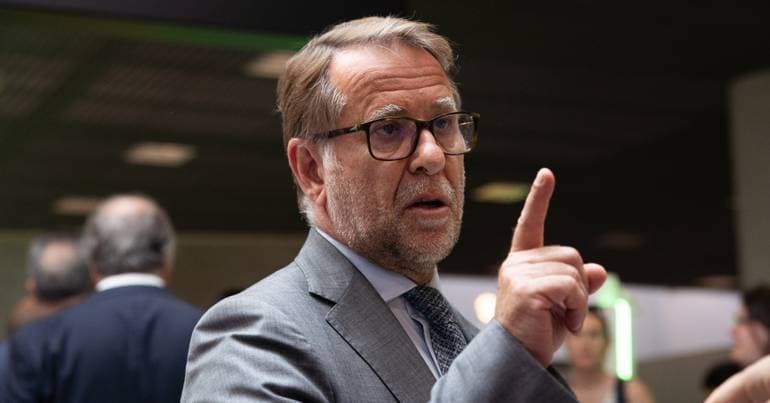
Minister of Internal Administration Luís Neves held a press conference this Wednesday to address recent controversies regarding his conduct and professional associations. Neves denied any diversion of assets or improper benefits, stating he remains fully committed to his role despite calls for his resignation from opposition parties.
Luís Neves will take office on Monday as Minister of Internal Administration. He graduated in law and has worked at the Judicial Police since 1995, where he served as coordinator of a national unit and developed a long career in criminal investigation.
Lisbon airport border control closed after passenger error
Border control at Lisbon Airport was temporarily closed on Tuesday after passengers from a flight arriving from Brazil disembarked in the wrong area. The Public Security Police (Polícia de Segurança Pública or PSP) confirmed that the error led to a mix of screened and unscreened passengers, necessitating a temporary halt to operations.
Update: Lisbon Metro Red Line suspended after pipe burst
Service on the Lisbon Metro Red Line was suspended between Chelas and the Airport following a pipe burst that flooded technical rooms. The incident caused a train to stall, leading some passengers to force doors open and walk along the tracks, forcing a complete shutdown of the line.

The PSP (Polícia de Segurança Pública) is Portugal's national civilian police force, founded in 1867. Responsible for defending Republican democracy and safeguarding internal security and citizens' rights, the PSP polices major cities—Lisbon, Porto, Faro—and large urban areas, covering only 4% of Portugal's territory but roughly half the population. Led by a National Director under the Ministry of Internal Affairs, its approximately 21,500 officers handle preventive policing, crime investigation, public order, airport security, diplomatic protection, private security regulation, firearms licensing, and border control (since 2023).
PSP vs. GNR: The PSP is civilian with police-focused training and urban jurisdiction, while the GNR (Guarda Nacional Republicana) is military (gendarmerie) with military training, covering 96% of Portugal's rural and suburban territory. Both share core public safety missions but differ fundamentally in nature, training, and geographic responsibility.

Minister arrived with a swaggering air to say he committed illegalities while leading the PJ
Pedro Frazão, a commentator for CNN Portugal, believes that the root of the problem in the controversy involving the Minister of Internal Administration is an 'ethical problem'.
Update: Parliamentary leaders to decide on Minister's hearing
Following a request from the Chega party, the President of the Assembly of the Republic, José Pedro Aguiar-Branco, has convened a conference of parliamentary leaders for Friday. The meeting will determine if Minister of Internal Administration Luís Neves must appear before the Permanent Committee to address ongoing controversies regarding his past conduct as director of the Judicial Police (Polícia Judiciária or PJ).
Chega ("Enough") is a Portuguese far-right populist party founded in 2019 by André Ventura. It positions itself as an anti-establishment movement against what it calls a "rotten and corrupt system" of PS-PSD dominance. The party surged from 1.3% in 2019 to 22.8% in May 2025, becoming parliament's second-largest force with 60 seats. Chega's core platform emphasizes strict immigration control—ending automatic CPLP residency, deporting non-independent immigrants, implementing job-market quotas, and requiring five-year social security contributions before benefit access. It advocates radical constitutional reform, including reducing parliament to 100 members, abolishing the prime minister position for a presidential system, and dismantling public healthcare. Law-and-order policies include life imprisonment and chemical castration proposals.
The party is defined by inflammatory anti-Romani rhetoric, with Ventura convicted multiple times for discrimination. Chega maintains international alignments with European far-right figures including Marine Le Pen, Santiago Abascal, and Matteo Salvini. Mainstream Portuguese parties, including Prime Minister Luís Montenegro's government, have imposed a cordon sanitaire, refusing coalition with Chega despite its parliamentary strength.

The PJ (Polícia Judiciária) is Portugal's national criminal investigation police agency, founded in 1945. Operating under the Ministry of Justice and supervised by the Public Ministry (prosecutors), the PJ is a "higher criminal police body" specializing in serious and complex crimes. Mission: The PJ assists judicial and prosecuting authorities by investigating terrorism, organized crime, homicide, kidnapping, drug trafficking, corruption, cybercrime, financial crime, and money laundering. It conducts forensic examinations, operates Portugal's Interpol and Europol liaison offices, and maintains specialized units including the National Counterterrorism Unit and National Anti-Corruption Unit. Difference from PSP/GNR: While PSP (civilian urban police) and GNR (military rural police) focus on preventive policing, public order, and investigating minor crimes, the PJ exclusively handles serious crime investigation requiring specialized technical and scientific expertise. PSP and GNR report to the Ministry of Internal Affairs; PJ reports to the Ministry of Justice. PJ officers receive higher pay and prestige but face greater operational risk.
High fire risk persists across mainland Portugal
Mainland Portugal continues to face maximum or very high wildfire danger, with the Portuguese Institute for Sea and Atmosphere (Instituto Português do Mar e da Atmosfera or IPMA) warning that conditions will remain hazardous throughout the week. While a fire in Vila Verde has been resolved, active blazes continue in the Guarda district, where five emergency workers were injured. Authorities are also monitoring a fire threatening rural tourism near the Alqueva dam in Mourão.
A red warning is the highest alert level issued by Portugal's weather agency, the Portuguese Institute for the Sea and the Atmosphere (Instituto Português do Mar e da Atmosfera or IPMA), used when conditions pose a very high risk to life and property. Under a red warning authorities may close roads, suspend transport and advise people to avoid coastal and flood‑prone areas, so follow civil protection instructions during the Friday–Saturday storm period.
Montenegro supports European response to Ceuta crisis but rules out more restrictive measures
The Prime Minister joins Portugal to the debate requested by 22 member states and Spain, but rejects the suspension of Schengen and advocates for “regulation and humanism” in immigration management.