Government signs contracts with individual accused of corruption
This Monday's edition also refers to the case of a Secretary of State who favoured a friend's hospital.

Latest news and stories about corruption in Portugal for expats and residents.
This Monday's edition also refers to the case of a Secretary of State who favoured a friend's hospital.

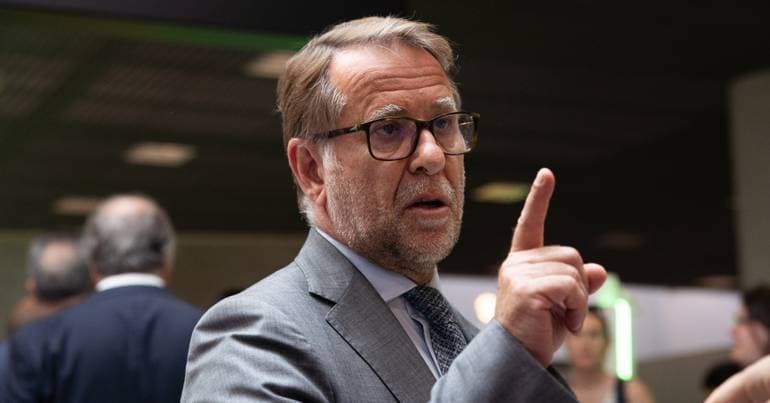
Carlos Galamba de Oliveira was under investigation by authorities when he was appointed by the minister as vice-president of the Central Administration of the Health System. He is now accused of abuse of power regarding public contracts he made while at Egas Moniz and São Francisco Xavier hospitals.

The Government's General Secretariat contracted a company led by a manager accused of bribing PSD mayors four times. The accused claims he is innocent.

The trial for the Operação Marquês case resumes this Tuesday, March 17, in Lisbon, following a three-week break—the third caused by the resignation of a lawyer representing former Prime Minister José Sócrates. This is the first time a former head of government has stood trial for corruption in Portugal. The 21 defendants, including former banker Ricardo Salgado and former minister Armando Vara, face 117 charges of corruption, money laundering, and tax fraud related to events between 2005 and 2014. Sócrates himself faces 22 charges. The trial faces significant procedural challenges, including potential statute of limitations issues and a recurring cycle of lawyer resignations, which has led the court to schedule sessions for listening to previous testimonies to allow new legal counsel time to prepare.
This is the first time a former head of government has sat in the dock for corruption.

Sócrates ridicules the justice system every day. He is dragging us into a second bankruptcy: the economic one in 2011 and the justice one in 2026. We recovered well and quickly from the first. I am not sure about the second.

A network of about a dozen employees is under investigation. Each could earn up to 500 euros per month in bribes from funeral homes.

PRESS REVIEW | Part of the funds used by Santos Silva had been released in 2021

Lawyer Carlos Melo Alves analyses the latest investigation into José Sócrates, carried out by the weekly newspaper Sol

Felícia Cabrita, a journalist for Sol, discusses the latest investigation into the finances of José Sócrates, the main topic of the report published this Friday in the weekly newspaper.

The proceedings involve the Public Prosecutor's Office, the Tax Authority, and the French police.
Authorities carried out searches at the home of Altice founder Armando Pereira in Vieira do Minho. A house and several companies belonging to Braga businessman Hernâni Vaz Antunes were also reportedly visited.

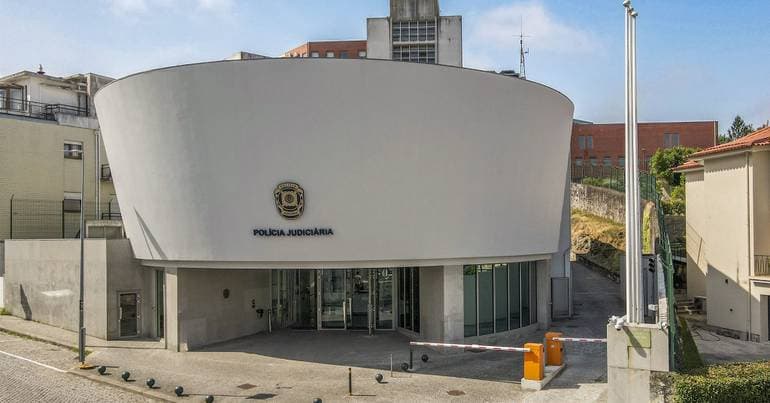
Officers from Portugal’s Polícia Judiciária (PJ) criminal police carried out searches this Thursday at the morgue of Lisbon’s Santa Maria Hospital as part of a corruption investigation. According to the The post Police search morgue at Lisbon’s Santa Maria Hospital in corruption probe appeared first on Portugal Resident.

Through the international judicial cooperation mechanism, French authorities have requested assistance from Portugal to conduct new searches as part of Operation Picoas, reports SIC Notícias. The searches are taking place in Vieira do Minho, at the homes of Armando Pereira in Guilhofrei and Hernâni Vaz Antunes in Gualtar, as well as at several of the businessman's companies.

The case involves acts of corruption allegedly committed by two former mayors of Espinho, focusing on real estate projects and their respective licensing worth tens of millions of euros.

The judge cancelled the hearing scheduled for March 20th.

Funeral homes are paying morgue staff to prepare and expedite the collection of bodies.

The Judiciary Police (PJ) carried out searches this Thursday, March 12, at the Santa Maria Hospital morgue in Lisbon, due to strong suspicions of the crime of undue receipt or offer of advantage. In the 'Rigor Mortis' operation, the PJ's National Anti-Corruption Unit also conducted 10 home searches as part of an investigation triggered by reports that morgue staff were receiving monetary payments from various funeral homes to prepare bodies, allowing for faster collection. The PJ stated that relevant evidence was seized during the searches, which were overseen by a judge and a public prosecutor, and will now be analysed as part of an inquiry led by the Lisbon DIAP. Santa Maria Hospital informed DN that it does not comment on judicial investigations but remains available to cooperate with authorities.

The investigation originated from a report that morgue staff were receiving monetary kickbacks, paid by various funeral homes, to expedite the preparation of deceased persons' bodies.
CNN Portugal commentator Luís Rosa argues that former Prime Minister José Sócrates' attempts to stall his trial undermine public trust in democracy, while Minister Leitão Amaro emphasizes the need to protect media independence from political interference.

Former Economy Minister Manuel Pinho has appealed to the Supreme Court of Justice (Supremo Tribunal de Justiça) against his 10-year prison sentence for corruption, money laundering, and tax fraud. Pinho was convicted in 2024 for allegedly receiving illegal payments from former banker Ricardo Salgado during his time in government. The appeal cites procedural flaws and statute of limitations issues, with the defense requesting either a full acquittal or a reduced sentence of seven and a half years. Residents following the long-running EDP case should note that the former minister remains under house arrest while the high court reviews the case.
Ricardo Salgado is the former chairman and CEO of Banco Espírito Santo (BES), the bank that collapsed in 2014 and triggered one of Portugal’s largest financial scandals. He has faced multiple criminal charges including fraud and money laundering, and recent appeal-court rulings ordering a new trial—despite reports about his Alzheimer’s—are important for anyone following accountability in Portugal’s banking sector.
Manuel Pinho is a former Portuguese Minister of Economy who served from 2005 to 2009 under the Socialist Party (Partido Socialista) government. In June 2024, he was sentenced to 10 years in prison for passive corruption, money laundering, and tax fraud related to undeclared payments from the Espírito Santo Group (Grupo Espírito Santo). His case is one of several high-profile legal proceedings involving former government officials and the collapse of the Banco Espírito Santo banking empire.

The Judicial Police have launched Operation 'Scorched Earth' to investigate a €3.6 million fraud involving European funds allocated for reforestation projects in Madeira. The operation has led to 26 searches in Madeira and Lisbon, identifying seven defendants, including five individuals and two companies. The investigation focuses on potential crimes such as qualified fraud, undue receipt of advantages, corruption, and money laundering, with two women arrested for significant losses linked to false investments in crypto-assets.

Portugal has been experiencing a continuous decline in its Transparency International index ranking since 2015, now positioned 46th out of 180 countries in 2025. This marks a drop of three places from 2024 and twelve places from 2023, highlighting ongoing challenges in preventing corruption in public office.

In this opinion piece, Arlindo Oliveira highlights that Portugal shows the largest discrepancy between perceived corruption (high) and corruption measured by direct personal experience (low). The article analyses how this perception–experience gap affects public trust and the policy debate, and argues for targeted communication and policy responses to reconcile public perception with measured realities.

The piece argues that Carlos (Carneiro) can only realistically vie for the premiership if he makes combating moral and economic corruption the centrepiece of his campaign and party renewal. Influence peddling, cronyism and nepotism are identified as the deepest maladies afflicting the Socialist Party (PS) and will largely determine its electoral prospects and internal legitimacy. The analysis outlines how a credible anti-corruption platform and concrete policy reforms could reshape voter perceptions and decide whether Carneiro’s bid succeeds.