17 August 2026 – 23 August 2026
Wildfires and Administrative Hurdles Dominate Portugal's Mid-August News
Emergency crews are battling widespread wildfires as the nation faces shifting weather patterns and economic adjustments to fuel taxes. Meanwhile, administrative tensions rise as the Bar Association and political leaders criticize AIMA's service failures, even as the agency begins issuing long-awaited residence cards.
Emergency teams battle wildfires across multiple regions
More than 200 personnel are currently fighting a wildfire in Mouriscas, within the Abrantes municipality, which began Saturday afternoon with two active fronts. While authorities describe the situation as complicated and out of control, no homes are currently at risk. Additional fires are also being managed in other regions, including Santa Marta de Penaguião and Celorico de Basto.
Update: Fire in Abrantes now involves 578 personnel
The wildfire in Abrantes has expanded, now mobilizing 578 personnel as it spreads toward the Mação municipality. While the fire is currently yielding to firefighting efforts, three people have sustained minor injuries, and authorities report that the blaze is still active.

President declares pension system remains sacred
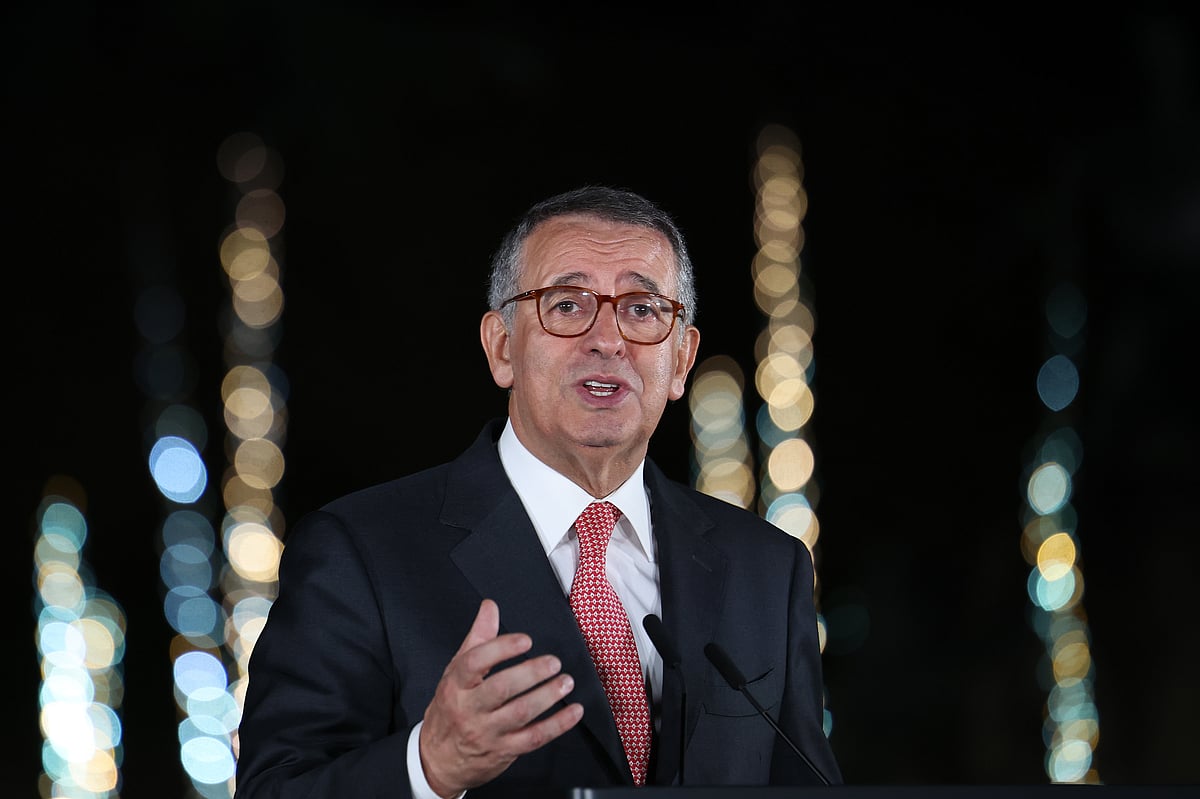
President of the Republic António José Seguro stated this Saturday that pensions in Portugal are sacred. During a public appearance in Viana do Castelo, he clarified that any legal changes to the pension system are the sole responsibility of the government or parliament, rather than the presidency.

- President of Portugal (since March 9, 2026)
- Party: Independent. Former leader of the Socialist Party (PS), Partido Socialista
- Center-left
António José Martins Seguro (born March 11, 1962, in Penamacor) is a lawyer, political scientist, and the current President of the Portuguese Republic, inaugurated on March 9, 2026 after winning the two-round presidential election in January–February 2026.
Career: He led Socialist Youth (1990–1994), served as MEP (1999–2001), was Minister Adjunct to PM António Guterres (2001–2002), and led the PS parliamentary group (2004–2005). Elected PS Secretary-General in 2011 with 68%, he led the opposition during Portugal's bailout era. In 2014, António Costa defeated him in party primaries by a landslide, prompting Seguro's resignation and a decade-long retreat from politics. He returned in 2025, launching the movement UPortugal and announcing his presidential candidacy in June. He received official PS backing in October 2025 and won the presidency in February 2026.
Political philosophy: Seguro positions himself as representing a "modern and moderate" left, advocating financial responsibility while opposing austerity. As President, he has emphasized institutional trust, efficient governance, and a collaborative relationship with the government while maintaining rigorous constitutional oversight.
Civil Protection warns of incoming autumn-like weather
The National Emergency and Civil Protection Authority (Autoridade Nacional de Emergência e Proteção Civil or ANEPC) has issued a nationwide warning due to an incoming low-pressure system. The Portuguese Institute for Sea and Atmosphere (Instituto Português do Mar e da Atmosfera or IPMA) forecasts heavy rain, strong winds, and rough seas starting Sunday, particularly in the Northwest.
A district emergency plan (Plano Distrital de Emergência) is a local civil-protection document that sets roles, resources and actions a district will use to prevent and respond to major incidents like floods, storms or wildfires. Municipal and district civil protection authorities prepare and can activate the plan with support from the national emergency agency (Autoridade Nacional de Emergência e Proteção Civil), ordering evacuations, opening shelters, closing roads and coordinating rescue teams. Those in affected districts should follow local instructions, sign up for official alerts and know their nearest shelter and evacuation routes during heavy rain.
A red warning is the highest alert level issued by Portugal's weather agency, the Portuguese Institute for the Sea and the Atmosphere (Instituto Português do Mar e da Atmosfera or IPMA), used when conditions pose a very high risk to life and property. Under a red warning authorities may close roads, suspend transport and advise people to avoid coastal and flood‑prone areas, so follow civil protection instructions during the Friday–Saturday storm period.

PCP leader criticizes government handling of healthcare
Paulo Raimundo, the secretary-general of the Portuguese Communist Party (Partido Comunista Português or PCP), accused the government of dismantling the National Health Service (Serviço Nacional de Saúde or SNS). During a visit to the Algarve, he argued that private interests are increasingly undermining public healthcare access in the region.
Paulo Raimundo is the Secretary-General of the Portuguese Communist Party (Partido Comunista Português or PCP), a position he has held since November 2022. He is a career politician and former trade unionist who succeeded Jerónimo de Sousa as the leader of the party.
António Filipe is a politician from the PCP (Partido Comunista Português) who, in this story, acknowledged that his election results fell short and said the party would join forces to oppose what it called a 'serious threat to democracy'. His remarks indicate the PCP intends to be active in post-election alliances rather than withdrawing from national debates. Voters and those following left-wing politics should pay attention to his and the PCP's next moves.
Polytechnic universities see surge in student applications
The first phase of the National Higher Education Access Competition (Concurso Nacional de Acesso ao Ensino Superior or CNAES) saw nearly 50,000 students placed in universities. Polytechnic institutions experienced a 24.5% growth in placements, a trend attributed to their recent rebranding as polytechnic universities and relaxed entrance requirements. Aerospace Engineering at the University of Porto remains the most competitive course, requiring an entry grade of 19.5.
The National Higher Education Access Competition (Concurso Nacional de Acesso ao Ensino Superior or CNAES) is the centralized system used by students to apply for public university and polytechnic degree programs in Portugal. Managed by the Directorate-General for Higher Education, it allocates spots based on national entrance exam scores and secondary school grades.

Government adjusts fuel tax to mitigate rising costs
The government has updated the Tax on Petroleum and Energy Products (Imposto sobre os Produtos Petrolíferos e Energéticos or ISP) to help families and businesses cope with rising fuel prices. Effective August 17, the new rates are set at 80.52 euros per 1,000 liters of diesel and 49.61 euros per 1,000 liters of gasoline.
The ISP (Imposto sobre Produtos Petrolíferos e Energéticos) is Portugal's excise tax on petroleum and energy products, charged as a fixed amount per liter on petrol, diesel, and other fuels. It is one of the main components of fuel prices at the pump, alongside VAT and the carbon tax (Taxa de Carbono).
The government can adjust ISP rates — temporarily or permanently — to influence fuel prices. Rate cuts are a common policy tool to ease cost-of-living pressures on drivers and transport businesses, though they also reduce government revenue.
For consumers, the ISP is significant because even small changes in the per-liter rate translate into noticeable differences at the pump, particularly for diesel users and commercial transport operators.

AIMA issues residence cards after long appeal process
A Brazilian national has received two residence cards from the Agency for Integration, Migration and Asylum (Agência para a Integração, Migrações e Asilo or AIMA) following a three-and-a-half-year wait. The cards were issued after the applicant appealed an abandonment notice, though the agency has not provided further clarification to the applicant or her legal counsel.
Temporary residence is a limited residence permit that allows non‑EU nationals to live in Portugal for a set period (commonly one year, renewable) for study, work or other reasons. The Agência para a Integração, Migrações e Asilo (AIMA) launching an online form means eligible students who also work can apply or regularise their status more easily through AIMA’s process rather than only via consular services.
Police seize 150 kilograms of cocaine in fruit shipment
The Judicial Police (Polícia Judiciária or PJ) seized 150 kilograms of cocaine hidden in frozen fruit pulp packaging during a joint operation with Spanish authorities. The shipment, which originated in Ecuador and was destined for Portugal, has an estimated street value of four million euros. One foreign national was arrested in connection with the drug trafficking operation.

The PJ (Polícia Judiciária) is Portugal's national criminal investigation police agency, founded in 1945. Operating under the Ministry of Justice and supervised by the Public Ministry (prosecutors), the PJ is a "higher criminal police body" specializing in serious and complex crimes. Mission: The PJ assists judicial and prosecuting authorities by investigating terrorism, organized crime, homicide, kidnapping, drug trafficking, corruption, cybercrime, financial crime, and money laundering. It conducts forensic examinations, operates Portugal's Interpol and Europol liaison offices, and maintains specialized units including the National Counterterrorism Unit and National Anti-Corruption Unit. Difference from PSP/GNR: While PSP (civilian urban police) and GNR (military rural police) focus on preventive policing, public order, and investigating minor crimes, the PJ exclusively handles serious crime investigation requiring specialized technical and scientific expertise. PSP and GNR report to the Ministry of Internal Affairs; PJ reports to the Ministry of Justice. PJ officers receive higher pay and prestige but face greater operational risk.

Firefighters battle major blazes amid high-risk conditions
Over 1,300 firefighters are currently battling nine active wildfires across Portugal, with significant operations in Torre de Moncorvo, Santo Tirso, and Arouca. Prime Minister Luís Montenegro noted that while the total burned area is 75% lower than in 2025, the country remains at maximum risk and must maintain strict prevention measures. The National Emergency and Civil Protection Authority (ANEPC) continues to coordinate the response as several villages remain under threat.
Update: Firefighters battle active blazes in Northern Portugal
Active fires continue to threaten communities in the north, with the situation in Arouca and Torre de Moncorvo remaining the most critical. Four firefighters were injured in Arouca after their vehicle went off the road, and authorities warn that some areas may face mandatory evacuations if conditions worsen.

- Prime Minister, Portugal: 2024 - Present
- Party: Social Democratic Party (PSD)
Luís Filipe Montenegro Cardoso de Morais Esteves (born February 16, 1973, in Porto) is a Portuguese lawyer and center‑right politician who has served as Prime Minister of Portugal since April 2, 2024. A long‑time member of the Social Democratic Party (PSD), he is the leading figure of the post‑Troika generation of Portuguese conservatives. Montenegro was elected to the Assembly of the Republic in 2002 for the Aveiro district and remained an MP for 16 years, becoming PSD parliamentary leader from 2011 to 2017 during the bailout and austerity period under Prime Minister Pedro Passos Coelho. He was a prominent defender of strict austerity measures, arguing in 2014 that “the life of the people is no better, but the life of the country is a lot better,” a phrase that has followed his public image since. After an unsuccessful leadership bid against Rui Rio in 2020, Montenegro won the PSD leadership in 2022. He then forged the centre‑right Democratic Alliance (PSD–CDS‑PP and allies), which won a plurality of seats in the 2024 legislative election. Refusing to partner with the far‑right Chega, which he has called “often xenophobic, racist, populist and excessively demagogic,” he formed a minority government as head of the XXIV Constitutional Government on April 2, 2024. His first government fell in March 2025 after a no‑confidence vote linked to a conflict‑of‑interest affair, but fresh elections saw the Democratic Alliance increase its seat share, allowing Montenegro to return as prime minister leading the XXV Constitutional Government. His importance to Portugal lies in attempting to re‑center the traditional centre‑right after the crisis years, defending liberal‑conservative economics and EU alignment while drawing a sharp line against formal cooperation with the radical right, thus shaping how Portuguese democracy manages its new multi‑party era.
A district emergency plan (Plano Distrital de Emergência) is a local civil-protection document that sets roles, resources and actions a district will use to prevent and respond to major incidents like floods, storms or wildfires. Municipal and district civil protection authorities prepare and can activate the plan with support from the national emergency agency (Autoridade Nacional de Emergência e Proteção Civil), ordering evacuations, opening shelters, closing roads and coordinating rescue teams. Those in affected districts should follow local instructions, sign up for official alerts and know their nearest shelter and evacuation routes during heavy rain.
Bar Association criticizes AIMA for service failures
The Bar Association (Ordem dos Advogados or AO) has formally challenged the Agency for Integration, Migration and Asylum (Agência para a Integração, Migrações e Asilo or AIMA) over its lack of dedicated service channels. Lawyers warn that staff shortages and inadequate digital systems are obstructing legal procedures and undermining the rights of immigrants.
The Bar Association (Ordem dos Advogados or AO) is the professional regulatory body for lawyers in Portugal. It oversees the practice of law, ensures ethical standards, and frequently advocates for legal and administrative reforms, such as improving access to government services for immigrants.
Temporary residence is a limited residence permit that allows non‑EU nationals to live in Portugal for a set period (commonly one year, renewable) for study, work or other reasons. The Agência para a Integração, Migrações e Asilo (AIMA) launching an online form means eligible students who also work can apply or regularise their status more easily through AIMA’s process rather than only via consular services.
Six active wildfires in the north of the country, with Arouca causing the greatest concern
There are currently six active forest fires in northern Portugal, with the situation in Arouca being the most worrying for authorities.
Fire in Abrantes mobilises almost 400 personnel
The fire is “complicated” and “out of control”, but “still with no homes at risk”, said the vice-president of the municipality in the Santarém district, at 18:00.

Two major fires remain active with nearly a thousand personnel mobilised
Two large-scale wildfires are still burning, with emergency services deploying almost one thousand personnel to combat the flames.