Latest news and stories about higher education in Portugal for expats and residents.
This page has only 2 stories and is not indexed by search engines.
A manifesto signed by dozens of professors. They want to put an end to the deluge of 'artificial assignments systematically brought down to mediocrity by a chatbot'.

Ivo Vieira, CEO of Lusospace — Portugal’s first homegrown space company — explains on the podcast 'O Futuro do Futuro' how the country’s Aerospace Engineering courses continue to post record-breaking averages and how that strong educational pipeline is producing talent the national space sector can recruit across roles, not only engineers. He stresses that the quality of graduates makes recruitment easier for emerging Portuguese space firms, signalling a maturing ecosystem linking higher education and industry needs.

The Harvard physics professor speaks to PÚBLICO about the challenges academic institutions face in the era of artificial intelligence. A hint: teaching methods will have to change.

Is the academic staff crisis reaching higher education? 'The absence of professionals is a major challenge', especially in the private sector, and it affects strategic areas, concludes a new observatory.

The reduction from two to one higher-education entrance test has not been finalised. The National Commission for Access to Higher Education warns about deadlines and says the change would involve a time-consuming process.

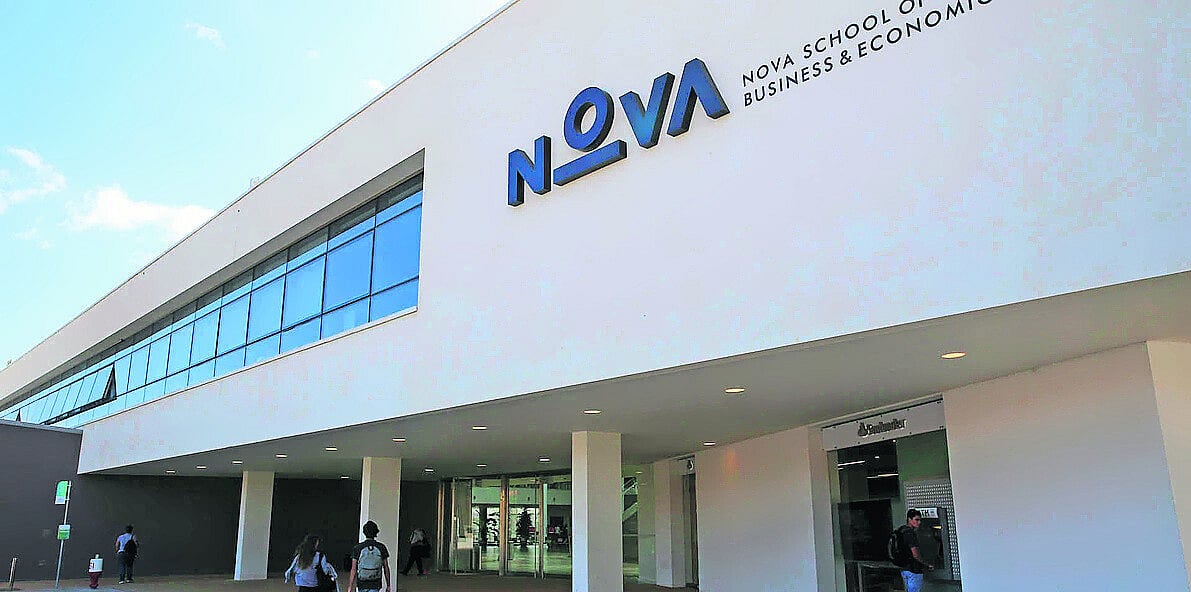
NOVA IMS (NOVA School of Information Management) is the information management and data science faculty of NOVA University Lisbon. It specialises in data science, information management and business analytics through taught programmes, applied research and industry partnerships. The school emphasises quantitative methods, practical analytics skills and interdisciplinary approaches to prepare graduates for roles in data-driven organisations and to support research and consulting activity across public and private sectors.

Between shared drives, past exams and recycled assessments, Portuguese higher education has normalised repetition, devalued merit and institutionalised 'desenrascanço' (the knack of improvising to get by). Column by Alexandre Pinto.

The President of the Council of Rectors warns that the word “freely” is missing from the text on the autonomy of higher education institutions, for example.

If we want an inclusive, competitive and socially relevant higher education, the solution is not to lower the bar but to raise the quality of the entire educational pathway. Opinion by Luís Ferreira

In higher education institutions there is a deep-rooted habit of denying the evidence.

Bloco de Esquerda, PCP, PS and Livre argued for ending that payment, with slight differences between them, but all the proposals were voted against by MPs from PSD, CDS-PP, Chega and Iniciativa Liberal.

After meeting with the Council of Rectors of the Azores, the minister said that, besides the space centre on Santa Maria, the region's contribution will come through 'other strengths, many at the University'.

The proposals were rejected with votes against from the PSD and CDS-PP, which favour increasing tuition fees.

Some parties call for the abolition of tuition fees.

'Frankly, I think everything will stay the same,' says an official of the Lisbon Academic Federation.

So far 107,000 student grant applications have been submitted, below last year. The rejection rate is around 17%, with about 18,000 applications denied.

Entities with no links to higher education were the subject of six proceedings by the Education Inspectorate in 2024 for advertising programmes as postgraduate qualifications without having authorisation to do so.

Held annually, the FCT competitions for doctoral grants are intended to finance scientific research for four years in order to confer the academic degree of doctor.

The issue of higher education costs borne by students remains on the table: five different proposals were submitted to the Assembly of the Republic in recent days.

The Minister of Education, Science and Innovation should be given the opportunity to outline the plan to revive fundamental science in Portugal and to build a modern scientific system. Opinion by Jorge Almeida.

Fewer than 40% receive a grant. The vast majority have no form of individualised support during their course — for most this is because they do not need it, but one in three are unaware that such support exists.

In August the minister said it made no sense 'to change the rules again'. The polytechnics say it was the evidence that made him change his mind. There will be only one exam. Rectors are not opposed.

Covilhã City Council unanimously approved a plea to the Government that the increase in places in public higher education should be preferentially allocated to institutions based in the interior, in low‑density territories. The motion was presented on Friday by the head of the executive, Hélio Fazendeiro, and was approved by the rest of the council line‑up...

Fernando Alexandre admitted he never understood the 2023 decision by the Socialist Party (PS) government to make at least two entrance exams mandatory.