27 April 2026 – 3 May 2026
Portugal Unveils Resilience Plan Amid Economic Shifts and Labor Unrest
As the government launches a 22.6 billion euro resilience plan, the nation faces rising fuel costs and looming labor strikes. Meanwhile, international tensions and domestic policy debates regarding migration and tax reforms continue to shape the political landscape.
FC Porto on the verge of 31st league title
FC Porto could secure their 31st national championship title this Saturday in their match against Alverca at the Estádio do Dragão. The team needs a victory to guarantee the trophy, though they could also be crowned champions if Benfica fails to win their earlier match against Famalicão. The Porto squad is currently preparing at their base in São Félix da Marinha.
Update: Porto celebrates 31st title as city prepares official reception
FC Porto officially secured their 31st national championship title on Saturday following a 1-0 victory against Alverca, with a goal from Jan Bednarek. Porto Mayor Pedro Duarte announced that the city will host an official reception for the team at the City Hall (Câmara Municipal) on May 16.

Fuel prices set to rise significantly next week
Drivers in Portugal will face higher costs at the pump starting Monday, with diesel prices expected to increase by up to 9.5 cents and petrol by 6 cents per litre. According to the Automobile Club of Portugal (Automóvel Club de Portugal or ACP), the average price for diesel could reach 2.05 euros per litre, while petrol may average 1.99 euros. These forecasts account for recent adjustments to the tax on petroleum products (Imposto sobre os Produtos Petrolíferos or ISP).
Update: Government increases fuel tax discount to mitigate price hikes
In response to the expected price surge, the government has further increased the discount on the ISP. The subsidy for diesel will rise by an additional 1.5 cents, while the petrol subsidy increases by 0.6 cents.
The ISP (Imposto sobre Produtos Petrolíferos e Energéticos) is Portugal's excise tax on petroleum and energy products, charged as a fixed amount per liter on petrol, diesel, and other fuels. It is one of the main components of fuel prices at the pump, alongside VAT and the carbon tax (Taxa de Carbono).
The government can adjust ISP rates — temporarily or permanently — to influence fuel prices. Rate cuts are a common policy tool to ease cost-of-living pressures on drivers and transport businesses, though they also reduce government revenue.
For consumers, the ISP is significant because even small changes in the per-liter rate translate into noticeable differences at the pump, particularly for diesel users and commercial transport operators.
ACP is the Automóvel Club de Portugal (Automobile Club of Portugal). It is a Portuguese motoring association that publishes fuel-price data and weekly forecasts used by motorists, media and retailers to anticipate petrol and diesel price changes when budgeting for trips or refuelling.

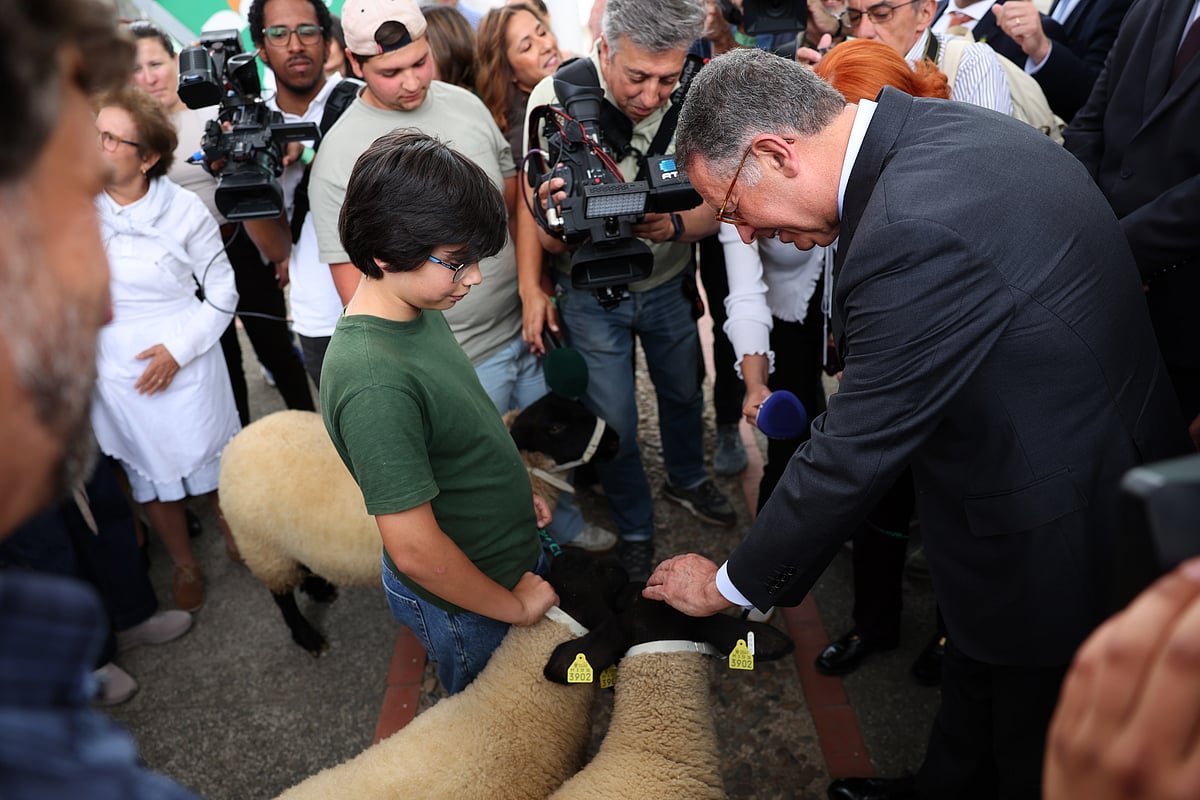
President Seguro addresses farmer concerns over Hormuz blockade
President of the Republic António José Seguro visited the Ovibeja agricultural fair this Saturday, expressing understanding for the difficulties faced by farmers. He specifically addressed the impact of the Middle East conflict and the blockade of the Strait of Hormuz, which he stated should never have closed. Seguro emphasized the need for affordable fertilizer imports to prevent further increases in food prices for Portuguese consumers.

- President of Portugal (since March 9, 2026)
- Party: Independent. Former leader of the Socialist Party (PS), Partido Socialista
- Center-left
António José Martins Seguro (born March 11, 1962, in Penamacor) is a lawyer, political scientist, and the current President of the Portuguese Republic, inaugurated on March 9, 2026 after winning the two-round presidential election in January–February 2026.
Career: He led Socialist Youth (1990–1994), served as MEP (1999–2001), was Minister Adjunct to PM António Guterres (2001–2002), and led the PS parliamentary group (2004–2005). Elected PS Secretary-General in 2011 with 68%, he led the opposition during Portugal's bailout era. In 2014, António Costa defeated him in party primaries by a landslide, prompting Seguro's resignation and a decade-long retreat from politics. He returned in 2025, launching the movement UPortugal and announcing his presidential candidacy in June. He received official PS backing in October 2025 and won the presidency in February 2026.
Political philosophy: Seguro positions himself as representing a "modern and moderate" left, advocating financial responsibility while opposing austerity. As President, he has emphasized institutional trust, efficient governance, and a collaborative relationship with the government while maintaining rigorous constitutional oversight.
PCP leader challenges government to drop labour reform
The leader of the Portuguese Communist Party (Partido Comunista Português or PCP), Paulo Raimundo, has challenged the government to withdraw its proposed labour reform to avoid a general strike scheduled for June 3rd. The General Confederation of the Portuguese Workers (Confederação Geral dos Trabalhadores Portugueses or CGTP) has indicated it may call off the strike if the government drops the proposal.
António Filipe is a politician from the PCP (Partido Comunista Português) who, in this story, acknowledged that his election results fell short and said the party would join forces to oppose what it called a 'serious threat to democracy'. His remarks indicate the PCP intends to be active in post-election alliances rather than withdrawing from national debates. Voters and those following left-wing politics should pay attention to his and the PCP's next moves.

The General Confederation of the Portuguese Workers (CGTP – Confederação Geral dos Trabalhadores Portugueses) is Portugal’s largest trade-union confederation, grouping most unions in manufacturing, public services and many other sectors.
Founded clandestinely in 1970 as “Intersindical” under the dictatorship, it emerged publicly after the 1974 Carnation Revolution and was legalised in 1975. It has been central to virtually all major labour struggles since then, from defending collective bargaining and the 40‑hour week to leading general strikes against austerity and labour‑law rollbacks.
CGTP is historically close to the Portuguese Communist Party and has a class‑struggle, anti‑neoliberal profile, strongly critical of EU and government policies seen as undermining workers’ rights. It favours grassroots mobilisation and strikes over compromise, often refusing national social‑pact deals that the more centrist UGT is willing to sign.
In today’s Portugal, CGTP remains a key actor in wage bargaining, labour‑law debates and national protests; together with UGT it called the first joint general strike in years in December 2025, signalling its continuing capacity to organise mass action.

Taxpayers can still claim Youth IRS for past years
Taxpayers who missed the opportunity to claim the Youth IRS (IRS Jovem) in their 2023 or 2024 tax returns can still submit a correction. The tax authority allows for a replacement declaration until June 30th, though a standard fine of 25 euros typically applies to these late submissions.
IRS Jovem is a tax benefit that provides a partial exemption on employment income for young workers aged 18 to 26 during their first five years of work. It helps young professionals retain more of their earnings by reducing their income tax (Imposto sobre o Rendimento de Pessoas Singulares) liability. As of 2024, these taxpayers are eligible for the automatic tax return system, simplifying the annual filing process.

EU warns of firm response to Trump tariff threats
The European Commission and the European Parliament are preparing a potential response to United States President Donald Trump's threat to impose 25 percent tariffs on European-manufactured cars and trucks. While the Commission stated it is keeping its options open, European officials rejected Trump's accusations that the EU violated a trade deal reached last summer. The German automotive industry has also called for the immediate opening of negotiations to resolve the dispute.
Migration union demands investigation into AIMA searches
The Migration Technicians Union has called for a rigorous investigation into the circumstances that led to Judicial Police (Polícia Judiciária or PJ) searches at the Agência para a Integração, Migrações e Asilo (AIMA) branch in the Azores. The union expressed solidarity with staff in Ponta Delgada and warned that the negative public exposure of the institution is placing significant pressure on its employees.

The PJ (Polícia Judiciária) is Portugal's national criminal investigation police agency, founded in 1945. Operating under the Ministry of Justice and supervised by the Public Ministry (prosecutors), the PJ is a "higher criminal police body" specializing in serious and complex crimes. Mission: The PJ assists judicial and prosecuting authorities by investigating terrorism, organized crime, homicide, kidnapping, drug trafficking, corruption, cybercrime, financial crime, and money laundering. It conducts forensic examinations, operates Portugal's Interpol and Europol liaison offices, and maintains specialized units including the National Counterterrorism Unit and National Anti-Corruption Unit. Difference from PSP/GNR: While PSP (civilian urban police) and GNR (military rural police) focus on preventive policing, public order, and investigating minor crimes, the PJ exclusively handles serious crime investigation requiring specialized technical and scientific expertise. PSP and GNR report to the Ministry of Internal Affairs; PJ reports to the Ministry of Justice. PJ officers receive higher pay and prestige but face greater operational risk.
Temporary residence is a limited residence permit that allows non‑EU nationals to live in Portugal for a set period (commonly one year, renewable) for study, work or other reasons. The Agência para a Integração, Migrações e Asilo (AIMA) launching an online form means eligible students who also work can apply or regularise their status more easily through AIMA’s process rather than only via consular services.

CGTP calls for general strike on June 3rd
The General Confederation of the Portuguese Workers (CGTP) has announced a general strike for June 3rd to protest the government's proposed labour reform package. While the CGTP secretary-general Tiago Oliveira described the reform as a major attack on workers, the General Union of Workers (UGT) has also expressed strong opposition to the government's core pillars of the proposal, though it is not currently joining the CGTP-led strike.
Update: UGT considers joining CGTP general strike
The UGT has indicated it may join the strike, though a final decision depends on the outcome of the next social concertation (Concertação Social) meeting scheduled for next Thursday. Meanwhile, the Portuguese Communist Party (Partido Comunista Português or PCP) has officially called for all workers to mobilize for the June 3rd action.
António Filipe is a politician from the PCP (Partido Comunista Português) who, in this story, acknowledged that his election results fell short and said the party would join forces to oppose what it called a 'serious threat to democracy'. His remarks indicate the PCP intends to be active in post-election alliances rather than withdrawing from national debates. Voters and those following left-wing politics should pay attention to his and the PCP's next moves.
The General Confederation of the Portuguese Workers (CGTP – Confederação Geral dos Trabalhadores Portugueses) is Portugal’s largest trade-union confederation, grouping most unions in manufacturing, public services and many other sectors.
Founded clandestinely in 1970 as “Intersindical” under the dictatorship, it emerged publicly after the 1974 Carnation Revolution and was legalised in 1975. It has been central to virtually all major labour struggles since then, from defending collective bargaining and the 40‑hour week to leading general strikes against austerity and labour‑law rollbacks.
CGTP is historically close to the Portuguese Communist Party and has a class‑struggle, anti‑neoliberal profile, strongly critical of EU and government policies seen as undermining workers’ rights. It favours grassroots mobilisation and strikes over compromise, often refusing national social‑pact deals that the more centrist UGT is willing to sign.
In today’s Portugal, CGTP remains a key actor in wage bargaining, labour‑law debates and national protests; together with UGT it called the first joint general strike in years in December 2025, signalling its continuing capacity to organise mass action.

The General Union of Workers (UGT – União Geral de Trabalhadores) is one of Portugal’s two main national trade union confederations. Founded in Lisbon on 28 October 1978, it was created as a social‑democratic alternative to the more communist‑aligned CGTP after the 1974 Revolution, grouping unions close to the Socialist Party and moderate centre‑right currents.
UGT represents around 400,000 workers and is affiliated to the European Trade Union Confederation and International Trade Union Confederation, giving Portuguese labour a voice at EU and global level. Its principles stress union independence from the state, employers, churches and parties, internal democracy and active worker participation.
Historically, UGT’s hallmark has been “propositive” social dialogue: it is usually more willing than CGTP to sign tripartite agreements on wages, labour law and social policy with governments and employers, shaping minimum wage increases, working‑time rules and social protection reforms. This makes UGT a key centrist actor in Portugal’s industrial relations, often mediating between left and right while defending collective bargaining and incremental improvements to labour rights.
Social Concertation (Concertação Social) is Portugal's tripartite dialogue between the government, trade unions and employer associations to negotiate labour, social and economic policies. Its agreements often shape government proposals but are not binding, so if talks fail the government can still submit the labour-law revision to Parliament and will need to secure votes there, potentially relying on support from opposition parties such as Chega.

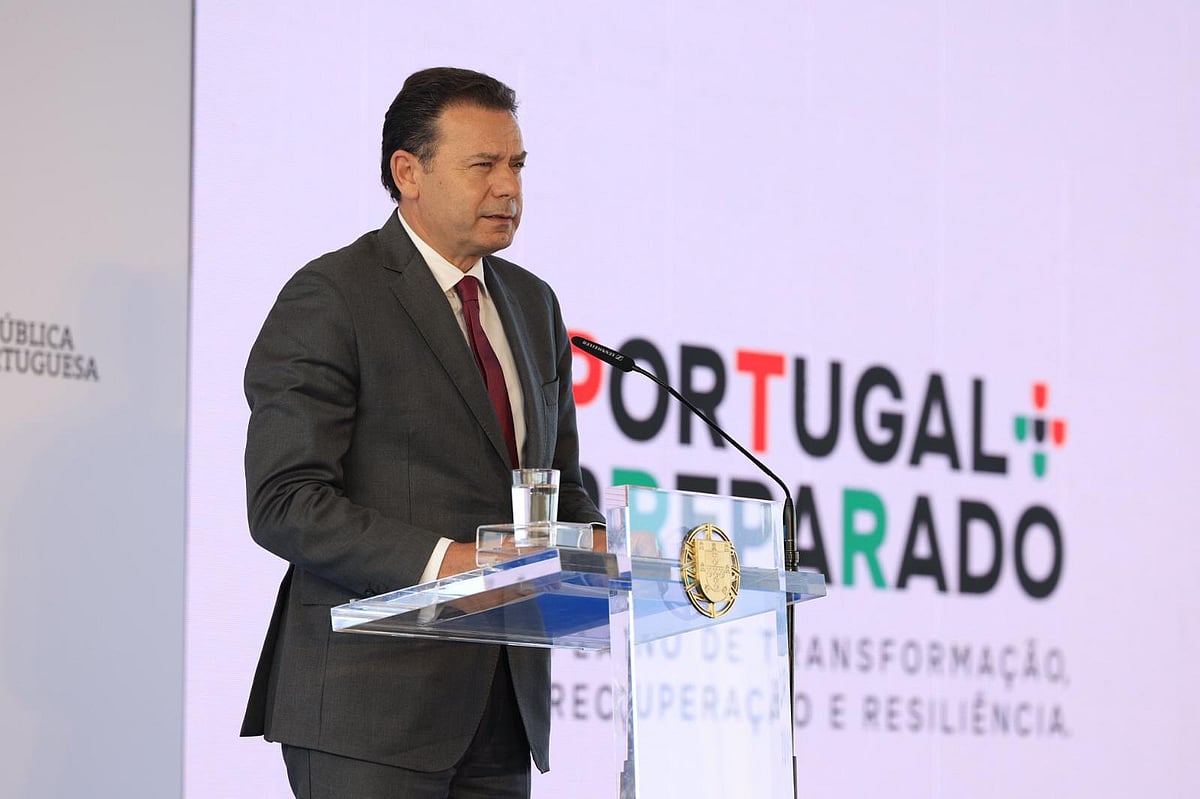
Government unveils 22.6 billion euro national resilience plan
Prime Minister Luís Montenegro has presented the Portugal Transformation, Recovery and Resilience (Portugal Transformação, Recuperação e Resiliência or PTRR), a 22.6 billion euro investment program running until 2034. The plan focuses on three pillars: recovery from recent storm damage, protection against extreme events through infrastructure and forest management, and a new response framework that includes a mandatory seismic insurance scheme.
Update: Government faces criticism over PTRR priorities
Opposition leader André Ventura of the Chega party has criticized the plan, labeling it as marketing and arguing that the government failed to define clear priorities. While the government maintains the plan prepares the country for future crises, reports indicate that funding sources for a significant portion of the private sector investments remain undefined.

- Prime Minister, Portugal: 2024 - Present
- Party: Social Democratic Party (PSD)
Luís Filipe Montenegro Cardoso de Morais Esteves (born February 16, 1973, in Porto) is a Portuguese lawyer and center‑right politician who has served as Prime Minister of Portugal since April 2, 2024. A long‑time member of the Social Democratic Party (PSD), he is the leading figure of the post‑Troika generation of Portuguese conservatives. Montenegro was elected to the Assembly of the Republic in 2002 for the Aveiro district and remained an MP for 16 years, becoming PSD parliamentary leader from 2011 to 2017 during the bailout and austerity period under Prime Minister Pedro Passos Coelho. He was a prominent defender of strict austerity measures, arguing in 2014 that “the life of the people is no better, but the life of the country is a lot better,” a phrase that has followed his public image since. After an unsuccessful leadership bid against Rui Rio in 2020, Montenegro won the PSD leadership in 2022. He then forged the centre‑right Democratic Alliance (PSD–CDS‑PP and allies), which won a plurality of seats in the 2024 legislative election. Refusing to partner with the far‑right Chega, which he has called “often xenophobic, racist, populist and excessively demagogic,” he formed a minority government as head of the XXIV Constitutional Government on April 2, 2024. His first government fell in March 2025 after a no‑confidence vote linked to a conflict‑of‑interest affair, but fresh elections saw the Democratic Alliance increase its seat share, allowing Montenegro to return as prime minister leading the XXV Constitutional Government. His importance to Portugal lies in attempting to re‑center the traditional centre‑right after the crisis years, defending liberal‑conservative economics and EU alignment while drawing a sharp line against formal cooperation with the radical right, thus shaping how Portuguese democracy manages its new multi‑party era.
The PTRR is Portugal's Transformation, Recovery and Resilience plan, the national programme that channels EU recovery funding (NextGenerationEU) into investments and reforms after the COVID-19 shock. It totals about €16.6 billion in grants plus €2.7 billion in loans (≈€19.3 billion) and runs mainly from 2021–2026, financing projects in green transition, digitalisation and social infrastructure that affect public spending and investment decisions expats may notice in housing, transport and services.

André Ventura, born January 15, 1983, is a lawyer, academic, and Portugal's most prominent far-right leader. He founded Chega ("Enough") in 2019 after his PSD mayoral campaign attacked the Romani community. Chega surged from 1.3% in 2019 to 22.8% in May 2025, becoming parliament's second-largest party and making Ventura Leader of the Opposition.
His platform emphasizes immigration restrictions, law-and-order policies, constitutional reform, and contains inflammatory anti-Romani rhetoric that has triggered multiple discrimination convictions and investigations. Politically classified as far-right by international media, Ventura cultivates alliances with European far-right figures including Marine Le Pen and Santiago Abascal.
GNR launches security operation for Fátima pilgrimage
The National Republican Guard (Guarda Nacional Republicana or GNR) is intensifying support for thousands of pilgrims traveling to the Sanctuary of Fátima for the May 12 and 13 celebrations. The Peregrinação Segura 2026 operation aims to ensure road safety and traffic flow, including real-time alerts on the Waze platform. The operation will focus on protecting faithful travelers on routes with heavy traffic and narrow shoulders.

The GNR (Guarda Nacional Republicana) is Portugal's national gendarmerie—a military police force founded in 1911, with origins dating to 1801. With over 22,600 personnel, GNR patrols 94-96% of Portuguese territory, covering rural areas, medium towns, and highways. Members are military personnel subject to military law, responsible for public order, customs, coastal control, environmental protection (SEPNA), firefighting/rescue (GIPS), border control, and ceremonial guards. GNR vs. PSP: The PSP (Polícia de Segurança Pública) is Portugal's civilian police force, covering major cities (Lisbon, Porto, Faro) and large urban areas—only 4% of territory but roughly half the population. PSP handles airport security, diplomatic protection, and private security regulation. Both share core missions (public order, crime prevention), but differ in nature: GNR is military with military training; PSP is civilian with police-focused training.

FC Porto champions. Porto City Council to host the 'dragons' on May 16
Porto City Council will host FC Porto to celebrate their Portuguese I Liga football title win on Saturday, May 16, the mayor, Pedro Duarte, announced today.
PTRR forecasts investments of 22.6 billion euros by 2034
The 'Portugal Transformation, Recovery and Resilience' (PTRR) programme will have a total financial envelope of 22.6 billion euros and a nine-year time horizon.
Update: Government to approve 12-month moratorium for storm-hit firms
Prime Minister Luís Montenegro announced that the Council of Ministers will approve a 12-month temporary moratorium on corporate loans this Thursday. The measure aims to support businesses affected by the severe storms that caused significant damage and casualties in January and February.
The PTRR is Portugal's Transformation, Recovery and Resilience plan, the national programme that channels EU recovery funding (NextGenerationEU) into investments and reforms after the COVID-19 shock. It totals about €16.6 billion in grants plus €2.7 billion in loans (≈€19.3 billion) and runs mainly from 2021–2026, financing projects in green transition, digitalisation and social infrastructure that affect public spending and investment decisions expats may notice in housing, transport and services.
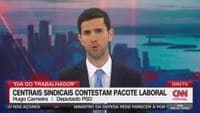
Labour reform must, in the final instance, be analysed and negotiated in Parliament
Hugo Carneiro, a PSD deputy, argues that it is important for the labour package to be brought before Parliament.