

13 April 2026 – 19 April 2026
Portugal Weekly: Labor Reforms, Healthcare Tensions, and New Tax Relief Measures
This week saw significant shifts in public policy, ranging from the reopening of the AIMA family reunification portal to new IRS tax deductions for cultural expenses. Tensions remain high in the healthcare sector as firefighters end their INEM agreement, while the government navigates ongoing labor law negotiations and adjustments to fuel tax policies.
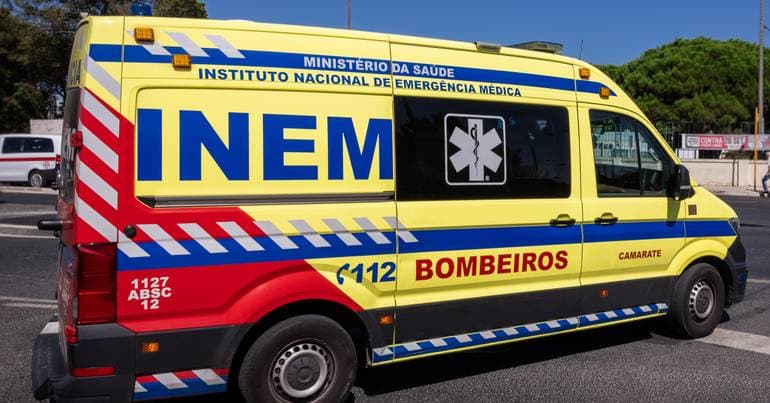
Firefighters terminate pre-hospital care agreement with INEM
The Portuguese Firefighters League (Liga dos Bombeiros Portugueses or LBP) has unanimously voted to terminate its cooperation agreement with the National Institute of Medical Emergency (Instituto Nacional de Emergência Médica or INEM). The decision follows a 20 million euro debt owed to the firefighters for pre-hospital services. The termination will take effect 120 days after formal notification, potentially impacting emergency response services.
Update: Government promises solution for INEM debt to firefighters
Minister of Internal Administration Luís Neves promised this Saturday that the government will find a solution in the coming days to resolve the outstanding payments. INEM acknowledged the debt, citing a need for budgetary reinforcement, and assured that emergency services will not be interrupted during the transition.
The Portuguese Firefighters' League (Liga dos Bombeiros Portugueses) is a national, non-governmental association that represents and coordinates many of Portugal’s fire brigades—particularly volunteer corps—and advocates for training, equipment and fire-safety policy. It frequently engages with government and the media on emergency-response standards and resource needs, so expats should know it can influence local fire services, public safety campaigns and how mutual aid is organised in their municipality.
Minimum services (serviços mínimos) are the legally required basic services that must be maintained during a strike to protect public safety—in healthcare this typically covers emergency care, critical ambulance coverage and intensive care. They matter because the INEM workers' committee admitted that late or unclear communication about which teams would be available during the end-of-2024 strike may have reduced operational capacity and confused patients; as an expat, expect limited non-urgent care during strikes and check official updates or call 112 for true emergencies.
Luís Neves will take office on Monday as Minister of Internal Administration. He graduated in law and has worked at the Judicial Police since 1995, where he served as coordinator of a national unit and developed a long career in criminal investigation.
President to meet social partners on Wednesday
President of the Republic António José Seguro will hold individual meetings with social partners at the Belém Palace this Wednesday, April 22nd. The hearings follow the conclusion of negotiations regarding proposed changes to labour law. The President aims to facilitate dialogue between unions and employer confederations, including the General Confederation of the Portuguese Workers (Confederação Geral dos Trabalhadores Portugueses or CGTP) and the General Workers' Union (União Geral de Trabalhadores or UGT).

- President of Portugal (since March 9, 2026)
- Party: Independent. Former leader of the Socialist Party (PS), Partido Socialista
- Center-left
António José Martins Seguro (born March 11, 1962, in Penamacor) is a lawyer, political scientist, and the current President of the Portuguese Republic, inaugurated on March 9, 2026 after winning the two-round presidential election in January–February 2026.
Career: He led Socialist Youth (1990–1994), served as MEP (1999–2001), was Minister Adjunct to PM António Guterres (2001–2002), and led the PS parliamentary group (2004–2005). Elected PS Secretary-General in 2011 with 68%, he led the opposition during Portugal's bailout era. In 2014, António Costa defeated him in party primaries by a landslide, prompting Seguro's resignation and a decade-long retreat from politics. He returned in 2025, launching the movement UPortugal and announcing his presidential candidacy in June. He received official PS backing in October 2025 and won the presidency in February 2026.
Political philosophy: Seguro positions himself as representing a "modern and moderate" left, advocating financial responsibility while opposing austerity. As President, he has emphasized institutional trust, efficient governance, and a collaborative relationship with the government while maintaining rigorous constitutional oversight.

The General Confederation of the Portuguese Workers (CGTP – Confederação Geral dos Trabalhadores Portugueses) is Portugal’s largest trade-union confederation, grouping most unions in manufacturing, public services and many other sectors.
Founded clandestinely in 1970 as “Intersindical” under the dictatorship, it emerged publicly after the 1974 Carnation Revolution and was legalised in 1975. It has been central to virtually all major labour struggles since then, from defending collective bargaining and the 40‑hour week to leading general strikes against austerity and labour‑law rollbacks.
CGTP is historically close to the Portuguese Communist Party and has a class‑struggle, anti‑neoliberal profile, strongly critical of EU and government policies seen as undermining workers’ rights. It favours grassroots mobilisation and strikes over compromise, often refusing national social‑pact deals that the more centrist UGT is willing to sign.
In today’s Portugal, CGTP remains a key actor in wage bargaining, labour‑law debates and national protests; together with UGT it called the first joint general strike in years in December 2025, signalling its continuing capacity to organise mass action.

The General Union of Workers (UGT – União Geral de Trabalhadores) is one of Portugal’s two main national trade union confederations. Founded in Lisbon on 28 October 1978, it was created as a social‑democratic alternative to the more communist‑aligned CGTP after the 1974 Revolution, grouping unions close to the Socialist Party and moderate centre‑right currents.
UGT represents around 400,000 workers and is affiliated to the European Trade Union Confederation and International Trade Union Confederation, giving Portuguese labour a voice at EU and global level. Its principles stress union independence from the state, employers, churches and parties, internal democracy and active worker participation.
Historically, UGT’s hallmark has been “propositive” social dialogue: it is usually more willing than CGTP to sign tripartite agreements on wages, labour law and social policy with governments and employers, shaping minimum wage increases, working‑time rules and social protection reforms. This makes UGT a key centrist actor in Portugal’s industrial relations, often mediating between left and right while defending collective bargaining and incremental improvements to labour rights.
Convicted psychiatrist continues practicing in Portugal
A Portuguese psychiatrist previously convicted in Sweden for child pornography continues to see patients in Portugal despite having his Swedish medical license revoked. Authorities discovered 39 devices containing illegal files during an investigation in Sweden, leading to a prison sentence. Although Swedish authorities notified the internal market information system, the doctor remains active in the Portuguese medical system.
AIMA reopens family reunification portal for CPLP citizens
The Agency for Integration, Migration and Asylum (Agência para a Integração, Migrações e Asilo or AIMA) has reopened its online portal for family reunification requests. The service is now available to citizens of the Community of Portuguese Language Countries (Comunidade dos Países de Língua Portuguesa or CPLP) seeking to bring minor children to Portugal. This development occurs ahead of the visit by Brazilian President Luiz Inácio Lula da Silva, who is expected to discuss immigration policy with Prime Minister Luís Montenegro.
Temporary residence is a limited residence permit that allows non‑EU nationals to live in Portugal for a set period (commonly one year, renewable) for study, work or other reasons. The Agência para a Integração, Migrações e Asilo (AIMA) launching an online form means eligible students who also work can apply or regularise their status more easily through AIMA’s process rather than only via consular services.
Luiz Inácio Lula da Silva is the current President of Brazil, serving his third term since January 2023. A prominent figure in Brazilian politics, he previously served as president from 2003 to 2010 and is a founding member of the Workers' Party (Partido dos Trabalhadores).

- Prime Minister, Portugal: 2024 - Present
- Party: Social Democratic Party (PSD)
Luís Filipe Montenegro Cardoso de Morais Esteves (born February 16, 1973, in Porto) is a Portuguese lawyer and center‑right politician who has served as Prime Minister of Portugal since April 2, 2024. A long‑time member of the Social Democratic Party (PSD), he is the leading figure of the post‑Troika generation of Portuguese conservatives. Montenegro was elected to the Assembly of the Republic in 2002 for the Aveiro district and remained an MP for 16 years, becoming PSD parliamentary leader from 2011 to 2017 during the bailout and austerity period under Prime Minister Pedro Passos Coelho. He was a prominent defender of strict austerity measures, arguing in 2014 that “the life of the people is no better, but the life of the country is a lot better,” a phrase that has followed his public image since. After an unsuccessful leadership bid against Rui Rio in 2020, Montenegro won the PSD leadership in 2022. He then forged the centre‑right Democratic Alliance (PSD–CDS‑PP and allies), which won a plurality of seats in the 2024 legislative election. Refusing to partner with the far‑right Chega, which he has called “often xenophobic, racist, populist and excessively demagogic,” he formed a minority government as head of the XXIV Constitutional Government on April 2, 2024. His first government fell in March 2025 after a no‑confidence vote linked to a conflict‑of‑interest affair, but fresh elections saw the Democratic Alliance increase its seat share, allowing Montenegro to return as prime minister leading the XXV Constitutional Government. His importance to Portugal lies in attempting to re‑center the traditional centre‑right after the crisis years, defending liberal‑conservative economics and EU alignment while drawing a sharp line against formal cooperation with the radical right, thus shaping how Portuguese democracy manages its new multi‑party era.

Cultural expenses now eligible for IRS tax deductions
Taxpayers can now validate invoices for books and show tickets on the e-Fatura portal to qualify for tax deductions. These cultural expenses will be applicable to the 2026 income tax (Imposto sobre o Rendimento das Pessoas Singulares or IRS) declaration. The portal now features specific icons to help users categorize these purchases correctly.
The IRS withholding tables (tabelas de retenção na fonte) are government-published schedules that determine how much personal income tax (Imposto sobre o Rendimento das Pessoas Singulares — IRS) employers must deduct from each paycheck. They take into account gross pay, marital status, number of dependents, and disability status.
The tables are updated annually (and sometimes mid-year when budgets change), directly affecting monthly take-home pay. When tables are revised downward, workers see more in their pay packet; when raised, less. Any difference between amounts withheld and the actual tax owed is settled when the annual IRS return (Modelo 3) is filed, typically between April and June.
Employees and pensioners should check the current tables — published by the Autoridade Tributária e Aduaneira (AT) — whenever they change, as the impact on net income can be significant.
E‑fatura is the Tax and Customs Authority's online invoice portal (E‑fatura), where taxpayers register and validate invoices so they can claim IRS deductions and benefits. The guidelines in the story note that taxpayers must validate last year’s invoices on the portal by the beginning of March before submitting the annual IRS tax return.

Government pledges support for media without interference
Minister of the Presidency António Leitão Amaro stated that the government intends to support the media sector without compromising its independence. Proposed measures include increased funding for newspaper distribution, mandatory public entity advertising in regional media, and new tax incentives. The minister also noted that the Lusa news agency has potential to expand its coverage across more national geographies.
António Leitão Amaro is Portugal's Minister of the Presidency (Ministro da Presidência) in the government led by Luís Montenegro. He is a key figure in the Social Democratic Party (Partido Social Democrata or PSD) and often is the government's spokesperson. Those following housing and rental policy should note his role in announcing the June 2024 measures regarding evictions and inheritances.
The government is amending the statutes of Lusa, Portugal's national news agency, to make the organization more professional and less influenced by political shifts. It is the primary source for breaking news and official reports, providing content to media outlets across the country. Those following local news should note that Lusa is often the first to report on government announcements and legislative changes.
Government cuts diesel tax discount as prices drop
The government is reducing the extraordinary tax discount on diesel by 1.5 cents per liter, while maintaining the current discount for unleaded petrol. This adjustment, published in the Diário da República, follows an expected significant decrease in diesel prices for the coming week. The move aims to balance fuel costs for consumers while managing the temporary tax relief measures.
The Official Journal (Diário da República) is Portugal's government gazette where laws, decrees and public contracts are formally published and take legal effect. Public‑private partnership approvals and other official notices — like the launch of the Central Algarve Hospital PPP — are published there so residents and businesses can find the authoritative text.

Natália Correia statue vandalized with Nazi symbols
A statue honoring the writer and former MP Natália Correia, located in the Graça area of Lisbon, was vandalized with Nazi symbols. The São Vicente parish council condemned the attack as an assault on democratic values and heritage. Authorities have been notified, and immediate cleaning efforts were undertaken to restore the monument.
Natália Correia (1923–1993) was a prominent Portuguese writer, poet, and politician known for her intellectual influence and advocacy for civil rights. She served as a member of the Assembly of the Republic (Assembleia da República), where she was a vocal figure in cultural and social debates.

Labour law reform negotiations near final deadline
The government has warned that negotiations regarding the Trabalho XXI labour law reform will conclude in the coming days, regardless of whether an agreement is reached with social partners. While the Minister of Labour expressed hope for a consensus, trade union centres remain divided, with the CGTP denouncing the process as a simulation after being excluded from preliminary meetings. Meanwhile, the Registry and Notary Workers' Union has granted a final ten-day extension for talks before considering strike action.
Update: Labour law negotiations set for final Friday meeting
The government has presented a final draft of the labour reform to the social concertation committee, with a new meeting scheduled for Friday to discuss minor adjustments. While the Minister of Labour claims conditions are met to conclude the process, the General Workers' Union (União Geral de Trabalhadores or UGT) maintains that significant issues, including the bank of hours (banco de horas) and continuous working day (jornada contínua), remain unresolved.
The General Confederation of the Portuguese Workers (CGTP – Confederação Geral dos Trabalhadores Portugueses) is Portugal’s largest trade-union confederation, grouping most unions in manufacturing, public services and many other sectors.
Founded clandestinely in 1970 as “Intersindical” under the dictatorship, it emerged publicly after the 1974 Carnation Revolution and was legalised in 1975. It has been central to virtually all major labour struggles since then, from defending collective bargaining and the 40‑hour week to leading general strikes against austerity and labour‑law rollbacks.
CGTP is historically close to the Portuguese Communist Party and has a class‑struggle, anti‑neoliberal profile, strongly critical of EU and government policies seen as undermining workers’ rights. It favours grassroots mobilisation and strikes over compromise, often refusing national social‑pact deals that the more centrist UGT is willing to sign.
In today’s Portugal, CGTP remains a key actor in wage bargaining, labour‑law debates and national protests; together with UGT it called the first joint general strike in years in December 2025, signalling its continuing capacity to organise mass action.
The General Union of Workers (UGT – União Geral de Trabalhadores) is one of Portugal’s two main national trade union confederations. Founded in Lisbon on 28 October 1978, it was created as a social‑democratic alternative to the more communist‑aligned CGTP after the 1974 Revolution, grouping unions close to the Socialist Party and moderate centre‑right currents.
UGT represents around 400,000 workers and is affiliated to the European Trade Union Confederation and International Trade Union Confederation, giving Portuguese labour a voice at EU and global level. Its principles stress union independence from the state, employers, churches and parties, internal democracy and active worker participation.
Historically, UGT’s hallmark has been “propositive” social dialogue: it is usually more willing than CGTP to sign tripartite agreements on wages, labour law and social policy with governments and employers, shaping minimum wage increases, working‑time rules and social protection reforms. This makes UGT a key centrist actor in Portugal’s industrial relations, often mediating between left and right while defending collective bargaining and incremental improvements to labour rights.
A banked hours scheme (banco de horas) is a flexible working time arrangement under Portuguese labor law that allows employees to accumulate overtime hours and use them later as time off, rather than receiving immediate overtime pay.
Under the Portuguese Labour Code, banked hours can be established through collective agreements or, in some cases, individual agreements. The scheme allows employers to vary working hours based on demand — requiring longer hours during peak periods and compensating with shorter hours or days off later.
Banked hours schemes are a frequent topic in labor reform negotiations, with unions (particularly CGTP) pushing for tighter limits and greater worker protections, while employers argue for more flexibility. Proposed reforms have included extending eligibility to parents of young children and adjusting the cap on banked hours.
Tupperware factory sale process continues after low bids
The sale of the Tupperware factory in Montalvo, Santarém, remains ongoing after initial purchase offers failed to meet the required 10 million euro minimum. The insolvency administrator, Jorge Calvete, confirmed that the sales process will proceed despite the lack of successful bids. The factory's future remains uncertain as the search for a buyer continues.

Pacheco Pereira and Ventura disagreed on everything in a debate marked by interruptions
Pacheco Pereira challenged André Ventura to a debate after the Chega leader claimed that 'shortly after the 25th of April there were more political prisoners than there were before the 25th of April 1974'.

PS suspends member suspected of 'Molotov cocktail' attack at the March for Life
The National Secretariat ordered the preventive suspension of the suspect, who has been a member of the PS since 2024.

Council of State focuses on national security and defense
The Council of State (Conselho de Estado) held its first meeting under the presidency of António José Seguro, focusing on national security, defense, and the protection of critical infrastructure. The session, which lasted four hours, included discussions on the country's preparedness for extreme weather events and the importance of respecting international law. President Seguro also held private meetings with his predecessor, Marcelo Rebelo de Sousa, and international leaders during the week.
- President of Portugal (since March 9, 2026)
- Party: Independent. Former leader of the Socialist Party (PS), Partido Socialista
- Center-left
António José Martins Seguro (born March 11, 1962, in Penamacor) is a lawyer, political scientist, and the current President of the Portuguese Republic, inaugurated on March 9, 2026 after winning the two-round presidential election in January–February 2026.
Career: He led Socialist Youth (1990–1994), served as MEP (1999–2001), was Minister Adjunct to PM António Guterres (2001–2002), and led the PS parliamentary group (2004–2005). Elected PS Secretary-General in 2011 with 68%, he led the opposition during Portugal's bailout era. In 2014, António Costa defeated him in party primaries by a landslide, prompting Seguro's resignation and a decade-long retreat from politics. He returned in 2025, launching the movement UPortugal and announcing his presidential candidacy in June. He received official PS backing in October 2025 and won the presidency in February 2026.
Political philosophy: Seguro positions himself as representing a "modern and moderate" left, advocating financial responsibility while opposing austerity. As President, he has emphasized institutional trust, efficient governance, and a collaborative relationship with the government while maintaining rigorous constitutional oversight.
The Council of State (Conselho de Estado) is the President's primary advisory body, composed of senior political figures including the Prime Minister and former presidents. It provides non-binding opinions on major issues such as dissolving parliament or declaring a state of emergency. Residents should note that the council acts as a stabilizing force during periods of political deadlock or institutional tension.