6 April 2026 – 12 April 2026
Portugal Weekly: Airport Biometrics Halted, Political Deals Struck, and Labor Unrest Looms
Portugal faces a week of transition as airport biometric systems are suspended to alleviate congestion while political parties reach a consensus on new Constitutional Court appointments. Meanwhile, residents should prepare for travel disruptions due to upcoming Lufthansa strikes, even as national debates continue over labor laws, healthcare access, and the legacy of cultural figures.
Biometrics suspended at major airports to ease queues
The Public Security Police (Polícia de Segurança Pública or PSP) suspended biometric data collection at departures in Lisbon, Porto, and Faro airports on Saturday morning to prevent passengers from missing flights due to excessive wait times. The system, part of the new European Entry/Exit System, resumed operations by the early afternoon. Officials confirmed that biometric collection remains active for all arrivals.
Update: Airport biometric data collection resumes after temporary suspension
PSP spokesperson Sérgio Soares confirmed that biometric data collection is now operating at full capacity for both departures and arrivals. The suspension was a contingency measure implemented after the new border control system caused significant queues, leading some passengers to miss their flights.

The PSP (Polícia de Segurança Pública) is Portugal's national civilian police force, founded in 1867. Responsible for defending Republican democracy and safeguarding internal security and citizens' rights, the PSP polices major cities—Lisbon, Porto, Faro—and large urban areas, covering only 4% of Portugal's territory but roughly half the population. Led by a National Director under the Ministry of Internal Affairs, its approximately 21,500 officers handle preventive policing, crime investigation, public order, airport security, diplomatic protection, private security regulation, firearms licensing, and border control (since 2023).
PSP vs. GNR: The PSP is civilian with police-focused training and urban jurisdiction, while the GNR (Guarda Nacional Republicana) is military (gendarmerie) with military training, covering 96% of Portugal's rural and suburban territory. Both share core public safety missions but differ fundamentally in nature, training, and geographic responsibility.
The Entry-Exit System (Sistema de Entrada e Saída) is an EU border-register that records biometric data (fingerprints and a facial image) and travel details for short-stay non‑EU travellers, replacing passport stamping and creating a searchable entry/exit record. According to recent reporting, the new rules now require over a third of non‑EU nationals entering Schengen to provide this extra data at the border; the aim is to improve security and migration tracking, but travellers should be prepared to submit biometrics at kiosks or border control and ensure their travel documents are valid. For expats and visitors this usually means slightly longer checks on arrival/departure and more robust digital records of your travel history.

Church leader opposes taxing abuse victim compensation
José Ornelas, president of the Portuguese Episcopal Conference (Conferência Episcopal Portuguesa or CEP), stated that taxing compensation payments for victims of sexual abuse within the Catholic Church is ethically unacceptable. He confirmed that the CEP is currently working to address the issue, arguing that these reparations should remain tax-exempt. Ornelas also recently criticized the use of religious rhetoric to justify hate speech or the exclusion of minorities.
José Ornelas is the Bishop of Leiria-Fátima and the current President of the Portuguese Episcopal Conference (Conferência Episcopal Portuguesa or CEP). He has held this leadership role since 2023, representing the Catholic Church in Portugal on national issues.
The Portuguese Episcopal Conference (Conferência Episcopal Portuguesa or CEP) is the official body representing the Catholic bishops of Portugal. It coordinates the church's stance on social, moral, and legal issues, often engaging with the government on matters affecting institutional policy and public ethics.
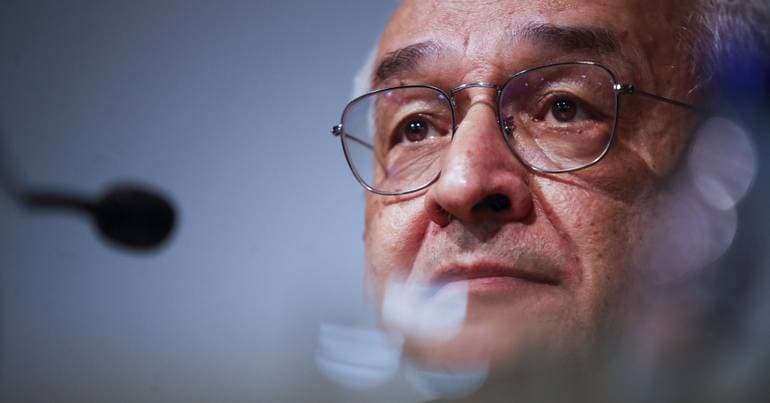
Lufthansa pilots call strike for Monday and Tuesday
The German pilots' union, Vereinigung Cockpit, has announced a new strike at Lufthansa for Monday and Tuesday. This follows a separate walkout by cabin crew that caused hundreds of flight cancellations. The union stated that the strike action is a response to a lack of serious proposals or dialogue from the airline's administration.

Ventura open to labour law talks if conditions met
Chega leader André Ventura stated this Saturday that he is open to reaching a consensus with the government on labour law reform, provided certain conditions are met. Ventura urged the executive to stop playing the victim, while the Communist Party (Partido Comunista Português or PCP) criticized Chega for imposing conditions on the process.

André Ventura, born January 15, 1983, is a lawyer, academic, and Portugal's most prominent far-right leader. He founded Chega ("Enough") in 2019 after his PSD mayoral campaign attacked the Romani community. Chega surged from 1.3% in 2019 to 22.8% in May 2025, becoming parliament's second-largest party and making Ventura Leader of the Opposition.
His platform emphasizes immigration restrictions, law-and-order policies, constitutional reform, and contains inflammatory anti-Romani rhetoric that has triggered multiple discrimination convictions and investigations. Politically classified as far-right by international media, Ventura cultivates alliances with European far-right figures including Marine Le Pen and Santiago Abascal.
He announced his 2026 presidential candidacy, polling at 18% alongside independent Admiral Gouveia e Melo. His rise ended Portugal's 50-year resistance to far-right parties.

Chega ("Enough") is a Portuguese far-right populist party founded in 2019 by André Ventura. It positions itself as an anti-establishment movement against what it calls a "rotten and corrupt system" of PS-PSD dominance. The party surged from 1.3% in 2019 to 22.8% in May 2025, becoming parliament's second-largest force with 60 seats. Chega's core platform emphasizes strict immigration control—ending automatic CPLP residency, deporting non-independent immigrants, implementing job-market quotas, and requiring five-year social security contributions before benefit access. It advocates radical constitutional reform, including reducing parliament to 100 members, abolishing the prime minister position for a presidential system, and dismantling public healthcare. Law-and-order policies include life imprisonment and chemical castration proposals.
The party is defined by inflammatory anti-Romani rhetoric, with Ventura convicted multiple times for discrimination. Chega maintains international alignments with European far-right figures including Marine Le Pen, Santiago Abascal, and Matteo Salvini. Mainstream Portuguese parties, including Prime Minister Luís Montenegro's government, have imposed a cordon sanitaire, refusing coalition with Chega despite its parliamentary strength.
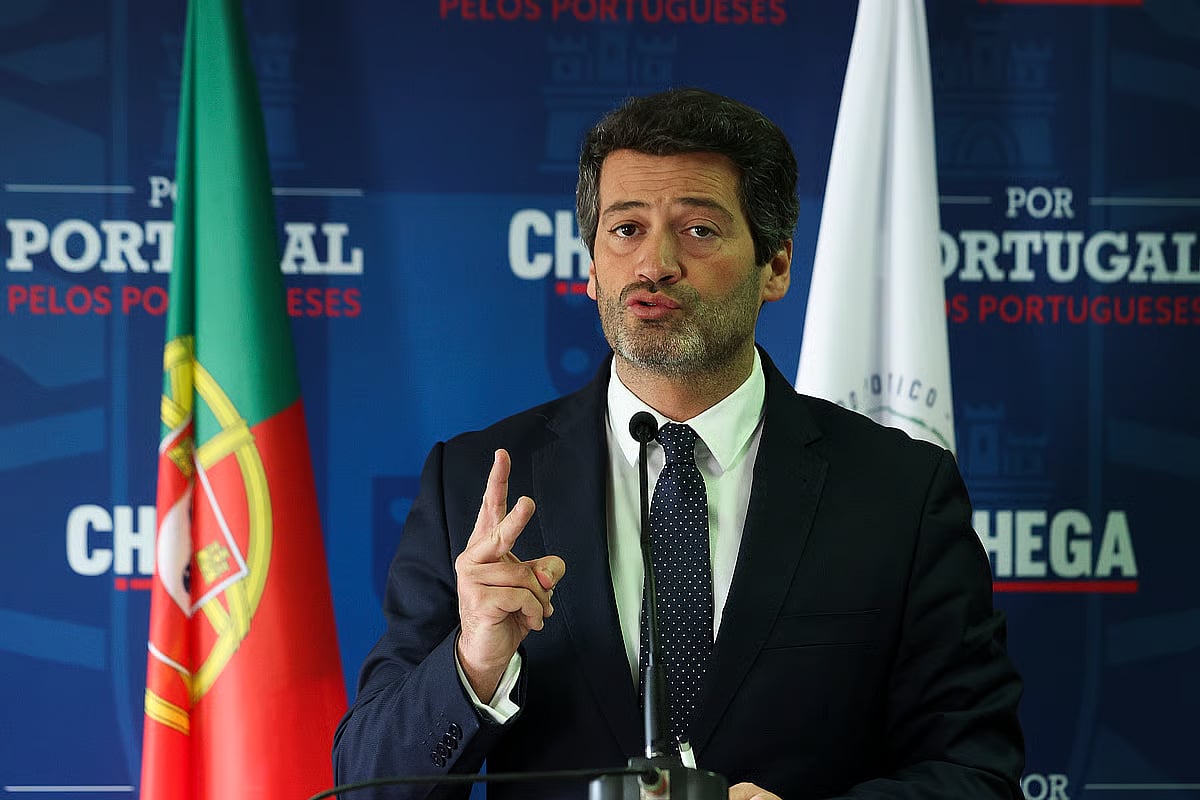
Historian and National Library director Diogo Ramada Curto dies
Diogo Ramada Curto, a prominent historian and the Director-General of the National Library of Portugal (Biblioteca Nacional de Portugal), died this Saturday at age 66. A professor at the New University of Lisbon, he was widely recognized for his critical research on the Portuguese empire and his contributions to contemporary historiography.
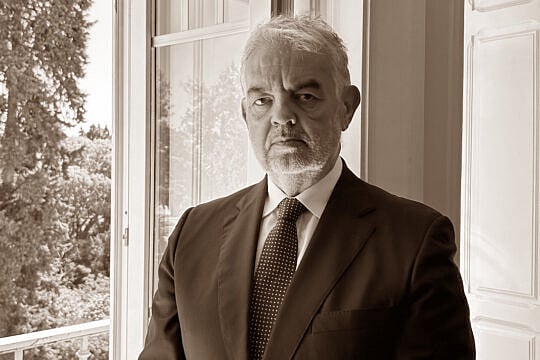
Doctor investigated for alleged disability pension fraud
The Inspectorate-General of Health Activities (Inspeção-Geral das Atividades em Saúde or IGAS) is investigating a doctor from Benavente suspected of charging 1,000 euros to facilitate fraudulent disability pensions. Beneficiaries of the scheme may face criminal charges and be required to return funds received improperly from the state.
IGAS is the Inspectorate-General for Health Activities (Inspeção-Geral das Atividades em Saúde or IGAS), the government body that inspects and audits public and private health services, investigates complaints and can recommend sanctions or changes. After reported failures in emergency care, IGAS can open inquiries, publish findings and advise the Ministry or the SNS on corrective measures; residents and patients can also file complaints that IGAS may investigate.
Coimbra mayor faces criticism over journalist dispute
The Liberal Initiative (Iniciativa Liberal or IL) and the Communist Party (Partido Comunista Português or PCP) have criticized Coimbra Mayor Ana Abrunhosa for publicly attacking a journalist from the Lusa news agency. Abrunhosa accused the reporter of bias and political agenda following a report on the Coimbra Film House, prompting the Lusa management to label her comments as defamatory. The mayor stated she has lost confidence in the journalist and intends to file a formal complaint.

Ana Abrunhosa is a Portuguese politician who appears in this story after publicly criticising Agriculture Minister José Manuel Fernandes for visiting flood-hit areas only recently and for speaking to journalists before meeting local officials. Her comments followed a reprimand from Coimbra's mayor, so residents in the affected towns and local authorities should note the political tensions around the flood response.
- Leader: Mariana Leitão (since July 2025)
- Ideology: Classical liberalism, economic libertarianism
Founded in 2017, the Liberal Initiative advocates for reduced state intervention, tax simplification, labor market liberalization, and secular liberalism under the motto "Less State, More Freedom". The party gained its first parliamentary seat in 2019 and now holds 9 seats. Mariana Leitão, 42, became the party's first female leader in July 2025 after Rui Rocha resigned following disappointing 2025 election results. Leitão previously served as parliamentary leader and has been announced as the party's candidate for the 2026 presidential election. The party explicitly rejects alliances with both far-left and far-right parties, positioning itself as the "only alternative" that won't negotiate with extremes.

The Portuguese Communist Party (PCP or Partido Comunista Português) is a Marxist‑Leninist party founded in 1921 out of the revolutionary trade‑union and anarcho‑syndicalist movement, becoming the Portuguese section of the Comintern in 1923. Banned after the 1926 coup, it went underground and became a central force of resistance to the Estado Novo dictatorship, organizing clandestine unions, anti‑fascist struggle and supporting the colonial liberation movements. After the 1974 Carnation Revolution, the PCP was pivotal in land reform, nationalisations and embedding social rights in the 1976 Constitution, especially in the Alentejo and Setúbal regions where it has long been very strong.
Today the PCP is a smaller but still influential party rooted in the CGTP trade‑union confederation and local government, holding a handful of Assembly seats and one MEP in the Left group. It advocates a “patriotic and left‑wing alternative”: defence of workers’ rights, public services and national sovereignty, strong criticism of EU and NATO constraints, and support for socialist countries and anti‑imperialist causes.

Leiria forest to sell storm-damaged timber
The Leiria National Forest will sell approximately 100,000 cubic metres of timber felled by Storm Kristin through a public auction. During his visit to the site, President António José Seguro also confirmed plans to create a memorial at the location of a fallen 165-year-old eucalyptus tree.
Update: President demands storm response report
President António José Seguro concluded his five-day Open Presidency by demanding a formal report from the government regarding the response to recent storms. He emphasized that current aid levels and planning must be adapted to better support affected regions, particularly in agriculture.

- The President of Portugal (From March 9 2026)
- Party: Independent. Former leader of Socialist Party (PS) Partido Socialista
- Center left
Background:
António José Martins Seguro (born March 11, 1962, in Penamacor) is a lawyer, political scientist, and Socialist Party politician running for president in Portugal's January 18, 2026 election. He led Socialist Youth (1990-1994), served as MEP (1999-2001), was Minister Adjunct to PM António Guterres (2001-2002), and led the PS parliamentary group (2004-2005). Elected PS Secretary-General in 2011 with 68%, he led the opposition during Portugal's bailout era. In 2014, António Costa defeated him in party primaries by a landslide, prompting Seguro's resignation and decade-long retreat from politics. He returned in 2025, launching the movement UPortugal and announcing his presidential candidacy in June. He received official PS backing in October 2025. Political Philosophy:
Seguro positions himself as representing a "modern and moderate" left, offering a progressive alternative to conservative candidates. He advocates for "financial responsibility but critical of austerity," attempting to reposition the PS at center-left. His campaign emphasizes institutional trust, efficient governance, and hope for a better future.

Parties reach agreement on new Constitutional Court judges
The Social Democratic Party (Partido Social Democrata or PSD), the Socialist Party (Partido Socialista or PS), and the Chega party have reached a three-way understanding to elect four new judges to the Constitutional Court (Tribunal Constitucional). While the agreement aims to resolve a long-standing impasse, the move has drawn criticism from the Left Bloc (Bloco de Esquerda or BE), which opposes the inclusion of Chega in the selection process.
Update: Parties agree to delay Constitutional Court election until May
The major political parties have officially postponed the election of new judges until May. This delay allows the parties to address four vacancies simultaneously, with the PSD set to nominate two candidates, while the PS and Chega will each select one.

The Social Democratic Party ('Partido Social Democrata' or 'PSD') is a liberal-conservative political party in Portugal that is the leading partner of the The Democratic Alliance (AD) which is the country's ruling party, with Prime Minister Luís Montenegro.
The Social Democratic Party, despite its name, occupies the centre-right of Portugal's political spectrum. Luís Montenegro, who became Prime Minister in April 2024, leads Portugal's current minority government. The PSD has been one of Portugal's two dominant parties since 1974, having formed nine governments including four with absolute majorities. Montenegro, a former party leader from 1996-1999, was elected with the highest approval rating among party leaders at 10.7 points out of 20.
The Democratic Alliance is a centre-right coalition that includes the smaller CDS – People's Party, a Christian democratic party that has historically been the PSD's coalition partner. Together, they govern without a parliamentary majority, requiring case-by-case support from opposition parties to pass legislation.
Socialist Party (PS)
- Leader: José Luís Carneiro (since June 2025)
- Ideology: Center-left, Social democracy, pro-Europeanism
Portugal's other traditional major party suffered a historic collapse in the 2025 election, dropping from 78 to 58 seats and falling to third place for the first time in democratic history. The party was led by Pedro Nuno Santos from January 2024 until his resignation following the May 2025 defeat. José Luís Carneiro, a 53-year-old former Minister of Internal Administration known for his moderate positioning within the party, was elected unopposed as the new Secretary-General with 95% of votes in June 2025. The Socialist Party governed Portugal from 2015 to 2024, including an absolute majority from 2022 to 2024 under António Costa, who resigned in November 2023 amid a corruption investigation. The PS previously led the innovative "Geringonça" (contraption) coalition government from 2015-2019, a minority government supported by the Left Bloc and Portuguese Communist Party that reversed austerity measures and presided over economic recovery.
Chega ("Enough") is a Portuguese far-right populist party founded in 2019 by André Ventura. It positions itself as an anti-establishment movement against what it calls a "rotten and corrupt system" of PS-PSD dominance. The party surged from 1.3% in 2019 to 22.8% in May 2025, becoming parliament's second-largest force with 60 seats. Chega's core platform emphasizes strict immigration control—ending automatic CPLP residency, deporting non-independent immigrants, implementing job-market quotas, and requiring five-year social security contributions before benefit access. It advocates radical constitutional reform, including reducing parliament to 100 members, abolishing the prime minister position for a presidential system, and dismantling public healthcare. Law-and-order policies include life imprisonment and chemical castration proposals.
The party is defined by inflammatory anti-Romani rhetoric, with Ventura convicted multiple times for discrimination. Chega maintains international alignments with European far-right figures including Marine Le Pen, Santiago Abascal, and Matteo Salvini. Mainstream Portuguese parties, including Prime Minister Luís Montenegro's government, have imposed a cordon sanitaire, refusing coalition with Chega despite its parliamentary strength.
Rui Rio is a centre‑right politician who served as mayor of Porto from 2002 to 2013 and led the Social Democratic Party (Partido Social Democrata) from 2018 to 2022. Known for moderate and fiscally cautious positions, he remains an influential voice in PSD debates and national politics, so journalists and party members often cite his views.
Protest held for obstetric emergency services
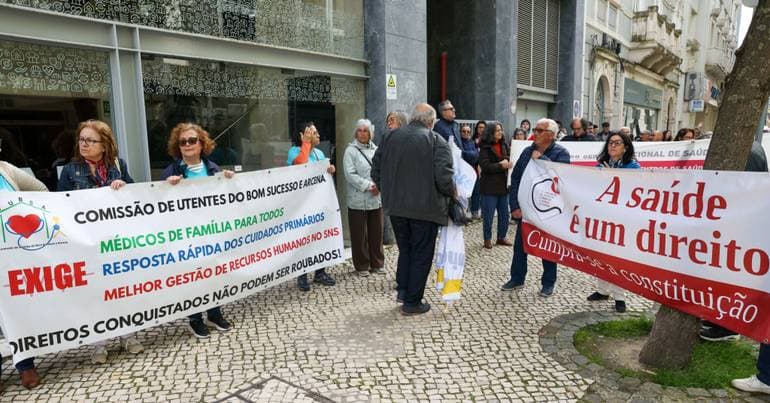
Approximately 50 people demonstrated in front of the Ministry of Health in Lisbon this Saturday to demand the continuation of obstetric and gynecological emergency services. The protest, organized by the Movement of Users of Public Services, called for increased investment in the National Health Service (Serviço Nacional de Saúde or SNS).
The Alfredo da Costa Maternity Hospital (Maternidade Alfredo da Costa) is Lisbon’s main public maternity centre and the busiest maternity within Portugal’s SNS (Serviço Nacional de Saúde). For residents and expectant parents it is a key referral hospital for high‑risk pregnancies and neonatal care and often handles more births and complex cases than other public units.
Biometric data collection resumes at airports after being suspended for departures
Biometric data collection for departures at Lisbon, Porto, and Faro airports was suspended on Saturday morning, April 11, to prevent passengers from missing flights due to long queues, according to the PSP. The process resumed in the early afternoon. PSP spokesperson Sérgio Soares confirmed that biometric collection is now operating at 100% for both departures and arrivals. The suspension was a contingency measure to manage high passenger volumes and avoid excessive wait times. The Entry/Exit System (EES), an automated EU system replacing passport stamps with digital biometric registration for non-EU citizens, has been fully operational since Friday, following a phased rollout that began in October 2025.
Update: Biometric collection suspended again at major airports
Biometric data collection for departures at Lisbon, Porto, and Faro airports was suspended again this Sunday, April 12, due to excessive waiting times. The PSP stated the measure aims to prevent passengers from missing flights while maintaining border security as high numbers of travelers exit the Schengen Area.
The PSP (Polícia de Segurança Pública) is Portugal's national civilian police force, founded in 1867. Responsible for defending Republican democracy and safeguarding internal security and citizens' rights, the PSP polices major cities—Lisbon, Porto, Faro—and large urban areas, covering only 4% of Portugal's territory but roughly half the population. Led by a National Director under the Ministry of Internal Affairs, its approximately 21,500 officers handle preventive policing, crime investigation, public order, airport security, diplomatic protection, private security regulation, firearms licensing, and border control (since 2023).
PSP vs. GNR: The PSP is civilian with police-focused training and urban jurisdiction, while the GNR (Guarda Nacional Republicana) is military (gendarmerie) with military training, covering 96% of Portugal's rural and suburban territory. Both share core public safety missions but differ fundamentally in nature, training, and geographic responsibility.
The Entry-Exit System (Sistema de Entrada e Saída) is an EU border-register that records biometric data (fingerprints and a facial image) and travel details for short-stay non‑EU travellers, replacing passport stamping and creating a searchable entry/exit record. According to recent reporting, the new rules now require over a third of non‑EU nationals entering Schengen to provide this extra data at the border; the aim is to improve security and migration tracking, but travellers should be prepared to submit biometrics at kiosks or border control and ensure their travel documents are valid. For expats and visitors this usually means slightly longer checks on arrival/departure and more robust digital records of your travel history.

Eight months later, what has changed in the labour law revision proposal? Discover the differences
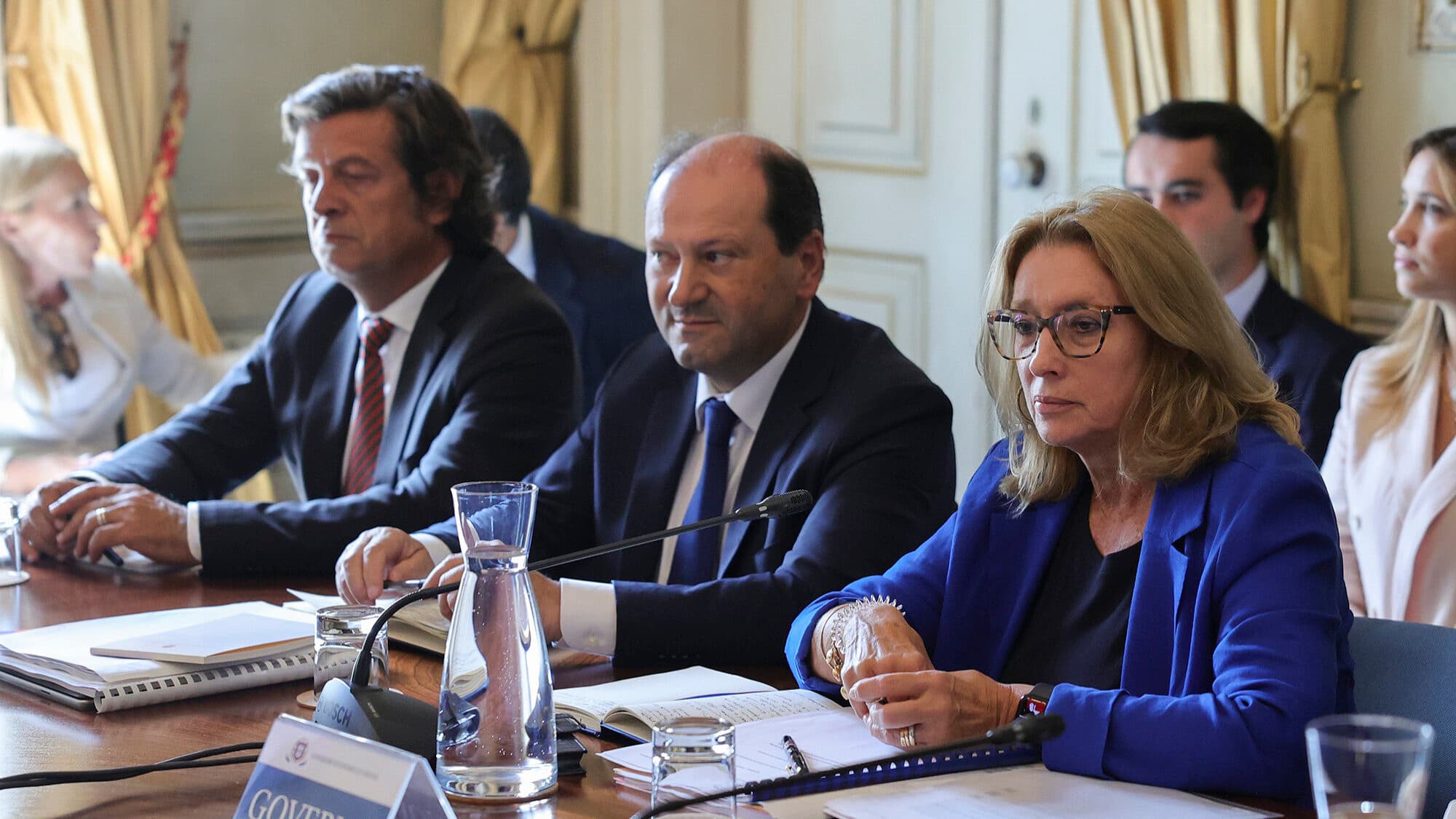
After 53 meetings, the Government, the four business confederations, and the UGT have finally reached a 'construction level' for the labour law reform proposal, which requires each organisation to consult its internal bodies. This is what the trade union centre led by Mário Mourão will do this Thursday, in a...
Mainland under yellow warning due to rain, Madeira on orange alert for waves and wind
The operator of the maritime route between Madeira and Porto Santo has cancelled the Lobo Marinho ship's trips scheduled for Wednesday and Thursday between the two islands.