Rui Rio criticizes government handling of Luís Neves case
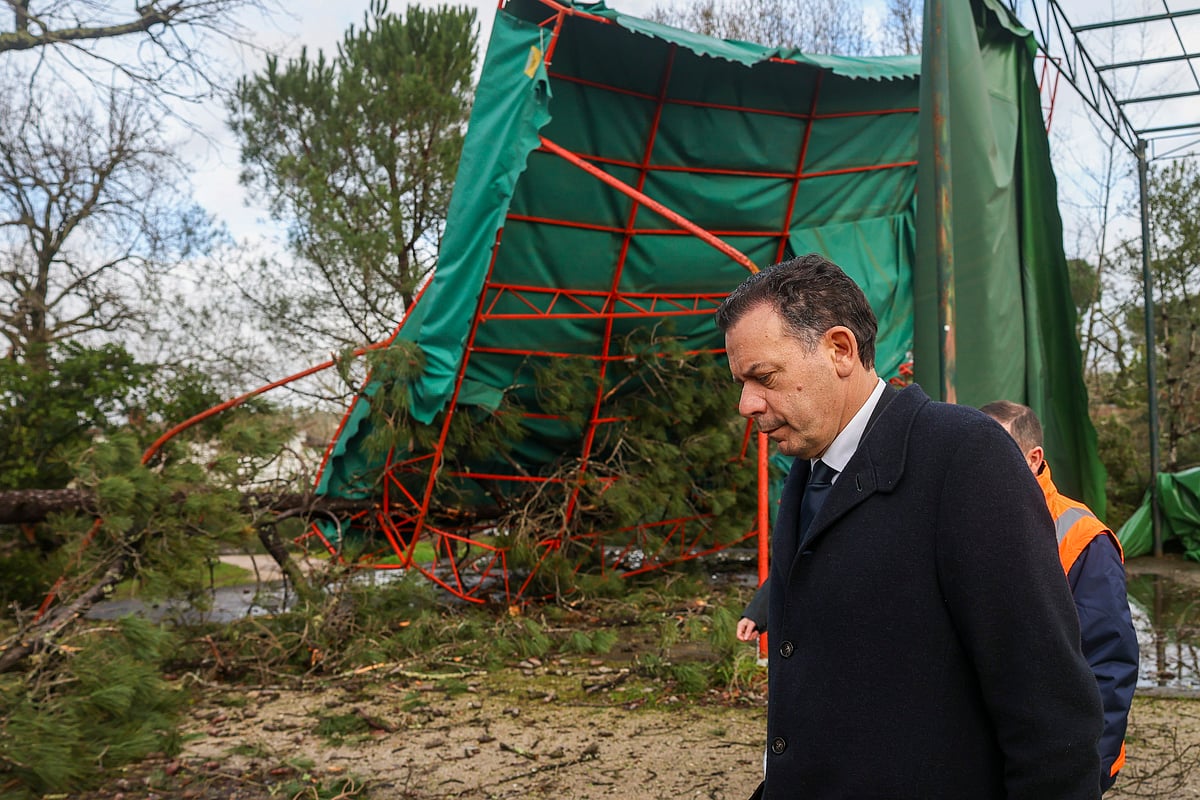
Former Social Democratic Party (Partido Social Democrata or PSD) president Rui Rio has stated that the controversy surrounding Minister of Internal Administration Luís Neves is damaging the credibility of the government and the PSD. Rio argued that the situation, which involves allegations regarding property renovations, provides political fuel for parties like Chega and should have been resolved through immediate, transparent explanations.
Update: Minister Neves remains silent as political pressure mounts
Minister Luís Neves has again refused to set a specific date for addressing the controversies, stating he is “absolutely calm” and will provide explanations “in due time.” While the Socialist Party (Partido Socialista or PS) has urged patience, its secretary-general José Luís Carneiro noted that silence is the enemy of transparency, and the Iniciativa Liberal (Iniciativa Liberal or IL) warned that the ongoing silence is tarnishing the image of the Judiciary Police (Polícia Judiciária or PJ).
Luís Neves will take office on Monday as Minister of Internal Administration. He graduated in law and has worked at the Judicial Police since 1995, where he served as coordinator of a national unit and developed a long career in criminal investigation.
- Former Mayor of Porto (2002–2013)
- Former PSD Leader (2018–2022)
- Party: Social Democratic Party (PSD), Partido Social Democrata
Rui Fernando da Silva Rio (born 1957) is a Portuguese politician and tax consultant known for his moderate, fiscally disciplined approach to center-right politics. As mayor of Porto for over a decade, he was credited with stabilizing the city's finances and overseeing urban regeneration.
He led the PSD from 2018 to 2022, adopting a conciliatory tone that contrasted with the more combative style of other PSD leaders. He lost the 2022 legislative election to the PS's António Costa (who won an absolute majority) and was succeeded as PSD leader by Luís Montenegro. He remains an influential voice in PSD internal debates and is occasionally cited in commentary on the party's direction.

The Social Democratic Party ('Partido Social Democrata' or 'PSD') is a liberal-conservative political party in Portugal that is the leading partner of the The Democratic Alliance (AD) which is the country's ruling party, with Prime Minister Luís Montenegro.
The Social Democratic Party, despite its name, occupies the centre-right of Portugal's political spectrum. Luís Montenegro, who became Prime Minister in April 2024, leads Portugal's current minority government. The PSD has been one of Portugal's two dominant parties since 1974, having formed nine governments including four with absolute majorities. Montenegro, a former party leader from 1996-1999, was elected with the highest approval rating among party leaders at 10.7 points out of 20.
The Democratic Alliance is a centre-right coalition that includes the smaller CDS – People's Party, a Christian democratic party that has historically been the PSD's coalition partner. Together, they govern without a parliamentary majority, requiring case-by-case support from opposition parties to pass legislation.

The PJ (Polícia Judiciária) is Portugal's national criminal investigation police agency, founded in 1945. Operating under the Ministry of Justice and supervised by the Public Ministry (prosecutors), the PJ is a "higher criminal police body" specializing in serious and complex crimes. Mission: The PJ assists judicial and prosecuting authorities by investigating terrorism, organized crime, homicide, kidnapping, drug trafficking, corruption, cybercrime, financial crime, and money laundering. It conducts forensic examinations, operates Portugal's Interpol and Europol liaison offices, and maintains specialized units including the National Counterterrorism Unit and National Anti-Corruption Unit. Difference from PSP/GNR: While PSP (civilian urban police) and GNR (military rural police) focus on preventive policing, public order, and investigating minor crimes, the PJ exclusively handles serious crime investigation requiring specialized technical and scientific expertise. PSP and GNR report to the Ministry of Internal Affairs; PJ reports to the Ministry of Justice. PJ officers receive higher pay and prestige but face greater operational risk.