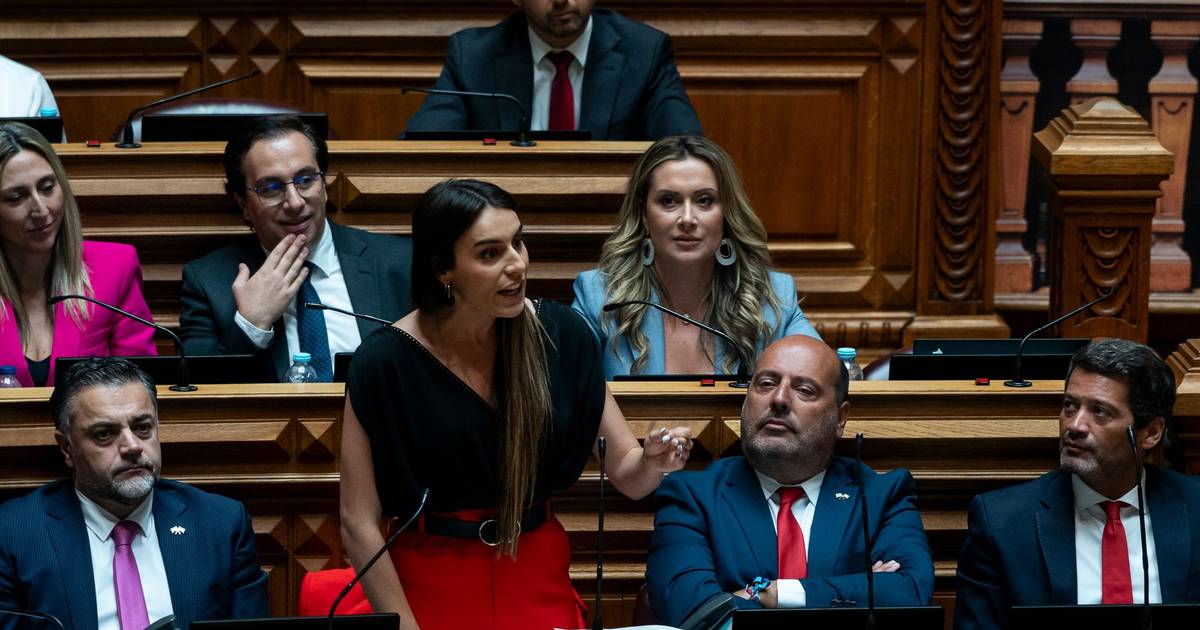
The political party Chega has successfully forced a parliamentary inquiry into the actions of Minister of Internal Administration Luís Neves during his eight-year tenure as national director of the Judiciary Police (Polícia Judiciária or PJ). The inquiry will focus on controversies surrounding his property renovations and undeclared income, with Neves stating he is fully available to provide clarifications when the legislative session resumes in September.
Chega initiates parliamentary inquiry into Luís Neves' PJ tenure
Saturday, 25 July 2026AI summary

Context & Explainers
Luís Neves will take office on Monday as Minister of Internal Administration. He graduated in law and has worked at the Judicial Police since 1995, where he served as coordinator of a national unit and developed a long career in criminal investigation.

Chega ("Enough") is a Portuguese far-right populist party founded in 2019 by André Ventura. It positions itself as an anti-establishment movement against what it calls a "rotten and corrupt system" of PS-PSD dominance. The party surged from 1.3% in 2019 to 22.8% in May 2025, becoming parliament's second-largest force with 60 seats. Chega's core platform emphasizes strict immigration control—ending automatic CPLP residency, deporting non-independent immigrants, implementing job-market quotas, and requiring five-year social security contributions before benefit access. It advocates radical constitutional reform, including reducing parliament to 100 members, abolishing the prime minister position for a presidential system, and dismantling public healthcare. Law-and-order policies include life imprisonment and chemical castration proposals.
The party is defined by inflammatory anti-Romani rhetoric, with Ventura convicted multiple times for discrimination. Chega maintains international alignments with European far-right figures including Marine Le Pen, Santiago Abascal, and Matteo Salvini. Mainstream Portuguese parties, including Prime Minister Luís Montenegro's government, have imposed a cordon sanitaire, refusing coalition with Chega despite its parliamentary strength.

The PJ (Polícia Judiciária) is Portugal's national criminal investigation police agency, founded in 1945. Operating under the Ministry of Justice and supervised by the Public Ministry (prosecutors), the PJ is a "higher criminal police body" specializing in serious and complex crimes. Mission: The PJ assists judicial and prosecuting authorities by investigating terrorism, organized crime, homicide, kidnapping, drug trafficking, corruption, cybercrime, financial crime, and money laundering. It conducts forensic examinations, operates Portugal's Interpol and Europol liaison offices, and maintains specialized units including the National Counterterrorism Unit and National Anti-Corruption Unit. Difference from PSP/GNR: While PSP (civilian urban police) and GNR (military rural police) focus on preventive policing, public order, and investigating minor crimes, the PJ exclusively handles serious crime investigation requiring specialized technical and scientific expertise. PSP and GNR report to the Ministry of Internal Affairs; PJ reports to the Ministry of Justice. PJ officers receive higher pay and prestige but face greater operational risk.
8 sources
- Ventura: PS is a "hostage to hidden powers" in the Neves caseobservador.pt ·
- The Luís Neves case: Undeclared income, a parliamentary inquiry, and... "thank goodness"dn.pt ·
- Contraponto: The controversies surrounding Luís Neves and the chaos in the examsrtp.pt ·
- Portuguese politics at this moment is an accumulation of weaknessesCNN Portugal ·
- While Fernando Alexandre's 'problem' is 'some political ineptitude', Luís Neves's is 'one of reputation that borders on criminal evidence'cnnportugal.iol.pt ·
- Rui Rio: Luís Neves case is “deeply shaking the credibility of the PSD”expresso.pt ·
- Investigation into Spinumviva in parliamentary inquiry into Luís Nevescmjornal.pt ·
- The immovable Neves manpublico.pt ·