

1 June 2026 – 7 June 2026
Portugal Faces Nationwide Strike Amidst Policy Shifts and Economic Uncertainty
This week was dominated by significant transport disruptions caused by a nationwide strike, alongside growing tensions over labor reforms and social benefit policies. Meanwhile, local business owners in Albufeira are reeling from new nightlife restrictions, even as the country prepares for the 2026 World Cup broadcast coverage.
Finance Minister appointed to European bank leadership role
Minister of Finance Joaquim Miranda Sarmento has been elected vice-president of the Board of Governors of the European Bank for Reconstruction and Development (EBRD). The appointment, confirmed during the bank's annual meeting in Riga, involves a one-year term. Additionally, the government announced that Lisbon will host the institution's annual meeting in 2029.
- Minister of State and Finance (2024–present)
- Party: Social Democratic Party (PSD), Partido Social Democrata
- Background: Economist, university professor (ISEG)
Joaquim Miranda Sarmento is Portugal's Finance Minister in the AD government led by Luís Montenegro. An economist and professor at ISEG (Lisbon School of Economics & Management), he served as PSD parliamentary group leader before joining the government.
As Finance Minister, he oversees the state budget, tax policy, public debt management, and fiscal relations with the EU. His decisions on tax brackets, IRS withholding tables, housing incentives, and public spending directly affect residents' cost of living and investment climate.
The European Bank for Reconstruction and Development (Banco Europeu de Reconstrução e Desenvolvimento or BERD) is an international financial institution founded in 1991 to support the development of market economies in post-communist countries. Portugal's appointment of its Finance Minister as a Vice-President of the Board of Governors highlights the country's active participation in the bank's governance and its influence on international economic policy.

Anti-poverty network warns against social benefit work requirements
The European Anti-Poverty Network (EAPN) Portugal has expressed concern that requiring recipients of the Single Social Benefit (Prestação Social Única or PSU) to perform social work could increase stigma against the poor. The network argues that linking benefits to mandatory activities may unfairly penalize those in situations of economic vulnerability.
PCP leader criticizes government handling of labour reform
Paulo Raimundo, the leader of the Communist Party (Partido Comunista Português or PCP), has accused the government of scheduling the parliamentary discussion of the new labour package in bad faith. Raimundo claimed the government is acting out of fear and warned that his party will remain alert to what he described as institutional tricks during the legislative process.
Paulo Raimundo is the Secretary-General of the Portuguese Communist Party (Partido Comunista Português or PCP), a position he has held since November 2022. He is a career politician and former trade unionist who succeeded Jerónimo de Sousa as the leader of the party.
António Filipe is a politician from the PCP (Partido Comunista Português) who, in this story, acknowledged that his election results fell short and said the party would join forces to oppose what it called a 'serious threat to democracy'. His remarks indicate the PCP intends to be active in post-election alliances rather than withdrawing from national debates. Voters and those following left-wing politics should pay attention to his and the PCP's next moves.
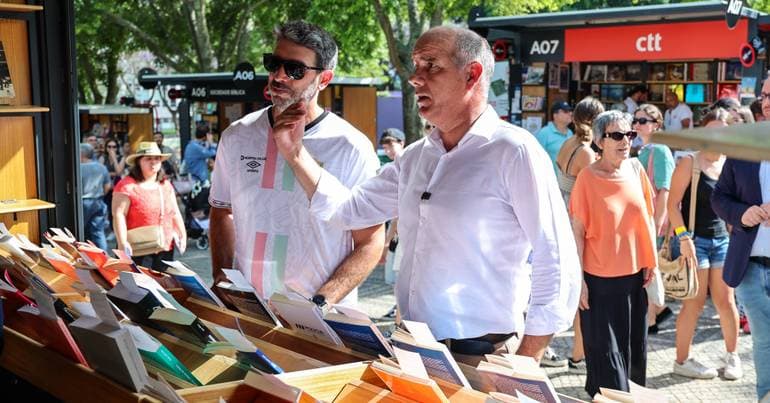
Albufeira nightlife restrictions spark business owner panic
Business owners in Albufeira are challenging new local council measures that reduce operating hours and impose noise limits in the Oura area and the old town. A group of 14 entrepreneurs has filed a legal challenge to halt the restrictions, while some establishments have already faced fines from the National Republican Guard (Guarda Nacional Republicana or GNR) for non-compliance.

The GNR (Guarda Nacional Republicana) is Portugal's national gendarmerie—a military police force founded in 1911, with origins dating to 1801. With over 22,600 personnel, GNR patrols 94-96% of Portuguese territory, covering rural areas, medium towns, and highways. Members are military personnel subject to military law, responsible for public order, customs, coastal control, environmental protection (SEPNA), firefighting/rescue (GIPS), border control, and ceremonial guards. GNR vs. PSP: The PSP (Polícia de Segurança Pública) is Portugal's civilian police force, covering major cities (Lisbon, Porto, Faro) and large urban areas—only 4% of territory but roughly half the population. PSP handles airport security, diplomatic protection, and private security regulation. Both share core missions (public order, crime prevention), but differ in nature: GNR is military with military training; PSP is civilian with police-focused training.

School health program targets increase in sex education
The National School Health Programme (Programa Nacional de Saúde Escolar or PNSE) has entered public discussion with a proposal to increase sex education projects in schools by 40%. The initiative aims to cover topics including consent, gender diversity, and sexual violence, following previous debates regarding the role of citizenship education in the classroom.
The National Strategy for Sex Education (Plano Nacional de Educação Sexual or PNSE) is a government-led framework designed to integrate sexual health and relationship education into the Portuguese school curriculum. It focuses on topics such as consent, gender identity, and sexual health to ensure students receive standardized information throughout their education.

Free-to-air channels secure 2026 World Cup broadcasting rights
Portuguese television operators RTP, SIC, and TVI have reached an agreement with FIFA to broadcast 20 matches of the 2026 World Cup. The package includes all matches featuring the Portuguese national team, the opening game, and the final. The channels will share the broadcast schedule, ensuring free access for viewers across the country.

RTP (Rádio e Televisão de Portugal) is Portugal's public service broadcaster, operating television channels (RTP1, RTP2, RTP3, RTP Memória, RTP Internacional, RTP África), radio stations (Antena 1, Antena 2, Antena 3, RDP Internacional, RDP África), and the RTP Play streaming platform.
Founded in 1955 (television) and 1935 (radio, as Emissora Nacional), RTP is funded through a monthly audiovisual contribution (Contribuição para o Audiovisual, CAV) included in electricity bills, plus limited advertising revenue. It operates under a public service concession that mandates news independence, cultural programming, and coverage for Portuguese-speaking communities worldwide.
RTP plays a central role in Portuguese public life — it hosts the main political debates during elections, produces news programming, and broadcasts major national events. Its editorial independence and funding model are recurring subjects of political debate, with some parties advocating for privatization or restructuring of the public broadcaster.

Notaries warn of long-term impact of inheritance property reform
The Order of Notaries (Ordem dos Notários) warns that the government's proposal to unlock the sale of properties from undivided inheritances will not provide an immediate solution to the housing crisis. Head of the order, Jorge Batista da Silva, argues the measure may take up to 20 years to show significant impact and could increase legal disputes. Meanwhile, notaries have also called for the Tax and Customs Authority (Autoridade Tributária e Aduaneira or AT) to refund the property transfer tax (Imposto Municipal sobre as Transmissões Onerosas de Imóveis or IMT) to young people previously excluded from exemptions due to inheritance shares.

Agriculture Minister calls for European support for farmers
Minister of Agriculture José Manuel Fernandes has admitted that the government's 20 million euro support package for farmers is insufficient to cover rising production costs. He is now advocating for a coordinated European response to address the financial strain caused by energy and fertilizer prices. The minister emphasized that national measures alone are not enough to prevent market distortions in the agricultural sector.
He is the government minister named in the story who appears in a video where he does not rule out legislative changes to make certain projects viable. Socialists in the Assembly of the Republic want to summon him to explain those remarks, which could affect planning and environmental approvals.
Nationwide strike causes widespread transport and flight disruptions
A 24-hour general strike called by the General Confederation of the Portuguese Workers (CGTP) is causing significant disruptions across Portugal today, June 3. The protest, which targets proposed labour law reforms, has grounded over 500 flights and halted Lisbon Metro operations. While the government maintains the reforms are necessary for economic competitiveness, unions and opposition parties argue the measures represent a regression in workers' rights.
Update: Parliament schedules debate on labour reforms for June 18
Following the day of industrial action, the Assembly of the Republic has officially scheduled the discussion of the government's contested labour package for June 18. Prime Minister Luís Montenegro criticized the strike as disruptive and unproductive, while union leaders reported high turnout across various sectors.

The General Confederation of the Portuguese Workers (CGTP – Confederação Geral dos Trabalhadores Portugueses) is Portugal’s largest trade-union confederation, grouping most unions in manufacturing, public services and many other sectors.
Founded clandestinely in 1970 as “Intersindical” under the dictatorship, it emerged publicly after the 1974 Carnation Revolution and was legalised in 1975. It has been central to virtually all major labour struggles since then, from defending collective bargaining and the 40‑hour week to leading general strikes against austerity and labour‑law rollbacks.
CGTP is historically close to the Portuguese Communist Party and has a class‑struggle, anti‑neoliberal profile, strongly critical of EU and government policies seen as undermining workers’ rights. It favours grassroots mobilisation and strikes over compromise, often refusing national social‑pact deals that the more centrist UGT is willing to sign.
In today’s Portugal, CGTP remains a key actor in wage bargaining, labour‑law debates and national protests; together with UGT it called the first joint general strike in years in December 2025, signalling its continuing capacity to organise mass action.

- Prime Minister, Portugal: 2024 - Present
- Party: Social Democratic Party (PSD)
Luís Filipe Montenegro Cardoso de Morais Esteves (born February 16, 1973, in Porto) is a Portuguese lawyer and center‑right politician who has served as Prime Minister of Portugal since April 2, 2024. A long‑time member of the Social Democratic Party (PSD), he is the leading figure of the post‑Troika generation of Portuguese conservatives. Montenegro was elected to the Assembly of the Republic in 2002 for the Aveiro district and remained an MP for 16 years, becoming PSD parliamentary leader from 2011 to 2017 during the bailout and austerity period under Prime Minister Pedro Passos Coelho. He was a prominent defender of strict austerity measures, arguing in 2014 that “the life of the people is no better, but the life of the country is a lot better,” a phrase that has followed his public image since. After an unsuccessful leadership bid against Rui Rio in 2020, Montenegro won the PSD leadership in 2022. He then forged the centre‑right Democratic Alliance (PSD–CDS‑PP and allies), which won a plurality of seats in the 2024 legislative election. Refusing to partner with the far‑right Chega, which he has called “often xenophobic, racist, populist and excessively demagogic,” he formed a minority government as head of the XXIV Constitutional Government on April 2, 2024. His first government fell in March 2025 after a no‑confidence vote linked to a conflict‑of‑interest affair, but fresh elections saw the Democratic Alliance increase its seat share, allowing Montenegro to return as prime minister leading the XXV Constitutional Government. His importance to Portugal lies in attempting to re‑center the traditional centre‑right after the crisis years, defending liberal‑conservative economics and EU alignment while drawing a sharp line against formal cooperation with the radical right, thus shaping how Portuguese democracy manages its new multi‑party era.
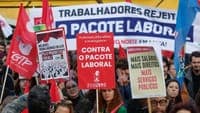
Justice Ministry denies influencing registry workers' strike
The Ministry of Justice has rejected accusations from the largest registry union that it attempted to influence workers ahead of an upcoming strike. The union had claimed the government was instrumentalizing the Institute of Registries and Notaries (Instituto dos Registos e Notariado or IRN) to condition staff. The ministry maintains that it has not interfered in the industrial action.
The Institute of Registries and Notaries (Instituto dos Registos e do Notariado or IRN) is the government body that manages civil, land, and commercial registries in Portugal. It is currently processing a backlog of 516,000 nationality applications, resulting in average wait times of three years. These delays impact all applicants, including children and grandchildren of Portuguese citizens.
General strike to impact schools and public services
The CGTP general strike begins at 00:00 on Wednesday. The trade union federation is contesting the changes proposed by the government to labour laws.

Government and opposition clash over new social benefit
The government's proposed Single Social Benefit (Prestação Social Única or PSU), which aims to consolidate 13 existing social supports, faces an uncertain future in Parliament. Prime Minister Luís Montenegro has pledged to address opposition concerns, while the Socialist Party (Partido Socialista or PS) warns against potential benefit cuts and mandatory social work requirements. Chega has also stated it will only support the measure if it includes stricter access for immigrants.
Health cards are private membership or discount schemes sold by companies that offer access to consultations, tests or reduced fees at private clinics; they are not the public health service. The Socialist Party (Partido Socialista or PS) has proposed regulation to increase transparency and protect consumers from misleading marketing or unexpected charges.

André Ventura, born January 15, 1983, is a lawyer, academic, and Portugal's most prominent far-right leader. He founded Chega ("Enough") in 2019 after his PSD mayoral campaign attacked the Romani community. Chega surged from 1.3% in 2019 to 22.8% in May 2025, becoming parliament's second-largest party and making Ventura Leader of the Opposition.
His platform emphasizes immigration restrictions, law-and-order policies, constitutional reform, and contains inflammatory anti-Romani rhetoric that has triggered multiple discrimination convictions and investigations. Politically classified as far-right by international media, Ventura cultivates alliances with European far-right figures including Marine Le Pen and Santiago Abascal.
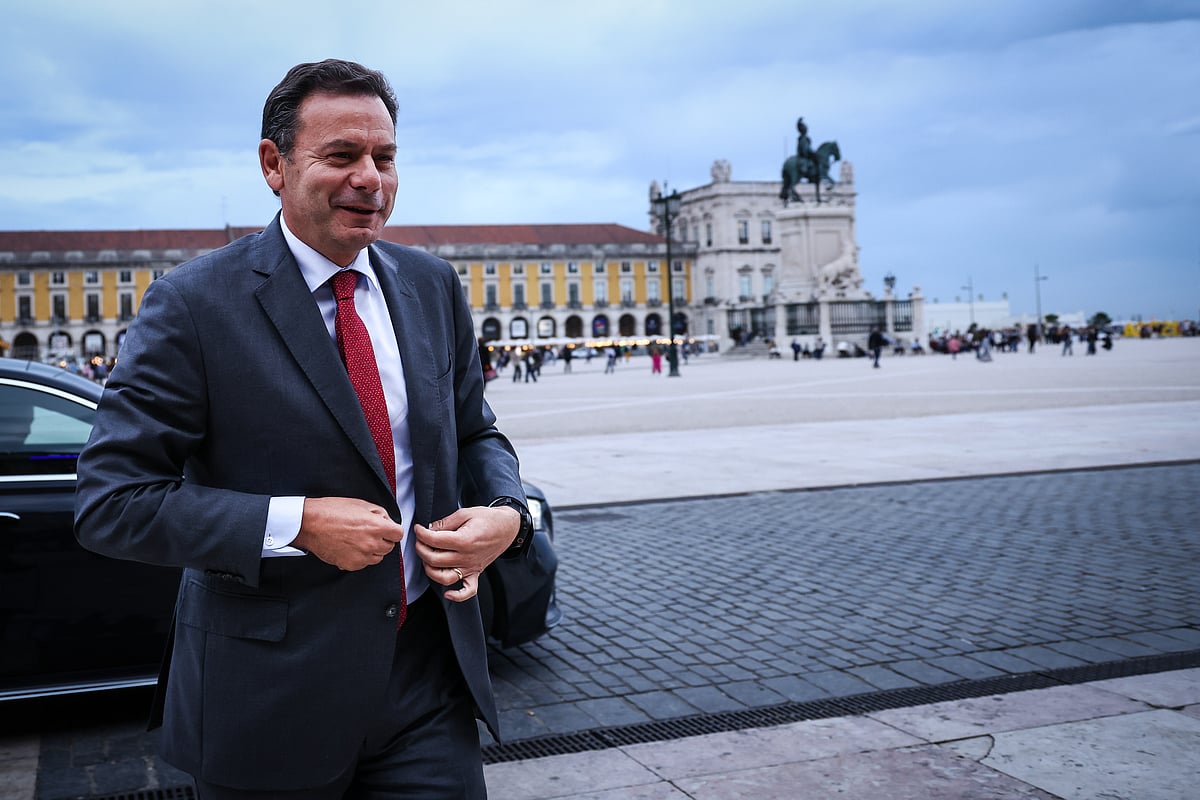
Portugal records historic decline in child population
Data released by the Francisco Manuel dos Santos Foundation via Pordata shows that children under 10 now make up only 9.8% of Portugal's population, down from 22% in 1975. Portugal is now among the European Union countries with the lowest proportion of children. Additionally, the report highlights that Portuguese children spend an average of 38 hours per week in schools and daycare facilities, one of the highest rates in Europe.
Pordata is a statistical database (Base de Dados de Portugal Contemporâneo) created by the Francisco Manuel dos Santos Foundation. It collects and publishes verified data on various aspects of Portuguese society, including demographics, education, and health, to support informed public debate.
The Francisco Manuel dos Santos Foundation (Fundação Francisco Manuel dos Santos) is a private, non-profit organization established in 2009. It focuses on promoting civic participation, social research, and the study of contemporary Portugal through initiatives like Pordata and various public policy debates.