6 July 2026 – 12 July 2026
Almada Water Crisis and National Tragedy Mark a Challenging Week in Portugal
Portugal faces a somber week as the death toll of citizens in the Venezuela earthquake rises and the nation mourns a GNR officer killed in the line of duty. Meanwhile, Almada struggles with persistent water shortages, and ongoing debates regarding teacher compensation and housing supply continue to dominate the domestic policy agenda.
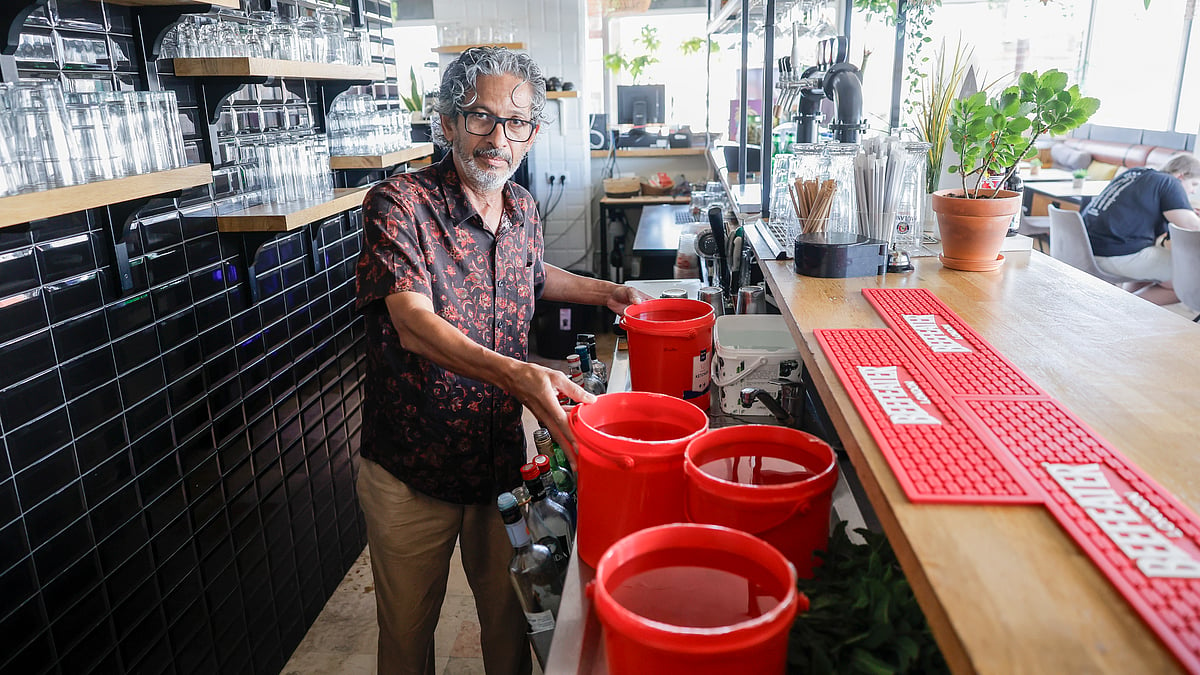
Almada implements nightly water cuts to restore reserves
The Municipal Water and Sanitation Services (Serviços Municipalizados de Água e Saneamento or SMAS) of Almada have implemented nightly water supply cuts between 10 pm and 6 am to stabilize reservoir levels. The Water and Waste Services Regulation Authority (Entidade Reguladora dos Serviços de Águas e Resíduos or ERSAR) confirms that while water may appear whitish due to air in the pipes, it remains safe for human consumption.
Update: New borehole to boost Almada water supply
Almada authorities announced that a new borehole will begin operating this Sunday morning to help reinforce the local water supply. This addition aims to address ongoing shortages that have caused frequent service interruptions across the municipality.
SMAS (Serviços Municipalizados de Água e Saneamento) is a municipal service provider responsible for managing water supply, sewage, and waste collection in specific Portuguese municipalities. In Almada, this entity oversees the local water infrastructure, and its operational failures are often linked to long-term maintenance and investment decisions made by the local government.
The Water and Waste Services Regulation Authority (Entidade Reguladora dos Serviços de Águas e Resíduos or ERSAR) is the public body responsible for regulating water supply, wastewater management, and municipal waste services in Portugal. It monitors service quality and compliance with legal standards, ensuring that utility providers like the Almada Municipal Water and Sanitation Services (Serviços Municipalizados de Água e Saneamento or SMAS) meet their obligations to consumers.
Livre holds congress to elect new leadership
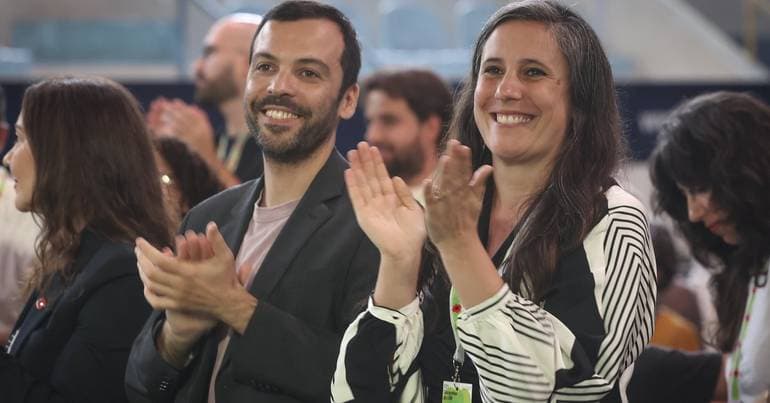
The political party Livre held its 17th congress in Sintra this weekend to elect a new spokesperson, with Jorge Pinto expected to succeed outgoing leader Rui Tavares. During the event, party members criticized the government's recent rental policies and debated the party's future strategy, including its stance on potential cooperation with the Socialist Party (Partido Socialista or PS).
Update: Livre challenges PS to block constitutional revision
Livre spokesperson Isabel Mendes Lopes has challenged the PS to block a right-wing constitutional revision by threatening to vote against the next State Budget. During the congress, the party also emphasized its ambition to govern by 2029 and called for ecological reindustrialisation.
Health cards are private membership or discount schemes sold by companies that offer access to consultations, tests or reduced fees at private clinics; they are not the public health service. The Socialist Party (Partido Socialista or PS) has proposed regulation to increase transparency and protect consumers from misleading marketing or unexpected charges.

- Leader: Rui Tavares
- Ideology: Green left-wing politics, libertarian socialism
LIVRE (meaning "Free") is a green left-wing party founded in 2014 by historian and former MEP Rui Tavares. The party struggled for years before finally electing Tavares as its first MP in 2022, then grew to 4 seats in 2024 and 6 seats in 2025—making it the only progressive party to gain ground in recent elections. LIVRE focuses on environmental protection, human rights, and progressive social policies while maintaining a pro-European stance.
Isabel Mendes Lopes is a spokesperson for the political party Livre. She is a member of the Portuguese Parliament (Assembleia da República) and represents the party in legislative debates and negotiations.
Teachers' union requests inquiry into exam grading
The National Federation of Teachers (Federação Nacional dos Professores or Fenprof) announced plans to file a complaint with the Attorney General's Office (Procuradoria-Geral da República or PGR) regarding the electronic grading process for national exams. The union seeks an official inquiry into potential irregularities, while the Ministry of Education, Science and Innovation (Ministério da Educação, Ciência e Inovação or MECI) faces continued criticism from opposition parties over the management of the assessment period.
Update: PS leader demands answers on national exam grading
Socialist Party (Partido Socialista or PS) Secretary-General José Luís Carneiro has urged Prime Minister Luís Montenegro to explain the failures in the exam grading process. Carneiro demanded that the government clarify how it intends to restore public confidence in the assessment of over 300,000 students.
Fenprof is the National Federation of Teachers (Federação Nacional dos Professores), the main public‑school teachers' union in Portugal that represents teachers in pay, working conditions and education reforms. Its criticism matters because Fenprof can organize strikes and mobilise teachers, which directly affects school operations and the implementation of government changes — something families and expat educators should monitor.
The Ministério Público (Public Prosecution Service) is Portugal's independent state prosecution body, responsible for leading criminal investigations, bringing charges, and representing the public interest in court.
The MP operates autonomously from the government and the police, though it directs criminal investigations carried out by the Polícia Judiciária, PSP, and GNR. It is led by the Procurador-Geral da República (Attorney General), who is appointed by the President on the government's proposal.
The MP gets involved in high-profile cases including corruption, financial crime, and incidents of potential institutional negligence. It also defends the legality of government actions and protects citizens' fundamental rights through the courts.
José Luís Carneiro is a Portuguese politician and member of the Socialist Party (Partido Socialista or PS). He served as the Minister of Internal Administration (Ministro da Administração Interna) from 2022 to 2024 and currently holds a seat in the Assembly of the Republic (Assembleia da República).

- Prime Minister, Portugal: 2024 - Present
- Party: Social Democratic Party (PSD)
Luís Filipe Montenegro Cardoso de Morais Esteves (born February 16, 1973, in Porto) is a Portuguese lawyer and center‑right politician who has served as Prime Minister of Portugal since April 2, 2024. A long‑time member of the Social Democratic Party (PSD), he is the leading figure of the post‑Troika generation of Portuguese conservatives. Montenegro was elected to the Assembly of the Republic in 2002 for the Aveiro district and remained an MP for 16 years, becoming PSD parliamentary leader from 2011 to 2017 during the bailout and austerity period under Prime Minister Pedro Passos Coelho. He was a prominent defender of strict austerity measures, arguing in 2014 that “the life of the people is no better, but the life of the country is a lot better,” a phrase that has followed his public image since. After an unsuccessful leadership bid against Rui Rio in 2020, Montenegro won the PSD leadership in 2022. He then forged the centre‑right Democratic Alliance (PSD–CDS‑PP and allies), which won a plurality of seats in the 2024 legislative election. Refusing to partner with the far‑right Chega, which he has called “often xenophobic, racist, populist and excessively demagogic,” he formed a minority government as head of the XXIV Constitutional Government on April 2, 2024. His first government fell in March 2025 after a no‑confidence vote linked to a conflict‑of‑interest affair, but fresh elections saw the Democratic Alliance increase its seat share, allowing Montenegro to return as prime minister leading the XXV Constitutional Government. His importance to Portugal lies in attempting to re‑center the traditional centre‑right after the crisis years, defending liberal‑conservative economics and EU alignment while drawing a sharp line against formal cooperation with the radical right, thus shaping how Portuguese democracy manages its new multi‑party era.
GNR officer killed by drunk driver while on duty
A 29-year-old officer from the National Republican Guard (Guarda Nacional Republicana or GNR) died Friday night after being struck by a vehicle while directing traffic on the IC2 near Alcobaça. The driver was detained with a blood alcohol level exceeding the legal limit, and the incident has drawn condolences from the President of the Republic, António José Seguro, and the Ministry of Internal Administration.

The GNR (Guarda Nacional Republicana) is Portugal's national gendarmerie—a military police force founded in 1911, with origins dating to 1801. With over 22,600 personnel, GNR patrols 94-96% of Portuguese territory, covering rural areas, medium towns, and highways. Members are military personnel subject to military law, responsible for public order, customs, coastal control, environmental protection (SEPNA), firefighting/rescue (GIPS), border control, and ceremonial guards. GNR vs. PSP: The PSP (Polícia de Segurança Pública) is Portugal's civilian police force, covering major cities (Lisbon, Porto, Faro) and large urban areas—only 4% of territory but roughly half the population. PSP handles airport security, diplomatic protection, and private security regulation. Both share core missions (public order, crime prevention), but differ in nature: GNR is military with military training; PSP is civilian with police-focused training.

- President of Portugal (since March 9, 2026)
- Party: Independent. Former leader of the Socialist Party (PS), Partido Socialista
- Center-left
António José Martins Seguro (born March 11, 1962, in Penamacor) is a lawyer, political scientist, and the current President of the Portuguese Republic, inaugurated on March 9, 2026 after winning the two-round presidential election in January–February 2026.
Career: He led Socialist Youth (1990–1994), served as MEP (1999–2001), was Minister Adjunct to PM António Guterres (2001–2002), and led the PS parliamentary group (2004–2005). Elected PS Secretary-General in 2011 with 68%, he led the opposition during Portugal's bailout era. In 2014, António Costa defeated him in party primaries by a landslide, prompting Seguro's resignation and a decade-long retreat from politics. He returned in 2025, launching the movement UPortugal and announcing his presidential candidacy in June. He received official PS backing in October 2025 and won the presidency in February 2026.
Political philosophy: Seguro positions himself as representing a "modern and moderate" left, advocating financial responsibility while opposing austerity. As President, he has emphasized institutional trust, efficient governance, and a collaborative relationship with the government while maintaining rigorous constitutional oversight.
Housing shortfall recovery could take three years
The Association of Civil Construction and Public Works Industries (Associação dos Industriais da Construção Civil e Obras Públicas or AICCOPN) warns that addressing the national shortfall of 300,000 homes will take at least three years. According to the Bank of Portugal (Banco de Portugal), this deficit remains a significant challenge for the housing sector.
AICCOPN is the Associação dos Industriais da Construção Civil e Obras Públicas (Association of Civil Construction and Public Works Industrialists), the main employers' organisation for construction companies in Portugal. It negotiates collective labour agreements, advises members on rules and public tenders, and its positions can affect prices, project timelines and hiring in the construction and real-estate sectors.
- Governor of Banco de Portugal (2020–present)
- Former: Minister of Finance (2015–2020), President of the Eurogroup (2018–2020)
- Party: Independent (PS-affiliated)
- Background: Economist (PhD, Harvard)
Mário José Gomes de Freitas Centeno (born 1966) is Portugal's central bank governor and one of the country's most internationally recognized economic figures. As Finance Minister under António Costa's first PS government, he became known as "Cristiano Ronaldo of European finance" for turning Portugal's deficit into a surplus while reversing austerity.
He was elected president of the Eurogroup (the informal body of euro area finance ministers) in 2018 — the first Portuguese to hold the role. Since becoming Governor of Banco de Portugal in 2020, he sits on the ECB's Governing Council and oversees Portuguese banking supervision and financial stability.
Judiciary Police report rise in sextortion cases
The Judiciary Police (Polícia Judiciária or PJ) recorded 732 inquiries related to sextortion in 2025, with approximately 900 investigations currently open. Authorities report an average of two new cases per day, highlighting the prevalence of online blackmail involving threats to share intimate content.

The PJ (Polícia Judiciária) is Portugal's national criminal investigation police agency, founded in 1945. Operating under the Ministry of Justice and supervised by the Public Ministry (prosecutors), the PJ is a "higher criminal police body" specializing in serious and complex crimes. Mission: The PJ assists judicial and prosecuting authorities by investigating terrorism, organized crime, homicide, kidnapping, drug trafficking, corruption, cybercrime, financial crime, and money laundering. It conducts forensic examinations, operates Portugal's Interpol and Europol liaison offices, and maintains specialized units including the National Counterterrorism Unit and National Anti-Corruption Unit. Difference from PSP/GNR: While PSP (civilian urban police) and GNR (military rural police) focus on preventive policing, public order, and investigating minor crimes, the PJ exclusively handles serious crime investigation requiring specialized technical and scientific expertise. PSP and GNR report to the Ministry of Internal Affairs; PJ reports to the Ministry of Justice. PJ officers receive higher pay and prestige but face greater operational risk.
Teachers to receive overtime pay for exam grading
The government will provide overtime pay to teachers grading national exams as recognition for their extraordinary effort during the current assessment period. This measure, confirmed by the Ministry of Education, Science and Innovation (Ministério da Educação, Ciência e Inovação or MECI), follows an announcement by Social Democratic Party (Partido Social Democrata or PSD) spokesperson Sebastião Bugalho.

The Social Democratic Party ('Partido Social Democrata' or 'PSD') is a liberal-conservative political party in Portugal that is the leading partner of the The Democratic Alliance (AD) which is the country's ruling party, with Prime Minister Luís Montenegro.
The Social Democratic Party, despite its name, occupies the centre-right of Portugal's political spectrum. Luís Montenegro, who became Prime Minister in April 2024, leads Portugal's current minority government. The PSD has been one of Portugal's two dominant parties since 1974, having formed nine governments including four with absolute majorities. Montenegro, a former party leader from 1996-1999, was elected with the highest approval rating among party leaders at 10.7 points out of 20.
The Democratic Alliance is a centre-right coalition that includes the smaller CDS – People's Party, a Christian democratic party that has historically been the PSD's coalition partner. Together, they govern without a parliamentary majority, requiring case-by-case support from opposition parties to pass legislation.
Sebastião Bugalho is a journalist and political commentator who currently serves as a member of the European Parliament for the Social Democratic Party (Partido Social Democrata or PSD). He was elected in June 2024 after leading the party's list in the European elections.

Judiciary Police arrest woman for homicide in Seixal
The Judiciary Police (Polícia Judiciária or PJ) have arrested a 54-year-old woman suspected of murdering her 57-year-old husband in their Corroios home. The incident, which occurred on June 29 during a domestic violence episode, led to the suspect being detained outside of flagrante delicto.
The PJ (Polícia Judiciária) is Portugal's national criminal investigation police agency, founded in 1945. Operating under the Ministry of Justice and supervised by the Public Ministry (prosecutors), the PJ is a "higher criminal police body" specializing in serious and complex crimes. Mission: The PJ assists judicial and prosecuting authorities by investigating terrorism, organized crime, homicide, kidnapping, drug trafficking, corruption, cybercrime, financial crime, and money laundering. It conducts forensic examinations, operates Portugal's Interpol and Europol liaison offices, and maintains specialized units including the National Counterterrorism Unit and National Anti-Corruption Unit. Difference from PSP/GNR: While PSP (civilian urban police) and GNR (military rural police) focus on preventive policing, public order, and investigating minor crimes, the PJ exclusively handles serious crime investigation requiring specialized technical and scientific expertise. PSP and GNR report to the Ministry of Internal Affairs; PJ reports to the Ministry of Justice. PJ officers receive higher pay and prestige but face greater operational risk.

Death toll of Portuguese in Venezuela earthquake reaches 110
The Ministry of Foreign Affairs (Ministério dos Negócios Estrangeiros or MNE) confirmed that the number of Portuguese citizens and those of Portuguese descent who died in the June 24 earthquakes in Venezuela has risen to 110. While 55 people remain missing, the total death toll from the disaster has climbed to 4,118, according to the latest official reports.
The Ministry of Foreign Affairs (Ministério dos Negócios Estrangeiros) oversees Portugal’s foreign policy and consular services, including passports, visa advice and assistance to citizens abroad. Expats should contact their consulate or the ministry for emergency help, repatriation issues or official documentation while living or travelling overseas.

Almada water crisis persists as government offers support
The Almada municipality is facing water supply disruptions, with the Environment Minister Maria da Graça Carvalho suggesting it could take three weeks to stabilize the system. While the mayor denies any area has been without water for more than 24 hours, the municipal water service (Serviços Municipalizados de Água e Saneamento or SMAS) has announced further overnight service interruptions in several localities.
Update: Almada water crisis expected to last weeks
Environment Minister Maria da Graça Carvalho confirmed that full water restoration will take two to three weeks, though a new borehole opening this weekend is expected to boost supply by 20%. Meanwhile, the consumer protection association DECO has demanded compensation for affected residents and businesses, calling for tariff exemptions and extended payment deadlines.
Deco Proteste is Portugal's largest consumer rights organization, providing independent product testing, legal advice, dispute mediation, and advocacy on behalf of consumers. It is part of the international Euroconsumers group.
Deco publishes comparative tests of products and services (from insurance policies to supermarket prices), lobbies for consumer-friendly legislation, and runs a mediation service that helps resolve disputes between consumers and companies. It also operates helplines during crises — such as severe weather events — to advise on insurance claims, billing disputes, and emergency consumer rights.
Membership is paid, but Deco's public advocacy and media presence make it a significant voice in Portuguese consumer affairs. Its studies and reports are frequently cited in news coverage of cost-of-living, energy prices, and financial products.
SMAS (Serviços Municipalizados de Água e Saneamento) is a municipal service provider responsible for managing water supply, sewage, and waste collection in specific Portuguese municipalities. In Almada, this entity oversees the local water infrastructure, and its operational failures are often linked to long-term maintenance and investment decisions made by the local government.
Almada water supply crisis sparks political tension
Residents in Almada are protesting against persistent water supply issues, leading to calls for the resignation of Mayor Inês de Medeiros. The Seixal municipality has accused Almada of failing to maintain its infrastructure, noting that a significant portion of the water supply is captured in Seixal, while the PS district structure has urged the National Association of Portuguese Municipalities (Associação Nacional de Municípios Portugueses or ANMP) to address the funding needed for network repairs.
ANMP is the National Association of Portuguese Municipalities (Associação Nacional de Municípios Portugueses), a membership body that represents Portugal’s 308 municipalities and speaks for them in talks with central government. Its new leadership raising questions matters because ANMP advises on local finance and decentralisation rules that directly affect municipal budgets, responsibilities and the practical ability of towns to deliver services.

Fernando Alexandre struggling to pass national exams
This year's national exams are proving to be a challenge for a Ministry of Education accused by all sector stakeholders, from schools and teachers to parents and students.

Almada announces total water cut overnight
There are areas that will have no water between 10:00 PM and 6:00 AM. The population is desperate. The collapse in supply threatens public health.
Update: Almada implements overnight water cuts
The Almada City Council has confirmed that six locations, including Feijó, Laranjeiro, Vale Flores, Barrocas, Cova da Piedade, and Chegadinho, will face total water cuts from 10:00 PM Friday to 6:00 AM Saturday. The municipality has declared a state of alert due to unprecedented consumption levels and will also close public swimming pools and restrict access to municipal spaces.