13 July 2026 – 19 July 2026
Portugal Weekly: Exam Chaos, Political Tensions, and Infrastructure Hurdles
This week saw significant national frustration as exam grading delays and INEM system failures sparked widespread criticism. Meanwhile, political pressure mounted over ministerial controversies, while local authorities grappled with ongoing challenges in healthcare staffing and urban development regulations.
National exam grading process faces widespread disruption
Students across Portugal are facing uncertainty as national exam results were published with many grades marked as “suspended.” While schools have begun receiving corrected files to replace these statuses, the National Federation of Teachers (Federação Nacional dos Professores or Fenprof) warns the evaluation process is compromised. Opposition parties have criticized the Minister of Education, Fernando Alexandre, for a lack of clear communication regarding the ongoing issues.
Update: National exam grade lists ready for school distribution
The Institute for Education, Quality and Assessment (Instituto de Educação, Qualidade e Avaliação or EduQA) announced late Saturday that the validation process for 1,400 suspended exams is complete. Schools are expected to receive the final grade lists within hours and begin posting them on Sunday. The Ministry of Education, Science and Innovation (Ministério da Educação, Ciência e Inovação or MECI) has apologized for the delays and guaranteed that no student will be disadvantaged in higher education applications due to these technical errors.
Fernando Alexandre is the Minister of Education, Science, and Innovation in Portugal's current government, which took office in April 2024. An economist by training, he previously served as a Secretary of State and is now responsible for managing the national school system and university funding. He recently sparked debate by suggesting that university tuition fees should be adjusted to account for inflation.
Fenprof is the National Federation of Teachers (Federação Nacional dos Professores), the main public‑school teachers' union in Portugal that represents teachers in pay, working conditions and education reforms. Its criticism matters because Fenprof can organize strikes and mobilise teachers, which directly affects school operations and the implementation of government changes — something families and expat educators should monitor.
The EduQA is the institute responsible for the design and management of national exams in Portugal. It oversees the creation of assessment materials and is currently under review following reports of errors in recent examination content.
The Ministry of Education, Science and Innovation (Ministério da Educação, Ciência e Inovação, MECI) is Portugal's national ministry responsible for education policy from pre‑school through higher education and for national science and innovation policy. In this story MECI announced that public higher education will have 78,283 places for the 2026/2027 academic year, an increase of 1,465 from the current year, which affects university admissions and capacity planning for students and institutions.
Ventura demands resignation of Minister of Internal Administration
Chega leader André Ventura has formally requested that Prime Minister Luís Montenegro dismiss the Minister of Internal Administration, Luís Neves. The demand follows reports that Neves had professional ties to a contractor who allegedly possessed a trailer seized by the Judicial Police (Polícia Judiciária or PJ) during a drug trafficking investigation. Ventura warned that failing to act could implicate the government in a culture of criminality, while the Left Bloc (Bloco de Esquerda or BE) has also demanded a full explanation regarding the minister's conduct.

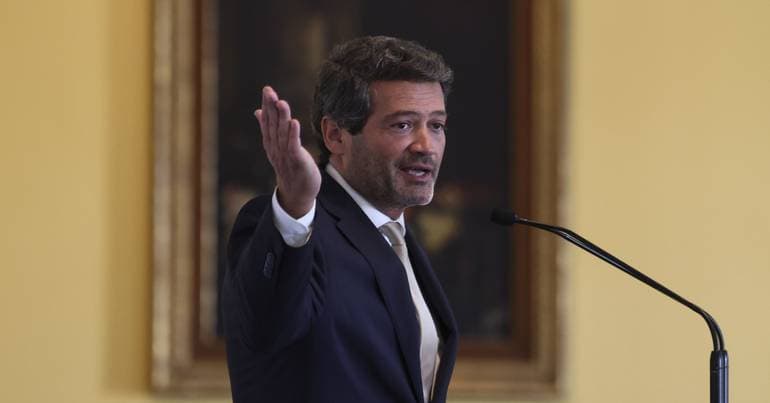
André Ventura, born January 15, 1983, is a lawyer, academic, and Portugal's most prominent far-right leader. He founded Chega ("Enough") in 2019 after his PSD mayoral campaign attacked the Romani community. Chega surged from 1.3% in 2019 to 22.8% in May 2025, becoming parliament's second-largest party and making Ventura Leader of the Opposition.
His platform emphasizes immigration restrictions, law-and-order policies, constitutional reform, and contains inflammatory anti-Romani rhetoric that has triggered multiple discrimination convictions and investigations. Politically classified as far-right by international media, Ventura cultivates alliances with European far-right figures including Marine Le Pen and Santiago Abascal.

- Prime Minister, Portugal: 2024 - Present
- Party: Social Democratic Party (PSD)
Luís Filipe Montenegro Cardoso de Morais Esteves (born February 16, 1973, in Porto) is a Portuguese lawyer and center‑right politician who has served as Prime Minister of Portugal since April 2, 2024. A long‑time member of the Social Democratic Party (PSD), he is the leading figure of the post‑Troika generation of Portuguese conservatives. Montenegro was elected to the Assembly of the Republic in 2002 for the Aveiro district and remained an MP for 16 years, becoming PSD parliamentary leader from 2011 to 2017 during the bailout and austerity period under Prime Minister Pedro Passos Coelho. He was a prominent defender of strict austerity measures, arguing in 2014 that “the life of the people is no better, but the life of the country is a lot better,” a phrase that has followed his public image since. After an unsuccessful leadership bid against Rui Rio in 2020, Montenegro won the PSD leadership in 2022. He then forged the centre‑right Democratic Alliance (PSD–CDS‑PP and allies), which won a plurality of seats in the 2024 legislative election. Refusing to partner with the far‑right Chega, which he has called “often xenophobic, racist, populist and excessively demagogic,” he formed a minority government as head of the XXIV Constitutional Government on April 2, 2024. His first government fell in March 2025 after a no‑confidence vote linked to a conflict‑of‑interest affair, but fresh elections saw the Democratic Alliance increase its seat share, allowing Montenegro to return as prime minister leading the XXV Constitutional Government. His importance to Portugal lies in attempting to re‑center the traditional centre‑right after the crisis years, defending liberal‑conservative economics and EU alignment while drawing a sharp line against formal cooperation with the radical right, thus shaping how Portuguese democracy manages its new multi‑party era.

The PJ (Polícia Judiciária) is Portugal's national criminal investigation police agency, founded in 1945. Operating under the Ministry of Justice and supervised by the Public Ministry (prosecutors), the PJ is a "higher criminal police body" specializing in serious and complex crimes. Mission: The PJ assists judicial and prosecuting authorities by investigating terrorism, organized crime, homicide, kidnapping, drug trafficking, corruption, cybercrime, financial crime, and money laundering. It conducts forensic examinations, operates Portugal's Interpol and Europol liaison offices, and maintains specialized units including the National Counterterrorism Unit and National Anti-Corruption Unit. Difference from PSP/GNR: While PSP (civilian urban police) and GNR (military rural police) focus on preventive policing, public order, and investigating minor crimes, the PJ exclusively handles serious crime investigation requiring specialized technical and scientific expertise. PSP and GNR report to the Ministry of Internal Affairs; PJ reports to the Ministry of Justice. PJ officers receive higher pay and prestige but face greater operational risk.
Almada water reserves allow for potential supply cut reduction
Water reserves in the Almada municipality have reached 40 percent, a level that the Municipalized Water and Sanitation Services (Serviços Municipalizados de Água e Saneamento or SMAS) says may allow for a reduction in scheduled supply cuts. The area has faced significant water shortages throughout the month, impacting residents in locations such as Costa da Caparica. Meanwhile, separate repair work on a pipe in Queluz recently left residents without water for over 15 hours.
SMAS (Serviços Municipalizados de Água e Saneamento) is a municipal service provider responsible for managing water supply, sewage, and waste collection in specific Portuguese municipalities. In Almada, this entity oversees the local water infrastructure, and its operational failures are often linked to long-term maintenance and investment decisions made by the local government.

Prosecutors seek suspension of Cascais hotel construction
The Public Prosecutor's Office has requested the immediate suspension of construction for a new Hilton hotel and over 100 apartments in the Cascais municipality. Authorities are also seeking the demolition of nearly completed structures and the nullification of permits authorized by current Minister of Infrastructure Miguel Pinto Luz during his previous tenure as vice-president of the Cascais City Council. The legal challenge centers on the sale of a 800-square-meter plot of land for 313,000 euros.
Miguel Pinto Luz is Portugal's Minister of Infrastructure. On Feb 24, 2026 he told journalists in Viseu that works on the A1 motorway in the Coimbra area would be fully completed and traffic restored to four lanes by the end of that week.
Workers' Commission reports failures in new INEM system
The Workers' Commission of the National Institute of Medical Emergency (Instituto Nacional de Emergência Médica or INEM) has denounced technical failures in the new OnCall computer system used by Urgent Patient Guidance Centres (Centros de Orientação de Doentes Urgentes or CODU). Staff warn that these glitches pose risks to the dispatching of emergency resources and have demanded immediate clarifications from the institute's board of directors. Additionally, the Ministry of Health is currently transitioning INEM toward a new training model that requires internationally recognized certifications for emergency professionals.
Minimum services (serviços mínimos) are the legally required basic services that must be maintained during a strike to protect public safety—in healthcare this typically covers emergency care, critical ambulance coverage and intensive care. They matter because the INEM workers' committee admitted that late or unclear communication about which teams would be available during the end-of-2024 strike may have reduced operational capacity and confused patients; as an expat, expect limited non-urgent care during strikes and check official updates or call 112 for true emergencies.
The CODU (Centro de Orientação de Doentes Urgentes) is the emergency medical dispatch center responsible for coordinating urgent pre-hospital care in Portugal. It operates under the National Institute of Medical Emergency (Instituto Nacional de Emergência Médica or INEM) to assess medical emergencies and dispatch the appropriate resources, such as ambulances or helicopters.
Family doctor shortage persists despite recent recruitment efforts
The latest recruitment drive for the National Health Service (Serviço Nacional de Saúde or SNS) filled only 38 percent of available family doctor vacancies. The Portuguese Medical Association (Ordem dos Médicos) warns that while the government opened all requested positions, additional incentives are necessary to retain specialists and address structural issues. Meanwhile, staff at the Braga Hospital emergency department have reported severe overcrowding and understaffed teams.
The Ordem dos Médicos is Portugal’s professional medical association that registers doctors, enforces ethical rules and can discipline members. It issues formal opinions and can challenge health policies or laws, so its objections matter when a programme like the Waitlist Recovery Programme changes how patients are referred or treated.
ULS Alto Ave is the Alto Ave Local Health Unit (Unidade Local de Saúde do Alto Ave), a public body that runs hospitals and some primary-care services for the Ave area in northern Portugal. It is part of the National Health Service (Serviço Nacional de Saúde or SNS), and recent staff strikes have affected overtime and complementary work, so residents should check local hospital notices before visiting.
Taxi association condemns new ride-hailing legislation
The National Association of United Taxis of Portugal (Associação Nacional Táxis Unidos de Portugal or ANTUP) has expressed strong opposition to the revised ride-hailing law approved by the Assembly of the Republic. The association claims the new rules create a market distortion by forcing taxis to operate under the same regulations as ride-hailing platforms. ANTUP also criticized the government for failing to curb predatory pricing practices by multinational companies.
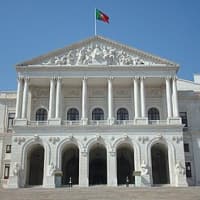
The Assembly of the Republic (Assembleia da República) is Portugal's unicameral parliament, located in the Palácio de São Bento in Lisbon. It consists of 230 deputies elected by proportional representation for four-year terms.
The Assembly's powers include making and amending laws, approving the state budget, ratifying international treaties, and overseeing the government through debates, hearings, and committees. It can also pass votes of no confidence to bring down a government, as happened in March 2025.
Following the May 2025 elections, the current parliamentary composition is led by the Democratic Alliance (AD) with the largest share of seats, followed by Chega, PS, and smaller parties including the Liberal Initiative, Left Bloc, Livre, and PCP.
The National Association of United Taxis of Portugal (Associação Nacional de Transportadores Rodoviários em Automóveis Ligeiros de Passageiros or ANTUP) is a trade organization representing traditional taxi drivers. It opposes recent legislative changes to the TVDE law (Lei TVDE), which regulates ride-hailing services like Uber and Bolt, arguing that these revisions negatively impact the taxi sector's competitive position.

National exam results delayed, causing frustration for students
The National Examination Jury (Júri Nacional de Exames) confirmed that 9th-grade exam results will not be posted this Friday as originally scheduled due to grading delays. While the Minister of Education stated all exams are graded, the government has refused to set a specific time for their release, leaving schools and students in uncertainty. Opposition figures have criticized the handling of the process, with some calling for the Minister of Education to step down.
Update: National exam grades released amid ongoing delays and errors
Secondary school exam grades finally reached schools late Friday evening, though many students remain in limbo with “suspended” classifications due to missing exam components. Minister of Education Fernando Alexandre requested an additional effort from school principals to post results, while President of the Republic António José Seguro acknowledged the process did not go well and called for an audit to prevent future failures.
The National Examination Jury (Júri Nacional de Exames or JNE) is the public body responsible for organizing, managing, and overseeing national school exams in Portugal. It ensures that testing procedures are consistent across all schools and handles the official publication of student grades.
Fernando Alexandre is the Minister of Education, Science, and Innovation in Portugal's current government, which took office in April 2024. An economist by training, he previously served as a Secretary of State and is now responsible for managing the national school system and university funding. He recently sparked debate by suggesting that university tuition fees should be adjusted to account for inflation.

- President of Portugal (since March 9, 2026)
- Party: Independent. Former leader of the Socialist Party (PS), Partido Socialista
- Center-left
António José Martins Seguro (born March 11, 1962, in Penamacor) is a lawyer, political scientist, and the current President of the Portuguese Republic, inaugurated on March 9, 2026 after winning the two-round presidential election in January–February 2026.
Career: He led Socialist Youth (1990–1994), served as MEP (1999–2001), was Minister Adjunct to PM António Guterres (2001–2002), and led the PS parliamentary group (2004–2005). Elected PS Secretary-General in 2011 with 68%, he led the opposition during Portugal's bailout era. In 2014, António Costa defeated him in party primaries by a landslide, prompting Seguro's resignation and a decade-long retreat from politics. He returned in 2025, launching the movement UPortugal and announcing his presidential candidacy in June. He received official PS backing in October 2025 and won the presidency in February 2026.
Political philosophy: Seguro positions himself as representing a "modern and moderate" left, advocating financial responsibility while opposing austerity. As President, he has emphasized institutional trust, efficient governance, and a collaborative relationship with the government while maintaining rigorous constitutional oversight.
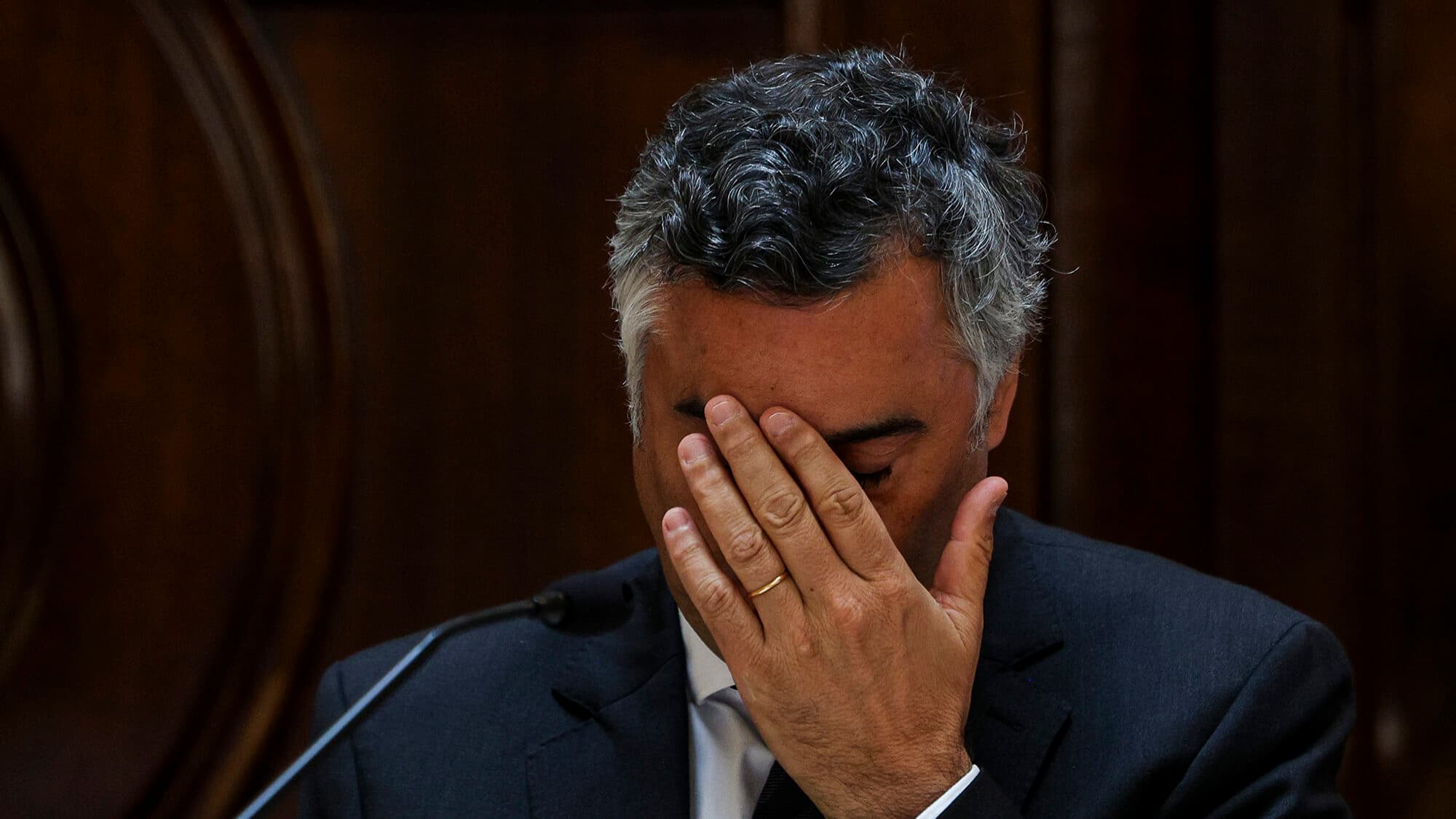
Drug-related chemicals found at contractor's facility
The Judicial Police (Polícia Judiciária or PJ) is investigating the discovery of chemical drums used for drug production at a facility owned by a business associate of the Minister of Internal Administration, Luís Neves. The chemicals were reportedly part of a trailer seized during a previous drug trafficking operation that subsequently went missing. The Public Prosecutor's Office is currently analyzing the circumstances surrounding the storage of these materials.
Luís Neves will take office on Monday as Minister of Internal Administration. He graduated in law and has worked at the Judicial Police since 1995, where he served as coordinator of a national unit and developed a long career in criminal investigation.
The PJ (Polícia Judiciária) is Portugal's national criminal investigation police agency, founded in 1945. Operating under the Ministry of Justice and supervised by the Public Ministry (prosecutors), the PJ is a "higher criminal police body" specializing in serious and complex crimes. Mission: The PJ assists judicial and prosecuting authorities by investigating terrorism, organized crime, homicide, kidnapping, drug trafficking, corruption, cybercrime, financial crime, and money laundering. It conducts forensic examinations, operates Portugal's Interpol and Europol liaison offices, and maintains specialized units including the National Counterterrorism Unit and National Anti-Corruption Unit. Difference from PSP/GNR: While PSP (civilian urban police) and GNR (military rural police) focus on preventive policing, public order, and investigating minor crimes, the PJ exclusively handles serious crime investigation requiring specialized technical and scientific expertise. PSP and GNR report to the Ministry of Internal Affairs; PJ reports to the Ministry of Justice. PJ officers receive higher pay and prestige but face greater operational risk.

PJ recovers drug-linked trailer from minister's associate
The Judiciary Police (Polícia Judiciária or PJ) has recovered a semi-trailer previously seized during a major anti-cocaine operation that had gone missing from an impound lot. The vehicle was located at the facilities of Construbarcelos, a construction firm owned by a personal friend of the Minister of Internal Administration, Luís Neves. The PJ has launched an inquiry into how the trailer ended up at the contractor's site.
The PJ (Polícia Judiciária) is Portugal's national criminal investigation police agency, founded in 1945. Operating under the Ministry of Justice and supervised by the Public Ministry (prosecutors), the PJ is a "higher criminal police body" specializing in serious and complex crimes. Mission: The PJ assists judicial and prosecuting authorities by investigating terrorism, organized crime, homicide, kidnapping, drug trafficking, corruption, cybercrime, financial crime, and money laundering. It conducts forensic examinations, operates Portugal's Interpol and Europol liaison offices, and maintains specialized units including the National Counterterrorism Unit and National Anti-Corruption Unit. Difference from PSP/GNR: While PSP (civilian urban police) and GNR (military rural police) focus on preventive policing, public order, and investigating minor crimes, the PJ exclusively handles serious crime investigation requiring specialized technical and scientific expertise. PSP and GNR report to the Ministry of Internal Affairs; PJ reports to the Ministry of Justice. PJ officers receive higher pay and prestige but face greater operational risk.
Luís Neves will take office on Monday as Minister of Internal Administration. He graduated in law and has worked at the Judicial Police since 1995, where he served as coordinator of a national unit and developed a long career in criminal investigation.

What is the schedule for exams and higher education applications?
With the uncertainty resulting from delays in posting 12th-grade exam grades, students are calculating the deadlines for the second phase of exams and higher education applications. These are the key dates.
Teachers summoned for exam grading days before deadline
Teachers have been called at the last minute to grade national exams, with many receiving assignments just three days before the final deadline. The Missão Escola Pública movement reported that teachers were summoned via an electronic platform on Saturday, raising concerns about the feasibility of completing the process on time. The Minister of Education, Fernando Alexandre, is expected to address these grading issues during the upcoming State of the Nation debate.
Fernando Alexandre is the Minister of Education, Science, and Innovation in Portugal's current government, which took office in April 2024. An economist by training, he previously served as a Secretary of State and is now responsible for managing the national school system and university funding. He recently sparked debate by suggesting that university tuition fees should be adjusted to account for inflation.
An Missão Escola Pública (Public School Mission) is a grassroots civic movement in Portugal that has spent months surveying heads of school groupings ( agrupamentos de escolas ) and standalone schools to collect complaints and evidence about problems in the education system. Its months-long survey compiles school leaders' reports to inform public debate and policy discussions, so those working in schools or parents should be aware of its findings.
Grades arrived tonight but not for everyone
Not all students can check their results yet. Some exams are appearing as “suspended”.