

25 May 2026 – 31 May 2026
Political Shifts and Economic Pressures Define Portugal's Final Week of May
As Luis Montenegro secures his leadership of the PSD, the nation faces a week of economic uncertainty marked by potential interest rate hikes and new mortgage restrictions. Meanwhile, residents should prepare for nationwide rail disruptions and local policy shifts regarding migrant support and airport security protocols.
Montenegro re-elected as PSD leader in direct vote
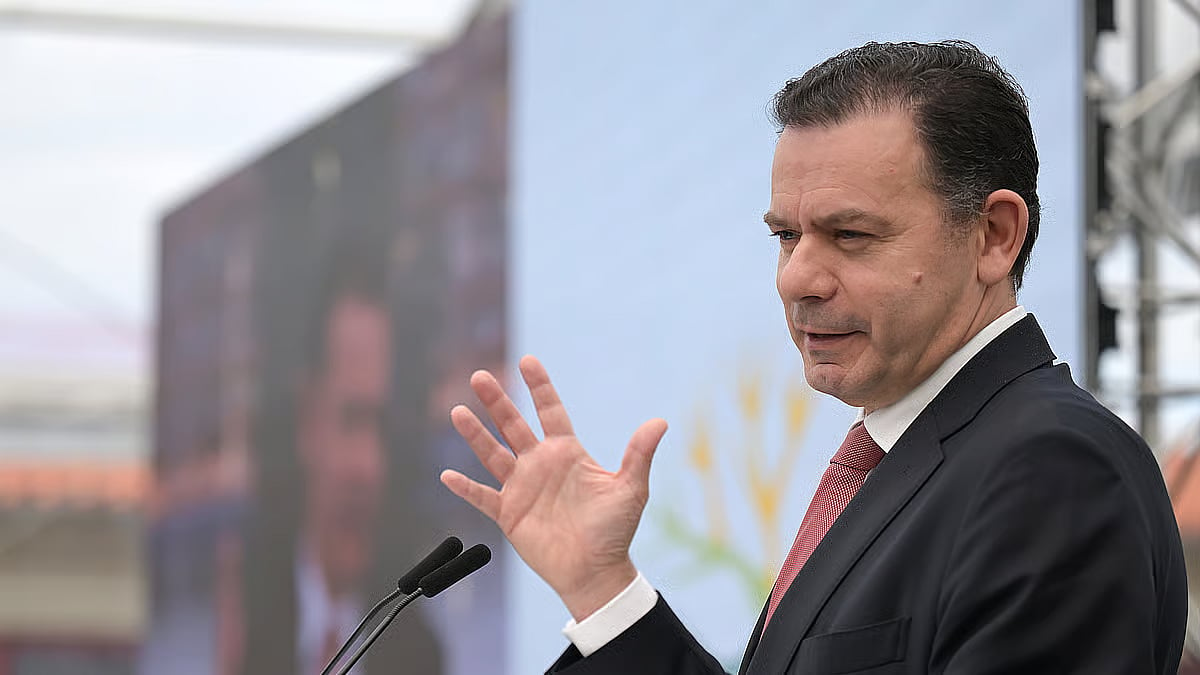
Prime Minister Luís Montenegro has been re-elected as president of the Social Democratic Party (Partido Social Democrata or PSD) after running as the sole candidate in the party's direct elections. Montenegro, who described his administration as the most reformist in 30 years, dismissed internal criticism from former Prime Minister Pedro Passos Coelho as minor noise.
Update: Montenegro re-elected as PSD leader in direct vote
Luís Montenegro secured 94.8% of the vote in Saturday's internal election, though voter turnout was lower than in previous years. Despite the uncontested nature of the ballot, Montenegro emphasized his commitment to his reformist agenda and promised to work to meet public expectations.
Pedro Passos Coelho is a Portuguese politician who served as Prime Minister from 2011 to 2015 and led the Social Democratic Party (Partido Social Democrata or PSD). His choice to stay silent during the presidential run-off matters because, as a former PM and centre‑right leader, his endorsements or comments could influence PSD voters ahead of the 8 February vote.

- Prime Minister, Portugal: 2024 - Present
- Party: Social Democratic Party (PSD)
Luís Filipe Montenegro Cardoso de Morais Esteves (born February 16, 1973, in Porto) is a Portuguese lawyer and center‑right politician who has served as Prime Minister of Portugal since April 2, 2024. A long‑time member of the Social Democratic Party (PSD), he is the leading figure of the post‑Troika generation of Portuguese conservatives. Montenegro was elected to the Assembly of the Republic in 2002 for the Aveiro district and remained an MP for 16 years, becoming PSD parliamentary leader from 2011 to 2017 during the bailout and austerity period under Prime Minister Pedro Passos Coelho. He was a prominent defender of strict austerity measures, arguing in 2014 that “the life of the people is no better, but the life of the country is a lot better,” a phrase that has followed his public image since. After an unsuccessful leadership bid against Rui Rio in 2020, Montenegro won the PSD leadership in 2022. He then forged the centre‑right Democratic Alliance (PSD–CDS‑PP and allies), which won a plurality of seats in the 2024 legislative election. Refusing to partner with the far‑right Chega, which he has called “often xenophobic, racist, populist and excessively demagogic,” he formed a minority government as head of the XXIV Constitutional Government on April 2, 2024. His first government fell in March 2025 after a no‑confidence vote linked to a conflict‑of‑interest affair, but fresh elections saw the Democratic Alliance increase its seat share, allowing Montenegro to return as prime minister leading the XXV Constitutional Government. His importance to Portugal lies in attempting to re‑center the traditional centre‑right after the crisis years, defending liberal‑conservative economics and EU alignment while drawing a sharp line against formal cooperation with the radical right, thus shaping how Portuguese democracy manages its new multi‑party era.

- Leader: Luís Montenegro (Prime Minister)
- Ideology: Liberal conservatism, pro-Europeanism
- Coalition: Social Democratic Party (PSD) + CDS–People's Party (CDS-PP)
The Democratic Alliance (Aliança Democrática, AD) is a center-right coalition primarily composed of the Social Democratic Party (PSD) with 89 seats and the CDS–People's Party (CDS-PP) with 2 seats. Together, they form the current minority government under Prime Minister Luís Montenegro.
The PSD, despite its name, occupies the center-right of Portugal's political spectrum and has been one of Portugal's two dominant parties since 1974, having formed nine governments including four with absolute majorities. The CDS-PP is a smaller Christian democratic party that has historically been the PSD's coalition partner.
The AD coalition governs without a parliamentary majority, requiring case-by-case support from opposition parties to pass legislation. The coalition has imposed a cordon sanitaire against Chega, refusing formal cooperation with the far-right despite its parliamentary strength, which means it must negotiate with the PS or smaller parties to advance its legislative agenda.
Defendants in corruption investigations face legal measures
Four individuals detained in Operation Imergente have been released under identity and residence requirements. Meanwhile, the Public Prosecutor's Office (Ministério Público or MP) has requested pre-trial detention for four defendants in the separate 'Águas Turvas' corruption investigation involving the municipal company Águas de Gaia.
Update: PS councillors named as formal suspects in Imergente case
Two Lisbon City Council members from the Socialist Party (Partido Socialista or PS) have been named as formal suspects (arguidos) in the ongoing Operation Imergente. This development follows broader investigations into municipal contracts, prompting PS Secretary-General José Luís Carneiro to demand irreproachable ethical conduct from party officeholders.
The Ministério Público (Public Prosecution Service) is Portugal's independent state prosecution body, responsible for leading criminal investigations, bringing charges, and representing the public interest in court.
The MP operates autonomously from the government and the police, though it directs criminal investigations carried out by the Polícia Judiciária, PSP, and GNR. It is led by the Procurador-Geral da República (Attorney General), who is appointed by the President on the government's proposal.
The MP gets involved in high-profile cases including corruption, financial crime, and incidents of potential institutional negligence. It also defends the legality of government actions and protects citizens' fundamental rights through the courts.
José Luís Carneiro is a Portuguese politician and member of the Socialist Party (Partido Socialista or PS). He served as the Minister of Internal Administration (Ministro da Administração Interna) from 2022 to 2024 and currently holds a seat in the Assembly of the Republic (Assembleia da República).
Health cards are private membership or discount schemes sold by companies that offer access to consultations, tests or reduced fees at private clinics; they are not the public health service. The Socialist Party (Partido Socialista or PS) has proposed regulation to increase transparency and protect consumers from misleading marketing or unexpected charges.

Bank of Portugal governor signals potential interest rate hike
The Governor of the Banco de Portugal (Banco de Portugal or BdP), Álvaro Santos Pereira, has expressed support for an interest rate increase at the next European Central Bank (Banco Central Europeu or ECB) meeting in June. Citing the need to act quickly against potential inflationary spirals, the governor noted that while the economy remains resilient, inflation remains a primary concern.
- Governor of Banco de Portugal (2020–present)
- Former: Minister of Finance (2015–2020), President of the Eurogroup (2018–2020)
- Party: Independent (PS-affiliated)
- Background: Economist (PhD, Harvard)
Mário José Gomes de Freitas Centeno (born 1966) is Portugal's central bank governor and one of the country's most internationally recognized economic figures. As Finance Minister under António Costa's first PS government, he became known as "Cristiano Ronaldo of European finance" for turning Portugal's deficit into a surplus while reversing austerity.
He was elected president of the Eurogroup (the informal body of euro area finance ministers) in 2018 — the first Portuguese to hold the role. Since becoming Governor of Banco de Portugal in 2020, he sits on the ECB's Governing Council and oversees Portuguese banking supervision and financial stability.
The European Central Bank (Banco Central Europeu or BCE) is the central institution for the 20 European Union countries that use the euro. It manages monetary policy, sets key interest rates, and maintains price stability across the eurozone.
Hospital HR director accused of restraining employee
The human resources director of the Lisbon Western Local Health Unit (Unidade Local de Saúde Lisboa Ocidental or ULSLO), André Coelho Dias, is accused of physically restraining an employee by taping her to a chair to force her to complete a task. The incident follows reports of internal unrest and staff departures at the hospital center, which is currently facing significant operational challenges.

General strike to disrupt train services nationwide
Comboios de Portugal (CP) has warned of significant train service disruptions from Tuesday through Thursday due to a general strike scheduled for June 3. The rail operator has published minimum service schedules for urban, regional, and long-distance trains, advising passengers to check their website for updates and potential ticket exchanges.
The Linha do Norte (North Line) is Portugal's main north–south rail corridor, linking Lisbon and Porto and carrying the country's busiest intercity and commuter trains. Disruptions on the North Line can affect long-distance schedules and regional services, so passengers should follow CP - Comboios de Portugal updates for alternative routes and timing.
Minimum services (serviços mínimos) are the legally required basic services that must be maintained during a strike to protect public safety—in healthcare this typically covers emergency care, critical ambulance coverage and intensive care. They matter because the INEM workers' committee admitted that late or unclear communication about which teams would be available during the end-of-2024 strike may have reduced operational capacity and confused patients; as an expat, expect limited non-urgent care during strikes and check official updates or call 112 for true emergencies.

Lisbon plans network of local migrant support centers
The Lisbon Metropolitan Area (Área Metropolitana de Lisboa or AML) is coordinating with the Agency for Integration, Migration and Asylum (Agência para a Integração, Migrações e Asilo or AIMA) to establish a network of local support centers for migrants. The initiative, discussed by municipal officials and AIMA representatives, aims to improve integration services across the region.
Temporary residence is a limited residence permit that allows non‑EU nationals to live in Portugal for a set period (commonly one year, renewable) for study, work or other reasons. The Agência para a Integração, Migrações e Asilo (AIMA) launching an online form means eligible students who also work can apply or regularise their status more easily through AIMA’s process rather than only via consular services.
The Lisbon Metropolitan Area (Área Metropolitana de Lisboa or AML) is an administrative region comprising 18 municipalities surrounding the capital city. It coordinates regional planning, transport, and public services for over 2.8 million residents.

Fuel prices expected to drop significantly next week
Fuel prices are expected to decrease by 12 cents per liter for both diesel and petrol between June 1 and June 7. The estimates, provided by the Automobile Club of Portugal (Automóvel Club de Portugal or ACP) based on data from the Directorate-General for Energy and Geology (Direção-Geral de Energia e Geologia or DGEG), may vary by location and gas station.
ACP is the Automóvel Club de Portugal (Automobile Club of Portugal). It is a Portuguese motoring association that publishes fuel-price data and weekly forecasts used by motorists, media and retailers to anticipate petrol and diesel price changes when budgeting for trips or refuelling.

New mortgage rules to limit home purchasing power
The BdP has reduced the maximum debt-to-income ratio (DSTI) for home loans from 50% to 45% to curb high-risk lending. Industry analysts estimate this change could lead to the rejection of 10% to 15% of mortgage applications that would have previously been approved. The government has introduced a public guarantee (Garantia Pública) to help mitigate these impacts for younger buyers.
The debt service-to-income ratio (rácio de serviço da dívida sobre o rendimento or DSTI) is a measure used by lenders to determine the percentage of a borrower's monthly income required to cover all debt payments. The Bank of Portugal (Banco de Portugal) sets limits on this ratio to ensure borrowers can afford their mortgage payments if interest rates rise.

Portugal to suspend biometric data collection at airports
The European Commission has confirmed that Portugal will temporarily suspend the collection of biometric data for the Entry/Exit System (EES) at national airports when necessary. The measure aims to prevent excessive queues during peak travel times, with the government notifying Brussels of the planned suspensions.
The Entry/Exit System (Sistema de Entrada/Saída or EES) is an automated IT system for registering travelers from non-EU countries, both short-stay visa holders and visa-exempt travelers, each time they cross an EU external border. It replaces the manual stamping of passports and is designed to improve security and identify overstayers within the Schengen Area.

Government funds demilitarisation of Alcochete shooting range
The government has approved an expenditure of up to 4.5 million euros to demilitarise the Alcochete Shooting Range. This process is a necessary step to clear the site for the construction of the new Luís de Camões Airport, which will serve the Lisbon region.

Luís Montenegro re-elected president of the PSD with 94.8% of the votes
All votes from the PSD direct elections have been counted. Running unopposed, Luís Montenegro was re-elected for a new two-year term.
PS Secretary-General defends SIRESP leadership
The PS states that the public interest of the State was safeguarded during the time he was Minister of Internal Administration and Viegas Nunes was the President of the Emergency System.

Government launches Single Social Benefit with mandatory work
The government has approved a new Single Social Benefit (Prestação Social Única or PSU) to consolidate 13 existing support schemes, including the Social Insertion Income (Rendimento Social de Inserção or RSI). Prime Minister Luís Montenegro stated the policy aims to combat fraud, though it faces criticism for requiring working-age recipients to perform up to 15 hours of community work per week.
- Prime Minister, Portugal: 2024 - Present
- Party: Social Democratic Party (PSD)
Luís Filipe Montenegro Cardoso de Morais Esteves (born February 16, 1973, in Porto) is a Portuguese lawyer and center‑right politician who has served as Prime Minister of Portugal since April 2, 2024. A long‑time member of the Social Democratic Party (PSD), he is the leading figure of the post‑Troika generation of Portuguese conservatives. Montenegro was elected to the Assembly of the Republic in 2002 for the Aveiro district and remained an MP for 16 years, becoming PSD parliamentary leader from 2011 to 2017 during the bailout and austerity period under Prime Minister Pedro Passos Coelho. He was a prominent defender of strict austerity measures, arguing in 2014 that “the life of the people is no better, but the life of the country is a lot better,” a phrase that has followed his public image since. After an unsuccessful leadership bid against Rui Rio in 2020, Montenegro won the PSD leadership in 2022. He then forged the centre‑right Democratic Alliance (PSD–CDS‑PP and allies), which won a plurality of seats in the 2024 legislative election. Refusing to partner with the far‑right Chega, which he has called “often xenophobic, racist, populist and excessively demagogic,” he formed a minority government as head of the XXIV Constitutional Government on April 2, 2024. His first government fell in March 2025 after a no‑confidence vote linked to a conflict‑of‑interest affair, but fresh elections saw the Democratic Alliance increase its seat share, allowing Montenegro to return as prime minister leading the XXV Constitutional Government. His importance to Portugal lies in attempting to re‑center the traditional centre‑right after the crisis years, defending liberal‑conservative economics and EU alignment while drawing a sharp line against formal cooperation with the radical right, thus shaping how Portuguese democracy manages its new multi‑party era.