

4 May 2026 – 10 May 2026
Healthcare Crisis and Legal Reforms Dominate Portugal's Weekly Agenda
Portugal faces mounting pressure as emergency services struggle with staffing shortages and operational warnings, prompting new government financial incentives. Meanwhile, political debates intensify over retirement policies and nationality law delays, while authorities investigate high-profile criminal cases across the country.
Judge to decide on police detention on Monday
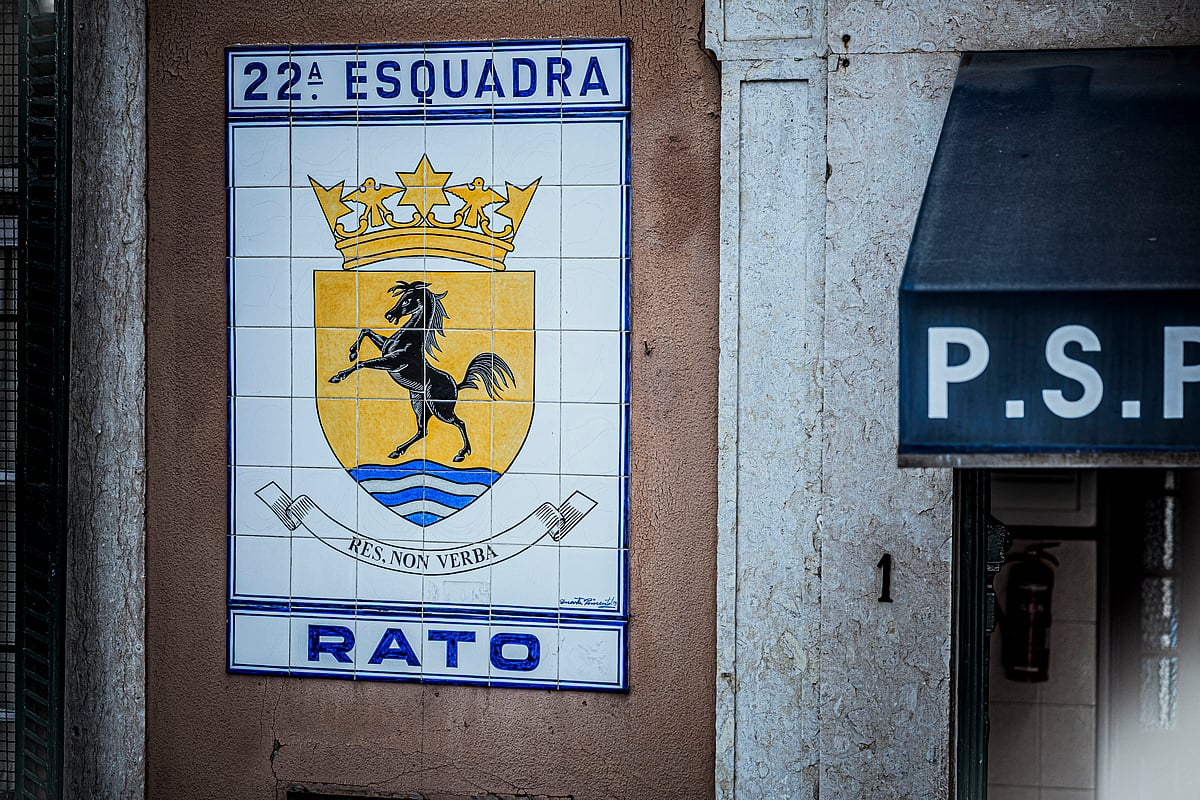
A judge has postponed the decision on coercive measures for 14 police officers detained in connection with alleged torture and abuse at the Rato police station in Lisbon. The Public Prosecutor's Office has requested pre-trial detention for four of the officers, while the detainees will remain in custody for two more nights until the ruling on Monday morning.
Update: Police station abuse case: coercive measures decision Monday
New reports indicate that the Public Prosecutor's Office has requested pre-trial detention for four officers, including a chief, while seeking house arrest for three others and suspension of duties for the remainder. Investigations also revealed that at least one officer allegedly warned colleagues that they were being monitored and would be subject to searches.
Firefighter association warns of INEM operational degradation
The National Association of Firefighters and Civil Protection Agents, known as Fénix, has raised concerns regarding the institutional and operational degradation of the National Institute of Medical Emergency (Instituto Nacional de Emergência Médica or INEM). The association warns that the service is struggling to meet its legal obligations, a sentiment echoed by the Pre-Hospital Emergency Technicians Union (Sindicato dos Técnicos de Emergência Pré-Hospitalar or STEPH).
Minimum services (serviços mínimos) are the legally required basic services that must be maintained during a strike to protect public safety—in healthcare this typically covers emergency care, critical ambulance coverage and intensive care. They matter because the INEM workers' committee admitted that late or unclear communication about which teams would be available during the end-of-2024 strike may have reduced operational capacity and confused patients; as an expat, expect limited non-urgent care during strikes and check official updates or call 112 for true emergencies.
The STEPH (Sindicato dos Técnicos de Emergência Pré-Hospitalar) is the trade union representing pre-hospital emergency technicians in Portugal. These professionals operate the ambulances and emergency vehicles for the National Institute of Medical Emergency (Instituto Nacional de Emergência Médica or INEM), playing a key role in the country's emergency medical response system.
Government introduces financial incentives for emergency department doctors
The government has announced a new incentive scheme for National Health Service (Serviço Nacional de Saúde or SNS) doctors working overtime in emergency departments. Physicians who exceed their annual requirement of 150 to 250 hours may receive compensation of up to 80 percent of their base salary, though critics argue that reorganizing emergency access may merely shift the burden of care rather than solving underlying capacity issues.
ULS Alto Ave is the Alto Ave Local Health Unit (Unidade Local de Saúde do Alto Ave), a public body that runs hospitals and some primary-care services for the Ave area in northern Portugal. It is part of the National Health Service (Serviço Nacional de Saúde or SNS), and recent staff strikes have affected overtime and complementary work, so residents should check local hospital notices before visiting.

Former Southampton defender Jan Bednarek robbed in Porto
Former Southampton defender Jan Bednarek and his family were threatened at knifepoint during a home invasion in Porto on Friday night. Reports indicate that a group of five individuals, who allegedly spoke Spanish, stole approximately 150,000 euros worth of jewelry from the residence.
Ventura's retirement age proposal sparks political debate
Chega leader André Ventura has proposed lowering the retirement age as a condition for approving labor reforms, a move that has drawn criticism from both the Socialist Party (Partido Socialista or PS) and the Social Democratic Party (Partido Democrata Social or PSD). Analysts suggest the proposal is a political maneuver intended to force the major parties into a unified stance against his platform.

André Ventura, born January 15, 1983, is a lawyer, academic, and Portugal's most prominent far-right leader. He founded Chega ("Enough") in 2019 after his PSD mayoral campaign attacked the Romani community. Chega surged from 1.3% in 2019 to 22.8% in May 2025, becoming parliament's second-largest party and making Ventura Leader of the Opposition.
His platform emphasizes immigration restrictions, law-and-order policies, constitutional reform, and contains inflammatory anti-Romani rhetoric that has triggered multiple discrimination convictions and investigations. Politically classified as far-right by international media, Ventura cultivates alliances with European far-right figures including Marine Le Pen and Santiago Abascal.
Nationality law reforms delayed until September
President Marcelo Rebelo de Sousa has promulgated the revised Nationality Law, but the implementation of the new framework has been delayed until September. While much public debate has centered on the potential shift from a five-year to a ten-year residency requirement for citizenship, the final legal text remains pending.

- Former President of Portugal (2016–2026)
- Party: Independent (formerly Social Democratic Party, PSD)
Electoral Mandate and Democratic Consensus:
Marcelo Rebelo de Sousa was elected President of Portugal on January 24, 2016, winning 52.0% of the vote in the first round—a decisive victory in a fragmented field. He campaigned as an independent, positioning himself as a unifying figure after years of austerity from Portugal's 2011–14 bailout, promising to repair political divisions and restore national confidence. His campaign emphasized moderation and cross-party consensus, a departure from his decades-long association with the center-right Social Democratic Party (PSD). Upon taking office on March 9, 2016, he suspended his party membership for the duration of his presidency.
His 2021 re-election proved extraordinary: Rebelo de Sousa secured 60.7% of the vote—the third-highest margin in Portuguese presidential electoral history since the 1974 Carnation Revolution. Historically, he became the first candidate ever to win in all 308 municipalities and the vast majority of parishes, ranging from 51.3% in Beja District to 72.16% in Madeira. This unprecedented sweep reflected his broad appeal across social, geographic, and ideological divides.
Constitutional Role and Crisis Leadership:
Portugal operates as a semi-presidential system where the president, while largely ceremonial, exercises meaningful influence over national security, foreign policy, and military affairs as Supreme Commander of the Armed Forces. Rebelo de Sousa leveraged this authority during Portugal's response to the COVID-19 pandemic. In March 2020, he requested parliamentary authorization for a state of emergency—the first nationwide declaration in 46 years of democratic history—to contain the crisis. He voluntarily quarantined after potential COVID-19 exposure in March 2020, and later tested positive in January 2021 while remaining asymptomatic. His measured handling of the pandemic, balancing public health with institutional continuity, contributed to his landslide 2021 re-election.
Diplomatic Engagement and International Presence:
Rebelo de Sousa has conducted extensive state visits representing Portugal's interests across diverse regions: the Vatican, Spain, Mozambique, Morocco, Brazil, Switzerland, Cuba, the United Kingdom, Greece, the United States, and Angola. A notable diplomatic highlight occurred in 2019 when he joined President Emmanuel Macron at the Bastille Day military parade in Paris, representing European military cooperation and the European Intervention Initiative. These engagements positioned Portugal as an active participant in global affairs, particularly regarding colonial history and Atlantic security partnerships.
Colonial Legacy and Historical Accountability:
During his presidency, Rebelo de Sousa has publicly supported making restitution and acknowledging abuses committed during Portugal's colonial history and the country's role in the Atlantic slave trade. This position marked a significant policy shift, as Portugal historically avoided confronting its imperial past compared to other European powers. His stance reflected evolving attitudes within Portuguese society toward historical accountability.
Controversies and Public Criticism:
Rebelo de Sousa's presidency has not been without controversy. In 2023, allegations emerged that he had intervened to expedite treatment for Brazilian twins with Zolgensma, an expensive rare disease medication, raising questions about presidential influence and potential corruption. These claims implicated his son and generated criticism across Portuguese political and media sectors. Additionally, in April 2024, Rebelo de Sousa made controversial remarks comparing the speed of Prime Ministers António Costa and Luís Montenegro using orientalist language that drew public rebuke. In August 2025, he called U.S. President Donald Trump a "Russian asset" at a PSD event, demonstrating his willingness to make provocative foreign policy statements.
Constitutional Constraints and Legacy:
Under Portugal's constitution, Rebelo de Sousa is barred from running for a third consecutive term, meaning his presidency concludes with elections scheduled for January 18, 2026. His decade-long tenure has established him as one of Portugal's most popular recent heads of state, characterized by broad consensus-building and institutional stability. Whether future presidents can replicate his cross-party appeal remains an open question for Portuguese democracy as it enters a new era.

INEM doctors demand inclusion in overtime incentive scheme
The workers' commission of the National Institute of Medical Emergency (Instituto Nacional de Emergência Médica or INEM) has demanded immediate clarification from the government regarding their exclusion from a new overtime incentive scheme. While the government recently approved new work regimes for emergency services, staff fear that INEM doctors have been overlooked, potentially impacting national emergency response capacity.
Minimum services (serviços mínimos) are the legally required basic services that must be maintained during a strike to protect public safety—in healthcare this typically covers emergency care, critical ambulance coverage and intensive care. They matter because the INEM workers' committee admitted that late or unclear communication about which teams would be available during the end-of-2024 strike may have reduced operational capacity and confused patients; as an expat, expect limited non-urgent care during strikes and check official updates or call 112 for true emergencies.

Seventeen districts under yellow weather warning
The Portuguese Institute for Sea and Atmosphere (Instituto Português do Mar e da Atmosfera or IPMA) has expanded its yellow weather warnings to 17 mainland districts due to heavy rain, thunderstorms, and strong wind gusts reaching 75 km/h. Additionally, seven islands in the Azores are under similar warnings for heavy precipitation through Monday morning.
A red warning is the highest alert level issued by Portugal's weather agency, the Portuguese Institute for the Sea and the Atmosphere (Instituto Português do Mar e da Atmosfera or IPMA), used when conditions pose a very high risk to life and property. Under a red warning authorities may close roads, suspend transport and advise people to avoid coastal and flood‑prone areas, so follow civil protection instructions during the Friday–Saturday storm period.

President Seguro criticizes EU unanimity rule on Europe Day
On Europe Day, President António José Seguro reiterated his opposition to the European Union's unanimity rule, warning that a bloc reliant on consensus is perpetually behind. While the President called for more ambitious majorities to drive progress, Prime Minister Luís Montenegro reaffirmed Portugal's commitment to a competitive and unified European project.

- President of Portugal (since March 9, 2026)
- Party: Independent. Former leader of the Socialist Party (PS), Partido Socialista
- Center-left
António José Martins Seguro (born March 11, 1962, in Penamacor) is a lawyer, political scientist, and the current President of the Portuguese Republic, inaugurated on March 9, 2026 after winning the two-round presidential election in January–February 2026.
Career: He led Socialist Youth (1990–1994), served as MEP (1999–2001), was Minister Adjunct to PM António Guterres (2001–2002), and led the PS parliamentary group (2004–2005). Elected PS Secretary-General in 2011 with 68%, he led the opposition during Portugal's bailout era. In 2014, António Costa defeated him in party primaries by a landslide, prompting Seguro's resignation and a decade-long retreat from politics. He returned in 2025, launching the movement UPortugal and announcing his presidential candidacy in June. He received official PS backing in October 2025 and won the presidency in February 2026.
Political philosophy: Seguro positions himself as representing a "modern and moderate" left, advocating financial responsibility while opposing austerity. As President, he has emphasized institutional trust, efficient governance, and a collaborative relationship with the government while maintaining rigorous constitutional oversight.

- Prime Minister, Portugal: 2024 - Present
- Party: Social Democratic Party (PSD)
Luís Filipe Montenegro Cardoso de Morais Esteves (born February 16, 1973, in Porto) is a Portuguese lawyer and center‑right politician who has served as Prime Minister of Portugal since April 2, 2024. A long‑time member of the Social Democratic Party (PSD), he is the leading figure of the post‑Troika generation of Portuguese conservatives. Montenegro was elected to the Assembly of the Republic in 2002 for the Aveiro district and remained an MP for 16 years, becoming PSD parliamentary leader from 2011 to 2017 during the bailout and austerity period under Prime Minister Pedro Passos Coelho. He was a prominent defender of strict austerity measures, arguing in 2014 that “the life of the people is no better, but the life of the country is a lot better,” a phrase that has followed his public image since. After an unsuccessful leadership bid against Rui Rio in 2020, Montenegro won the PSD leadership in 2022. He then forged the centre‑right Democratic Alliance (PSD–CDS‑PP and allies), which won a plurality of seats in the 2024 legislative election. Refusing to partner with the far‑right Chega, which he has called “often xenophobic, racist, populist and excessively demagogic,” he formed a minority government as head of the XXIV Constitutional Government on April 2, 2024. His first government fell in March 2025 after a no‑confidence vote linked to a conflict‑of‑interest affair, but fresh elections saw the Democratic Alliance increase its seat share, allowing Montenegro to return as prime minister leading the XXV Constitutional Government. His importance to Portugal lies in attempting to re‑center the traditional centre‑right after the crisis years, defending liberal‑conservative economics and EU alignment while drawing a sharp line against formal cooperation with the radical right, thus shaping how Portuguese democracy manages its new multi‑party era.
Judiciary Police investigate rape report at Porto Queimódromo
A 22-year-old woman has filed a complaint alleging she was raped by a 25-year-old man at the Queimódromo in Porto during the Queima das Fitas festivities. The victim received treatment at Pedro Hispano Hospital, and the Judiciary Police (Polícia Judiciária or PJ) are currently investigating the incident.

The PJ (Polícia Judiciária) is Portugal's national criminal investigation police agency, founded in 1945. Operating under the Ministry of Justice and supervised by the Public Ministry (prosecutors), the PJ is a "higher criminal police body" specializing in serious and complex crimes. Mission: The PJ assists judicial and prosecuting authorities by investigating terrorism, organized crime, homicide, kidnapping, drug trafficking, corruption, cybercrime, financial crime, and money laundering. It conducts forensic examinations, operates Portugal's Interpol and Europol liaison offices, and maintains specialized units including the National Counterterrorism Unit and National Anti-Corruption Unit. Difference from PSP/GNR: While PSP (civilian urban police) and GNR (military rural police) focus on preventive policing, public order, and investigating minor crimes, the PJ exclusively handles serious crime investigation requiring specialized technical and scientific expertise. PSP and GNR report to the Ministry of Internal Affairs; PJ reports to the Ministry of Justice. PJ officers receive higher pay and prestige but face greater operational risk.

"It is one thing for those who had access to the footage and did not…
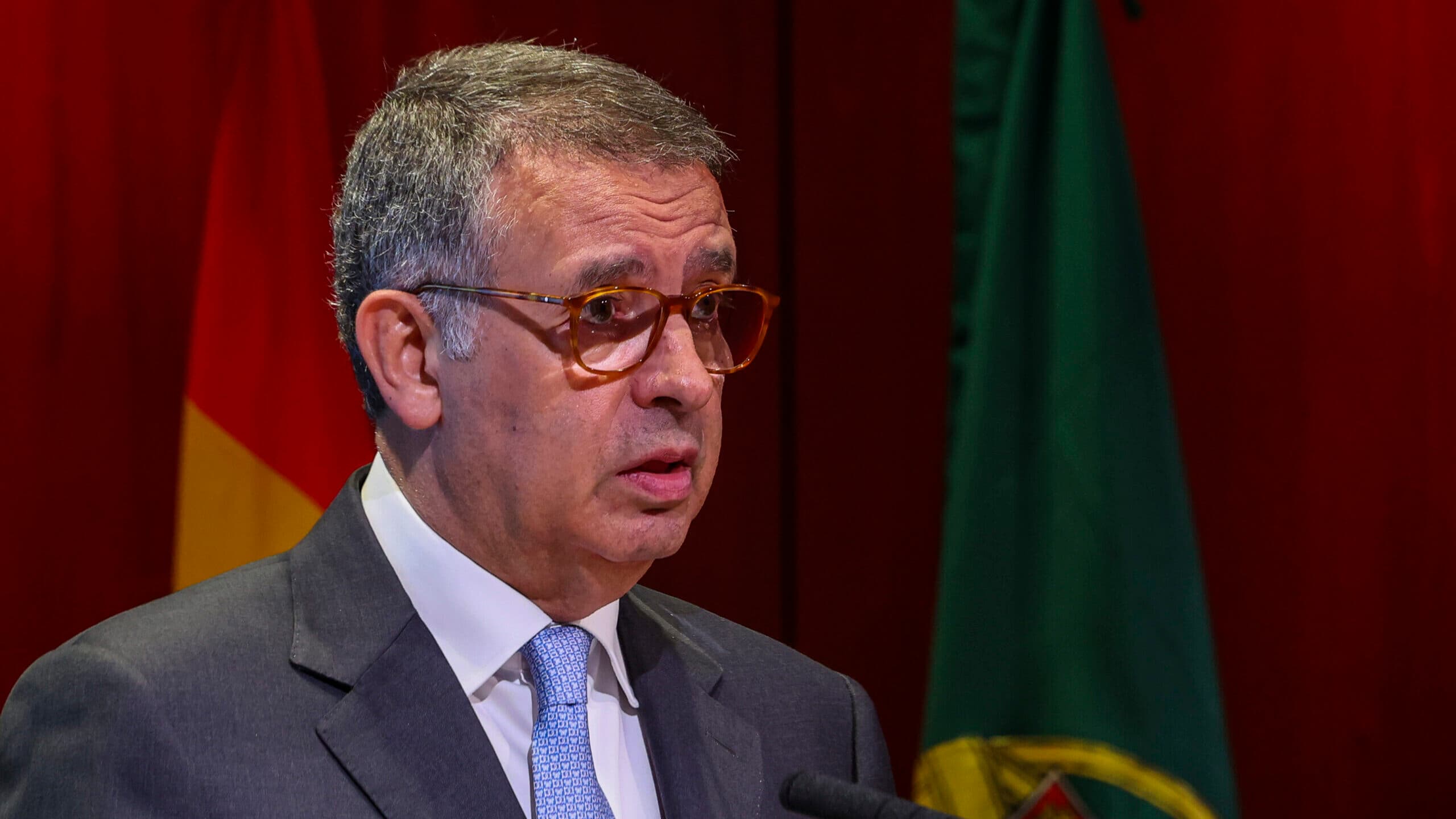
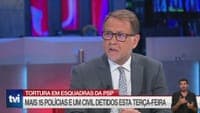
The Minister of Internal Administration, Luís Neves, appeared on TVI's Jornal Nacional to discuss the case of dozens of PSP officers arrested on suspicion of torturing vulnerable people.
President of the Republic promulgates Nationality Law
The President of the Republic promulgated the bill amending the Nationality Law this evening, although he expressed a desire to see a greater political consensus.

Rato PSP police station. Coercive measures to be announced on Monday
The coercive measures for the case involving the Rato PSP police station in Lisbon will be announced at 9:00 am on Monday. The suspected police officers will remain in detention for two more nights.