

23 March 2026 – 29 March 2026
Political Clashes, EU Funding Cuts, and New Citizenship Rules Shape the Week
Political tensions are escalating in Portugal over Constitutional Court appointments and looming cuts to European Union funding. For expats, significant legislative updates are on the horizon, including debates on starting the citizenship countdown from the residency request date and new asset distribution laws. Meanwhile, environmental and safety challenges continue as firefighters battle blazes in Peneda-Gerês and the government commits to rebuilding storm-damaged schools.
President Seguro calls for balanced labour deal and military modernization
President António José Seguro expressed hope for a balanced agreement on labour legislation (legislação laboral) between the government and social partners. Speaking in Santarém, the President also advocated for the modernization of the Armed Forces (Forças Armadas) to meet international commitments, provided it does not compromise social welfare spending. Workers should note that the government has proposed extending the duration of certain employment contracts as part of the negotiations.
Update: Protests and political opposition mount against new labour package
Hundreds of protesters, led by the Interjovem wing of the CGTP union, marched in Lisbon to oppose the government's proposed labour changes. Former Minister of Labour Ana Mendes Godinho also called for the Socialist Party (Partido Socialista or PS) to be uncompromising against the package, which she described as an attack on workers.

- The President of Portugal (From March 9 2026)
- Party: Independent. Former leader of Socialist Party (PS) Partido Socialista
- Center left
Background:
António José Martins Seguro (born March 11, 1962, in Penamacor) is a lawyer, political scientist, and Socialist Party politician running for president in Portugal's January 18, 2026 election. He led Socialist Youth (1990-1994), served as MEP (1999-2001), was Minister Adjunct to PM António Guterres (2001-2002), and led the PS parliamentary group (2004-2005). Elected PS Secretary-General in 2011 with 68%, he led the opposition during Portugal's bailout era. In 2014, António Costa defeated him in party primaries by a landslide, prompting Seguro's resignation and decade-long retreat from politics. He returned in 2025, launching the movement UPortugal and announcing his presidential candidacy in June. He received official PS backing in October 2025. Political Philosophy:
Seguro positions himself as representing a "modern and moderate" left, offering a progressive alternative to conservative candidates. He advocates for "financial responsibility but critical of austerity," attempting to reposition the PS at center-left. His campaign emphasizes institutional trust, efficient governance, and hope for a better future.
A banked hours scheme (commonly called banco de horas in Portuguese) lets employees store overtime or unused hours and use them later as paid time off instead of receiving immediate extra pay. The CGTP (Confederação Geral dos Trabalhadores Portugueses) proposal in its labour-review document would extend flexible working and the option to bank hours to parents with children up to 16, giving them more ability to adjust work time around family needs while hours are formally tracked.
Socialist Party (PS)
- Leader: José Luís Carneiro (since June 2025)
- Ideology: Center-left, Social democracy, pro-Europeanism
Portugal's other traditional major party suffered a historic collapse in the 2025 election, dropping from 78 to 58 seats and falling to third place for the first time in democratic history. The party was led by Pedro Nuno Santos from January 2024 until his resignation following the May 2025 defeat. José Luís Carneiro, a 53-year-old former Minister of Internal Administration known for his moderate positioning within the party, was elected unopposed as the new Secretary-General with 95% of votes in June 2025. The Socialist Party governed Portugal from 2015 to 2024, including an absolute majority from 2022 to 2024 under António Costa, who resigned in November 2023 amid a corruption investigation. The PS previously led the innovative "Geringonça" (contraption) coalition government from 2015-2019, a minority government supported by the Left Bloc and Portuguese Communist Party that reversed austerity measures and presided over economic recovery.

Socialist Party warns of rupture over Constitutional Court appointments
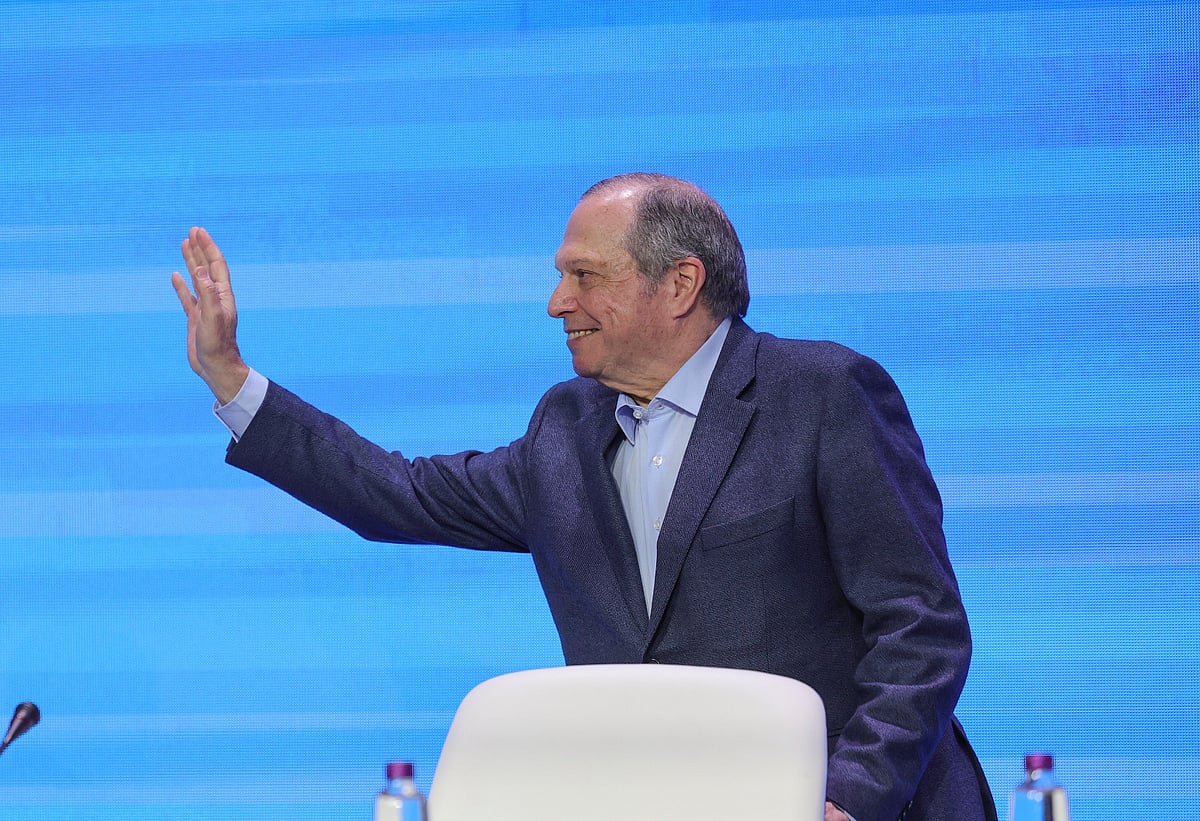
At the 25th National Congress of the Socialist Party (Partido Socialista or PS), Carlos César was confirmed as party president and warned that excluding the PS from judicial appointments is a risk to democracy. Leader José Luís Carneiro stated that a rupture will occur if the government bypasses the PS to negotiate with the Chega party regarding the Constitutional Court (Tribunal Constitucional). The tension centers on the selection of three new judges for the court, which Chega leader André Ventura claims is a historic opportunity for reform.
Update: Carneiro re-elected as PS leader amid calls for dialogue
José Luís Carneiro was re-elected as secretary-general at the Viseu congress, where he outlined ten priorities including wage convergence with the European average by 2035. Leonor Beleza, vice-president of the Social Democratic Party (Partido Social Democrata or PSD), responded by calling for discretion in negotiations regarding the Constitutional Court. Carneiro also warned that the PS will reject the government's current labor law reform proposal if it remains unchanged.
Carlos César is the President of the Socialist Party (Partido Socialista or PS) and a candidate for re-election to the position. He was the President of the Regional Government of the Azores (Governo Regional dos Açores) for 16 years between 1996 and 2012. Those following political news should note that while the Secretary-General leads the party, the President acts as a senior representative and moderator.
The Constitutional Court (Tribunal Constitucional) is Portugal's highest court for constitutional review, responsible for checking whether laws and statutes comply with the Constitution and for annulling or suspending unconstitutional measures. FNAM's push for a review matters because the court can strike down or block parts of the regional emergency services statute, directly affecting how emergency care is regulated.
Socialist Party (PS)
- Leader: José Luís Carneiro (since June 2025)
- Ideology: Center-left, Social democracy, pro-Europeanism
Portugal's other traditional major party suffered a historic collapse in the 2025 election, dropping from 78 to 58 seats and falling to third place for the first time in democratic history. The party was led by Pedro Nuno Santos from January 2024 until his resignation following the May 2025 defeat. José Luís Carneiro, a 53-year-old former Minister of Internal Administration known for his moderate positioning within the party, was elected unopposed as the new Secretary-General with 95% of votes in June 2025. The Socialist Party governed Portugal from 2015 to 2024, including an absolute majority from 2022 to 2024 under António Costa, who resigned in November 2023 amid a corruption investigation. The PS previously led the innovative "Geringonça" (contraption) coalition government from 2015-2019, a minority government supported by the Left Bloc and Portuguese Communist Party that reversed austerity measures and presided over economic recovery.
Over 100 firefighters battle blaze in Peneda-Gerês National Park
More than 100 personnel and three aircraft are currently fighting a wildfire in the Pedra Bela area of the Peneda-Gerês National Park (Parque Nacional da Peneda-Gerês). Authorities from the Cávado Sub-regional Command for Emergency and Civil Protection (Comando Sub-regional de Emergência e Proteção Civil do Cávado) report that no homes are currently at risk. The fire broke out Saturday afternoon in the municipality of Terras de Bouro, involving multiple fire brigades and the GNR.
Update: Wildfire in Peneda-Gerês National Park brought under control
Emergency services have brought the fire in Terras de Bouro under control (dominado), with the status downgraded to the resolution phase (resolução) as of Sunday afternoon. While 81 personnel and 22 vehicles remain on-site for mop-up operations (rescaldo), the immediate threat to the national park has subsided. One aerial asset was used throughout the morning to douse remaining hotspots in difficult-to-access terrain.
The Peneda-Gerês National Park (Parque Nacional da Peneda-Gerês) is Portugal's only national park, covering over 70,000 hectares across the Viana do Castelo, Braga, and Vila Real districts. Established in 1971, it is known for its granite peaks, oak forests, and traditional stone villages like Lindoso and Soajo. For residents and visitors, it offers extensive hiking trails and protected habitats for wild Garrano horses and wolves.

Storm-damaged schools to be rebuilt with cyclonic wind standards
Education Minister Fernando Alexandre announced that schools damaged by Storm Kristin will be rebuilt to withstand winds of 200 kilometers per hour. The government is adopting construction models used in countries frequently exposed to cyclones to ensure structural resilience and prevent future closures. Parents and students should note that the plan involves redesigning projects in collaboration with local municipalities (municípios).
Update: Government sets June deadline for delayed housing support
The government aims to complete all financial support for private homes damaged by the storm by June 30, admitting that only 10% of 30,000 applications have been processed. Minister of Economy and Territorial Cohesion Manuel Castro de Almeida also announced that €500 million in projects from the Recovery and Resilience Plan (Plano de Recuperação e Resiliência or PRR) will be reallocated due to the disaster. Those awaiting support should note that 750 technicians are being deployed to help municipalities speed up damage assessments.
Fernando Alexandre is the Minister of Education, Science, and Innovation in Portugal's current government, which took office in April 2024. An economist by training, he previously served as a Secretary of State and is now responsible for managing the national school system and university funding. He recently sparked debate by suggesting that university tuition fees should be adjusted to account for inflation.
The Recovery and Resilience Plan (Plano de Recuperação e Resiliência) is Portugal's national programme under the EU's NextGenerationEU to fund reforms and investments after COVID‑19; the plan includes roughly €16.6 billion in grants plus about €2.7 billion in loans approved in 2021. Payments are tied to specific milestones and targets — which the government said it is politically committed to meet — so missed milestones can delay projects and funding that affect public works, contractors and local services.

PS leader proposes tax cuts while Cavaco slams Chega
At the Socialist Party (Partido Socialista or PS) congress in Viseu, leader José Luís Carneiro proposed 0% value-added tax (Imposto sobre o Valor Acrescentado or IVA) on essential food and a reduction to 13% for fuel. Meanwhile, former President Aníbal Cavaco Silva criticized the theatrical discourse of Chega and urged Prime Minister Luís Montenegro to maintain distance from the party. Tax-paying residents should note these proposals aim to address the rising cost of living linked to international conflicts.
Update: Carlos César re-elected PS president amid internal list challenge
Carlos César was re-elected as president of the PS with 89.9% of the vote as the congress continued in Viseu. While the party leadership remains stable, former MP Ricardo Gonçalves presented an alternative list for the National Commission (Comissão Nacional), challenging the use of single lists. Party members should note that the meeting concludes on Sunday with the final election of national bodies.
Socialist Party (PS)
- Leader: José Luís Carneiro (since June 2025)
- Ideology: Center-left, Social democracy, pro-Europeanism
Portugal's other traditional major party suffered a historic collapse in the 2025 election, dropping from 78 to 58 seats and falling to third place for the first time in democratic history. The party was led by Pedro Nuno Santos from January 2024 until his resignation following the May 2025 defeat. José Luís Carneiro, a 53-year-old former Minister of Internal Administration known for his moderate positioning within the party, was elected unopposed as the new Secretary-General with 95% of votes in June 2025. The Socialist Party governed Portugal from 2015 to 2024, including an absolute majority from 2022 to 2024 under António Costa, who resigned in November 2023 amid a corruption investigation. The PS previously led the innovative "Geringonça" (contraption) coalition government from 2015-2019, a minority government supported by the Left Bloc and Portuguese Communist Party that reversed austerity measures and presided over economic recovery.
Aníbal Cavaco Silva is a former Prime Minister (1985–1995) and former President of Portugal (2006–2016) from the Social Democratic Party (Partido Social Democrata or PSD). He led the country during its early years in the European Union and is known for his focus on economic stability and modernization. As a senior political figure, he remains influential and recently criticized the lack of credibility in newer political movements like Chega.
Carlos César is the President of the Socialist Party (Partido Socialista or PS) and a candidate for re-election to the position. He was the President of the Regional Government of the Azores (Governo Regional dos Açores) for 16 years between 1996 and 2012. Those following political news should note that while the Secretary-General leads the party, the President acts as a senior representative and moderator.
Parliament to debate starting citizenship countdown from residency request
The Assembly of the Republic (Assembleia da República) will debate petitions on April 1st that propose changing how the five-year residency requirement for citizenship is calculated. The proposal suggests the countdown should begin when a foreigner first requests residency from the Agência para a Integração, Migrações e Asilo (AIMA), rather than when the permit is actually issued. Visa holders should note that this change could significantly shorten the total waiting time for Portuguese nationality (nacionalidade portuguesa).
The Assembleia da República (Assembly of the Republic) is Portugal's unicameral parliament, made up of 230 deputies elected every four years, responsible for making laws and overseeing the government. Quercus sent its letter to the government and the Assembly to push lawmakers to consider banning non‑biodegradable wet wipes and to create a biodegradable labelling rule.

New law gives residents more control over asset distribution
A new government proposal aims to reform inheritance laws by strengthening the power of testators to define how their assets are divided among heirs. The change would allow individuals to specify which specific properties or assets go to which heirs within the legitimate portion (legítima), a restriction that currently limits estate planning. Property owners should note that the reform also seeks to reduce the number of undivided inheritances (heranças indivisas) that often lead to legal deadlocks.

Portugal faces 12% cut in future European Union funding
Internal documents from the European Parliament suggest Portugal may see a 12% reduction in its national funding envelope for the 2028-2034 budget cycle. The cut results from a new EU architecture that merges the Common Agricultural Policy (Política Agrícola Comum) and cohesion funds into a single strategic plan. Residents should note that this reduction could impact long-term public investment in infrastructure and regional development.

Suspect in Castelo de Vide murder dies in car crash
A 28-year-old woman was murdered in her home in Castelo de Vide on Saturday in a case being investigated as domestic violence (violência doméstica). The 42-year-old suspect, identified as her ex-partner, died shortly after in a car accident while attempting to flee the scene. Residents should note that the Judicial Police (Polícia Judiciária or PJ) is leading the investigation into the homicide.

The Judicial Police (Polícia Judiciária) is Portugal’s national criminal investigation force that handles serious crimes such as homicide, organised crime, corruption and major fraud. It conducts criminal inquiries alongside prosecutors, so if you are involved in or affected by a serious criminal case in Portugal the PJ leads investigative work and consular assistance may be helpful.

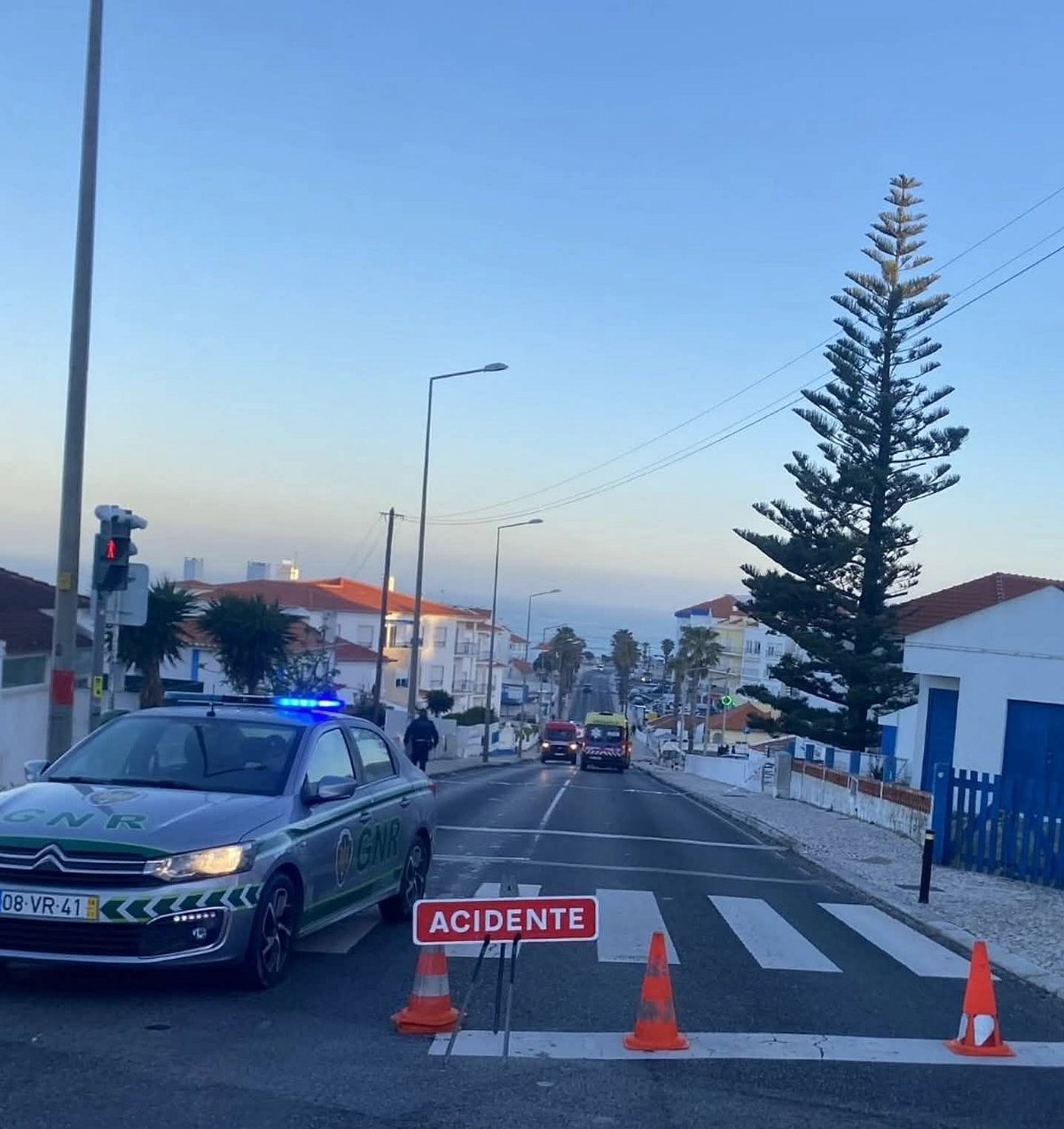
Two pedestrians killed in Ericeira car crash
Two men in their 30s died on Saturday morning after being struck by a car that veered onto the pavement in Ericeira. The driver of the vehicle was also injured and transported to the Hospital de Santa Maria in Lisbon. Residents should note that the National Republican Guard (Guarda Nacional Republicana or GNR) is investigating the circumstances of the crash, which occurred near the local fire station.

The GNR (Guarda Nacional Republicana) is Portugal's national gendarmerie—a military police force founded in 1911, with origins dating to 1801. With over 22,600 personnel, GNR patrols 94-96% of Portuguese territory, covering rural areas, medium towns, and highways. Members are military personnel subject to military law, responsible for public order, customs, coastal control, environmental protection (SEPNA), firefighting/rescue (GIPS), border control, and ceremonial guards. GNR vs. PSP: The PSP (Polícia de Segurança Pública) is Portugal's civilian police force, covering major cities (Lisbon, Porto, Faro) and large urban areas—only 4% of territory but roughly half the population. PSP handles airport security, diplomatic protection, and private security regulation. Both share core missions (public order, crime prevention), but differ in nature: GNR is military with military training; PSP is civilian with police-focused training.
Carneiro calls for unity in the PS and challenges Montenegro to choose: "If you sow…
The PS Congress meets this weekend in Viseu to refine its opposition strategy. José Luís Carneiro arrives at the major meeting re-elected and without declared internal opposition, but with several voices pointing to the need to sharpen their focus.
IL joins PSD and Chega at the Constitutional Court. Will it be enough?
Is a possible resolution to the deadlock at the Constitutional Court getting closer?

With the surplus lost, the Government still has room to reach a deficit of 0.5%
European budgetary rules protect countries that maintain a “budgetary situation close to balance,” meaning a deficit of less than 0.5%, from the opening of an excessive deficit procedure.
