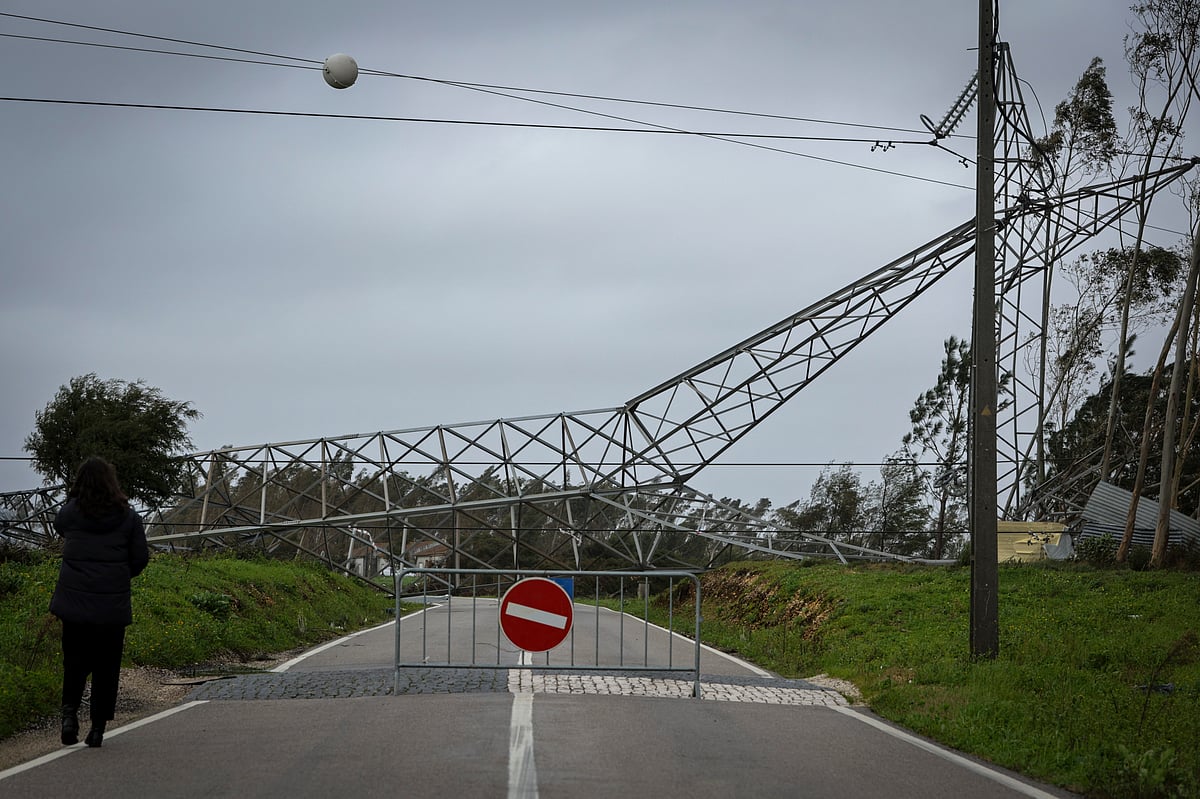
Storm damage: Part of the West Line reopens this Monday
Partial service on the West Line resumes this Monday following severe storm damage, though long-term recovery efforts continue.

Latest news and stories about severe weather in infrastructure in Portugal for expats and residents.
Partial service on the West Line resumes this Monday following severe storm damage, though long-term recovery efforts continue.

Six weeks after Storm Kristin, students in Vieira de Leiria continue to face significant educational disruptions, with classes held in makeshift locations including containers and a former mortuary chapel due to ongoing infrastructure repairs.

Nine districts in the Centre and South of mainland Portugal are under a yellow warning for rain tonight due to the passage of storm Regina, as reported by the Portuguese Institute of the Sea and the Atmosphere (IPMA). The affected districts include Viseu, Évora, Setúbal, Santarém, Leiria, Castelo Branco, Aveiro, Coimbra, and Portalegre.
Update: Additional Context on the Warning The yellow warning remains in effect as authorities urge residents to stay informed about weather updates and take necessary precautions to ensure public safety during the storm's passage.
The 14 municipalities of Central Alentejo have reported losses caused by severe weather amounting to at least 26 million euros, with ongoing assessments of damage to municipal infrastructure, according to the Intermunicipal Community of Central Alentejo (CIMAC).

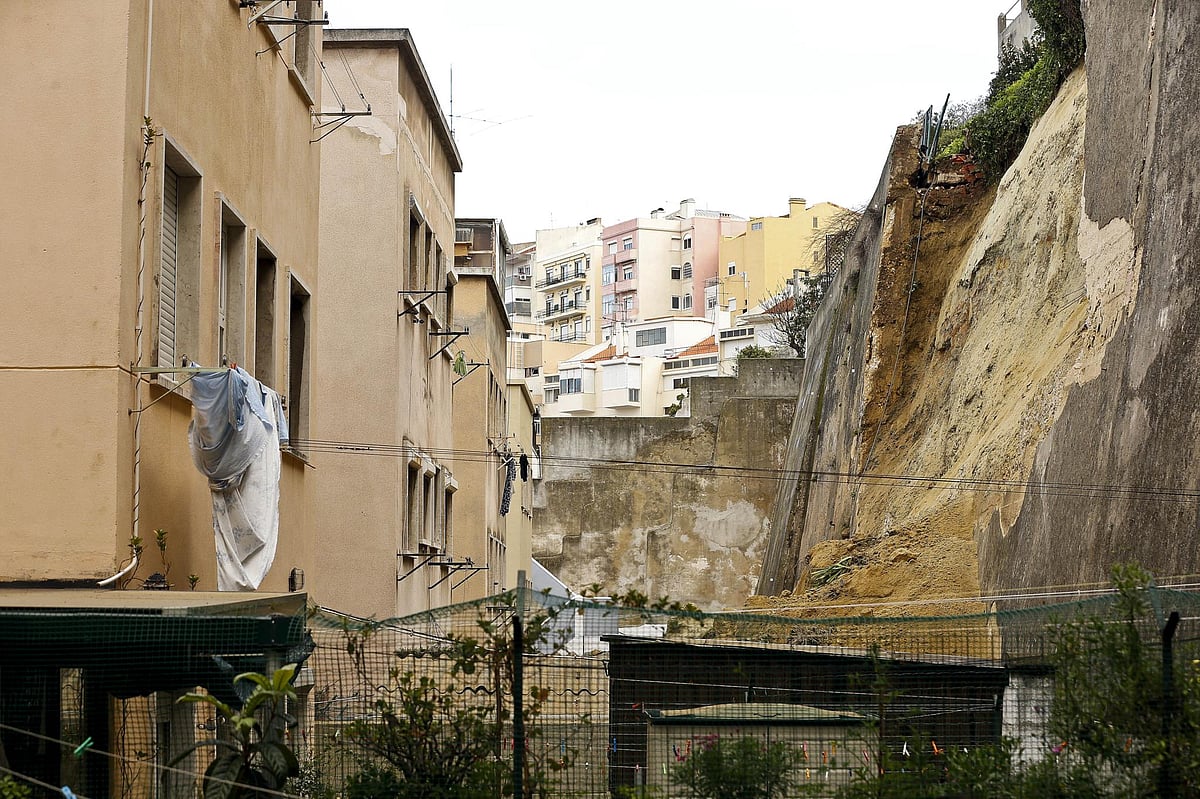
Brisa has reported that the landslide on the A5 motorway was caused by an abnormal volume of water due to recent storms, leading to soil instability and debris on the road. A technical analysis to determine a solution is expected to be completed next week. The president of Brisa announced that the company will not seek compensation from the Portuguese state for the landslide on the A1 near Coimbra, despite estimated losses exceeding three million euros. The storms have caused significant damage across the country, including fatalities and destruction of infrastructure.
Approximately 1,800 customers of E-Redes in areas affected by storm Kristin remained without electricity as of 5:00 PM on February 22. The EDP group company stated it is focused on restoring electricity supply. Earlier, 4,500 customers were reported without power. The storms have caused significant damage, resulting in 18 fatalities and affecting 90,000 students due to school closures. The Central, Lisbon and Tagus Valley, and Alentejo regions were the most impacted, with estimated damages in Seixal around 15 million euros.
Infraestruturas de Portugal has announced that 273 kilometers of railway lines remain closed due to severe weather conditions, with only 20 kilometers expected to reopen next week. The agency has not provided a timeline for when train services will resume on the Oeste and Douro lines, nor has it set a date for the commencement of necessary repair works.

The number of E-Redes customers without electricity supply in mainland Portugal has decreased to 26,000, with 16,000 in the most critical areas affected by the Kristin depression. Efforts to restore power have successfully brought electricity back to around 5,000 customers throughout the day, as the company continues to prioritize restoration in severely impacted regions.

Press review: Storms in January and February have pushed the food basket to a four‑year high, with prices rising consecutively since early 2026 as greenhouse destruction and higher transport costs bite, warns Deco Proteste. Jornal de Notícias and other outlets flag further deterioration in vegetable and fruit bills, while the state faces millions in costs to recover at‑risk companies. Coverage also notes a controversial overlap in business figures linked to a human‑trafficking case, a resigning INEM training director earning €5,700 while working remotely, and the ongoing hardship in Amor, Leiria, where residents describe daily struggle after the storms.
The Mission Structure for the Recovery of Affected Areas reports 34,000 applications — including over 25,000 pre‑registrations — for the €10,000 reconstruction support aimed at homes in the Centre and Lisbon and Tagus Valley, with roughly 9,000 formal submissions handled through the two CCDRs. Authorities also note 66,000 insurance activations (around 8,000 for companies), while the Intermunicipal Council of CIM Leiria met to assess the local calamity response. Transport disruptions persist: the A16 has reopened after a short closure caused by a fallen advertising sign, but Infraestruturas de Portugal reports restricted railway circulation on parts of the national network due to recent bad weather. The IPMA forecasts easing rain and improving conditions through the weekend, which may reduce further transport and recovery impediments. The situation highlights strong demand for reconstruction aid, large insurance mobilisation and ongoing infrastructure vulnerability to extreme weather.
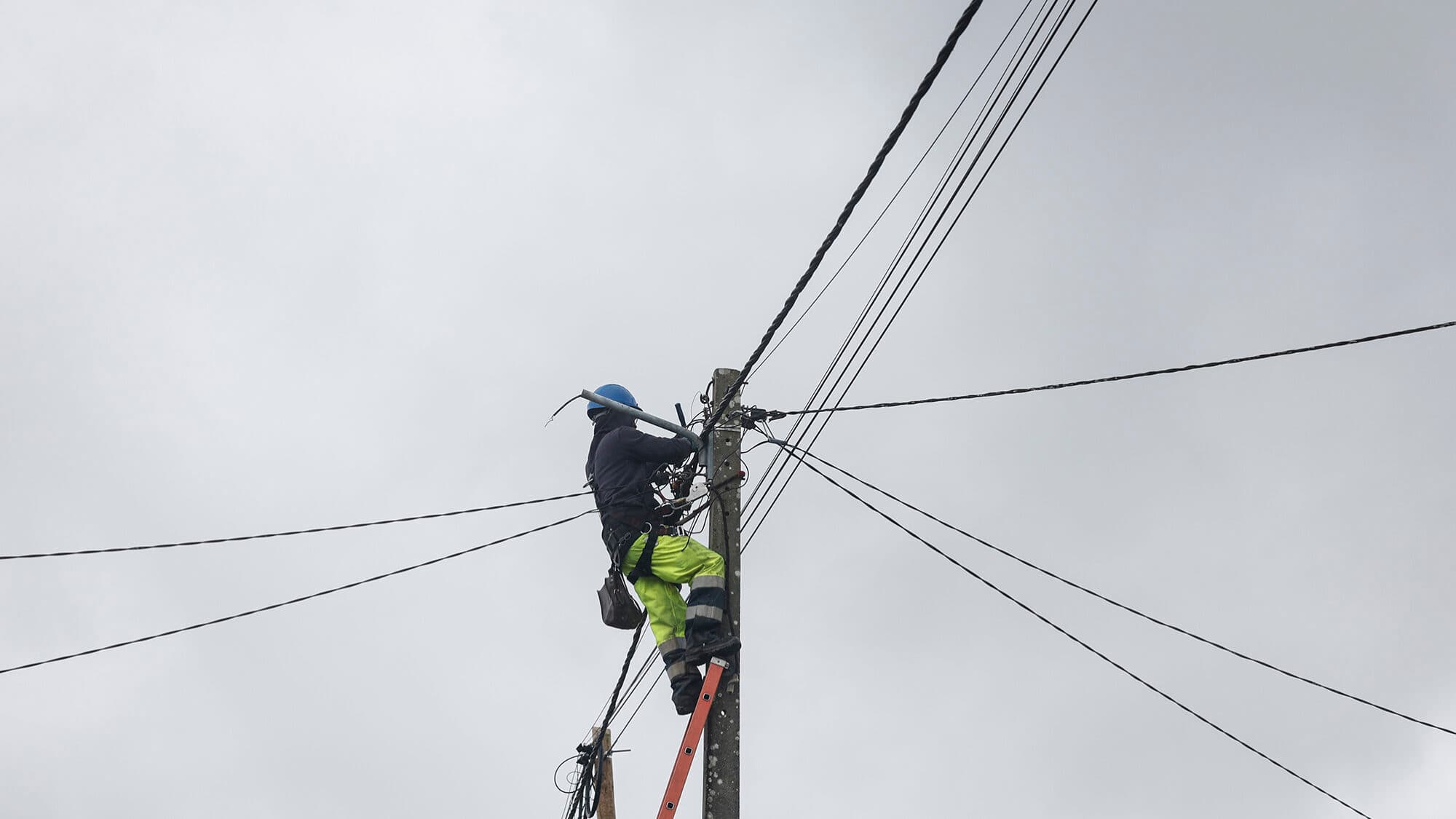
Storm Kristin inflicted severe damage on Portugal’s telecommunications infrastructure, leaving thousands without phone or internet service and creating uncertainty about the full scale of losses. Anabela Campos of Expresso’s Economy section analyses the technical and organisational challenges of recovery: assessing fibre and mast damage, restoring power-dependent sites, coordinating operators and emergency services, and prioritising public-safety links. The piece outlines short-term fixes (temporary radio links, generator deployment, mobile cells) and longer-term resilience measures (network redundancy, hardening infrastructure, investment and regulatory incentives), while stressing the need for clear damage assessment and co‑operation between public authorities and private operators to minimise disruption and protect vulnerable communities.
The controlled discharge from the Aguieira Dam has raised the Mondego’s level and increased the likelihood of a centennial-level flood in central Coimbra. Several railway links and roads are already affected, with transport disruptions and infrastructure at risk. Local authorities and emergency services are monitoring the river closely, issuing advisories and managing responses; residents and travellers are advised to follow minute-by-minute updates as flood forecasts and dam releases evolve. The situation poses short-term travel, safety and logistical challenges and will require coordinated emergency and transport management if levels continue to rise.
Former Secretary of State for the Environment Joaquim Poças Martins warns that a distinctive dike system in Portugal — described as unique nationwide — was designed for a different climatic baseline and may not cope with the growing intensity and frequency of extreme events such as droughts and floods. He argues the infrastructure and current management practices are not prepared for today’s severe weather patterns, raising questions about public safety, long-term resilience and whether such a project would be approved under modern standards. The assessment points to the need for policy review, risk reassessment and investment in adaptive measures.
![This [dike] system is unique in Portugal, perhaps it wouldn't be built today](/_next/image?url=https%3A%2F%2Fimg.iol.pt%2Fimage%2Fid%2F698efe22d34e6a48f4467fff%2F200.jpg&w=3840&q=75)
Commander Luís Martins warns that a new episode of an atmospheric river will affect mainland Portugal in the coming days, increasing the risk of falling trees and landslides. Authorities say the greatest danger is to those travelling on roads and urge motorists to be extra vigilant, follow official guidance, consider postponing non-essential journeys and watch for debris, flooded sections and unstable slopes. The warning highlights risks to transport infrastructure and the need for coordinated emergency response and preventative measures.

Gonçalo Lopes, the mayor of Leiria, discussed the extensive damage caused by Storm Kristin in a recent interview with CNN Portugal, highlighting the municipality's emergency response and recovery efforts over the past ten days.

Many residents have been coping with life without electricity for ten days following storm Kristin, resorting to early bedtimes, using wipes for hygiene, and relying on takeout meals. Local mayors emphasize the need for collective empathy as they face challenges in restoring power and communication, leaving many without access to basic necessities.

The National Elections Commission (CNE) is urging citizens to participate in the upcoming presidential elections on Sunday, despite forecasts of bad weather. The CNE has recommended the organization of special public transport to facilitate voter turnout and ensure that citizens can exercise their right to vote under the best possible conditions.

The arrival of Depression Marta is expected to bring heavy rain to Lisbon and Setúbal, with the most concerning period being between morning and early afternoon. Areas already facing complications may experience the worst impacts as this is the third depression to hit the region in a short span of time.

The Municipal Civil Protection Service of Porto has raised a red alert due to imminent flooding risks along the Douro River, indicating severe weather conditions that could lead to significant emergency situations.
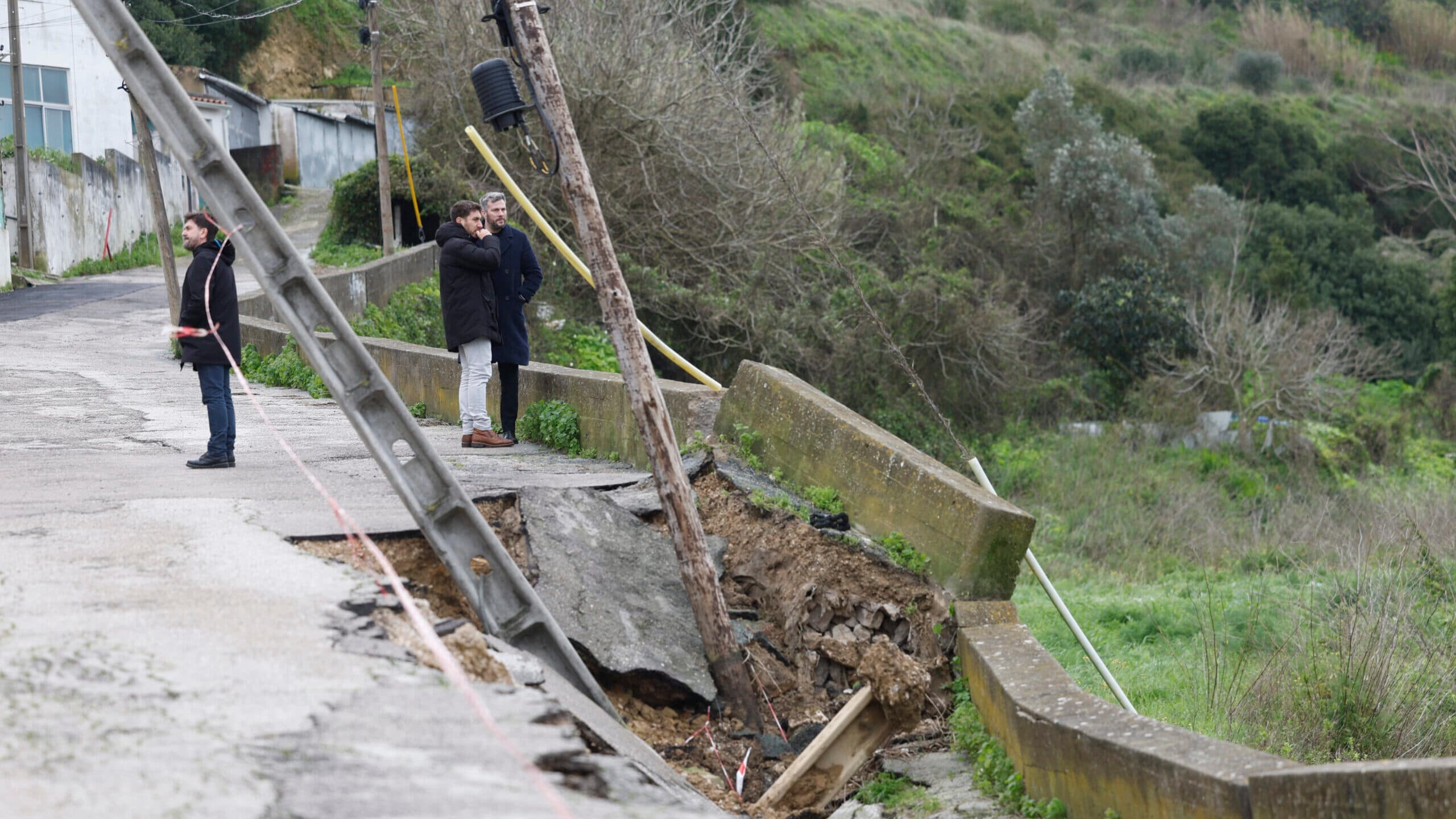
A series of storms has wreaked havoc across Portugal, leading to extensive damage to infrastructure and impacting local communities. The severe weather has prompted emergency services to respond to the crisis, highlighting concerns over public safety and the resilience of affected areas.

Train services on the North Line between Castanheira do Ribatejo and Alverca have been suspended since 6am due to flooding on the railway. The local council is also restricting access to the Tagus River at Terreiro do Paço as a safety measure.

A week after severe weather conditions, over 200,000 people remain without power, and the European Civil Protection Plan has not been activated. The government has extended the state of calamity until February 8 to address the adverse weather expected from depression Leonardo, which will bring heavy rain, snow, strong winds, and rough seas to mainland Portugal.

Continental Portugal experienced 833 incidents due to severe weather conditions on Tuesday, primarily involving fallen trees, flooding, and landslides, as reported by Civil Protection.

PS secretary-general Carneiro has challenged the Government to activate the European Civil Protection Mechanism immediately after Storm Kristin, sending Luís Montenegro a programme of measures to address the impacts. Civil Protection experts concede a late assessment of the disaster’s scale but say Portugal has not yet exhausted national response capacity; the question of requesting generators from abroad remains under study. Other centre-left parties, including the PCP of Santarém, describe government measures as too late and insufficient, warning that a disaster of this magnitude cannot be left to the goodwill of local communities alone.