

1926–1974
Dictatorship and the Estado Novo
The coup of 28 May 1926 began a military dictatorship. In 1933 a constitution drafted by the head of government, António de Oliveira Salazar, and approved by plebiscite founded the Estado Novo, or New State, which left freedom of speech, assembly and association to special laws. From 1961 Portugal fought armed liberation movements in its African colonies, a war that helped bring the regime down.
10 key moments · 149 in all
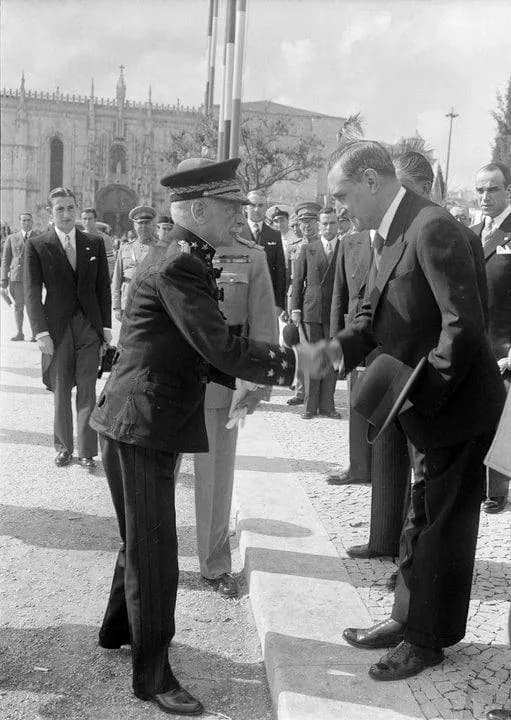
General Manuel Gomes da Costa launches a military uprising in Braga that spreads quickly through the army. Within days the government falls and the First Republic collapses, ending 16 years of chaotic parliamentary rule and opening the way to the military dictatorship that would evolve into Salazar's Estado Novo.
The February Revolt, the first serious attempt to topple the military dictatorship installed in 1926, ends with the rebels' surrender after days of fighting and artillery duels across the Douro. About 80 people were killed in Porto and more than 70 in Lisbon.
Fernando Pessoa makes his debut in 'Presença', the Coimbra magazine of the second wave of Portuguese modernism. Issue no. 5 carries his poem 'Marinha', signed under his own name, alongside 'Ambiente', a set of aphorisms signed by his heteronym Álvaro de Campos — the start of a collaboration that would run until 1934 and bring the still little-known poet to a new generation of readers.
At Lisbon's Santa Marta Hospital, the neurologist Egas Moniz obtains the first successful cerebral angiogram, injecting contrast into the carotid artery so that the brain's blood vessels show up on X-ray — a technique still at the heart of neuroradiology. His 1949 Nobel Prize, by contrast, honoured the lobotomy, a procedure now discredited.
Miguel Januário de Bragança, styled Miguel II by the Miguelist monarchists and son of the deposed absolutist King Miguel I, dies in exile in Austria. Born in 1853 and barred from Portugal by the banishment law against his branch of the family, he was the grandfather of Duarte Pio, today's Duke of Braganza.
António de Oliveira Salazar, a Coimbra economics professor, becomes Minister of Finance after demanding a veto over every ministry's spending. Within a year he had balanced the budget, the springboard for his rise to Prime Minister in 1932 and four decades in power.
José 'Zeca' Afonso, Portugal's most influential folk and protest singer, is born in Aveiro. His song 'Grândola, Vila Morena', broadcast on Rádio Renascença shortly after midnight on 25 April 1974, was the go signal for the troops of the Carnation Revolution that toppled the dictatorship.
Maria de Lourdes Pintasilgo is born in Abrantes. A chemical engineer and progressive Catholic activist, she became Portugal's first — and so far only — woman prime minister in August 1979, heading a five-month caretaker government; she was only the second woman to lead a Western European government, after Margaret Thatcher.
At a ceremony in the Council of State hall in Lisbon, Finance Minister António de Oliveira Salazar launches the União Nacional with his speech on the 'fundamental principles of the political revolution'. It becomes the sole legal party of the Estado Novo, renamed Acção Nacional Popular in 1970 and dissolved after the 25 April 1974 revolution.
José Águas is born in Angola. Spotted playing for Lusitano do Lobito, the striker nicknamed 'Cabeça de Ouro' (Golden Head) for his heading joined Benfica in 1950 and, as captain, lifted the European Cup in 1961 and 1962, finishing as top scorer of the first campaign with 11 goals.
The poet Herberto Helder is born in Funchal, Madeira. Author of 'A Colher na Boca' and 'Photomaton & Vox', he became one of the most admired and most reclusive Portuguese poets of the century, refusing almost all interviews and turning down the Pessoa Prize in 1994.
Death in Lisbon of the writer Raul Brandão, aged 63. Born at Foz do Douro, of fishing stock, the former army officer wrote the anguished modernist novel 'Húmus' (1917) and luminous chronicles of the coast and the Atlantic islands such as 'Os Pescadores' and 'As Ilhas Desconhecidas', still read as some of the finest prose about Portugal's sea.
The poet Florbela Espanca dies in Matosinhos on her 36th birthday, after an overdose of barbiturates. Born in Vila Viçosa, thrice married and scandalous in her day, she wrote passionately sensual, defiantly feminine sonnets; her last book, 'Charneca em Flor', appeared weeks after her death, and Fernando Pessoa called her his 'twin soul'.
The first issue of 'Avante!', the Portuguese Communist Party's newspaper, appears. For the next 43 years it was printed on hidden presses and passed hand to hand under the dictatorship — in the Alentejo copies were even left in olive trees for harvest workers to find.
Death of Manuel II, the last King of Portugal, aged 42, at Fulwell Park in Twickenham, where he had lived in exile since the 1910 revolution, devoting himself to a scholarly catalogue of early Portuguese books. Salazar's government grants a state funeral, and crowds line Lisbon's streets as his coffin passes to the Braganza pantheon at São Vicente de Fora.
Poet Ruy Belo is born in São João da Ribeira, near Rio Maior. A law graduate who left the Opus Dei and spent years teaching Portuguese in Madrid, he became one of the great voices of 20th-century Portuguese poetry with books such as 'Homem de Palavra(s)', before dying at just 45.
The Constitution of the Estado Novo is approved by national plebiscite, formally establishing António de Oliveira Salazar's authoritarian corporatist regime that would govern Portugal for over four decades, until the Carnation Revolution of 1974.
The Estado Novo is formally established in Portugal following the approval of the new constitution by plebiscite on March 19, consolidating Salazar's authoritarian corporatist regime.
Birth in Lisbon of Celeste Caeiro, the restaurant worker who gave the Carnation Revolution its name. On 25 April 1974 her restaurant cancelled the first-anniversary party for which it had bought carnations; she took the flowers to Rossio, and when a soldier on a tank asked her for a cigarette she gave him a carnation instead, which he slipped into the barrel of his rifle.
Birth of Álvaro Siza Vieira in Matosinhos. Portugal's most celebrated architect and winner of the 1992 Pritzker Prize, his works — from the Boa Nova Tea House to the rebuilt Chiado and the Portuguese Pavilion at Expo '98 — define modern Portuguese architecture.
The historian A. H. de Oliveira Marques, author of landmark histories of Portugal and pioneering studies of daily life in the Middle Ages, is born in São Pedro do Estoril, near Lisbon.
A decree-law creates the PVDE (Polícia de Vigilância e de Defesa do Estado), the Estado Novo's political police and forerunner of the PIDE, which would enforce the dictatorship's repression for four decades.
'A Canção de Lisboa', the first sound feature film made entirely in Portugal, premieres at the São Luiz theatre in Lisbon. Directed by José Cottinelli Telmo and starring Vasco Santana, Beatriz Costa and António Silva, its comedy of a medical student fooling his rich aunts left lines and songs the Portuguese still quote.
An insurrectionary general strike against the Estado Novo's corporatist labour laws breaks out across Portugal, most dramatically in Marinha Grande, where glassworkers cut roads, telephone lines and the railway and briefly seize the town hall, post office and GNR post. The revolt is crushed within hours and followed by mass arrests, and the regime uses it to justify deeper repression of the labour movement.
Paula Rego is born in Lisbon. Settling in London, she became one of the great figurative painters of her time, known for unsettling fairy-tale scenes and her 'Abortion' series; the Casa das Histórias in Cascais is dedicated to her work.
Death in Lisbon of Ana de Castro Osório, writer, suffragist and republican. In 1908 she co-founded the Liga Republicana das Mulheres Portuguesas with the doctors Carolina Beatriz Ângelo and Adelaide Cabete, helped Afonso Costa draft the Republic's divorce law, and with her 18-volume series 'Para as Crianças' became a founder of Portuguese children's literature.
The Emissora Nacional, Portugal's new state radio, begins regular broadcasts from Lisbon, three days before its official inauguration on 4 August. For four decades a mouthpiece of Salazar's Estado Novo, it was folded into the new public broadcaster RDP after the 1974 revolution and is today part of RTP.
Alfredo Roque Gameiro, master of Portuguese watercolour, dies in Lisbon aged 71. His 'Lisboa Velha' series recorded the alleys, fountains and street life of the old city, and all five of his children became artists in their own right.
Adelaide Cabete, one of Portugal's foremost feminists and among the first Portuguese women to qualify as a physician, dies in Lisbon. An obstetrician, republican and abolitionist, she presided over the National Council of Portuguese Women for more than twenty years, campaigning tirelessly for women's rights and suffrage.
Fernando Pessoa dies at the Hospital de São Luís dos Franceses in Lisbon, aged 47. His last written words, in English, were 'I know not what tomorrow will bring'. Little known at his death beyond 'Mensagem', he left a trunk of more than 25,000 papers that revealed one of the century's great poets.
The film director Paulo Rocha is born in Porto. His debut feature, 'Os Verdes Anos' (1963), about a young country boy adrift in Lisbon, is regarded as a founding work of Portugal's Novo Cinema, the 1960s new wave that broke with the cosy comedies favoured under the Estado Novo.
José Policarpo is born in Alvorninha, near Caldas da Rainha. A theologian, he served as Cardinal Patriarch of Lisbon from 1998 to 2013, the leading voice of the Portuguese Catholic Church through two papal conclaves.
Otelo Saraiva de Carvalho is born in Lourenço Marques (now Maputo), Mozambique. As chief strategist of the Armed Forces Movement he directed the 25 April 1974 coup from a command post at Pontinha; he later ran second in the 1976 presidential election and was tried over alleged links to the FP-25 armed group before a 1996 amnesty.
Sailors of the Organização Revolucionária da Armada, linked to the clandestine Communist Party, seize the warships Afonso de Albuquerque and Dão in the Tagus, hoping to sail them to Spain to fight for the Republic. Shelled by the shore batteries, both ships run aground; around a dozen sailors die, and many mutineers become the first inmates of the new Tarrafal prison camp.
The steamer Luanda lands the first 152 political prisoners at the Tarrafal concentration camp on Santiago island in Cape Verde, among them Marinha Grande strikers and sailors from the September mutiny. The 'camp of slow death' operated until 1954 and again from 1961 to 1974.
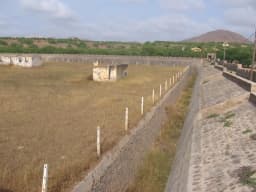 Long readTarrafal, 29 October 1936: Salazar's prison camp in Cape Verde opens
Afonso Costa dies in exile in Paris, aged 66. The fiery leader of the Democratic Party dominated the First Republic, writing the 1911 Law of Separation of Church and State and, as finance minister, producing a rare balanced budget. He refused to return while Salazar's regime ruled Portugal.
Anarchists including Emídio Santana detonate a bomb hidden in a sewer on Avenida Barbosa du Bocage in Lisbon as António de Oliveira Salazar steps out of his car to attend Sunday Mass at a friend's private chapel. The blast goes off only a few metres away but the dictator is unhurt; thanksgiving Masses are said across the country and the failed attack burnishes his providential image.
Jorge Nuno Pinto da Costa is born in Porto. President of FC Porto for 42 years, from 1982 to 2024, he oversaw two European Cups (1987 and 2004), two UEFA Cup/Europa League titles and more than 20 league championships, and turned the club into the dominant force in Portuguese football.
Film-maker João César Monteiro is born in Figueira da Foz. The great provocateur of Portuguese cinema, he won a Silver Lion at Venice for 'Recordações da Casa Amarela' (1989), playing his own lecherous alter ego, João de Deus, and later scandalised audiences with 'Branca de Neve', a film that is largely a black screen.
Portugal and Spain sign the Treaty of Friendship and Non-Aggression (Iberian Pact), establishing formal neutrality between the two Iberian nations on the eve of World War II. This treaty helped maintain Portuguese neutrality throughout the war.
As Germany invades Poland, António de Oliveira Salazar's government announces that Portugal's centuries-old alliance with Britain remains intact but that, since London has not asked for its help, the country will stay neutral — a position the Estado Novo maintained throughout the Second World War.
Jorge Sampaio, lawyer, opponent of the Estado Novo dictatorship and later Mayor of Lisbon and President of Portugal from 1996 to 2006, is born in Lisbon.
Carlos do Carmo is born in Lisbon, son of the fadista Lucília do Carmo, and grew up around his parents' fado house, O Faia. His 1977 album 'Um Homem na Cidade' became a landmark of modern fado, and in 2014 he became the first Portuguese artist to receive a Grammy, a Latin Grammy for lifetime achievement.
Portugal and the Holy See sign a Concordat and a Missionary Agreement in the Vatican. Ending the bitter feud with the anticlerical First Republic, the deal restored the Church's legal standing and gave it a central role in the empire's missions. It also barred couples married in church from civil divorce, a rule changed only in 1975.
The Exposição do Mundo Português opens in Belém, Lisbon, marking eight centuries of independence and three of the Restoration. Its original Padrão dos Descobrimentos and colonial 'villages' — some peopled with men, women and children brought from Africa and Asia to be put on display — stage the Estado Novo's vision of a pluricontinental empire as war rages across Europe.
A violent cyclone sweeps across mainland Portugal, uprooting trees by the thousands, tearing roofs from buildings and wrecking boats in the Tagus and along the coast. Remembered simply as 'o ciclone de 1941', it remains one of the most destructive storms ever recorded in the country.
Birth in Póvoa de Varzim of Diogo Freitas do Amaral, founder and first leader of the Christian-democratic CDS after the Carnation Revolution. He lost the 1986 presidential run-off to Mário Soares by barely two points and remains the only Portuguese to have presided over the United Nations General Assembly, in 1995–96.
Cesária Évora, the 'barefoot diva' of Cape Verdean morna, is born in Mindelo on the island of São Vicente, then a Portuguese colony. Singing in Creole, she found international fame only in her late forties and won a Grammy in 2004.
Eusébio da Silva Ferreira is born in Lourenço Marques (today Maputo), in Portuguese Mozambique. The Benfica striker would become the first global star of Portuguese football and one of the best players the world has seen.
Birth in Porto of José Mário Branco, one of the great voices of Portuguese protest song. In exile in France he produced José Afonso's 1971 album 'Cantigas do Maio', which includes 'Grândola, Vila Morena', the song broadcast as a signal for the Carnation Revolution; his own epic 'FMI' captured the revolution's hopes and disillusion.
Birth in Lisbon of António Lobo Antunes, psychiatrist turned novelist whose books drawing on the colonial war in Angola made him one of Portugal's greatest modern writers; he was awarded the Prémio Camões in 2007.
Birth in Bengo province, near Luanda, of José Adelino Barceló de Carvalho — Bonga. Recruited by Benfica, he became Portugal's 400-metre record holder while secretly carrying messages for Angolan independence fighters, then went into exile in the Netherlands, where his 1972 debut album 'Angola 72' became a landmark of the independence struggle.
Pan Am's 'Yankee Clipper' flying boat crashes while landing on the Tagus in Lisbon, wartime Europe's gateway to America. Twenty-four of the 39 people aboard die; Broadway singer Jane Froman, travelling to entertain US troops, survives badly injured — a story Hollywood retold in 'With a Song in My Heart'.
Winston Churchill tells the House of Commons that Britain, invoking the alliance treaty of 1373, has asked neutral Portugal for facilities in the Azores and that Portugal has agreed. British forces had landed on 8 October, and within weeks RAF aircraft were hunting U-boats from Lajes on Terceira, extending air cover over the mid-Atlantic convoy routes.
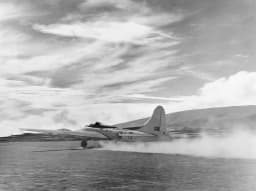 Long readChurchill, Salazar and the Azores bases: 12 October 1943
Manuel António Pina is born in Sabugal, in the Beira Alta. A Porto journalist who spent three decades at the 'Jornal de Notícias', he wrote spare, playful poetry and much-loved children's books, and in 2011 won the Camões Prize, the highest award in Portuguese-language literature.
Death in Porto, aged 93, of Bernardino Machado. Born in Rio de Janeiro — the only president of Portugal born outside the country — he was twice elected head of state of the First Republic, and both terms were cut short by military coups, in 1917 and 1926, each followed by exile.
The poet Eugénio de Castro, whose 1890 collection 'Oaristos' introduced Symbolism into Portuguese literature, dies in his native Coimbra at the age of 75.
Birth of António Variações in Amares, in the Minho. A barber who opened what is said to be Portugal's first unisex salon, he became one of the most original voices of 1980s Portuguese pop, mixing Minho folk, fado and new wave in hits like 'O Corpo É Que Paga' and 'Canção de Engate'. He died in 1984, aged 39, amid rumours of AIDS that reflected the prejudice of the time.
Portugal holds its first legislative election after the Second World War. The opposition Movimento de Unidade Democrática, formed weeks earlier amid hopes of liberalisation, withdraws in protest at the lack of free conditions, and Salazar's União Nacional takes every seat in the National Assembly.
In Margão, the Indian socialist Ram Manohar Lohia and the Goan campaigner Julião Menezes defy the Portuguese colonial ban on public meetings, and Lohia is arrested. Goa still marks the date as Revolution Day, the start of the struggle that ended Portuguese rule when India took the territory in December 1961.
Birth of Xanana Gusmão in Manatuto, Portuguese Timor. Educated by Jesuits at Dare, he led the armed resistance to the Indonesian occupation that followed Portugal's hasty withdrawal in 1975, spent nearly seven years in Indonesian custody, and became the first President of independent East Timor in 2002.
TAP (Transportes Aéreos Portugueses) opens its first commercial route, between Lisbon and Madrid, flown with a Douglas DC-3. The airline had been created the year before on the orders of Humberto Delgado, then head of civil aviation and later the 'fearless general' who challenged Salazar.
Carlos Lopes is born in Vildemoinhos, near Viseu. A late bloomer, he won the Olympic marathon in Los Angeles at 37 — Portugal's first Olympic gold medal — and the following year set a world marathon record of 2:07:12 in Rotterdam.
Birth in Lisbon of Marcelo Rebelo de Sousa, law professor, member of the assembly that drafted the 1976 Constitution, co-founder of the weekly 'Expresso' and for years Portugal's best-known TV political commentator. Elected President in 2016 and re-elected in 2021, he became known for his ubiquitous presence, hugs and selfies, leaving office in March 2026.
The plane carrying the 'Grande Torino' football team home from a friendly against Benfica in Lisbon crashes into the Superga hill above Turin, killing all 31 people on board. The disaster wipes out the side that dominated Italian football and leaves a lasting bond between the two clubs.
António Egas Moniz is awarded the Nobel Prize in Physiology or Medicine, shared with Walter Hess, for the prefrontal leucotomy. He remains Portugal's only Nobel laureate in the sciences, though the operation is now discredited.
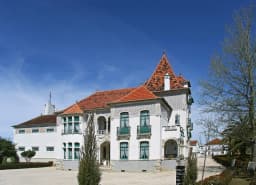 Long readEgas Moniz, the lobotomy and Portugal's first Nobel Prize
José Ramos-Horta is born in Dili, Portuguese Timor, to a Portuguese father and a Timorese mother. A founder of Fretilin, he spent 24 years in exile as the voice of East Timor's resistance to the Indonesian occupation, sharing the 1996 Nobel Peace Prize with Bishop Ximenes Belo; he survived being shot in 2008 and has twice served as President.
Death in Porto of Guilhermina Suggia, aged 65, the cellist who studied with Pablo Casals in Paris, shared his life and stage for six years and built a career as one of the leading cellists of her time. Augustus John's dramatic portrait of her at the cello hangs in Tate Britain.
Salazar and President Óscar Carmona inaugurate the Castelo do Bode dam on the River Zêzere near Tomar, then the largest hydroelectric scheme in Portugal. Its 115-metre concrete wall holds back a reservoir of more than a billion cubic metres that still supplies much of Lisbon's drinking water.
Francisco Craveiro Lopes, a military aviator, is sworn in as President of the Republic, succeeding the late Óscar Carmona while Salazar keeps real power as head of government. Dropped by the regime in 1958, the former loyalist drew close to the opposition and was linked to the failed Botelho Moniz coup of 1961.
Death of the painter Mário Eloy, aged 51, at the Casa de Saúde do Telhal near Sintra, where Huntington's disease had confined him since 1945. A leading figure of Portugal's second modernist generation, he absorbed German Expressionism in Berlin and left only about 100 paintings, among them haunted self-portraits and 'Bailarico no Bairro', a Lisbon neighbourhood dance.
Portugal and the United States sign the defence agreement in Lisbon granting the US Air Force use of the Lajes base in the Azores, cementing the islands' strategic role in the early Cold War.
Poet and teacher Sebastião da Gama dies of tuberculosis in Lisbon, aged just 27. The bard of the Serra da Arrábida, he wrote a letter in 1947 pleading for the hills' protection that led to the founding of the Liga para a Protecção da Natureza, Portugal's first environmental association.
The Batepá Massacre begins in São Tomé, as Portuguese colonial authorities and plantation interests unleash deadly violence against the native forro population; 3 February is commemorated in São Tomé and Príncipe as the Day of the Martyrs of Liberty.
Aristides de Sousa Mendes dies in poverty and disgrace at the Franciscan Hospital in Lisbon. As consul-general in Bordeaux in 1940 he had defied Salazar's orders to issue visas to thousands of refugees fleeing the Nazis — 'perhaps the largest rescue action by a single individual during the Holocaust', in historian Yehuda Bauer's words.
Catarina Eufémia, a 26-year-old harvest worker from Baleizão in the Alentejo, is shot dead by a GNR lieutenant while asking, on behalf of striking women, for two more escudos a day; she was holding her eight-month-old son. Her killing made her an enduring symbol of resistance to the Estado Novo.
The Ponte de Santa Clara over the Mondego at Coimbra, designed by the engineers Edgar Cardoso and António Franco de Abreu, is inaugurated by Salazar, replacing the iron bridge of 1875.
General José Norton de Matos dies in his home town of Ponte de Lima aged 87. As war minister he built the expeditionary force sent to Flanders in 1917, as governor of Angola he founded the city of Huambo, and in 1949 he stood as the first opposition candidate for president against the Estado Novo, withdrawing before the vote.
Death of Artur Alves dos Reis, author of one of history's boldest frauds. In 1925, with forged contracts, he persuaded the London printers Waterlow & Sons to print genuine-looking Bank of Portugal 500-escudo notes, flooding the country with money worth about 1% of GDP. The scandal shook the First Republic months before the 1926 coup.
Death of Calouste Gulbenkian in Lisbon, aged 86. The Armenian oil magnate — known as 'Mr Five Per Cent' for his stake in Middle Eastern oil — had taken refuge in neutral Portugal in 1942, living at the Hotel Aviz, and left most of his fortune and his celebrated art collection to a foundation based in the city.
Carmen Miranda, the Portuguese-born singer and actress who became a Hollywood and Brazilian music icon, dies in Beverly Hills aged 46. Born in Marco de Canaveses in northern Portugal, she was for a time the highest-paid woman in American show business.
Construction work begins on the Lisbon Metropolitano, Portugal's first underground railway. The inaugural line opened to the public in December 1959.
On India's Independence Day, several thousand unarmed satyagrahis march across the border into Portuguese Goa to demand its integration with India, and Portuguese police open fire, killing more than twenty. The bloodshed hardened Indian opinion against Lisbon's rule, which ended when India annexed Goa in December 1961.
Francisca Van Dunem is born in Luanda, Angola. A public prosecutor for more than three decades, she became the first Black woman to serve as a minister in Portugal when António Costa appointed her Minister of Justice in 2015, a post she held for six years.
Birth in Lisbon of the poet Ana Luísa Amaral. A Porto professor who translated Emily Dickinson and Louise Glück, she won the Reina Sofía Prize for Ibero-American Poetry in 2021, the year before her death.
The Calouste Gulbenkian Foundation is formally established in Lisbon under the will of the Armenian oil magnate who had spent his last years in the city. Endowed with his vast fortune and art collection, it becomes Portugal's leading private patron of the arts, science, education and charity.
Birth in Lisbon of José Pedro Reis — Zé Pedro — guitarist and co-founder in 1978 of Xutos & Pontapés, the punk-rooted band from the Olivais neighbourhood that became Portugal's best-loved rock group. Much of his early childhood was spent in Timor, where his army officer father was posted; he died in 2017.
Radiotelevisão Portuguesa (RTP) begins regular broadcasting at 21:30, launching Portugal's first permanent television service six months after test transmissions at Lisbon's Feira Popular. The early schedule ran only until about 23:00 each night.
At a press conference in Lisbon's Café Chave d'Ouro, opposition presidential candidate General Humberto Delgado is asked what he would do with Salazar if elected. His reply — 'Obviamente, demito-o!' ('Obviously, I'll sack him!') — electrifies the country and becomes one of the most famous phrases in Portuguese politics.
Birth of Rosa Mota in Porto's Foz Velha. A pioneer of women's distance running, she won the first ever women's marathon at a European Championships in 1982 and, at Seoul in 1988, became the first Portuguese woman to win Olympic gold.
The film director Pedro Costa is born in Lisbon. His slow, luminous films set among Cape Verdean immigrants in the Fontainhas shantytown in Amadora won international acclaim; 'Vitalina Varela' took the Golden Leopard at the Locarno Film Festival in 2019.
Fernando Chalana is born in Barreiro. Nicknamed 'o pequeno genial' (the little genius), the Benfica winger dazzled at Euro 1984, where Portugal reached the semi-finals in their first European Championship, and earned a record-breaking move to Bordeaux.
The Cristo Rei monument in Almada is inaugurated before some 300,000 people, ten years after its first stone was laid. Overlooking the Tagus opposite Lisbon, the statue by the Madeiran sculptor Francisco Franco (no relation to the Spanish dictator) was raised in thanksgiving for Portugal being spared from the Second World War.
Birth in Lisbon of Pedro Ayres Magalhães, guitarist and founder of Madredeus. Built around the voice of Teresa Salgueiro, the group fused fado, folk and classical music into a sound that made it Portugal's most internationally successful act of its generation, immortalised in Wim Wenders's film 'Lisbon Story' (1994).
RTP broadcasts the first edition of the Telejornal at half past eight in the evening, presented by the journalists Mário Pires and Alberto Lopes. Subject to the Estado Novo's censors in its early years, it is today the longest-running programme in the history of Portuguese television.
The Lisbon Metro opens to the public after more than four years of work. The first network had 11 stations on a Y-shaped line running from Restauradores, splitting at Rotunda towards Sete Rios and Entrecampos, served by two-carriage trains. Almost every station carried artwork by the painter Maria Keil.
Cotton growers in the Baixa de Cassanje, in Angola's Malanje region, rise against the forced-cultivation regime of the Cotonang company, refusing to work and burning their seed. The colonial repression that follows kills thousands, and 4 January is now marked in Angola as the Day of the Martyrs of Colonial Repression.
Exiled opposition leader Henrique Galvão and a band of Portuguese and Spanish rebels seize the liner 'Santa Maria' in 'Operation Dulcineia', killing one officer. Broadcasting denunciations of Salazar's dictatorship from the ship, they hold the world's attention for eleven days before receiving asylum in Brazil on 2 February.
Nationalist militants armed mostly with machetes storm the São Paulo prison and police posts in Luanda, trying to free political prisoners. Claimed by the MPLA, the attack is regarded as the start of the Angolan War of Independence and of the 13-year Portuguese Colonial War.
The UPA (Union of Peoples of Angola) launches a large-scale uprising in northern Angola, attacking coffee plantations and settlements. The violence marks a dramatic escalation of the Angolan War of Independence and the beginning of Portugal's 13-year Colonial War.
After seeing off an attempted coup by his defence minister, Júlio Botelho Moniz, Salazar takes over the defence portfolio himself and, in a broadcast address, orders troops to Angola 'rapidamente e em força' — rapidly and in force — committing Portugal to 13 years of colonial war.
Benfica win the European Cup for the first time, beating Barcelona 3–2 at the Wankdorf Stadium in Bern. It is the first final not won by Real Madrid, and Benfica would retain the trophy the following year.
Hermínio da Palma Inácio and fellow opponents of the Salazar regime hijack a TAP airliner flying from Casablanca to Lisbon and fly it low over Lisbon and southern Portugal, scattering anti-regime leaflets, before making the crew return to Morocco — one of the first political hijackings of a commercial flight.
Governor-General Manuel Vassalo e Silva surrenders Goa, Daman and Diu to the Indian army after a 36-hour invasion, ending 451 years of Portuguese rule in India. Salazar had ordered his 3,500 men to fight to the death against some 45,000 Indian troops; Vassalo e Silva chose to save lives and was later cashiered for cowardice.
In the early hours of New Year's Day, several dozen civilian and military rebels led by Captain João Varela Gomes and Manuel Serra storm the 3rd Infantry Regiment barracks in Beja, hoping to spark a rising against Salazar. General Humberto Delgado had slipped secretly into Portugal to lead it, but the assault fails and Varela Gomes is gravely wounded.
The Salazar regime bans the 'Dia do Estudante' (Students' Day) celebrations in Lisbon, setting off the 1962 academic crisis — months of strikes, protests and police charges that shaped a generation of opponents of the dictatorship. Portugal still marks 24 March as National Student Day.
Benfica retain the European Cup, beating Real Madrid 5–3 in the final at Amsterdam's Olympic Stadium. Despite a Puskás hat-trick for the five-time champions, two goals from the 20-year-old Eusébio seal Benfica's second consecutive title.
The PAIGC (African Party for the Independence of Guinea and Cape Verde) begins armed insurgency in Portuguese Guinea, marking the start of the Guinea-Bissau War of Independence.
Birth in Beira, Mozambique, of José Rodrigues dos Santos, who became one of Portugal's best-known television journalists as an RTP news anchor and, alongside it, one of the country's best-selling novelists.
Sporting CP win the European Cup Winners' Cup, beating MTK Budapest 1–0 in a replay in Antwerp after a 3–3 draw in Brussels two days earlier. The winner is João Morais's celebrated goal scored direct from a corner.
Death in Lisbon, aged 70, of Marshal Francisco Craveiro Lopes, President of the Republic from 1951 to 1958. His cool relations with Salazar and his sympathy for opponents of the regime cost him a second term, and he was later linked to the failed Botelho Moniz coup attempt of April 1961.
FRELIMO guerrillas attack the Portuguese administrative post at Chai in Cabo Delgado province, launching the Mozambican War of Independence. The conflict lasted a decade, ending only after the Carnation Revolution opened the way to Mozambican independence.
Fire guts the Teatro Nacional D. Maria II on Lisbon's Rossio in the early hours, leaving only the outer walls and Amélia Rey Colaço's dressing room standing; Columbano Bordalo Pinheiro's ceiling paintings are lost. Theatre folk blamed the curse of 'Macbeth', which was then playing. Rebuilt in its original neoclassical style, the national theatre only reopened in 1978.
General Humberto Delgado, the most prominent opponent of the Salazar dictatorship, is lured into a PIDE ambush near Villanueva del Fresno, just across the Spanish border, while trying to slip back into Portugal. He and his Brazilian secretary, Arajaryr Campos, are murdered.
Actress and director Maria de Medeiros is born in Lisbon. She played Anaïs Nin in 'Henry & June' and Fabienne, Bruce Willis's girlfriend, in 'Pulp Fiction', and directed 'Capitães de Abril' (2000), a film about the Carnation Revolution screened at Cannes.
Birth in Madeira of José Tolentino de Mendonça, priest, theologian and one of the most admired Portuguese poets of his generation. Called to Rome by Pope Francis as Archivist and Librarian of the Holy Roman Church in 2018, he was made a cardinal in 2019 and later became Prefect of the Vatican's Dicastery for Culture and Education.
Portugal beat the Soviet Union 2–1 at Wembley to finish third at the FIFA World Cup in England, on their first appearance at the tournament. Eusébio converts a penalty to end as the competition's top scorer with nine goals, and José Torres strikes the late winner.
The Salazar Bridge over the Tagus, linking Lisbon and Almada, is inaugurated as the longest suspension bridge in Europe at the time. After the Carnation Revolution it was renamed the Ponte 25 de Abril.
Birth in Praia da Vitória, on Terceira in the Azores, of Nuno Bettencourt, youngest of ten children of a family that emigrated to Massachusetts when he was four. As guitarist of Extreme he co-wrote the 1991 US number one 'More Than Words', and later played for Rihanna, including at the 2023 Super Bowl half-time show.
The Hotel da Penina opens near Alvor, on former rice fields outside Portimão, with a championship course designed by the British golfer Henry Cotton — the Algarve's first golf course and its first five-star hotel, which helped turn the region into a year-round destination. Paul McCartney later wrote a song, 'Penina', for its resident band.
During the night of 25 to 26 November, torrential rain sets off flash floods across the Lisbon region, sweeping away shanty towns and riverside villages in Loures, Odivelas and Alenquer. Between 500 and 700 people die, in the deadliest natural disaster in Portugal since 1755; the censored press played down the toll, and students' relief work fuelled opposition to the regime.
António de Oliveira Salazar falls from a deckchair at his summer residence in Estoril, striking his head. The resulting brain injury led to his replacement as Prime Minister by Marcello Caetano the following month, ending his decades-long rule.
Marcelo Caetano takes office as President of the Council of Ministers, succeeding António de Oliveira Salazar, who had been incapacitated by illness. Caetano would be the Estado Novo's last leader, governing until the Carnation Revolution of 1974.
RTP's second channel, then called the 'II Programa', goes on air on Christmas Day, broadcasting on UHF for two hours each evening and repeating some programmes shown earlier on the main channel. Regular broadcasts began in 1970; today it is RTP2.
Essayist and educationalist António Sérgio dies in Lisbon aged 85. Born in Damão, in Portuguese India, he was briefly education minister in 1923, was arrested five times for opposing dictatorship, championed the co-operative movement, and through his eight volumes of 'Ensaios' shaped generations of Portuguese democrats.
In the early hours, a magnitude 7.8 earthquake centred in the Atlantic southwest of Cape São Vicente shakes Lisbon and the Algarve, cutting power and telephone lines and raising a small tsunami. Two people in Portugal are killed directly, and several more die of heart attacks in the panic — the strongest quake to hit the mainland in the 20th century.
Birth in Montijo of Dulce Pontes, whose soaring reworkings of traditional song helped drive the 1990s revival of Portuguese music. Her 'Canção do Mar' found its way onto the soundtrack of the Hollywood film 'Primal Fear', and she later recorded and toured with Ennio Morricone.
At the inauguration of Coimbra University's new Mathematics building, student union president Alberto Martins asks President Américo Tomás for permission to speak and is refused. The snub sparks the 1969 academic crisis — months of strikes and exam boycotts that became one of the boldest challenges to the late Estado Novo.
Birth of Fernanda Ribeiro in Penafiel. The tenacious distance runner became world 10,000 m champion in Gothenburg in 1995 and won Olympic gold over the same distance in Atlanta in 1996, outkicking China's Wang Junxia in an Olympic record time.
The headquarters and museum of the Calouste Gulbenkian Foundation are inaugurated in Lisbon in the centenary year of the collector's birth, opening to the public a collection of some 6,000 works gathered from Paris, London and Washington. The modernist complex by Ruy d'Athouguia, Pedro Cid and Alberto Pessoa became one of the city's landmarks.
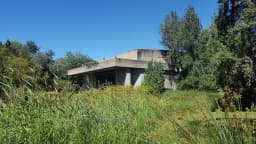 Long readMr Five Per Cent's museum: the Gulbenkian opens in Lisbon, 1969
Portugal holds its first legislative election under Marcelo Caetano. Although no opposition candidate is elected, the vote brings into the National Assembly the 'liberal wing' of Sá Carneiro, Pinto Balsemão and Miller Guerra, who would press for reform from within.
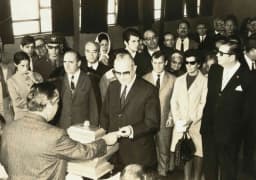 Long readPortugal's 1969 election: Caetano's first vote and the opposition it shaped
Death of Cassiano Branco, one of the most inventive Portuguese architects of the Art Deco years, designer of Lisbon's Hotel Vitória on Avenida da Liberdade, the Coliseu do Porto and Coimbra's miniature park Portugal dos Pequenitos. An outspoken opponent of Salazar, he was shut out of major state commissions and arrested by the PIDE after backing Humberto Delgado in 1958.
Death of José de Almada Negreiros in Lisbon. Born in São Tomé in 1893, painter, novelist, dramatist and provocateur, Almada was a co-founder of the magazine 'Orpheu' alongside Fernando Pessoa and Mário de Sá-Carneiro and is considered the most exuberant figure of Portuguese modernism. His murals at the Gare Marítima de Alcântara are among the great monuments of 20th-century Portuguese art.
Death of António de Oliveira Salazar at the São Bento residence in Lisbon, aged 81. Removed from office in September 1968 after suffering a brain haemorrhage, Salazar was nonetheless kept in the comforting illusion that he was still Prime Minister until his death. His passing closes the personal chapter of the Estado Novo, even as the regime would stagger on for almost four more years under Marcelo Caetano.
In Operation Green Sea (Operação Mar Verde), Portuguese commandos led by Alpoim Calvão land at Conakry, capital of the Republic of Guinea, and free 26 Portuguese soldiers captured by the PAIGC independence movement. The raid failed to topple President Sékou Touré and was condemned by the UN Security Council.
Death of António Silva, the irascible, bumbling star of the golden age of Portuguese film comedy. From 'A Canção de Lisboa' (1933) to 'O Pátio das Cantigas' (1942) and 'O Leão da Estrela' (1947), his films remain much-loved classics of Portuguese cinema.
Jorge Costa is born in Porto. Nicknamed 'Bicho', the tough centre-back captained FC Porto to the UEFA Cup in 2003 and the Champions League under José Mourinho in 2004, and died in August 2025, aged 53, after collapsing at the club's training ground while serving as its director of football.
Luís Figo is born in Almada. The winger starred for Sporting, Barcelona, Real Madrid and Inter Milan, won a then-record 127 caps for Portugal and is regarded as one of the finest players of his generation.
Portuguese commandos and DGS secret-police agents massacre the villagers of Wiriyamu, in Mozambique's Tete province, killing between 150 and some 400 civilians, many of them women and children. Lisbon denied it after the British priest Adrian Hastings exposed it in 'The Times' in 1973; in 2022 Prime Minister António Costa called it 'an unforgivable act that dishonours Portuguese history'.
The first issue of the weekly 'Expresso', founded by Francisco Pinto Balsemão, goes on sale. Testing the limits of Marcelo Caetano's censorship, it became one of Portugal's most influential newspapers and is still published weekly half a century later.
Amílcar Cabral, the Cape Verdean-Guinean agronomist who founded the PAIGC and led the armed struggle against Portuguese rule in Guinea, is shot dead in Conakry by members of his own movement; the role of Portugal's PIDE secret police has long been debated. Guinea-Bissau declared independence eight months later.
In Bad Münstereifel, a spa town in West Germany, Mário Soares and fellow exiled and clandestine opponents of the Estado Novo turn the Acção Socialista Portuguesa into the Partido Socialista. A year later the PS would become one of the pillars of the new democracy.
The PAIGC unilaterally proclaims the independence of Guinea-Bissau from Portugal, after a decade of guerrilla war in the colony. Dozens of states recognised the new republic, though Portugal itself only did so after the Carnation Revolution of April 1974.
DECO, the Portuguese consumer-rights association, is founded, ten weeks before the Carnation Revolution, as an offshoot of the reformist SEDES group. Now with more than 350,000 members, it is the body Portuguese households turn to over unfair bills, faulty goods and bank disputes.
General António de Spínola publishes 'Portugal e o Futuro' (Portugal and the Future), arguing that the colonial wars could not be won by military means. Written by the newly appointed deputy chief of the armed forces staff and former governor of Guinea, it called for a political solution and helped build momentum toward the Carnation Revolution two months later.
Some 200 officers, representing more than 600, meet clandestinely in an architect's studio in Cascais and approve 'O Movimento, as Forças Armadas e a Nação', the manifesto that turns the Captains' Movement into the MFA. The coup it promised came 51 days later, on 25 April.
General António de Spínola and General Francisco da Costa Gomes are dismissed from their posts as Deputy Chief and Chief of the General Staff by Prime Minister Marcelo Caetano after refusing to attend a ceremony pledging loyalty to the regime's colonial policy. This galvanises the MFA and accelerates planning for the April 25 coup.
In the 'Levantamento das Caldas', a column of more than 200 men from the 5th Infantry Regiment sets out from Caldas da Rainha to march on Lisbon and topple the Estado Novo. Left without support, it is halted at the gates of the capital and surrenders — a failed dress rehearsal for the Carnation Revolution of 25 April.
At 10:55 pm, Emissores Associados de Lisboa radio plays 'E Depois do Adeus' by Paulo de Carvalho, Portugal's Eurovision entry that year. It is the first secret signal to the Armed Forces Movement, telling rebel units to begin the operations of the Carnation Revolution.
Back to the full timeline of Portugal, with key moments, search and long reads.