

Churchill, Salazar and the Azores bases: 12 October 1943
Portugal stayed neutral in the Second World War, yet in October 1943 British aircraft began hunting U-boats from a field on Terceira. Churchill explained it to Parliament with a treaty signed in 1373.
At a glance
- On 12 October 1943 Winston Churchill told the House of Commons that Britain, invoking the Anglo-Portuguese alliance of 1373, had asked neutral Portugal for facilities in the Azores, and that Portugal had agreed.
- The agreement was signed in Lisbon on 17 August 1943, and British forces were admitted to Terceira and Faial on 8 October. Portugal got war material, supplies and a promise that the British would leave when the war ended.
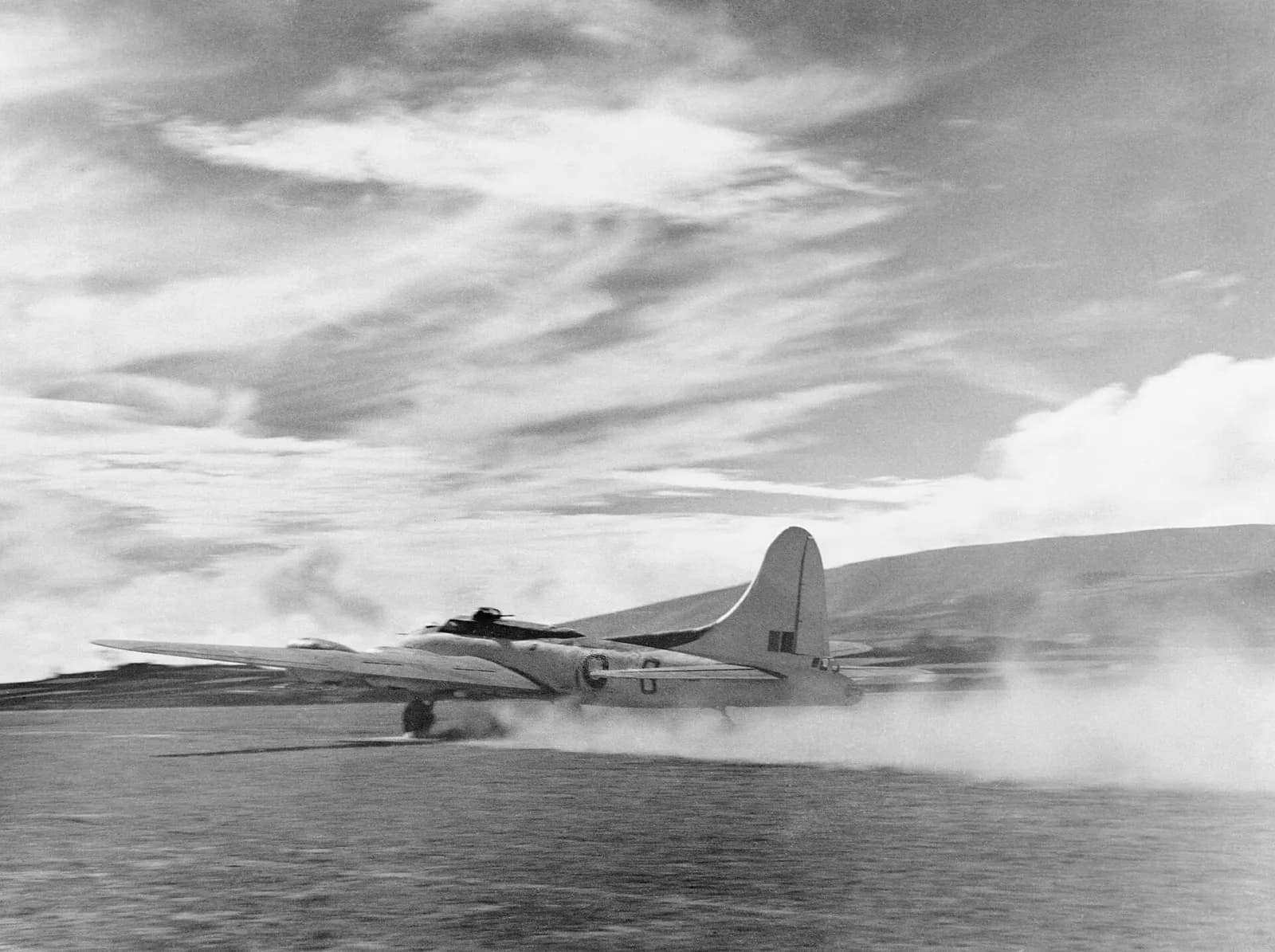
- RAF Fortresses began flying from the Lagens airfield on Terceira on 19 October. On 9 November one of them sank U-707, the first U-boat destroyed by an Azores-based aircraft.
- The bases came after the Battle of the Atlantic had turned in May 1943. They completed air cover over the Atlantic north of latitude 30° North and helped protect the convoys between Britain, Gibraltar and West Africa.
- American personnel followed: at Lajes from January 1944 and at a new airfield on Santa Maria later that year. The Americans stayed at Lajes under a 1951 defence agreement, and the base was used in the 1973 airlift to Israel and for the Azores summit of 2003.
Three small convoys and a secret
On the last day of September 1943, three small convoys left Britain for the middle of the Atlantic. Under Commodore R. V. Holt, a retired vice-admiral, they were made up of an escort carrier, the Fencer, three destroyers, merchant ships, oilers, anti-submarine trawlers and landing craft. They carried the men and stores needed to open air bases on islands belonging to a neutral country.
They arrived off the Azores on 8 October. The Portuguese were expecting them. Seven weeks earlier, António de Oliveira Salazar's government had signed an agreement giving Britain the use of facilities on the islands of Terceira and Faial, and both sides had kept it secret. Washington planned to keep quiet too, and to describe the landings, when it had to, as “in no sense an occupation”.
“Our forces were admitted to these islands on October 8th and publicity will be given on the 12th.”
The RAF Fortress bombers meant to fly in from Gibraltar were held up by bad weather. So on 11 October the Fencer put to sea again and flew nine Swordfish biplanes to Lagens, the small airfield on Terceira. For the next week they flew dawn and dusk searches over the surrounding sea. On 12 October, the day after they landed, Winston Churchill stood up in the House of Commons in London to explain what Britain was doing there.
A neutral dictatorship and an old ally
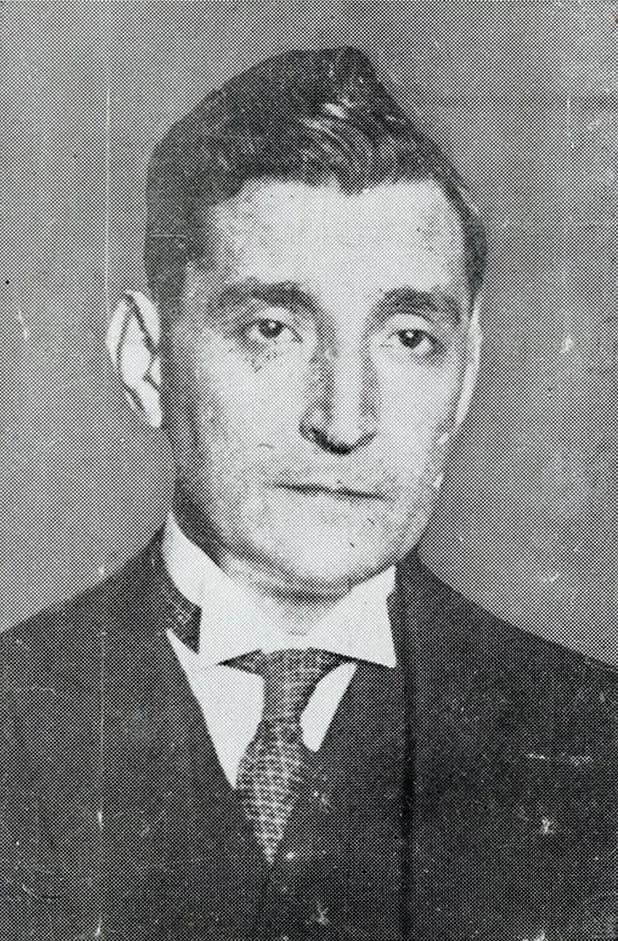
Portugal in 1943 was a dictatorship. As President of the Council of Ministers, Salazar had drafted the constitution of 1933, approved by plebiscite, which founded the Estado Novo, or New State, an authoritarian regime with a single party. By the war years he was also Minister of War and Minister for Foreign Affairs.
When the war began in 1939, Portugal declared itself neutral “in full agreement” with Britain, as Churchill later put it, to keep the fighting out of the Iberian Peninsula. Lisbon also reaffirmed its alliance with Britain, which went back to a treaty of 1373. Salazar repeated in a speech on 27 April 1943 that neutrality and the alliance did not contradict each other.
Neutrality meant trading with both sides, and both sides wanted Portuguese wolfram, the ore of tungsten. The American minister in Lisbon judged that Portugal's help to Germany, above all with wolfram, was worth about as much to Germany as the Azores were to the United States. The Allies tried to buy the ore before the Germans could. In the nine months to December 1943, he reported, pre-emptive buying and other methods took 1,160 tons off the Portuguese market, and the Allies bought another 400 to 500 tons that had crossed into Spain.
The gap in the middle of the ocean
Britain needed food, fuel and weapons from across the Atlantic, and German submarines, the U-boats, were sinking the ships that carried them. Aircraft were the U-boat's worst enemy; by late 1943 Dönitz's own staff complained that “the air menace has curtailed the mobility of the U-boats”. But land-based planes could not yet reach the whole ocean. The stretch they missed in the north was known as the “Greenland air gap”, and U-boats gathered on its edges.
The Azores lie in the middle of that ocean, about 1,000 miles (some 1,600 kilometres) west of the Iberian Peninsula. In January 1943 a tanker convoy from Trinidad to Gibraltar was cut to pieces south of the islands, out of range of air cover; only two of its nine tankers survived. In March the British Naval Staff listed what it needed besides heavier bombing of the U-boat bases: more very long-range aircraft, escort carriers in service sooner, and the use of bases in the Azores.
“the Germans never came so near to disrupting communication between the New World and the Old as in the first twenty days of March 1943”
Then the battle turned. In May 1943 more escorts and support groups, more long-range aircraft and new ten-centimetre radar pushed U-boat losses from about 13 per cent of the boats at sea to 30 per cent. Karl Dönitz, who commanded the German navy and its submarines, pulled them out of the North Atlantic convoy routes. The Azores agreement came after this defeat, as the chart shows.
Merchant shipping sunk in the North Atlantic, month by month, 1943
thousand gross register tons
British, Allied and neutral merchant ships sunk by all forms of enemy action (U-boats, aircraft, mines and surface ships) in what the British official naval history counts as the North Atlantic theatre, in thousands of gross register tons, rounded to the nearest hundred tons. The steep fall came in May and June 1943, months before the Azores agreement took effect; October, highlighted, is the month aircraft began operating from the islands. January to May are from Roskill's vol. II, Appendix O, Table II; June to December from vol. III, part 1, Appendix K, Table II.
Show the data
| British, Allied and neutral merchant ships sunk by all forms of enemy action | |
|---|---|
| Jan | 172.7 |
| Feb | 288.6 |
| Mar | 476.3 |
| Apr | 235.5 |
| May | 163.5 |
| Jun | 18.4 |
| Jul | 123.3 |
| Aug | 10.2 |
| Sep | 43.8 |
| Oct | 56.4 |
| Nov | 23.1 |
| Dec | 47.8 |
Plans to take the islands
Everyone had looked at the Azores. In the spring of 1941 Hitler wanted to occupy them “in order to be able to operate long-range bombers from there against the United States”. On 22 May 1941 President Franklin D. Roosevelt ordered his army and navy to plan an expedition strong enough to occupy and defend the islands, to be ready within a month. He approved the plan on 4 June.
The Americans stood down within days. Churchill had told Roosevelt that Britain was ready to occupy the Cape Verde Islands, Grand Canary and one of the Azores if the Germans marched into Spain, and on 2 June the British suggested that the United States step back from the Azores for the time being. The Army suspended its planning for an Azores expedition, and Washington turned to Iceland instead.
By 1943 the British had plans for an occupation “by force or by invitation”, wrote S. W. Roskill, the Royal Navy's official historian, but hoped they would not need force against an ancient ally. In Allied papers “Lifebelt” was the code name for the islands and for a plan to take them by assault. “Alacrity” was the plan for British forces to enter the Azores on 8 October 1943. Norman Herz, who took part as a corporal in the US Army Corps of Engineers and later became a geology professor, used that name for his 2004 book about the operation.
Roosevelt worried that Germany would strike back at Portugal. On 30 June 1943 he suggested sending an infantry division, anti-aircraft battalions and fighter squadrons to the Portuguese mainland. Churchill disagreed. The talks were going ahead on the basis that Portugal remained a non-belligerent, which he knew Salazar wanted, and success was “far from certain”. If the Germans bombed Lisbon and Porto, he argued, they would lose a listening post and their wolfram.
The deal
The British ambassador in Lisbon, Sir Ronald Campbell, made the formal request in a note to Salazar marked “Most Secret” and dated 16 June 1943. His government, he wrote, had decided “in the name of the Alliance” to ask Portugal for the facilities it needed in the Azores, leaving the precise conditions for later discussion. An aide-mémoire followed two days later, which is why some accounts date the request 18 June. Salazar agreed in principle on 23 June and asked for the negotiations to be held in Lisbon.
The talks took two months. Salazar was afraid of German reprisals, and he did not want American forces in the islands as well as British ones. Roskill wrote that American insistence on a share very nearly broke the negotiations down. The agreement was signed in Lisbon on 17 August 1943, the date on the text the British handed to the Americans and in the published treaty collection; Roskill gives 18 August.
- Requested by
- Britain, “basing themselves upon” the alliance of 1373
- Signed
- Lisbon, 17 August 1943 (Roskill gives 18 August)
- Islands
- Terceira, with the Lagens airfield, and Faial
- Facilities from
- 8 October 1943
- Announced
- 12 October 1943, in the House of Commons
- Portugal received
- War material and supplies, a guarantee against German aggression and a promise of withdrawal at the end of hostilities
In return Britain promised war material for Portugal's armed forces, supplies for its economy and a guarantee against German aggression. The American legation in Lisbon later listed what that meant in practice: extra shipping, more coal and wheat, and British help in obtaining goods from the United States. The agreement was temporary, Portuguese sovereignty was untouched, and all British forces were to leave at the end of the war.
Six hundred years in a Commons statement
Churchill's statement on 12 October 1943 began in the fourteenth century. He named the treaty signed in 1373 between Edward III and King Ferdinand and Queen Eleanor of Portugal, listed the treaties that renewed it, among them a secret declaration of 1899, and read out its first article. Then he came to the point.
“His Majesty's Government in the United Kingdom, basing themselves upon this ancient Alliance, have now requested the Portuguese Government to accord them certain facilities in the Azores which will enable better protection to be provided for merchant shipping in the Atlantic.”
He stressed the limits of the deal. The arrangement was “of a temporary nature only”, British forces would leave at the end of hostilities, and Portugal remained neutral on the European mainland. He thanked a government “whose loyalty to their British Ally never wavered in the darkest hours of the war”.
MPs asked three questions. One asked Churchill to draw the attention of “the Government of Southern Ireland” to Portugal's attitude. Another asked whether Britain would help Portugal if Germany struck back; Churchill would add nothing. A third asked whether the United States was making a similar agreement. “No, Sir,” Churchill replied, “I have no information on that.” Two days later Roosevelt asked him to back a direct American approach to Lisbon for air transport and ferry facilities in the islands.
From Lagens into the Atlantic
A new RAF command, No. 247 Group under Air Vice-Marshal G. R. Bromet, ran the islands' aircraft, with an Area Combined Headquarters on Faial. The first Fortresses reached Lagens on 18 October and began operations the next day. With them, Roskill wrote, “after more than four years of war”, reliable air cover could at last be provided over the whole Atlantic north of latitude 30° North.
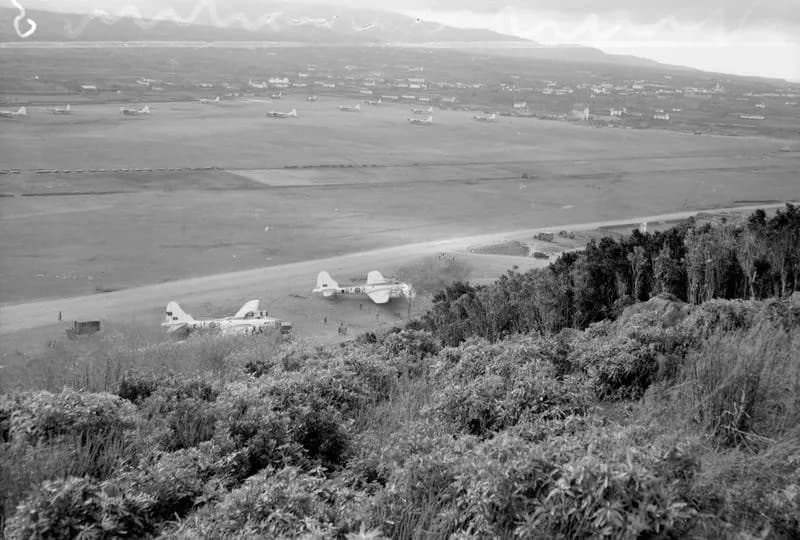
The field was rough, and in late 1943 RAF engineers prepared two runways of 6,000 feet for American use. A British engineer became the first of the garrison to die, on 3 November. On 9 November a Fortress of No. 220 Squadron escorting a convoy sank U-707, the only loss the Germans suffered in their attack on that convoy and the first U-boat sunk by an Azores-based aircraft.
“the enemy holds all the trump cards. Far-reaching air cover using location methods against which we have no warning ...”
With the northern routes closed to them, the U-boats moved to the convoys running between Britain, Gibraltar and Sierra Leone. There the islands counted. In November 1943 one southbound convoy passed safely “well shielded by aircraft from the Azores”, Roskill wrote, and the U-boats never found it. In January 1944 a Wellington from the islands sank U-231 about 465 miles to the north-east.
The Americans move in
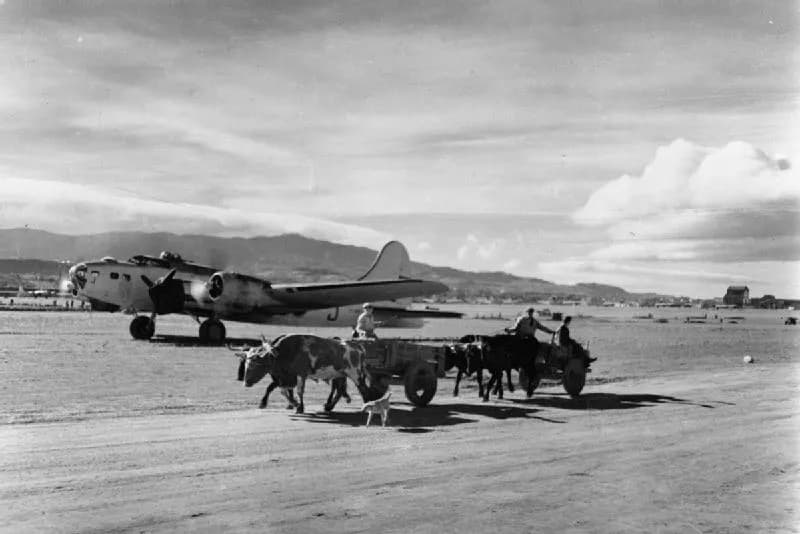
Washington wanted more than submarine patrols. Roosevelt told Churchill that a central Atlantic air route through the Azores would save millions of gallons of high-octane fuel and many thousands of pilot and engine hours a month. On 31 December 1943 Salazar accepted a formula for American personnel to go to Lagens under the British arrangement.
It nearly went wrong at once. Shortly after 2 am on 9 January 1944 Salazar was woken by a telegram from Terceira: a British officer had said that two American transports “with troops” would arrive in the night. Salazar said he had agreed to technicians, not troops, and that soldiers trying to land would be stopped by force. The British and American envoys hurried to calm things down. In the end, Roskill wrote, American aircraft used the bases disguised as part of No. 19 Group of RAF Coastal Command.
On Santa Maria, the most south-easterly island, the United States built an airfield of its own. The first American military personnel arrived on 3 August 1944. They were ordered to wear civilian clothes so they would pass as staff of Pan American Airways, and army equipment carried Pan Am markings. Portuguese workers and American engineers used nearly two million pounds of dynamite to level the lava, and the field was activated on 17 October 1944.
The formal agreement came only on 28 November 1944. The notes exchanged that day presented the base as Portugal's indirect contribution to freeing Portuguese Timor, then occupied by Japan: it would help move American forces to the Pacific. The Portuguese government told the Azores authorities to hand the base over to the US Army at once.
The wolfram question was settled that summer. On the evening of 5 June 1944, the eve of the Normandy landings, Salazar agreed to an immediate embargo on wolfram exports, with the government buying up existing stocks and production winding down. He presented the decision as taken on the basis of the Anglo-Portuguese alliance. The embargo was announced on 7 June.
September 1939
War breaks out; Portugal declares neutrality in agreement with Britain
22 May 1941
Roosevelt orders a plan to occupy the Azores; it is shelved in June
March 1943
Enemy action sinks 476,349 tons of merchant shipping in the North Atlantic, the worst month of 1943
May 1943
After heavy losses, the U-boats withdraw from the North Atlantic convoy routes
16 June 1943
Britain asks Portugal for facilities in the Azores “in the name of the Alliance”
23 June 1943
Salazar agrees in principle
17 August 1943
The Anglo-Portuguese agreement is signed in Lisbon
8 October 1943
British forces land in the Azores
12 October 1943
Churchill announces the agreement in the House of Commons
19 October 1943
RAF Fortresses begin operations from Lagens
9 November 1943
A Fortress from the Azores sinks U-707
9 January 1944
Night alarm in Lisbon over American personnel bound for Terceira
7 June 1944
Portugal's embargo on wolfram exports is announced
28 November 1944
Agreement on the American air base on Santa Maria
After the war: a base that stayed
The British kept their word. In September 1945 London told Washington it meant to withdraw its forces from Terceira and Faial within six months of the end of the war, hoping to keep only emergency and diversionary landing rights. A further Anglo-Portuguese exchange of notes on the Azores facilities followed on 30 May 1946.
The Americans stayed. Portugal was one of the 12 founding members of NATO on 4 April 1949, its treaty signed by the Foreign Minister José Caeiro da Matta, and the newspaper Observador has argued that the base in the Azores counted for much in its admission. On 6 September 1951 the United States and Portugal signed a defence agreement on the use of facilities in the Azores, negotiated as part of NATO's planning for the North Atlantic.
| Date | Agreement | What it allowed |
|---|---|---|
| 17 August 1943 | Anglo-Portuguese agreement, signed in Lisbon | British use of facilities on Terceira and Faial from 8 October 1943, in return for war material, supplies and a promise to leave at the end of hostilities |
| 31 December 1943 | Formula for Lagens accepted by Salazar | American personnel to work at Lagens under the British arrangement |
| 28 November 1944 | Exchange of notes between Portugal, Britain and the United States | An American air base on Santa Maria, presented as Portugal's indirect part in freeing Timor |
| 30 May 1946 | Anglo-Portuguese exchange of notes | A further document on the Azores facilities, the last in Portugal's 1946 published collection of the Azores papers |
| 6 September 1951 | United States and Portugal defence agreement | American use of facilities in the Azores, negotiated within NATO's planning for the North Atlantic |
Roskill's official naval history dates the 1943 agreement 18 August; the American diplomatic papers of 1943 give 17 August. The 1943, 1944 and 1946 Anglo-Portuguese texts are printed in British and Foreign State Papers, vol. 146.
Lajes, as the field is now spelled, proved its value to Washington again in October 1973, during the Arab-Israeli war. When the United States decided to airlift weapons to Israel, its other allies, fearing an Arab oil embargo, refused landing and overflight rights, according to the aviation historian Walter J. Boyne. Portugal, after hard bargaining, let the flights stage through Lajes, where daily departures grew from one to 40 within a few days. By the end of the airlift on 14 November, US Air Force transports had delivered 22,395 tons of cargo.
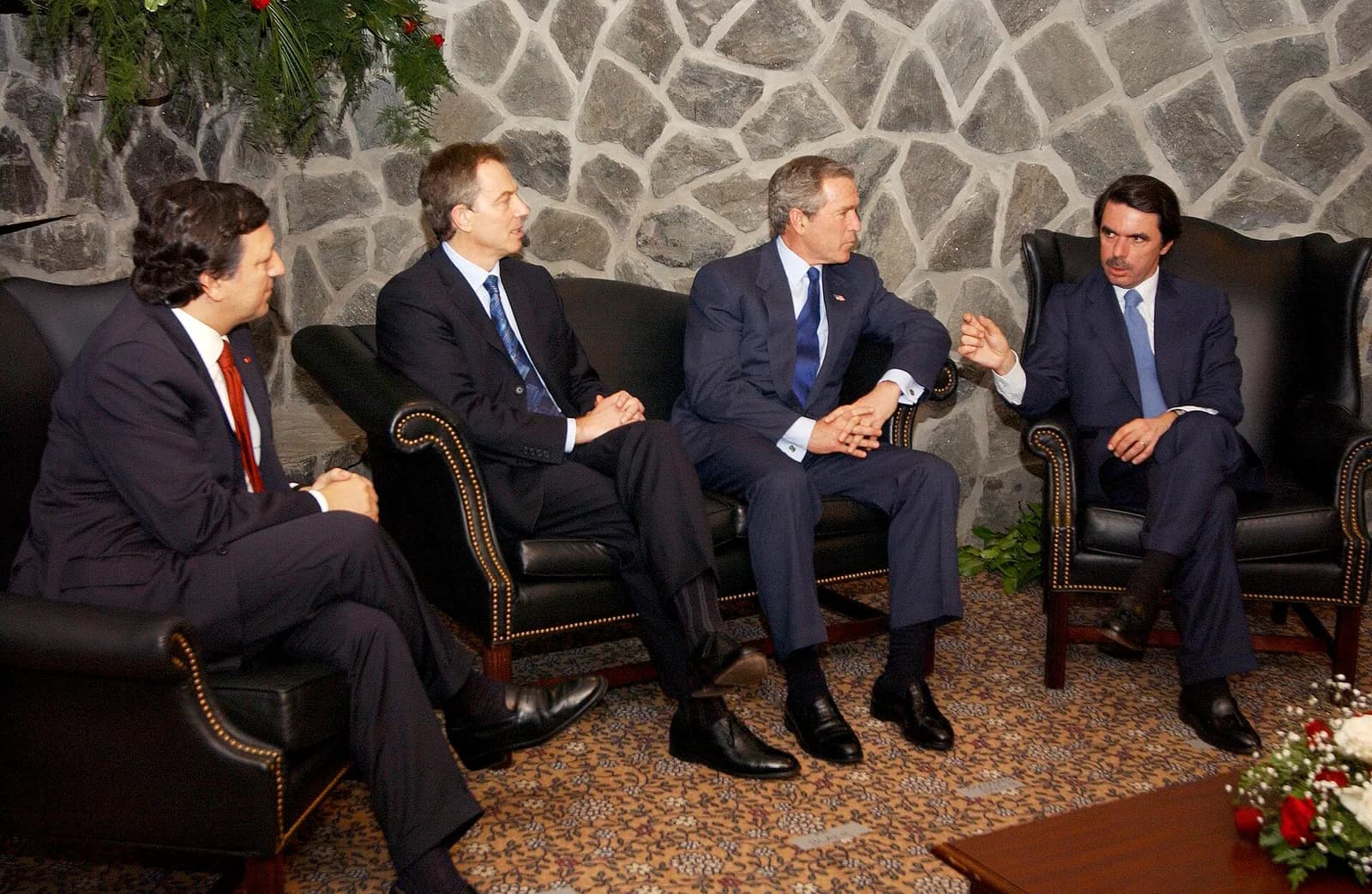
On 16 March 2003 the Portuguese Prime Minister, José Manuel Durão Barroso, welcomed George W. Bush, Tony Blair and José María Aznar to the Azores, which he described as “halfway between the continent of Europe and the continent of America”. Bush called the next day “a moment of truth for the world” on Iraq. The meeting at Lajes became known in Portugal as the Cimeira das Lajes, the Lajes summit, and the invasion of Iraq followed.
Why it still matters
Lajes has two halves. The Portuguese side has always remained a Portuguese air force base, Base Aérea n.º 4, while the American side grew into a small town, with houses, a church, schools and shops, home at its peak to around 5,000 Americans including families. Its money and its contacts with the outside world mattered on Terceira, especially under the dictatorship.
That presence has shrunk. In January 2015 Observador reported that the United States had confirmed cuts to its contingent at Lajes. Portugal's Foreign Minister, Rui Machete, said he had hoped for a better result than a reduction of about 500 military personnel and their families. The decision, part of a programme closing 15 American bases in Europe, was expected to save Washington 35 million dollars a year.
The 1943 agreement also brought a third country under the old alliance. Britain asked in the name of a medieval treaty, but within a year American personnel were at Lagens too. Vernon Walters, a US Army officer who escorted two Portuguese officers around American arms factories in 1943, later wrote that the alliance was “the umbrella under which we intended to slide into the Azores as subtenants of the British”.
From 1951 the United States had its own agreement with Lisbon. Portugal joined NATO in 1949 while still a dictatorship, and the islands kept their place in Atlantic defence through the Cold War and after.
FAQs
Why did neutral Portugal let Britain use the Azores in 1943?
Britain asked in the name of the Anglo-Portuguese alliance, which dates from 1373. By mid-1943 Salazar's fear of German reprisals had faded, and Britain offered war material, supplies, a guarantee against German aggression and a promise to withdraw at the end of the war.
When did British forces arrive in the Azores?
British forces were admitted to Terceira and Faial on 8 October 1943, under an agreement signed in Lisbon on 17 August. Churchill announced it in the House of Commons on 12 October, and RAF Fortresses began operations from Lagens on 19 October.
Was Portugal neutral in the Second World War?
Yes. Portugal declared neutrality in 1939 in agreement with Britain and stayed neutral on the European mainland throughout the war. It sold wolfram to both sides until June 1944, but from October 1943 it let first Britain and then the United States use bases in the Azores.
What was Operation Alacrity?
In the Allied conference papers of 1943, Alacrity was the code name for the plan for British forces to enter the Azores on 8 October 1943. Norman Herz, who served there with the US Army engineers, used it as the title of his 2004 book on the operation. The islands themselves, and a plan to seize them by assault, were code-named Lifebelt.
Is Lajes still an American base?
The United States has used Lajes since the Second World War, since 1951 under defence agreements with Portugal. The Portuguese side is Air Base No. 4 of the Portuguese Air Force. In 2015 Washington confirmed cuts of about 500 military personnel there.
On the timeline
Open the timelineNearby moments from dictatorship and the estado novo (1926–1974).
Birth in Lisbon of António Lobo Antunes, psychiatrist turned novelist whose books drawing on the colonial war in Angola made him one of Portugal's greatest modern writers; he was awarded the Prémio Camões in 2007.
Birth in Bengo province, near Luanda, of José Adelino Barceló de Carvalho — Bonga. Recruited by Benfica, he became Portugal's 400-metre record holder while secretly carrying messages for Angolan independence fighters, then went into exile in the Netherlands, where his 1972 debut album 'Angola 72' became a landmark of the independence struggle.
Pan Am's 'Yankee Clipper' flying boat crashes while landing on the Tagus in Lisbon, wartime Europe's gateway to America. Twenty-four of the 39 people aboard die; Broadway singer Jane Froman, travelling to entertain US troops, survives badly injured — a story Hollywood retold in 'With a Song in My Heart'.
The Azores agreement of 1943
Manuel António Pina is born in Sabugal, in the Beira Alta. A Porto journalist who spent three decades at the 'Jornal de Notícias', he wrote spare, playful poetry and much-loved children's books, and in 2011 won the Camões Prize, the highest award in Portuguese-language literature.
Death in Porto, aged 93, of Bernardino Machado. Born in Rio de Janeiro — the only president of Portugal born outside the country — he was twice elected head of state of the First Republic, and both terms were cut short by military coups, in 1917 and 1926, each followed by exile.
The poet Eugénio de Castro, whose 1890 collection 'Oaristos' introduced Symbolism into Portuguese literature, dies in his native Coimbra at the age of 75.
Coming up in history
All long reads 14 October 18991899: the secret declaration that revived the Anglo-Portuguese alliance
 15 October 201715 October 2017: the day Ophelia's winds set central Portugal alight
 16 October 1544Pedro Nunes takes Coimbra's chair of mathematics, 16 October 1544
 17 October 1978Luxembourg, 1978: Portugal opens its talks to join the EEC
33 sources
Archives, scholarship and reporting this article was checked against.
- 1
Azores (British Facilities In): Agreement with Portugal, HC Deb 12 October 1943 vol 392 cc716-9UK Parliament, Hansard
- 2
The War at Sea 1939–1945, vol. III, part 1: The Offensive, 1st June 1943–31st May 1944 (S. W. Roskill)HMSO, 1960 (scan of the printed edition, Internet Archive)
- 3
The Ambassador in the United Kingdom (Winant) to the Secretary of State, London, 31 August 1943 (FRUS 1943, Europe, vol. II, Document 484)Office of the Historian, US Department of State
- 4
- 5
The War at Sea 1939–1945, vol. II, chapter XIV: The Battle of the Atlantic, the Triumph of the Escorts (S. W. Roskill)HMSO, 1956 (History of the Second World War, UK Military Series), transcribed by the HyperWar Foundation
- 6
- 7
The Agreements for the British and American use of Bases in The Azores in WWII and the role of Portuguese Timor (Curtis Stewart)British Historical Society of Portugal, Newsletter 10, February 2021
- 8
Secret Base: Santa Maria Airfield during World War II (Daniel Haulman, Air Force Historical Research Agency)Revista LPAZ, vol. 3, December 2017, republished by the Pan Am Historical Foundation
- 9
- 10
Review of The Portuguese Connection by Roland Eugene Vintras (Lt. Gen. Vernon A. Walters)Central Intelligence Agency, Studies in Intelligence (released 1993)
- 11
- 12
O Estado Novo (1933-1974)Assembleia da República
- 13
- 14
- 15
The Beginnings of the Anglo-Portuguese AlliancePortugal-UK 650
- 16
History's unparalleled alliance: the Anglo-Portuguese Treaty of Windsor, 9th May 1386The National Archives (UK), History blog
- 17
The War at Sea 1939–1945, vol. II, Appendix O: British, Allied and Neutral Merchant Ship Losses, January 1942 to May 1943 (S. W. Roskill)HMSO, 1956, transcribed by the HyperWar Foundation
- 18
- 19
Prof details secret military operation (on Norman Herz, Operation Alacrity: The Azores and the War in the Atlantic)University of Georgia, UGA Today, 1 March 2004
- 20
- 21
- 22
- 23
- 24
- 25
- 26
- 27
- 28
- 29
NATO member countriesNorth Atlantic Treaty Organization
- 30A importância da base das Lajes em sete factosObservador, 15 January 2015
- 31
- 32
Nickel Grass (Walter J. Boyne)Air Force Magazine, December 1998 (Air & Space Forces Magazine)
- 33
Press Availability with President Bush, Prime Minister Blair, President Aznar, and Prime Minister Barroso, the Azores, Portugal, 16 March 2003The White House (archived), Office of the Press Secretary
Image credits
- A Boeing Fortress of No. 206 Squadron RAF takes off from Lagens on Terceira for an anti-submarine patrol over the Atlantic. Photograph by an official RAF photographer, between 1943 and 1945. Royal Air Force official photographer, Hensser H (Flt Lt), Public domain, via Wikimedia Commons.
- António de Oliveira Salazar, Portugal's head of government, in a portrait printed in Ilustração Portugueza in September 1942. Unknown author, Public domain, via Wikimedia Commons.
- Boeing Fortresses at their dispersal points at Lagens; the two nearest belong to No. 220 Squadron RAF. A steel-plate runway is being laid across the middle of the airfield. RAF official photograph, between 1943 and 1945. Royal Air Force official photographer, Hensser H (Mr), Public domain, via Wikimedia Commons.
- Portuguese ox carts pass a Boeing Fortress having an engine test at Lagens, Terceira. RAF official photograph, between 1943 and 1945. Royal Air Force official photographer, Public domain, via Wikimedia Commons.
- José Manuel Durão Barroso, Tony Blair, George W. Bush and José María Aznar at the one-day summit at Lajes Field on Terceira, 16 March 2003. Staff Sgt. Michelle Michaud, Public domain, via Wikimedia Commons.