

1899: the secret declaration that revived the Anglo-Portuguese alliance
Three days into the Boer War, Lord Salisbury and Portugal's man in London signed a short secret declaration confirming treaties from 1642 and 1661. A year earlier, Britain had quietly agreed with Germany how a loan to Portugal, and perhaps one day its colonies, would be shared out.
At a glance
- On 14 October 1899, in London, Lord Salisbury and Portugal's minister Luís de Soveral signed a secret declaration confirming Anglo-Portuguese treaties of 1642 and 1661.
- Portugal promised not to let arms and munitions for the South African Republic (the Transvaal) pass through its territory, and not to declare neutrality in the Boer War, which had begun three days earlier.
- In return the declaration restated Britain's promise of 1661 to defend Portugal's colonies against all enemies, present and future.
- Thirteen months earlier, on 30 August 1898, Britain and Germany had secretly agreed how to share any loan to Portugal secured on the customs of Angola, Mozambique and Timor, and to keep out of each other's zone if Portugal ever lost those colonies.
- The 1899 document is often called the 'Treaty of Windsor'. The editors of Britain's official documents called that name inaccurate: the text is a declaration, and it was done at London.
A Saturday in London
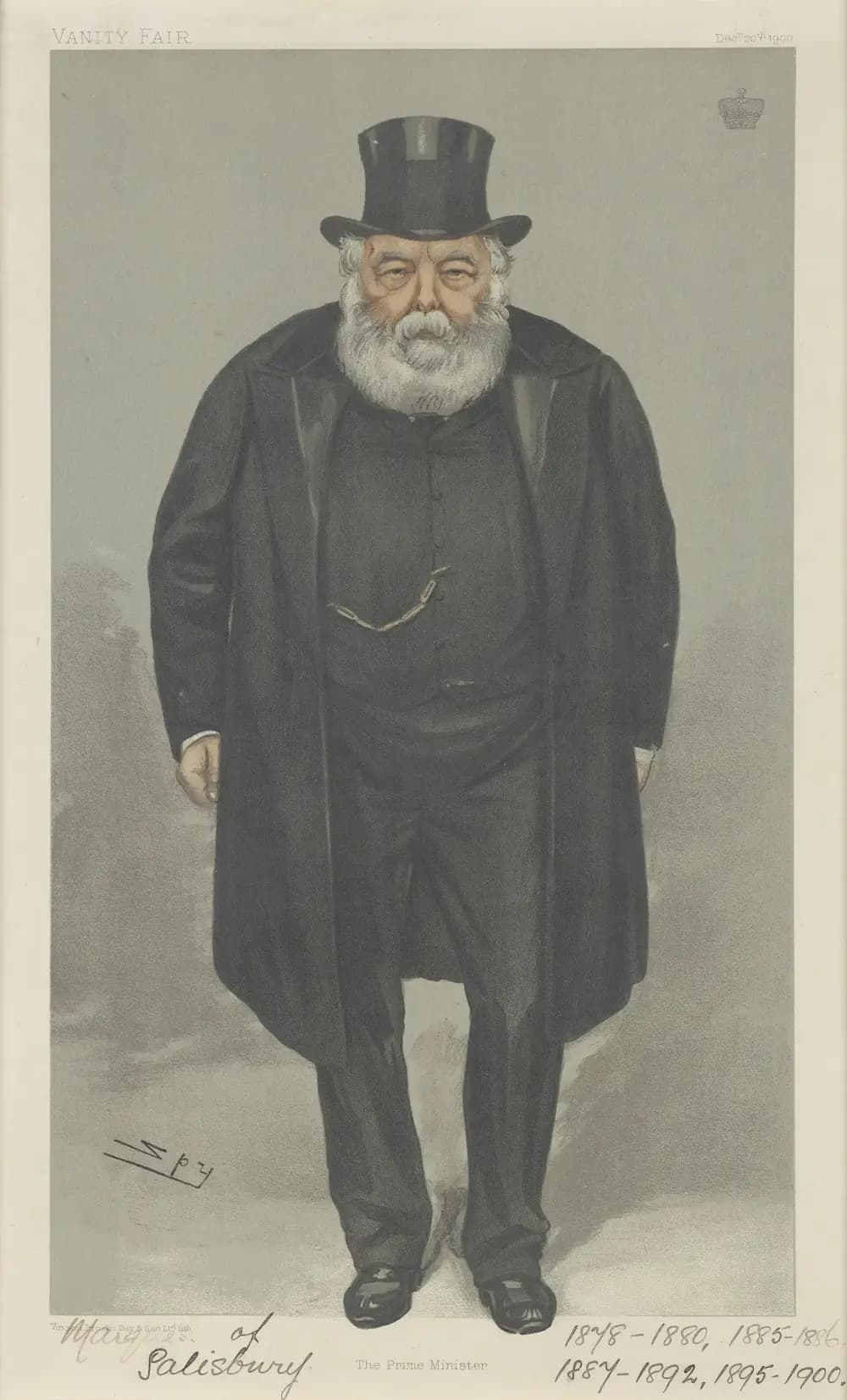
On Saturday 14 October 1899 two men put their names to a single document in London. One was Robert Gascoyne-Cecil, 3rd Marquess of Salisbury, Britain's prime minister, who also ran the Foreign Office. The other was Luís de Soveral, Portugal's minister at the British court, who wrote his letters from 12 Gloucester Place.
The text ran in English and Portuguese, side by side in parallel columns. The two signatures stretched across the foot of the page. It was marked secret, and it stayed secret for years: Britain did not show it to the German government until 1913.
Its timing was no accident. Three days earlier, at the expiry of a Boer ultimatum on 11 October, Britain had gone to war with the two Boer republics of southern Africa, the South African Republic (the Transvaal) and the Orange Free State. On 12 October Boer commandos crossed into the British colonies of Natal and the Cape.
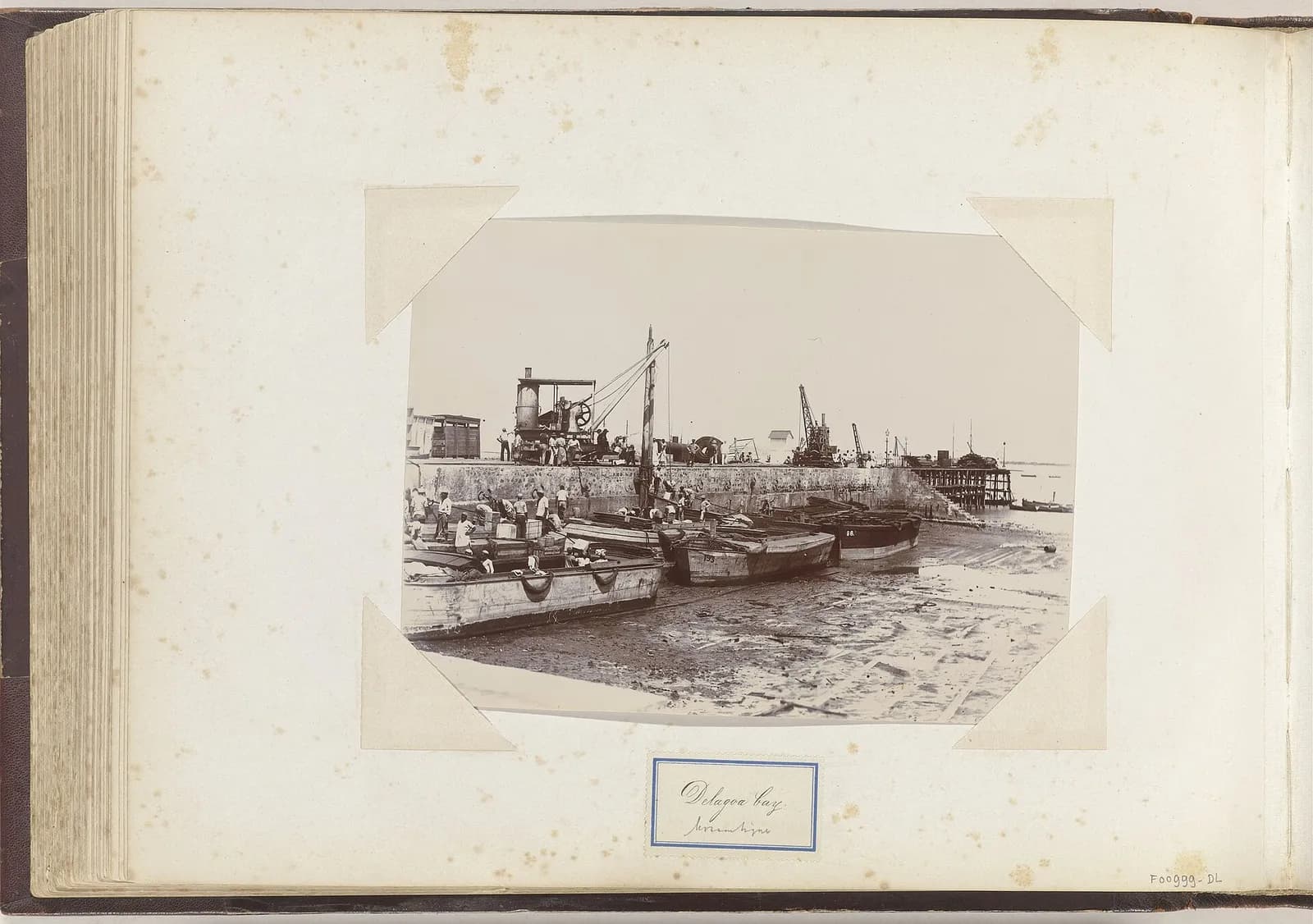
The Transvaal had no coast of its own. Its nearest port was Lourenço Marques, today's Maputo, on Delagoa Bay in Portuguese Mozambique. Whatever Portugal did there would matter to the war.
What you need to know first: an alliance five centuries old
England and Portugal were already old allies by 1899. On 16 June 1373, at St Paul's Cathedral in London, Edward III of England and King Fernando and Queen Leonor of Portugal agreed a treaty of perpetual friendship. Its first article bound the two crowns to be 'friends to friends and enemies to enemies'.
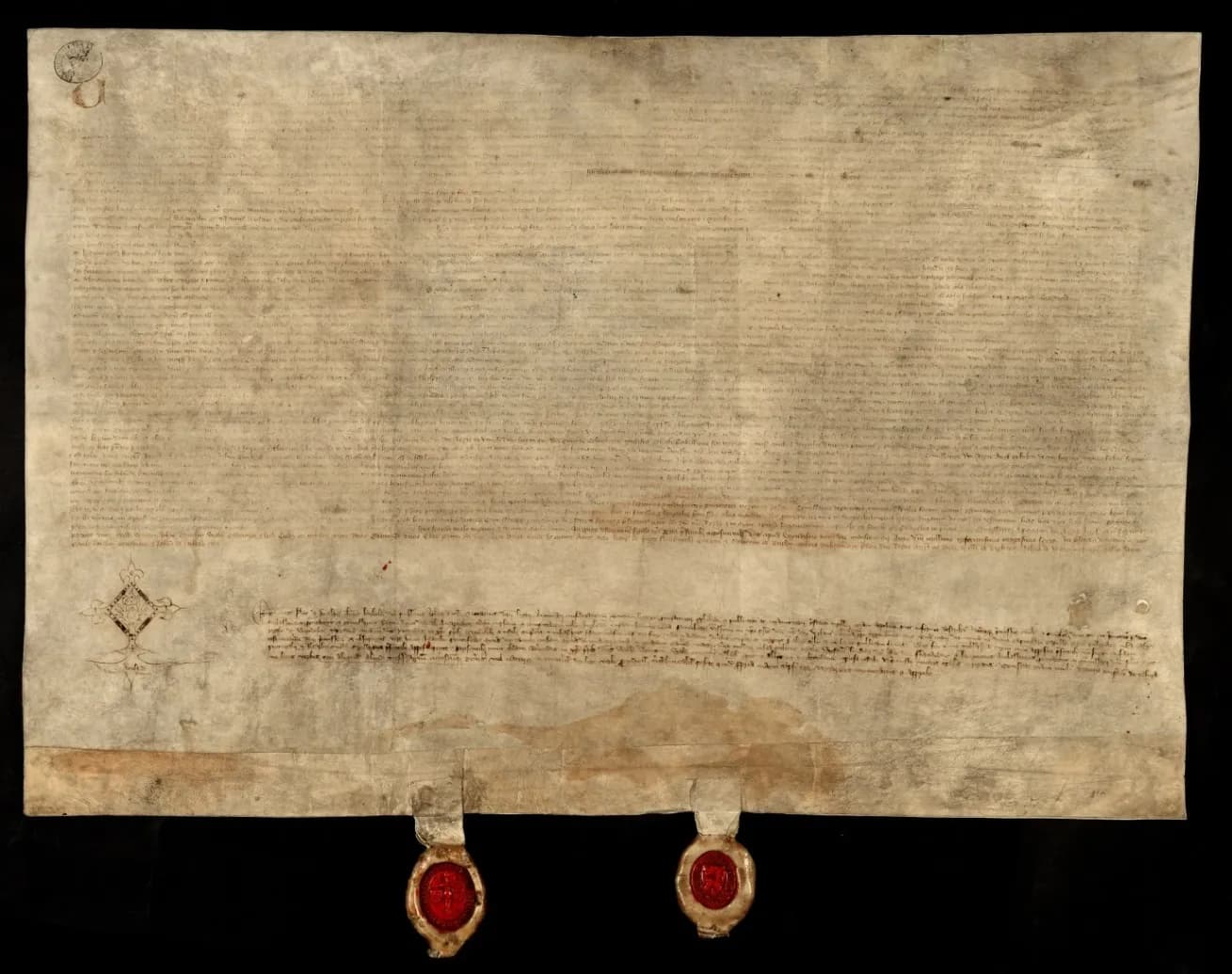
The better-known Treaty of Windsor followed on 9 May 1386, between Richard II and John I of Portugal, the founder of the Avis dynasty, who had beaten Castile at Aljubarrota the year before. It covered mutual defence and trade, and let the subjects of each kingdom live in the other. In 1387 John married Philippa of Lancaster, daughter of John of Gaunt, which tied the alliance to the English royal family.
The seventeenth century renewed the bond three times. A treaty of 29 January 1642 between Charles I and John IV promised that neither king would 'consent nor adhere unto any war, counsel, or Treaty, in prejudice of the other'. A treaty signed at Westminster on 10 July 1654 with Oliver Cromwell's government opened Portuguese trade, including most of the trade with Brazil, to English merchants.
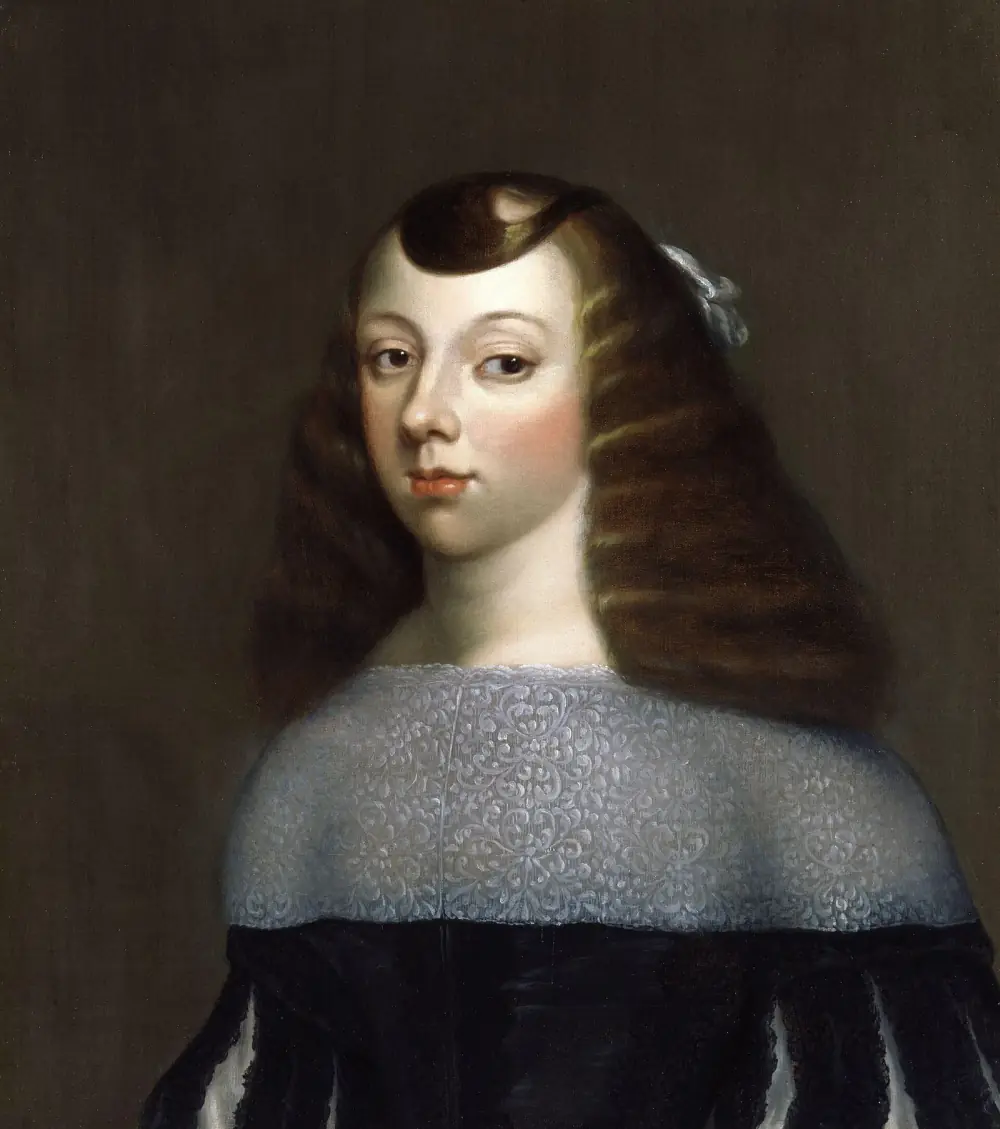
Then, on 23 June 1661, came the marriage treaty of Charles II and the Portuguese princess Catherine of Braganza. Portugal handed over Tangier and Bombay. In a secret article England promised to defend all of Portugal's colonies. In 1899 the first part of that article would be quoted word for word.
| Date | Agreement | Signed by | What it did |
|---|---|---|---|
| 16 June 1373 | Treaty of London | Edward III; Fernando and Leonor | Perpetual friendship and mutual help 'by sea and by land' |
| 9 May 1386 | Treaty of Windsor | Richard II; John I | Mutual defence, trade, and the right to live in each other's kingdom |
| 29 January 1642 | Treaty of peace and amity | Charles I; John IV | Neither king to join any war or treaty against the other |
| 10 July 1654 | Treaty of Westminster | Cromwell's Commonwealth; John IV | Trading privileges for English merchants, including in the Brazil trade |
| 23 June 1661 | Marriage treaty | Charles II; Afonso VI | Tangier and Bombay to England; secret article to defend Portugal's colonies |
| 14 October 1899 | Secret declaration | Salisbury; Soveral | Confirmed 1642 and 1661; no Boer arms through Portuguese territory |
| 1904 and 1914 | Treaties of arbitration | Both governments | Recognised that the old treaties were still valid |
Churchill's 1943 list also names treaties of 1643, 1660, 1703 and 1815. The Anglo-Portuguese treaty of 1654 should not be confused with the Treaty of Westminster of 5 April 1654, which made peace between England and the Dutch Republic.
1890: the ultimatum that poisoned the friendship
Nine years before the declaration, the alliance had nearly broken. In the 1880s Portugal claimed the interior of Africa between Angola on the west coast and Mozambique on the east, land that is now in Zambia, Zimbabwe and Malawi. The claim was drawn on a map of 1886 that coloured it pink, and Portuguese still call it the Mapa Cor-de-Rosa, the Pink Map.
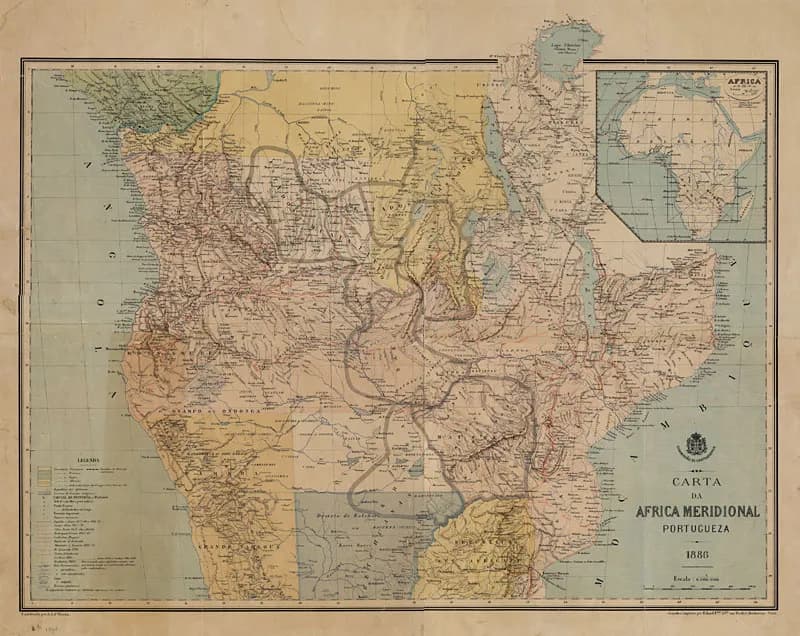
Britain had other plans for the same ground. On 11 January 1890 Lord Salisbury sent Lisbon a memorandum demanding that Portuguese troops withdraw from Mashonaland and the Shire–Nyasa region. Portugal gave way. A treaty of 11 June 1891, negotiated in London by the same Soveral, fixed the new borders.
In Portugal the retreat felt like a national humiliation. The composer Alfredo Keil wrote a march of protest that year, with words by Henrique Lopes de Mendonça. It was called A Portuguesa, and on 19 June 1911 the young Republic's Constituent Assembly made it the national anthem.
The bitterness lasted. In November 1899 the British minister in Lisbon, Sir Hugh MacDonell, reported that the 'ill-feeling caused throughout the country by the events of 1891' still coloured the attitude of all classes in Portugal, with the exception of the king and perhaps a few people involved in foreign policy.
1898: carving up the colonies on paper
By 1898 Portugal was in desperate straits for money. It had discussed raising a loan in London secured on the revenues of its colonies, and Germany demanded a share in any such deal. British officials debated letting Germany in while keeping France out. On 30 August 1898 Arthur Balfour, standing in for Salisbury at the Foreign Office, and the German ambassador Count Paul von Hatzfeldt signed two conventions and a secret note in London.
The first convention dealt with a loan to Portugal secured on the customs revenues of Mozambique, Angola and Portuguese Timor. If either government agreed to lend, the other had the right to lend a share. Britain's share would rest on the customs of Mozambique south of the Zambezi, which included Lourenço Marques, and of a strip of central Angola. Germany's would rest on all the other customs, including Timor's. If Portugal defaulted, each lender would take over the custom houses in its zone.
The second, secret convention went further. It opened by admitting that 'it may unfortunately not be found possible to maintain the integrity of the African possessions of Portugal'. Both powers would keep any third power out of Mozambique, Angola and Timor, and neither would claim the other's zone. One article dealt with trade if Portugal gave up or lost those colonies.
The word partition appears nowhere in the text. But in June 1898, by Salisbury's own record, Hatzfeldt had explained that in choosing where each loan's customs were collected the two powers would be fixing a footing which, 'in case of certain eventualities, would decide the destiny of the territories in question'.
“With regard also to the practical realisation of its real though unexpressed intention, the later actual partition of the Portuguese colonies, the treaty in its new form showed marked improvements and advantages as compared with the old one.”
In the event Portugal never borrowed on those terms, and the 1898 conventions never came into operation. Lisbon had not been shown the text: Balfour told Soveral only that an arrangement about a possible loan had been reached. In September 1899 MacDonell wrote privately that what preoccupied the Portuguese government most was 'the fear that we may fall back upon the Secret Convention', whatever it might be, and leave them in the lurch.
Why Britain needed Delagoa Bay shut
In 1895 the Transvaal president, Paul Kruger, opened a railway from Pretoria to Delagoa Bay. It gave the landlocked republic a route to the sea that did not pass through the British ports of Natal and the Cape.
As war loomed in 1899, arms and ammunition for the Transvaal kept arriving at Lourenço Marques. Portugal said a treaty it had signed with the Transvaal in 1875 obliged it to let them through. Salisbury put the British case bluntly in a private letter to Soveral: 'it is essential that we should stop the supply of arms through Lourenço Marques.' Otherwise, he warned, Britain's only other means would be a blockade.
The Admiralty had its own worry. If Portugal declared itself neutral, British warships might be refused coal at Delagoa Bay. On 6 October Salisbury asked Soveral to add a promise that Portugal would not proclaim neutrality at all.
- Boer ultimatum expired
- 11 October 1899
- Declaration signed
- 14 October 1899, London
- War ended
- Treaty of Vereeniging, 31 May 1902
- British and imperial troops involved
- Over 400,000
- British and imperial dead
- About 22,000
- Port in question
- Lourenço Marques (Maputo), Delagoa Bay
Three weeks of bargaining
The idea of a formal agreement came from the Portuguese side. On 17 September 1899, when Salisbury pressed him to stop the arms traffic, Soveral proposed instead that the two governments sign an engagement binding each to close alliance in case of war with the Transvaal. On 23 September Salisbury told him the cabinet would be willing to form an offensive and defensive alliance with Portugal against the Transvaal if war came.
Soveral sent a draft on 2 October in which each side promised to defend the other's territory. Salisbury turned it down. He wanted something more useful from Portugal, and he preferred the exact words of the old treaties for Britain's side.
“We desire an engagement that, if we are at war with the Transvaal, the Portuguese Government will, on our invitation, declare war with the Transvaal also.”
Soveral would not go that far. A declaration of war, he said on 6 October, would stir comment in Lisbon and the ill-will of other powers. He offered instead what Britain most needed: no more supplies would pass from the coast through Portuguese territory to the Transvaal. Salisbury accepted, and added his request about neutrality.
11 January 1890
British Ultimatum
Portugal is told to withdraw its troops from the lands claimed on the Pink Map.
11 June 1891
Anglo-Portuguese treaty
New borders in central Africa, negotiated by Soveral.
8 July 1895
Delagoa Bay railway opened
Kruger opens the line from Pretoria to Lourenço Marques.
30 August 1898
Anglo-German conventions
Britain and Germany secretly divide the security for any loan to Portugal.
17 September 1899
Soveral's proposal
Portugal offers a formal alliance in case of war with the Transvaal.
23 September 1899
Salisbury's reply
The cabinet is willing to form an alliance against the Transvaal if war comes.
2–7 October 1899
Drafts exchanged
Soveral rejects declaring war; offers to stop arms passing instead.
11 October 1899
Boer War begins
The Boer ultimatum expires; invasion of Natal and the Cape follows on 12 October.
14 October 1899
Declaration signed
Salisbury and Soveral sign in London.
16 October 1899
British minister told
Salisbury telegraphs the terms to Sir Hugh MacDonell in Lisbon.
What the declaration actually said
The finished text is short. It declared the 'ancient treaties of alliance, amity and guarantee' between the two crowns still in force. It then quoted in full Article 1 of the 1642 treaty and the first part of the secret article of 1661.
“His Majesty of Great Britain … shall promise and oblige himself as by this present Article he doth, to defend and protect all conquests or colonies belonging to the Crown of Portugal against all his enemies, as well future as present.”
Portugal's side took two sentences. Its government undertook 'not to permit, after the declaration of war between Great Britain and the South African Republic, or during the continuance of the war, the importation and passage of arms, and of munitions of war destined for the latter'. And it 'will not proclaim neutrality in the war between Great Britain and the South African Republic'.
The Orange Free State is not mentioned, and Portugal promised no troops. Britain promised nothing new: it restated the secret article of 1661, whose 'conquests or colonies' now meant Mozambique, Angola and Portugal's other territories. British governments had not always read it that way. In 1825 the foreign secretary George Canning had denied that the guarantee covered Portugal's colonies.
Soveral, the king's friend
Luís Maria Pinto de Soveral was born in 1851 at São João da Pesqueira, in the Douro valley of northern Portugal. He joined the legation in London in 1885 and became a fixture of high society there. He was a close friend of the Prince of Wales, the future Edward VII, and a regular guest at Sandringham.
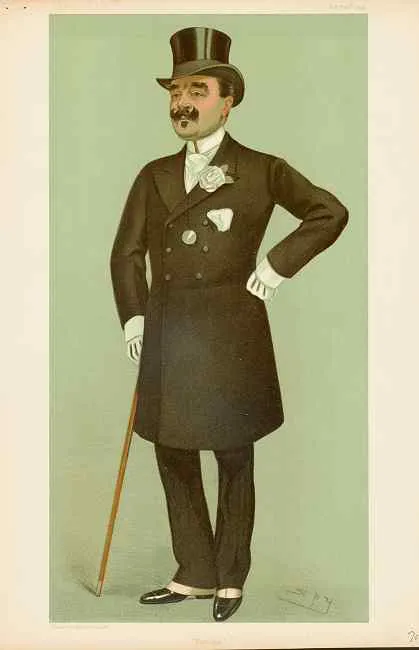
He was more than a society figure. MacDonell reported in 1899 that Soveral had his own 'scheme of upsetting the Anglo-German Agreement by a direct convention with us'. Lichnowsky later credited the 1899 declaration to 'the endeavours of Marquis Soveral, who was presumably aware of the Anglo-German agreement'. Sir Edward Grey went further, writing that Soveral knew all about the secret agreement and had made no secret of it to Salisbury.
Portugal made him a peer in 1898 and Marquis of Soveral in 1901 (one account says 1900), so in October 1899 he signed simply as Luiz de Soveral. When the monarchy fell in 1910 he was still in London. He stood by the exiled King Manuel II and Queen Amélia, left public life, and died in Paris in 1922.
Aftermath: two secrets in one drawer
Britain now held two secret commitments that pulled different ways. One, with Germany, planned for the day Portugal lost its colonies. The other, with Portugal, promised to defend them against all enemies. Portugal was a party only to the second.
In public Portugal looked neutral. In November 1899 MacDonell complained that ministers tolerated violent anti-British articles in the press, and noted that if Britain ever asked for more active help they 'would be virtually lost in public opinion by being forced to disclose its existence'.
In December 1900 the British Channel Fleet visited Lisbon. King Carlos gave a state banquet and pressed for the alliance to be stated openly. At a second banquet MacDonell told his hosts that the old treaties 'have been recently strengthened by late events', without saying what those events were.
Berlin noticed. On 20 December 1900 a German diplomat asked whether the Lisbon speeches changed the 1898 agreement. Lord Lansdowne, Salisbury's successor at the Foreign Office, said they 'left the secret agreement exactly where it was'.
When Britain and Germany reopened talks on Portugal's colonies before the First World War, Sir Edward Grey would sign a new deal only if the agreements of 1898 and 1899 were published with it. Berlin's Foreign Office objected. One argument, Lichnowsky recalled, was that publishing the 1899 text might damage the Chancellor, Bethmann Hollweg, as 'a proof of British hypocrisy and perfidy'. The new agreement was initialled in August 1913 but never signed.
Why it still matters
Portugal kept its African colonies, and the alliance was invoked again. On 23 February 1916 Portugal seized the German merchant ships lying in its ports. On 9 March 1916 Germany declared war, saying the Portuguese government regarded itself as 'the vassal of Great Britain'. Portugal's minister in Washington, the Viscount de Alte, replied that his country was 'drawn into the war as a result of her long-standing alliance with England'.
On 12 October 1943 Winston Churchill told the House of Commons that Britain, 'basing themselves upon this ancient Alliance', had asked neutral Portugal for facilities in the Azores to protect Atlantic shipping, and Portugal had agreed. In his list of the treaties behind the request he included 'a secret declaration of 1899'.
“This engagement has lasted now for over 600 years and is without parallel in world history.”
In 1982, during the Falklands War, Britain asked again. A US State Department memorandum of 26 May 1982 records that Portugal agreed in principle to let up to one RAF Nimrod a day stage and refuel at Lajes in the Azores, with a written request for each flight.
FAQs
What was the secret Treaty of Windsor of 1899?
It was a secret Anglo-Portuguese declaration signed in London on 14 October 1899 by Lord Salisbury and Luís de Soveral. It confirmed treaties of 1642 and 1661, including Britain's promise to defend Portugal's colonies. Portugal agreed to stop arms for the Transvaal passing through its territory and not to declare neutrality in the Boer War.
Why is it called the Treaty of Windsor if it was signed in London?
The name borrows from the 1386 Treaty of Windsor, the best-known early alliance treaty. The editors of the official British Documents on the Origins of the War called the label erroneous for the 1899 text, which was a declaration done at London.
Did Britain plan to divide Portugal's colonies with Germany?
On 30 August 1898 Britain and Germany signed conventions splitting the security for any loan to Portugal between them, using the customs revenues of Mozambique, Angola and Timor. A secret convention bound each to keep out of the other's zone and dealt with what would follow if Portugal lost those colonies. Portugal never took such a loan, so the conventions never came into operation, and a revised deal of 1913 was never signed.
Is the Anglo-Portuguese alliance still in force?
Yes. Both countries still treat it as valid. The alliance dates from the Treaty of London of 16 June 1373. Britain invoked it in 1943 to ask for facilities in the Azores, and sought the use of the Azores again during the Falklands War in 1982.
On the timeline
Open the timelineNearby moments from regeneration and the last kings (1851–1910).
Birth in Lisbon of Amélia Rey Colaço, the towering figure of 20th-century Portuguese theatre. With her husband Robles Monteiro she ran a company that was resident at the Teatro Nacional D. Maria II for 46 years, staging Brecht, Lorca and Tennessee Williams despite the censors and training actors such as Eunice Muñoz.
Birth of novelist José Maria Ferreira de Castro in Ossela, near Oliveira de Azeméis. Emigrating to Brazil at the age of 12, he spent four years on an Amazon rubber plantation, the experience behind his novel 'A Selva' (1930). A pioneer of Portuguese social realism, he was nominated more than once for the Nobel Prize.
António Aleixo is born in Vila Real de Santo António. A barely literate weaver's son who sold lottery tickets and sang his verses at Algarve fairs, he became one of Portugal's best-loved popular poets, his ironic four-line 'quadras' written down and published by a friend, Joaquim de Magalhães.
The secret declaration of 1899
The poet António Nobre dies aged just 32. His book 'Só' (1892), with its homesick, saudade-steeped verses about his native north, had already made him one of the defining voices of Portuguese symbolist poetry.
José Maria Eça de Queirós, master novelist of Portuguese realism and author of 'Os Maias' and 'O Crime do Padre Amaro', dies near Paris, where he was serving as Portuguese consul.
Lisbon's first electric trams enter commercial service, running between Cais do Sodré and Algés — the beginning of the electric tram network that remains an icon of the city.
Coming up in history
All long reads 16 October 1544Pedro Nunes takes Coimbra's chair of mathematics, 16 October 1544
 17 October 1978Luxembourg, 1978: Portugal opens its talks to join the EEC
 18 October 1739The Inquisition condemns 'o Judeu', Lisbon's comic playwright, in 1739
 19 October 1921Noite Sangrenta: the night a Portuguese prime minister was hunted down
19 sources
Archives, scholarship and reporting this article was checked against.
- 1
British Documents on the Origins of the War, 1898–1914, Vol. I: The End of British Isolation (ed. G. P. Gooch and Harold Temperley)His Majesty's Stationery Office, 1927 (digitised by Internet Archive)
- 2
Azores (British Facilities In): Agreement with Portugal, HC Deb 12 October 1943 vol 392 cc716-9UK Parliament, Hansard
- 3
History's unparalleled alliance: the Anglo-Portuguese Treaty of Windsor, 9th May 1386The National Archives (UK), History blog
- 4
My Mission to London, 1912–1914, by Prince Karl Max LichnowskyProject Gutenberg
- 5
The Boer WarNational Army Museum
- 6
The Entry of Portugal into the European War (editorial comment)American Journal of International Law, vol. 10 (1916), Cambridge University Press
- 7
British and Portuguese Attitudes Towards the British Ultimatum of 1890, by Maria Teresa Pinto CoelhoBritish Historical Society of Portugal, Report 21 (1994)
- 8
Delagoa Bay railway line is officially openedSouth African History Online
- 9
The Beginnings of the Anglo-Portuguese AlliancePortugal-UK 650
- 10
Treaty of Westminster (1654), by Pedro NobreEncyclopaedia of Portuguese Expansion, CHAM (NOVA FCSH / Universidade dos Açores)
- 11
Marriage contract of Charles II of Great Britain and Catherine of Portugal, London, 23 June 1661Dynastic Marriage Contracts in the Early Modern Period, Philipps-Universität Marburg
- 12
“Bretões” ou “canhões”? A história do hino de PortugalRFM
- 13
Review of J. A. Gonçalves Guimarães, Marquês de Soveral: Homem do Douro e do Mundo, by António Barros CardosoFaculdade de Letras da Universidade do Porto
- 14
Alfredo KeilMACAM (Museu de Arte Contemporânea Armando Martins)
- 15
Hino Nacional: sabe mesmo a letra toda de A Portuguesa?, by Miguel Pintoe-konomista
- 16
- 17
Foreign Relations of the United States, 1981–1988, Vol. XIII, Document 300: UK Use of US Facilities at Lajes, 26 May 1982Office of the Historian, US Department of State
- 18
- 19“Portugueses emocionam-se na Batalha por aqui estarem sepultados protagonistas maiores da nossa História”Diário de Notícias, 16 March 2025
Image credits
- Dock workers unloading lighters at low tide at Delagoa Bay, the harbour of Lourenço Marques (now Maputo), photographed by an unknown photographer about 1900–1920 for an album of a journey through southern Africa. In 1899 Britain wanted arms for the Transvaal stopped here. Rijksmuseum, CC0, via Wikimedia Commons.
- Lord Salisbury, caricatured by Leslie Ward ('Spy') for Vanity Fair, 20 December 1900, under the title 'The Prime Minister'. He signed the 1899 declaration for Britain. Leslie Ward, Public domain, via Wikimedia Commons.
- The Anglo-Portuguese Treaty of Windsor, dated 9 May 1386, with the seals of the two Portuguese ambassadors. The National Archives at Kew holds it as E 30/310. English and Portuguese diplomats, Public domain, via Wikimedia Commons.
- Catherine of Braganza, painted after Dirk Stoop around 1660–1661. Her marriage treaty with Charles II carried the secret article that Salisbury and Soveral confirmed in 1899. After Dirk Stoop, Public domain, via Wikimedia Commons.
- The 'Pink Map': Carta da Africa Meridional Portugueza, 1886, showing Portugal's claim to a belt of land joining Angola and Mozambique. Sociedade de Geografia, Public domain, via Wikimedia Commons.
- Luís de Soveral, drawn by Leslie Ward ('Spy') for Vanity Fair on 10 February 1898 with the one-word caption 'Portugal'. He was not yet a marquis when he signed in 1899. Leslie Ward, Public domain, via Wikimedia Commons.