

The Inquisition condemns 'o Judeu', Lisbon's comic playwright, in 1739
Born into a New Christian family in Rio de Janeiro, António José da Silva made Lisbon laugh with comic operas for puppets. On 18 October 1739 the Inquisition handed him over to be strangled and burned.
At a glance
- António José da Silva, known as 'o Judeu', was sentenced at an auto-da-fé held in Lisbon's São Domingos church on Sunday 18 October 1739 and handed to the secular courts for execution.
- He was born in Rio de Janeiro on 8 May 1705 into a New Christian family, descendants of Jews forcibly baptised in Portugal in 1497, and was brought to Lisbon in 1712 when the Inquisition arrested his parents.
- Between 1733 and 1738 he wrote eight comic operas for puppets, staged at the public theatre of the Bairro Alto with music by António Teixeira.
- Arrested twice, in 1726 and 1737, he was tortured in his first trial and condemned in his second as a relapsed, unrepentant Judaiser; he was garrotted before his body was burned.
- His trial records survive in the Torre do Tombo and can be read online, and the national theatre on the Rossio now stands on the site of the Inquisition palace where he was held.
A Sunday at São Domingos
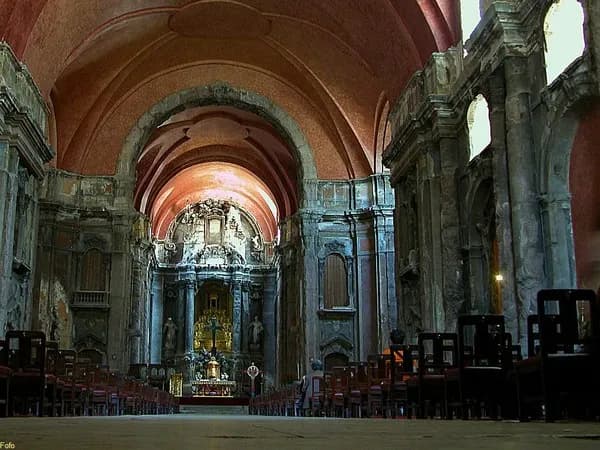
On Sunday 18 October 1739, as at every auto-da-fé, the Inquisition's prisoners were led in procession from its palace on the Rossio, Lisbon's great square, to the church of the Dominican convent of São Domingos nearby. Among them was a 34-year-old lawyer whose comedies had been staged in the city since 1733. Inside the church, before clergy, officials and a crowd, his sentence was read aloud.
The inquisitors described António José da Silva as a heretic and apostate from the Catholic faith, in the sentence's words 'convicted, denying, obstinate and relapsed'. He was 'relaxed in person' to the secular justice, the formula by which the Church handed a prisoner to the Crown's courts to be put to death. In the same ceremony his wife, Leonor Maria de Carvalho, and his mother, Lourença Coutinho, heard lesser sentences and were reconciled with the Church.
He was not burned alive. The executioner strangled him with a garrotte, and his body was then burned. The Inquisition granted this 'mercy' to condemned prisoners who said they wished to die 'in the law of Christ', and da Silva had sworn throughout his second trial that he was a Catholic.
The execution itself did not happen inside the church. Once the sentences were read, the prisoners condemned to death were taken to a separate site. According to the historians Giuseppe Marcocci and José Pedro Paiva, executions in Lisbon took place beside the fountain at the Terreiro do Trigo, on the river at the edge of Alfama, and not in the Terreiro do Paço, as famous engravings suggest. A short 2009 article by Cristina Abranches Guerreiro places his auto at the Campo da Lã instead, although it also misdates it to 1738.
- Born
- 8 May 1705, Rio de Janeiro
- Died
- 18 October 1739, Lisbon, aged 34 (19 October in older accounts)
- Profession
- Lawyer and playwright
- Charge in 1737
- Relapse into Judaism
- Sentence
- Excommunication, confiscation, relaxed to the secular justice
- Trial file
- Torre do Tombo, PT/TT/TSO-IL/028/08027-1
What you need to know first
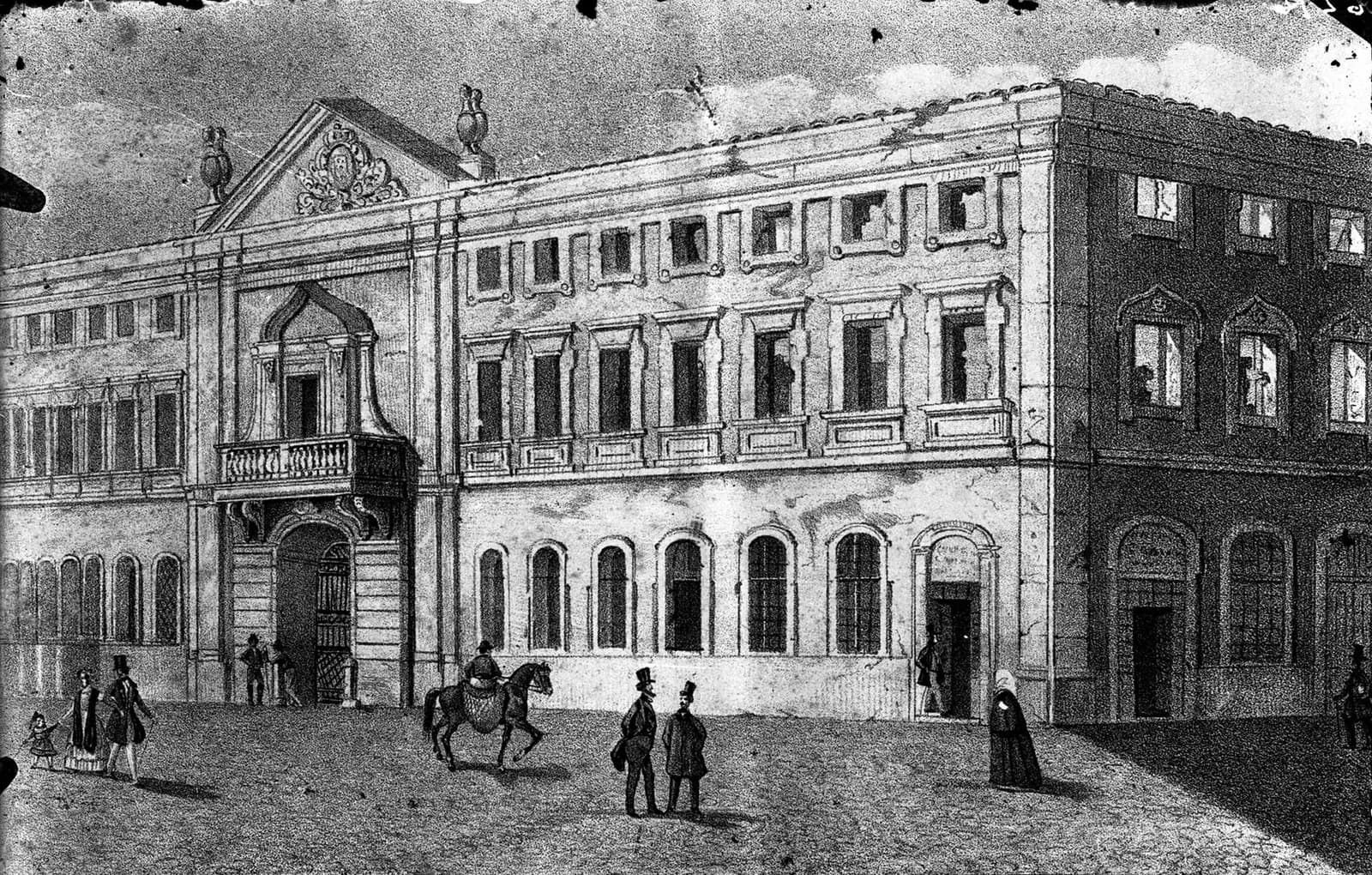
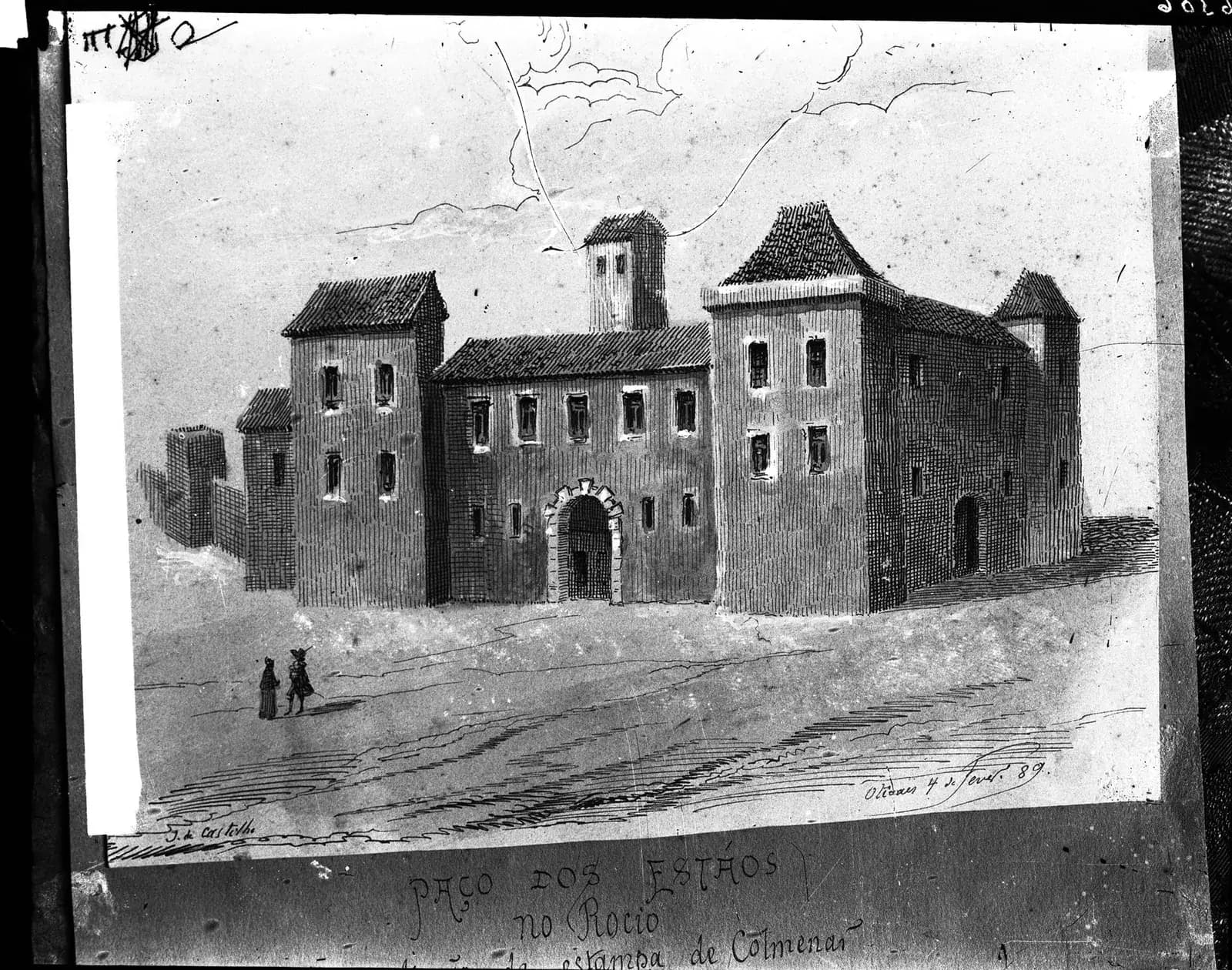
The Portuguese Inquisition, the Tribunal do Santo Ofício, was established by papal bull in 1536, two decades after the crown first asked Rome for one. It had three tribunals in the kingdom, at Lisbon, Évora and Coimbra, and one overseas, in Goa. From 1584 the Lisbon tribunal and the General Council that ran the whole institution sat in the Palácio dos Estaus, a fifteenth-century palace on the Rossio. The torture chamber was on the ground floor, and there were cells on all four floors.
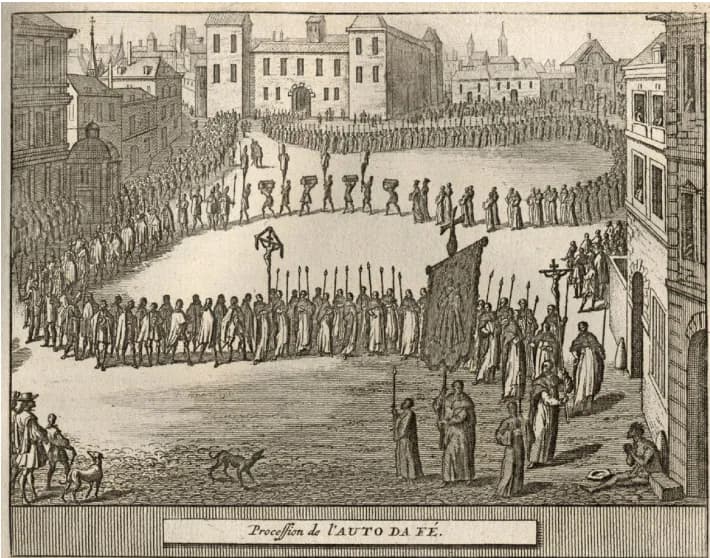
The public face of the tribunal was the auto-da-fé, the 'act of faith'. It began with a procession from the palace, followed by a sermon and the reading of each sentence. Penitents abjured their errors and were reconciled. Those condemned to death came last, and were handed to the civil authorities because canon law forbade the Church to kill. Sundays were preferred. Until the 1680s the great autos were held in the Terreiro do Paço; after that they moved indoors, usually to São Domingos.
Da Silva lived under King João V, who reigned from 1706 to 1750. The Inquisition did well under him: the king gave it money, and it also drew on royal pensions and confiscated property. The historian Francisco Bethencourt describes the years from 1735 to 1745 as a period of renewed repression against New Christians, at a time when the institution was otherwise in long decline.
A family from Rio
António José da Silva was born in Rio de Janeiro on 8 May 1705, the son of João Mendes da Silva, a lawyer and poet, and Lourença Coutinho, daughter of a sugar-mill owner. Both were New Christians. The family was wealthy and well connected; its members included lawyers, doctors, merchants, plantation owners and even priests and friars.
Denounced to the Inquisition, his parents were arrested and shipped to Lisbon, where they arrived in October 1712; his mother's file records her imprisonment there on 11 October. The literary scholar Kenia Pereira dates the voyage to 1713. The three boys, Baltasar, André and seven-year-old António, sailed in the same fleet with many relatives. In July 1713 both parents were reconciled at an auto-da-fé after confessing to Jewish practices, and their property was confiscated. João Mendes da Silva then set up as a lawyer in Lisbon.
António studied canon law at the University of Coimbra between 1722 and 1725. In August 1726, aged 21, he was arrested on four denunciations. In his interrogations he admitted that an aunt had taught him to keep the Sabbath and the fast of Yom Kippur, and named other New Christians, including university friends and relatives.
The inquisitors decided he had not told the whole truth about his mother, and on 23 September 1726 he was tortured. The record calls it the trato corrido. The historian Lúcio de Azevedo says he suffered both the polé, in which the prisoner was hoisted on a rope and dropped in jolts, and the potro, a bed of slats on which the body was bound tight with leather straps.
“He called only upon God, and not upon Jesus, or any saint.”
A month later, Azevedo writes, his wrist was still so sore and his tendons so stiff that he could not sign his abjuration, and the notary and witnesses signed for him. He was sentenced at the auto-da-fé of 13 October 1726 in São Domingos to perpetual prison and the penitent's habit, and left the cells ten days later. His mother, arrested on the same day as him, was held until 1729 and then sentenced to three years' exile at Castro Marim, in the Algarve.
8 May 1705
Born in Rio de Janeiro
Son of João Mendes da Silva and Lourença Coutinho, both New Christians.
October 1712
Brought to Lisbon
His parents, arrested on the Inquisition's orders, arrive with their three sons.
9 July 1713
Parents reconciled
Abjuration, penitent's habit and confiscation of property.
1722–1725
Canon law at Coimbra
8 August 1726
First arrest
Tortured on 23 September; sentenced at São Domingos on 13 October; released on 23 October.
October 1733
First opera
Vida do Grande D. Quixote opens at the Bairro Alto theatre.
5 October 1737
Second arrest
Taken with his wife; his mother follows on 12 October.
18 October 1739
Auto-da-fé
Relaxed to the secular justice, garrotted and burned.
Puppet operas in the Bairro Alto
After his release da Silva worked as a lawyer alongside his father. In 1735 he married his cousin Leonor Maria de Carvalho, a New Christian from Covilhã who had herself been penanced by the Spanish Inquisition in Valladolid after being caught fleeing towards Bayonne in 1725. Their daughter, Lourença, was born on 25 October 1735.
In October 1733 a new kind of show opened at the public theatre of the Bairro Alto: the Vida do Grande D. Quixote de la Mancha e do Gordo Sancho Pança. By January 1738 seven more had followed. The Biblioteca Nacional describes them as óperas joco-sérias, comic-serious operas, played by bonifrates, puppets, and mixing spoken dialogue with music, verse and dance.
| Title | In English | First staged at the Bairro Alto |
|---|---|---|
| Vida do Grande D. Quixote de la Mancha e do Gordo Sancho Pança | The Life of the Great Don Quixote and Fat Sancho Panza | October 1733 |
| Esopaida, ou Vida de Esopo | The Aesopiad, or the Life of Aesop | April 1734 |
| Os Encantos de Medeia | The Enchantments of Medea | May 1735 |
| Anfitrião, ou Júpiter e Alcmena | Amphitryon, or Jupiter and Alcmene | May 1736 |
| O Labirinto de Creta | The Labyrinth of Crete | November 1736 |
| As Guerras do Alecrim e da Manjerona | The Wars of Rosemary and Marjoram | Carnival 1737 |
| Variedades de Proteu | The Variations of Proteus | May 1737 |
| Precipício de Faetonte | The Fall of Phaethon | January 1738 |
Dates from the Biblioteca Nacional's chronology; Kenia Pereira gives the same years. Only three were printed in his lifetime; all eight were published anonymously in 1744 in the Theatro Comico Portuguez.
Most of the plots borrow from Greek myth or from Cervantes. The exception is the Guerras do Alecrim e da Manjerona, a gallant comedy set in the Lisbon of its day, in which rival factions take the side of two herbs, rosemary and marjoram. The music was by António Teixeira, and it fed an operatic craze that gripped João V's court and the wider public.
The comedies were popular. The Biblioteca Nacional calls him the most representative Portuguese dramatist of the first half of the eighteenth century and says the operas were staged 'with great success'; Lisbon knew them as the óperas do Judeu, the Jew's operas. Scholars read veiled jokes in them at the expense of religious fanaticism and of João V's extravagance. Even so, the plays had been licensed by the censors, and the inquisitors never used them as evidence.
The second arrest
In late September or early October 1737, after a quarrel in the household, an enslaved domestic servant threatened to denounce the family to the Inquisition for Jewish practices. One account names her as Leonor Gomes and says he had refused her a letter of freedom. Da Silva went to the Estaus palace to explain himself. The Biblioteca Nacional's chronology tells it differently: he was taken with his wife, mother, aunt, brother and sister-in-law while they were taking part in a Yom Kippur ceremony.
“António José da Silva was arrested on 5 October 1737 without any denunciation registered in the Inquisition and without a written warrant of arrest, which was exceptional; and by order not of the Lisbon Inquisition, as would be normal, but of the General Council, the highest authority of the kingdom's three inquisitions.”
His wife Leonor, 25, was taken the same day. His mother, by then in her fifties, was arrested a week later, for the third time. The enslaved woman was also held in the Inquisition's cells, where she died in 1738.
This time da Silva confessed nothing. That made him negativo, a prisoner who denied the charges, and because he had abjured in 1726 any new guilt made him a relapso. Both words appear in his sentence. The case against him rested on the reports of the Inquisition's lay officers who watched him in the cells, and on two prisoners placed in his cell as informers, who reported that he kept Jewish practices.
Leonor was tortured. She and Lourença Coutinho were sentenced at the auto-da-fé of 18 October 1739 to prison at the inquisitors' discretion and spiritual penances. What became of Leonor afterwards is unclear. One account says she took their daughter to the Netherlands. The 1906 Jewish Encyclopedia says she died on 10 October 1739, before the auto, although her own file records her sentence at it, and the encyclopedia itself notes that some authorities have her outliving her husband.
Aftermath: the end of the Inquisition
In 1744 Francisco Luís Ameno published the eight operas in the first two volumes of the Theatro Comico Portuguez. The title page said only that they had been performed at the public theatre of the Bairro Alto; da Silva's name did not appear. The collection was reprinted several times before 1800.
The Inquisition outlived him by more than eighty years, but it weakened. The 1755 earthquake destroyed the Estaus palace. Under the Marquis of Pombal, a law of 25 May 1773 abolished the legal distinction between Old and New Christians, and a new set of rules in 1774 banned secret accusations and restricted torture. On 31 March 1821 the liberal Cortes voted unanimously to abolish the tribunal.
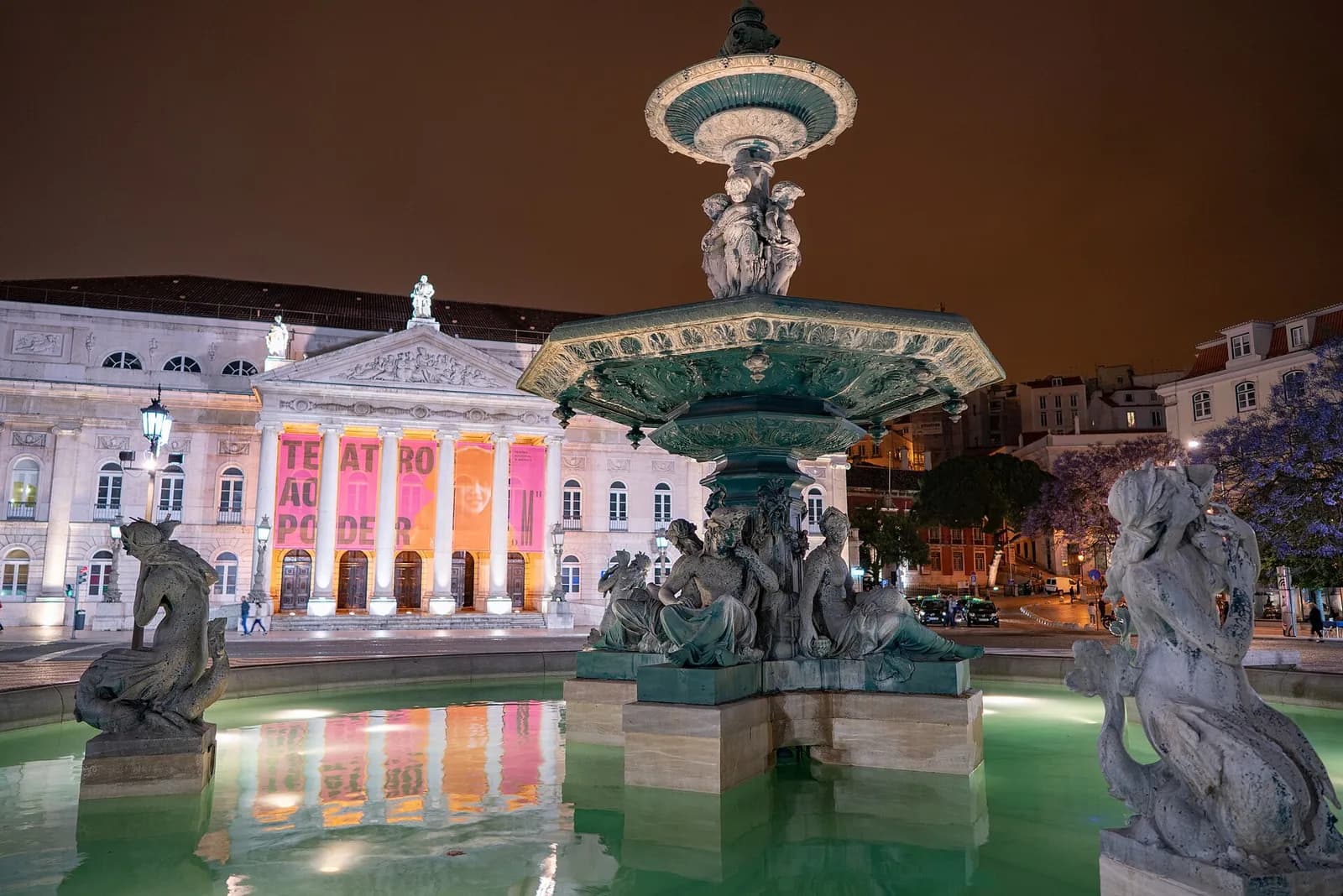
The rebuilt palace on the Rossio burned in 1836. The ruins were cleared, and in 1842 work began on a national theatre promoted by the writer Almeida Garrett. The Teatro Nacional D. Maria II opened on the site in 1846.
1744
Theatro Comico Portuguez
The eight operas are published without the author's name.
1755
Earthquake
The Estaus palace is destroyed and later rebuilt.
25 May 1773
New Christian status abolished
31 March 1821
Inquisition abolished
1825
Archives to the Torre do Tombo
The Lisbon tribunal's records begin to enter the national archive.
1836
Palace burns
1838
Gonçalves de Magalhães's play opens in Rio
1846
Teatro Nacional D. Maria II opens
Built on the ruins of the Estaus palace.
1966
Santareno publishes O Judeu
20 February 1981
O Judeu premieres at the D. Maria II
Why it still matters
Writers in Brazil and Portugal took up his story. In Rio in 1838 Gonçalves de Magalhães staged António José, ou o Poeta e a Inquisição, a play linked to the beginning of Romanticism in the Brazilian theatre. In Portugal, his life inspired a historical novel by Camilo Castelo Branco.
The playwright Bernardo Santareno published O Judeu in 1966, at a harsh moment of the Estado Novo dictatorship, and it could not be staged. It premiered on 20 February 1981 at the Teatro Nacional D. Maria II, after Santareno's death in 1980, in a production with seventy people on stage. The theatre stood on the site of the palace where the play's hero had been imprisoned and tried.
“Palácio dos Estaus, seat of the Inquisition in Lisbon. On its ruins the Teatro Nacional D. Maria II was built.”
The director Jom Tob Azulay finished a film, O Judeu, in 1995. Da Silva's own work took longer to return. In 1956 the director António Pedro complained that his books were not in the shops and his plays were not on stage; from the late 1960s, and above all after the 1974 revolution, the operas entered the repertoire of independent and national companies, and puppet companies in Lisbon and Porto staged them again.
His trials are also unusually well documented. Both files, and those of his wife and mother, are in the Torre do Tombo, which ran a project from 2007 to 2009 to digitise the whole archive of the Lisbon Inquisition. The two trials are bound together: the first fills folios 1 to 80, the second folios 81 to 398.
FAQs
Why was António José da Silva called 'o Judeu'?
He came from a New Christian family, descended from Jews forcibly baptised in 1497, and he and his parents were tried by the Inquisition for secretly practising Judaism. His comedies were popularly called the óperas do Judeu, the Jew's operas.
How and where did he die?
He was sentenced at an auto-da-fé inside Lisbon's São Domingos church on 18 October 1739 and handed to the secular justice. He was garrotted and his body burned, the 'mercy' shown to condemned prisoners who said they would die as Christians. Executions in Lisbon took place apart from the auto, by the river; historians name the Terreiro do Trigo.
What did he write?
Eight comic operas for puppets, staged at the Bairro Alto public theatre between 1733 and 1738, including the Vida do Grande D. Quixote and As Guerras do Alecrim e da Manjerona. They were published anonymously in 1744 in the Theatro Comico Portuguez.
Was he really a secret Jew?
In 1726, under interrogation, he confessed to keeping the Sabbath and Jewish fasts taught by an aunt, and he was then tortured for saying too little about his mother. In 1737–1739 he denied every charge and insisted he was a Catholic. Historians still disagree: António José Saraiva thought him innocent of Judaism, while others read his plays as the work of a secret Jew.
Can I read his trial records?
Yes. The Torre do Tombo holds both of his trials and has digitised them. The second trial is catalogued on Digitarq as PT/TT/TSO-IL/028/08027-1 and the first as PT/TT/TSO-IL/028/08027.
On the timeline
Open the timelineNearby moments from restoration and the gold of brazil (1640–1750).
In the early hours, lightning strikes the castle keep of Campo Maior in the Alentejo, which was being used as a gunpowder magazine holding some 6,000 arrobas (around 90 tonnes) of powder. The explosion and fire kill about 800 people and destroy roughly two-thirds of the town's buildings.
Diogo Inácio de Pina Manique is born in Lisbon. As Intendant-General of Police under Queen Maria I he introduced public street lighting and modern policing to Lisbon and founded the Casa Pia in 1780 to educate orphaned and abandoned children.
Maria Francisca, the future Maria I, is born at the Ribeira Palace in Lisbon. She became Portugal's first undisputed queen regnant in 1777, but by 1792 she was deemed insane — George III's doctor, Francis Willis, was summoned from London to treat her — and her son João ruled as regent.
António José da Silva, 'o Judeu'
Tomás António Gonzaga, poet of 'Marília de Dirceu' and later a conspirator in Brazil's Inconfidência Mineira, is born in Porto. Exiled to Mozambique for his part in the plot, he died there in 1810.
Coming up in history
All long reads 20 October 1570João de Barros, the historian of Portuguese Asia who never went there
 21 October 1520Magalhães reaches the Cape of the Virgins: 21 October 1520
 22 October 1383Fernando I dies in Lisbon, and the crisis of 1383–85 begins
 23 October 2022Adriano Moreira (1922–2022): Salazar’s reformer in democracy’s parliament
20 sources
Archives, scholarship and reporting this article was checked against.
- 1
Processo de António José da Silva (PT/TT/TSO-IL/028/08027-1)Arquivo Nacional Torre do Tombo, Digitarq
- 2
António José da Silva, as Obras do diabinho da mão furada e a Inquisição PortuguesaMarkus Ebenhoch, Antíteses (Universidade Estadual de Londrina), v. 10, n. 20, 2017
- 3
António José da Silva «O Judeu»: Cronologia da vida e obraBiblioteca Nacional de Portugal
- 4
Roteiro da Inquisição em Lisboa: uma possibilidade cultural?João Miguel Cabral Borges Capela, master's dissertation, Iscte – Instituto Universitário de Lisboa, 2021
- 5
O tribunal do Santo Ofício nas óperas de Antônio José da Silva, o JudeuKenia Maria de Almeida Pereira, Arquivo Maaravi (UFMG), v. 15, n. 28, 2021
- 6
Metáforas de um drama histórico: O Judeu, de Bernardo SantarenoCristina Abranches Guerreiro, Sinais de Cena, n. 12, 2009
- 7
- 8
- 9
- 10
Antônio José da Silva: um cavaleiro andante na Lisboa do século XVIIIJosevania Souza de Jesus Fonseca, ANPUH (Associação Nacional de História)
- 11
Silva, Antonio José daIsidore Singer and George Alexander Kohut, Jewish Encyclopedia (1906)
- 12
De fio a pavio: a história da Inquisição Portuguesa revisitada (review of Marcocci and Paiva, 2013)Georgina Silva dos Santos, Tempo (Universidade Federal Fluminense), 2014
- 13
- 14
- 15
- 16
«Guerras do Alecrim e Mangerona» de António José da Silva, «o Judeu»Duarte Ivo Cruz, e-cultura (Centro Nacional de Cultura)
- 17
HistóriaTeatro Nacional D. Maria II
- 18
- 19
Caleidoscópio de uma culturaJornal do Brasil, 17 November 2010
- 20
Image credits
- The former Inquisition palace on the Rossio in an engraving by Legrand, dated to the early nineteenth century. This is the building as rebuilt after the 1755 earthquake; it burned down in 1836. Da Silva was held in the older palace on the same site from 1737 to 1739. Legrand, Public domain, via Wikimedia Commons.
- 'Procession de l'Auto da Fé', a French engraving of about 1741 from the Biblioteca Nacional. Wikimedia Commons describes it as an auto-da-fé on the Rossio, but the place it shows is uncertain. By da Silva's time Lisbon's autos were held inside São Domingos church. Unknown author, Public domain, via Wikimedia Commons.
- The Estaus palace on the Rossio before the 1755 earthquake, in a pen drawing made in 1889 by Júlio de Castilho from an older printed view. The Inquisition's Lisbon tribunal sat here from 1584. Júlio de Castilho, Public domain, via Wikimedia Commons.
- Inside the Igreja de São Domingos, beside the Rossio. Da Silva was sentenced at autos-da-fé held in this church in 1726 and 1739. Only the chancel, crypt and sacristy survived the 1755 earthquake, and the scarred stone is the mark of a fire in 1959. Fofo from Sabadell, Catalunya, CC BY-SA 2.0, via Wikimedia Commons.
- The Teatro Nacional D. Maria II, opened in 1846 on the site of the Inquisition's Estaus palace and rebuilt after a fire in 1964, seen across the Rossio in 2018. Nan Palmero from San Antonio, TX, USA, CC BY 2.0, via Wikimedia Commons.