

João de Barros, the historian of Portuguese Asia who never went there
For more than thirty years the reports from India crossed the desk of the factor of Lisbon's Casa da Índia. He turned them into the Décadas da Ásia, the official history of the Portuguese in the East, and died in debt at his country house near Pombal.
At a glance
- João de Barros, the historian of the Portuguese in Asia, died on 20 October 1570 at his country house at Ribeira de Litém, near Pombal, aged about 74.
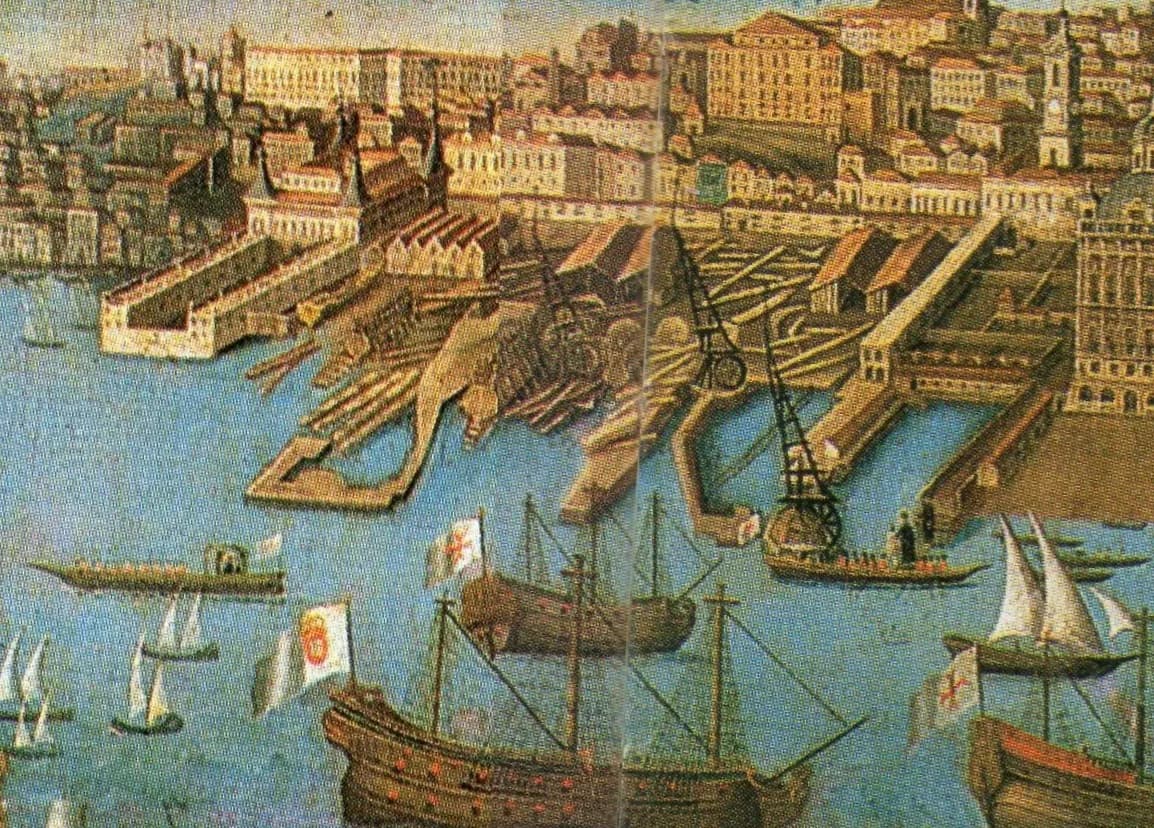
- As factor of the Casa da Índia, the crown's trading house in Lisbon, from 1533 until 1567 or early 1568, he read the reports and letters that came back from the East. He never went to Asia.
- His Décadas da Ásia appeared in 1552, 1553 and 1563. A fourth volume, revised by João Baptista Lavanha, was printed in Madrid in 1615.
- He used Asian sources, including a Persian chronicle and a Chinese cosmography interpreted for him by a Chinese slave, and became known as the “Portuguese Livy”.
- In 1540 he published the second grammar of Portuguese, after Fernão de Oliveira's of 1536. A colonising fleet he backed sailed for Maranhão in Brazil in late 1535, was wrecked, and left him in debt for life.
A death in debt near Pombal
João de Barros died on 20 October 1570 at Ribeira de Litém, near Pombal in central Portugal. He was about 74. A few years earlier, at about seventy and after a thrombosis, he had retired from the crown's trading house in Lisbon and withdrawn to his country house there.
He had known the place for forty years. When plague struck Lisbon in 1530 he moved to the house near Pombal, and there he wrote Ropicapnefma, a dialogue on “spiritual merchandise” printed in 1532. He came back to it at the end with debts he could not clear.
The debts were a standing joke. To make time for his books, the story went, he had passed up the profits of “an office that could yield ten for one”, enough to keep the ten children he had. The phrase is the historian António Borges Coelho's, quoted in a recent edition of Barros's dialogue. Another reference work counts eleven children, six daughters and five sons.
What he left of value was on paper. Three volumes of his history of the Portuguese in Asia were in print and a fourth was in draft. A planned geography and a book on trade were never seen again. Two years after his death, Luís de Camões published Os Lusíadas, the epic that told the same story in verse.
Barros is remembered as the “Portuguese Livy”, the man who wrote the official history of Portugal's first decades in Asia. He never went there. Almost everything he knew of India, China and Persia reached him at a desk in Lisbon.
A courtier who wanted to write history
Barros was born around 1496, probably in Viseu, the illegitimate son of a nobleman, Lopo de Barros. He grew up at the court of King Manuel I, learning Latin, mathematics and the humanities with other boys of good family. As a child, Borges Coelho writes, he played on top of the clothes chests of the king's son, the future João III.
His first book was a chivalric romance, the Crónica do Imperador Clarimundo, printed in 1520 or 1522; scholars give both dates. In it a giant, Fanimor, foretells the glories of the future kings of Portugal. In the prologue to his first Décade, Barros said he had written it to “sharpen the style” for his real subject, Asia.
King Manuel liked the book enough to give its author the task of writing the deeds of the Portuguese in the East. Manuel died in 1521 and the plan stalled. When Barros came back to it years later, he wrote from an unusual vantage point: the Casa da Índia.
c. 1496
Born, probably in Viseu
Raised at the court of Manuel I.
1520 or 1522
Crónica do Imperador Clarimundo
A chivalric romance and his first book.
1525–1528
Treasurer
Of the Houses of India, Mina and Ceuta in Lisbon.
1530–1532
Ropicapnefma
Written at his country house near Pombal while plague hit Lisbon; printed in 1532.
1533
Factor of the Casa da Índia
He held the post for more than thirty years.
March 1535
Captaincy in Brazil
Granted a share of the coast from Rio Grande to Maranhão.
Late 1535
The Maranhão fleet sails
Ten ships, wrecked approaching Maranhão.
1539–1540
Cartinha and Gramática
A reading primer and a grammar of Portuguese.
1552, 1553, 1563
Décadas I, II and III
Printed in Lisbon.
1567 or January 1568
Retires
Made a fidalgo and given a pension.
20 October 1570
Dies at Ribeira de Litém
Near Pombal, aged about 74.
1615
Década IV
Revised by João Baptista Lavanha and printed in Madrid.
Treasurer, factor and ruined coloniser
João III first put Barros in charge of São Jorge da Mina, the Portuguese fortress in West Africa. Whether he served there is unclear. One modern account says he probably never took up the post; older ones send him to Guinea in 1522.
In 1525 he became treasurer of the Houses of India, Mina and Ceuta, and held the post until 1528. In 1533 he was made factor of the Casa da Índia, a more prestigious office; the 1911 Britannica puts the appointment in 1532. He kept it until he retired in 1567, or in January 1568 by another account, when King Sebastião made him a fidalgo, a nobleman of the royal household, and gave him a pension.
In between, he gambled on Brazil. To attract settlers, the crown was dividing the Brazilian coast into hereditary captaincies, each granted to a lord called a donatário. In March 1535 Barros received a captaincy in the north in partnership with Aires da Cunha, a nobleman with experience at sea, and a further grant went to Fernão Álvares de Andrade, the kingdom's high treasurer. Between them they held the coast from Rio Grande to Maranhão.
The partners fitted out a lavish expedition in Lisbon. António Galvão, a contemporary chronicler, counted ten ships, 900 Portuguese and 130 horses. The fleet sailed under Aires da Cunha at the end of 1535 and was wrecked approaching Maranhão. The 1911 Britannica dates the voyage to 1539, but the grants of March 1535 and modern scholarship put it in 1535 or 1536.
“A Portuguese nobleman called Aires da Cunha also went to this river Maranhão. He took ten ships, nine hundred Portuguese, a hundred and thirty horses, and went to great expense, in which those who fitted it out were ruined, and the one who lost most was João de Barros, factor of the Casa da Índia, who, being noble and of generous disposition, paid for Aires da Cunha and others who died there, out of pity for the wives and children they left behind.”
The loss ruined him, and he never recovered financially. He put money into a second Brazilian venture in 1565, which also failed. It was after the wreck, in one account, that he offered to “write about the things of India”.
A grammar for an empire
Barros also wrote for the schoolroom. In 1539 he published a Cartinha, a primer for learning to read, bound with the commandments of the Church. In 1540 the Lisbon printer Luís Rodrigues issued his Gramática da Língua Portuguesa. It was the second grammar of Portuguese: Fernão de Oliveira had published the first in 1536.
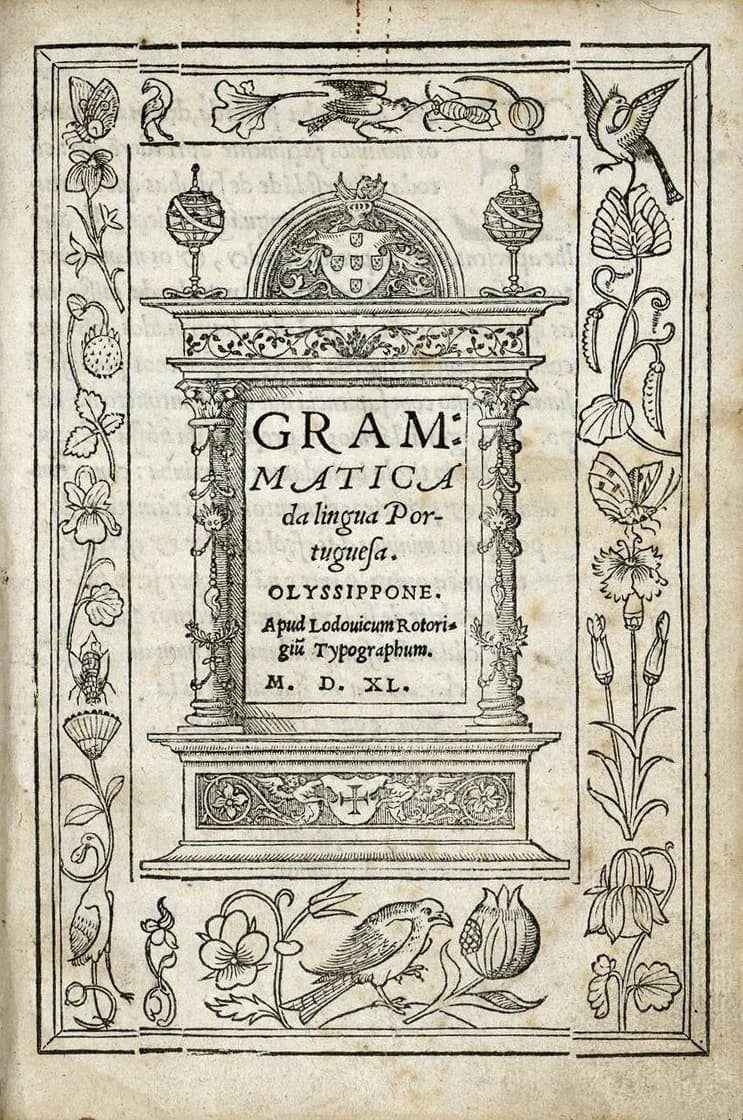
The grammar was a schoolbook built on the Latin model. Because the Portuguese were “children of the Latin language”, Barros argued, they should use its grammatical terms. He covered spelling, syllables, parts of speech and syntax, and took many of his examples from Portugal itself, praising Lisbon as one of the noblest cities in the world, and from the spices and peoples of the empire.
Bound with it was the Diálogo em louvor da nossa linguagem, a dialogue between a father and son in praise of Portuguese. Barros claimed the language was close enough to Latin that a Latinist could follow Portuguese verse, and rich enough that even Aristotle would not have run short of words in it. He also tied it to conquest. As the Romans had made subject peoples speak Latin, he expected the Portuguese to leave their language, customs and faith in the lands they took.
Portuguese, he wrote, was a daughter of Latin that had taken in terms from 72 other languages, among them Arabic and the tongues of the peoples in Africa and Asia that Portugal had conquered or traded with. One of his own example sentences reads, in translation, “João de Barros was the first who put our language into a grammar”. It passes over Oliveira's book of four years earlier.
Scholars count the grammar and its dialogue among the founding works of the study of Portuguese. They also show the frame of mind Barros brought to his history: Latin as the model, and Portugal as the heir of the last great monarchy, Rome.
Writing Asia from a desk in Lisbon
Barros planned a vast work on the model of the Roman historian Livy, in three parts. The Conquest would tell the deeds of the Portuguese in Europe, Africa, Asia and Brazil. The Navigation would give a “universal geography of all that was discovered”, and the Trade would describe goods, weights, measures and prices. Only the Asian part of the Conquest survives; much of the geography and trade sections was apparently written and then lost.
He had a first draft of the Asian history by about 1539 and kept adding to it as new reports arrived. Each volume held ten books, which is why they are called Décadas, or decades.
As factor he could read the regulations, itineraries, reports, letters and commercial papers that reached Lisbon from Africa and the East, and he questioned the men who came home. He found them trying. Sailors, he complained, wanted the book to be about voyages and shipwrecks, the soldier about fighting, the geographer about places and the merchant about prices, “each one in love with his own inclination”.
He preferred documents, and he went looking for Asian ones. He knew chronicles of the kings of Kilwa, Hormuz, Gujarat and Vijayanagara, and a history of the kings of Persia, the “Tarigh”, “which we have in our power, in the Persian language”. He had oriental manuscripts translated by local scholars.
China fascinated him most. He obtained a Chinese cosmography, a printed book that described the country like an itinerary, and a Chinese slave who could read and write Portuguese, bought to interpret it. The pages on China in his third Décade are admiring. In the Chinese, he wrote, were “all the things for which the Greeks and Latins are praised”.
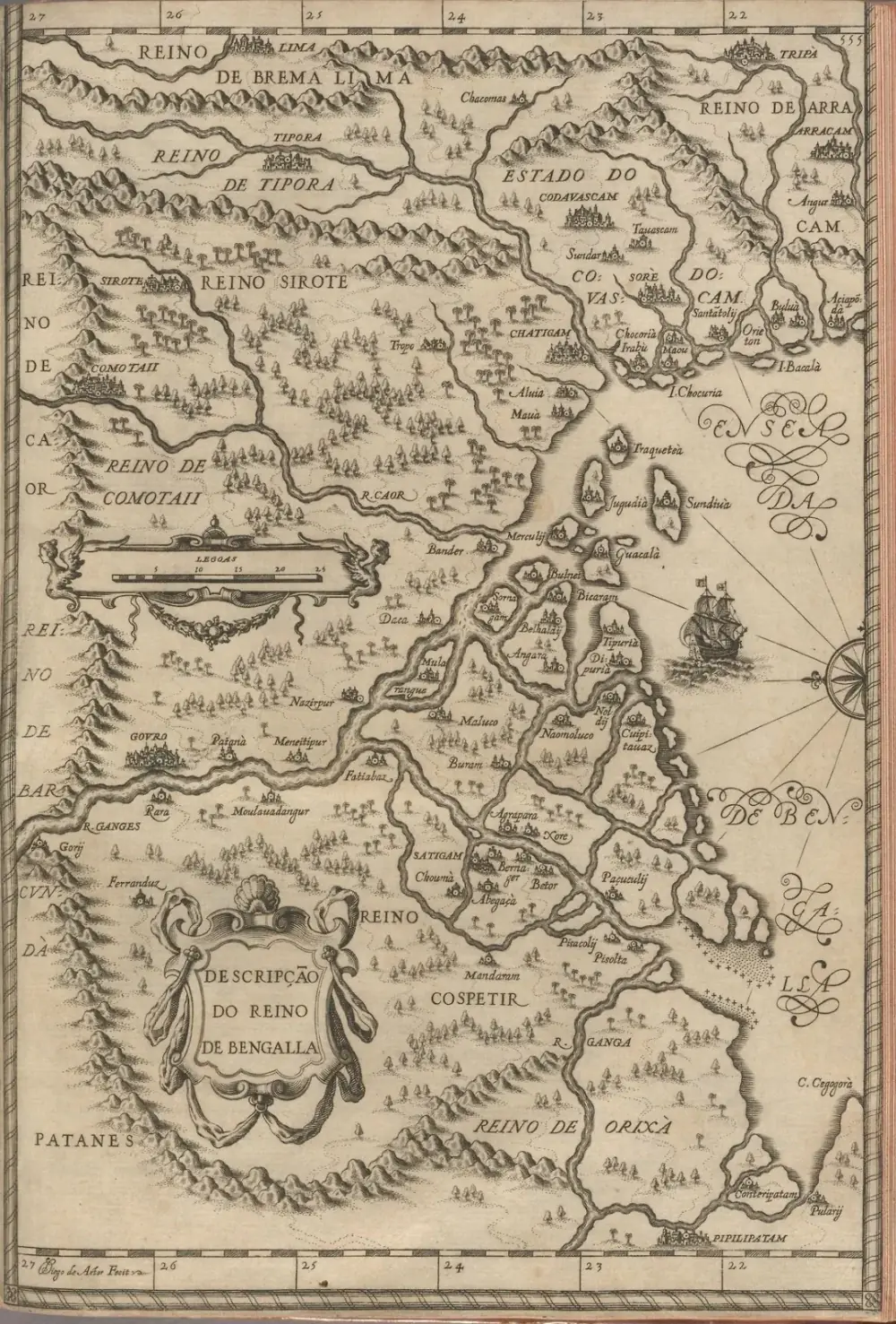
Maps reached him too. His correspondents in the East sent maps and books printed in oriental languages, and in the first Décade he mentions a drawing sent to him in three sheets in 1548. When his fourth volume was printed in 1615, its editor, João Baptista Lavanha, added notes and maps.
Four Décadas in sixty-three years
The first Décade was printed in Lisbon on 28 June 1552, and the second followed in 1553. The third took ten more years and appeared in 1563. Barros was not alone in the field: Fernão Lopes de Castanheda's history of the Portuguese conquest of India had begun to come off the press in 1551.
| Volume | First printed | What it covers | Notes |
|---|---|---|---|
| Década I | Lisbon, 28 June 1552 | From the fifteenth-century voyages down the West African coast to the arrival in India and the first Portuguese trading and military footholds in Asia | Book IV tells Vasco da Gama's first voyage to India |
| Década II | Lisbon, 1553 | A shorter span: the viceroy Francisco de Almeida, then the governor Afonso de Albuquerque, whom Books IV to X follow until his death at Goa in 1515 | Says as little as possible about the quarrel between Almeida and Albuquerque |
| Década III | Lisbon, 1563 | The governors who came next, among them Lopo Soares de Albergaria, Diogo Lopes de Sequeira, Duarte de Meneses, Vasco da Gama and Henrique de Meneses | Opens with Barros's manifesto on history and contains his long description of China |
| Década IV | Madrid, 1615 | From the disputed succession of 1526, when Lopo Vaz de Sampaio took office in the absence of Pedro Mascarenhas, to the late 1530s under the governor Nuno da Cunha, when the Ottoman sultan sent a fleet against the Portuguese in India | Posthumous; revised and expanded by João Baptista Lavanha, with notes and maps |
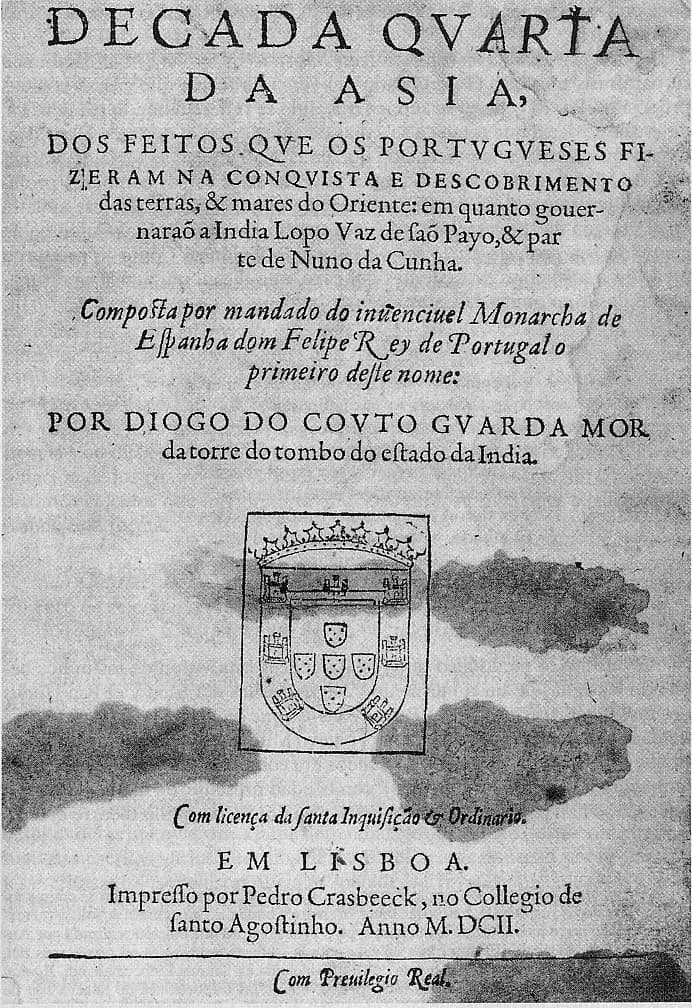
Each volume has ten books. Diogo do Couto's Década IV, printed in Lisbon in 1602 and covering the same governors, is a different book: Couto's continuation of the series.
The books travelled fast. An Italian translation was printed in Venice in 1561 and 1562, before the third volume had even appeared in Portuguese.
The fourth Décade was still in draft when Barros died, and his notes went through what one historian calls a period of “turbulent wanderings”. João Baptista Lavanha revised, expanded and annotated the text, and it was printed in Madrid in 1615, 45 years after the author's death.
By then the series had a second author. Diogo do Couto, keeper of the archives of the Portuguese State of India in Goa and royal chronicler, took account only of the three volumes Barros had published and started his own continuation at Década IV, printed in 1602. He went on to write nine Décadas in all. Unlike Barros, Couto knew India at first hand, and he leaned heavily on oral testimony, Portuguese and Asian.
The Portuguese Livy and what he left out
Barros's readers gave him the highest place. He was called the Portuguese Livy, after the Roman historian whose model he followed and whose own history is read in decades, and the 1911 Encyclopaedia Britannica called him the first great historian of his country. In colonial Brazil, the friar Vicente do Salvador, who finished his História do Brasil in 1627, praised three historians in its dedication: Barros, Camões and Couto.
He was also a royal servant writing the crown's story, and he said openly that he chose what to tell. History, he wrote in the prologue to the third Décade, was “a field where all doctrine is sown, divine, moral, rational and instrumental”. Truth was its first and main part, he added, “but in some things it must not be so much”.
“Like that painter who, portraying King Philip, father of Alexander, from life, set the pose of his face so as to hide the defect he had, which was one eye fewer.”
In practice that meant silence. Barros left out the attempted mutiny on Vasco da Gama's first voyage and said nothing of Afonso de Albuquerque's cruelty to the people he defeated. He also dropped an Indian legend in which the apostle Thomas turned into a peacock before he died, which did not suit the dignity of an official chronicle.
Of the quarrel between Albuquerque and the viceroy Francisco de Almeida he wrote only what the story required. His subject, he explained, was the war the Portuguese waged on the “infidels”, not the one they fought among themselves, and he would not stain “such illustrious deeds” with “hatred, envy, greed”.
He backed the crown's holy war against Islam and urged João III to carry the Christian faith to Ethiopia, Arabia, Persia and India. Yet the same books describe African and Asian rulers, cities and customs with care, and Barros wrote about China with open admiration. Historians have attacked his moralising as a flaw in his credibility. Others reply that he selected on purpose and by rule, to shape a history that would teach future governors.
The 1911 Britannica found him largely impartial, but the narrator and apologist of his countrymen's deeds, without the critical spirit of Damião de Góis.
Why Barros still matters
- Born
- About 1496, probably in Viseu
- Died
- 20 October 1570, Ribeira de Litém, near Pombal
- Offices
- Treasurer of the Houses of India, Mina and Ceuta (1525–1528); factor of the Casa da Índia (1533 to 1567 or 1568)
- Main work
- Ásia, the Décadas da Ásia: four volumes, 1552, 1553, 1563 and 1615
- Other works
- Clarimundo (1520 or 1522), Ropicapnefma (1532), Cartinha (1539), Gramática da Língua Portuguesa (1540)
- Known as
- The Portuguese Livy
Historians of Portuguese Asia still work from the Décadas. They hold a central place among sixteenth-century Portuguese writing on Asia, for the number of sources Barros used and for their influence on later authors. Parts have been translated for other countries' histories: the chapters of Barros and Couto on Sri Lanka were published in English in Colombo in 1908 as The History of Ceylon.
The grammar has its own place in the history of the language. Linguists count it among the founding works on the Portuguese language, and its dialogue made an early case that Portuguese was a language of learning, able to stand beside Latin.
His version of events also shaped how Portugal told its own story. The heroic Asia of the Décadas, without its mutinies and massacres, is the same glorious expansion that Camões put into verse in 1572, and the chapters on Vasco da Gama were probably among the poet's sources. Reading Barros today means reading for what he chose to show and what he chose to hide.
FAQs
Who was João de Barros?
João de Barros (about 1496 to 1570) was a Portuguese historian, grammarian and royal official. As factor of the Casa da Índia in Lisbon from 1533 he had access to the reports coming back from Asia, and he used them to write the Décadas da Ásia, the official history of the Portuguese in the East.
What are the Décadas da Ásia?
They are Barros's history of the Portuguese in Asia, in four volumes of ten books each. Décadas I, II and III were printed in Lisbon in 1552, 1553 and 1563; Década IV, revised by João Baptista Lavanha, appeared in Madrid in 1615. Diogo do Couto continued the series with nine more Décadas from 1602.
Why is João de Barros called the Portuguese Livy?
Because he modelled his history on the Roman historian Livy and, like Livy's history of Rome, arranged it in decades. The label was already in use by the time of the 1911 Encyclopaedia Britannica, which also called him the first great historian of Portugal.
Did João de Barros write the first grammar of Portuguese?
No. Fernão de Oliveira published the first, in 1536. Barros's Gramática da Língua Portuguesa, printed in Lisbon by Luís Rodrigues in 1540, was the second, and it is counted among the founding works on the language.
Where and when did João de Barros die?
He died on 20 October 1570 at his country house at Ribeira de Litém, near Pombal, where he had retired after leaving the Casa da Índia in 1567 or early 1568.
On the timeline
Open the timelineNearby moments from the age of discoveries (1415–1580).
Death in Lisbon of Martim Afonso de Sousa, who led the 1530 expedition that began the systematic colonisation of Brazil. In 1532 he founded São Vicente, the first permanent Portuguese town in the colony, and planted the sugar cane, soon worked by enslaved labour, that would define the colony's economy; he later served as Governor of Portuguese India.
Portuguese captain Estácio de Sá founds the city of São Sebastião do Rio de Janeiro in Brazil, establishing a strategic settlement to expel French colonists from Guanabara Bay.
Dominican friar Gaspar da Cruz dies of plague in Setúbal, having caught it after nursing the sick in Lisbon. Shortly before, his 'Tratado das cousas da China' had been printed in Évora — often described as the first European book devoted entirely to China.
João de Barros and the Décadas
Damião de Góis, the humanist chronicler of King Manuel I and friend of Erasmus, is found dead in his house at Alenquer, months after his release from the Inquisition's prisons. Whether he died from a fall, a fit or a blow, his death remains one of the mysteries of the Portuguese Renaissance.
King Sebastião I and much of the Portuguese nobility are killed at the Battle of Alcácer Quibir in Morocco, the 'Battle of the Three Kings'. The disaster triggered a succession crisis that led to Spanish rule over Portugal from 1580 and gave rise to the enduring myth of Sebastianism.
Pedro Nunes, royal cosmographer and one of Europe's foremost mathematicians, dies in Coimbra. Inventor of the nonius and pioneer of the loxodrome, he placed Portuguese navigation on a scientific footing.
Coming up in history
All long reads 22 October 1383Fernando I dies in Lisbon, and the crisis of 1383–85 begins
 23 October 2022Adriano Moreira (1922–2022): Salazar’s reformer in democracy’s parliament
 24 October 1885The Elevador da Glória: Lisbon's hill funicular, 1885 to 2025
 25 October 1147The siege of Lisbon, 1147: how crusaders and a new king took the city
16 sources
Archives, scholarship and reporting this article was checked against.
- 1
João de Barros (1496-1570)Ana Isabel Buescu, Encyclopaedia of Portuguese Expansion (CHAM, NOVA FCSH), 2009
- 2
Nos primórdios da antropologia moderna: a Ásia de João de BarrosZoltán Biedermann, Anais de História de Além-Mar IV (2003), pp. 29-61, CHAM
- 3
Ropicapnefma, de João de Barros: edição e estudoNatália Albino Pires and Roberto Carmo Antunes (eds), IELT, NOVA FCSH, 2023
- 4
Documental Anthology: Decade of Asia III, João de Barros (introduction)Revista de Cultura, Instituto Cultural de Macau
- 5
Barros, João deEdgar Prestage, Encyclopaedia Britannica, 11th edition (1911), vol. 3, via Wikisource
- 6
Estudio de los ejemplos y referencias citadas por Barros en la Grammatica da Língua Portuguesa (1540)Virginia Andrea Garrido Meirelles, Revista argentina de historiografía lingüística XVI:1 (2024), pp. 21-36
- 7
As Décadas da Ásia: a questão da escrita da história e sua dimensão políticaRubens Leonardo Panegassi, Anais do XXVI Simpósio Nacional de História, ANPUH, São Paulo, 2011
- 8
Cronologia: 1535Arquivo Nacional (Brazil), MAPA – Memória da Administração Pública Brasileira
- 9
Barros, João deWho Was Who in Indology (Klaus Karttunen)
- 10
Entre histórias: a leitura das Décadas de João de Barros na metrópole e na América portuguesaRicardo Souza de Carvalho, Boletim do CESP 20:26 (2000), Universidade Federal de Minas Gerais
- 11
Grammatica da lingua portuguesa / [João de Barros], Lisbon, Luís Rodrigues, 1540Biblioteca Nacional de Portugal, Biblioteca Nacional Digital
- 12
Asia de Ioam de Barros, dos fectos que os Portugueses fizeram no descobrimento e conquista dos mares e terras do Oriente (1552-1615)James Ford Bell Library, University of Minnesota (UMedia digitised copy)
- 13
Da Asia de João de Barros: Década segunda, parte primeiraRegia Officina Typografica, Lisbon, 1777 (digitised by the Internet Archive)
- 14
- 15
- 16
Image credits
- The warehouses and Ribeira das Naus shipyard of the Casa da Índia on Lisbon's waterfront, in a panorama painted around 1730 by an unknown artist. It shows the riverfront some two centuries after Barros's time, not as he knew it. Unknown artist, Public domain, via Wikimedia Commons.
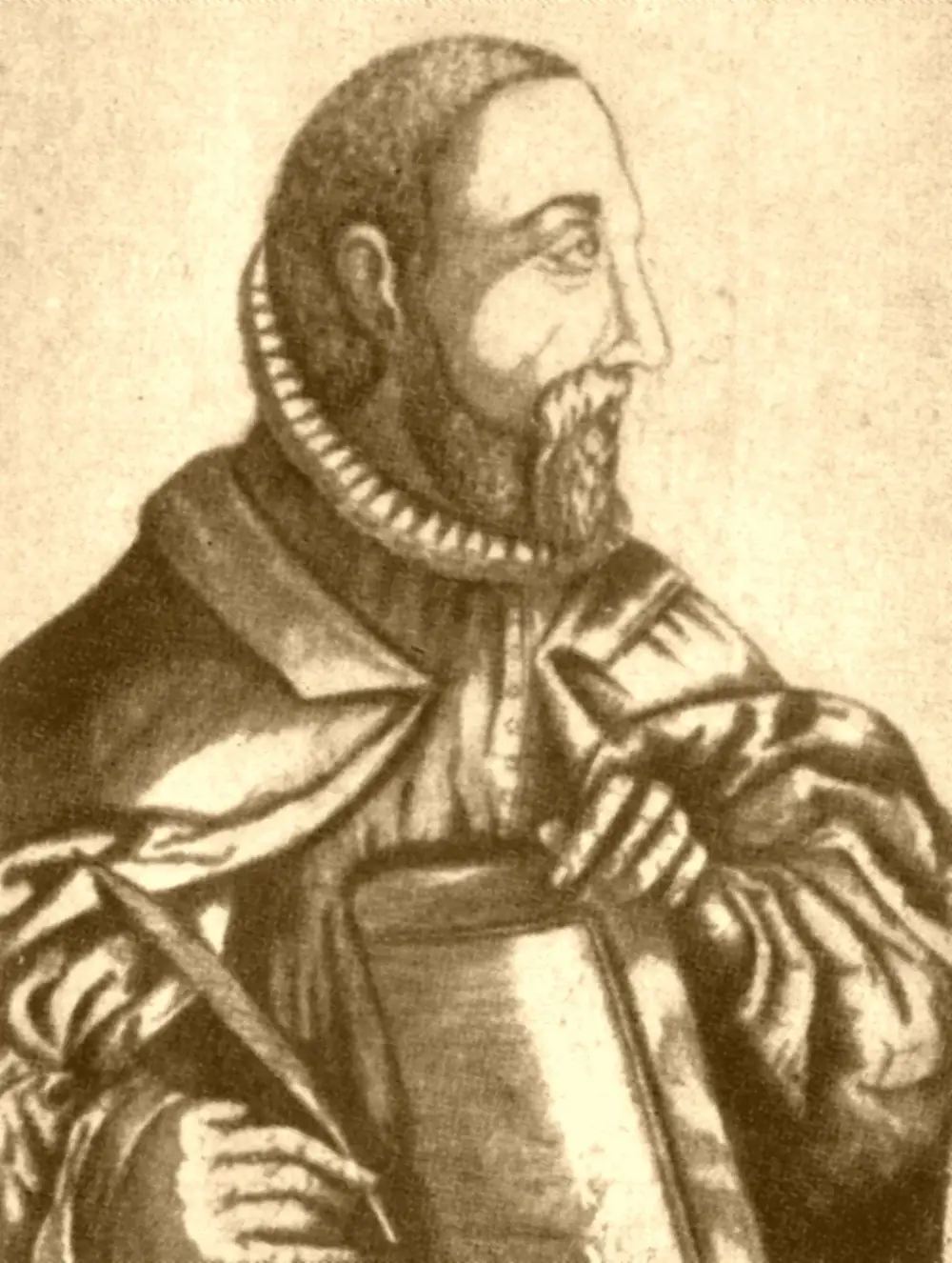
- João de Barros with pen and book, in a portrait that Wikimedia Commons dates to 1615, the year his fourth Décade was printed. Unknown author, Public domain, via Wikimedia Commons.
- Title page of Barros's Grammatica da lingua portuguesa, printed in Lisbon by Luís Rodrigues in 1540. João de Barros, Public domain, via Wikimedia Commons.
- Map of the kingdom of Bengal from the 1615 Madrid edition of Barros's fourth Décade, which João Baptista Lavanha published with added maps. It is signed by the engraver Diego de Astor; the copy is in Harvard's Houghton Library. João de Barros, Public domain, via Wikimedia Commons.
- Title page of Diogo do Couto's Década IV, printed in Lisbon by Pedro Crasbeeck in 1602. It covers the rule of Lopo Vaz de Sampaio and part of Nuno da Cunha's, the same ground as Barros's own fourth volume. Diogo do Couto, Public domain, via Wikimedia Commons.