

1415–1580
The age of discoveries
Portugal captured Ceuta in North Africa on 21 August 1415, then began settling Madeira in 1420 and the Azores in 1439. Its ships worked down the African coast until Vasco da Gama reached India by sea in 1498 and Pedro Álvares Cabral landed in Brazil in 1500, and forts followed from Goa to Malacca. At home the Inquisition began in 1536, and King Sebastião died at Alcácer Quibir in 1578.
12 key moments · 78 in all
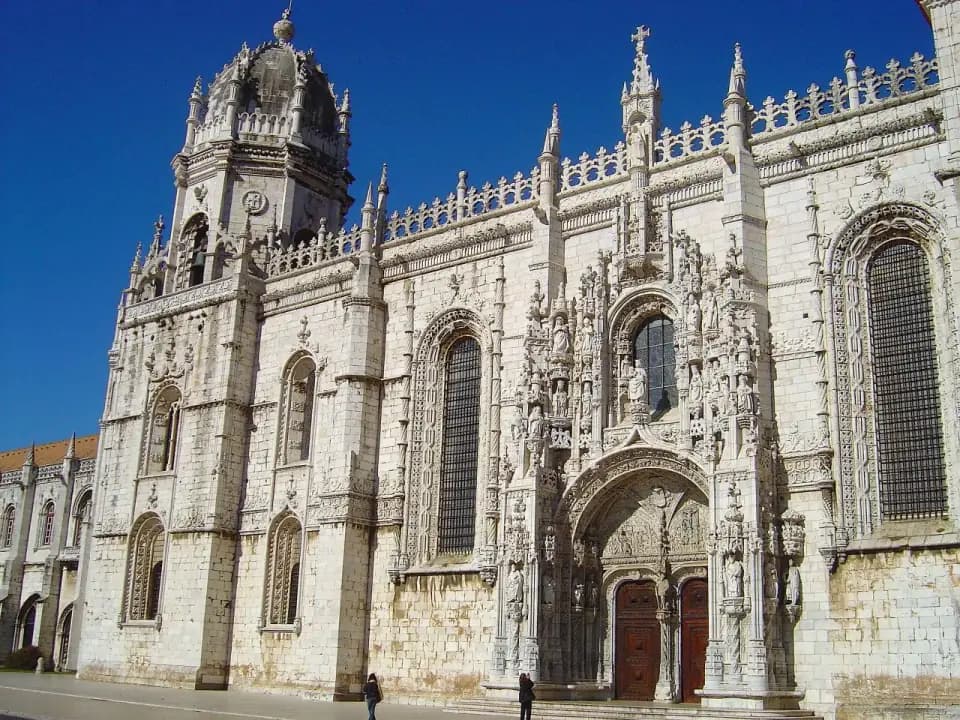
Portuguese forces under King João I, accompanied by his sons including the young Prince Henry the Navigator, storm and capture the Moroccan city of Ceuta in a single day — the conquest that begins the Portuguese overseas empire.
At the request of King João I, the Pope appoints Prince Henry the Navigator administrator of the Order of Christ, the Portuguese successor to the Templars. The order's great wealth would help fund the voyages of exploration down the West African coast.
By royal charter, King João I abolishes the old Hispanic Era of Caesar and orders that documents in Portugal be dated by the Christian era of Anno Domini — the last Iberian kingdom to make the change.
In Bruges, Philip the Good, Duke of Burgundy, founds the Order of the Golden Fleece during the celebrations of his marriage to Isabella of Portugal, daughter of King João I and Philippa of Lancaster, who would become a leading figure of Burgundian diplomacy.
The future King Afonso V is born in Sintra, son of King Duarte. Left king at the age of six, he would earn the nickname 'o Africano' for his conquests in Morocco.
King Duarte I of Portugal, known as 'the Eloquent' for his philosophical writings, dies of plague at Tomar. He was succeeded by his six-year-old son Afonso V, with Queen Leonor named regent under his will.
Death of Infante Fernando, 'the Constant Prince', in captivity in Fez, Morocco. Captured at the disastrous Tangier expedition of 1437 and offered as ransom for the Portuguese surrender of Ceuta, he chose to remain a prisoner rather than see his country lose its African foothold. His death after six years in chains turned him into a symbol of sacrificial chivalry, later immortalised in Calderón's play 'El príncipe constante'.
The first large auction of enslaved Africans in Europe takes place at Lagos in the Algarve, where 235 captives brought back by caravels sponsored by Prince Henry the Navigator are sold, marking the grim beginning of the European Atlantic slave trade.
Pope Nicholas V issues the bull 'Romanus Pontifex', granting the Portuguese crown exclusive rights to conquest, trade and navigation along the African coast south of Cape Bojador and sanctioning the enslavement of non-Christians — a papal charter for Portugal's overseas expansion.
Birth of King João II ('The Perfect Prince') in Lisbon. He would become one of Portugal's most important monarchs, sponsoring Bartolomeu Dias's voyage around the Cape of Good Hope and negotiating the Treaty of Tordesillas.
Cardinal Jaime of Portugal, a grandson of King João I and archbishop of Lisbon, dies in Florence in his mid-twenties on his way to a papal congress at Mantua. His funerary chapel at San Miniato al Monte, with a tomb by the Rossellino brothers and decoration by Luca della Robbia and the Pollaiuolo brothers, is one of the great monuments of the Florentine Renaissance.
Infante Henrique — Prince Henry the Navigator — dies at his Vila do Infante near Sagres, aged 66. Patron of the voyages down the African coast that opened the Age of Discovery, he lies in the Founder's Chapel of the Monastery of Batalha.
Portuguese navigators Pêro Escobar and João de Santarém discover the island of Príncipe in the Gulf of Guinea, sighting it on the feast day of Santo Antão — the island's original name — twenty-seven days after their discovery of São Tomé. It was renamed Ilha do Príncipe in 1502 in honour of the heir to the Portuguese throne.
Isabel of Portugal, Duchess of Burgundy, dies at Aire-sur-la-Lys aged 74. The only surviving daughter of João I and Philippa of Lancaster, she governed the Burgundian Low Countries in her husband's absence, negotiated trade deals with England and was the mother of Charles the Bold.
Portugal and Castile sign the Treaty of Alcáçovas, ending the War of the Castilian Succession; Castile keeps the Canaries while Portugal's possession of Madeira, the Azores, Cape Verde and Guinea is recognised — the first treaty to divide the Atlantic world between European powers.
King Afonso V of Portugal, known as 'the African' for his conquests in Morocco, dies at Sintra and is succeeded by his son João II, under whom Portuguese exploration would flourish.
King João II grants an annuity 'in consideration of his services' to Diogo Cão, back in Lisbon from the voyage on which he became the first European to reach the mouth of the Congo. Days later he was given a coat of arms bearing the two padrões — carved stone pillars — he had planted on the African coast.
Pêro da Covilhã and Afonso de Paiva set out from Santarém on João II's secret overland mission to find the spice route to India and the court of Prester John. Travelling disguised as merchants via Cairo and Aden, Covilhã would reach India years before Vasco da Gama.
Portuguese explorer Bartolomeu Dias lands at Mossel Bay, South Africa, after rounding the Cape of Good Hope, becoming the first known European to sail beyond the southern tip of Africa.
Nzinga a Nkuwu, ruler of the Kingdom of Kongo, is baptised by Portuguese missionaries and takes the Christian name João, after Portugal's king. The alliance brings priests and masons, but within a generation his son Afonso I is writing to João III to protest that Portuguese slave traders are depopulating his kingdom.
Death at age 16 of Prince Afonso, only legitimate son and heir of King João II and Queen Eleanor, after a fall from a horse on the banks of the Tagus near Santarém. The tragedy ends the direct Avis succession and sets in motion the dynastic chain that, three generations later, will deliver Portugal into the hands of the Habsburgs.
Ferdinand and Isabella of Spain sign the Alhambra Decree, ordering the expulsion of all Jews who refuse to convert. Tens of thousands of Spanish Jews flee to Portugal, significantly increasing the Jewish population until Manuel I's own expulsion edict in 1496.
Christopher Columbus, returning from his first voyage to the Americas, arrives in the Tagus estuary near Lisbon due to a storm. His meeting with King João II sparks Portuguese urgency to negotiate what would become the Treaty of Tordesillas.
Pope Alexander VI issues the bull 'Inter caetera', dividing the newly discovered lands outside Europe between Spain and Portugal along a meridian west of the Azores and Cape Verde islands. Portuguese dissatisfaction with the line leads directly to the Treaty of Tordesillas the following year.
The Treaty of Tordesillas is signed between Portugal and Spain, dividing newly discovered lands outside Europe along a meridian 370 leagues west of the Cape Verde islands. Portuguese diplomacy secures the shift of the line westwards from the 100 leagues set by the papal bull of 1493, a decision that would give Portugal its claim to Brazil after Cabral's 1500 landfall.
Birth of João Cidade (later Saint John of God / São João de Deus) in Montemor-o-Novo. He would found the Brothers Hospitallers religious order and become the patron saint of hospitals, the sick, and healthcare workers.
João II, 'o Príncipe Perfeito', dies at Alvor in the Algarve aged 40. The king who broke the power of the great nobles and drove exploration down the African coast towards India was succeeded by his cousin and brother-in-law Manuel I.
At Muge, near Santarém, King Manuel I signs the decree ordering all Jews and Muslims to leave Portugal by the end of October 1497 — a condition of his marriage to Isabella of Aragon, daughter of the Catholic Monarchs. In practice few were allowed to go: most of Portugal's Jews were forcibly baptised the following year, creating the 'New Christians' later hunted by the Inquisition.
Vasco da Gama departs the Restelo, near Lisbon, with four small ships — São Gabriel, São Rafael, Berrio and a supply vessel — and roughly 170 men, in search of the sea route to India. Ten months later he would anchor off Calicut, fulfilling decades of Portuguese effort and rewriting the geography of world trade.
Vasco da Gama's four ships round the Cape of Good Hope after days of contrary winds and enter the Indian Ocean, on the voyage that would reach India the following May and open the first sea route from Europe to Asia.
Vasco da Gama's fleet arrives at Mozambique Island during his first voyage to India, encountering a prosperous Swahili trading settlement and the first major Islamic port on the East African coast.
At sunset Vasco da Gama's fleet anchors off Malindi, on the coast of today's Kenya, after a tense week at hostile Mombasa. Malindi's ruler, a rival of Mombasa's, welcomes the Portuguese and supplies a Gujarati pilot who guides them across the Indian Ocean to Calicut — not, as legend long had it, the famous Arab navigator Ibn Majid.
Vasco da Gama's fleet anchors off Calicut, India, completing the first direct sea voyage from Europe to Asia. When the Zamorin (ruler) later receives the Portuguese, da Gama's modest gifts of cloth, honey, and coral provoke laughter at court — a humiliation that would be repaid with gunboats.
Queen Isabel of Portugal, wife of Manuel I and eldest daughter of Spain's Catholic Monarchs, dies in Zaragoza within an hour of giving birth to a son, Miguel da Paz. Sworn heir to Portugal, Castile and Aragon, the boy might have united the whole Iberian Peninsula under one crown, but he died before his second birthday.
Pedro Álvares Cabral's fleet of 13 ships departs Lisbon for India, carrying about 1,500 men. The expedition would accidentally reach Brazil on April 22, making one of the most consequential landings in the Age of Discoveries.
Pedro Álvares Cabral's fleet of 13 ships, bound for India but sweeping far west across the Atlantic, sights a mountain the crews name Monte Pascoal — the first Portuguese landfall in Brazil. The scribe Pero Vaz de Caminha's account of the following days is known as 'Brazil's birth certificate'.
A boat under Nicolau Coelho from Pedro Álvares Cabral's fleet makes the first contact with the indigenous people of Brazil, exchanging caps and a hat for a feathered headdress, as described by the scribe Pero Vaz de Caminha in his letter to King Manuel I.
Frei Henrique de Coimbra celebrates the first Catholic Mass in Brazil at Coroa Vermelha beach (now Santa Cruz Cabrália, Bahia), four days after Cabral's fleet arrived.
Portuguese navigator Diogo Dias, blown off course during Pedro Álvares Cabral's voyage to India, becomes the first European to sight Madagascar, naming it Ilha de São Lourenço after the feast day of St Lawrence.
The Infanta Isabel, daughter of Manuel I and Maria of Aragon, is born in Lisbon. Married to the Emperor Charles V in 1526, she became Queen of Spain and Holy Roman Empress and governed Spain as regent during her husband's long absences.
Francisco de Almeida departs Lisbon with a fleet of 22 ships as the first Viceroy of Portuguese India, tasked with establishing permanent Portuguese naval dominance in the Indian Ocean.
The Lisbon Massacre begins: a mob attacks New Christians (forcibly converted Jews) near the Church of São Domingos. The pogrom lasts three days and kills between 500 and 4,000 people — one of the darkest episodes in the history of Portugal's Jewish community, three decades before the Inquisition was established.
Days after his handful of ships destroyed the fleet of Hormuz, Afonso de Albuquerque has its young king, Seyf ad-Din, accept terms of submission: a yearly tribute of 15,000 xerafins, duty-free entry for goods from Portugal and a site for a fort. Mutiny among his own captains wrecked the plan within months, and Portugal only took the Gulf trading hub in 1515.
 Long readAlbuquerque at Hormuz: the treaty of 10 October 1507
A Portuguese fleet under Viceroy Francisco de Almeida defeats the combined navies of Mamluk Egypt, the Sultanate of Gujarat and the Zamorin of Calicut, backed by Venice and the Ottomans, at the Battle of Diu in India, establishing Portuguese naval dominance in the Indian Ocean.
The 'Flor de la Mar', the great Portuguese carrack carrying Afonso de Albuquerque and the treasure looted from the sultan's palace at Malacca, is wrecked in a storm off Sumatra. Albuquerque escaped on an improvised raft, but the cargo was lost, and the wreck — one of history's most coveted lost treasures — has never been found.
King Manuel I's embassy to Pope Leo X, led by Tristão da Cunha, parades through Rome in 'Indian style' to flaunt the riches of the East. The star is Hanno, a young white elephant who kneels before the Pope and becomes his beloved pet until it dies in 1516.
Ferdinand Magellan (Fernão de Magalhães), the Portuguese navigator sailing in the service of Spain, departs Seville with five ships on the expedition that would achieve the first circumnavigation of the globe.
Fernão de Magalhães, the Portuguese navigator sailing for Spain, reaches the cape at the eastern entrance of the strait that now bears his name, calling it the Cape of the Eleven Thousand Virgins for that day's feast. Three of his four ships reached the Pacific on 28 November; the San Antonio deserted.
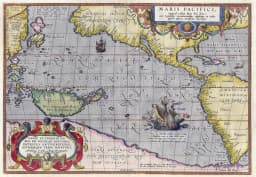 Long readMagalhães reaches the Cape of the Virgins: 21 October 1520
Fernão de Magalhães's three remaining ships emerge from the strait that now bears his name into the ocean he called the 'Mar Pacífico', after weeks threading the channel at the southern tip of South America.
Portuguese navigator Ferdinand Magellan (Fernão de Magalhães), sailing in the service of Spain, reaches the island of Guam in the Mariana Islands after a gruelling crossing of the Pacific Ocean.
Portuguese navigator Ferdinand Magellan sights the island of Samar in the Philippines, becoming the first European to reach the Philippine archipelago during his circumnavigation voyage.
Death of Ferdinand Magellan (Fernão de Magalhães), the Portuguese navigator sailing in Spain's service, at the Battle of Mactan in the Philippines, killed while leading an assault on the local chief Lapu-Lapu. One of his ships, the 'Victoria', under Juan Sebastián Elcano, went on to complete the first circumnavigation of the globe.
The Trinidad and the Victoria, the surviving ships of the Spanish expedition led by the Portuguese navigator Fernão de Magalhães until his death in the Philippines, drop anchor at Tidore in the Moluccas — the Spice Islands that had been the voyage's goal, where Portuguese traders were already active.
Death of King Manuel I, 'o Venturoso' (the Fortunate), in Lisbon, aged 52. His 26-year reign saw Vasco da Gama reach India and Cabral land in Brazil, and the riches of the spice trade paid for the exuberant Manueline style of the Jerónimos Monastery and the Tower of Belém. He is buried at Jerónimos.
The Victoria, sole surviving ship of the expedition led by the Portuguese navigator Fernão de Magalhães (Ferdinand Magellan), reaches Sanlúcar de Barrameda in Spain, completing the first circumnavigation of the globe three years after setting out.
Vasco da Gama dies of malaria in Cochin (Kochi), on his third voyage to India, barely three months after arriving as viceroy. He was buried in the city's St Francis Church; his remains were brought home in 1539, and in 1880 what were believed to be his bones were moved to the Jerónimos Monastery in Lisbon.
The Treaty of Zaragoza is signed between Portugal and Spain, fixing a demarcation line in the Pacific to complement the Treaty of Tordesillas. Spain sells its claim to the Moluccas (Spice Islands) to Portugal for 350,000 gold ducats, confirming Portuguese control of the spice trade's heartland.
A powerful earthquake strikes Lisbon before dawn, destroying around a third of the city's buildings, while the Tagus surges and throws ships onto the rocks. When friars in Santarém blamed the disaster on the New Christians, the playwright Gil Vicente rebuked them, possibly averting a massacre.
In a chapel on the hill of Montmartre in Paris, Ignatius of Loyola and six companions — among them Simão Rodrigues, a young Portuguese nobleman from Vouzela — take vows of poverty and chastity, forming the nucleus of the Society of Jesus. Rodrigues went on to establish the Jesuits in Portugal, the springboard for their missions across the Portuguese empire.
The Treaty of Baçaim (Bassein) is signed aboard the galleon São Mateus. Sultan Bahadur of Gujarat cedes Bassein and its dependencies, including the seven islands of Bombay, to Portugal in return for help against the Mughals — islands later handed to England in Catherine of Braganza's dowry and today the heart of Mumbai.
Pope Paul III issues the bull 'Cum ad nihil magis', establishing the Inquisition in Portugal at the insistence of King João III; the tribunal would shape Portuguese religious and cultural life for nearly three centuries.
Francis Xavier sails from Lisbon on his 35th birthday aboard the 'Santiago', sent east by João III as one of the first Jesuit missionaries to Portuguese Asia. He reached Goa 13 months later and went on to Malacca and Japan; his body still lies in Goa's Basilica of Bom Jesus.
Portuguese musketeers under Cristóvão da Gama, Vasco's son, storm a hillfort held by forces of the Adal Sultanate at the Battle of Baçente in northern Ethiopia, part of Portugal's military alliance with the Christian Ethiopian Empire.
At the Battle of Wofla in the Ethiopian highlands, Cristóvão da Gama, son of Vasco da Gama, is wounded and captured by the forces of the Adal imam Ahmad Grañ, who has him executed the next day. Survivors of his 400 Portuguese musketeers went on to help defeat and kill the imam the following year.
The mathematician and cosmographer Pedro Nunes is appointed to the chair of Mathematics at the University of Coimbra, the most prestigious post then open to a Portuguese mathematician. Inventor of the nonius, a scale for precise angle readings, and a pioneer of the mathematics of navigation, he held the chair until he retired in 1562.
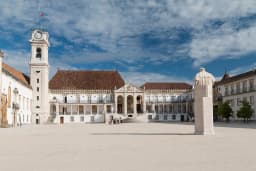 Long readPedro Nunes takes Coimbra's chair of mathematics, 16 October 1544
Tomé de Sousa arrives at the Bay of All Saints (Baía de Todos os Santos) in Brazil as the first Governor-General, accompanied by approximately 1,000 settlers, soldiers, and six Jesuits. He founds the city of Salvador, establishing it as the capital of Portuguese Brazil.
Sebastião, the future king known as 'o Desejado' (the Desired), is born in Lisbon and named after the saint whose feast falls that day. His disappearance at Alcácer Quibir in 1578 would give rise to Sebastianism, the enduring legend that he would one day return to save Portugal.
Jesuit missionaries sent by Manuel da Nóbrega, among them the young José de Anchieta, celebrate Mass at a modest new college on the Piratininga plateau on the feast of the Conversion of St Paul, founding the settlement that would grow into São Paulo, the largest city in the Southern Hemisphere.
Death of King João III in Lisbon, aged 55. His reign of more than three decades saw the colonisation of Brazil through hereditary captaincies and the establishment of the Inquisition; having outlived all his children, he leaves the throne to his three-year-old grandson Sebastião, whose disappearance at Alcácer Quibir in 1578 would doom the House of Aviz.
Death in Lisbon of Martim Afonso de Sousa, who led the 1530 expedition that began the systematic colonisation of Brazil. In 1532 he founded São Vicente, the first permanent Portuguese town in the colony, and planted the sugar cane, soon worked by enslaved labour, that would define the colony's economy; he later served as Governor of Portuguese India.
Portuguese captain Estácio de Sá founds the city of São Sebastião do Rio de Janeiro in Brazil, establishing a strategic settlement to expel French colonists from Guanabara Bay.
Dominican friar Gaspar da Cruz dies of plague in Setúbal, having caught it after nursing the sick in Lisbon. Shortly before, his 'Tratado das cousas da China' had been printed in Évora — often described as the first European book devoted entirely to China.
João de Barros, the humanist historian whose 'Décadas da Ásia' chronicled the Portuguese conquests in the East and earned him the title of the 'Portuguese Livy', dies at Ribeira de Litém near Pombal, aged about 74.
 Long readJoão de Barros, the historian of Portuguese Asia who never went there
Damião de Góis, the humanist chronicler of King Manuel I and friend of Erasmus, is found dead in his house at Alenquer, months after his release from the Inquisition's prisons. Whether he died from a fall, a fit or a blow, his death remains one of the mysteries of the Portuguese Renaissance.
King Sebastião I and much of the Portuguese nobility are killed at the Battle of Alcácer Quibir in Morocco, the 'Battle of the Three Kings'. The disaster triggered a succession crisis that led to Spanish rule over Portugal from 1580 and gave rise to the enduring myth of Sebastianism.
Pedro Nunes, royal cosmographer and one of Europe's foremost mathematicians, dies in Coimbra. Inventor of the nonius and pioneer of the loxodrome, he placed Portuguese navigation on a scientific footing.
Cardinal-King Henrique dies at Almeirim on his 68th birthday without naming an heir. His death opens the way for Philip II of Spain to claim the throne, beginning sixty years of Iberian Union.
Death of Luís Vaz de Camões in Lisbon, in poverty and obscurity. The author of 'Os Lusíadas' — the epic that crystallised Portugal's Age of Discoveries — dies only months before the kingdom passes to Philip II of Spain, beginning sixty years of Iberian Union. The date is now Portugal's National Day: Dia de Portugal, de Camões e das Comunidades Portuguesas.
Back to the full timeline of Portugal, with key moments, search and long reads.