

Magalhães reaches the Cape of the Virgins: 21 October 1520
A Portuguese captain sailing for the king of Castile found a cape at the bottom of South America on the feast of the Eleven Thousand Virgins. Behind it lay the way into the Pacific, and two more years of hunger, killing and desertion.
At a glance
- On 21 October 1520 the fleet of Fernão de Magalhães (Ferdinand Magellan) reached a cape at about 52 degrees south and named it for the Eleven Thousand Virgins, whose feast fell that day. Behind it lay the strait now named after him.
- Magalhães was a Portuguese nobleman, born around 1480, who had fought for Portugal in India, Malacca and Morocco before a quarrel with King Manuel I sent him to Seville in 1517.
- Charles I of Spain backed his plan to reach the Moluccas, the clove islands, by sailing west, on the argument that they lay in Castile's half of the world under the Treaty of Tordesillas.
- Five ships and somewhere between 234 and 280 men sailed in 1519. Three ships came out of the strait into the Pacific between 26 and 28 November 1520; Magalhães was killed at Mactan, in the Philippines, on 27 April 1521.
- Only the Victoria, under Juan Sebastián Elcano, got back to Spain, reaching Sanlúcar de Barrameda on 6 September 1522 with 18 men, the first ship to sail round the world.
A cape for the Eleven Thousand Virgins
In the third week of October 1520, four ships were working south along the coast near the bottom of South America, at about 52 degrees south. They had spent almost two months in a river their crews called Santa Cruz and had put to sea again on 18 October. Before they sailed, the captain-general and all his men confessed and took communion.
The captain-general was Fernão de Magalhães, a Portuguese nobleman in the pay of the king of Castile, known in English as Ferdinand Magellan. He had promised to find a sea route round America to the Spice Islands, and had told his captains he would follow the coast as far as 75 degrees south if he had to.
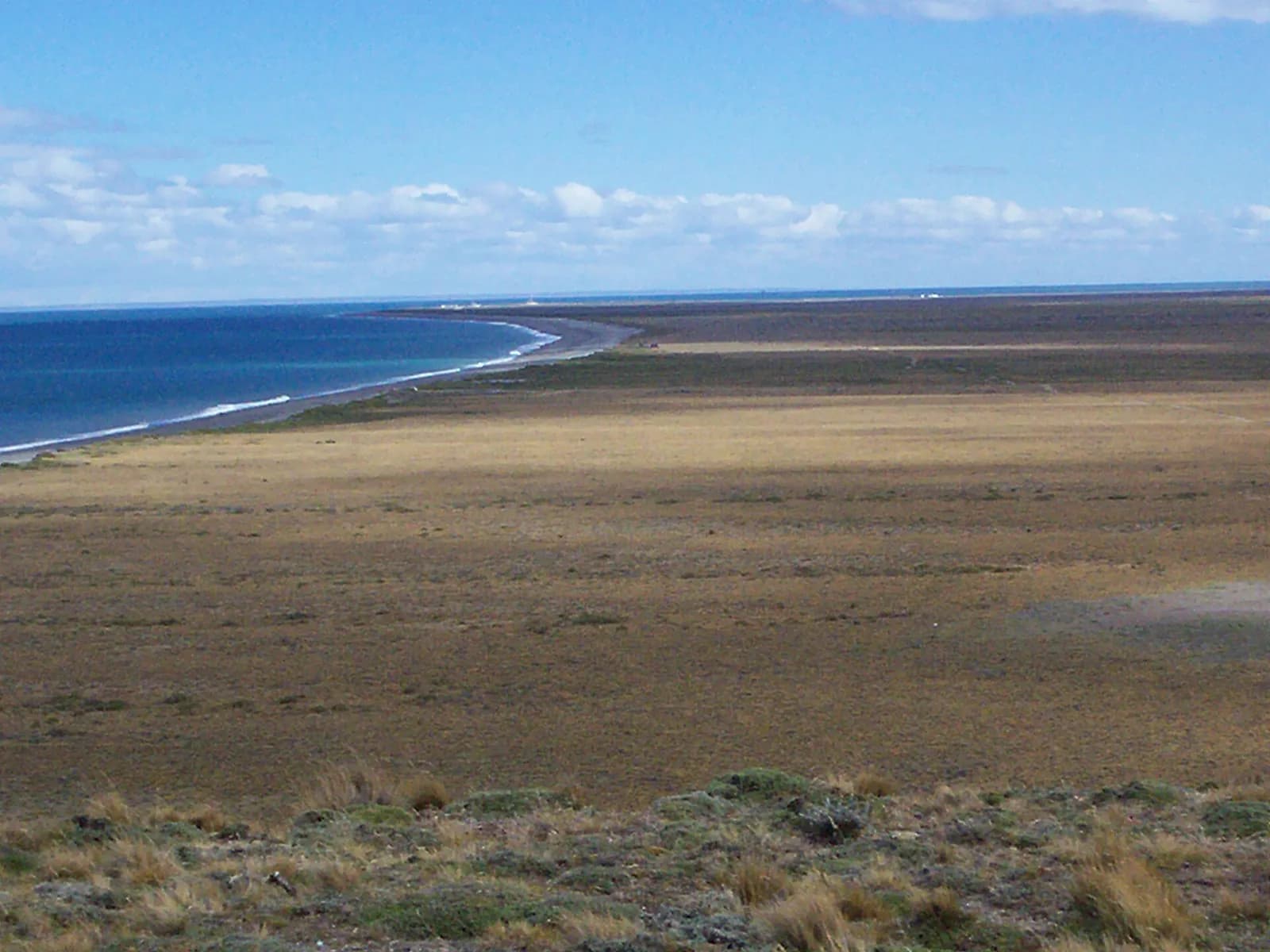
On 21 October, the feast of the Eleven Thousand Virgins in the Church calendar, the fleet came to a headland with a wide opening behind it. Antonio Pigafetta, an Italian gentleman who kept a journal of the voyage, recorded the name they gave the headland: Capo de le Undici Millia Vergine, the Cape of the Eleven Thousand Virgins.
Magalhães sent the San Antonio and the Concepción into the bay to look, and waited with the Trinidad and the Victoria. A storm blew all that night, and two days passed with no sign of the scouts. Then they came back with sails full and flags flying, fired their guns and cheered: they had found a channel that ran on into the land.
“Had it not been for the captain-general, we would not have found that strait, for we all thought and said that it was closed on all sides.”
The fleet spent more than five weeks in the strait that now carries his name and lost a ship there to desertion. The three that came out proved that a sea passage joined the Atlantic and the Pacific, against those who believed the land ran unbroken to the south.
- Date
- 21 October 1520 (20 October in the chronicler João de Barros)
- Place
- Cape of the Eleven Thousand Virgins, at the eastern entrance of the strait, about 52 degrees south
- Commander
- Fernão de Magalhães, captain-general of the fleet
- Ships
- Trinidad, San Antonio, Concepción and Victoria
- In the strait
- 21 October to 26–28 November 1520, depending on the account
- Length of the strait
- 110 leagues, by Pigafetta's reckoning
A Portuguese knight in the East
Nobody knows exactly when or where Magalhães was born. The Torre do Tombo, Portugal's national archive, says around 1480 in the north, possibly in Porto; Sabrosa, Gaia and Ponte da Barca also claim him. The historian José Manuel Garcia argues for Porto: in 1518 Magalhães signed himself “vecino de la ciudad del Puerto”, and a Porto writer of 1549 named the city as his birthplace. The Sabrosa claim, Garcia says, rests on a document forged in 1796.
His family were minor nobles from the Minho without much money. In 1492 he went as a page to the court of Queen Leonor, where he lived for thirteen years. In 1505 he sailed for India in the fleet of Francisco de Almeida, the first Portuguese viceroy there, with his brother Diogo and Francisco Serrão, who became a close friend.
He stayed eight years in the East, fought in the naval battle of Diu in 1509 and took part in Afonso de Albuquerque's conquests of Goa in 1510 and Malacca in 1511. Garcia argues that he also sailed with António de Abreu's ships to the Moluccas in 1512. Other historians dispute this, and the American editor James Robertson wrote in 1906 that Abreu's ships got no further than the Banda Islands. He was back in Lisbon in 1513.
Francisco Serrão, shipwrecked on Abreu's voyage, made his way to Ternate in the Moluccas, where he prospered at the court of its king. His letters, which reached Lisbon around 1515, urged Magalhães to join him. Magalhães replied in 1516 that he would come, by a Portuguese route or, failing that, a Castilian one.
Short of money, Magalhães joined the Duke of Bragança's expedition that took Azamor, on the Atlantic coast of Morocco, in 1513. He lost a horse in the first fighting and was wounded in the leg. As quadrilheiro-mor, the officer in charge of the spoils, he was then accused of selling cattle in his care.
He went back to Azamor between July 1515 and March 1516 to clear his name, and brought home proof of his innocence. It did not change King Manuel I's mind. The king turned down at least two petitions for advancement between 1514 and 1516, and in 1517 refused him both a rise of 100 réis in his monthly allowance and leave to sail to the Moluccas. Magalhães publicly renounced his allegiance and reached Seville on 20 October 1517.
Spices and a line nobody had finished drawing
The prize was the Moluccas, a group of islands in the East Indies where cloves grew. Under the Treaty of Tordesillas of 1494, Portugal and Castile had divided the lands they might discover into a Portuguese half and a Castilian half, split by a meridian in the Atlantic. The treaty never fixed the matching line on the far side of the globe.
Magalhães argued, wrongly as it turned out, that the Moluccas lay in Castile's half. If they did, Castile could claim them and reach them by sailing west round the southern end of America, without touching Portugal's route round Africa. He backed the case with information from Serrão, from the cosmographers Rui and Francisco Faleiro and from the mapmakers Pedro and Jorge Reinel.
Charles I of Spain, the future Emperor Charles V, agreed. On 22 March 1518 at Valladolid the Crown signed a contract with Magalhães, described as “a knight native of the kingdom of Portugal”, and the astronomer Rui Faleiro. They were to explore within Castile's half and keep out of Portugal's. In return they would get a twentieth of the Crown's profits from any lands they found, the title of governor for themselves and their heirs, and ten years' protection from rival expeditions on their route.
Lisbon tried to stop the voyage. In September 1518 Álvaro da Costa reported to Manuel I on his attempts to talk Charles out of it, and in February 1519 Charles wrote to Manuel promising that the fleet would do nothing against Portuguese interests. Faleiro never sailed. In July 1519 the king ordered that Juan de Cartagena go in his place as Magalhães's “conjunct person”.
Five ships and about 240 men
The fleet left Seville on 10 August 1519, by Pigafetta's account, dropped down the Guadalquivir to Sanlúcar de Barrameda and put to sea on 20 September. Three of his four captains, Cartagena, Quesada and Mendoza, were Spaniards.
Nobody knows how many men sailed. The 1518 contract provided for 234, the number the Torre do Tombo gives, and a royal order of May 1519 capped the fleet at 235. Pigafetta counted 237. The Portuguese chroniclers Barros and Castanheda gave 250, the crew lists published by Martín Fernández de Navarrete add up to 265, and the historian Guillemard, combing the lawsuits that followed the voyage, found at least 268 and guessed the true total at 270 to 280.
At least 37 were Portuguese. Besides Spaniards there were thirty or more Italians, nineteen Frenchmen, Flemings, Germans, an Englishman, men from Corfu, Africans and Malays. Enrique, a man from Malacca whom Magalhães held as a slave, went as interpreter.
| Ship | Size | Captain at departure | What became of her |
|---|---|---|---|
| Trinidad (flagship) | 110 tons | Fernão de Magalhães | Reached the Moluccas; failed to recross the Pacific eastwards and fell into Portuguese hands in 1522 |
| San Antonio | 120 tons | Juan de Cartagena | Deserted in the strait in early November 1520; anchored at Seville on 6 May 1521 |
| Concepción | 90 tons | Gaspar de Quesada | Burned off Bohol, in the Philippines, after the killings at Cebu in May 1521, for lack of men to sail her |
| Victoria | 85 tons | Luis de Mendoza | Sailed home round Africa under Juan Sebastián Elcano; reached Sanlúcar on 6 September 1522 |
| Santiago | 75 tons | João Serrão | Wrecked on the Patagonian coast in May 1520; all but one of her men were saved |
Tonnages from the registers published by Navarrete, as given by Robertson (1906); the 1518 contract had called for two ships of 130 toneles, two of 90 and one of 60. Cartagena lost his command in the Atlantic and Mendoza and Quesada were killed at San Julián, so most ships changed captain during the voyage.
Mutiny at San Julián
During twenty days of calm off Africa, Juan de Cartagena, the king's inspector of the fleet and captain of the San Antonio, defied Magalhães at a meeting of captains and was put in the stocks. The fleet reached the bay of what is now Rio de Janeiro on 13 December 1519 and worked south.
On 31 March 1520, the eve of Palm Sunday, the ships put into a bay on the Patagonian coast that they named San Julián, to sit out the southern winter. Magalhães cut the rations. When the men begged him to turn back, he replied, by Navarrete's account from the documents, that he would either die or do what he had promised.
On the night of 1 April, Gaspar de Quesada and Cartagena crossed to the San Antonio with about thirty armed men. The ship's master, Juan de Elorriaga, ordered them off in the king's name; Quesada stabbed him four times in the arm. With Mendoza's Victoria and Quesada's own Concepción, the rebels now held three of the five ships, and demanded that Magalhães follow the king's orders.
Magalhães answered with a trick. He sent his constable, Gonzalo Gómez de Espinosa, to the Victoria with a letter for Mendoza and six men with hidden weapons. While Mendoza read it, smiling, Espinosa stabbed him in the throat. A second boat under Duarte Barbosa took the ship. The next night the San Antonio dragged her anchor, drifted onto the flagship and surrendered.
Mendoza's body was quartered on the shore, and on 7 April Quesada was beheaded and quartered by one of his own followers, Luis de Molino, who did it to escape hanging. Cartagena and a priest, Pedro Sánchez de la Reina, were marooned when the fleet sailed. More than forty other guilty men were pardoned, because the ships needed them.
In May the smallest ship, the Santiago, was wrecked while scouting the coast to the south. Her crew got ashore, and two men made their way back overland to raise the alarm; one man, João Serrão's slave, was lost. The four remaining ships left San Julián on 24 August.
Five weeks in the strait
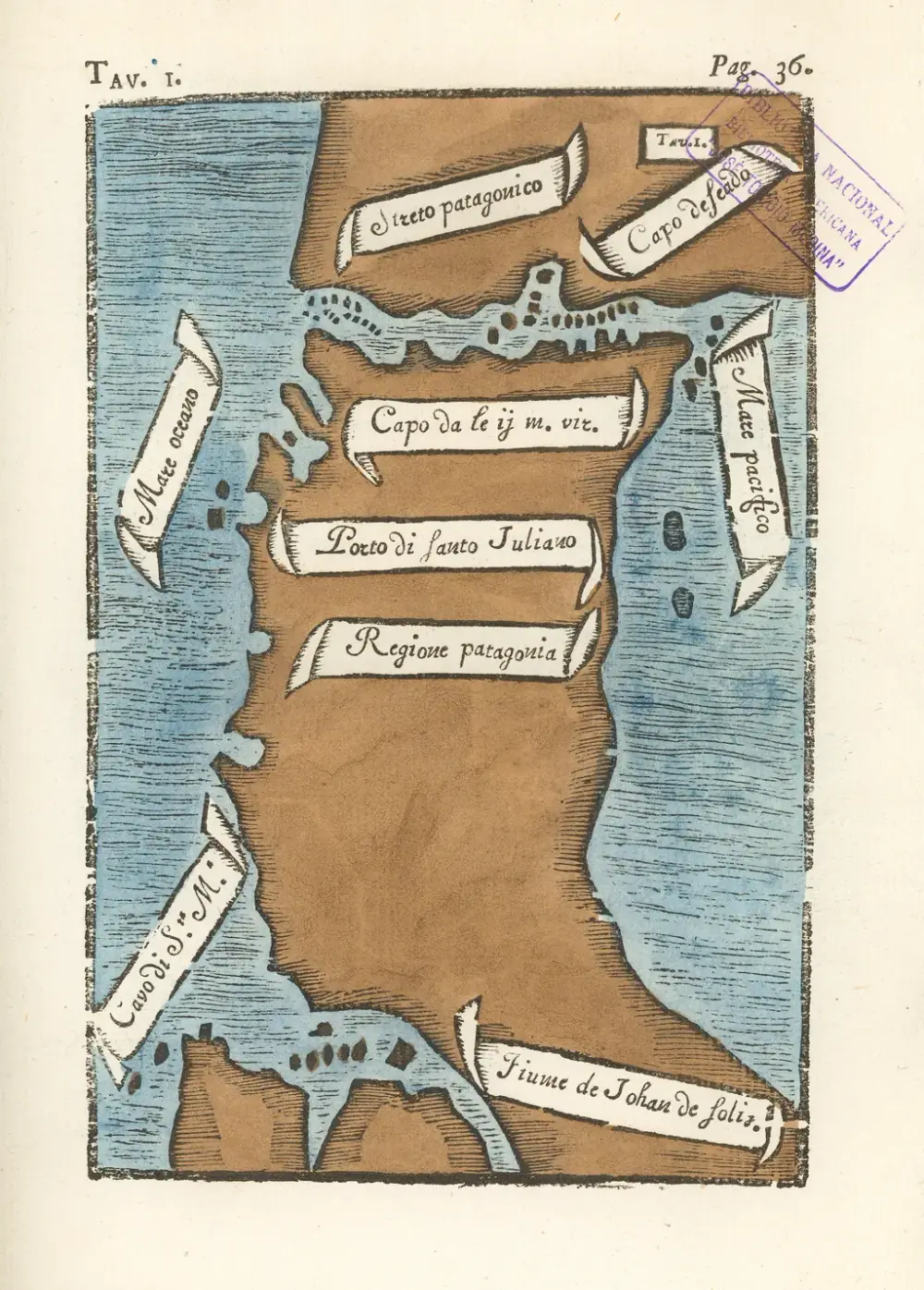
Pigafetta reckoned the strait 110 leagues long and in places half a league wide, between mountains loaded with snow, with water too deep to anchor in. The October nights, he wrote, lasted three hours. He called it the strait of Patagonia and thought there was no more beautiful strait in the world.
18 October
Leaves the river of Santa Cruz
After almost two months there, by the pilot Francisco Albo's log.
21 October
Cape of the Eleven Thousand Virgins
The San Antonio and the Concepción are sent ahead to explore.
That night
Storm in the bay
The Trinidad and the Victoria lift anchor and drift until midday.
Two days later
The scouts return
They have found narrows and bays leading on into the land.
Early November
Two channels
The San Antonio and the Concepción take the south-eastern one; the San Antonio turns back and deserts.
Early November
Cape Deseado
A boat sent from the river of Sardines comes back within three days: it has seen the open sea.
26–28 November
Into the Pacific
Three ships leave the strait. Pigafetta says 28 November, the Genoese pilot 26 November, other accounts 27 November.
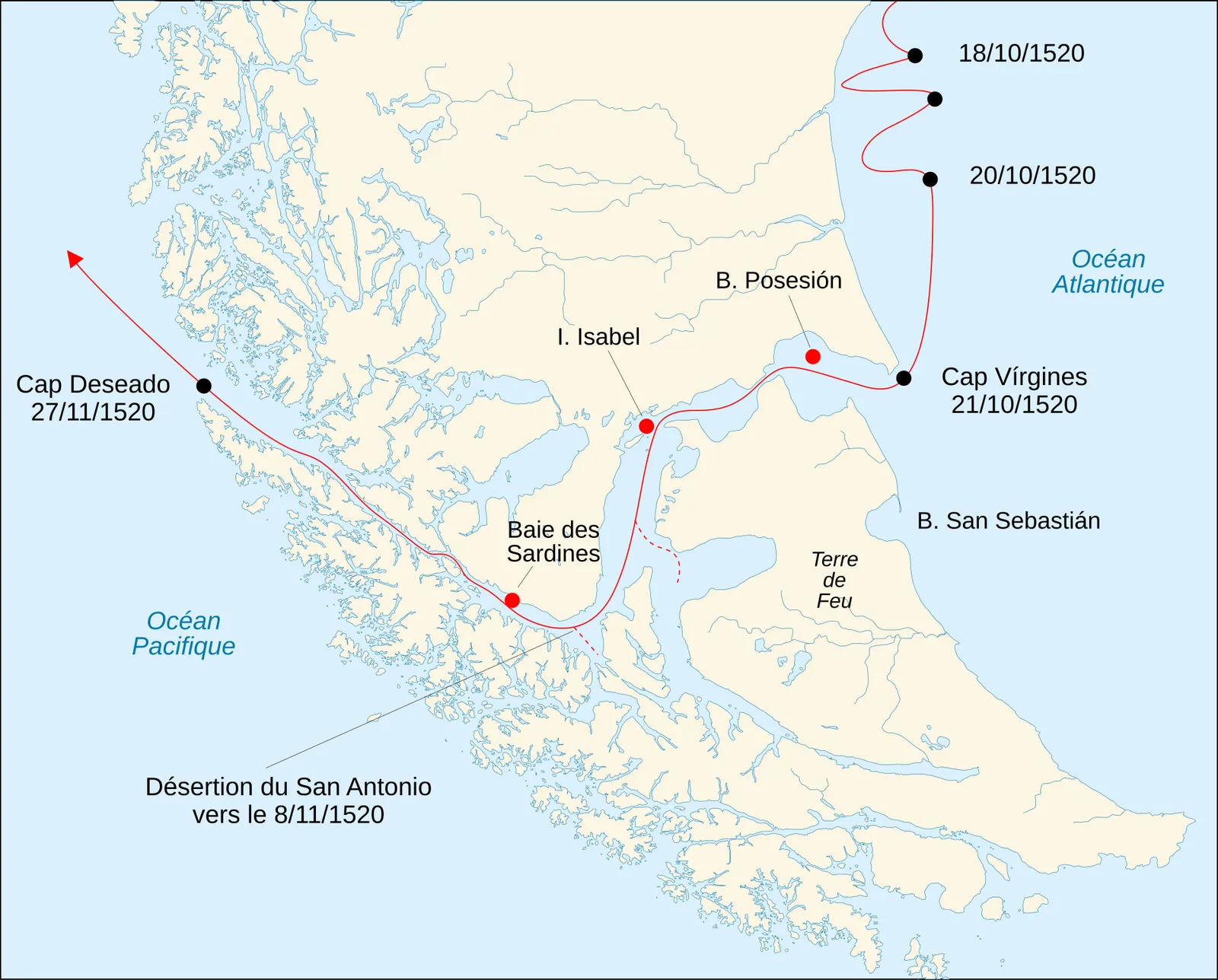
Magalhães took the south-western channel. A boat sent ahead came back within three days: its crew had seen the cape at the end and the open sea.
“The captain-general wept for joy, and called that cape, Cape Dezeado, for we had been desiring it for a long time.”
The San Antonio, the largest ship in the fleet, never came back. Her pilot, the Portuguese Estêvão Gomes, had been promised ships for a voyage of his own before Magalhães arrived in Spain, and Pigafetta says he hated the captain-general. With some Spaniards he seized the captain, Magalhães's cousin Álvaro de Mesquita, wounded him, put him in irons and sailed for Spain.
Magalhães searched the strait for her. He sent the Victoria back to the entrance, and her crew planted two banners, one on a hillock in the first bay and one on an islet, each with a letter in an earthen pot buried beside it, the signal the captains had agreed on for a lost ship. Then he went on with three.
Across the Pacific to Mactan
On Wednesday 28 November, in Pigafetta's words, they “debouched from that strait, engulfing ourselves in the Pacific Sea”. They went three months and twenty days without fresh food.
“We ate biscuit, which was no longer biscuit, but powder of biscuits swarming with worms, for they had eaten the good. It stank strongly of the urine of rats.”
They soaked the ox hides wrapped round the main yard and ate them, and paid half a ducat for a rat. Scurvy swelled the men's gums until they could not eat. Pigafetta says nineteen died of it, with a Patagonian the fleet had seized and a man from Brazil; a record in the Archive of the Indies used by Navarrete counts eleven scurvy deaths. There was not one storm, and Pigafetta thought the new ocean well named: “In truth it is very pacific.”
On 6 March 1521 they reached the islands now called the Marianas. Islanders swarmed aboard and took what they could, including the flagship's boat. Magalhães went ashore with forty armed men, burned forty or fifty houses and killed seven men, and Pigafetta named the group the Ladrones, the Thieves' Islands.
On 16 March they sighted Samar, in the archipelago later named the Philippines. At Cebu Magalhães made an alliance with its ruler, Rajah Humabon, who was baptised with his queen and, by Pigafetta's count, 800 of his people. Within the week, Pigafetta writes, they burned a village on a neighbouring island “because it refused to obey the king or us”.
That village, Bulaia, was on the small island of Mactan, opposite Cebu. Mactan had two chiefs, Zula and the man Pigafetta calls Cilapulapu, known in the Philippines today as Lapulapu. On 26 April Zula sent two goats and asked for help against his rival, who refused to obey the king of Spain. The log of a Genoese pilot in the fleet says Magalhães had demanded goats, pigs, rice and millet from Mactan by threes, and was offered them by twos.
Magalhães decided to fight, although his royal instructions told him not to go ashore himself where he might come to harm, and his men begged him not to go. Sixty men set out at midnight in three boats, with Humabon and twenty or thirty of his own craft. Magalhães sent word that if the islanders obeyed the king of Spain, accepted Humabon as their lord and paid tribute, he would be their friend. They answered that if he had lances, they had lances of bamboo and stakes hardened in fire.
At daybreak on Saturday 27 April, forty-nine of his men waded ashore through water up to their thighs. Pigafetta says more than 1,500 islanders were waiting in three groups; the Genoese pilot guessed three or four thousand. Half an hour of musket and crossbow fire from too far off did little harm, and when Magalhães had houses set alight the defenders pressed harder.
Magalhães was hit in the right leg by a poisoned arrow and ordered a slow retreat. Most of his men ran; six or eight stayed with him, fighting in the shallows for more than an hour.
“They rushed upon him with iron and bamboo spears and with their cutlasses, until they killed our mirror, our light, our comfort, and our true guide.”
Eight of his men died with him, Pigafetta says, and four Christian islanders were killed by fire from the boats; the people of Mactan lost fifteen. They refused to give up his body for any amount of goods, saying they would keep him as a memorial.
The alliance at Cebu did not last. On the day of the battle Duarte Barbosa, one of the two commanders the crews chose to replace Magalhães, told Enrique that his master's death had not freed him and that he would still be a slave in Spain. Pigafetta says Enrique then plotted with Humabon; the chronicler Peter Martyr blamed the sailors' abuse of the island's women instead.
On 1 May Humabon invited the visitors to a feast and his men killed them. Pigafetta says twenty-four went ashore; other accounts put the number between twelve and thirty-six, and Navarrete's list of those lost has twenty-seven names, Barbosa among them. The other commander, João Serrão, was brought to the beach bound and wounded, begging to be ransomed, and the ships sailed without him.
Too few men were left to sail three ships, so the Concepción was burned off Bohol, leaving between 108 and 180 men by the different counts.
Eighteen men at Sanlúcar
The Trinidad and the Victoria anchored at Tidore, in the Moluccas, on 8 November 1521 and loaded cloves. Francisco Serrão, Magalhães's friend, had died in the islands, probably poisoned, at about the time Magalhães was killed. In September the crews had chosen Juan Sebastián Elcano, a Basque from Getaria who had sailed as master of the Concepción, to command the Victoria. Pigafetta never mentions him.
Then the Trinidad sprang a leak. The Victoria would go home westward round Africa, through Portuguese waters, while the Trinidad, once repaired, would try to recross the Pacific to Panama. The Victoria sailed on 21 December with 47 Europeans and 13 islanders; 53 men stayed with the Trinidad. She failed to recross the Pacific and fell to the Portuguese in October 1522, and only four of her crew ever reached Spain.
Elcano kept clear of Sumatra and the Portuguese and spent nine weeks fighting the weather off the Cape of Good Hope, rounding it in May 1522. On 9 July, starving, the crew put into Santiago in the Cape Verde Islands with a story to hide where they had been. Ashore they learned it was Thursday; by Pigafetta's careful log it was Wednesday. Sailing always westward, they had lost a day.
When the Portuguese found them out, they held thirteen men and the ship's boat, and the Victoria fled with 22 aboard, sick and well, by Albo's count. On Saturday 6 September 1522 she entered the bay of Sanlúcar “with only eighteen men and the majority of them sick, all that were left of the sixty men who left Malucho”. At Seville on 9 September the survivors walked barefoot in their shirts, carrying candles, to give thanks at two shrines.
Men left in the expedition, 1519–1522
men
Pigafetta's count at departure (other sources give 234 to 280); Guillemard's figure after the Concepción was burned (the Roteiro gives 108, Barros 180); the 47 Europeans and 13 islanders aboard the Victoria when she left Tidore, not counting the 53 who stayed with the Trinidad; Albo's 22 after thirteen men were held at Cape Verde; and Pigafetta's 18 at Sanlúcar. The San Antonio's crew had already gone home.
Show the data
| Men | |
|---|---|
| Seville, Aug 1519 | 237 |
| After Cebu, May 1521 | 115 |
| Victoria leaves Tidore, Dec 1521 | 60 |
| Victoria leaves Cape Verde, Jul 1522 | 22 |
| Sanlúcar, Sep 1522 | 18 |
Why it still matters
The voyage did not settle who owned the Moluccas; the quarrel between the two crowns ran on until the Treaty of Zaragoza in 1529. It did open the way for Spain to colonise the Philippines and to run its own spice route across the Pacific.
The Portuguese documents about him, nearly all in the Torre do Tombo, deal mostly with his pay, a loan he struggled to recover and the efforts of Manuel I's agents to stop him sailing.
Of the twenty-five early accounts of the voyage that survive, eleven were written by men who were there. Pigafetta's, first printed in Paris in 1525, is the fullest, and it holds word lists of four languages the crews met, from Guanabara Bay in Brazil, Patagonia, Cebu and the Malay world.
The written accounts all come from the visitors' side. In the Philippines the man who stopped Magalhães is a national figure: in 1961 the town of Opon, on Mactan, was made the City of Lapu-Lapu, and in 2017 the government created a state decoration, the Order of Lapu-Lapu.
FAQs
Was Magellan Portuguese or Spanish?
Portuguese. Fernão de Magalhães was born around 1480 in the north of Portugal, possibly in Porto, and served the Portuguese crown in India, Malacca and Morocco. After King Manuel I refused his requests he moved to Seville in 1517 and led the 1519 expedition for Charles I of Spain.
When did Magellan find the strait?
His fleet reached the cape at its eastern entrance on 21 October 1520, according to Pigafetta and the Genoese pilot's log; João de Barros gave 20 October. The three remaining ships left the western end between 26 and 28 November 1520, depending on the account.
Did Magellan sail all the way round the world?
No. He was killed at Mactan, in the Philippines, on 27 April 1521. The Victoria, commanded by Juan Sebastián Elcano, completed the voyage by way of the Cape of Good Hope and reached Sanlúcar de Barrameda on 6 September 1522. Magalhães had planned to reach the Moluccas and come back the way he went.
How many men survived the voyage?
Eighteen men came home on the Victoria in September 1522, out of 234 to 280 who sailed in 1519, depending on the source. Thirteen more, held by the Portuguese at Cape Verde, were released soon afterwards, and the crew of the San Antonio, which deserted in the strait, had reached Seville in 1521.
On the timeline
Open the timelineNearby moments from the age of discoveries (1415–1580).
The 'Flor de la Mar', the great Portuguese carrack carrying Afonso de Albuquerque and the treasure looted from the sultan's palace at Malacca, is wrecked in a storm off Sumatra. Albuquerque escaped on an improvised raft, but the cargo was lost, and the wreck — one of history's most coveted lost treasures — has never been found.
King Manuel I's embassy to Pope Leo X, led by Tristão da Cunha, parades through Rome in 'Indian style' to flaunt the riches of the East. The star is Hanno, a young white elephant who kneels before the Pope and becomes his beloved pet until it dies in 1516.
Ferdinand Magellan (Fernão de Magalhães), the Portuguese navigator sailing in the service of Spain, departs Seville with five ships on the expedition that would achieve the first circumnavigation of the globe.
Magalhães and his strait
Fernão de Magalhães's three remaining ships emerge from the strait that now bears his name into the ocean he called the 'Mar Pacífico', after weeks threading the channel at the southern tip of South America.
Portuguese navigator Ferdinand Magellan (Fernão de Magalhães), sailing in the service of Spain, reaches the island of Guam in the Mariana Islands after a gruelling crossing of the Pacific Ocean.
Portuguese navigator Ferdinand Magellan sights the island of Samar in the Philippines, becoming the first European to reach the Philippine archipelago during his circumnavigation voyage.
Coming up in history
All long reads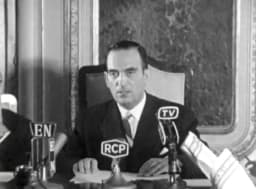 23 October 2022Adriano Moreira (1922–2022): Salazar’s reformer in democracy’s parliament
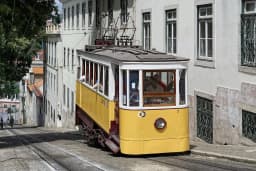 24 October 1885The Elevador da Glória: Lisbon's hill funicular, 1885 to 2025
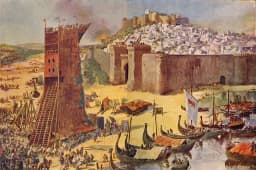 25 October 1147The siege of Lisbon, 1147: how crusaders and a new king took the city
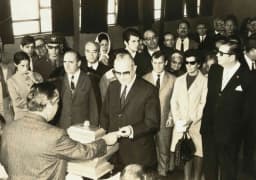 26 October 1969Portugal's 1969 election: Caetano's first vote and the opposition it shaped
10 sources
Archives, scholarship and reporting this article was checked against.
- 1
Antonio Pigafetta, Primo viaggio intorno al mondo, part 1 (Italian text with English translation by James Alexander Robertson), in The Philippine Islands, 1493–1898, vol. XXXIIIArthur H. Clark, Cleveland, 1906; Project Gutenberg edition
- 2
- 3
José Manuel Garcia, “Documentos existentes em Portugal sobre Fernão de Magalhães e as suas viagens”, Abriu 8 (2019), 15–33Universitat de Barcelona
- 4
José María Ortuño Sánchez-Pedreño, “Hernando de Magallanes, adelantado y gobernador de las islas y tierras de la Especiería”, Revista de Estudios Histórico-Jurídicos XXII (2000)Pontificia Universidad Católica de Valparaíso
- 5
- 6
A viagem de circum-navegação de Fernão de Magalhães (virtual exhibition)Arquivo Nacional Torre do Tombo
- 7
O conjunto escultóricoPadrão dos Descobrimentos, EGEAC, Lisbon
- 8
Republic Act No. 3134: An Act Creating the City of Lapu-Lapu (approved 17 June 1961)Congress of the Philippines; text from the Lawphil Project, Arellano Law Foundation
- 9
- 10
Image credits
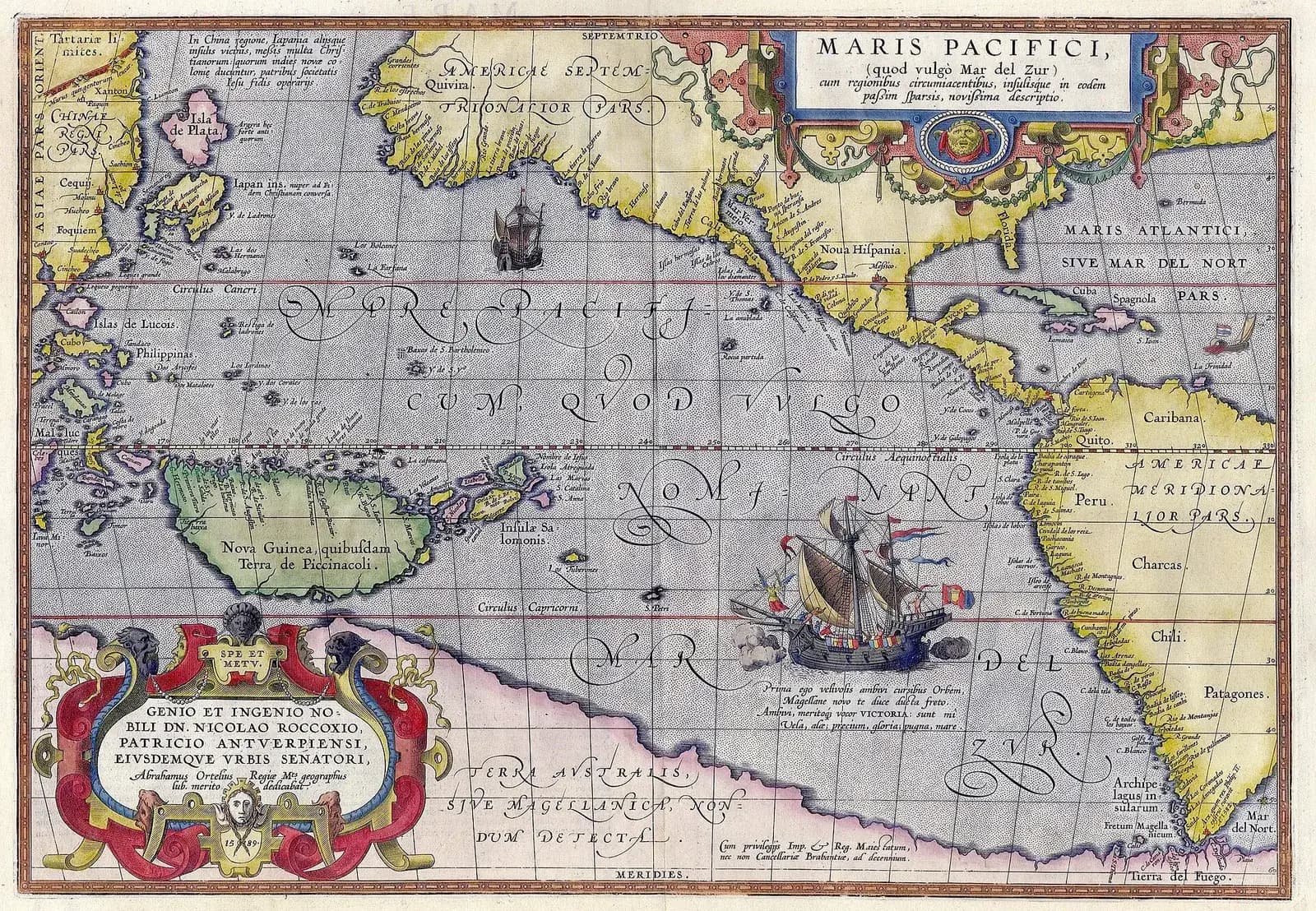
- Maris Pacifici, the map of the Pacific that Abraham Ortelius published in his atlas Theatrum Orbis Terrarum in 1589. The ship in the southern ocean is the Victoria, named in the verse beneath it; the strait is at bottom right, between Patagonia and the unknown southern land. Abraham Ortelius, Public domain, via Wikimedia Commons.
- The mouth of the strait seen from the lighthouse at Cabo Vírgenes, photographed in February 2009. Ulises Icardi, CC BY-SA 4.0, via Wikimedia Commons.
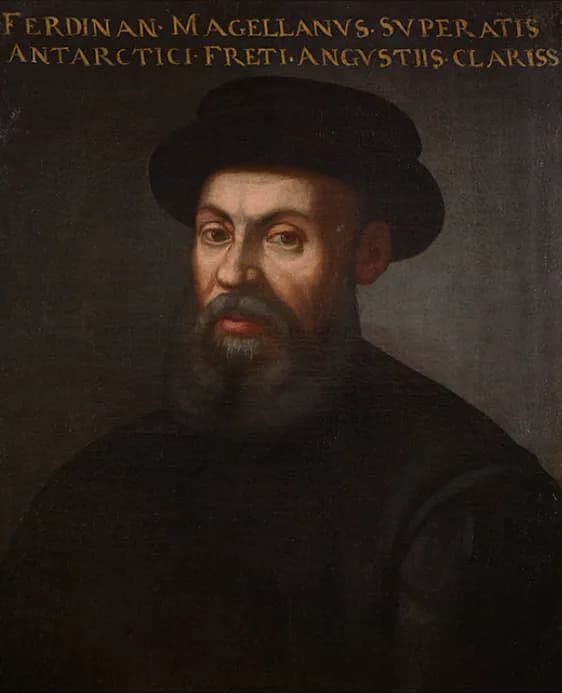
- Portrait of Magalhães by an unknown artist, painted between about 1550 and 1625, long after his death, now in the Mariners' Museum, Newport News, Virginia. The Latin inscription praises him for having overcome the narrows of the Antarctic strait. Unknown author, Public domain, via Wikimedia Commons.
- The fleet's route through the strait in 1520, drawn in 2008 after a reconstruction in Castro, Hamon and Thomaz's Le voyage de Magellan (2007). Dates are the mapmaker's: Cape Vírgenes on 21 October, the desertion of the San Antonio around 8 November and Cape Deseado on 27 November. Red dots mark anchorages. Labels are in French. Shakki, CC BY-SA 3.0, via Wikimedia Commons.
- Pigafetta's own map of the strait, as reproduced in Carlo Amoretti's 1800 edition of his journal. South is at the top: the strait (“streto patagonico”) runs across it, with the cape of the Virgins, Port San Julián and the river of Juan de Solís (the River Plate) below. Amoretti, Carlo (1741-1816), Public domain, via Wikimedia Commons.
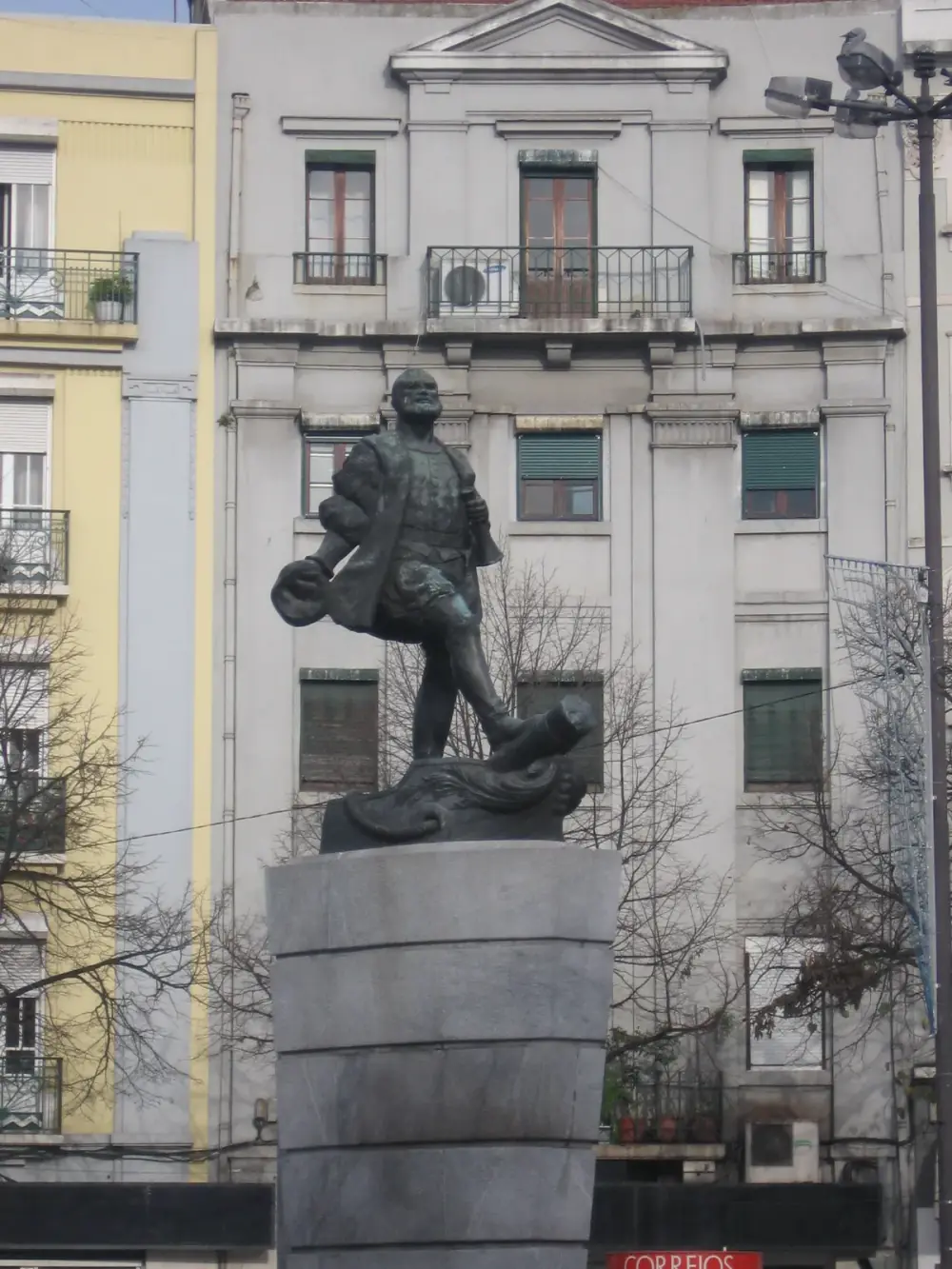
- The statue of Fernão de Magalhães in the Praça do Chile, Lisbon, in December 2008. CorreiaPM, Public domain, via Wikimedia Commons.