

The siege of Lisbon, 1147: how crusaders and a new king took the city
A fleet of northern crusaders bound for the Holy Land stopped in Portugal and stayed to besiege Lisbon. Seventeen weeks later the starving city surrendered on terms, and the terms did not hold.
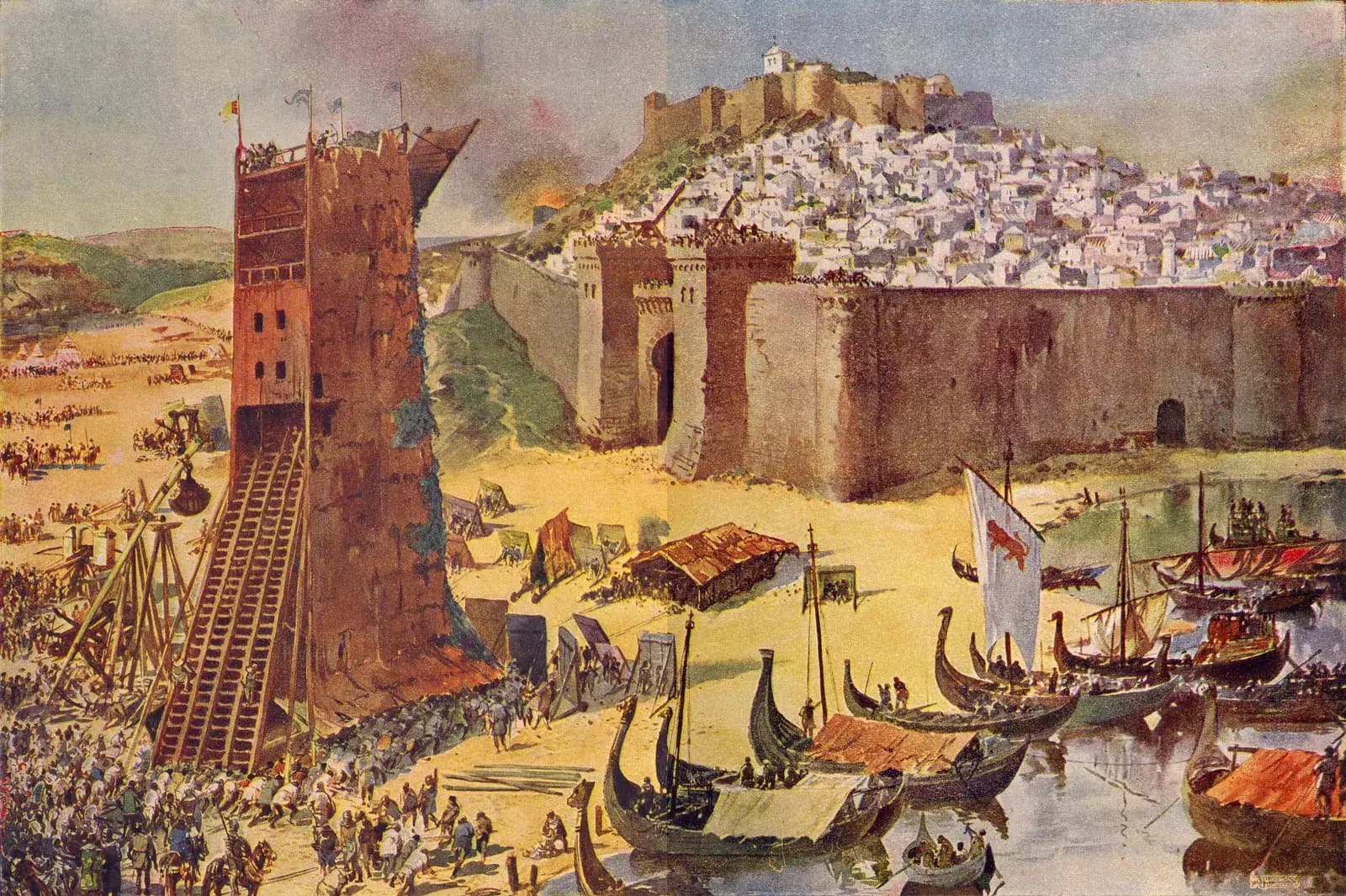
At a glance
- From the end of June to late October 1147, King Afonso Henriques of Portugal and a fleet of crusaders from England, Flanders and the Rhineland besieged Muslim Lisbon.
- The crusaders had sailed from Dartmouth in May on their way to the Holy Land. At Porto, Bishop Pedro Pitões persuaded them to stop, and at Lisbon the king granted them the enemy's goods.
- Hunger, a mine under the eastern wall and a siege tower pushed against the riverside wall forced the defenders to ask for a truce on 21 October and to surrender on terms.
- When the gates opened, men from Cologne and Flanders broke the terms, plundered the houses and cut the throat of the city's aged bishop, probably the leader of its Christian community. The stripped inhabitants left through three gates over five days.
- Gilbert of Hastings, one of the English crusaders, became bishop of Lisbon, and work on the Sé began. The fullest account is a letter by an Anglo-Norman crusader, the De expugnatione Lyxbonensi.
A cross on the highest tower
The gate opened in the last week of October 1147. Three hundred chosen men were meant to go in first: 140 from the English and Norman ships and 160 from the contingents of Cologne and Flanders. Their job was to occupy the upper castle peacefully, so that the inhabitants could bring their money and goods there and swear to what they owned.
Behind them came the archbishop of Braga and his fellow bishops with a banner bearing the cross, then the crusader leaders and King Afonso Henriques. The clergy sang the Te Deum. A cross was raised on the highest tower as a sign that the city was taken, and the king walked the circuit of the castle walls on foot.
Down in the streets, the agreement was already falling apart. The men of Cologne and the Flemings had slipped more than 200 extra men through the gate and others through a breach in the wall. They broke into houses, drove out the citizens and seized whatever they found. They also cut the throat of the city's aged bishop.
Most of what we know of that day, and of the seventeen weeks before it, comes from a long letter by one of the Anglo-Norman crusaders. He was partial, but he was there.
A Muslim city on the Tagus
In 1147 Lisbon was al-Ushbuna, a city of al-Andalus, as Muslim Iberia was known. A circuit of walls, later called the Cerca Moura or Cerca Velha, ran down the hillside from the summit to the river, roughly following the line of the Roman walls. Inside lay the medina, the city proper. A second ring of walls enclosed the top of the hill, the alcáçova (qasaba), where the political, military and religious elite lived.
The oldest written record of those defences is an Arabic inscription of 985, carved on a reused Roman stone. It records repairs to the city wall in the reign of the caliph Hisham II, paid for by Almanzor, the celebrated general and governor of al-Andalus. The stone was found in 1939 between two towers on the west side of the castle and is shown in the city museum, now the Museu de Lisboa.
The crusader writer was astonished by the place. He counted 60,000 tax-paying families, including the suburbs, and houses so closely packed that outside the merchants' quarter hardly a street was more than eight feet wide. The city, he wrote, was “populous beyond what can readily be believed”. After the surrender its governor told the crusaders that it had held 154,000 men, not counting women and children, but only enough lances and shields for 15,000. Medieval figures of this kind are rarely reliable.
Part of the crowd were refugees. The citizens of Santarém, about 75 km north-east on the Tagus, had been expelled that year, and the leading families of Sintra, Almada and Palmela had moved into the city.
Afonso Henriques, the founder of the Portuguese monarchy, styled himself king of the Portuguese. On 15 March 1147 he had taken Santarém by a surprise night assault, and Lisbon was the obvious next prize.
He had tried before. The eyewitness letter refers to a failed attack on Lisbon five years earlier, in about 1142, by the king and a band of northern crusaders. Some of the men who arrived in 1147 had been there, and they did not trust him. A Portuguese chronicle tells a similar story under 1140: almost seventy ships, plundered suburbs, a king who went home and crusaders who sailed on. It may or may not be the same attack.
A fleet bound for Jerusalem
In 1147 the Second Crusade was setting out for the East. King Louis VII of France marched overland with his army. The fleet that sailed for Portugal was a humbler affair: townsmen and seamen from the ports of England, Flanders and the Rhineland, led by a count and a few lords but with few noblemen in the ranks, going the long way round Iberia.
They gathered at Dartmouth in Devon, “men of divers nations, customs, and speech” in about 164 ships, and sailed on 23 May 1147. No king led them. They swore themselves into an association with its own laws, among them “a life for a life and a tooth for a tooth”, and elected two judges for every thousand men. The expedition sailed in three divisions.
| Division | Leader | Men from |
|---|---|---|
| Imperial | Count Arnold of Aerschot, nephew of Duke Godfrey of Lower Lotharingia | The lands of the Empire, chiefly Cologne and the Rhineland |
| Flemish | Christian of Ghistelles | Flanders and Boulogne |
| Anglo-Norman | Four constables: Hervey de Glanvill, Simon of Dover, Andrew of London and Saher of Archelle | Norfolk and Suffolk (Glanvill), Kent (Simon), London (Andrew) and all the rest (Saher) |
| Portuguese | King Afonso Henriques, with Archbishop John of Braga and Bishop Pedro of Porto | Portugal; the two prelates sailed from Porto with the fleet |
The De expugnatione does not give the size of each division. See the table of numbers below.
A storm in the Bay of Biscay scattered the fleet. The first ships reached Porto on Monday 16 June, according to the German letters. Bishop Pedro Pitões met them with his clergy and read out a letter from the king, who was away fighting the Moors: if the ships of the Franks arrived, the bishop was to receive them kindly, offer himself as a guarantee and bring them to the king at Lisbon.
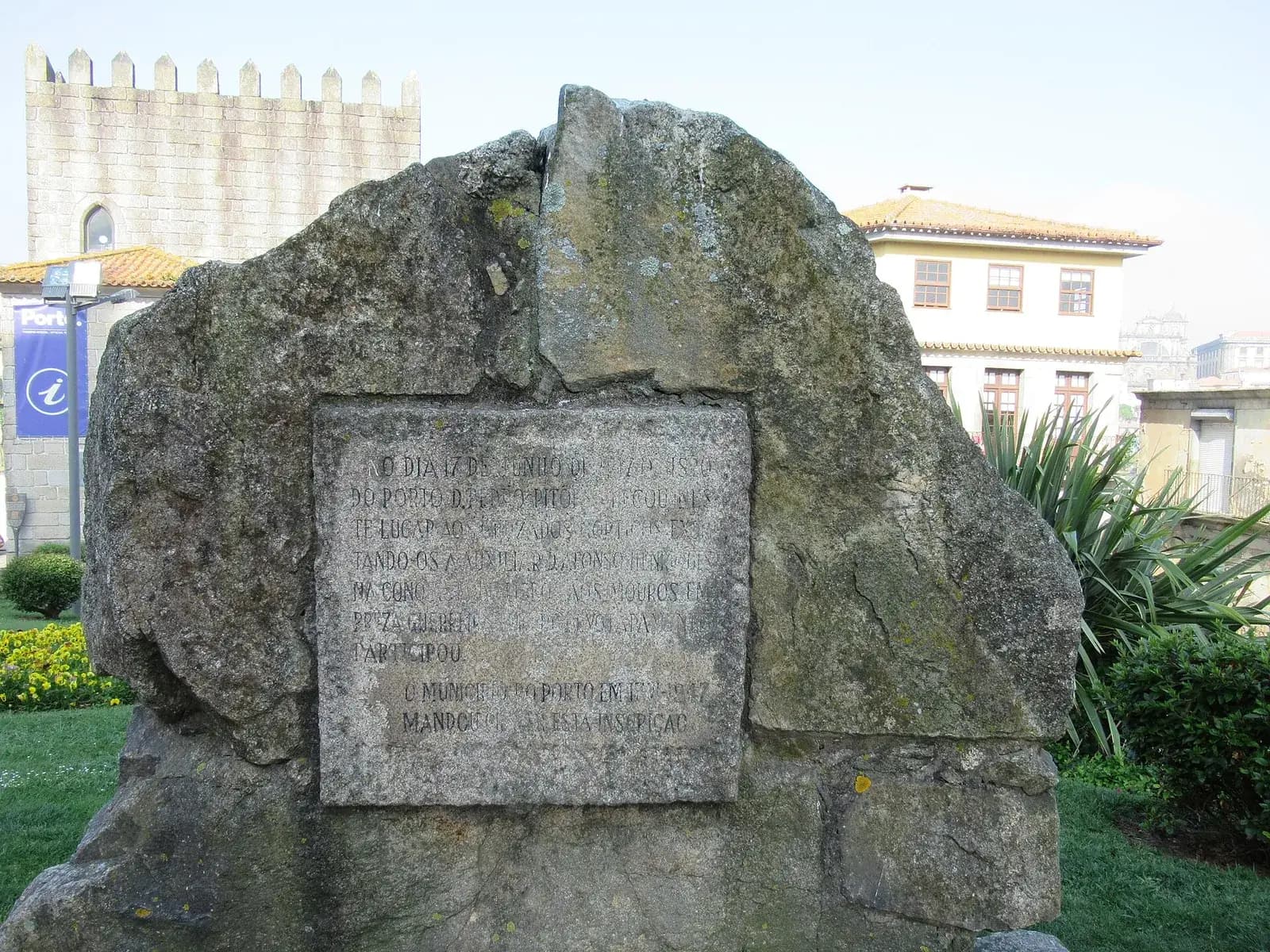
The next morning everyone came ashore and gathered in the cathedral churchyard on the hill. The bishop preached in Latin, and interpreters passed it on to each nation in its own language. Through the Moors and Moabites, he said, God's vengeance had struck all Spain, and the Church there called on them for help. Then he turned to the obvious objection.
“Be not seduced by the desire to press on with the journey which you have begun; for the praiseworthy thing is not to have been to Jerusalem, but to have lived a good life while on the way.”
The fleet waited for its stragglers, sailed south with the archbishop and the bishop on board and anchored off Lisbon on Saturday 28 June. The deal was struck in the following days. In a charter read out before everyone, Afonso Henriques granted the crusaders all the enemy's goods and the ransoms of any prisoners, while he and his men took nothing. If they took the city, they could search and despoil it before handing it over to him.
The land would then be divided among those who stayed, and their ships would be free for ever of the toll called the pedatica. Each side gave twenty hostages, and the king swore not to leave the siege unless mortal illness or an invasion forced him to. Not everyone was persuaded. About eight shiploads under William Viel called the king's promise treachery and talked of raiding merchant ships instead, until a tearful appeal from Hervey de Glanvill won them over.
Seventeen weeks under the walls
Before the fighting, the archbishop of Braga and the bishop of Porto went to parley under the walls. The governor stood on the rampart with the city's bishop and its leading men. The archbishop urged them to go back to the land of the Moors with their goods, women and children. Failing that, he offered terms: surrender the citadel, and each of them could keep his liberties and live by his own customs. One of the city's elders answered him, at least in the version the crusader wrote down.
“While a single forest or a district suffices for many elephants and lions, neither the land nor the sea is enough for you. Verily, it is not the want of possessions but ambition of the mind which drives you on.”
The suburb fell almost at once, around 1 July, after a day of fighting through twisting lanes barely passable even for unarmed men. The Anglo-Normans camped on the west side of the city and the men of Cologne, Flanders and Boulogne on the east.
The Anglo-Normans' first siege tower, 95 feet high, stuck in the sand short of the wall and was burned by the defenders after four days, in early August. The men of Cologne began mines under the walls five times and each time they collapsed. Later the Anglo-Normans set up two mangonels, stone-throwing engines, worked by teams of a hundred men who took turns at a signal, so that 5,000 stones could be thrown in ten hours.
Inside, food was running out. Ten Moors tried to slip away by boat towards Palmela and, when chased, abandoned the skiff and its letters in Arabic. One begged the lord of Évora for help, saying the Frankish fleet had kept the city “shut within the circuit of this close-drawn wall” for nearly two months. Soon afterwards a drowned man was found under the ships with the reply tied to his arm: Évora would not break its truce with Portugal. The nineteenth-century historian Alexandre Herculano doubted that this reply was genuine.
Meanwhile the king sent most of his army home, keeping only a few knights and his household officers. The hungry poor of the city slipped out and gave themselves up to the besiegers, and the crusaders learned the defenders' plans from them. Inside the walls there was no room to bury the dead, and people gathered for food the refuse thrown from the ships and washed up under the walls.
Two pieces of engineering ended it. On the east side the Germans and Flemings dug a gallery mine with five entrances. On the night of 16 October they packed it with combustible material and set it alight, and at cockcrow about thirty cubits of wall fell; the German letters say 200 feet. The breach was steep, and the defenders held it with a barricade of beams.
On the west, the Anglo-Normans had built a new movable tower 83 feet high, covered in osier mats and ox-hides against fire. The German and Flemish letters say a Pisan engineer directed it and the king paid for it. On Sunday 19 October, after a priest holding a relic of the cross had preached to the crews, it was blessed and pushed some fifteen cubits towards the wall near the river.
The next day it was brought close to the wall near the Porta do Ferro. For two days and a night its guards held it, cut off whenever the tide came in, while the defenders sallied out and threw burning pitch, flax and oil, and boats packed with fire, from the walls. Seven young men from Ipswich held a wicker shelter, the “Welsh cat”, beneath it.
On the afternoon of 21 October, at low tide, the tower was rolled to within four feet of the wall and its drawbridge began to come down. The defenders laid down their arms and asked for a truce.
15 March
Santarém taken
Afonso Henriques captures Santarém on the Tagus in a night assault.
23 May
The fleet leaves Dartmouth
About 164 ships from England, Flanders and the Rhineland set out for the Holy Land.
16–17 June
Porto
The ships reach Porto; Bishop Pedro Pitões reads the king's letter and preaches to the crusaders.
28 June
Arrival at Lisbon
The fleet anchors in the Tagus; the agreement with the king is sealed in the following days.
c. 1 July
The suburbs fall
The crusaders take the suburb below the walls after a day of street fighting.
Early August
First tower burned
The Anglo-Norman siege tower sticks in the sand and is set on fire by the defenders. David dates this to about 6 or 7 August; one German letter gives 15 August.
8 September
Second tower begun
The German and Flemish letters date the new tower from 8 September to mid-October.
16 October
The mine is fired
A stretch of the eastern wall collapses, but the breach is held.
19–21 October
The tower reaches the wall
After two days and a night cut off by the tide, the tower is moved up to the wall.
21 October
Truce
The defenders ask for a truce and give five hostages.
22–24 October
Terms and a mutiny
The city offers to surrender; sailors mutiny against Hervey de Glanvill, crusaders from Cologne and Flanders riot over the hostages, and the leaders swear fealty to the king.
24 or 25 October
Entry and sack
The chosen men enter, the cross is raised and the city is plundered. David's edition dates the entry to Friday 24 October; Portuguese editions give 25 October.
25–29 October
The exodus
The inhabitants leave through three gates from Saturday morning to Wednesday.
1 November
A cathedral
The great mosque is purified as a cathedral and the see of Lisbon is restored under Gilbert of Hastings.
Surrender, and a sack
The truce nearly broke the alliance. The five hostages were handed to the king rather than to the crusaders, and many in the camp suspected betrayal. On 22 October the hostages offered the city to the king and the citizens' gold, silver and goods to the crusaders. A renegade priest from Bristol stirred up the sailors, and more than 400 of them went looking for Hervey de Glanvill, shouting “let the traitor be punished”. The next day the men of Cologne and Flanders took up arms to seize the hostages from the king's camp.
Their leaders calmed them. A furious Afonso Henriques said he wanted nothing more to do with such desperadoes, but he was talked round, and each crusader leader swore fealty to him for as long as he stayed in Portugal.
Then the terms were accepted. The people would bring their wealth to the upper castle and swear to it. The city would be searched, and the owner of any house where hidden goods were found would lose his head. Then everyone, stripped of their property, would be let go in peace outside the walls. A German letter records the same bargain: the crusaders took the goods, the king the city, and the inhabitants were to leave unharmed.
“They rushed about hither and thither; they pillaged; they broke open doors; they tore open the innermost parts of every house; they drove out the citizens and treated them with insults, against right and justice.”
The writer insisted that the Normans and English stayed at their posts and kept their oath. The one victim he named was the aged bishop of the city, killed “by cutting his throat”. David identified him with the bishop who had stood beside the governor at the first parley. Herculano took him to be the bishop of Lisbon's Mozarabs, the Christians who lived under Muslim rule, and David agreed, though Júlio de Castilho disputed it. The crusaders also seized the governor and emptied his house.
From Saturday morning until the following Wednesday, the inhabitants left through three gates, stripped of their goods, so many “that it seemed as if all Spain had flowed together into it”. The besiegers found 8,000 seams of wheat and barley and 12,000 sextars of oil in the cellars. In the great mosque they found almost 200 corpses and more than 800 sick people.
The letter does not say where the departing families went. The Castelo de São Jorge's history sums up what followed the opening of the gates as the looting and violence usual in war, then a reordering of the city and its people.
| What was counted | Figure | Source |
|---|---|---|
| Ships leaving Dartmouth | About 164 | De expugnatione Lyxbonensi |
| Ships leaving Dartmouth | Almost 200 | The German and Flemish letters (the 'Teutonic Source') |
| Ships in the fleet at Lisbon | 190 | Indiculum of São Vicente de Fora, a Lisbon monastery history of c. 1188 |
| All Christian forces at the siege | 13,000 | Continuation of Sigebert of Gembloux (Premonstratensian) |
| Wall brought down by the mine on 16 October | About 30 cubits | De expugnatione Lyxbonensi |
| Wall brought down by the mine on 16 October | 200 feet | The German and Flemish letters |
| Tax-paying families in Lisbon and its suburbs | 60,000 | De expugnatione Lyxbonensi |
| Men in the city, women and children not counted | 154,000 | The governor, as reported in the De expugnatione |
| Sets of lances and shields in the city | Enough for 15,000 | De expugnatione Lyxbonensi |
| Chosen men to enter first | 140 Anglo-Normans and 160 from Cologne and Flanders, plus more than 200 who slipped in | De expugnatione Lyxbonensi |
Medieval figures for crowds and armies are often guesses or exaggerations. The ship counts range from about 164 to almost 200, and the De expugnatione gives no size for the Portuguese army.
Who wrote it down
The main account survives in a single manuscript at Corpus Christi College, Cambridge. It is a letter, and its opening greeting is abbreviated: “Osb. de Baldr. R. salutem”, greetings between a man called Osb. de Baldr. and a man known only by the initial R. A table of contents written in the sixteenth century calls it the history of Osbern, and the name Osbernus stuck, though its 1936 editor, Charles Wendell David, thought that tradition worth little.
Who wrote to whom cannot be settled. David judged it impossible to decide from the abbreviations alone, but thought it more likely that Osb. was the person addressed, perhaps Osbert, a clerk of Bawdsey in Suffolk. That would make R. the author. Library catalogues now attribute the work to “Osbernus and Raol”, the 2001 Portuguese translation reads the initial as Raul, and the Castelo de São Jorge calls the author the Anglo-Norman priest Raul. None of these names is certain.
From the text itself, David concluded that the writer was probably a priest who sailed with the East Anglian ships and shared a tent with Hervey de Glanvill, and that he wrote in Lisbon during the winter of 1147 to 1148. He is the best witness to the siege and a partisan one, who blames every outrage on the men of Cologne and Flanders and describes the city's Muslims with open contempt.
The other side of the camp left its own record. Three letters by participants survive: from Winand, a priest of Cologne; from Duodechin, a priest of Lahnstein; and from Arnulf, probably a Flemish priest, to the bishop of Thérouanne. They are so nearly identical that David treated them as one source, which he called the “Teutonic Source”. It agrees with the Anglo-Norman letter on most points, and it is the source of the Pisan engineer and the date of 21 October for the victory.
- Main source
- De expugnatione Lyxbonensi, one manuscript, Corpus Christi College, Cambridge
- Other eyewitnesses
- Letters of Winand, Duodechin and Arnulf (the 'Teutonic Source')
- Portuguese sources
- Indiculum of São Vicente de Fora (c. 1188) and the Chronica Gothorum
- Length of the siege
- Seventeen weeks, counting from 28 June
- Entry into the city
- 24 October (David) or 25 October (Portuguese tradition)
The exact day of the entry is disputed. David's chronology puts it on Friday 24 October, with the exodus beginning on Saturday 25 October. Portuguese tradition gives 25 October, four days after the surrender was agreed, and the Portuguese text of the letter published by O Portal da História notes that the sources allow either date.
A bishop from Hastings
With Lisbon gone, the nearby strongholds gave up. The people of Sintra surrendered their castle to the king, and the garrison of Palmela abandoned theirs. A plague followed among the Muslims, and the writer described thousands of corpses left in vineyards, villages and ruined houses. Starving survivors were seen kissing the cross and crying “Maria bona”; Herculano and David took them to be Mozarabs. The writer admitted that he felt pity for them.
The crusaders chose one of their own as bishop: Gilbert of Hastings. On 1 November, All Saints' Day, the archbishop of Braga and four bishops purified the great mosque as a cathedral and restored the see of Lisbon. Its territory ran from Alcácer do Sal to Leiria and from the Atlantic to Évora.
Gilbert remained bishop until his death, which a seventeenth-century church history dates to 27 April 1166. In 1150 he was back in England, recruiting for an attack on Seville. According to the priest Duodechin, the German crusaders wintered in Lisbon until 1 February 1148 and then sailed on to the Holy Sepulchre. Others stayed: a German chronicler wrote that a colony of Christians was planted there.
What remains of 1147
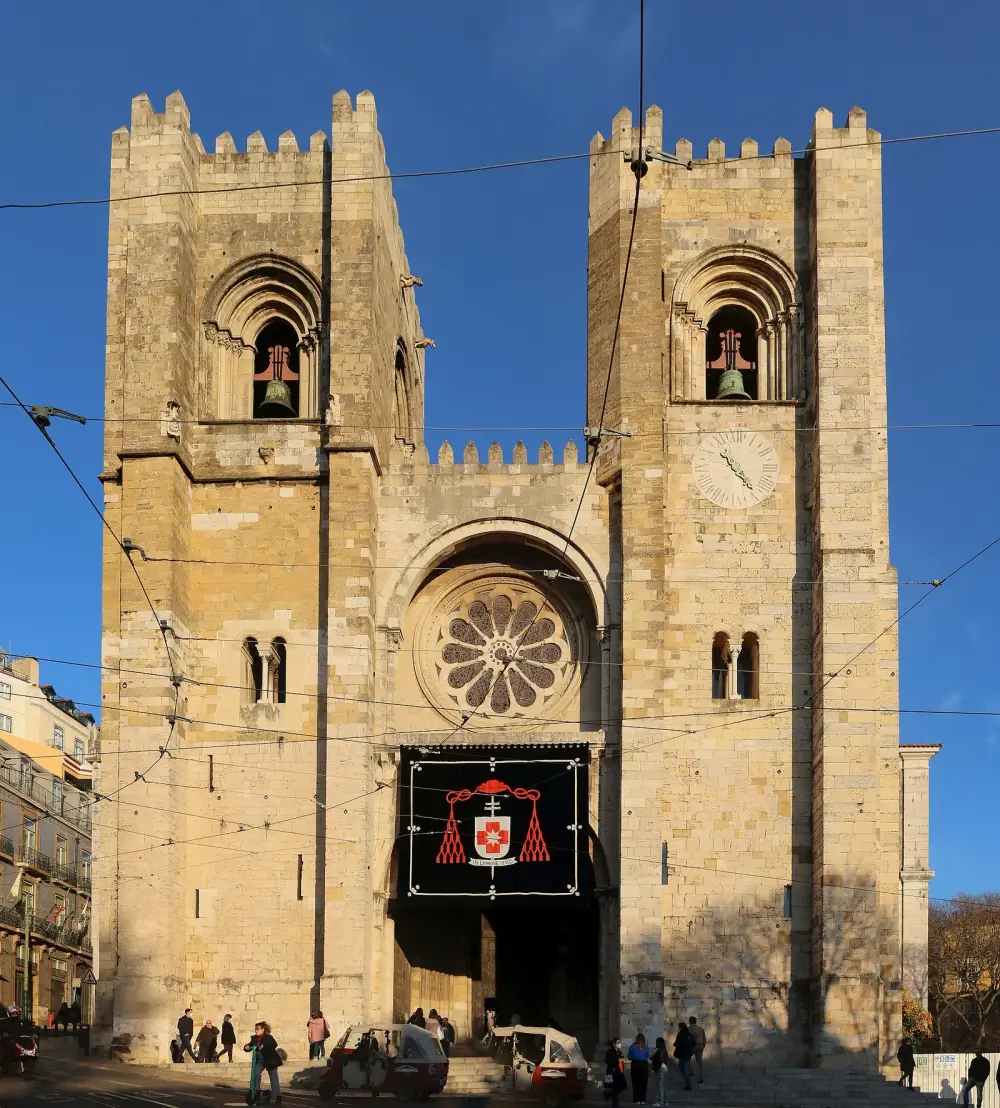
The cathedral the crusaders consecrated in 1147 was the old mosque. The Sé de Lisboa, Lisbon's cathedral, says its own building was begun in 1147 under Gilbert, designed in the Romanesque style by a Master Robert and finished in the first decades of the thirteenth century. Earthquakes, above all that of 1755, and an early twentieth-century restoration changed it a great deal.
On the castle hill, archaeologists have uncovered part of the elite quarter of the Islamic alcáçova at Praça Nova, built in the second half of the eleventh century. Its two large courtyard houses had painted plaster, storage silos, and latrines connected to drains under the paved street. A monumental entrance led to the quarter's mosque, thought to lie under the church of Santa Cruz do Castelo.
After the conquest, Afonso Henriques gave land on top of those houses to Bishop Gilbert, and a bishops' palace grew up there. The ruins on show are mostly from its later rebuildings, and the castle's archaeologists are not certain which of the older walls belonged to it. The castle that visitors see today is also later, the work mainly of Afonso III and Dinis in the thirteenth and fourteenth centuries.
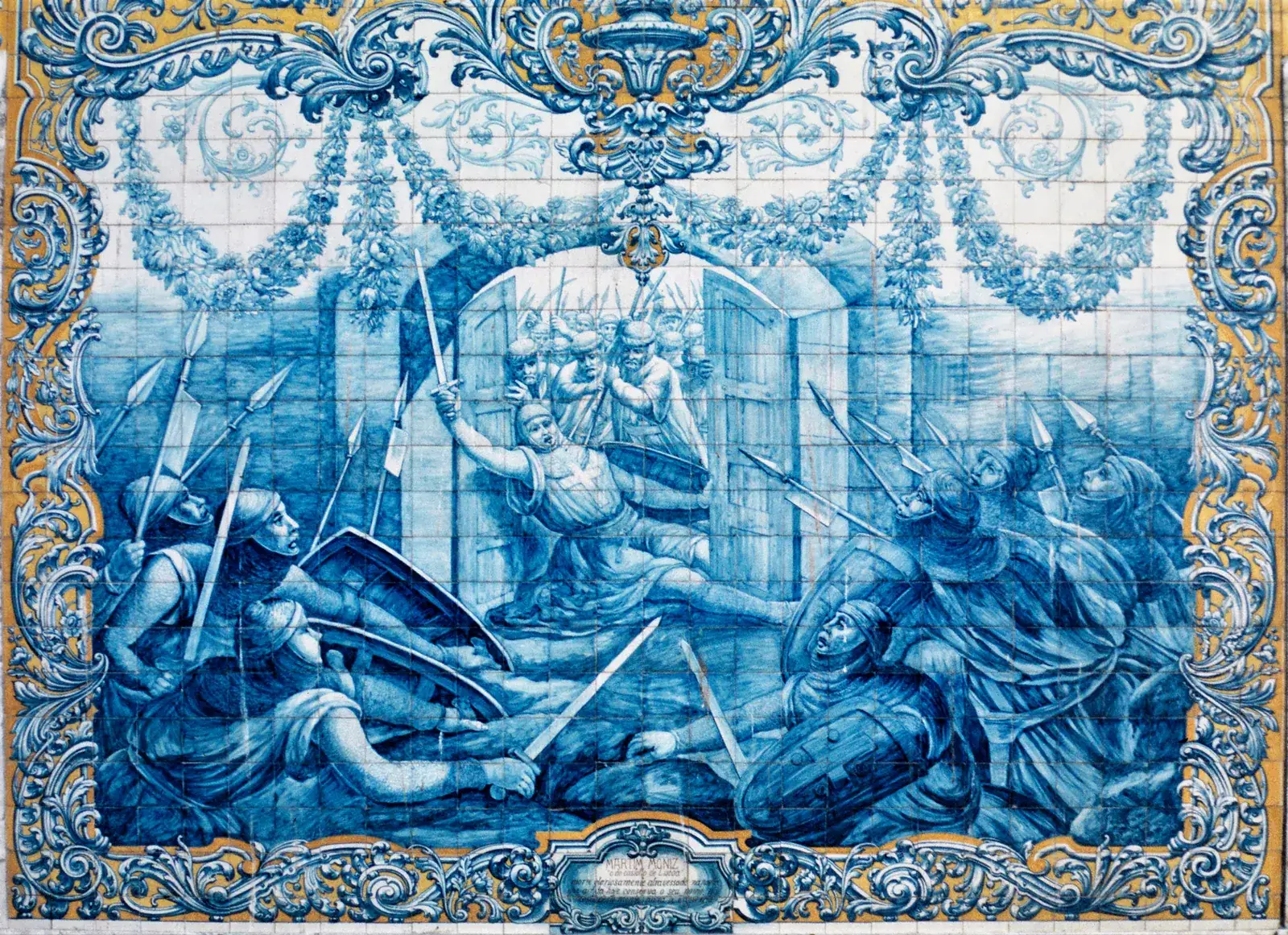
The city has gone on marking the siege. In 1947, the eighth centenary of the conquest, the celebrations were held in the Sé, and a copy of Soares dos Reis's statue of Afonso Henriques was set up on the castle's parade ground. The 1646 plaque still hangs over the Porta do Moniz.
FAQs
When did Lisbon fall to Afonso Henriques?
The defenders asked for a truce on 21 October 1147 and agreed terms over the next three days. The chosen crusaders and the king entered the city on 24 or 25 October: Charles Wendell David's edition of the main eyewitness account dates the entry to Friday 24 October, and Portuguese tradition gives 25 October. The inhabitants left from Saturday 25 October to the following Wednesday.
Was the siege of Lisbon part of the Second Crusade?
Yes. The fleet was made up of crusaders from England, Flanders and the Rhineland who were sailing to the Holy Land on the Second Crusade, and Charles Wendell David called Lisbon the crusade's sole important success. They stopped in Portugal and agreed to help Afonso Henriques in return for the enemy's goods. The German contingent, at least, wintered in Lisbon and sailed on to the Holy Land in February 1148.
How many people took part?
The sources disagree. The Anglo-Norman letter counts about 164 ships at Dartmouth and the German and Flemish letters almost 200; a Portuguese source counts 190 ships at Lisbon. One chronicle puts all the Christian forces at 13,000. The crusader writer said the governor claimed 154,000 men in the city, but arms for only 15,000. Medieval figures like these are rarely reliable.
What happened to the Muslim inhabitants?
Under the surrender terms they were to hand over their goods and leave in peace. When the gates opened, crusaders from Cologne and Flanders plundered the houses, insulted the citizens and cut the throat of the city's aged bishop, whom historians have taken to be the bishop of its Mozarab Christians. The stripped inhabitants left through three gates over five days, and a plague followed among the Muslims of the region. The eyewitness letter does not say where they went.
Was Martim Moniz real?
A gate of the castle was already called the Porta do Moniz in 1258, and genealogists linked a Martim, son of Monio, to the Vasconcelos family. The story of his death in the gate is not in the eyewitness letter of 1147, and the plaque telling it was put up in 1646 by a descendant. The castle's historians call it very hard to prove.
On the timeline
Open the timelineNearby moments from from county to kingdom (1096–1249).
By the Treaty of Zamora, Alfonso VII of León and Castile recognises his cousin Afonso Henriques as king, with the papal legate Cardinal Guido de Vico as mediator. The date is traditionally taken as the birth of the independent Kingdom of Portugal.
Afonso Henriques takes Santarém from the Almoravids in a surprise night attack: 25 knights climb the walls on hidden ladders, kill the sentries and open the gate to his army. The prize opens the road to Lisbon, which he captures that October.
The Siege of Lisbon begins. King Afonso I, having struck a deal with Northern European crusaders bound for the Second Crusade, opens the assault on the great Almoravid city on the Tagus. After almost four months the city falls on 25 October, becoming the future capital of the Kingdom of Portugal.
The siege of Lisbon, 1147
First naval battle in Portuguese history. Off Cape Espichel, a small fleet assembled by King Afonso Henriques and commanded by Dom Fuas Roupinho intercepts an Almohad squadron returning to Andalusia, kills its admiral and captures several of its galleys. The victory marks the modest birth of Portuguese seapower.
Death in Coimbra of Afonso Henriques, the first King of Portugal, after ruling for more than half a century, first as count and from 1139 as king. He is buried in the Monastery of Santa Cruz in Coimbra; in 2006 a scientific plan to open his tomb and study his remains was halted by the state heritage agency after a public outcry.
Birth in Coimbra of Afonso III, the king who completed Portugal's share of the Reconquista by taking Faro in 1249 and was the first to style himself 'King of Portugal and the Algarve'. He also moved the royal seat from Coimbra to Lisbon, which has been the capital ever since.
Coming up in history
All long reads 27 October 1949Egas Moniz, the lobotomy and Portugal's first Nobel Prize
 28 October 1856Portugal's first train: Lisbon to Carregado, 28 October 1856
 29 October 1936Tarrafal, 29 October 1936: Salazar's prison camp in Cape Verde opens
 30 October 1340The Battle of Salado, 1340: how Portugal helped stop the last Moroccan invasion
11 sources
Archives, scholarship and reporting this article was checked against.
- 1
De expugnatione Lyxbonensi: The Conquest of Lisbon, edited from the unique manuscript in Corpus Christi College, Cambridge, with a translation into English by Charles Wendell David (Columbia University Press, 1936)Internet History Sourcebooks Project, Fordham University (full-text PDF of the 1936 edition)
- 2
- 3
As CercasCastelo de São Jorge (EGEAC, Câmara Municipal de Lisboa)
- 4
- 5
- 6
HistóriaSé de Lisboa (Patriarcado de Lisboa)
- 7
Da carta do cruzado sobre a conquista de LisboaO Portal da História (Manuel Amaral)
- 8
- 9
- 10
De expugnatione Lyxbonensi = The Conquest of Lisbon (Columbia University Press, 2001 reprint with a foreword by Jonathan Phillips): catalogue recordOpen Library (Internet Archive), from Library of Congress cataloguing data
- 11
Image credits
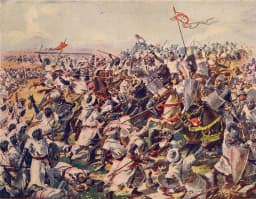
- The conquest of Lisbon as Roque Gameiro imagined it for Quadros da História de Portugal in 1917: a siege tower on the shore, the crusader fleet on the Tagus and the walled city below the alcáçova. It is a reconstruction, painted 770 years after the event. Roque Gameiro, Public domain, via Wikimedia Commons.
- A stone in Porto's old cathedral quarter, photographed in 2022. Its inscription, put up by the city on 17 June 1947, says that Bishop Pedro Pitões preached to the northern crusaders on this spot on 17 June 1147. Chris Amies from Birmingham, England, CC BY 2.0, via Wikimedia Commons.
- The west front of the Sé de Lisboa in 2022. Building began after the conquest of 1147 under Gilbert of Hastings and ended in the early thirteenth century; much of the present facade was restored in the early twentieth century. Ingo Mehling, CC BY-SA 4.0, via Wikimedia Commons.
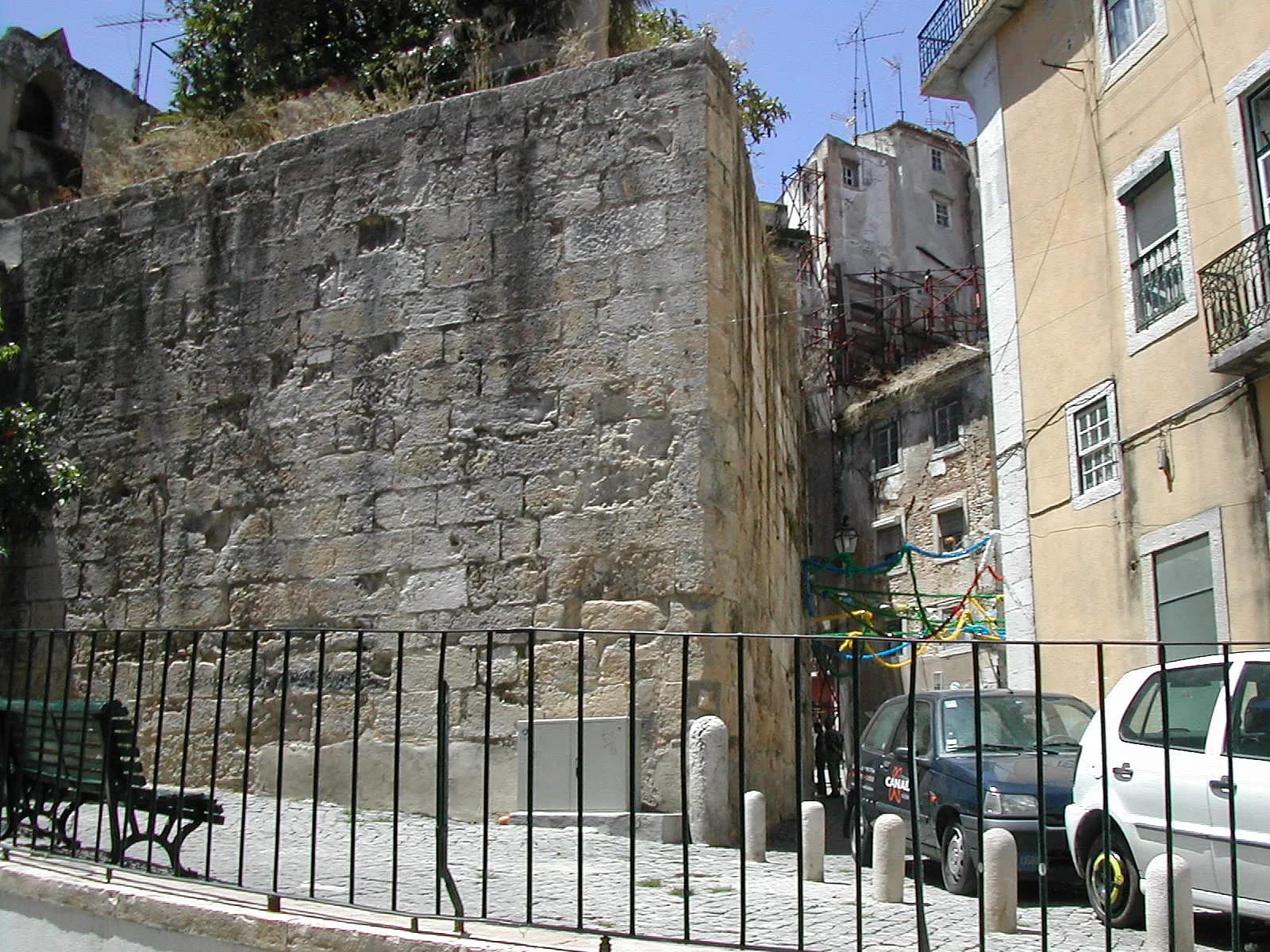
- The Torre de Alfama, one of the surviving towers of the Cerca Moura, the old wall circuit of the medieval city below the castle. Photographed in 2003. CorreiaPM, Public domain, via Wikimedia Commons.
- Martim Moniz dying in the castle gate, a nineteenth-century azulejo panel by Pereira Cão at the Palácio da Rosa in Lisbon. It illustrates the legend, not a recorded event. Pereira Cão, Public domain, via Wikimedia Commons.