

Egas Moniz, the lobotomy and Portugal's first Nobel Prize
On 27 October 1949 a Portuguese neurologist was awarded the Nobel Prize for an operation that cut nerve fibres in the brains of psychiatric patients. His earlier invention, a way of seeing the brain's arteries on an X-ray, is the one hospitals still use.
At a glance
- On 27 October 1949 the Karolinska Institute awarded the Nobel Prize in Physiology or Medicine to the Portuguese neurologist Egas Moniz, aged 74, and the Swiss physiologist Walter Hess, half each.
- Moniz's citation was “for his discovery of the therapeutic value of leucotomy in certain psychoses”: an operation, first done in Lisbon in late 1935 by the neurosurgeon Almeida Lima on his instructions, that cut nerve fibres in the frontal lobes.
- His earlier invention, cerebral angiography (1927), was nominated for the prize in 1928, 1933 and 1937 without success. It made the brain's arteries visible on X-rays and is still used.
- Leucotomy, renamed lobotomy and spread by Walter Freeman in the United States, was performed on tens of thousands of people before antipsychotic drugs replaced it in the 1950s.
- Families of lobotomy patients have asked for the prize to be withdrawn. The Nobel Foundation declined in 2004, and its statutes allow no appeal against an award. Moniz is still Portugal's only Nobel laureate in the sciences.
Arteries through the skull
In late June 1927, in Lisbon, a young neurosurgeon named Pedro Almeida Lima exposed the carotid artery in the neck of a 20-year-old man with a tumour of the pituitary gland. The method, as it was later published, was to clamp the artery for a moment and inject five or six cubic centimetres of a freshly made 25 per cent solution of sodium iodide, taking X-ray plates as fast as possible while the liquid was still going in.
The man in charge, the professor of neurology António Egas Moniz, could not do the injections himself; gout had left his hands badly deformed. On the film the arteries of the brain showed up through the bone, bent out of their usual course by the tumour. It was the first time angiography had shown a lesion inside a living patient's skull. The Casa-Museu Egas Moniz and a 2017 review date the success to 28 June 1927; a 2020 history gives 18 June.
“When, in June 1927, I managed for the first time to see the arteries of the brain on an X-ray, through the thick bones of the skull, I had one of the greatest moments of wonder of my life.”
Twenty-two years later, on 27 October 1949, the Karolinska Institute in Stockholm announced that Moniz had won the Nobel Prize in Physiology or Medicine. It was not for the angiogram. It was for an operation he had devised in 1935, which cut into the frontal lobes of psychiatric patients and which the world came to know as the lobotomy.
Doctor, deputy, diplomat
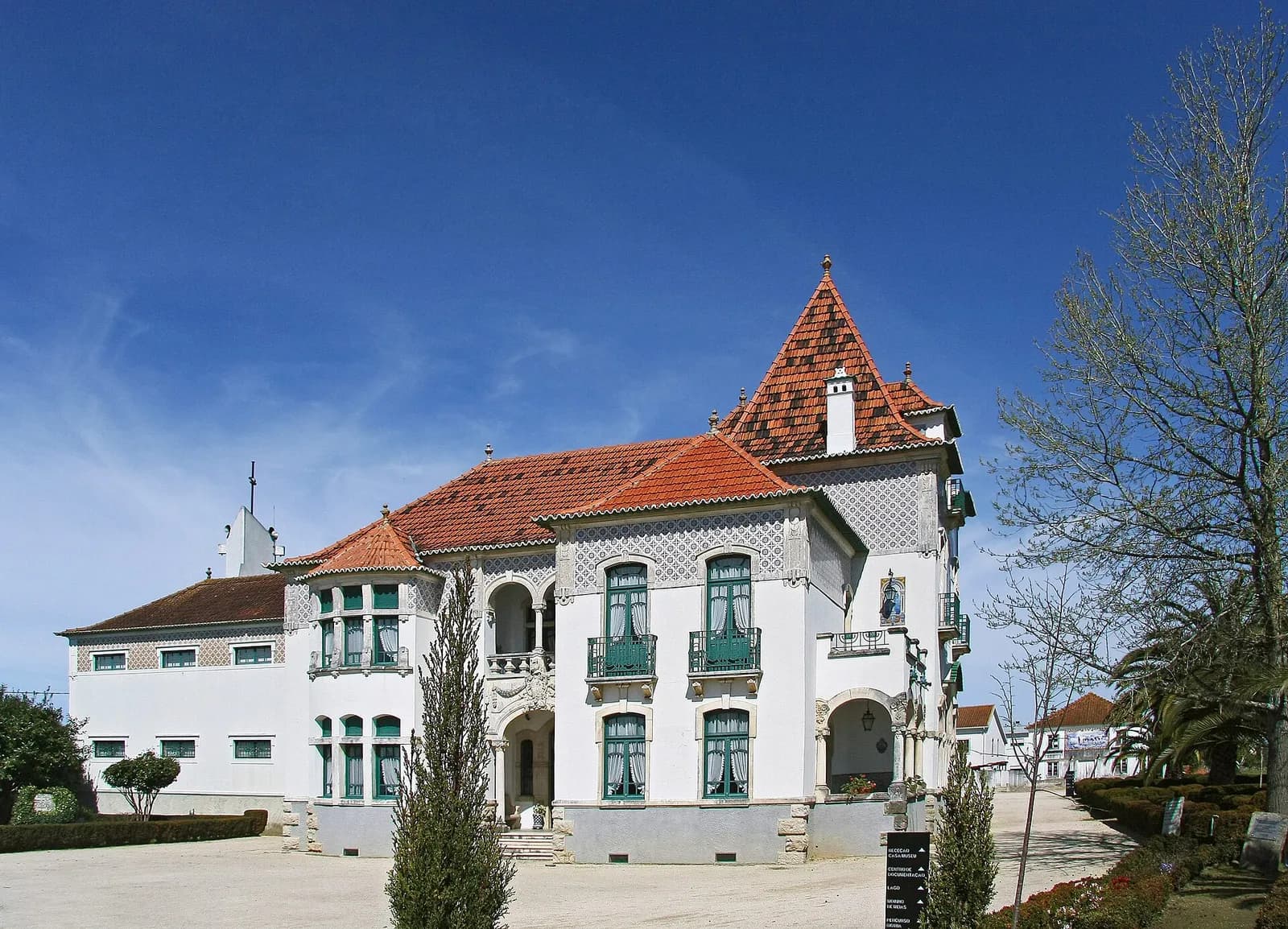
He was born António Caetano de Abreu Freire on 29 November 1874 in Avanca, a village near Estarreja in the district of Aveiro. His godfather, an uncle who was a priest and gave him his first lessons, had him take the name Egas Moniz, after a hero of Portugal's twelfth-century wars against the Moors.
He studied medicine at Coimbra, graduating in 1899, and trained in neurology in Bordeaux and Paris under Babinski, Dejerine and Pierre Marie. He became a lecturer at Coimbra in 1902. In 1911 the new Republic created a chair of neurology at Lisbon, the first in the country, and gave it to him.
Politics took up as much of his energy as medicine. A republican under the monarchy, he was jailed in 1908 for his part in a plot against the dictatorship of João Franco, and sat as a deputy in several parliaments from 1903. In 1917 he founded the Centrist Republican Party, which wanted the president to have the power to dissolve parliament.
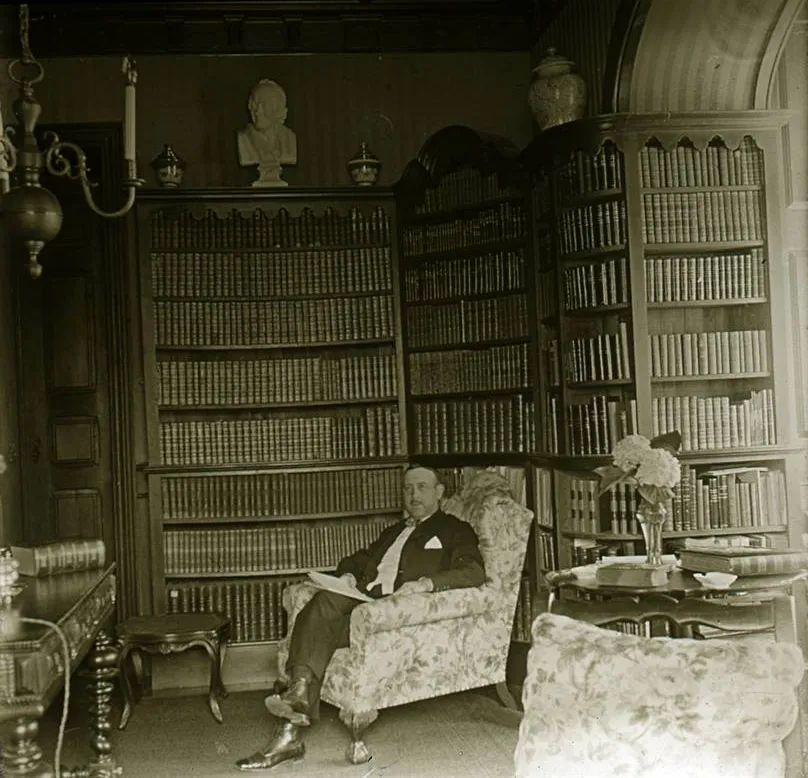
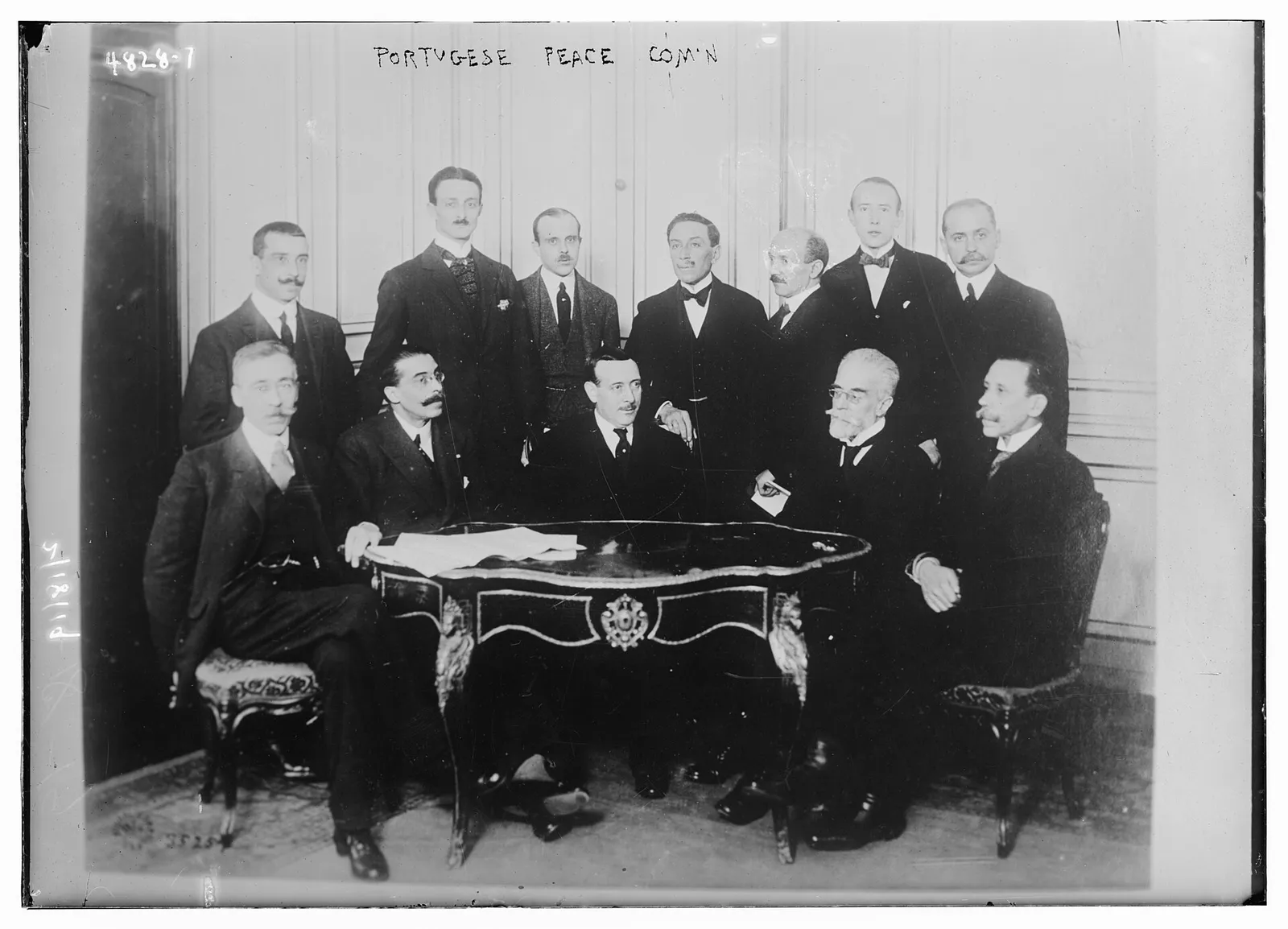
His Centrists backed Sidónio Pais, the army officer who seized power in December 1917. Moniz presented his credentials in Madrid as Portugal's envoy on 16 March 1918, and on 8 October 1918 became foreign minister. He was named head of the Portuguese delegation to the peace conference in Paris, but on 16 March 1919, three months after Sidónio's assassination, Afonso Costa replaced him.
After 1919 he went back to his clinic. The First Republic ended with a military coup in May 1926, and the dictatorship that followed became António de Oliveira Salazar's Estado Novo (New State). Moniz left public life disillusioned and, at 52, gave himself to research.
Making the brain's blood vessels visible
In the 1920s neurologists could not see a brain tumour on an X-ray. The best method was the American surgeon Walter Dandy's pneumoencephalography, which injected air into the brain's cavities and looked for distortions. Moniz had seen Jean-Athanase Sicard in Paris use an iodised oil to diagnose compression of the spinal cord, and wondered whether the brain's arteries could be made opaque instead.
He worked through dogs, rabbits and heads from the anatomy department, testing lithium bromide, strontium bromide and sodium iodide. On living patients the first attempts failed. One patient, injected with a bromide solution, died about eight hours later of a stroke caused by a clot in the carotid artery. “This accident … was a great shock to us,” the Lisbon team wrote, and Moniz stopped for a time before switching to sodium iodide.
On 7 July 1927 he presented the result to the Neurological Society in Paris. His conclusion was short.
“Our thesis has been demonstrated. Radio-arteriography of the brain can be obtained in the living, and it can provide us with information for locating tumours.”
He kept refining it. From 1931 he used Thorotrast, a thorium dioxide suspension that gave sharper pictures; years later it was found to cause liver disease and leukaemia because the radioactive thorium stayed in the body. He showed that angiography could reveal a blocked internal carotid artery, and named the carotid siphon, a bend of the artery inside the skull. In 1942 the thousandth angiography was performed at Lisbon's Hospital de Santa Marta.
Lisbon colleagues nominated him for the Nobel Prize for angiography in 1928 and 1933, and again in 1937, when the leucotomy was also mentioned. Writing in Neurosurgery in 1998, B. Lee Ligon reported from the Nobel documents that on two occasions his nominations were assessed by Hans Christian Jacobaeus, a Karolinska Institute professor and member of the Nobel committee, who advised against an award. Until computed tomography arrived in the 1970s, angiography was the main way to see the brain's blood vessels.
The “white cut”
In August 1935 Moniz attended the second International Neurological Congress in London. There the American physiologist John Fulton and his colleague Carlyle Jacobsen described two chimpanzees whose frontal lobes had been removed. Afterwards the animals no longer flew into rages when they failed at a task. Many have seen this, as Bengt Jansson notes in an essay for the Nobel organisation, as the trigger for Moniz's “bold step”.
His idea, as the 1949 presentation speech later put it, was that mental illnesses accompanied by emotional tension might be relieved by destroying the frontal lobes or their connections with the rest of the brain. He chose to cut the connections, which run through the white matter, hence the name leucotomy, “the white cut”. Moniz thought some psychoses were sustained by fixed, obsessive patterns of thought, which he blamed on a “fixation” of the connections between nerve cells, and that cutting these fibres might break them.
He moved fast. In November 1935, only months after London, Almeida Lima began operating at Moniz's direction, under general anaesthetic, first by injecting alcohol into the white matter of the frontal lobes to destroy it. The patients came from Lisbon's Bombarda mental hospital, whose director, Sobral Cid, supplied them. From 27 December they used a leucotome Moniz designed: a thin cannula with a retractable wire loop, later replaced by a steel band, which was pushed into the brain and rotated to cut small cores of white matter in each frontal lobe.
On 3 March 1936 Moniz presented the first 20 cases in Paris, and a monograph followed that year. By his own count seven patients were cured, seven improved and six unchanged, and none died. Of the seven with schizophrenia, only two improved. Vomiting, incontinence, apathy and disorientation followed almost every operation, but he described them as temporary.
In 1937 he reported a second series of 18 patients, all with schizophrenia, of whom three were almost cured and two much better. He admitted that patients whose illness had already worn them down gained little.
“Prefrontal leukotomy is a simple operation, always safe, which may prove to be an effective surgical treatment in certain cases of mental disorder.”
Critics have found the evidence thin. The neuroscientist Elliot Valenstein argued that Moniz proposed the operation with little theoretical or experimental basis and quickly declared many patients cured, and that his peers did not question him because of the standing angiography had given him. Moniz has also been accused of playing down complications, keeping poor records and following patients up poorly.
The medical historians Dominik Gross and Gereon Schäfer, who went back to Moniz's Portuguese and French papers, found his first assessments were made days or weeks after surgery, with no follow-up over months or years. The patients' own wishes were not taken into account. By modern standards, they concluded, the first series gave no evidence at all that the operation worked.
| Cerebral angiography | Prefrontal leucotomy | |
|---|---|---|
| First used | June 1927, Lisbon | November 1935, Lisbon |
| Surgeon who carried it out | Pedro Almeida Lima | Pedro Almeida Lima |
| What was done | Contrast liquid injected into the carotid artery, then X-rays taken | Alcohol injected, later a wire loop rotated, to cut white-matter fibres in both frontal lobes |
| First results reported | Displaced arteries showed a tumour's position | 7 of 20 “cured” by Moniz's own count, assessed days or weeks after surgery |
| Purpose | To locate tumours and vascular disease in the brain | To relieve severe anxiety, depression, obsessions and some cases of schizophrenia |
| Nobel record | Nominated 1928, 1933, 1937; never awarded | Awarded 27 October 1949 |
| Fate | Refined with safer contrast agents and still used today | Largely abandoned after antipsychotic drugs arrived in the 1950s |
Moniz directed both procedures but did not perform them himself. The 1937 nominations cited both angiography and the leucotomy; the 1949 nominations again named both, with the operation first.
From leucotomy to lobotomy
Moniz's reputation carried the operation abroad, to Brazil, Italy and above all the United States. There the neurologist Walter Freeman and the neurosurgeon James Watts began operating in 1936, soon developed their own “closed” technique, and performed about 600 operations with it. The operation became known as lobotomy. In 1944 Freeman nominated Moniz for the Nobel Prize.
Freeman then simplified it further. His transorbital lobotomy drove an instrument like an ice pick through the thin bone above the eye socket, often under local anaesthesia or with the patient sedated after electroconvulsive therapy. He taught it to psychiatrists and travelled from hospital to hospital demonstrating it. Watts broke with him over the lack of sterile technique. Counts of Freeman's own operations vary: more than 3,000 lobotomies of both kinds in one review, more than 3,500 transorbital ones alone in another, over 4,000 in a third.
Asylums were full and nothing else seemed to work. In the United States about 10,000 operations had been done by August 1949. In England and Wales, 10,365 people had a single leucotomy between 1942 and 1954, and 762 more were operated on more than once. One estimate puts the total for the United States and Europe between 1936 and 1956 at about 60,000.
Outcome of leucotomy in England and Wales, 1942 to 1954
% of patients followed up
The 9,284 patients followed up in Tooth and Newton's survey of everyone given a leucotomy in England and Wales between 1942 and 1954 (published by HMSO in 1961), as summarised by Bengt Jansson on NobelPrize.org. The outcome categories are the survey's own; Jansson's summary does not say how improvement was judged or after how long, nor what the deaths were from. It was not a controlled trial. Patients with affective disorders such as depression did better (63% recovered) than those with schizophrenia (30%).
Show the data
| Share of 9,284 patients followed up | |
|---|---|
| Recovered or greatly improved | 41 |
| Minimally improved | 28 |
| No change | 25 |
| Worse | 2 |
| Died | 4 |
The cost showed early. Many patients became dull, apathetic and childlike, without drive or initiative. At a conference in 1953, reported death rates from the operation ranged from 0.8 to 2.5 per cent, and about one patient in ten developed epilepsy. In 1971 Freeman published a follow-up of 707 people with schizophrenia, four to 30 years after surgery. He reported that most had improved, yet 73 per cent were still in hospital or living at home in “a state of idle dependency”.
“She is my daughter but yet a different person. She is with me in body but her soul is in some way lost.”
The prize
By 1949 Moniz was 74 and retired: he had left his chair on reaching 70 in November 1944. On 14 March 1939 a patient had shot him in his consulting room. Accounts of his injuries differ. The NobelPrize.org essay says he was hit in the leg and spent the rest of his life in a wheelchair; a 2017 review says he was left paraplegic. What is clear is that he went on working: he kept his chair for five more years and a private practice until his death.
That year the archive records nine nominations for him: five from professors in Lisbon, three from São Paulo and one from E. Busch, a professor of neurosurgery in Copenhagen. All gave the same reasons, the surgical treatment of mental disorders and the diagnosis of brain tumours by angiography. On 27 October the Karolinska Institute decided to split the prize between Moniz and Walter Rudolf Hess of Zurich.
- Announced
- 27 October 1949, by the Karolinska Institute, Stockholm
- Prize
- Physiology or Medicine, shared equally
- Egas Moniz
- “for his discovery of the therapeutic value of leucotomy in certain psychoses”
- Walter Hess
- “for his discovery of the functional organization of the interbrain as a coordinator of the activities of the internal organs”
- Moniz's age
- 74
- Ceremony
- Stockholm; Moniz was absent, and gave no Nobel lecture
Both prizes were for work on how the brain is organised. Hess had mapped centres deep in the brain by stimulating them with fine wires in cats. Presenting the award, Professor Herbert Olivecrona of the Karolinska Institute said the leucotomy worked best for depression and obsessions and less well for schizophrenia, and that in less favourable cases nursing was simpler because the patient could be kept in a “quiet” ward. He acknowledged that the personality changed.
“Frontal leucotomy, despite certain limitations of the operative method, must be considered one of the most important discoveries ever made in psychiatric therapy, because through its use a great number of suffering people and total invalids have recovered and have been socially rehabilitated.”
Moniz did not go to Stockholm. At the ceremony the Crown Prince handed his prize to Portugal's chargé d'affaires, a Mr Patricio. On 3 January 1950 the Swedish minister in Lisbon, Gustaf Weidel, delivered the prize to Moniz, and Estarreja, his home municipality, had already honoured him on 23 December.
Nominations for Egas Moniz, by year
nominations
Counted from the Nobel Prize nomination archive. The 1928 and 1933 nominations were for angiography; 1937 named angiography and the leucotomy; 1944 (Walter Freeman) the leucotomy alone; 1949 and 1950 both, the 1950 ones arriving after he had already won. Nobel statutes keep nominations closed for at least 50 years, which is why the archive can show them.
Show the data
| Nominations received | |
|---|---|
| 1928 | 2 |
| 1933 | 2 |
| 1937 | 2 |
| 1944 | 1 |
| 1949 | 9 |
| 1950 | 2 |
A drug ends the operation
The prize came after the operation's best years. In 1952 two Frenchmen, Delay and Deniker, introduced chlorpromazine, the first drug with a definite effect on schizophrenia. By the mid-1950s antipsychotic drugs had largely replaced surgery, and the procedure and the people who practised it fell into disrepute. After 1954, Jansson notes, the number of operations fell steadily.
Moniz saw the turn. On 20 May 1954 he spoke to the Lisbon Academy of Sciences on “A leucotomia está em causa”, “Leucotomy is in question”. He died in Lisbon on 13 December 1955, aged 81. The British doctor Sir Geoffrey Jefferson wrote in The Lancet that his name would live for his “two great contributions to medicine”.
Psychosurgery did not disappear altogether. Since the 1970s a few patients with severe anxiety or obsessive-compulsive disorder that resists every other treatment have had small, precisely placed lesions made with stereotactic methods. Sweden, Jansson wrote in 1998, performed about five such operations a year.
Freeman, the operation's great promoter, lost his standing as the drugs took over. Norway later reckoned with the damage: in 1996 it agreed to compensate people who had been lobotomised.
Should the prize stand?
Some have called for Moniz to be stripped of the prize. In 2004 the campaign was led by Christine Johnson, who had a close relative harmed by lobotomy, through the website psychosurgery.org. That July the Nobel Foundation wrote to her declining to withdraw the award, while saying it was relieved that “the medical profession can today offer much more humane and effective therapies for the severely mentally ill patients”.
The Nobel organisation's own website carries an essay on the controversy, published in 1998 by Bengt Jansson, a professor of psychiatry at the Karolinska Institutet who had sat on the Nobel Assembly. He argued that the 1940s had no alternative for the sickest patients and that the operation made some lives more bearable, and concluded: “I think there is no doubt that Moniz deserved the Nobel Prize.”
Others disagree. The neuroscientist Torsten Wiesel, himself a Nobel laureate in medicine, has been quoted as calling the 1949 award “a terrible mistake that caused permanent damage to thousands of patients.” Some take a middle line: the authors of a 2017 tribute in Frontiers in Neuroanatomy wrote that angiography, not the leucotomy, would have deserved the prize, while asking readers to judge the operation in the context of its time.
Moniz in Portugal today
In Portugal Moniz is honoured as a scientist. In 1989 the Banco de Portugal put him on a 10,000-escudo banknote, and several stamps have marked the first cerebral arteriogram. The museum in Avanca presents him as the precursor of modern brain imaging and of psychosurgery. The next Nobel laureate born in Portugal was José Saramago, who won the prize for literature in 1998. Moniz is still the country's only laureate in the sciences.
The angiogram he fought for has lasted. Doctors now usually image vessels first with CT or MR angiography, but catheter angiography of the brain is still used to confirm aneurysms and malformations and to investigate subarachnoid haemorrhage and stroke.
29 November 1874
Born in Avanca, Estarreja
1899
Graduates in medicine at Coimbra
1903
Begins a career as a deputy that lasts until 1918
4 April 1911
Takes the new chair of neurology in Lisbon
16 March 1918
Presents credentials in Madrid as Portugal's envoy
8 October 1918
Becomes foreign minister and head of the peace delegation
16 March 1919
Replaced in Paris by Afonso Costa
28 June 1927
First cerebral arteriography with Almeida Lima
7 July 1927
Presents angiography in Paris
November 1935
First leucotomy, by alcohol injection
27 December 1935
First operation with the leucotome
14 March 1939
Shot by a patient
29 November 1944
Retires from his chair
27 October 1949
Awarded the Nobel Prize, shared with Walter Hess
3 January 1950
Receives the prize from the Swedish minister in Lisbon
20 May 1954
Lecture “Leucotomy is in question”
13 December 1955
Dies in Lisbon, aged 81
14 July 1968
Casa-Museu Egas Moniz opens in Avanca
FAQs
What did Egas Moniz win the Nobel Prize for?
He won half of the 1949 Nobel Prize in Physiology or Medicine “for his discovery of the therapeutic value of leucotomy in certain psychoses”. The leucotomy, later called lobotomy, cut nerve fibres linking the frontal lobes to the rest of the brain. The other half went to Walter Hess of Zurich.
Did Egas Moniz perform lobotomies himself?
No. He designed the operation and directed it, but the neurosurgeon Pedro Almeida Lima carried it out; Moniz had no surgical training and gout had deformed his hands. The ice-pick “transorbital” lobotomy was a later American method devised by Walter Freeman.
Has Egas Moniz's Nobel Prize been revoked?
No. Relatives of lobotomy patients campaigned for it to be withdrawn, and in 2004 the Nobel Foundation declined. Its statutes allow no appeal against a prize-awarding body's decision.
What was cerebral angiography and is it still used?
It is an X-ray of the brain's arteries after a contrast liquid is injected into them, first achieved by Moniz and Almeida Lima in June 1927. It was the main way to see the brain's vessels until CT scanning arrived, and catheter angiography is still used for aneurysms, malformations, haemorrhage and stroke.
How many Nobel laureates has Portugal had?
Two people born in Portugal have won Nobel Prizes: Egas Moniz, in Physiology or Medicine in 1949, and José Saramago, in Literature in 1998. Moniz is the country's only laureate in the sciences.
On the timeline
Open the timelineNearby moments from dictatorship and the estado novo (1926–1974).
Carlos Lopes is born in Vildemoinhos, near Viseu. A late bloomer, he won the Olympic marathon in Los Angeles at 37 — Portugal's first Olympic gold medal — and the following year set a world marathon record of 2:07:12 in Rotterdam.
Birth in Lisbon of Marcelo Rebelo de Sousa, law professor, member of the assembly that drafted the 1976 Constitution, co-founder of the weekly 'Expresso' and for years Portugal's best-known TV political commentator. Elected President in 2016 and re-elected in 2021, he became known for his ubiquitous presence, hugs and selfies, leaving office in March 2026.
The plane carrying the 'Grande Torino' football team home from a friendly against Benfica in Lisbon crashes into the Superga hill above Turin, killing all 31 people on board. The disaster wipes out the side that dominated Italian football and leaves a lasting bond between the two clubs.
Egas Moniz's Nobel Prize
José Ramos-Horta is born in Dili, Portuguese Timor, to a Portuguese father and a Timorese mother. A founder of Fretilin, he spent 24 years in exile as the voice of East Timor's resistance to the Indonesian occupation, sharing the 1996 Nobel Peace Prize with Bishop Ximenes Belo; he survived being shot in 2008 and has twice served as President.
Death in Porto of Guilhermina Suggia, aged 65, the cellist who studied with Pablo Casals in Paris, shared his life and stage for six years and built a career as one of the leading cellists of her time. Augustus John's dramatic portrait of her at the cello hangs in Tate Britain.
Salazar and President Óscar Carmona inaugurate the Castelo do Bode dam on the River Zêzere near Tomar, then the largest hydroelectric scheme in Portugal. Its 115-metre concrete wall holds back a reservoir of more than a billion cubic metres that still supplies much of Lisbon's drinking water.
Coming up in history
All long reads 29 October 1936Tarrafal, 29 October 1936: Salazar's prison camp in Cape Verde opens
 30 October 1340The Battle of Salado, 1340: how Portugal helped stop the last Moroccan invasion
 31 October 1886Ponte Luís I: the double-decker iron arch that joined Porto and Gaia
 1 October 1777The Treaty of San Ildefonso: Portugal and Spain redraw South America, 1777
34 sources
Archives, scholarship and reporting this article was checked against.
- 1
Egas Moniz: Facts (Nobel Prize in Physiology or Medicine 1949)NobelPrize.org (Nobel Prize Outreach)
- 2
- 3
- 4
- 5
Cronologia (Egas Moniz chronology)Casa-Museu Egas Moniz, Câmara Municipal de Estarreja
- 6
Egas Moniz: 90 years (1927–2017) from cerebral angiography (Artico M. et al.)Frontiers in Neuroanatomy 11:81 (2017), via PubMed Central
- 7
Egas Moniz (1874–1955) and the “invention” of modern psychosurgery: a historical and ethical reanalysis (Dominik Gross and Gereon Schäfer)Neurosurgical Focus 30(2): E8 (2011), Journal of Neurosurgery Publishing Group
- 8
Egas Moniz and the origins of psychosurgery: a review commemorating the 50th anniversary of Moniz's Nobel Prize (Ann Jane Tierney)Journal of the History of the Neurosciences 9(1): 22–36 (2000), PubMed record
- 9
- 10
- 11
- 12
- 13
O Essencial sobre Sidónio Pais, by António AraújoImprensa Nacional, 2025
- 14
Treaty of Peace with Germany (Treaty of Versailles), 28 June 1919, in Treaties and Other International Agreements of the United States of America 1776–1949, vol. 2 (Bevans)Library of Congress
- 15
Um golpe na República: 28 de Maio de 1926, da Ditadura Militar ao Estado NovoMuseu da Presidência da República
- 16
O Estado Novo (1933-1974)Assembleia da República
- 17
- 18
- 19
- 20
- 21
- 22
- 23
- 24
- 25
- 26
- 27
- 28
Should they de-Nobel Moniz? (John Sutherland)The Guardian, 2 August 2004
- 29
- 30
- 31
Nobel Prize laureates born in Portugal (Nobel Prize API, laureates by birth country)NobelPrize.org (Nobel Prize Outreach)
- 32
- 33
- 34
Image credits
- The Casa do Marinheiro in Avanca, where Egas Moniz was born in 1874. He had it rebuilt in 1915 and left it to become the Casa-Museu Egas Moniz, which opened in 1968. Photographed in 2016. Vitor Oliveira from Torres Vedras, PORTUGAL, CC BY-SA 2.0, via Wikimedia Commons.
- Egas Moniz in his study in 1918, the year he went to Madrid as Portugal's envoy and then became foreign minister. He was 43. Unknown author, Public domain, via Wikimedia Commons.
- The Portuguese delegation to the Paris Peace Conference, photographed for the Bain News Service in January 1919. Egas Moniz, its first head, is seated in the centre, third from the left. Bain News Service, publisher, Public domain, via Wikimedia Commons.
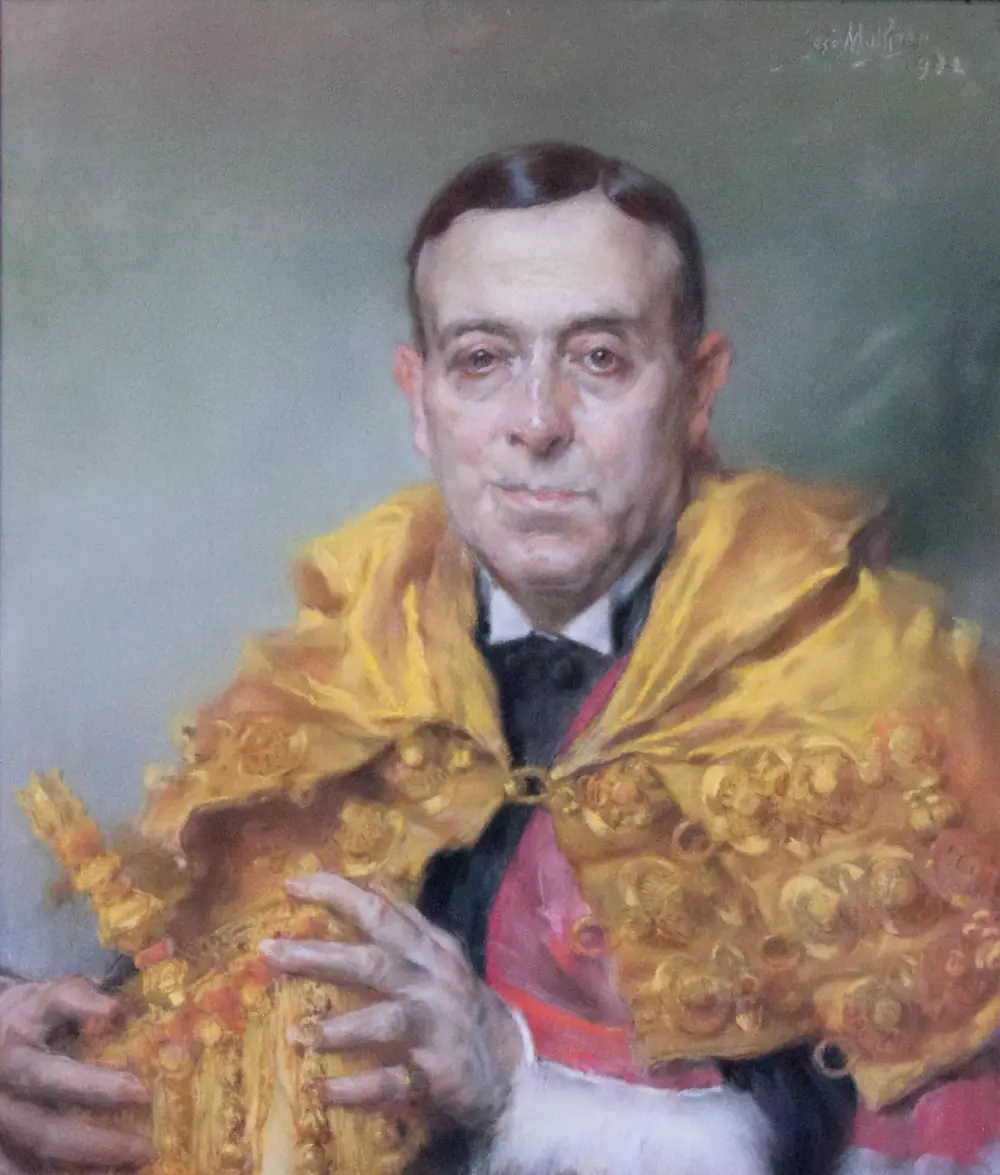
- José Malhoa's 1932 portrait of Egas Moniz in academic dress, painted five years after the first cerebral angiogram. It hangs at the Hospital de Santa Maria in Lisbon. José Malhoa, Public domain, via Wikimedia Commons.