

Tarrafal, 29 October 1936: Salazar's prison camp in Cape Verde opens
Salazar's dictatorship built a penal colony for its opponents on the far side of the Atlantic. Prisoners called it the camp of slow death, and it held Portuguese and then African prisoners until 1 May 1974.
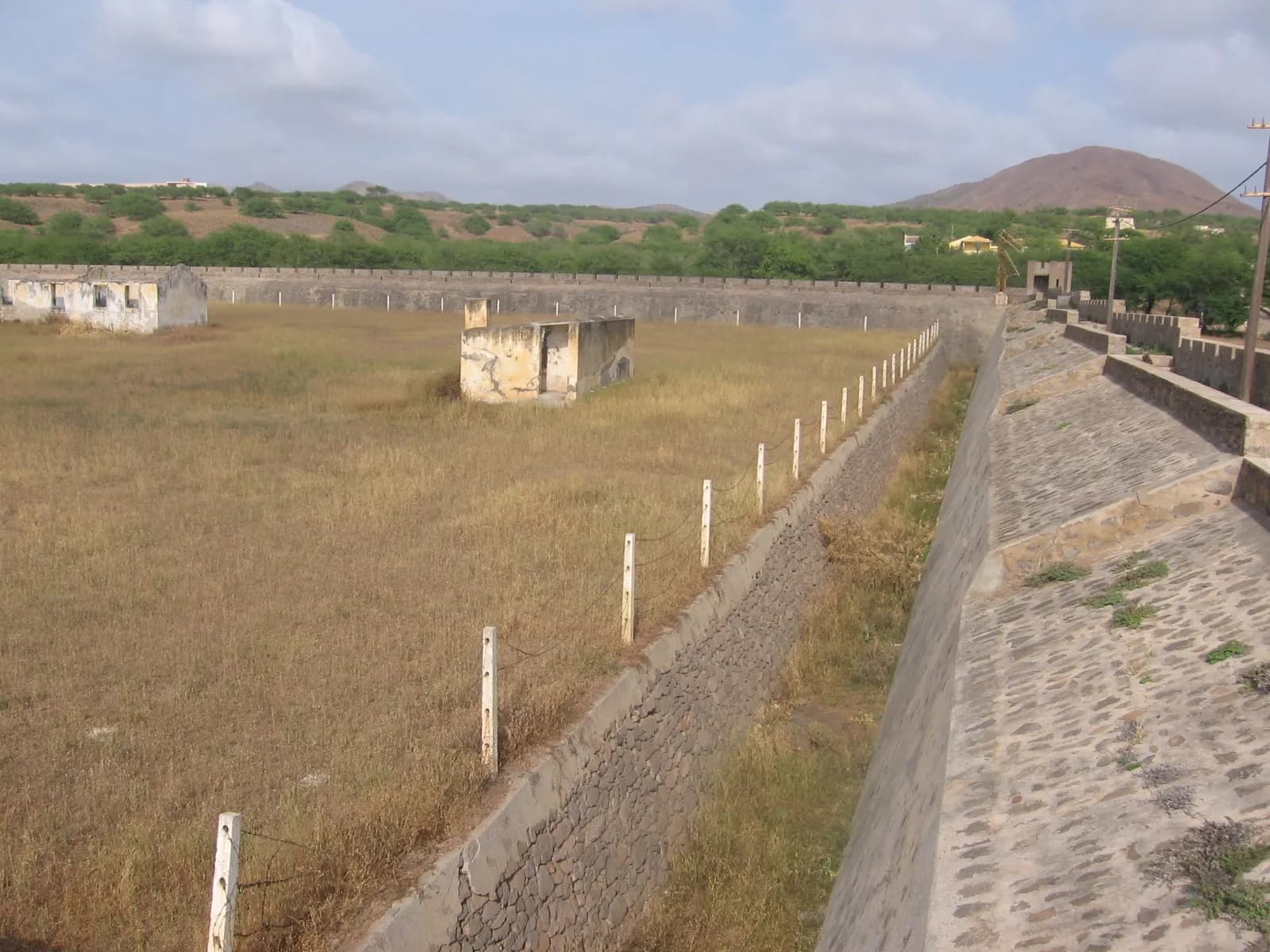
At a glance
- On 29 October 1936 the ship Luanda landed the first 152 political prisoners at Tarrafal, on the island of Santiago in Cape Verde, after 12 days at sea from Lisbon.
- Salazar's government had created the camp by Decree-Law 26:539 of 23 April 1936 as a penal colony for political and social prisoners, with room for 500.
- Between 32 and 34 Portuguese prisoners died in the camp from 1937 to 1948, depending on the count, most of them from malaria and other fevers, with almost no medical care.
- The camp emptied in January 1954 and reopened in 1961 as the Chão Bom labour camp for independence activists from Angola, Guinea and Cape Verde. Three or four of them died there.
- The last prisoners walked out on 1 May 1974, a week after the Carnation Revolution. The site is now a museum, and the Portuguese dead lie in a mausoleum in Lisbon.
Twelve days in the hold
On 29 October 1936 the ship Luanda reached the bay of Tarrafal, a small town in the north of Santiago island in Cape Verde, then a Portuguese colony off the coast of West Africa. In its holds were 152 political prisoners. They had sailed from Lisbon on 18 October and spent twelve days below decks.
Some of them had taken part in the general strike of 18 January 1934 against the dictatorship's control of the trade unions. Thirty-four were sailors from a naval mutiny that September. Edmundo Pedro, one of the first to arrive, would return to the camp in 2009 to tell a documentary crew what had happened there.
They were taken to Chão Bom, just outside the town, where the government had decreed a penal colony six months earlier. The permanent prison did not yet exist. The decree allowed a provisional camp to be set up first, partly so that the prisoners' own labour could be used to build the colony.
“Whoever enters through that gate loses all rights and has only duties to fulfil.”
- Date
- 29 October 1936
- Place
- Chão Bom, municipality of Tarrafal, Santiago island, Cape Verde
- Ship
- Luanda, which left Lisbon on 18 October 1936
- Prisoners
- 152 in the first group (one Museu do Aljube note says 150)
- Legal basis
- Decree-Law 26:539 of 23 April 1936
- Official name
- Colónia Penal de Cabo Verde; from 1961 Campo de Trabalho de Chão Bom
A dictatorship and its enemies
Portugal had been a dictatorship since a military coup in 1926. In 1933 a constitution drafted by António de Oliveira Salazar, the head of government, founded the Estado Novo, or New State. It was approved by a plebiscite in which abstentions counted as votes in favour, and it left freedom of expression, assembly and association to special laws.
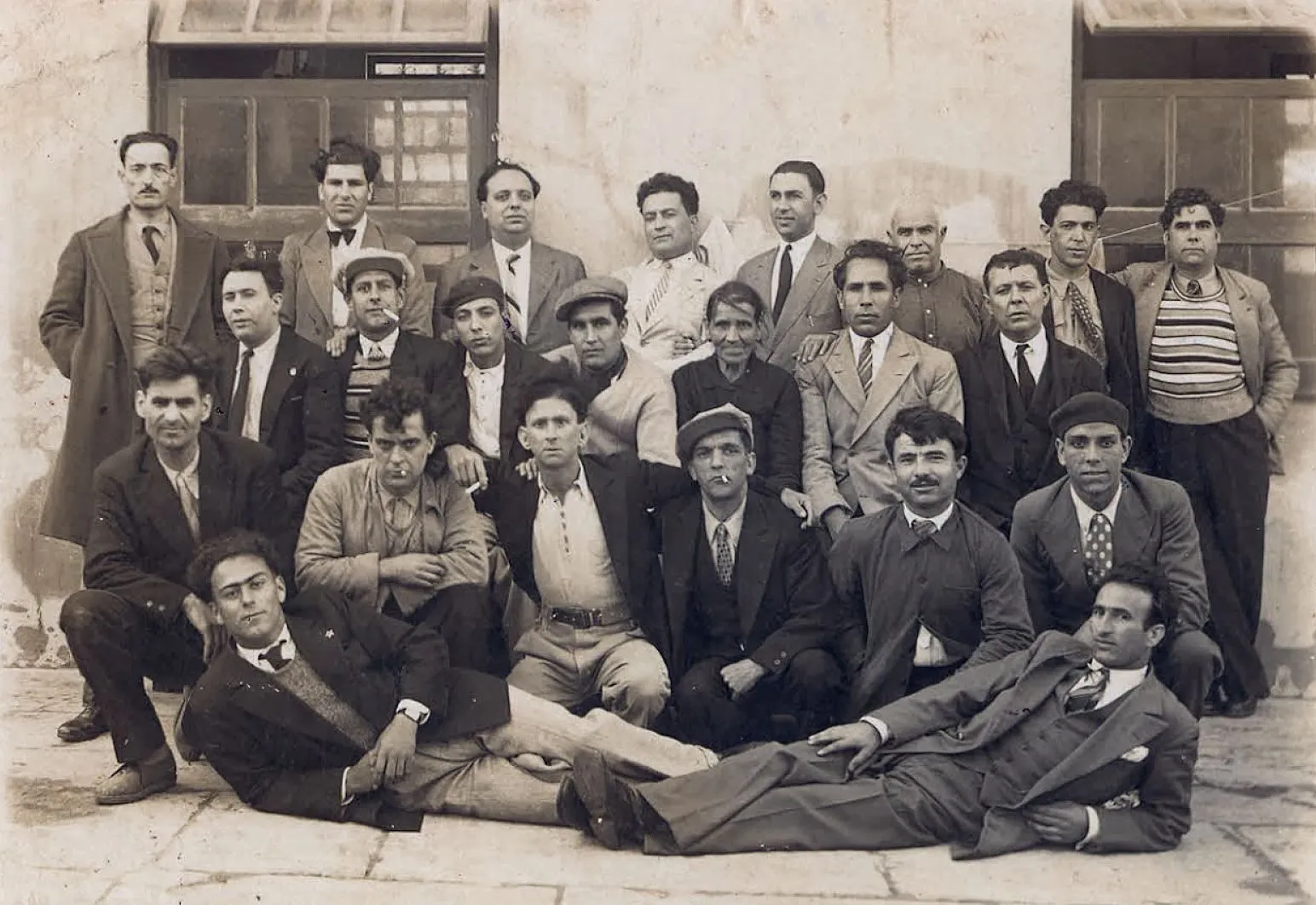
In September 1933 the regime's National Labour Statute, modelled on Mussolini's Carta del Lavoro, brought the unions under state control. Anarcho-syndicalists of the General Confederation of Labour (CGT), communists and socialists answered with a revolutionary general strike on 18 January 1934. The regime had made arrests in advance, and the movement was quickly put down.
Only in Marinha Grande, a glassmaking town in the district of Leiria, did it go further. Workers occupied the post of the Republican National Guard, the town hall and the post office and proclaimed a short-lived “soviet of Marinha Grande”. Troops restored control within hours, and a wave of arrests and deportations followed.
When civil war broke out in Spain, Salazar sided with General Franco against the Republic. A Portuguese militia, the Viriatos, fought for the Nationalists, perhaps 20,000 men by unofficial estimates. Arms for Franco came in through Portuguese ports, and the Portuguese police handed Spanish republicans and refugees over to his side. In March 1939 the two dictators sealed their alliance in the Iberian Pact.
On 8 September 1936 sailors on three warships, the Bartolomeu Dias, the Dão and the Afonso de Albuquerque, rose against the regime. The Revolutionary Organisation of the Navy, which grouped the Communist Party's cells in the fleet, planned to storm the prisons of the Azores, free the comrades held there and set up a provisional government to demand Salazar's fall. The government knew of the plan. Aircraft and coastal artillery fired on the ships, and within hours the revolt was over.
Twelve men died. Of the 208 sailors arrested, 82 were convicted, with sentences of 16 to 20 years. Thirty-four of them sailed with the first group to Tarrafal, and most stayed until the camp was emptied in 1954. Five died there.
A penal colony by decree
The legal groundwork had been laid in the Diário do Governo, the official gazette, on 23 April 1936. Decree-Law 26:539, issued by Salazar's office and promulgated by President Óscar Carmona, created “a penal colony for political and social prisoners” at Tarrafal. It put into effect decrees of 1933 and 1934 that had already provided for such a colony overseas.
“After a survey carefully made by technicians of different islands of the Cape Verde archipelago, the conclusion was reached that the place of Tarrafal, on the island of Santiago, met the conditions necessary for the installation of this colony, from the point of view of hygiene, of surveillance and of the natural means of communication indispensable to its proper functioning.”
The colony was meant for people convicted of political crimes and sentenced to banishment, and for prisoners who, held in another prison, proved “refractory” to its discipline or “pernicious” to other inmates. If needed, it could also hold suspects awaiting trial whom the government chose to keep outside mainland Portugal. It was to have room for 500 prisoners, on about 1,700 hectares of land at Chão Bom, Achada Grande and Ponta da Achada.
The decree also ordered an isolation zone around the colony “to prevent contact between the prisoners and the free population”. On paper the staff were to include a director, a chaplain, a doctor, a pharmacist, three nurses and seventy guards, backed by a company of African colonial troops under European officers.
“The camp of slow death”
Former prisoners called Tarrafal the campo da morte lenta, the camp of slow death. Their memoirs, studied by the sociologist Antónia Gato, describe the routine. Prisoners swapped their own clothes for coarse uniforms they called “iron suits”. A guard struck a length of old rail hanging by the gate to sound each order, and the men had to line up bareheaded for roll calls, work brigades and the raising of the flag, and take off their hats before every guard.
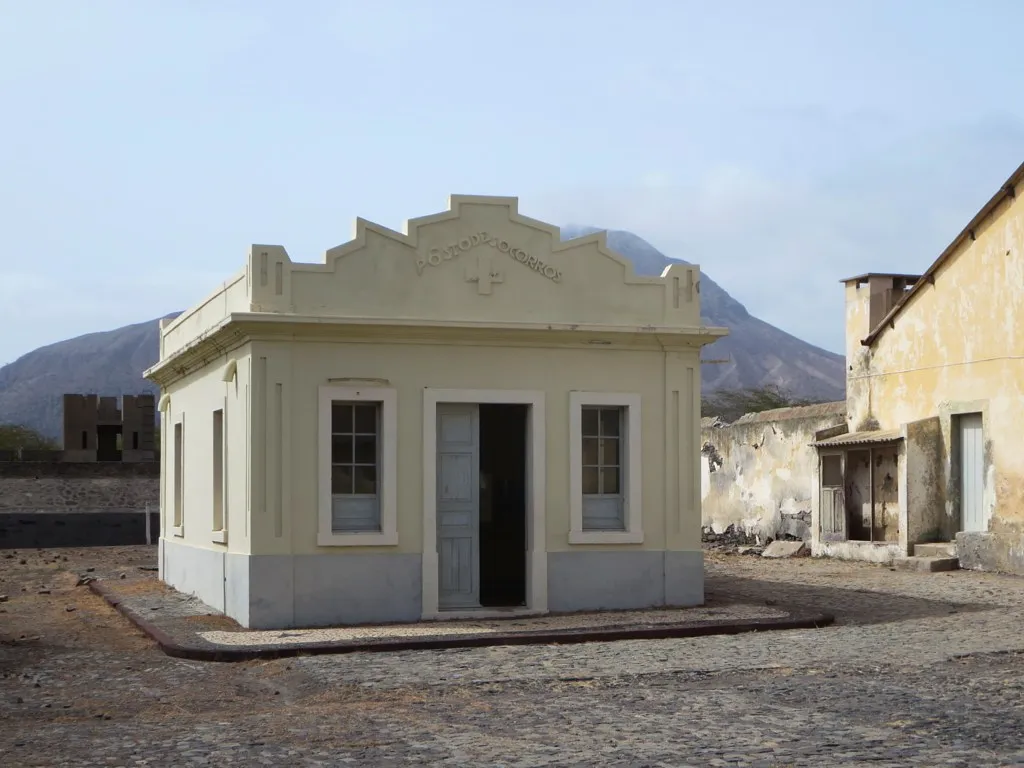
The first months were dry. Then came the rainy season and swarms of mosquitoes, and within days about 200 men were burning with fever. No doctor came to treat them and there were no proper medicines. The sick had a qualified nurse, who had arrived with the second group of prisoners in June 1937, and he had a thermometer, enemas and cold compresses.
The first death came on 20 September 1937. In little more than a month the fever the prisoners called the biliosa killed seven men, all from the first group. Their comrades hid the deaths from the sick, saying the dying had been taken to hospital in Praia, and the carpenters among them turned refectory tables into coffins.
“I am not here to cure, but to sign death certificates.”
Punishment meant the frigideira, the “frying pan”: a concrete block in open ground a few metres from the camp, about six metres long and three wide, split into two cells. Its only openings were an iron door pierced with small holes and a grating above it. In the tropical sun, prisoners said, the heat inside could reach 60 degrees. Men were held there on bread and water or thin soup, and at night they shivered on the concrete floor.
“Three prisoners punished in the same cell were enough for drops of water, condensed from breathing, to fall from the ceiling like rain. We went to punishment barefoot and without belts, and our first act, when the door closed on us, was to strip naked. The heat was atrocious.”
On 2 August 1937 a collective escape, planned with the help of two sentries, failed at the last moment. The prisoners the camp held responsible were beaten and 17 were sent to the frigideira. Days later a ditch was dug around the camp.
Counting the dead
The Museu do Aljube's list of people who died at the hands of the dictatorship names 33 men who died in the Tarrafal camp between 1937 and 1948. Most were workers: a glassworker and another worker from Marinha Grande, sailors, a barber, a cork worker, masons and drivers. The youngest, a newspaper seller, was 22. The oldest, a mason, was 58.
Two of them led the movements behind the 1934 strike. Mário Castelhano, the anarcho-syndicalist leader of the CGT, died in 1940 at 44. Bento Gonçalves, a lathe operator and secretary-general of the Portuguese Communist Party, died in 1942 at 40. The Museu do Aljube calls both deaths murders.
Deaths in the Tarrafal camp by year, 1937 to 1948
deaths
Lisboeta's count, by year of death, of the 33 people that the Museu do Aljube's list “Os que ficaram pelo caminho” records as dying in the Tarrafal camp. Other sources give 32 or 34 deaths for these years but no yearly breakdown, so some bars may be one too high or too low. The list gives Fernando Alcobia's death as 1939 in Portuguese and 1936 in English; the chart uses 1939.
Show the data
| Prisoners who died in the camp | |
|---|---|
| 1937 | 7 |
| 1938 | 3 |
| 1939 | 1 |
| 1940 | 3 |
| 1941 | 6 |
| 1942 | 4 |
| 1943 | 4 |
| 1944 | 1 |
| 1945 | 1 |
| 1946 | 0 |
| 1947 | 0 |
| 1948 | 3 |
The totals differ. The Museu do Aljube gives 340 prisoners and 34 deaths in one of its notes and 375 prisoners and 32 deaths in another. The mausoleum in Lisbon carries 32 names. The historian José Soares Tavares, a former Tarrafal councillor, told Lusa that 34 political and common prisoners were buried in Tarrafal's cemetery. Deutsche Welle and the documentary maker Diana Andringa give 32 Portuguese dead, and both note that others died after release from what the camp had done to them.
| Period | Name and prisoners | Prisoners held | Deaths in the camp |
|---|---|---|---|
| 1936 to 1954 | Colónia Penal de Cabo Verde: Portuguese opponents of the regime | 340 to 375 | 32 to 34 |
| 1962 to 1974 | Campo de Trabalho de Chão Bom: nationalists from Angola, Guinea and Cape Verde | 227 to about 230 | 3 or 4 |
| Total | More than 500 | 36 or 37 |
Figures from the Museu do Aljube (340 and 34; 375 and 32; 227 and 4), RTP and Lusa (340 and 34; about 230, of them 106 Angolans, 100 Guineans and 20 Cape Verdeans, and 3 dead; up to 37 dead in all), Deutsche Welle and Diana Andringa (32 Portuguese, 2 Angolan and 2 Guinean dead, 36 in all). Cape Verde's heritage institute dates the first period to 1936 to 1956.
Closed in 1954, reopened in 1961
The Museu do Aljube dates the camp's first closure to 26 January 1954 and names Francisco Miguel as the last prisoner of that period to leave. Cape Verde's heritage institute puts the end of this first phase in 1956.
Early in 1961 independence movements in Portugal's African colonies took up arms, and Portugal sent troops. The camp was reopened as the Campo de Trabalho de Chão Bom, the Chão Bom labour camp. The Museu do Aljube dates the reopening to 14 April 1961 in one note and to June 1961 in another, while RTP and Lusa give 1962. The first prisoners, from Angola, arrived in February 1962. Guineans followed in September 1962, and the first Cape Verdeans in 1968.
“a place planned, designed and built to make people suffer”
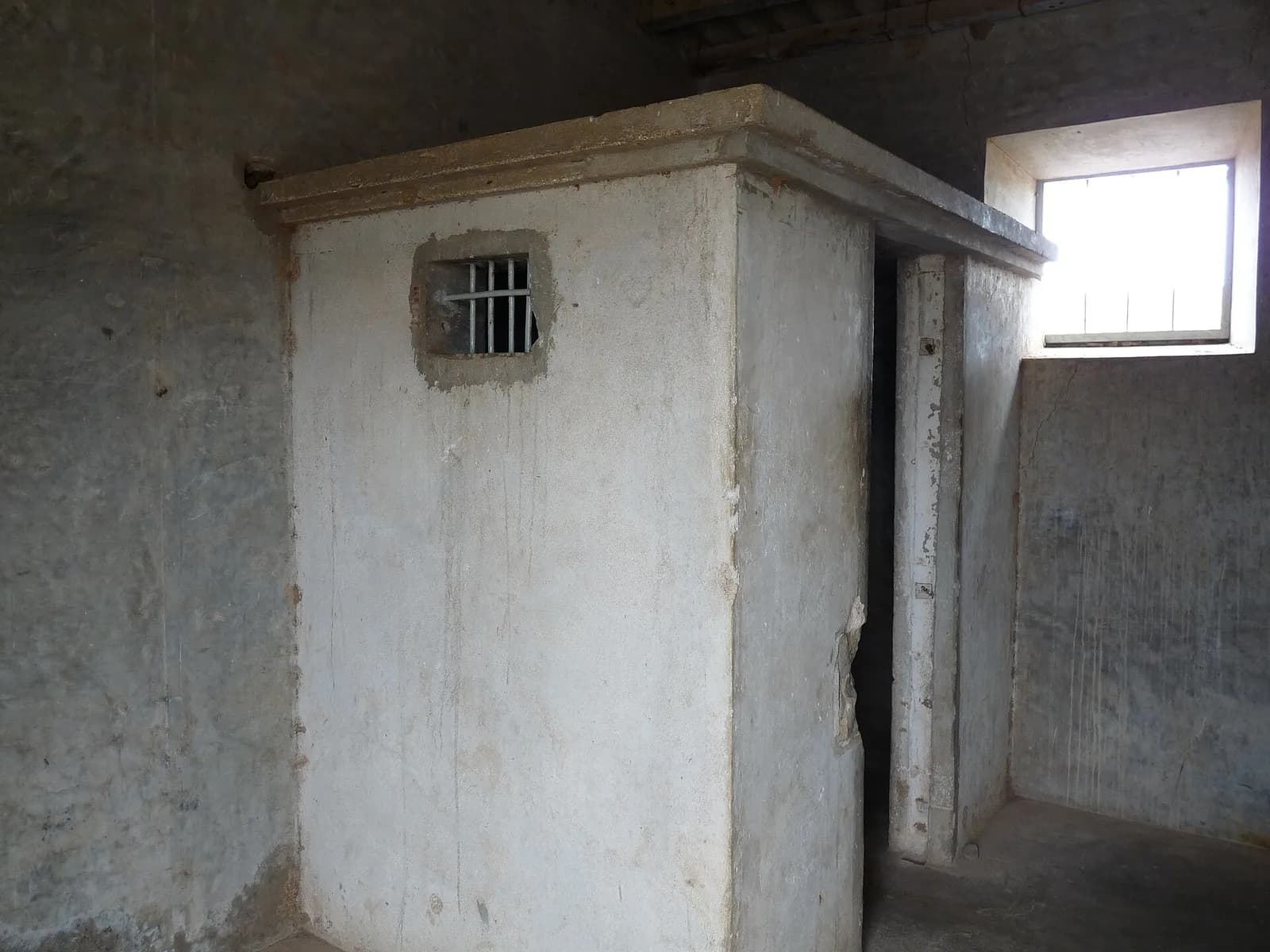
Martins recalled cells so crowded that the men lay “like canned sardines”, and daily cachupa, the Cape Verdean maize stew, with traces of tuna. When prisoners refused rotten fish, the director cut their meals. In place of the frigideira there was now a small concrete punishment cell, barely taller than a standing man and barely longer than a man lying down. It was nicknamed the Holandinha, “little Holland”, after the country to which many Cape Verdeans emigrated.
Prisoners organised all the same. The camp had had a library since the 1940s, many peasants learned to read and write there, and Martins said almost everyone in his wing took up studying. Cape Verdean prisoners passed notes to the Angolans on the other side of the camp, with the help of some guards. Three or four African prisoners died there: two Guineans and one or two Angolans, depending on the source.
Freedom on 1 May 1974
On 25 April 1974 the Armed Forces Movement overthrew the Estado Novo in Lisbon. Freeing political prisoners was one of the main popular demands, and on 1 May 1974 the last prisoners in Tarrafal, Angolans and Cape Verdeans, walked out through the gate. The camp was formally wound up in 1975.
“Tarrafal was a prison for the rest of your life. If it hadn't been for 25 April, we would all have died there.”
18 January 1934
General strike; the “soviet of Marinha Grande”
23 April 1936
Decree-Law 26:539 creates the penal colony
8 September 1936
Naval mutiny on the Tagus is crushed
18 October 1936
The Luanda leaves Lisbon with the first prisoners
29 October 1936
152 prisoners arrive at Tarrafal
2 August 1937
A collective escape attempt fails
20 September 1937
First death in the camp
1940
Mário Castelhano dies in the camp
1942
Bento Gonçalves dies in the camp
26 January 1954
The last prisoner of the first period leaves
1961
Reopened as the Chão Bom labour camp (1962 in some accounts)
February 1962
First Angolan prisoners arrive
1 May 1974
The last prisoners are freed
18 February 1978
Remains of the dead are laid in a mausoleum in Lisbon
December 2000
The Museu da Resistência opens in the camp
1 May 2024
Presidents of Portugal, Cape Verde and Guinea-Bissau mark 50 years since liberation
Remembering the camp
On 18 February 1978 thousands of people followed the remains of the Tarrafal dead through Lisbon in heavy rain, chanting “Tarrafal never again”. They were laid in a mausoleum paid for by public subscription in the Alto de São João cemetery. It carries 32 names and the words “To those who, in the long night of fascism, carried the flame of freedom and for freedom died in the Tarrafal concentration camp” (translated from Portuguese).
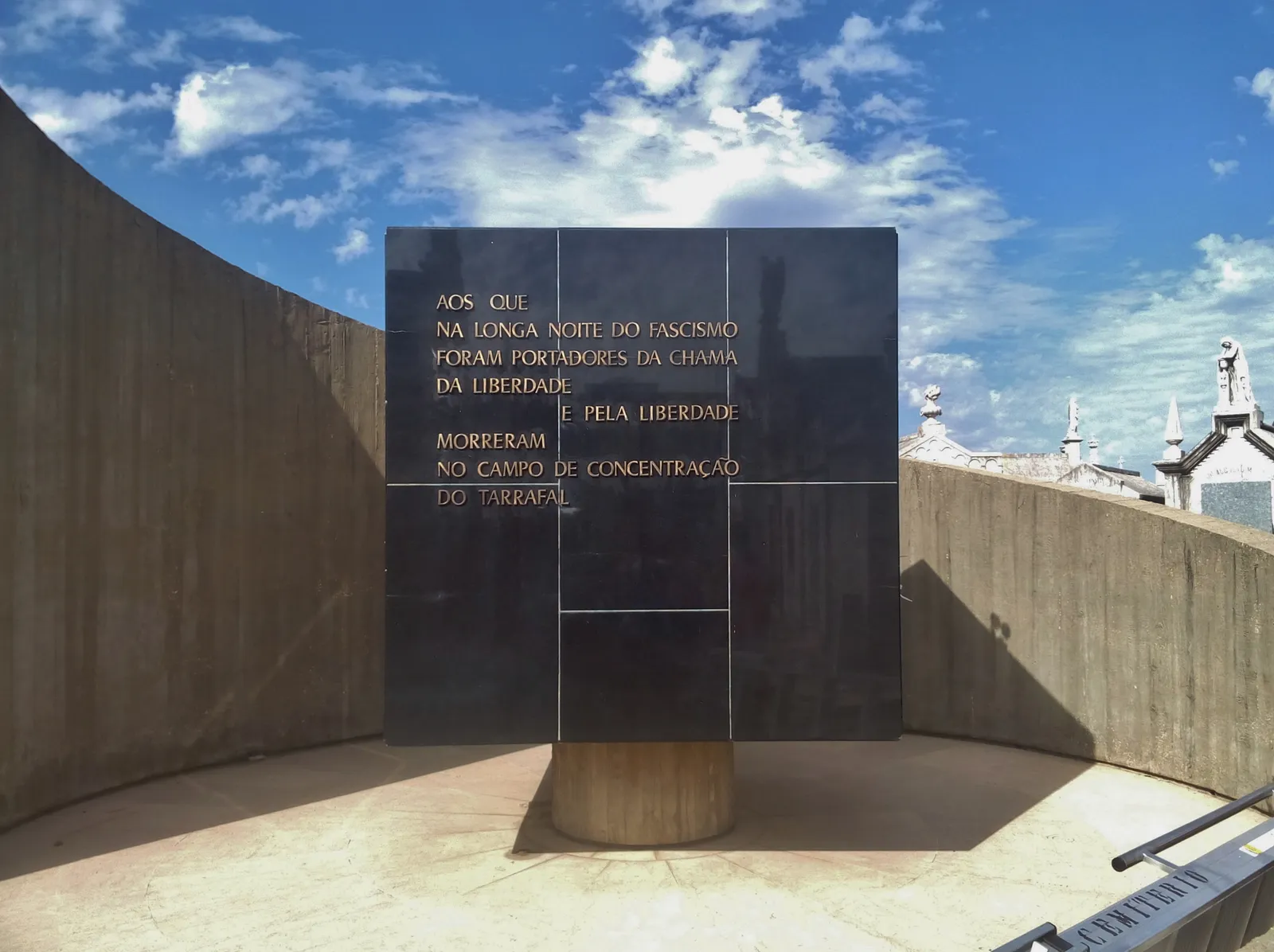
The graves in Tarrafal's own cemetery remain. In 2020 Cape Verde's culture minister, Abraão Vicente, said the government was checking whether any remains had yet to be moved, and planned a memorial to everyone who had passed through or died in the camp.
The camp itself became the Museu da Resistência in December 2000, at first a single room in the old secretariat. On 1 May 2009, the 35th anniversary of the liberation, Cape Verde's president, Pedro Pires, invited the survivors back for a symposium, and the museum reopened with galleries on both periods of the camp. Deutsche Welle dates the museum itself to that year. It was redesigned in 2016 and again in 2021.
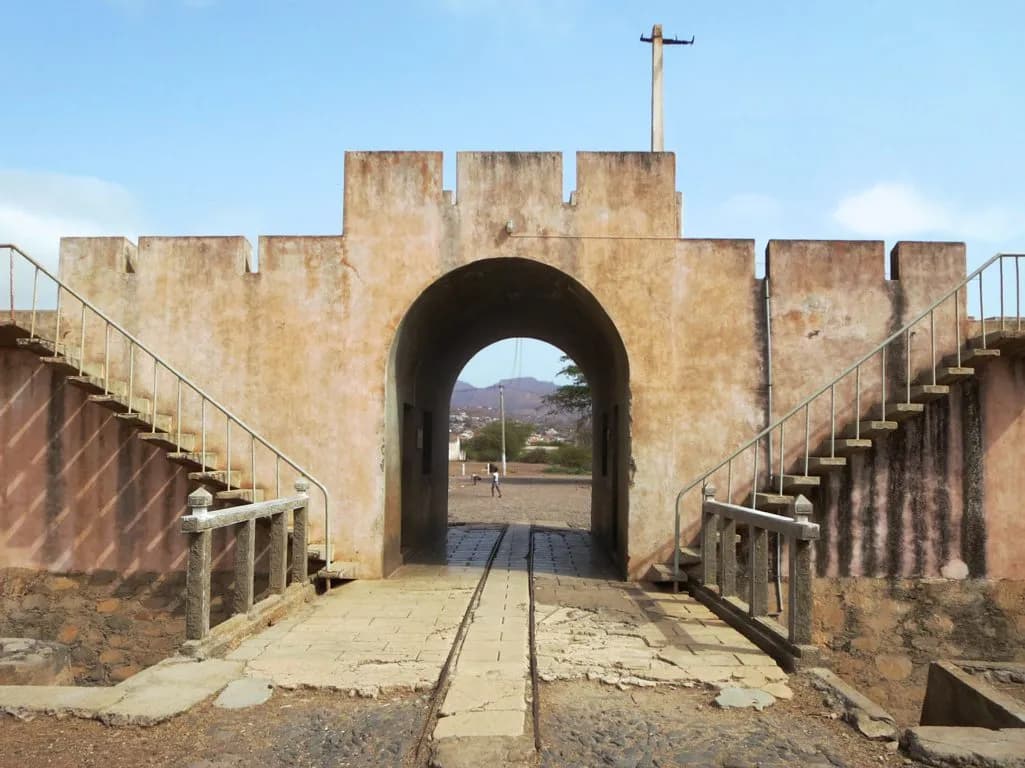
Cape Verde lists the site as national heritage and has placed it on its tentative list for UNESCO World Heritage status. In 2020 RTP described the museum as the country's most visited, with more than 9,000 visits a year.
On 1 May 2024, fifty years after the liberation, Portugal's president, Marcelo Rebelo de Sousa, joined Cape Verde's José Maria Neves, Guinea-Bissau's Umaro Sissoco Embaló and Angola's defence minister at the camp. They opened an exhibition, “Tarrafal: from repression to freedom”, and heard a talk on the camp's history by the historian Victor Barros.
FAQs
What was the Tarrafal camp?
It was a prison camp for political prisoners that Salazar's Estado Novo built at Chão Bom, near Tarrafal on Santiago island in Cape Verde. Created by decree on 23 April 1936, it held Portuguese opponents of the regime from 1936 to 1954 and, from 1962 to 1974, nationalists from Angola, Guinea and Cape Verde.
How many prisoners died at Tarrafal?
Counts differ. Between 32 and 34 Portuguese prisoners died there between 1937 and 1948, and three or four African prisoners died during the Chão Bom period, for a total of 36 or 37. Others died after their release as a result of what they had suffered in the camp.
Why was Tarrafal called the camp of slow death?
Former prisoners used the name because they saw the camp as a slow substitute for a death sentence. One of them, Cândido de Oliveira, wrote of the fever as “the biliosa, replacing the death penalty”. Prisoners died of malaria and other fevers, with almost no medical care, amid forced labour, poor food and punishment in the frigideira cell. The camp doctor was remembered for saying he was there to sign death certificates, not to cure.
Who was the first group of prisoners sent to Tarrafal?
The 152 men who arrived on the ship Luanda on 29 October 1936 included participants in the general strike of 18 January 1934 and 34 sailors from the naval mutiny of 8 September 1936.
Can you visit the Tarrafal camp today?
Yes. The former camp at Chão Bom, near the town of Tarrafal on Santiago, is a museum run by Cape Verde's Instituto do Património Cultural and opens daily. In Lisbon, the Museu do Aljube covers the dictatorship's political prisoners, and the Tarrafal dead lie in a mausoleum in the Alto de São João cemetery.
On the timeline
Open the timelineNearby moments from dictatorship and the estado novo (1926–1974).
José Policarpo is born in Alvorninha, near Caldas da Rainha. A theologian, he served as Cardinal Patriarch of Lisbon from 1998 to 2013, the leading voice of the Portuguese Catholic Church through two papal conclaves.
Otelo Saraiva de Carvalho is born in Lourenço Marques (now Maputo), Mozambique. As chief strategist of the Armed Forces Movement he directed the 25 April 1974 coup from a command post at Pontinha; he later ran second in the 1976 presidential election and was tried over alleged links to the FP-25 armed group before a 1996 amnesty.
Sailors of the Organização Revolucionária da Armada, linked to the clandestine Communist Party, seize the warships Afonso de Albuquerque and Dão in the Tagus, hoping to sail them to Spain to fight for the Republic. Shelled by the shore batteries, both ships run aground; around a dozen sailors die, and many mutineers become the first inmates of the new Tarrafal prison camp.
The Tarrafal prison camp
Afonso Costa dies in exile in Paris, aged 66. The fiery leader of the Democratic Party dominated the First Republic, writing the 1911 Law of Separation of Church and State and, as finance minister, producing a rare balanced budget. He refused to return while Salazar's regime ruled Portugal.
Anarchists including Emídio Santana detonate a bomb hidden in a sewer on Avenida Barbosa du Bocage in Lisbon as António de Oliveira Salazar steps out of his car to attend Sunday Mass at a friend's private chapel. The blast goes off only a few metres away but the dictator is unhurt; thanksgiving Masses are said across the country and the failed attack burnishes his providential image.
Jorge Nuno Pinto da Costa is born in Porto. President of FC Porto for 42 years, from 1982 to 2024, he oversaw two European Cups (1987 and 2004), two UEFA Cup/Europa League titles and more than 20 league championships, and turned the club into the dominant force in Portuguese football.
Coming up in history
All long reads 31 October 1886Ponte Luís I: the double-decker iron arch that joined Porto and Gaia
 1 October 1777The Treaty of San Ildefonso: Portugal and Spain redraw South America, 1777
 2 October 1969Mr Five Per Cent's museum: the Gulbenkian opens in Lisbon, 1969
 3 October 1910Miguel Bombarda: the shooting at Rilhafoles on the eve of the Republic
21 sources
Archives, scholarship and reporting this article was checked against.
- 1
Decreto-Lei n.º 26:539, cria uma colónia penal para presos políticos e sociais no Tarrafal, da ilha de Santiago, no arquipélago de Cabo VerdeDiário do Governo, I série, n.º 94, 23 April 1936 (Presidência do Conselho), via Diário da República
- 2
Chegam ao Tarrafal os primeiros presos deportadosMuseu do Aljube: Resistência e Liberdade (EGEAC), 29 October 2024
- 3
- 4
O território do campo de concentração português (Antónia Gato)IX Congresso Português de Sociologia, Associação Portuguesa de Sociologia
- 5
Tarrafal: Memórias do Campo da Morte Lenta, um filme de Diana Andringa (presentation)Centro de Estudos Sociais, Universidade de Coimbra
- 6
Tarrafal: o campo da morte lenta (Madalena Sampaio)DW África (Deutsche Welle)
- 7Memorial quer recordar os que passaram e morreram no campo do TarrafalRTP Notícias, with Lusa, 3 March 2020
- 8
Museu do Campo de Concentração do TarrafalInstituto do Património Cultural, Cabo Verde
- 9
- 10
- 11
- 12
Um golpe na República: 28 de Maio de 1926, da Ditadura Militar ao Estado NovoMuseu da Presidência da República
- 13
O Estado Novo (1933-1974)Assembleia da República
- 14
- 15
- 16
- 17
- 18
Início da Guerra ColonialArquivo Nacional Torre do Tombo
- 19
Comemorações do Cinquentenário da Libertação do Campo de Concentração do TarrafalPresidência da República Portuguesa (archive of Marcelo Rebelo de Sousa's term), 1 May 2024
- 20
Jazigo dos mortos no Campo de Concentração do Tarrafal (photograph of the inscription, 26 August 2017)Wikimedia Commons, photograph by Ricardo Bettencourt Morais (RickMorais), CC BY-SA 4.0
- 21

Image credits
- The walled prison compound at Chão Bom, near Tarrafal on Santiago, Cape Verde, in November 2008, with the ditch that ran inside the perimeter wall. CorreiaPM, Public domain, via Wikimedia Commons.
- Men held in the fortress of Peniche for their part in the 18 January 1934 movement, photographed on 25 December 1934. The photograph was given to Joaquim Montes, a cork worker who later died at Tarrafal. Unknown author, Public domain, via Wikimedia Commons.
- The camp's Posto de Socorros, or first-aid post, dating from 1940, photographed in April 2015. Deutsche Welle reports that its two rooms were also used as the mortuary. David Stanley from Nanaimo, Canada, CC BY 2.0, via Wikimedia Commons.
- The Holandinha punishment cell of the Chão Bom period, inside a room of the camp, photographed in June 2009. Gagum, CC BY 2.0, via Wikimedia Commons.
- The mausoleum of the Tarrafal dead in the Alto de São João cemetery, Lisbon, in August 2017. RickMorais, CC BY-SA 4.0, via Wikimedia Commons.
- A gateway of the former camp, now the Museu da Resistência, in April 2015. David Stanley from Nanaimo, Canada, CC BY 2.0, via Wikimedia Commons.