

Miguel Bombarda: the shooting at Rilhafoles on the eve of the Republic
Lisbon's leading psychiatrist was also one of the men organising the overthrow of the monarchy. A former patient shot him in his office, and the conspirators had to decide that same evening whether to go ahead without him.
At a glance
- Around midday on Monday 3 October 1910, the psychiatrist Miguel Bombarda was shot in his office at the Rilhafoles asylum in Lisbon, which he had directed since 1892.
- His killer was Aparício Rebelo dos Santos, an army lieutenant who had been a patient at Rilhafoles in 1909 and who blamed the hospital for the voices he heard.
- Bombarda was one of the civilian leaders of the republican conspiracy. He died at the São José hospital just after six that evening, aged 59.
- The conspirators met that night and kept to the date already fixed. The rising began in the early hours of 4 October, and the Republic was proclaimed in Lisbon on the morning of 5 October (at about nine or about eleven, depending on the account).
- Rilhafoles took Bombarda's name in 1911. The hospital closed in 2011–2012, and in 2025 the state began proceedings to protect 518 objects from its collections.
A visitor at Rilhafoles
On Monday 3 October 1910, Miguel Bombarda was at work in the consulting room of Rilhafoles, Lisbon's hospital for the mentally ill, when a servant announced a visitor. It was a former inmate, Lieutenant Aparício Rebelo dos Santos of the army staff. Bombarda had him shown in and, as the young officer stood in front of his desk, remarked kindly on his surprise at seeing him so well.
The lieutenant said nothing. He took a Browning pistol from his coat pocket and shot Bombarda in the chest, then in the belly. The doctor got up and grabbed him, but the man kept firing until one of the hospital guards overpowered him. The first news bulletins spoke of three shots.
“Don't hurt him. He is ill!”
Bombarda walked to the hospital gate, climbed into the carriage that had brought his attacker and told the driver to take him to the São José hospital. There, before the operation, he took some papers from his pocket and carefully burned one of them. According to the conspirators, it was the list of the civilian groups who were to fight in a revolution due to start within hours.
He died a little after six that evening. He was 59, the director of Portugal's first psychiatric hospital and one of the men organising the overthrow of the monarchy. Two days later Portugal was a republic, and he became one of its first martyrs.
Near the end, according to the Museu da Presidência, he told his friend Pinto de Magalhães that he had been ready to fight and die for the Republic. Instead he was dying a 'stupid' death at the hands of a 'madman'.
What you need to know first
In 1910 Portugal was still a constitutional monarchy, ruled under the Constitutional Charter of 1826 and its later amendments. Its king, Manuel II, had come to the throne after his father, King Carlos, and his elder brother, Luís Filipe, were shot dead in Lisbon on the afternoon of 1 February 1908.
Republican deputies had sat in parliament since 1878, campaigning for civil registration, divorce, press freedom and limits on the religious orders. In the last election of the monarchy, in August 1910, the republicans won 14 seats. Their leaders were already plotting an armed rising at the same time.
The plot had several layers. A republican congress in 1909 set up a military committee, led by the naval officer Carlos Cândido dos Reis, and a civil committee. In June 1909 the Freemasons of the Grand Orient set up a secret 'resistance committee' to pull the scattered revolutionary groups together. Its members included Miguel Bombarda, the naval commissary officer Machado Santos and the businessman Francisco Grandella.
From a certain point the committee met daily at the Centro de São Carlos, a republican club by the opera house, with Bombarda in the chair. Every night soldiers, corporals and sergeants came there to pledge themselves to the cause. Simões Raposo, the committee's secretary, later remembered him as remarkably regular in attendance and devoted without limit.
The psychiatrist who turned republican
- Born
- 6 March 1851, Rio de Janeiro, Brazil
- Trained
- Escola Médico-Cirúrgica de Lisboa, 1872–1877; naturalised Portuguese in 1877
- Rilhafoles
- Director from July 1892 until his death
- Politics
- Deputy from 1908; joined the Republican Party in 1909; re-elected in August 1910
- Died
- 3 October 1910, São José hospital, Lisbon
Miguel Augusto Bombarda was born in Rio de Janeiro in 1851 and trained at the Lisbon medical school, the Escola Médico-Cirúrgica. His graduation thesis of 1877 was on the delusion of persecution. He went on to teach at the school, worked at the São José hospital, founded an institute of histology and organised the 15th International Congress of Medicine, held in Lisbon in 1906.
Rilhafoles had opened in 1848 in a former convent, on the orders of the Duke of Saldanha, as the country's first hospital for the mentally ill. When Bombarda was appointed director in July 1892 he found it badly run down. He rebuilt its administration, put up new pavilions, improved hygiene, diet and occupational therapy, and published reports on its work until 1909.
His best-known building was the Pavilhão de Segurança, or 8th Infirmary, for patients sent by the courts. It is a perfectly symmetrical ring around an inner courtyard, with rounded walls and no sharp edges to protect its patients. Vítor Albuquerque Freire, who studied the building, thinks it was perhaps influenced by panoptic prisons, designed so that inmates could always be watched. The Mensagem de Lisboa dates its opening to 1896; Aires Gameiro gives 1892, the year Bombarda took over.
Bombarda was a firm defender of the principle that the insane could not be held criminally responsible for what they did. He argued it in the much-publicised case of the painter Josefa Greno, who shot her husband dead in 1901.
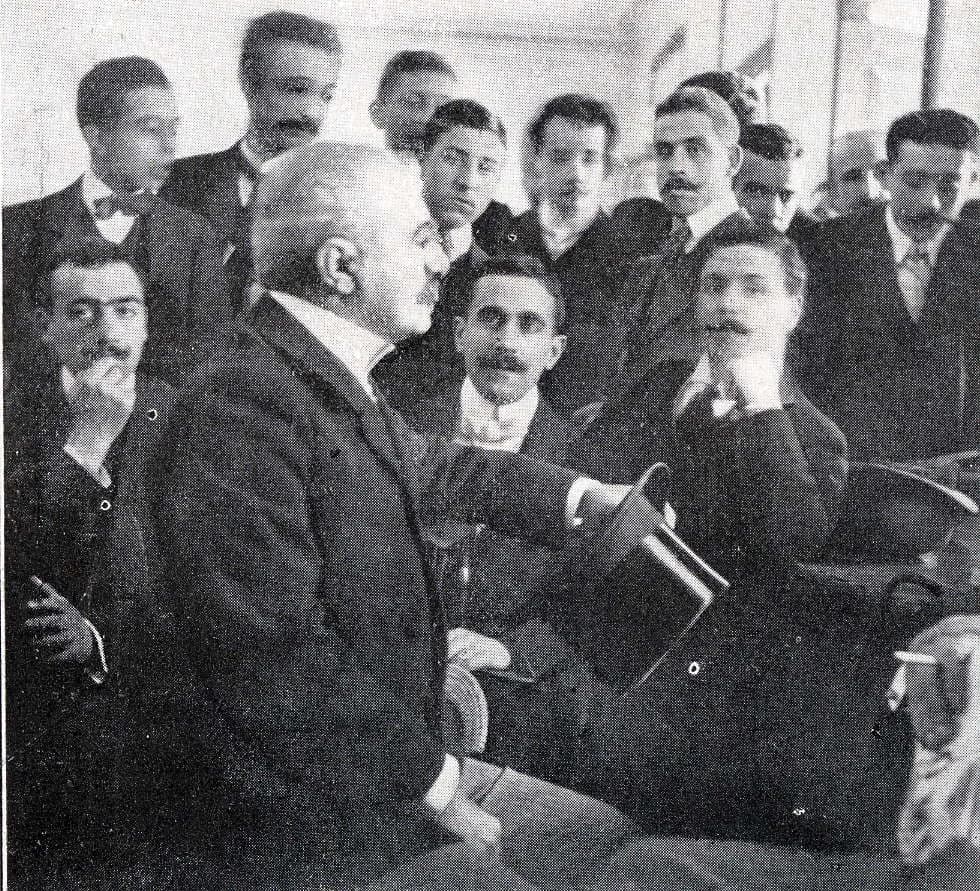
He was also a combative public intellectual. He held that mind and matter were one and that science, not religion, explained life and consciousness. In 1900 he answered the Jesuit Manuel Fernandes Santana, who had attacked his materialism, with a book called A sciencia e o jesuitismo (Science and Jesuitism). He was widely known for his anticlericalism.
His politics came late. He entered parliament in 1908 while still a monarchist, joined the Republican Party in 1909 and was re-elected as a republican in August 1910. His programme had socialist leanings: labour laws, progressive taxation, separation of Church and State, civil divorce and public health measures. With the neurologist Egas Moniz and Cândido dos Reis he founded the Junta Liberal, which campaigned for a secular state.
“I am not a member of the republican party, but my whole spirit has turned republican.”
The patient: Aparício Rebelo dos Santos
Aparício Rebelo dos Santos was born in Braga in 1878. Much of what is known of his early life comes from Joaquim da Silva Gomes, a Braga historian who traced his records. His father had made a fortune in Brazil and been made a viscount by King Carlos. Braga's baptism register gives his birthday as 5 August; the University of Coimbra's records give 5 July.
He chose the army, then went to study at Coimbra, where the first signs of illness appeared. He went back to the army and became a lieutenant on 1 December 1907. On 21 March 1909, according to a later army medical report, he was admitted to Rilhafoles with auditory hallucinations, ideas of persecution and violent outbursts, and was diagnosed with primary paranoia and a delusion of persecution.
His father had him discharged on 3 December 1909, after repeated requests, although the psychosis was, in the doctors' words, in full activity. He then took his son to Paris to see the neurologists Ballot and Babinski. Back in Portugal the young man got worse, and when he went out friends or the police kept watch on him.
Gomes writes that his father then decided to take him to see Bombarda, who had examined him before. Jorge d'Abreu, a republican journalist who published a history of the revolution in 1912, tells it from what Bombarda himself told colleagues at the São José hospital. He says only that a servant announced a former patient.
| Date | Event |
|---|---|
| 1878 | Born in Braga (5 July or 5 August, depending on the record) |
| 1 December 1907 | Promoted to lieutenant |
| 21 March 1909 | Admitted to Rilhafoles: primary paranoia, delusion of persecution |
| 3 December 1909 | Discharged at his father's insistence, still psychotic |
| 3 October 1910 | Shoots Miguel Bombarda in the director's office at Rilhafoles |
| 1 November 1910 | Forensic examination: he acted under his delusion and is not responsible; he must stay in the asylum. He is never tried |
| 22 May 1929 | An army doctor reporting to the military hospital's inspection board finds him unfit for any military service |
| 24 April 1943 | Dies at the Casa de Saúde do Telhal, a psychiatric hospital near Sintra |
From the 1929 army medical report transcribed by João Medina, the Museu da Presidência and Joaquim da Silva Gomes. The Telhal hospital was founded in 1893 by Bento Menni of the Brothers of Saint John of God.
When he was seized, Gomes writes, he called out that he could be let go, since the bullets had run out, and that nobody need be afraid. He never showed remorse. While he was still at Rilhafoles a nurse asked him if he regretted what he had done, and he gave a flat answer.
“I am not sorry. I would have killed him wherever he was.”
As for motive, he blamed Rilhafoles for his illness and said he was tormented by the 'voices of Rilhafoles'. The 1929 army report records him saying that he had been Bombarda's enemy because he was the enemy of the Hospital, and that he blamed his hallucinations on a system of suggestions worked on him by an entity he called 'the Hospital'. The forensic examination of 1 November 1910 concluded that he had acted under his delusion and was not responsible for the crime.
3 October: a death and a decision
The date of the rising had been settled the day before. On the afternoon of 2 October, while crowds cheered the visiting Brazilian marshal Hermes da Fonseca outside the Belém palace, about forty officers met in the Chiado consulting room of the republican doctor Eusébio Leão. They swore to rise and fixed the start for the early hours of 4 October. Bombarda was to pass the password to the leaders of the civilian groups.
The password was a question and an answer: 'Did you send for me?' and 'Pass, citizen.' The news from Rilhafoles reached the evening papers around lunchtime on 3 October, and crowds gathered in front of the bulletin boards. When Bombarda died, just after six, word went out to the republican press to avoid inflammatory headlines. A riot might have pushed the government into precautions that would wreck the plan.
His death also left a gap in the organisation. That evening the leaders of the civilian groups were called to the Centro de São Carlos to collect weapons and orders, at a meeting Bombarda should have chaired. His place was taken by Simões Raposo, the resistance committee's secretary, who knew the burned list by heart.
At eight o'clock some fifty conspirators crowded into a third-floor flat at 106 Rua da Esperança, lit by a single paraffin lamp. Among them were Cândido dos Reis, Afonso Costa, José Relvas, João Chagas and António José de Almeida. Cândido dos Reis told them that if he could not lead the sailors to victory he had no right to live. By 10.30 the plan was set: a 31-gun salute from the warships in the Tagus at 1 a.m. would start the rising.
“That painful event had in no way affected the plan for the revolt, whether to postpone it or merely to change it in some particular.”
The killing has sometimes been said to have hurried the revolution on. In 2020 Joaquim da Silva Gomes gave a talk for Braga's public library called 'the man from Braga who hastened 5 October 1910'. Abreu's account, drawn from the conspirators, does not support that. The warships had orders to change anchorage on the morning of 4 October, which made that date the natural one. Cândido dos Reis named it at a meeting on 28 September, and the officers confirmed it the day before the shooting.
2 Oct, 4 pm
Date fixed
About forty officers meet in Eusébio Leão's consulting room in the Chiado and settle on the early hours of 4 October.
3 Oct, around midday
The shooting
Aparício Rebelo dos Santos shoots Bombarda at Rilhafoles. Bombarda has himself driven to the São José hospital.
3 Oct, afternoon
Surgery
Before the operation Bombarda burns the list of the civilian groups. The bullets have pierced his intestines.
3 Oct, just after 6 pm
Bombarda dies
3 Oct, 8–10.30 pm
Last meeting
At 106 Rua da Esperança the leaders confirm the plan: warships to signal the start at 1 a.m.
3 Oct, 11.50 pm
No delay
Cândido dos Reis and Simões Raposo agree at the Centro de São Carlos that Bombarda's death changes nothing.
4 Oct, after midnight
The signal
The cruiser Adamastor fires three blank rounds. The navy dates them to 00:45; conspirators waiting at the São Paulo baths heard three shots about 20 minutes after one o'clock.
4 Oct, about 6.30 am
Cândido dos Reis found
A labourer finds the admiral dying of a head wound in the Azinhaga das Freiras, in Arroios, with a pistol beside him.
4 Oct
The Rotunda
Machado Santos and his men hold the Rotunda, today the Marquês de Pombal roundabout, which becomes the rebels' headquarters.
5 Oct, morning
The Republic
The Republic is proclaimed from the balcony of Lisbon City Hall.
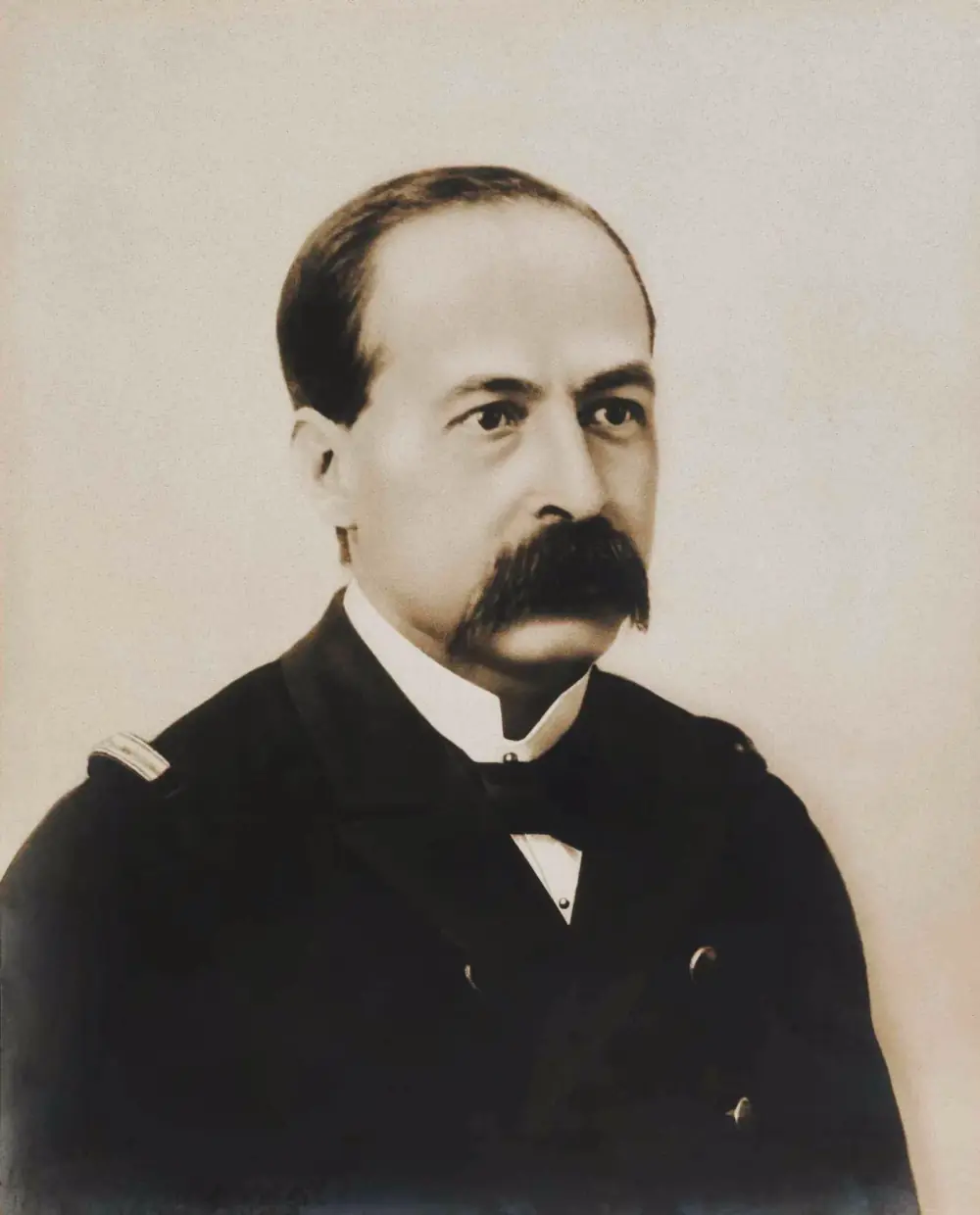
The night went badly at first. The 31-gun salvo never came, and the first regiment on the streets was the one the plotters had least counted on, the 16th Infantry. For some hours the leaders waiting at the São Paulo baths thought all was lost.
Cândido dos Reis thought so too. He withdrew to a house in Rua de Dona Estefânia, left it at about five in the morning and was found dying of a head wound in a lane in Arroios, a pistol beside him, at around half past six. Jorge d'Abreu, writing in 1912, thought it most likely that he had shot himself in despair, believing the rising had failed. Others suspected a trap laid by the Republic's enemies, since it seemed too great a coincidence that two of the revolution's leaders should die on the eve of victory.
In fact the rising held. Warships in the Tagus came over to the rebels, and Machado Santos dug in at the Rotunda with soldiers and armed civilians. On the morning of 5 October the Republic was proclaimed in Lisbon, and the royal family sailed into exile from Ericeira.
| Name | Who he was | His part |
|---|---|---|
| Miguel Bombarda | Psychiatrist, director of Rilhafoles, deputy | Chaired the resistance committee's daily meetings; was to pass the password to the civilian groups. Shot on 3 October. |
| Carlos Cândido dos Reis | Naval officer, head of the military committee | Was to lead the navy. Found dying in Arroios early on 4 October. |
| Simões Raposo | Secretary of the resistance committee | Took Bombarda's place at the Centro de São Carlos on the night of 3 October. |
| António Maria da Silva | Engineer, Carbonária representative on the committee | Went to find about twelve cars for messengers on the evening of 3 October. |
| Machado Santos | Naval commissary officer and Carbonária leader | Held the Rotunda until the Republic was proclaimed. |
| Aparício Rebelo dos Santos | Army lieutenant and former Rilhafoles patient | Shot Bombarda; held in hospitals until his death in 1943. |
Aftermath
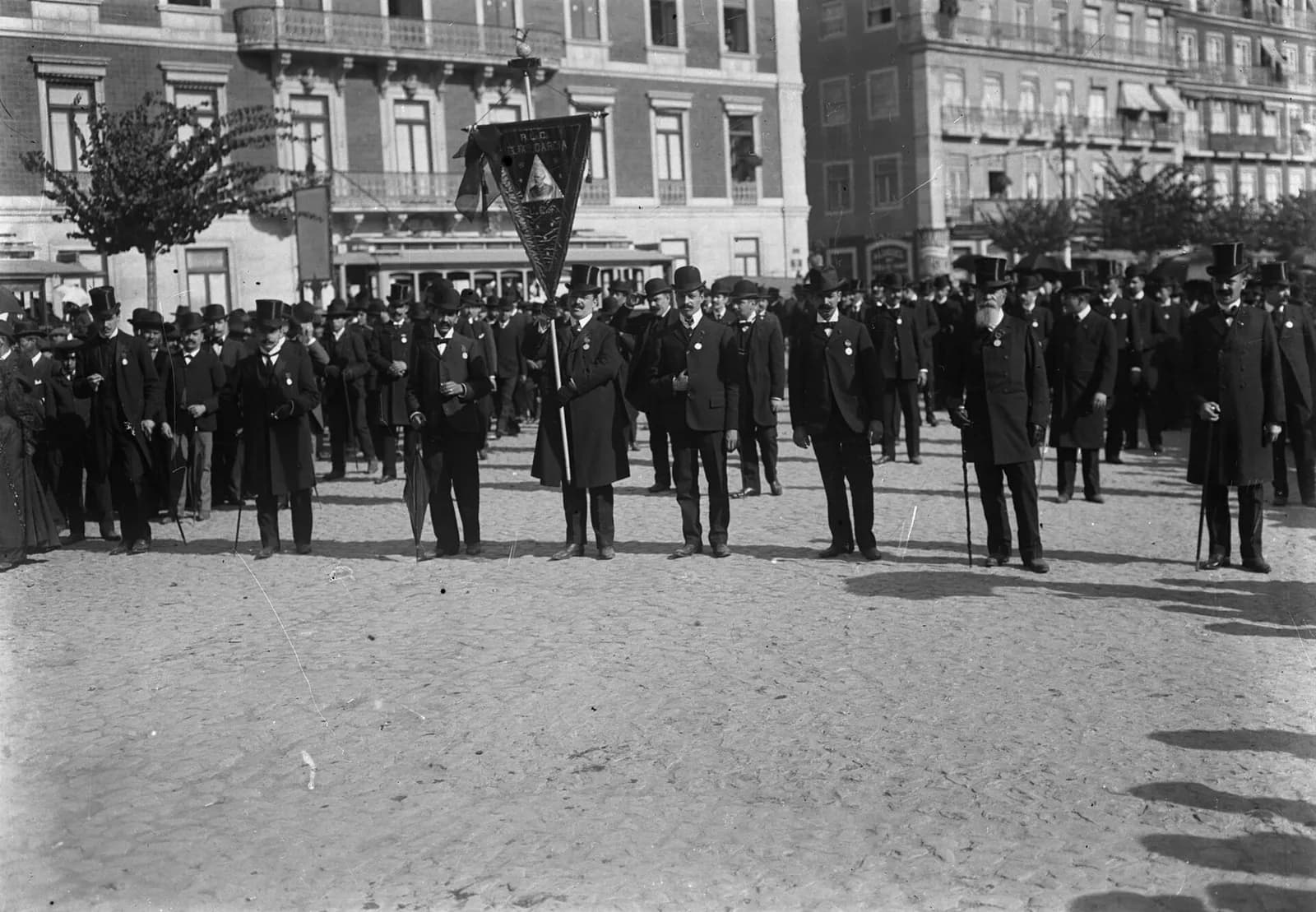
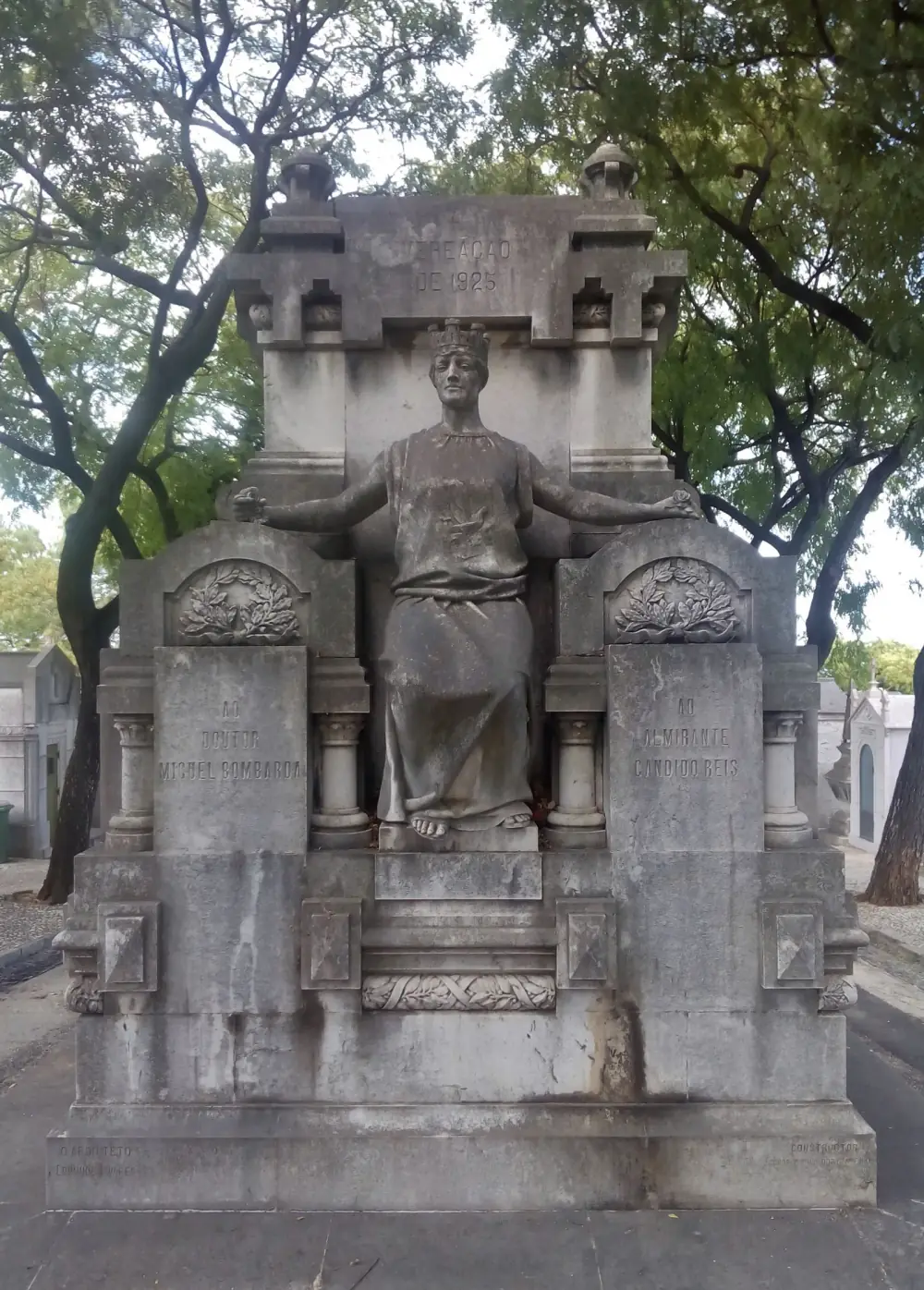
The new regime gave Bombarda and Cândido dos Reis a joint funeral, and a republican publication of 1911 called them the 'martyrs' of the revolution. O Século reported the funeral on its front page on 16 October 1910, and photographs show large crowds watching the cortège pass through the city.
Aparício Rebelo dos Santos was never brought to trial. Because doctors found him mentally ill, he was kept in institutions for the rest of his life and died at the Casa de Saúde do Telhal on 24 April 1943. In 1929, when the army reviewed his case, its doctor found that twenty years of psychosis had not left him demented, but that he had never given up his delusions.
In 1911 Rilhafoles was renamed the Hospital Miguel Bombarda. It kept that name until it closed, a century later.
Why it still matters
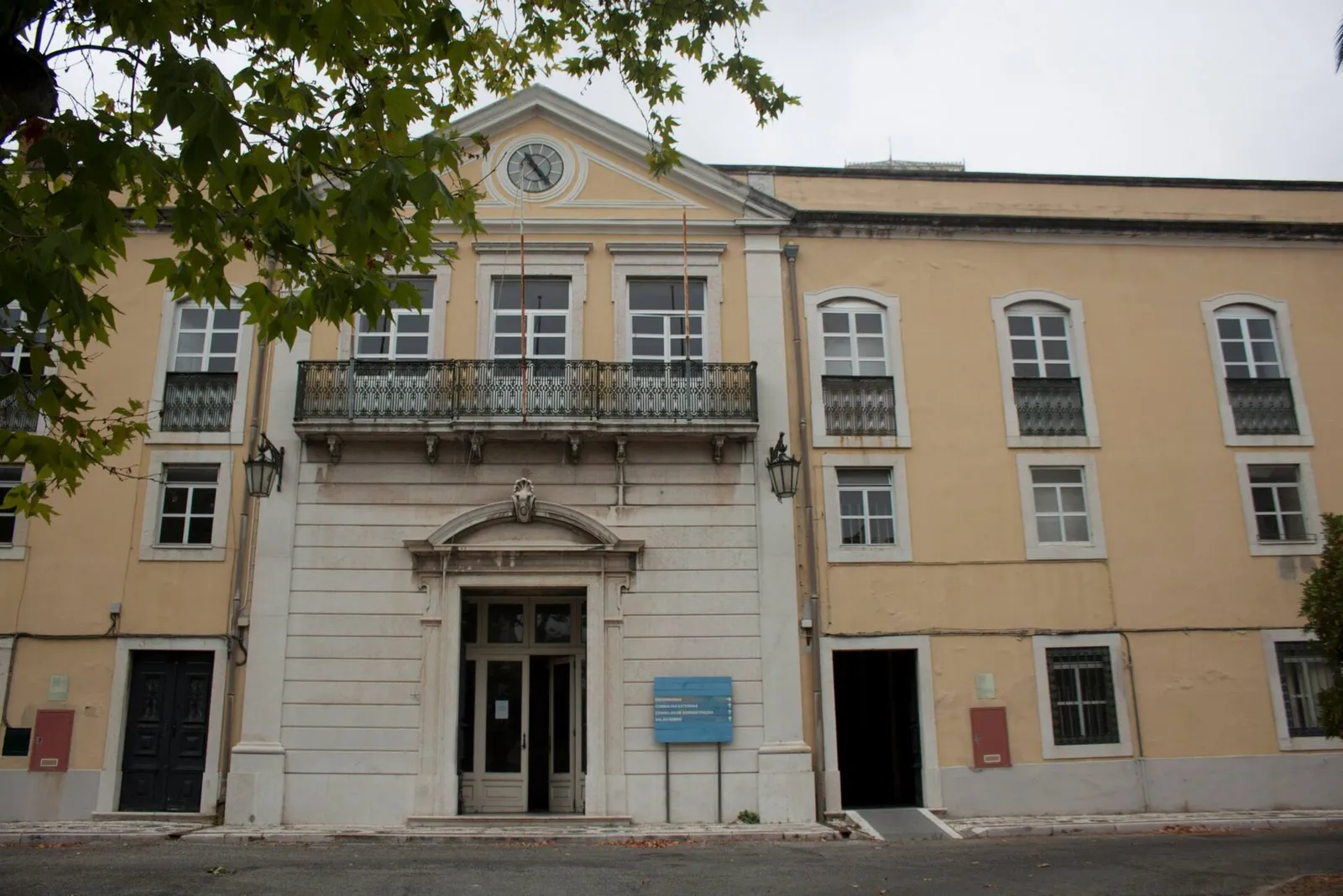
The hospital Bombarda ran outlived him by a hundred years. Most sources date its closure to 2011, when the last 24 residents were moved to the Júlio de Matos hospital; RTP says the closure was announced in 2011 and carried out the following year. Two other state psychiatric hospitals, Lorvão and Arnes, closed in 2012.
The buildings are still there, on one of Lisbon's hills in Arroios. In 2006 the security pavilion was in the process of being listed as a protected building, and in 2023 the Mensagem de Lisboa described the former hospital as classified as a property of public interest. Over the years there has been talk of a hotel and of housing for homeless people; in 2023 a cultural cooperative, Largo Residências, was negotiating to use part of the site.
The patients' own traces have survived too. Over 120 years the hospital gathered about 4,000 works, some of them art brut made by patients, and about 5,000 photographs, registers and clinical files. In March 2025 the state heritage body, Museus e Monumentos de Portugal, opened proceedings to protect 518 of these objects as a set of public interest. They include patients' letters, poems, paintings and sculptures made of matches, and medical objects such as a straitjacket.
Bombarda's principle that the insane could not be held criminally responsible was applied to his own killer. Aparício never stood trial and spent his last 32 years in psychiatric hospitals.
FAQs
Who killed Miguel Bombarda?
Aparício Rebelo dos Santos, an army lieutenant from Braga born in 1878, who had been a patient at Rilhafoles in 1909. He shot Bombarda in his office at the hospital on 3 October 1910. A forensic examination found that he had acted under a persecutory delusion, so he was never tried. He died in a psychiatric hospital in 1943.
Why was Miguel Bombarda killed?
As far as the records show, because of his killer's illness. Aparício blamed Rilhafoles and its director for the voices he heard. At the time many republicans suspected a Catholic plot, since Bombarda was a fierce anticlerical, but the medical record describes a man acting on his delusion.
Did Bombarda's murder trigger the 5 October revolution?
Not according to the conspirators' account. On 2 October, the day before the shooting, about forty officers fixed the early hours of 4 October as the start of the rising. On the night of 3 October Cândido dos Reis and Simões Raposo agreed that the death changed nothing, and the rising began a few hours later.
How did Cândido dos Reis die?
He was found dying of a head wound, a pistol beside him, in a lane in Arroios at about 6.30 am on 4 October 1910, after he had come to believe the rising had failed. Jorge d'Abreu, writing in 1912, thought suicide the likeliest explanation; others at the time suspected a trap set by the Republic's enemies.
What happened to the Hospital Miguel Bombarda?
Rilhafoles, Portugal's first psychiatric hospital, opened in 1848 and took Bombarda's name in 1911. Most sources say it closed in 2011, when the last patients moved to the Júlio de Matos hospital; RTP dates the final closure to 2012. The buildings in Arroios still stand, their future undecided as of 2023, and in 2025 the state opened proceedings to protect 518 objects from the hospital's collections.
On the timeline
Open the timelineNearby moments from regeneration and the last kings (1851–1910).
Birth in Funchal of Fernão de Ornelas, the lawyer who as president of the city council from 1935 to 1946 led a sweeping programme of public works that modernised Madeira's capital. Ousted after a clash with the island's governor, he was posthumously awarded Funchal's Medal of Honour in 2008.
A strong earthquake strikes the Tagus valley in the late afternoon, wrecking much of Benavente, Samora Correia and Salvaterra de Magos and killing several dozen people. Aid poured in from across the country, and Benavente was rebuilt on a new, more regular plan.
Club Sport Marítimo, one of Portugal's historic football clubs, is founded in Funchal on the island of Madeira; it would go on to win the national Campeonato de Portugal in 1926.
Miguel Bombarda's murder, 1910
The republican revolution breaks out in Lisbon. With the Palácio das Necessidades under threat of bombardment, King Manuel II withdraws to Mafra, and the following day he boards the royal yacht Amélia at Ericeira for exile, never to return.
Coming up in history
All long reads 5 October 1910The morning Portugal became a republic: 5 October 1910
 6 October 1999Amália Rodrigues, the voice of fado, dies in Lisbon: 6 October 1999
 7 October 2018Odette Ferreira, HIV-2 and the blood sample carried in a coat
 8 October 1998José Saramago wins the Nobel Prize in Literature: 8 October 1998
17 sources
Archives, scholarship and reporting this article was checked against.
- 1
A Revolução Portugueza: O 5 de Outubro (Lisboa 1910), by Jorge d'AbreuLisbon, 1912 (Project Gutenberg edition)
- 2
Bombarda, Miguel Augusto (1851-1910), by Ana Leonor Pereira and João Rui PitaDicionário de História da I República e do Republicanismo, vol. I, Assembleia da República, 2013 (Estudo Geral, Universidade de Coimbra)
- 3
«Esta noite podia eu morrer pela República!» (Destaques Arquivo MPR #29)Museu da Presidência da República
- 4
Aparício, o assassino de Bombarda, by João MedinaMalomil, 22 August 2013
- 5
O bracarense que assassinou Miguel Bombarda, by Joaquim da Silva GomesCorreio do Minho, 2 October 2016
- 6
Miguel Bombarda: reorganizador e gestor de Rilhafoles, by J. F. Reis de OliveiraIn A. L. Pereira and J. R. Pita (eds), Miguel Bombarda (1851-1910) e as singularidades de uma época, Imprensa da Universidade de Coimbra, 2006, pp. 147–153
- 7
Efeméride: Implantação da República, 5 de outubro de 1910Marinha Portuguesa, Cultura Marinha
- 8
Bombarda, Miguel (authority record)Arquivo Municipal de Cascais
- 9
A Monarquia Constitucional (1820-1910)Assembleia da República
- 10
Miguel Augusto Bombarda: uma figura incontornável da Política e Medicina Portuguesa, by Ana Catarina NechoActas do 1.º Colóquio Saudade Perpétua, CEPESE, pp. 752–767
- 11
From the Past to the Present: Miguel Bombarda, scientist, politician and medical psychiatristFaculdade de Medicina da Universidade de Lisboa, news@fmul
- 12
Quinhentos anos de marcos históricos de saúde mental nos Açores e na Madeira, by Aires GameiroIn Phármakon: do combate da enfermidade à invenção da imortalidade, Faculdade de Letras da Universidade do Porto
- 13
- 14
Miguel Bombarda vai reabrir portas. Que memórias guarda?, by Tomás DelfimMensagem de Lisboa, 29 October 2023
- 15
- 16
- 17MMP abre processo de classificação de 518 peças do acervo do Hospital Miguel BombardaRTP Notícias (Lusa), 27 March 2025
Image credits
- Mourners gather in the Praça dos Restauradores, Lisbon, for the joint funeral of Admiral Cândido dos Reis and Miguel Bombarda. The Lisbon municipal archive dates the negative to 16 October 1910. Joshua Benoliel, Public domain, via Wikimedia Commons.
- Miguel Bombarda, in profile with his top hat, at the second trial over alleged abuse of press freedom, Lisbon, 1907. Photograph by Joshua Benoliel, published in Ilustração Portuguesa. Joshua Benoliel, Public domain, via Wikimedia Commons.
- Carlos Cândido dos Reis, head of the republicans' military committee, in a portrait from the 1900s first published in the magazine Archivo Democratico in 1910. Unknown author, Public domain, via Wikimedia Commons.
- The façade of the former Hospital Miguel Bombarda, once the Rilhafoles asylum, photographed in January 2014 after the hospital had closed. Lijealso, CC BY-SA 3.0, via Wikimedia Commons.
- The monument over the tomb of Miguel Bombarda and Admiral Cândido dos Reis in the Alto de São João cemetery, Lisbon. The slabs read 'Ao Doutor Miguel Bombarda' and 'Ao Almirante Cândido Reis', and the top names the city council of 1925. Photographed in 2017. RickMorais, CC BY-SA 4.0, via Wikimedia Commons.