

José Saramago wins the Nobel Prize in Literature: 8 October 1998
The news caught a 75-year-old former mechanic at Frankfurt airport, minutes from a flight home. Six years earlier his own government had struck his most controversial novel off a European prize list.
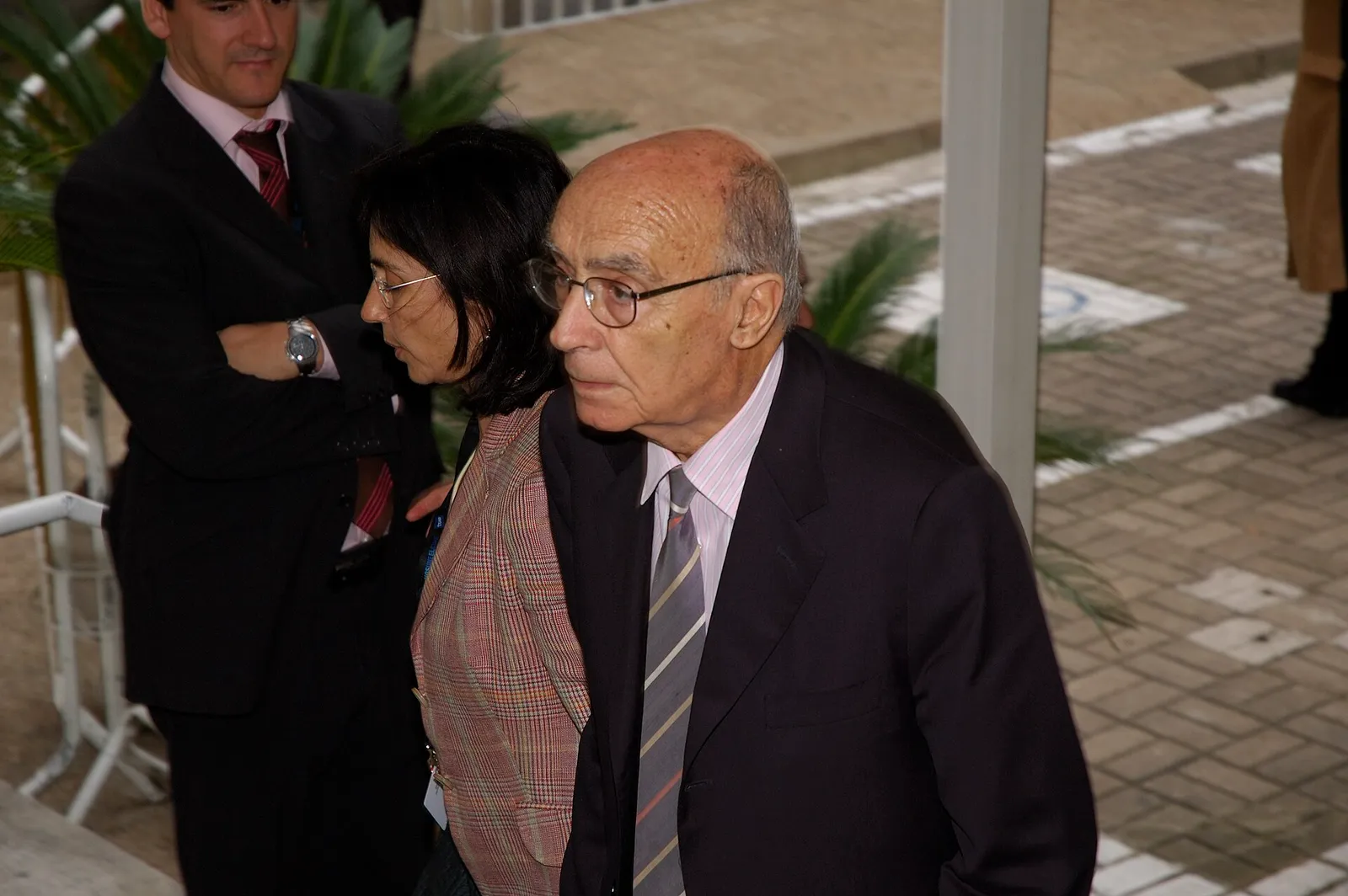
At a glance
- On Thursday 8 October 1998, at noon Lisbon time, the Swedish Academy announced that José Saramago had won the Nobel Prize in Literature. No writer in Portuguese had won it before.
- Saramago heard the news by phone at Frankfurt airport, about to fly to Madrid on his way home to Lanzarote after the Frankfurt Book Fair. He went back to the fair instead.
- Born to landless peasants in Azinhaga, in the Ribatejo, in 1922, he trained as a mechanical locksmith and worked as a civil servant, translator and journalist. His first big success came at about 60, with Memorial do Convento in 1982.
- In 1992 a junior culture minister, António Sousa Lara, struck his novel O Evangelho segundo Jesus Cristo off Portugal's list for the European Literary Prize. Saramago moved to Lanzarote in February 1993.
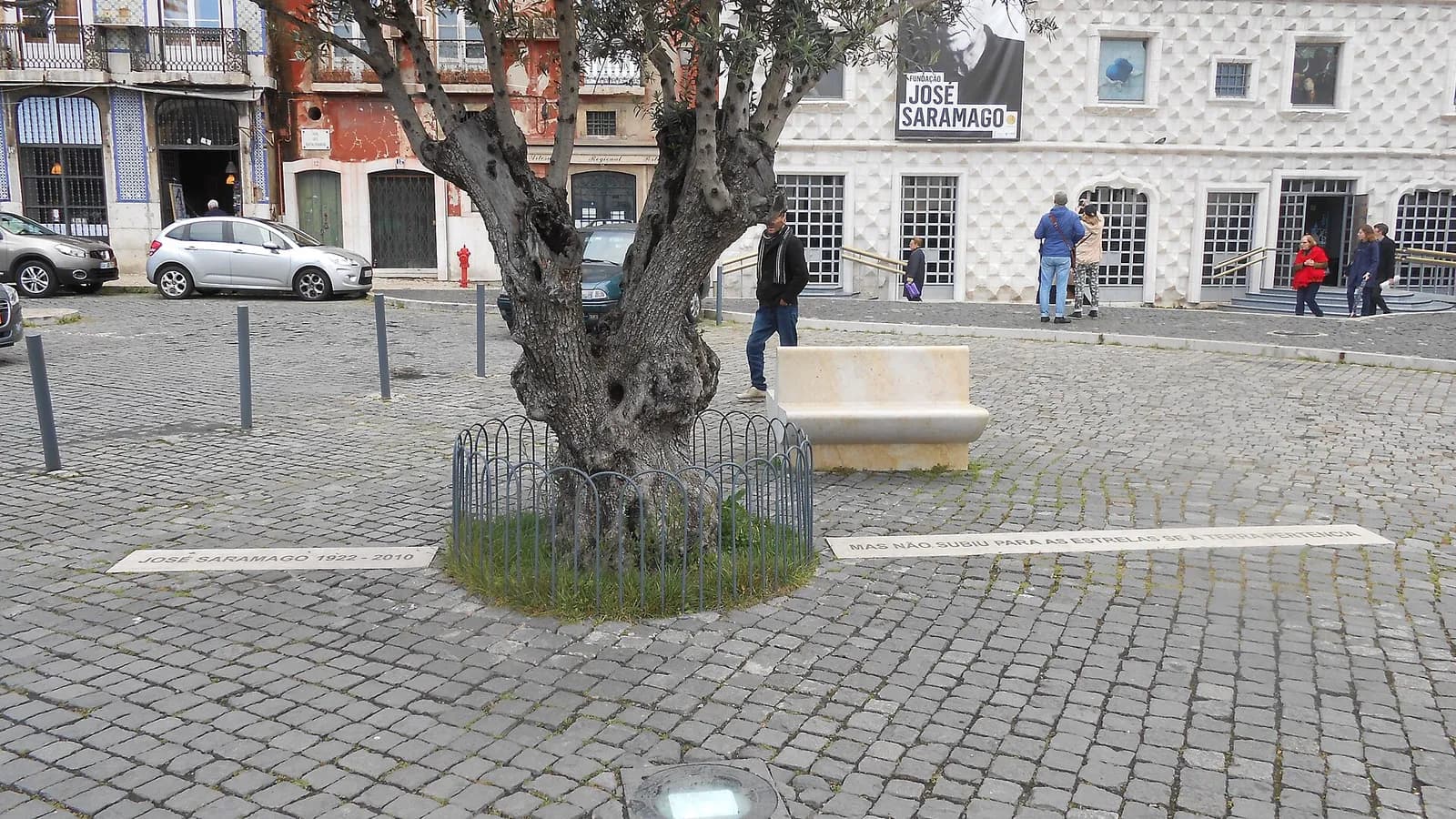
- He died on Lanzarote on 18 June 2010, aged 87. A year later his ashes were laid beside an olive tree from Azinhaga outside the Casa dos Bicos in Lisbon, home of the Fundação José Saramago.
A phone call at the departure gate
On Thursday 8 October 1998 José Saramago was in the departure lounge at Frankfurt airport, a few minutes from boarding a plane to Madrid. He was 75, a Portuguese novelist on his way home to Lanzarote, in the Canary Islands, after several days at the Frankfurt Book Fair, the biggest book fair in the world. A mobile phone rang. On the line was Zeferino Coelho, his publisher at Editorial Caminho in Lisbon.
Coelho told him the Swedish Academy had just given him the Nobel Prize in Literature. Público's two reporters gave slightly different accounts the next morning: one said he was with José Oliveira, another of his Caminho editors, and that the two men embraced in tears; Saramago himself said it was his Madrid publishers who hugged him. Then he walked off alone, raincoat over his arm.
“The corridor was empty, at least fifty metres of empty corridor. With my little hand case and my raincoat over my arm, I passed suddenly from the enormous joy of the news I had received to the most complete solitude.”
He did not take the flight. At the fair, the news had reached stand 903, Caminho's, through a Brazilian journalist, and there was a rush to the airport. When Saramago came back, Portuguese publishers had stuck photocopied black-and-white photographs of him, captioned Nobel Prize for Literature 1998, on their stands. Staff in the Portuguese pavilion climbed onto chairs holding roses, and their Italian neighbours at the fair applauded.
At a press conference that lasted a little over an hour, he said Portugal had waited almost a century for this, and that some Portuguese writers had probably deserved it more than he did. He asked everyone who spoke Portuguese to accept the prize as theirs. Then he added a joke: since the prize belonged to everyone, he would keep the money. It came to 7.6 million Swedish kronor, about 166 million escudos at the time.
A registrar's mistake in the Ribatejo
Saramago was born into a family of landless peasants in Azinhaga, a village on the right bank of the river Almonda in the Ribatejo, about 100 kilometres north-east of Lisbon. His parents were José de Sousa and Maria da Piedade. When the birth was registered, the registrar added, on his own initiative, the nickname the family went by in the village: Saramago, a wild plant whose leaves the poor ate in hard times.
In 1924 his father, who had served as an artillery soldier in France in the First World War, moved the family to Lisbon and joined the police. Saramago's older brother, Francisco, died a few months later. The boy spent long spells back in Azinhaga with his mother's parents, Jerónimo Meirinho and Josefa Caixinha, illiterate swineherds who would open his Nobel lecture.
He did well at school, but after two years of grammar school his parents could no longer afford it. He spent five years at a technical school learning to be a mechanical locksmith, a serralheiro mecânico, and worked for about two years in a car repair shop. The course included literature, and with no books at home, its Portuguese textbooks were his first way into it. In the evenings he read at a public library in Lisbon, the one at the Palácio Galveias, with nobody to guide him.
By 1944, when he married Ilda Reis, he was an administrative clerk in the social welfare service. In 1947, the year his only child, Violante, was born, he published a first novel. He had called it A Viúva (The Widow); the publisher changed it to Terra do Pecado (Land of Sin). Then he went quiet for 19 years.
He lost his job for political reasons in 1949 and found work at a metal company through a former teacher. In the late 1950s he became production manager at the publisher Estúdios Cor, and from 1955 he translated Colette, Tolstoy, Baudelaire and Hegel, among others, in his spare time. A book of poems in 1966 marked his return as an author. In 1969 he joined the Portuguese Communist Party (PCP).
After the 1974 revolution, in April 1975, he became deputy director of the Lisbon morning paper Diário de Notícias, during the months when the Communists were at their strongest. He was sacked that November, after the coup of 25 November 1975 ended the revolutionary period.
His months at the paper left lasting resentment. As Público told it in 1998, journalists who protested at the climate in the newsroom that summer, in what became known as the Manifesto of the 24, were pushed out, and 22 people left without compensation. Saramago answered in 1991 that the paper had a line and could not become a platform for everyone to say what they liked about it.
A late start, then a book every two years
Out of work, with no hope of another newspaper job, he decided to find out what he was worth as a writer. Early in 1976 he spent several weeks in Lavre, a village in the Alentejo, studying the lives of farm labourers. The result was Levantado do Chão (1980), three generations of a peasant family from the early twentieth century to the revolution of 1974. He wrote later that his way of telling stories was born in that book.
That way of telling became his signature: dialogue blended into the narration, sparse punctuation, and sentences that can run on for pages. The Guardian's obituary recorded his own verdict on how late it all came.
“If I had died when I was 60, I would have written nothing.”
The Swedish Academy called Memorial do Convento (1982), published in English as Baltasar and Blimunda, his breakthrough. It is set in the eighteenth century, while thousands of labourers build King João V's convent, palace and basilica at Mafra, near Lisbon. Its lovers are Baltasar, a soldier who lost his left hand in the war, and Blimunda, who can see inside people's bodies. They help a priest build a flying machine powered by human will.
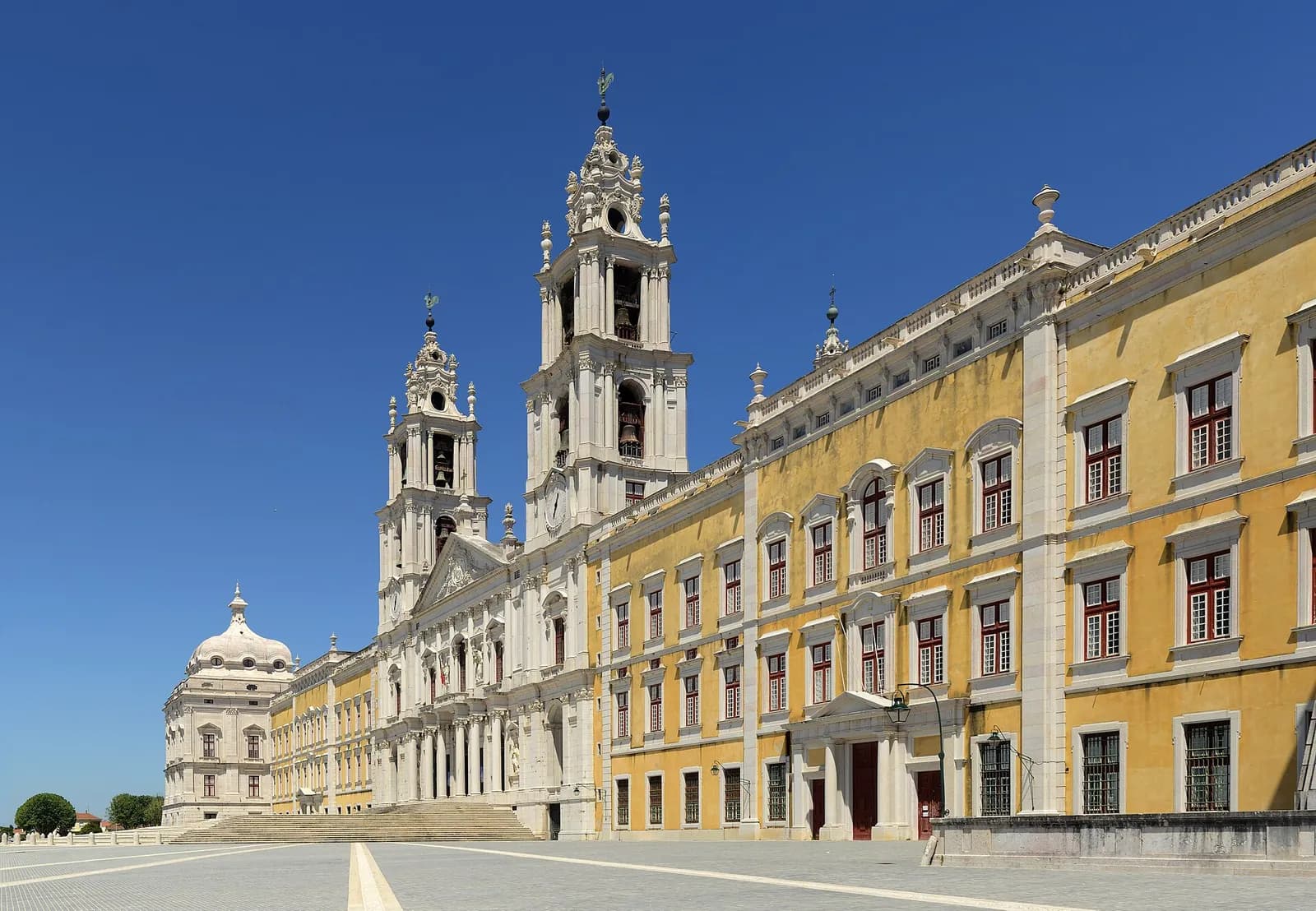
Mafra is real and enormous. João V built it to fulfil a vow for an heir, in local lioz limestone paid for with Brazilian gold: some 1,200 rooms, 4,700 doors and windows, and a library of about 38,000 volumes. Saramago's novel gives as much room to the thousands of men who hauled the stones as to the king.
Then came O Ano da Morte de Ricardo Reis (1984), his first bestseller, in which one of Fernando Pessoa's invented poets outlives Pessoa and wanders Lisbon in 1936. A Jangada de Pedra (1986) breaks the Iberian Peninsula off from Europe and floats it into the Atlantic. In História do Cerco de Lisboa (1989) a proofreader slips the word “not” into a history book and changes the past.
| Year | Portuguese title | English title | In brief |
|---|---|---|---|
| 1947 | Terra do Pecado | Land of Sin | First novel; he had titled it A Viúva (The Widow) |
| 1977 | Manual de Pintura e Caligrafia | Manual of Painting and Calligraphy | A painter's road to writing, ending with the fall of the dictatorship |
| 1980 | Levantado do Chão | Risen from the Ground | Three generations of Alentejo farm labourers, up to 1974 |
| 1982 | Memorial do Convento | Baltasar and Blimunda | Love, the Inquisition and a flying machine while the Mafra convent rises |
| 1984 | O Ano da Morte de Ricardo Reis | The Year of the Death of Ricardo Reis | One of Pessoa's invented poets in Lisbon, 1936 |
| 1986 | A Jangada de Pedra | The Stone Raft | The Iberian Peninsula breaks away and drifts into the Atlantic |
| 1989 | História do Cerco de Lisboa | The History of the Siege of Lisbon | A proofreader adds one word to a history book |
| 1991 | O Evangelho segundo Jesus Cristo | The Gospel According to Jesus Christ | The life of Jesus, who questions his role and challenges God |
| 1995 | Ensaio sobre a Cegueira | Blindness | An epidemic of blindness and the collapse of a society |
| 1997 | Todos os Nomes | All the Names | A clerk at a civil registry office hunts down one name |
English titles as given in his Nobel autobiography and the Swedish Academy's press release. After the prize came A Caverna (2000), O Homem Duplicado (2002), Ensaio sobre a Lucidez (2004), As Intermitências da Morte (2005), A Viagem do Elefante (2008) and Caim (2009); Claraboia, finished in 1953, appeared in 2011.
The Gospel, a veto and an island
O Evangelho segundo Jesus Cristo came out in 1991. In it God and the Devil bargain over evil, and Jesus questions the part he has been given and challenges God. It drew hostile reactions from Catholic and conservative circles. Saramago, an atheist, said he had written a novel, not a treatise on theology.
In April 1992 Portugal had to name candidates for the European Literary Prize, an award of the European Community. On 14 April the national book institute, the IPLL, suggested Saramago, the poet Pedro Tamen and Fiama Hasse Pais Brandão. António Sousa Lara, under-secretary of state for culture in Aníbal Cavaco Silva's Social Democratic (PSD) government, left Saramago off. The names sent were Tamen, Fiama and Agustina Bessa-Luís.
Público broke the story on 25 April 1992. Sousa Lara told the paper that the book did not represent Portugal. In parliament he argued that the novel attacked the religious heritage of the Portuguese and, far from uniting them, divided them.
“It is the victory of high-handedness. The triumph of the arrogance of someone with the power to make decisions in fields where he has no business. It is the return of the Inquisition.”
The row spread to Spanish, French and Italian newspapers; the French culture minister, Jack Lang, called it unacceptable. Tamen and Fiama withdrew. The secretary of state for culture, Pedro Santana Lopes, overruled Sousa Lara and promised a new jury, but Saramago asked not to be considered and the jury never met. The novel sold 135,000 copies in Portugal by 21 May, and the 1992 prize went to the Spanish novelist Manuel Vázquez Montalbán.
On 1 May 1992, a week after the story broke, Saramago and his second wife, the Spanish journalist Pilar del Río, whom he had married in 1988, visited her sister on Lanzarote, and Pilar suggested they move there. They settled on the island in February 1993, in a house in Tías.
At the time Saramago told Público the timing was a coincidence he had not sought; in his Nobel autobiography he gave the government's “censorship” as the reason. Pilar del Río has said the row played a part, but that the two things mostly coincided.
On Lanzarote he began a diary, Cadernos de Lanzarote, and wrote Ensaio sobre a Cegueira (1995), in which an epidemic of blindness strikes a population and society falls apart. The same year he received the Camões Prize. Todos os Nomes followed in 1997.
The announcement
As was its custom, the Swedish Academy had promised the name for “a Thursday in October”, without fixing the date. In 1998 the announcement came at 1 pm in Stockholm, noon in Portugal. For years Saramago had been on the unofficial waiting list, along with António Lobo Antunes, Salman Rushdie, Mario Vargas Llosa and Jorge Amado. The year before, he and Pilar had heard on the kitchen radio that the prize had gone to Dario Fo.
“who with parables sustained by imagination, compassion and irony continually enables us once again to apprehend an elusory reality”
The press release noted that he would be 76 in November, came from a working-class background and had his first big success only at 60. It picked out Memorial do Convento as the breakthrough and said Ensaio sobre a Cegueira added “appreciably” to his stature. In Portuguese the Academy's citation read “que, com parábolas portadoras de imaginação, compaixão e ironia torna constantemente compreensível uma realidade fugidia”.
- Announced
- Thursday 8 October 1998, 1 pm in Stockholm (noon in Lisbon)
- Laureate
- José Saramago, 75, Portuguese, living on Lanzarote
- Language
- Portuguese, a first for the literature prize
- Prize
- 7.6 million Swedish kronor, the whole prize
- Lecture
- 7 December 1998, Swedish Academy, Stockholm
- Ceremony
- 10 December 1998, Stockholm Concert Hall
Politicians and intellectuals welcomed the news. President Jorge Sampaio, as Público reported it, called the prize “the definitive consecration of Portuguese” and thanked him, whatever anyone's politics, for “a great collective satisfaction”. The French news agency AFP wrote of a wave of national pride in a year that had already brought Expo 98 in Lisbon and a place in the first wave of the euro.
Not everyone joined in. The Vatican daily L'Osservatore Romano objected to the choice of “an inveterate communist”. Sousa Lara told Público he did not regret his decision on the Gospel, though as a citizen he was glad a Portuguese writer had won. In Mafra, the town his novel had made famous, the Social Democrat majority had blocked since April 1993 a proposal to give him the municipality's gold medal.
The apprentice in Stockholm
On 7 December 1998 Saramago gave his Nobel lecture to more than 400 people in the hall of the Swedish Academy. He called it De como a personagem foi mestre e o autor seu aprendiz, “How characters became the masters and the author their apprentice”. He began with his grandfather.
“The wisest man I ever knew in my whole life could not read or write.”
Jerónimo got up at four in the morning to take his pigs to pasture; in hard winters he and Josefa took the weakest piglets into their own bed to keep them alive. From there Saramago walked through his books one character at a time: the painter of the Manual, the Alentejo labourers, Baltasar and Blimunda, Ricardo Reis, the proofreader, Jesus. He also attacked a Church he called “both accomplice and beneficiary” of the power of the state and the landlords under the dictatorship.
Three days later, on 10 December, he received the prize at the Stockholm Concert Hall. Presenting him, Kjell Espmark of the Swedish Academy said Saramago allowed the laws of nature to be broken in one decisive respect only, then followed the consequences with strict logic and exact observation: a peninsula breaks loose, or a proofreader slips one word into a history book.
After the prize: Lanzarote, Lisbon and an olive tree
After the prize he travelled across five continents, giving lectures and collecting honorary degrees, and he kept writing: A Caverna in 2000, Ensaio sobre a Lucidez, a sequel to Blindness, in 2004, As Intermitências da Morte in 2005, a memoir, As Pequenas Memórias, in 2006, A Viagem do Elefante in 2008. Caim (2009), with God as one of its main characters, started another row with the Church. Fernando Meirelles filmed Blindness in 2008.
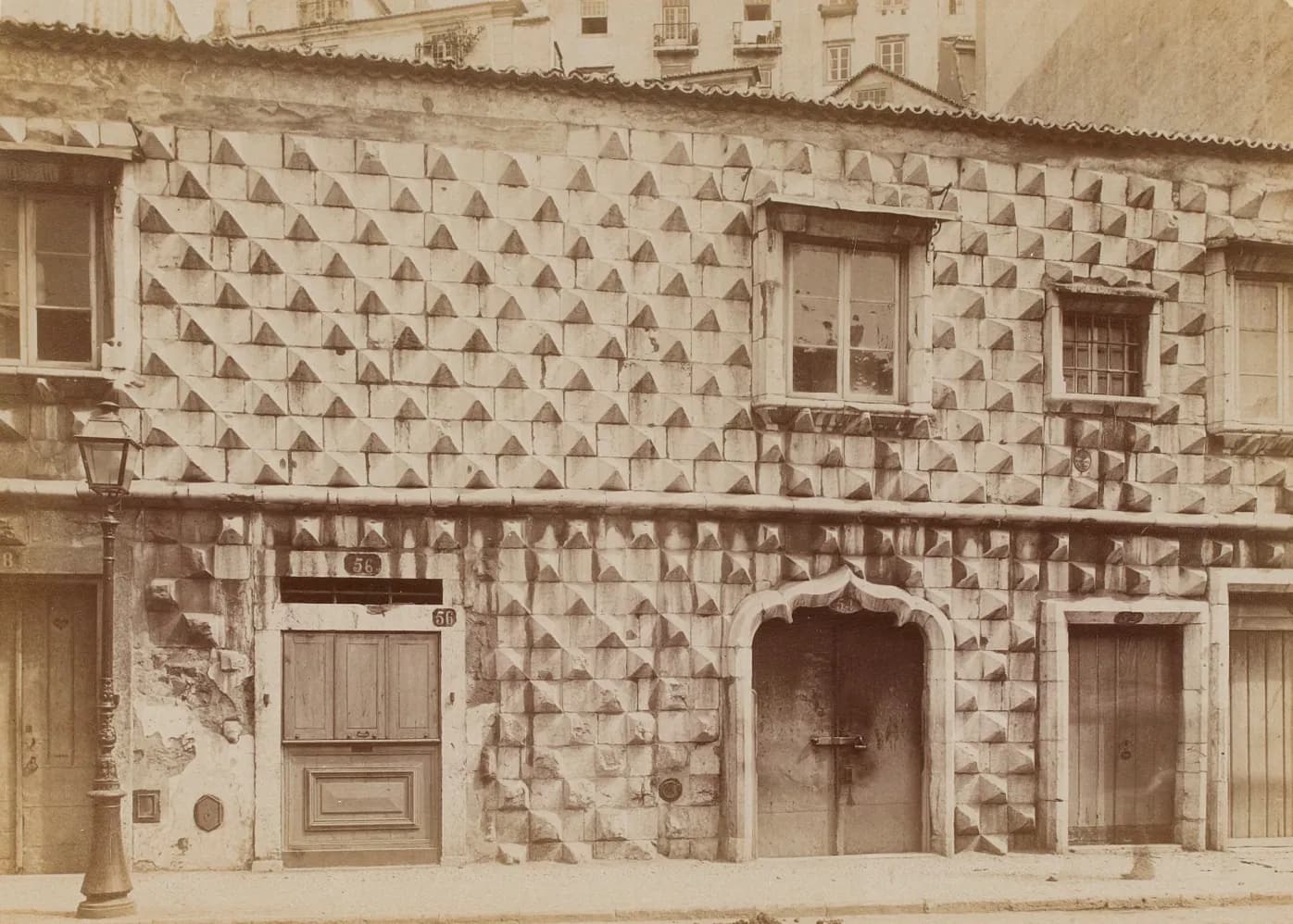
In June 2007 he set up the Fundação José Saramago in Lisbon. Its Declaration of Principles, which he signed on 29 June 2007, binds it to the Universal Declaration of Human Rights and to the environment as well as to literature. In July 2008 Lisbon City Council granted it the upper floors of the Casa dos Bicos, a sixteenth-century noble house facing the river.
Saramago died at home on Lanzarote on Friday 18 June 2010, aged 87. Portugal's government declared two days of national mourning, and three days were declared on the Canaries. A military plane carrying the culture minister, Gabriela Canavilhas, and his daughter, Violante, brought his body to Lisbon. It lay in state at the city hall until noon on Sunday and was cremated at the Alto de São João cemetery.
On 18 June 2011, a year to the day after his death, his ashes were laid beside an olive tree brought from Azinhaga and planted in front of the Casa dos Bicos. A stone next to it carries a line from Memorial do Convento: “Mas não subiu para as estrelas, se à terra pertencia”, roughly “But he did not rise to the stars, since he belonged to the earth” (our translation).
16 November 1922
Born in Azinhaga, Ribatejo (registered as 18 November)
1924
The family moves to Lisbon
1947
First novel, Terra do Pecado
1969
Joins the Portuguese Communist Party (PCP)
April to November 1975
Deputy director of Diário de Notícias
1982
Memorial do Convento
April 1992
Government strikes O Evangelho segundo Jesus Cristo off the European prize list
February 1993
Moves to Lanzarote with Pilar del Río
1995
Ensaio sobre a Cegueira; Camões Prize
8 October 1998
Nobel Prize in Literature announced
June 2007
Creates the Fundação José Saramago
18 June 2010
Dies on Lanzarote, aged 87
18 June 2011
Ashes laid beside an Azinhaga olive tree at the Casa dos Bicos
Why it still matters
Saramago was the first writer in Portuguese to win the Nobel Prize in Literature. Portuguese speakers had won Nobels before: Egas Moniz for medicine in 1949, and Bishop Ximenes Belo and José Ramos-Horta of East Timor for peace in 1996. In Frankfurt Saramago said he hoped the prize would make people defend the language at home and spread it abroad.
His reach grew. When he won, his books had been translated into more than 25 languages; by his death, RTP reported, they were published in more than 30 countries. His foundation's lists now run to dozens of countries and languages, from Albanian to Vietnamese. In 2016 it gave the National Library of Portugal his manuscripts, typescripts, notebooks and letters.
The 1992 veto still divides the people involved. In 2017 Artur Anselmo, who had run the book institute, called it a regrettable intrusion of politics into culture; Sousa Lara said he would veto the book again. What RTP called the state's “reconciliation” with Saramago came in April 2004, over lunch with the prime minister, José Manuel Durão Barroso.
FAQs
When did José Saramago win the Nobel Prize in Literature?
The Swedish Academy announced the prize on Thursday 8 October 1998. Saramago gave his Nobel lecture in Stockholm on 7 December and received the prize at the Stockholm Concert Hall on 10 December 1998.
Was Saramago the first Portuguese Nobel laureate?
No. Egas Moniz won the Nobel Prize in Physiology or Medicine in 1949. Saramago was the first writer in Portuguese to win the Nobel Prize in Literature.
Why did Saramago move to Lanzarote?
In April 1992 the under-secretary of state for culture, António Sousa Lara, removed O Evangelho segundo Jesus Cristo from Portugal's candidates for the European Literary Prize, saying it offended Catholics. Saramago and his wife, Pilar del Río, moved to Lanzarote in February 1993. In his Nobel autobiography he blamed the veto; she has said it played a part but that the timing was largely a coincidence.
What did the Nobel citation say?
The Swedish Academy gave the prize to Saramago “who with parables sustained by imagination, compassion and irony continually enables us once again to apprehend an elusory reality”.
Where are José Saramago's ashes?
Under an olive tree brought from his home village of Azinhaga, in front of the Casa dos Bicos in Lisbon, the headquarters of the Fundação José Saramago. They were placed there on 18 June 2011, a year after his death.
On the timeline
Open the timelineNearby moments from portugal in europe (1986–today).
Expo '98 opens in Lisbon on the theme 'The Oceans, a Heritage for the Future,' celebrating the 500th anniversary of Vasco da Gama's voyage. The exposition transforms the eastern waterfront into the modern Parque das Nações neighbourhood.
Portuguese voters narrowly reject the decriminalisation of abortion in the country's first national referendum since the 1933 Estado Novo constitution. With turnout below the 50% threshold, the result is constitutionally non-binding, but the political debate it opens shapes a decade of family-law reform leading to the 2007 referendum that finally liberalises the law.
Expo '98 closes in Lisbon after 132 days and more than ten million visits. The world's fair left a lasting mark on the city: its once-derelict industrial riverside site became the Parque das Nações district, home to the Oceanário and Santiago Calatrava's Gare do Oriente.
Saramago's Nobel Prize
The European Union fixes the irrevocable conversion rates for the euro, which launches the next day: one euro equals 200.482 Portuguese escudos. The escudo, created in 1911, carried on in notes and coins until euro cash arrived in 2002.
Amália Rodrigues, the queen of fado, dies at her home in Lisbon's Rua de São Bento aged 79. The government declares three days of national mourning, the parties suspend campaigning for the general election four days later, and in 2001 she becomes the first woman laid in the National Pantheon.
António Guterres's Socialist Party wins the legislative election with exactly half the seats in parliament, 115 of 230, one short of an absolute majority, in a vote held days after the death of Amália Rodrigues had paused the campaign.
Coming up in history
All long reads
22 sources
Archives, scholarship and reporting this article was checked against.
- 1
Press release: The Nobel Prize for Literature 1998, José Saramago (8 October 1998)Swedish Academy, via NobelPrize.org
- 2
- 3
Público, 9 October 1998, pages 1 to 9 (Nobel coverage: reports from Frankfurt, profile, reactions)Hemeroteca Digital, Câmara Municipal de Lisboa
- 4A história do veto ao Evangelho de José Saramago (Joana Stichini Vilela, 25 April 2017)Observador
- 5
- 6
- 7
José Saramago: Biography and autobiographyFundação José Saramago
- 8Morreu o Prémio Nobel da Literatura José Saramago (18 June 2010)RTP Notícias
- 9
- 10
O Estado Novo (1933-1974)Assembleia da República
- 11
- 12
José Saramago obituary (Amanda Hopkinson, 18 June 2010)The Guardian
- 13
- 14
Palácio Nacional de MafraCultura Portugal (Government of Portugal)
- 15
- 16
- 17
Saramago dijo que se siente discípulo de sus personajes (EFE, 8 December 1998)La Nación (Buenos Aires)
- 18
- 19
- 20Dois dias de luto nacional por José Saramago (18 June 2010)RTP Notícias
- 21Cinzas de Saramago depositadas no Campo das Cebolas (9 June 2011)Diário de Notícias
- 22
Casa dos Bicos: a 500-year-old house (text by Paulo Almeida Fernandes, Museu de Lisboa), stamp issue of 7 September 2023CTT Correios de Portugal
Image credits
- José Saramago, aged 82, photographed on 24 September 2005, seven years after the Nobel Prize. Mario Antonio Pena (oneras), CC BY-SA 2.0, via Wikimedia Commons.
- The main façade of the Palace and Convent of Mafra, with the basilica between its two bell towers, in May 2013. Its construction is the backdrop of Memorial do Convento. Alvesgaspar, CC BY-SA 3.0, via Wikimedia Commons.
- Saramago's olive tree outside the Casa dos Bicos in Lisbon, in March 2014. The stone on the left reads “José Saramago 1922–2010”; the one on the right carries the line from Memorial do Convento. 69joehawkins, CC BY-SA 3.0, via Wikimedia Commons.
- The Casa dos Bicos in 1889, with only its lower floors standing. The upper floors lost in the 1755 earthquake were rebuilt from 1981. James Jackson (1843-1895), Public domain, via Wikimedia Commons.