

Odette Ferreira, HIV-2 and the blood sample carried in a coat
A Lisbon pharmacist who came late to research noticed that blood from patients sent from Guinea-Bissau did not behave like other AIDS samples. In Paris in 1985 she helped isolate a second AIDS virus. In the 1990s she ran Portugal's AIDS commission and took clean syringes to Lisbon's drug users.
At a glance
- Maria Odette Santos-Ferreira (1925–2018) was a Lisbon pharmacist and microbiologist who died on 7 October 2018, aged 93.
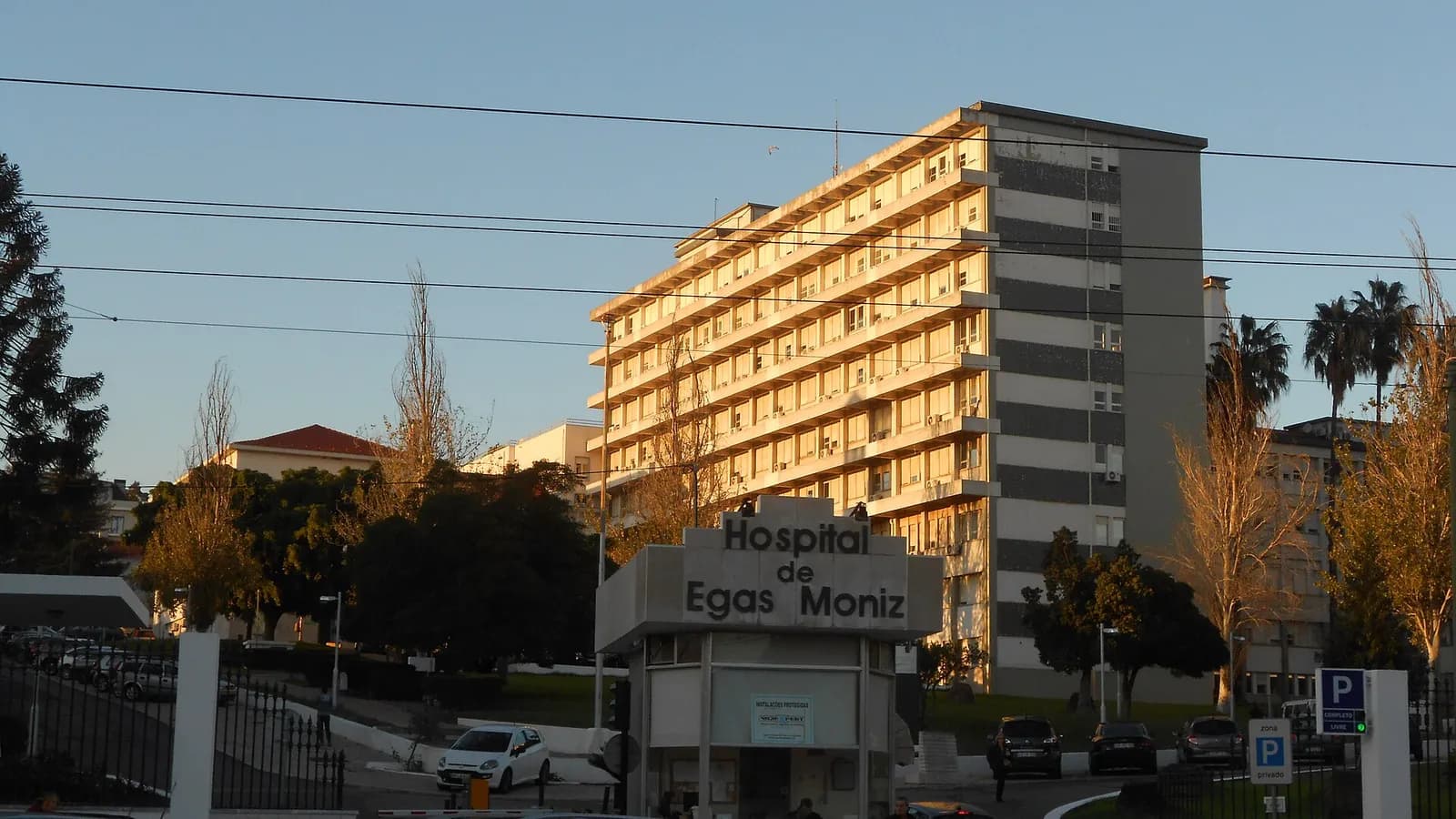
- In 1985 her laboratory at the Faculty of Pharmacy in Lisbon kept getting faint, ambiguous AIDS test results from patients sent from Guinea-Bissau to the Hospital de Egas Moniz.
- In September 1985 she took their blood to the Institut Pasteur in Paris, reportedly under her coat to keep it at body heat, and on 26 September recorded a virus in one patient's culture.
- The virus, called LAV-II and later HIV-2, was described in Science on 18 July 1986 by a Franco-Portuguese team led by François Clavel and Luc Montagnier.
- As head of the National Commission against AIDS from 1992 to 2000 she launched the pharmacy needle exchange 'Diz Não a Uma Seringa em Segunda Mão' on 1 October 1993.
“Our MIR!”
On 26 September 1985, in Luc Montagnier's laboratories at the Institut Pasteur in Paris, a Portuguese visitor wrote a number in her notebook. A liquid scintillation counter had read 75,000 counts of reverse transcriptase activity, the enzyme retroviruses use to copy their genes into DNA, in a culture grown from the blood of a patient in a Lisbon hospital. The isolate was nicknamed MIR, after the patient's name.
Maria Odette Santos-Ferreira was 60, a professor at the Faculty of Pharmacy of the University of Lisbon, and on the last day of a stay in Paris that had begun on 16 September. The blood came from a 28-year-old man admitted to the Hospital de Egas Moniz, one of several patients from Guinea-Bissau with all the signs of AIDS whose blood kept testing negative, or almost negative, for the AIDS virus.
“Our MIR! Our first viral isolation! The most fantastic thing was that our first isolation was obtained from the blood of a patient in the Egas Moniz Hospital, always considered negative for HIV/AIDS infection by internationally renowned laboratories! And more astonishing still, our first virus was also a new AIDS virus!”
Ten months later the virus was described in Science as LAV-II. It is now called HIV-2, the second human immunodeficiency virus. Odette Ferreira, as she was known, died 33 years after that entry, on 7 October 2018, aged 93.
A pharmacist who started late
She was born in Lisbon on 4 June 1925 into a family of pharmacists. Her grandfather owned the first pharmacy on the island of Bolama, in what was then Portuguese Guinea; her father was a civil servant. She was taken to Bolama at three months old, visited Portugal every four years, and came back to Lisbon at ten to attend the Colégio Moderno.
She chose pharmacy and completed the first part of the course, but the Lisbon pharmacy school had been closed since 1932 and the only place to finish the degree was Porto. Her father would not let her live there alone, so her studies stopped for more than two decades. The Lisbon school reopened in 1968, and she graduated in 1970, in her mid-forties.
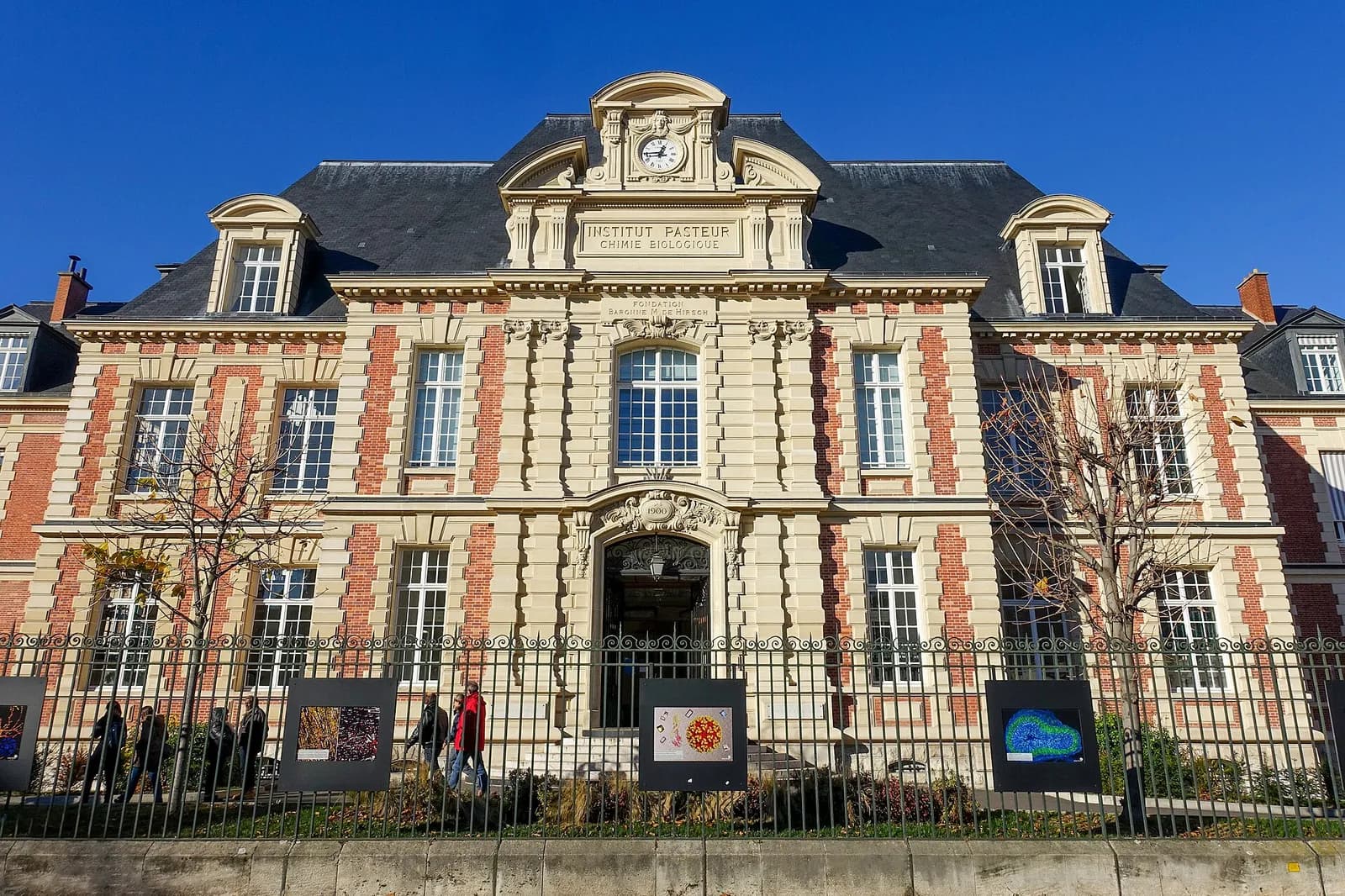
She became an assistant in microbiology and won a three-month scholarship from the French embassy to train at the Institut Pasteur. That became a doctorate from the Université Paris-Sud in 1977 on tracing hospital infections in Portugal caused by the bacterium Pseudomonas aeruginosa. The work gave her two things she would need later: a place at the Pasteur, and contacts with the infectious-disease doctors of Lisbon's hospitals.
The mystery patients of Egas Moniz
AIDS was first reported in the United States in June 1981. In May 1983 Montagnier's team at the Pasteur isolated a virus it called LAV, and in 1984 Robert Gallo's American team published its own virus, HTLV-III. The two turned out to be the same virus, written as LAV/HTLV-III by 1986 and now called HIV-1, but in 1984 the French and American teams were still competing to prove which had found the cause of AIDS.
In September 1984 Santos-Ferreira joined Montagnier's viral oncology unit to learn how to detect LAV. She came home to run a survey of the infection among people living in Portugal and set up the Pasteur's immunofluorescence test at the Faculty of Pharmacy. Until September 1985 hers was the only laboratory in Portugal doing these tests, and she asked the main Lisbon hospitals to send her blood from suspected AIDS cases.
The doctors at Egas Moniz, led by José Luís Champalimaud with Jaime Nina and Kamal Mansinho, had a group of men and women from Guinea-Bissau with chronic diarrhoea, wasting, tuberculosis and other infections typical of a broken immune system. None was in the groups then linked to AIDS in Europe and America: they were not gay men, haemophiliacs or people who injected drugs. From August 1984 the hospital sent their blood to laboratories abroad, and the answers came back positive one time and negative the next.
In Lisbon the same sera always gave the same odd picture under the microscope: a faint fluorescence, neither clearly positive nor clearly negative. The team marked them with a question mark as weak positives. On 11 and 13 September 1985 two of the patients were retested, with the same result: weak in immunofluorescence, positive in a second test and negative in a third.
Blood in a coat
In the first days of September 1985 she presented her survey of Portuguese patients at a European microbiology congress in Brighton, on a poster signed with Montagnier and two of his staff. A stay at the Pasteur had already been agreed for the following weeks, and she decided to take blood from the Egas Moniz patients with her.
How it travelled is the part of the story people remember. According to an account based on Sandra Nobre's biography of her, Kamal Mansinho, then a junior doctor at Egas Moniz, brought the samples to her at Lisbon airport, and she flew to Paris with them hidden inside her coat. The blood had to be kept at about 37 degrees Celsius, and the coat kept it at body heat.
“It had to be kept at 37 degrees, but she was lucky that this was a time when we did not yet have to take our coats off at the airport. Today she would be accused of bioterrorism, like in the films you see these days.”
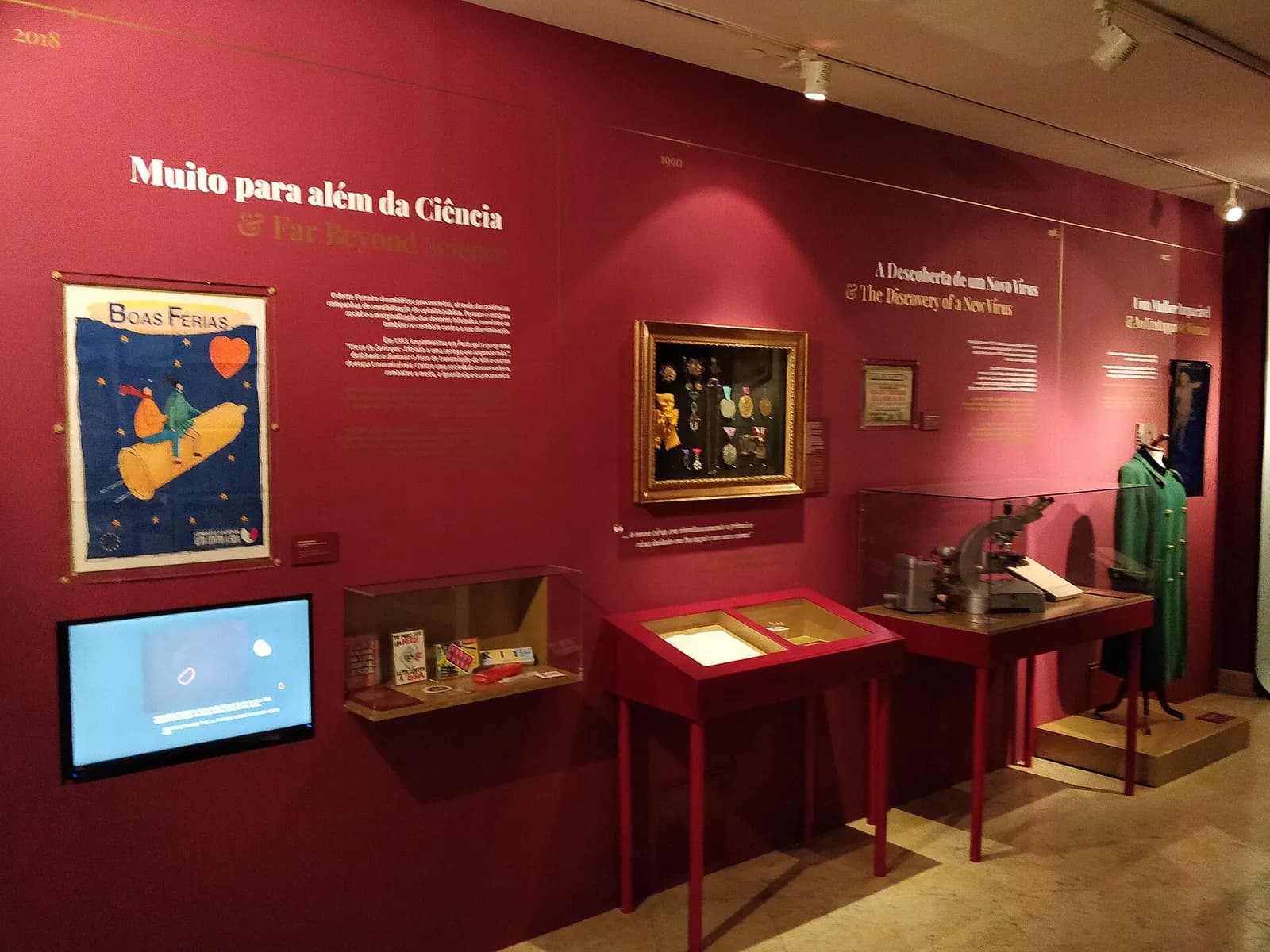
The coat itself was shown in the February 2019 exhibition on her life at the Museu da Farmácia. The detail comes from her own retelling and her friends', not from a document of 1985, but her notebook confirms the rest: she was at the Pasteur from 16 to 26 September 1985 with blood from the Egas Moniz patients.
On 19 September she noted that one culture was contaminated with bacteria and could not continue; two others went on. Paula Basso, curator at the Museu da Farmácia, who has studied the notebooks, writes that the Portuguese team kept its suspicion of a new virus to itself. The French staff, and Montagnier, seem to have thought she was simply running routine LAV tests for Portuguese doctors.
A second AIDS virus
The isolate from Lisbon was not the only sign of something new. In December 1985 a team led by Francis Barin and Max Essex reported in The Lancet that blood from some healthy people in Senegal reacted more strongly with a monkey virus, STLV-III, than with the AIDS virus. That pointed to a related virus in West Africa, but the virus itself had not yet been isolated.
On 18 July 1986 Science published “Isolation of a new human retrovirus from West African patients with AIDS”. Its first author was François Clavel; Santos-Ferreira was sixth, and José Luís Champalimaud and Montagnier were among the other authors. It reported a virus isolated from two West African AIDS patients that looked and behaved much like LAV but differed in the proteins of its outer envelope.
- Paper
- Isolation of a new human retrovirus from West African patients with AIDS
- Journal
- Science, vol. 233, pp. 343–346, 18 July 1986
- First author
- François Clavel
- Portuguese co-authors
- M. O. Santos-Ferreira (Faculty of Pharmacy, Lisbon) and J. L. Champalimaud (Hospital de Egas Moniz)
- Name given
- LAV-II, later HIV-2
- Related to
- STLV-IIImac, a simian virus of macaques, more closely than to LAV
The authors found that the envelope of the new virus was recognised by serum from a macaque infected with a simian virus, suggesting it was closer to that monkey virus than to LAV. Hybridisation tests showed it was only distantly related to LAV. They called it LAV-II. Montagnier announced the discovery in Lisbon in 1986 with his Portuguese collaborators, and a follow-up paper in The New England Journal of Medicine in May 1987 found HIV-2 in 30 patients, almost all from West Africa, 17 of them with AIDS.
December 1979
First patient from Guinea-Bissau with the unexplained illness admitted to Egas Moniz
June 1981
AIDS first reported in the United States
May 1983
Montagnier's team in Paris isolates LAV, later called HIV-1
September 1984
Santos-Ferreira trains in Montagnier's unit
October 1984
Her laboratory begins a survey of HIV infection in Portugal
14 June 1985
Five Egas Moniz patients from Guinea-Bissau are tested in Lisbon
16–26 September 1985
Santos-Ferreira works at the Pasteur with the patients' blood
26 September 1985
She records a virus in one patient's culture: “our MIR”
December 1985
Barin and Essex report antibodies to a monkey-like virus in Senegal
18 July 1986
Science publishes LAV-II, later HIV-2
7 May 1987
NEJM reports HIV-2 in 30 patients
A slower, more local virus
The two viruses came into humans separately. HIV-1 is closest to a virus of chimpanzees in Central Africa. HIV-2 descends from a virus of the sooty mangabey, a West African monkey, and probably crossed into people in Guinea-Bissau in the 1940s or 1950s. Basso cites research suggesting that injections and other blood exposure during the independence war of 1963 to 1974 helped it spread there.
| HIV-1 | HIV-2 | |
|---|---|---|
| Closest animal virus | SIV of chimpanzees, Central Africa | SIV of sooty mangabeys, West Africa |
| Probable jump to humans | Before the 1920s, in Cameroon | 1940s to 1950s, probably in Guinea-Bissau |
| Where it is found | Worldwide; about 95% of people with HIV in 2021 | Mainly West Africa, with an estimated 1 to 2 million people infected; also Portugal, France, Brazil and India |
| Transmission | Sexual, blood and mother to child | Same routes, but 5 to 9 times less by sex and 10 to 20 times less from mother to child |
| Course of infection | Faster loss of CD4 cells and progression to AIDS | Lower viral load, longer symptom-free period, slower progression |
| Cases diagnosed in Portugal, 1983–2024 | 63,411 | 2,163 |
In Portugal a further 487 cases are recorded as HIV-1 and HIV-2 together, mostly old notifications where the type was not identified, and 360 give no type.
HIV-2 is harder to pass on, by sex and especially from mother to child, probably because infected people carry less virus in their blood. Infection usually stays silent longer and destroys the immune system more slowly. Estimates of how many untreated people ever reach AIDS vary, even within one source. A 2021 review says in its summary that most eventually do, but its main text cites studies suggesting that only 15 to 25 per cent progress to AIDS without treatment, after an estimated 15 to 20 years on average.
It has also stayed local. Guinea-Bissau once had the highest rate, with about 8 per cent of adults infected. The latest figures in the 2021 review put Guinea-Bissau, Senegal, the Gambia, Sierra Leone and Côte d'Ivoire at 1 to 5 per cent, and Cape Verde and the rest of West Africa below 1 per cent. Prevalence is falling. In Europe, Portugal and France have the most cases, through their old colonial links with West Africa.
HIV-2 infections diagnosed in Portugal, by decade
cases
From the DGS/INSA report for 2025, figure 16. HIV-2 made up 6.8% of all HIV diagnoses in Portugal in 1985–1994 and 2.6% to 3.2% in later decades. Of the 330 cases in 2015–2024, 65.5% were women, 73.6% came from sub-Saharan Africa (83.1% of those born in Guinea-Bissau) and 93.6% reported heterosexual transmission.
Show the data
| HIV-2 cases diagnosed in Portugal | |
|---|---|
| 1985–1994 | 492 |
| 1995–2004 | 716 |
| 2005–2014 | 625 |
| 2015–2024 | 330 |
“Say no to a second-hand syringe”
In 1992 the health minister appointed her coordinator of the Comissão Nacional de Luta Contra a SIDA, the national commission against AIDS. She held the post until 2000, the first pharmacist to do so in a job usually held by doctors. By then heroin had spread through Portugal, and HIV infections among people who injected drugs were rising steeply.
She went to them. Lisbon's Casal Ventoso neighbourhood was then Europe's biggest open-air drug market, and she gave away clean syringes there, with donated clothes, soap, razors, condoms, fruit and sandwiches. Dealers sent her death threats. The Guardian, which interviewed her in 2017, reported her answer.
“Don't mess with me. You do your job, and I'll do mine.”
On 1 October 1993 the commission, the Ministry of Health and the Associação Nacional das Farmácias launched “Diz Não a Uma Seringa em Segunda Mão”, “Say no to a second-hand syringe”. Users could swap a used syringe at a pharmacy for a kit with sterile syringes, condoms and disinfectant wipes. Because about 2,500 pharmacies took part, it reached the whole country at once, and the European Commission rated it the best project presented by a member state.
The National Association of Pharmacies counted more than 43 million syringes collected between 1993 and 2008. An external evaluation in 2002 estimated that the programme's first eight years had saved the state between €400 million and €1.7 billion. In 2022 the programme handed out 1.1 million syringes, 80 per cent of them through harm-reduction teams and 19 per cent through pharmacies.
The commission did more than syringes. Under her it opened free, anonymous testing centres, a drop-in centre for sex workers in the Intendente district of Lisbon, district AIDS commissions and the first palliative care home for people with AIDS in Lisbon, and it reopened the AIDS helpline.
What the numbers show
Portugal's national register counts 66,421 HIV infections diagnosed in the country from 1983 to 2024. New diagnoses rose through the 1990s to a peak of 3,338 in 1999 and have broadly fallen since. In 2024 there were 951, fewer than a third of the 1999 figure.
New HIV diagnoses in Portugal, 1991 to 2024
cases diagnosed in Portugal
Cases diagnosed in Portugal, by year of diagnosis, from quadro 19 of the DGS/INSA report for 2025; 1,941 earlier cases from 1983 to 1990 are not shown. Late notifications mean recent years may still rise. Highlighted: 1993, when the pharmacy needle exchange began, and the 1999 peak.
Show the data
| HIV infections by year of diagnosis | |
|---|---|
| 1991 | 905 |
| 1992 | 1,330 |
| 1993 | 1,399 |
| 1994 | 1,699 |
| 1995 | 2,116 |
| 1996 | 2,607 |
| 1997 | 2,983 |
| 1998 | 3,159 |
| 1999 | 3,338 |
| 2000 | 3,240 |
| 2001 | 2,836 |
| 2002 | 2,677 |
| 2003 | 2,481 |
| 2004 | 2,435 |
| 2005 | 2,261 |
| 2006 | 2,275 |
| 2007 | 2,201 |
| 2008 | 2,256 |
| 2009 | 2,060 |
| 2010 | 1,954 |
| 2011 | 1,771 |
| 2012 | 1,770 |
| 2013 | 1,729 |
| 2014 | 1,406 |
| 2015 | 1,457 |
| 2016 | 1,461 |
| 2017 | 1,361 |
| 2018 | 1,210 |
| 2019 | 1,227 |
| 2020 | 924 |
| 2021 | 1,064 |
| 2022 | 940 |
| 2023 | 997 |
| 2024 | 951 |
The sharpest change was among people who inject drugs. They account for 19,573 of all infections recorded, 29.5 per cent of the total, and the DGS and INSA describe a very steep rise in the 1990s to 1999, then a fast and continuous fall. In 2024 only 19 new diagnoses were linked to injecting.
The register shows when infections fell, not why. Needle exchange began in 1993. In 2001 Portugal decriminalised the possession of drugs for personal use: people caught with a personal supply could be sent to a local panel of a doctor, a lawyer and a social worker instead of being arrested. Treatment centres and harm-reduction services were also growing through those years. The Guardian's 2017 investigation warned that it is misleading to credit Portugal's results entirely to the change in law.
Honours and last years
France made her a knight of the Légion d'honneur in 1987 for the HIV-2 work. In Portugal she became a Commander of the Order of Sant'Iago da Espada on 6 April 1988, won the Ministry of Health's Prémio Nacional de Saúde for 2012 (announced that October and presented in 2013), and in 2016 received the science ministry's Medal of Scientific Merit. The Ordem dos Farmacêuticos named a research prize after her in 2010.
On 19 December 2017 the Faculty of Pharmacy gave her name to its auditorium, which she had helped to build. “Today is one of the happiest days of my life,” she said. The same month the President, Marcelo Rebelo de Sousa, made her a Grand Cross of the Order of Public Instruction, the highest grade of the order for services to education; she received it in a private ceremony in February 2018.
She still went to the faculty every day in her nineties and sat in the front row at HIV conferences. She died on Sunday 7 October 2018. Her funeral ceremonies were held at the Igreja do Campo Grande in Lisbon, and the funeral went from there to the Alto de São João cemetery. Her papers are at the Museu da Farmácia, which opened an exhibition on her life in February 2019.
FAQs
Who was Odette Ferreira?
Maria Odette Santos-Ferreira (1925–2018) was a Portuguese pharmacist and professor of microbiology at the University of Lisbon. She helped identify HIV-2 in 1985 and 1986, coordinated Portugal's National Commission against AIDS from 1992 to 2000 and launched the national pharmacy needle exchange in 1993.
Did Odette Ferreira discover HIV-2?
She was one of the team that did. Her Lisbon laboratory flagged odd results from patients from Guinea-Bissau at the Hospital de Egas Moniz, and in September 1985 she grew a virus from one patient's blood at the Institut Pasteur. The virus was published in Science in July 1986 by François Clavel, Luc Montagnier and others, with her as a co-author.
How is HIV-2 different from HIV-1?
HIV-2 comes from a different monkey virus and is concentrated in West Africa. It is passed on less easily, especially from mother to child, and usually damages the immune system more slowly, though without treatment it can still cause AIDS.
What was “Diz Não a Uma Seringa em Segunda Mão”?
“Say no to a second-hand syringe” was Portugal's national needle-exchange programme, launched on 1 October 1993 by the National Commission against AIDS, the Ministry of Health and the National Association of Pharmacies. People who injected drugs could swap used syringes for sterile kits at about 2,500 pharmacies.
How many HIV-2 cases has Portugal recorded?
Portugal recorded 2,163 HIV-2 infections diagnosed in the country from 1983 to the end of 2024, about 3.3% of all HIV diagnoses. There were 15 new HIV-2 diagnoses in 2024.
On the timeline
Open the timelineNearby moments from portugal in europe (1986–today).
Edmundo Pedro dies in Lisbon aged 99. First arrested as a teenager for helping organise a strike, he was sent with his father to the Tarrafal prison camp in Cape Verde, where he spent ten years as its youngest political prisoner; he later joined the 1962 Beja revolt and, after 1974, sat in parliament for the Socialist Party.
Cristiano Ronaldo scores a hat-trick in a 3–3 draw with Spain in Sochi, completing it with an 88th-minute free kick curled into the top corner. At 33 he becomes the oldest player to score a World Cup hat-trick and the first to score at eight consecutive major tournaments.
At a ceremony in Lisbon closing his Diamond Jubilee year, the Aga Khan formally designates the Henrique de Mendonça Palace on Rua Marquês de Fronteira as the Seat of the Ismaili Imamat, making the city the global headquarters of the Shia Ismaili Muslim community. Tens of thousands of Ismailis from around the world gather in Lisbon for the celebrations.
Odette Ferreira and HIV-2
Death of Agustina Bessa-Luís in Porto, aged 96. Her 1954 novel 'A Sibila' made her one of the great voices of 20th-century Portuguese fiction; she went on to win the Camões Prize in 2004, and her long creative partnership with the director Manoel de Oliveira produced films such as 'Francisca' and 'Vale Abraão'.
Death from Covid-19 of Maria de Sousa, aged 80, one of Portugal's most distinguished scientists. Working in London in the 1960s she showed where T lymphocytes settle in the lymph nodes and coined the term 'ecotaxis'; back in Porto she built a leading research team and a pioneering graduate programme in biology.
Portugal and the Portuguese-speaking world celebrate the first World Portuguese Language Day, proclaimed by UNESCO the previous November. Spoken by more than 260 million people across four continents, Portuguese is among the most widely spoken languages on Earth; with the pandemic raging, the celebrations move largely online.
Coming up in history
All long reads 9 October 1261King Dinis, born in Lisbon on 9 October 1261: the poet who ruled 46 years
 10 October 1507Albuquerque at Hormuz: the treaty of 10 October 1507
 11 October 1810The Lines of Torres Vedras: where Masséna's march on Lisbon stopped, 1810
 12 October 1943Churchill, Salazar and the Azores bases: 12 October 1943
18 sources
Archives, scholarship and reporting this article was checked against.
- 1
Isolation of a new human retrovirus from West African patients with AIDS (Clavel F, Guétard D, Brun-Vézinet F, Chamaret S, Rey MA, Santos-Ferreira MO et al.)Science 233 (4761): 343–346, 18 July 1986 (PubMed record)
- 2
O enigma dos doentes-mistério do Hospital de Egas Moniz e a descoberta do LAV-2 (HIV-2) (Paula Basso)Anais do Instituto de Higiene e Medicina Tropical 23 (1), 2024, pp. 120–129
- 3
Caderno de apontamentos de Maria Odette de Santos Ferreira, Instituto Pasteur, 16 a 26 de setembro de 1985 (Inv. 015294)Museu da Farmácia, online collection
- 4
Odette Ferreira (1925-2018)Ordem dos Farmacêuticos, October 2018
- 5
Infeção por VIH em Portugal – 2025Direção-Geral da Saúde and Instituto Nacional de Saúde Doutor Ricardo Jorge, November 2025
- 6
Human Immunodeficiency Virus Type 2: The Neglected ThreatPathogens 10 (11): 1377, 2021
- 7
Trinta anos do Programa Troca de Seringas em destaque no Museu da FarmáciaAssociação Nacional das Farmácias (press release)
- 8
Portugal's radical drugs policy is working. Why hasn't the world copied it? (Susana Ferreira)The Guardian, 5 December 2017
- 9Morreu Odette Ferreira, pioneira na investigação da sida em PortugalObservador (Lusa), 7 October 2018
- 10
Odette FerreiraShe Thought It, Instituto de Literatura Comparada Margarida Losa, Universidade do Porto
- 11
- 12A pioneira que descobriu o VIH 2 e impulsionou a luta contra a sidaDiário de Notícias, 20 December 2017
- 13O diário, o casaco e outras coisas de Odette Ferreira quando descobriu o VIH tipo 2Diário de Notícias, 21 February 2019
- 14
- 15Prémio Nacional de Saúde 2012 atribuído à investigadora Odette Santos FerreiraRTP (Lusa), 4 October 2012
- 16
Tributo de homenagem à Professora Odette Ferreira (Carlos Vasconcelos)Medicina Interna, Revista da Sociedade Portuguesa de Medicina Interna 25 (4), 2018
- 17
Entidades nacionais agraciadas com ordens portuguesas (search: Maria Odette Santos Ferreira)Presidência da República, Ordens Honoríficas Portuguesas
- 18
Morreu Odette Ferreira, pioneira na investigação da sida em PortugalVisão (Lusa), 7 October 2018
Image credits
- Part of the display on Odette Ferreira at the Museu da Farmácia in Lisbon, photographed in June 2022. The panels cover the discovery of a new virus and her campaigns outside the laboratory. Roundtheworld, CC BY-SA 4.0, via Wikimedia Commons.
- The Hospital de Egas Moniz in Lisbon, photographed in 2017. Founded as the Colonial Hospital, it treated the patients from Guinea-Bissau whose blood led to HIV-2. Joehawkins, CC BY-SA 4.0, via Wikimedia Commons.
- A building of the Institut Pasteur in Paris, photographed in November 2016. Odette Ferreira worked at the institute from the 1970s, and in the 1980s in Luc Montagnier's viral oncology unit. Guilhem Vellut from Paris, France, CC BY 2.0, via Wikimedia Commons.
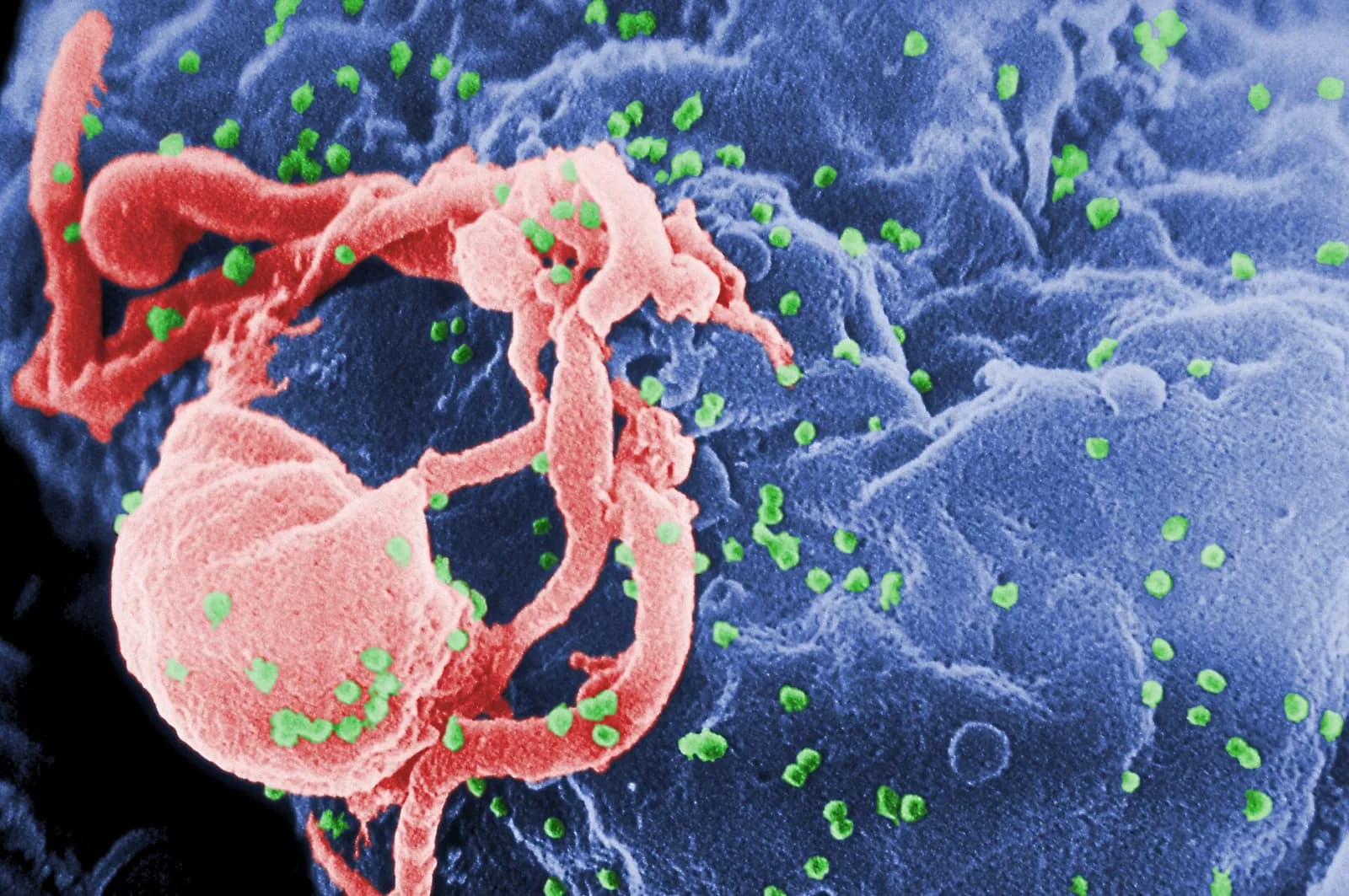
- HIV-1 particles, coloured green, budding from a cultured lymphocyte: a scanning electron micrograph made at the US Centers for Disease Control in 1984. HIV-2 looks much the same under the microscope; the differences are in its proteins and genes. CDC/C. Goldsmith, P. Feorino, E. L. Palmer, W. R. McManus, Public domain, via Wikimedia Commons.
- The Museu da Farmácia in Lisbon, photographed in June 2024. It holds Odette Ferreira's papers, including her Pasteur notebook of September 1985. Jorge Franganillo, CC BY 2.0, via Wikimedia Commons.