

Amália Rodrigues, the voice of fado, dies in Lisbon: 6 October 1999
Portugal's parties stopped campaigning to mourn a singer who had once sold fruit on the Alcântara docks. Her death also reopened an old question: had the queen of fado served the dictatorship, or quietly helped its enemies?
At a glance
- Amália Rodrigues, the best-known fado singer of the twentieth century, died of a heart attack at her home in Lisbon's Rua de São Bento on 6 October 1999, aged 79.
- The prime minister, António Guterres, declared three days of national mourning, and the parties suspended campaigning for the general election of 10 October.
- Born to a poor family, she sold fruit on the Alcântara quay before her professional debut in 1939 at the Retiro da Severa, a Lisbon fado house.
- Films, records and seasons at the Paris Olympia made her famous abroad from the late 1940s; from 1962 the composer Alain Oulman set poets such as Camões and David Mourão-Ferreira for her.
- Accused after 1974 of serving the Estado Novo dictatorship, she had also, according to research published after her death, secretly given money to its opponents. On 8 July 2001 she became the first woman laid in the National Pantheon.
Four days before the vote
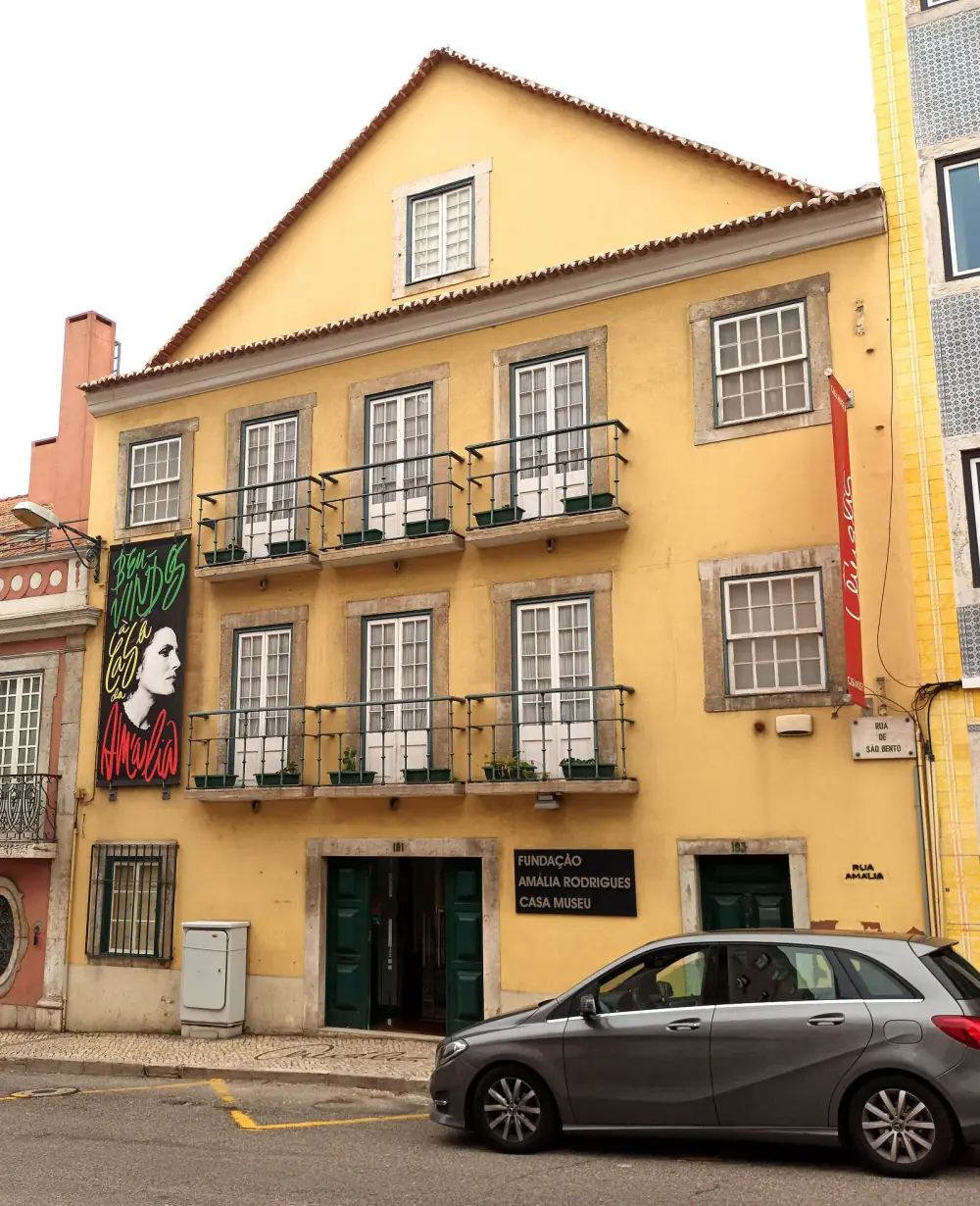
Amália Rodrigues died on Wednesday 6 October 1999 in the house at number 193 Rua de São Bento, in Lisbon, which she had bought in 1955 and lived in ever since. She was 79, and the cause was a heart attack. She had given her last recital five years earlier at the Coliseu dos Recreios. César Seabra, her partner of 42 years, had died in 1997.
Portugal was in the last week of a general election campaign. The vote was set for Sunday 10 October, and the Socialist prime minister, António Guterres, was seeking a second term. Guterres declared three days of national mourning. From right to left, every party stopped campaigning.
Guterres said, as BBC News reported, that the country had lost “the voice of the Portuguese soul”. The funeral mass was held at the Basílica da Estrela, with Guterres and the president, Jorge Sampaio, among the mourners and guitarists playing in the church. Press reports put the crowds that lined the streets in the tens of thousands as her coffin, draped in the national flag, was taken to the Prazeres cemetery.
Not every tribute was simple. Journalists kept asking whether she had been the singer of the dictatorship that ruled Portugal until 1974. That same day, in Paris, the novelist José Saramago, who had won the Nobel Prize for Literature the year before, gave the correspondent of the Lisbon daily Público a different answer.
“That same Amália who, they say, was celebrated by Salazarism sometimes sent money through other people, money she knew was going to the Communist Party, then underground.”
The remark started Miguel Carvalho, a reporter for the news magazine Visão, on 20 years of research into her politics, published in the magazine in 2019 and as a book in 2020. Both versions of her, the regime's star and the secret donor, have evidence behind them.
What fado is, and the regime she sang under
Fado is the urban song of Lisbon: one voice, usually with the guitarra portuguesa, a twelve-string instrument found only in Portugal, and an ordinary acoustic guitar, which the Portuguese call the viola. UNESCO describes it as a blend of Afro-Brazilian sung dances, local song, rural music brought to the city by migrants and urban song of the early nineteenth century. It added fado to its list of the intangible heritage of humanity in 2011.
Fado grew up in the taverns and back streets of nineteenth-century Lisbon, among sailors, coachmen and prostitutes, and educated Portugal long looked down on it. Its founding legend is Maria Severa Onofriana (1820–1846), a singer and prostitute said to have been the lover of the Count of Vimioso. A novel about her by Júlio Dantas, published in 1901, became the first Portuguese sound film in 1931.
After the military coup of 1926, fado was regulated. A decree-law of 6 May 1927 brought licences for venues, professional cards for performers and the prior approval of programmes and lyrics. Improvisation faded, singers turned professional and listening to fado moved into fado houses, most of them in the Bairro Alto from the 1930s.
- Full name
- Amália da Piedade Rodrigues (also given as Rebordão Rodrigues)
- Born
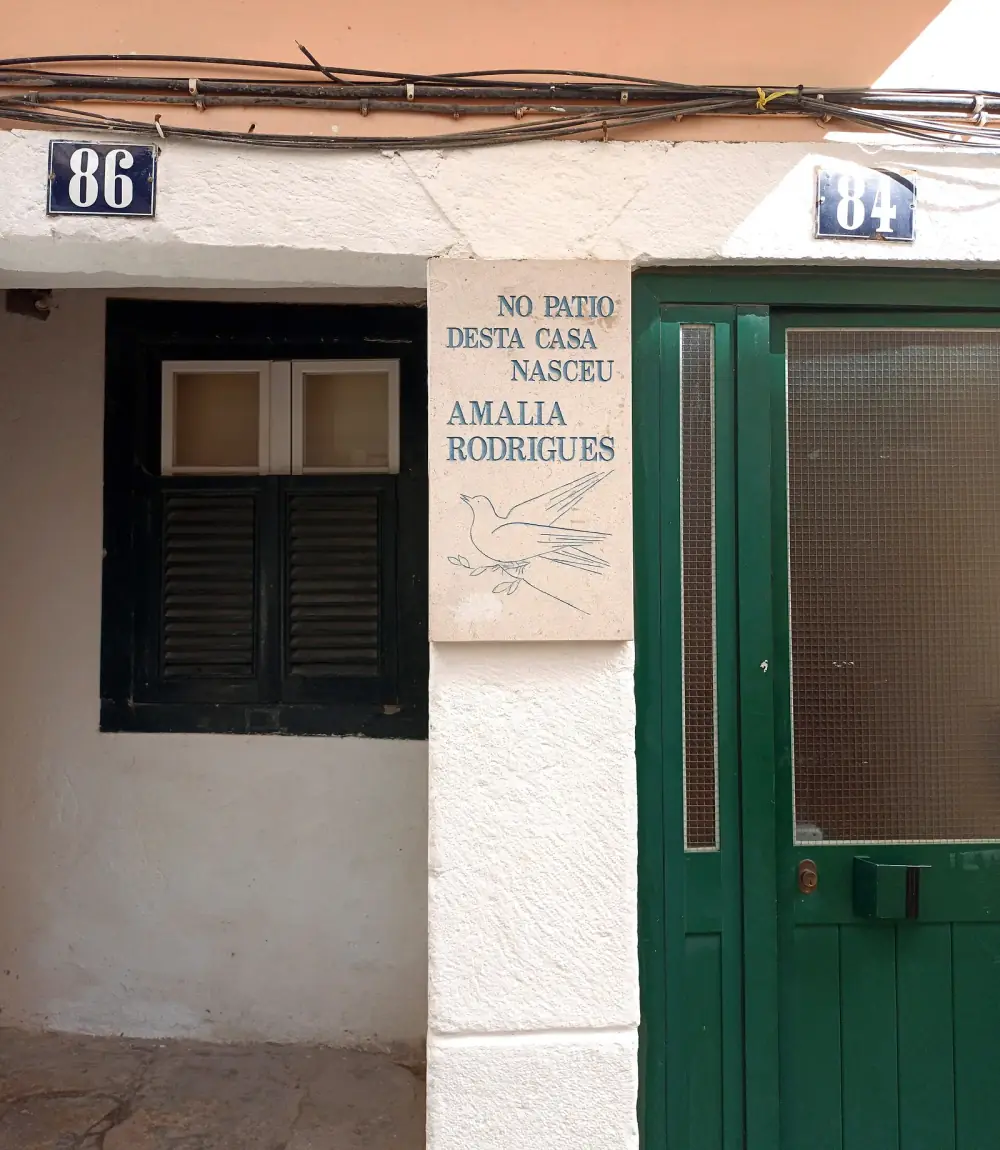
- Registered as 23 July 1920, Rua de Martim Vaz, Lisbon; she celebrated on 1 July
- Debut
- July 1939, Retiro da Severa, Lisbon
- First records
- 1945, in Brazil: eight 78 rpm discs for the Continental label
- Died
- 6 October 1999, Rua de São Bento, Lisbon, aged 79
- Buried
- Prazeres cemetery, then the National Pantheon from 8 July 2001
1920
Birth registered in Lisbon on 23 July
1935
Sings “Fado Alcântara” as soloist of her neighbourhood's marcha at the June festivals
1939
Professional debut at the Retiro da Severa
1943
First performance abroad, in Madrid
1947
Stars in Capas Negras and Fado, História de uma Cantadeira
1955
Sings “Barco Negro” in the French film Les Amants du Tage; buys the house in Rua de São Bento
1956
First season at the Olympia in Paris
1962
First album with the composer Alain Oulman
1965
Records poems by Camões, to public controversy
1974
Carnation Revolution; she is attacked as a singer of the regime
1985
First solo concert in Portugal, at the Coliseu dos Recreios, 19 April
1994
Last recital, at the Coliseu dos Recreios
1999
Dies on 6 October; buried at Prazeres
2001
Moved to the National Pantheon on 8 July; her house opens as a museum on 23 July
2011
UNESCO inscribes fado as intangible heritage
From the Alcântara quay to the Retiro da Severa
Her parents, Albertino de Jesus Rodrigues and Lucinda da Piedade Rebordão, came from Fundão, in the poor inland province of Beira Baixa. She was born in Lisbon almost by chance, while they were staying with her mother's parents in Rua de Martim Vaz, in the parish of Pena. When she was 14 months old, says the Museu do Fado (her foundation's chronology gives 1922), her parents went back to Fundão and left her with her grandparents.
She grew up in Alcântara, the docks district in western Lisbon. Her grandparents moved there when she was about six, according to the Museu do Fado, and she stayed until she was 19, first with them and then with her parents, who came back to Lisbon in 1934. Her foundation's chronology first places her in Alcântara in 1935. Several of her brothers and sisters died young, and the family often went hungry.
She finished primary school at the Tapada da Ajuda. Her grandmother then took her out of school, against her will, reckoning that “for a woman she already knew too much”. She went to work as an embroiderer and an ironer, and in cake and sweet factories. With her sister Celeste, and for a time their mother, she sold fruit on commission along the Alcântara quay.
In 1935 she was picked to sing “Fado Alcântara” as the soloist of her neighbourhood's marcha, the parade each Lisbon district stages for the June saints' festivals. In 1938 she signed up for a contest to choose a Rainha do Fado, a queen of fado, but pulled out before it was held. Through it she met Francisco da Cruz, a lathe operator and amateur guitarist, whom she married in 1940. The marriage lasted two years; the divorce came only in 1949.
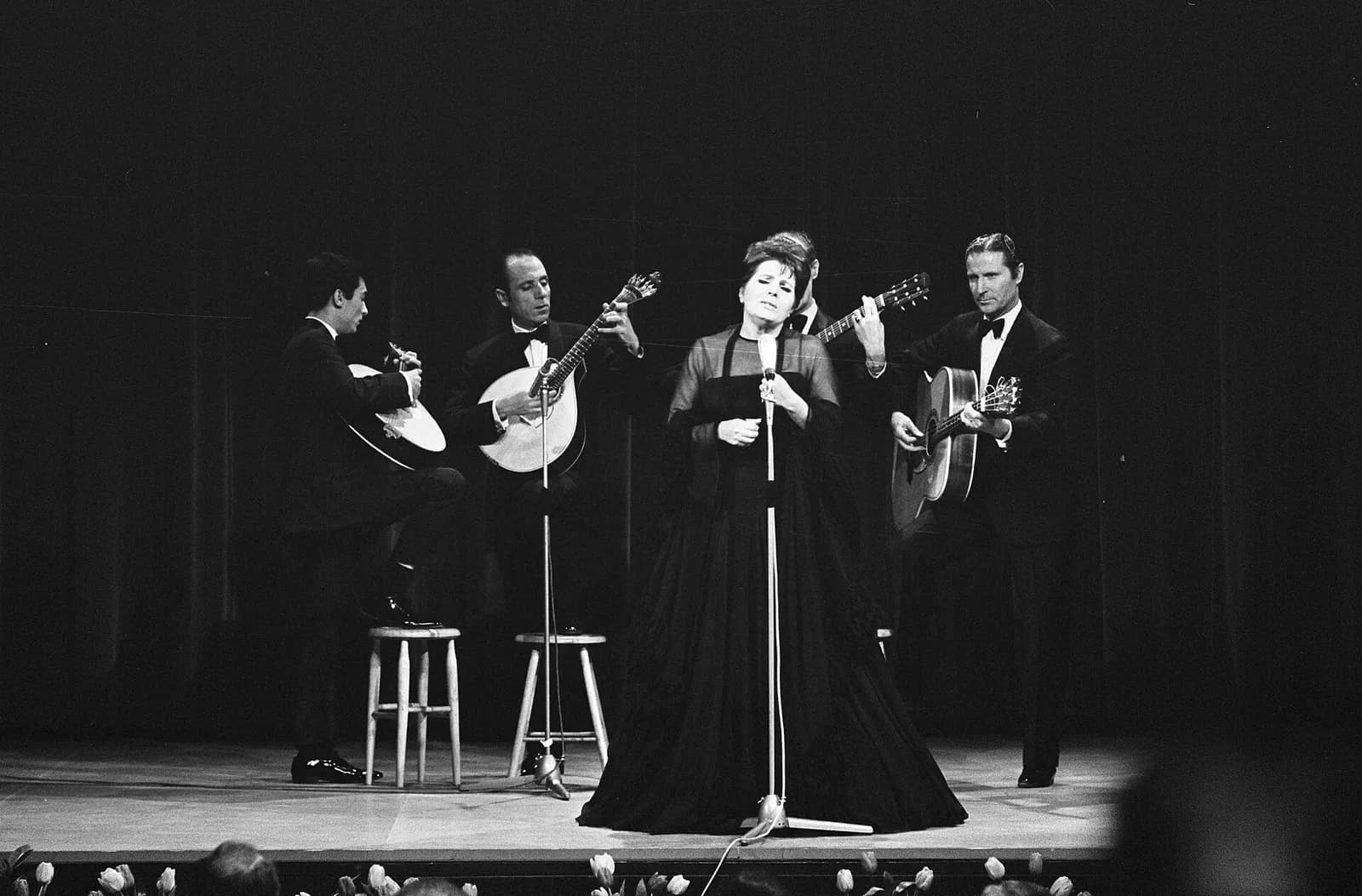
In July 1939, after an audition, she made her professional debut at the Retiro da Severa, a fado house named after the nineteenth-century singer. By early October she topped the bill. Within a year, at the Café Luso, she was the best-paid fado singer in the country, earning a conto, a thousand escudos, a night. She also began singing dressed entirely in black, which became the fado singer's uniform.
Films, Paris and “April in Portugal”
Revue theatre came next, from 1940, then travel. In 1943 the Portuguese ambassador in Madrid, Pedro Teotónio Pereira, invited her to sing at one of his parties. In 1944 and 1945 she sang for months at the Copacabana casino in Rio de Janeiro, and in Brazil she made her first records, eight 78 rpm discs.
Cinema made her a national star. Capas Negras, shot in 1946, opened at Lisbon's Cinema Condes on 16 May 1947. Within months she also starred in Fado, História de uma Cantadeira, which won her the best actress prize of the Secretariado Nacional de Informação, the regime's propaganda office.
| Year | Film | Director | Note |
|---|---|---|---|
| 1947 | Capas Negras | Armando Miranda | First film; she plays Maria Lisboa |
| 1947 | Fado, História de uma Cantadeira | Perdigão Queiroga | Prize for best actress |
| 1949 | Sol e Toiros | José Buchs | Guest singer |
| 1949 | Vendaval Maravilhoso | Leitão de Barros | Lead role |
| 1955 | Les Amants du Tage | Henri Verneuil | Sings “Barco Negro”, words by David Mourão-Ferreira |
| 1955 | April in Portugal | Evan Lloyd | British production |
| 1958 | Sangue Toureiro | Augusto Fraga | First Portuguese film in colour |
| 1964 | Fado Corrido | Jorge Brum do Canto | From a story by David Mourão-Ferreira |
| 1965 | As Ilhas Encantadas | Carlos Vilardebó | Shot on Porto Santo |
Capas Negras is dated 1946 in some archive records, when it was shot; it premiered in May 1947. She also appeared in Via Macau (1965) and in short fado films shot in 1947.
Capas Negras also carried a song that would follow her abroad. Raul Ferrão had written the melody of “Coimbra” in 1939 and could not place it. In the film it was sung by her co-star Alberto Ribeiro, with little success. About three years later Amália sang it on an international tour, and it went round the world as “Avril au Portugal” and “April in Portugal”, in close to a thousand recorded versions.
The 1950s made her an international star. She sang in 1950 in a series of Marshall Plan shows in Berlin, Rome, Trieste, Dublin, Bern and Paris, spent 14 weeks at La Vie en Rose in New York in 1952, and in 1953 became the first Portuguese artist on American television, on Eddie Fisher's show. In 1956 Bruno Coquatrix, who ran the Olympia in Paris, booked her after the success of “Barco Negro”. She returned in 1957, 1959 and 1960, and an eighth time in 1989.
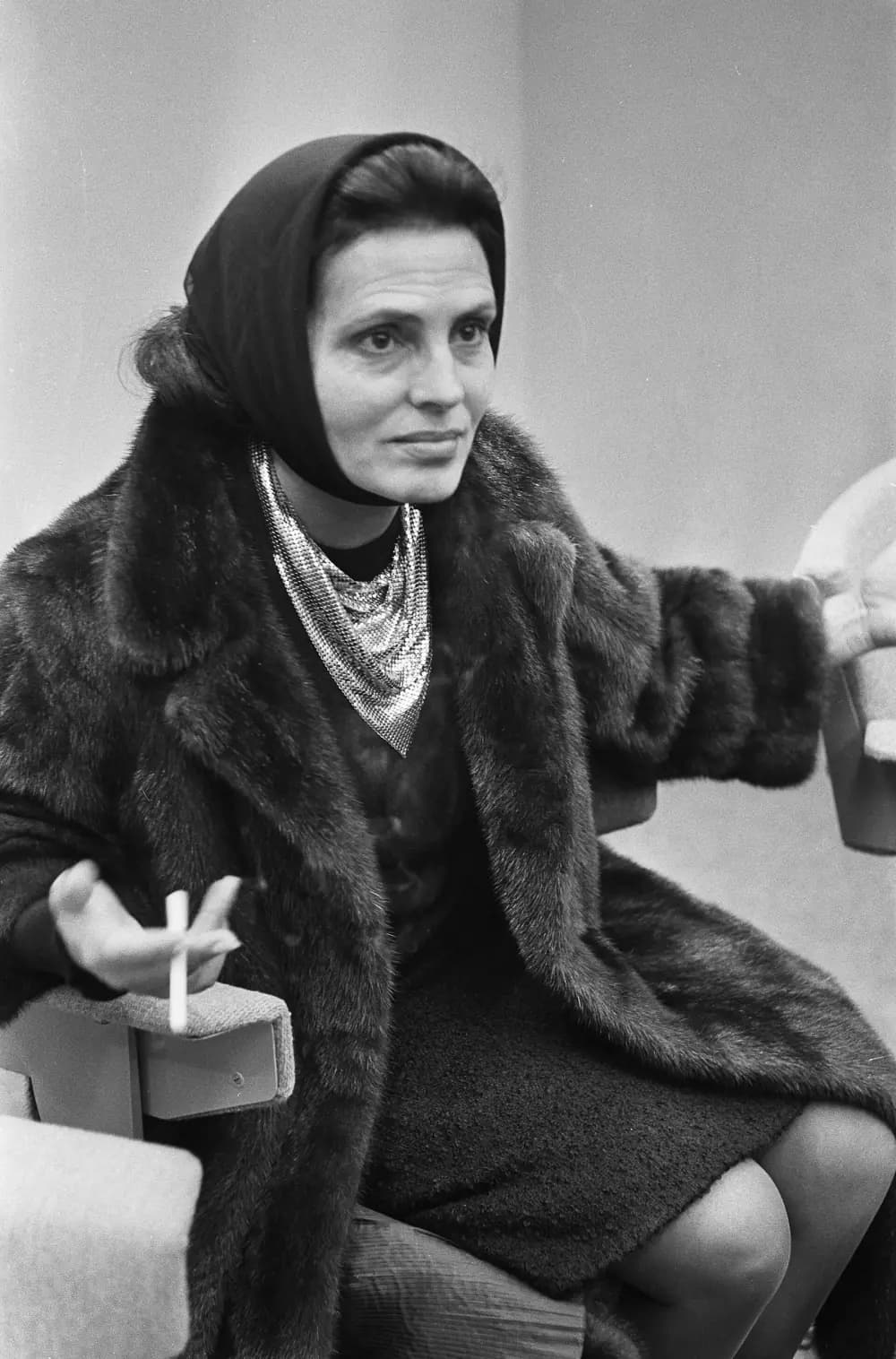
“Fado travels very badly. Nobody can listen for two hours to very heavy fados in a language they don't understand. After a while they all sound the same.”
So abroad she alternated light fados and serious ones with livelier songs and Spanish numbers, and once she had the audience, she said, she could sing whatever she wanted.
Alain Oulman and the poets
Most fado lyrics had been written by popular poets. Amália reached for literature early, recording Pedro Homem de Mello's “Fria Claridade” in the early 1950s and David Mourão-Ferreira's “Primavera” in 1953. The decisive step came with the composer Alain Oulman. The sources disagree on when they met: her foundation says they were working together in 1959, while the National Pantheon dates their meeting to 1961.
Their first album, released in 1962 and known as Busto or Asas Fechadas, opened with her voice and a piano, without the usual guitars. It set poems by Luís de Macedo, Pedro Homem de Mello (“Povo que Lavas no Rio”) and David Mourão-Ferreira (“Abandono”, “Maria Lisboa”), and her own “Estranha Forma de Vida”. The partnership lasted until 1975. Her guitarists had to learn harmonies that, she said, had nothing to do with fado.
In 1965 she recorded poems by Luís de Camões, the sixteenth-century national poet. On 23 October the Lisbon daily Diário Popular put the question on its front page and asked public figures whether a fado singer had any business singing Camões. Some approved; others were scathing.
“Camões, for me, is a great fado singer... There was a big controversy because I sang Camões. I thought it was stupid. However bad an artist may be, nobody can destroy a great poet by singing him.”
The poet Alexandre O'Neill wrote “Gaivota” for her in the mid-1960s. He once said, as she recalled it, that fado had been all curls until Oulman straightened it. In 1970 came Com que Voz, named after a Camões line, “with what voice shall I weep my sad fate”, with poems by Camões, Cecília Meireles, Manuel Alegre and Mourão-Ferreira. Her foundation calls it her masterpiece.
Singer of the regime?
Nuno Domingos, a researcher at the University of Lisbon's Institute of Social Sciences, argues that the Estado Novo did not pick fado as propaganda; Amália's popularity made fado useful to it. She played a part in the regime's cultural diplomacy, through its propaganda secretariat and its colonial agency, sang many times for the elite and admired Salazar. In a 1973 interview the writer Manuel da Fonseca and her agent, João Belchior Viegas, told her she was the only good thing the regime could show the world.
Some episodes fixed that image. In 1958, weeks after a presidential election rigged against the opposition candidate Humberto Delgado, the opposition asked for public shows to be cancelled. Pressed by both sides, she appeared, escorted by the PIDE, at a show in the Alvalade stadium for the anniversary of Sporting, the Lisbon football club, which turned into a rally for the regime.
In 1966, days before the new bridge over the Tagus opened, she wrote Salazar a letter that, in Miguel Carvalho's words, melts with patriotic pride and praise for him. She sang for soldiers in the colonial wars and took part in a 1971 record for the Movimento Nacional Feminino, a women's group that supported the troops.
After 25 April 1974 the bill came due. Fado was out of fashion and politically suspect: the Grande Noite do Fado contest stopped for two years and fado was heard far less on radio and television. Amália stayed in Portugal and was called a fascist, “the princess of the PIDE”, and insulted at concerts. Oulman organised a letter in her defence, arguing that she had been a professional who accepted contracts like many others. Few signed it.
The other side came out after her death, mostly through Miguel Carvalho's research, which Visão published in 2019 and the academic journal Análise Social reviewed in 2020. According to Carvalho, she gave money, usually through close friends, to opposition groups involving the Portuguese Communist Party (PCP), banned under the dictatorship. They ranged from the youth wing of the Movement of Democratic Unity (MUD) to a committee supporting political prisoners.
Carvalho writes that she paid young communists' fares to Warsaw and passed money for prisoners through her hairdresser. The witnesses he gathered say she also tried to use her influence to free political prisoners, Oulman among them. Her own foundation now says she gave financial support to anti-fascists in secret.
Communist Party veterans confirmed the story to him, among them Domingos Abrantes, who called her help to the MUD youth wing “a thoroughly confirmed fact”. Domingos accepts the findings, while noting that the book does not reference its sources rigorously. A PIDE report of 1939 on a “Communist Organisation in Fado”, found by Carvalho, mentioned her name in passing.
César Seabra, her partner and later her husband, backed Delgado's campaign in 1958. In 1962 she recorded “Abandono”, also known as the “Fado de Peniche”, which was taken as a comment on the imprisonment of the communist leader Álvaro Cunhal in the political prison at Peniche fort. She always said she chose songs because she liked them.
“When it suited, I was a communist; when it didn't, I was a fascist.”
“If Miguel Carvalho's work absolves Amália of the stigma of collaboration, it does not replace her image as an accomplice of the regime.”
Rehabilitation was slow. Only on 19 April 1985 did she give her first solo concert in Portugal, at the Coliseu dos Recreios. In 1990, at a concert there for her 50 years on stage, President Mário Soares gave her the Grand Cross of the Order of Saint James of the Sword. The Estado Novo had made her a knight of the same order in 1958.
From Prazeres to the National Pantheon
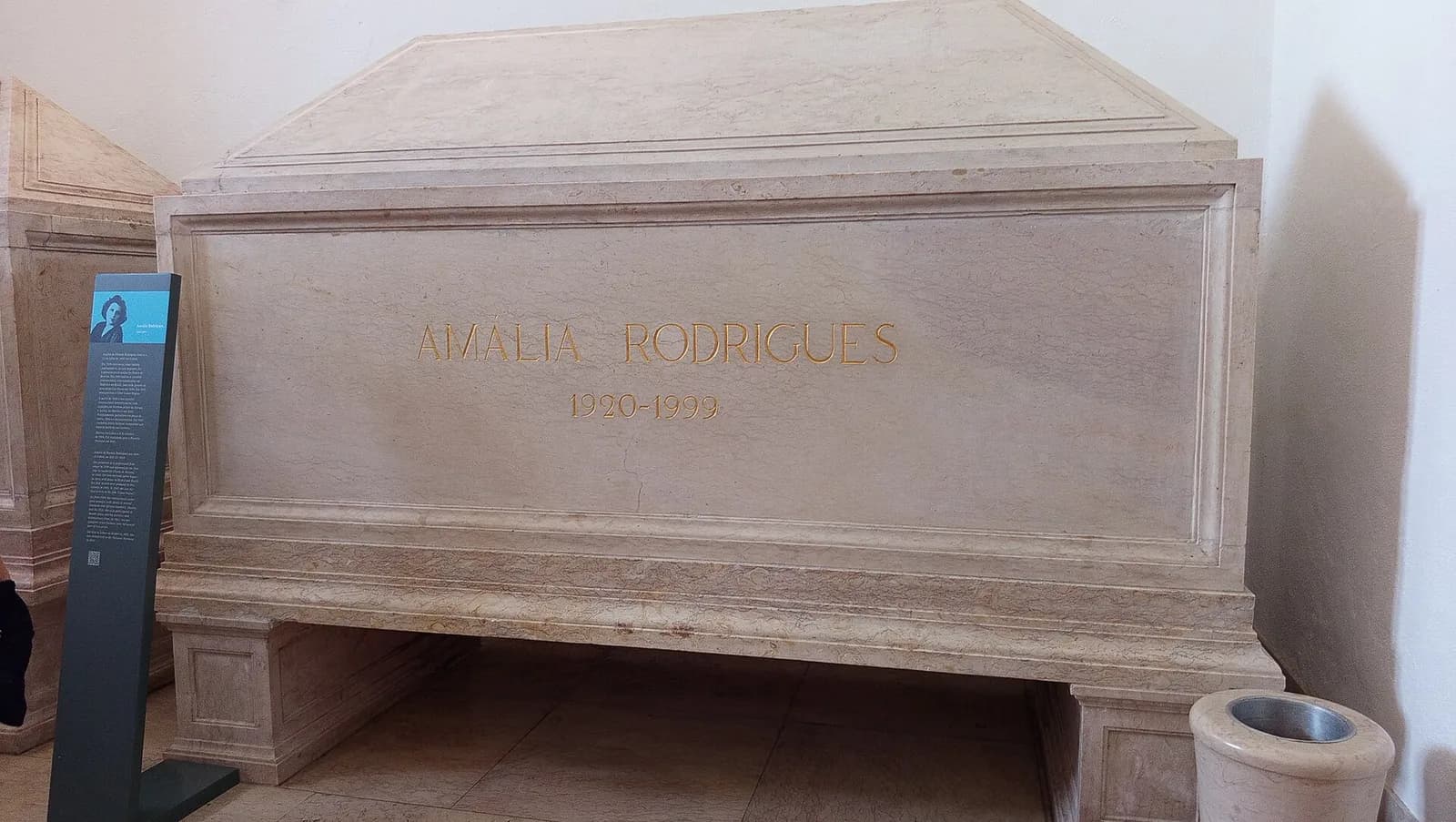
She was first buried at Prazeres. In December 1999 the Fundação Amália Rodrigues was set up under her will. On Sunday 8 July 2001 her remains were moved to the National Pantheon, the domed church of Santa Engrácia at Campo de Santa Clara. She was the first woman given that honour, and, as Domingos notes, it had never gone to a popular artist.
Santa Engrácia took so long to build that “obras de Santa Engrácia” is still Portuguese for a job that never ends. A law of 1916 made it the national pantheon, but its dome was finished only in the 1960s, and it opened in 1966. Since then the remains of only seven people have been brought there.
| Year | Person | Known as |
|---|---|---|
| 1990 | Humberto Delgado | General and opposition presidential candidate |
| 2001 | Amália Rodrigues | Fado singer |
| 2004 | Manuel de Arriaga | First president of the Republic |
| 2007 | Aquilino Ribeiro | Writer |
| 2014 | Sophia de Mello Breyner Andresen | Poet |
| 2015 | Eusébio da Silva Ferreira | Footballer |
| 2025 | Eça de Queiroz | Writer |
Six people were moved in at the opening in 1966, and six more are honoured with cenotaphs, tombs without remains. Since 2021 the Pantheon has also honoured people with plaques, starting with the diplomat Aristides de Sousa Mendes.
Why it still matters
The fashions she set lasted: the black dress and shawl, the singer standing in front of her guitarists, the habit of singing serious poetry. By the time UNESCO inscribed fado in 2011, a new generation of singers had made their names, among them Camané, Ana Moura, Carminho and Mariza, who built the biggest international career.
The argument about her politics has not quite closed. In 2019 a town in the south of Luxembourg, home to many Portuguese emigrants, dropped a plan to name a street after her, after objections that she had been complicit with the old regime.
FAQs
When and how did Amália Rodrigues die?
She died of a heart attack at her home in Rua de São Bento, Lisbon, on 6 October 1999, aged 79. The prime minister, António Guterres, declared three days of national mourning, and the parties suspended campaigning for the general election of 10 October.
Where is Amália Rodrigues buried?
She was buried at the Prazeres cemetery in Lisbon in October 1999. On 8 July 2001 her remains were moved to the National Pantheon in the church of Santa Engrácia, making her the first woman to receive that honour.
Why does Amália have two birthdays?
Her birth registration gives 23 July 1920, but she did not know her exact birthday and always celebrated on 1 July. Her grandmother told her she had been born in cherry time, and she kept both dates.
Did Amália Rodrigues support the Salazar dictatorship?
Both things are true in part. She sang for the regime's propaganda, admired Salazar and accepted its honours, and after 1974 she was attacked as a fascist. Research by the journalist Miguel Carvalho, published in 2019 and 2020 and backed by testimony from Communist Party veterans, found that she also secretly gave money to opposition groups linked to the Communist Party and to political prisoners.
Can you visit Amália Rodrigues's house?
Yes. Her house at Rua de São Bento 193 in Lisbon has been the Casa-Museu Amália Rodrigues since 23 July 2001, run by her foundation. It is open Tuesday to Sunday from 10:00 to 18:00.
On the timeline
Open the timelineNearby moments from portugal in europe (1986–today).
Expo '98 closes in Lisbon after 132 days and more than ten million visits. The world's fair left a lasting mark on the city: its once-derelict industrial riverside site became the Parque das Nações district, home to the Oceanário and Santiago Calatrava's Gare do Oriente.
The Swedish Academy announces that José Saramago has won the Nobel Prize in Literature, the first Portuguese-language writer to receive it, for work that 'with parables sustained by imagination, compassion and irony continually enables us once again to apprehend an elusory reality'.
The European Union fixes the irrevocable conversion rates for the euro, which launches the next day: one euro equals 200.482 Portuguese escudos. The escudo, created in 1911, carried on in notes and coins until euro cash arrived in 2002.
The death of Amália Rodrigues
António Guterres's Socialist Party wins the legislative election with exactly half the seats in parliament, 115 of 230, one short of an absolute majority, in a vote held days after the death of Amália Rodrigues had paused the campaign.
SATA Air Açores Flight 530M, a turboprop on the inter-island route from Ponta Delgada to Horta and Flores, flies into the slopes of Pico da Esperança on São Jorge in heavy rain and cloud, killing all 35 people on board. It remains the deadliest accident involving the BAe ATP and the worst in SATA's history.
At midnight, in a ceremony at the Macao Cultural Centre, Portugal hands Macau over to China, ending 442 years of Portuguese administration that began in 1557. Macau became a Special Administrative Region of China, promised its own way of life for 50 years under 'one country, two systems'.
Coming up in history
All long reads 8 October 1998José Saramago wins the Nobel Prize in Literature: 8 October 1998
 9 October 1261King Dinis, born in Lisbon on 9 October 1261: the poet who ruled 46 years
 10 October 1507Albuquerque at Hormuz: the treaty of 10 October 1507
 11 October 1810The Lines of Torres Vedras: where Masséna's march on Lisbon stopped, 1810
19 sources
Archives, scholarship and reporting this article was checked against.
- 1
Uma estranha forma de vida (chronology of Amália Rodrigues, 1920–2011)Fundação Amália Rodrigues
- 2
Amália Rodrigues (biography)Museu do Fado, Lisbon (EGEAC)
- 3
Amália Rodrigues e o século XX portuguêsNuno Domingos, Análise Social 237 (2020), pp. 886–897, Instituto de Ciências Sociais da Universidade de Lisboa
- 4
Miguel Carvalho: “A democracia demorou a perceber que não podia deitar Amália para o caixote do lixo do fascismo”24notícias (SAPO), 2020
- 5
Há 20 anos, morte de Amália parou os partidosTVI Notícias, 4 October 2019
- 6
História do Panteão NacionalPanteão Nacional, Museus e Monumentos de Portugal
- 7
Fado, urban popular song of Portugal (Representative List, decision 6.COM 13.39, 2011)UNESCO Intangible Cultural Heritage
- 8
Rodrigues, AmáliaContemporary Musicians (Gale), via Encyclopedia.com
- 9
- 10
- 11
O Estado Novo (1933-1974)Assembleia da República
- 12
- 13
Uma estranha forma de vida na Torre do Tombo: centenário do nascimento de Amália RodriguesArquivo Nacional Torre do Tombo, 2020
- 14
Amália (temporary exhibition)RTP Virtual Museum
- 15
- 16Coimbra: História de uma Canção (documentary, 2021)RTP Play
- 17
- 18
- 19
Panteão NacionalMuseus e Monumentos de Portugal
Image credits
- Amália Rodrigues on stage at the Grand Gala du Disque Populaire in the Netherlands on 7 March 1969, with her guitarists behind her. Rob Mieremet (ANEFO), CC0, via Wikimedia Commons.
- The plaque at number 86 Rua de Martim Vaz, in Lisbon's old parish of Pena: “In the courtyard of this house Amália Rodrigues was born.” Photographed in 2022. Acediscovery, CC BY 4.0, via Wikimedia Commons.
- Amália Rodrigues at Schiphol airport, Amsterdam, on 8 October 1964. Harry Pot for Anefo, CC0, via Wikimedia Commons.
- Amália Rodrigues's tomb in the National Pantheon, Lisbon, photographed in 2025. DavidFerreira20048, CC BY-SA 4.0, via Wikimedia Commons.
- The Casa-Museu Amália Rodrigues in Rua de São Bento, Lisbon, where she lived from 1955 until her death. Photographed in 2022. Acediscovery, CC BY 4.0, via Wikimedia Commons.