

1986–today
Portugal in Europe
Portugal joined what is now the European Union on 1 January 1986 and the euro area on 1 January 1999. Expo 98, on the theme of the oceans, drew about 11 million visitors in 132 days and regenerated 340 hectares of eastern Lisbon. In 2011 Portugal needed a €78 billion rescue from the EU, euro area countries and the IMF, under a programme that ran until mid-2014.
11 key moments · 106 in all
Portugal and Spain join the European Economic Community (today's European Union) — a historic turning point for a country that had shed its dictatorship and its African empire barely a decade earlier.
Mário Soares beats Diogo Freitas do Amaral in the presidential run-off by barely two points, becoming Portugal's first civilian head of state in six decades. The founder of the Socialist Party would serve two terms, until 1996.
José 'Zeca' Afonso dies in Setúbal of amyotrophic lateral sclerosis, aged 57. The singer-songwriter's 'Grândola, Vila Morena', broadcast on the radio as a signal to the rebel troops on 25 April 1974, made him the voice of the Carnation Revolution.
Prime Minister Cavaco Silva and Premier Zhao Ziyang sign the Sino-Portuguese Joint Declaration in Beijing, agreeing that Macau is Chinese territory under Portuguese administration and that sovereignty would pass to China on 20 December 1999, under the 'one country, two systems' principle.
FC Porto win the European Cup, coming from behind to beat Bayern Munich 2–1 at Vienna's Praterstadion with Rabah Madjer's famous back-heel and a Juary volley — the first European Cup for a Portuguese club since Benfica's in 1962.
Death of Fernando Van Zeller Guedes, the Porto wine-maker behind Mateus Rosé. Launched in 1942 by the company that became Sogrape, the lightly sparkling pink wine in its flask-shaped bottle — with the baroque Mateus Palace near Vila Real on the label — became one of the world's best-selling wines, shifting millions of cases a year at its peak.
Admiral Américo Tomás, the last President of the Estado Novo regime, who was deposed in the Carnation Revolution of 1974, dies aged 92.
TSF goes on air in Lisbon at 7am as Portugal's first all-news radio station. Private stations were not yet licensed, so it broadcast as a pirate for seven months; its live coverage of the Chiado fire that August made its name.
Rosa Mota wins the Boston Marathon for the second year running; she would take it a third time in 1990. Five months later the runner from Porto added Olympic gold in Seoul, becoming the first Portuguese woman to win an Olympic title.
A devastating fire sweeps through the Chiado, Lisbon's historic shopping district, destroying eighteen buildings including the Grandella and Chiado department stores. It was the worst disaster in central Lisbon since the 1755 earthquake, and the quarter was later rebuilt under architect Álvaro Siza Vieira.
Singer-songwriter Carlos Paião, a qualified doctor who represented Portugal at Eurovision in 1981 with the playful 'Play-back', dies in a road accident on the old Lisbon–Porto road near Rio Maior, aged just 30.
Rosa Mota wins the Olympic marathon in Seoul by thirteen seconds, becoming the first Portuguese woman to win an Olympic gold medal.
Salvador Sobral is born in Lisbon. In 2017 his gentle ballad 'Amar pelos dois', written by his sister Luísa, won the Eurovision Song Contest in Kyiv with a record 758 points. It was Portugal's first win since its 1964 debut, ending the longest losing run in the contest's history. Months later he underwent a heart transplant.
President Mário Soares is re-elected for a second term as President of Portugal.
Angolan President José Eduardo dos Santos and UNITA leader Jonas Savimbi sign the Bicesse Accords in Portugal, mediated by the Portuguese government with US and Soviet observers. The deal briefly halts Angola's civil war and paves the way for multi-party elections in 1992.
Portugal wins the FIFA World Youth Championship (under-20) on home soil at the Estádio da Luz in Lisbon, defeating Brazil on penalties. Back-to-back champions after their 1989 win in Saudi Arabia, the 'Golden Generation' of João Pinto, Rui Costa and Luís Figo heralds a new era of Portuguese football.
Indonesian troops open fire on a peaceful procession of more than 2,000 people at the Santa Cruz cemetery in Dili, East Timor, killing scores of young Timorese. Footage smuggled out by the British cameraman Max Stahl was shown around the world and revived the cause of independence for Portugal's former colony.
A month into Portugal's first presidency of the European Community, foreign minister João de Deus Pinheiro and finance minister Jorge Braga de Macedo sign the Maastricht Treaty for Portugal. The treaty created the European Union and set the course for the euro, which Portugal adopted in 1999.
Death of Captain Fernando José Salgueiro Maia, the iconic military hero of the Carnation Revolution. On April 25, 1974, he led the armoured columns from Santarém to Lisbon and surrounded the Carmo Barracks, becoming the face of the revolution. He died of cancer at age 47.
Martinair Flight 495, a DC-10 carrying 340 people, mostly Dutch holidaymakers from Amsterdam, flies through wind shear in a thunderstorm on its approach to Faro Airport and lands so hard that the fuselage splits in two and catches fire. Fifty-six people are killed and 106 badly injured.
The composer Fernando Lopes-Graça dies in Parede, aged 87. A lifelong opponent of the Estado Novo, he was arrested by the political police on the very day in 1931 he came top in the exams for a teaching post at the National Conservatory, later saw a Paris scholarship annulled on police orders, and built much of his music on Portuguese folk song.
Miguel Torga, pen name of the Coimbra doctor Adolfo Correia da Rocha, dies aged 87. The fiercely independent author of 'Bichos' and of a 16-volume 'Diário' was the first winner of the Camões Prize, in 1989, and lies in a simple grave in his native village of São Martinho de Anta, in Trás-os-Montes.
The Schengen Convention takes effect for Portugal and six other countries — Spain, France, Germany and the Benelux states — lifting routine passport checks at their shared borders, including Portugal's long frontier with Spain.
The Socialist Party under António Guterres wins the legislative election with 43.8 per cent of the vote, ending ten years of Social Democrat government under Aníbal Cavaco Silva, though falling short of an absolute majority.
Death of Mário Viegas, one of Portugal's greatest actors and poetry reciters. He founded three theatre companies and was celebrated for his recordings of Fernando Pessoa and other major Portuguese poets. A Lisbon theatre is named after him.
Marshal António de Spínola, the first President of the Republic after the Carnation Revolution of 25 April 1974, dies in Lisbon aged 86.
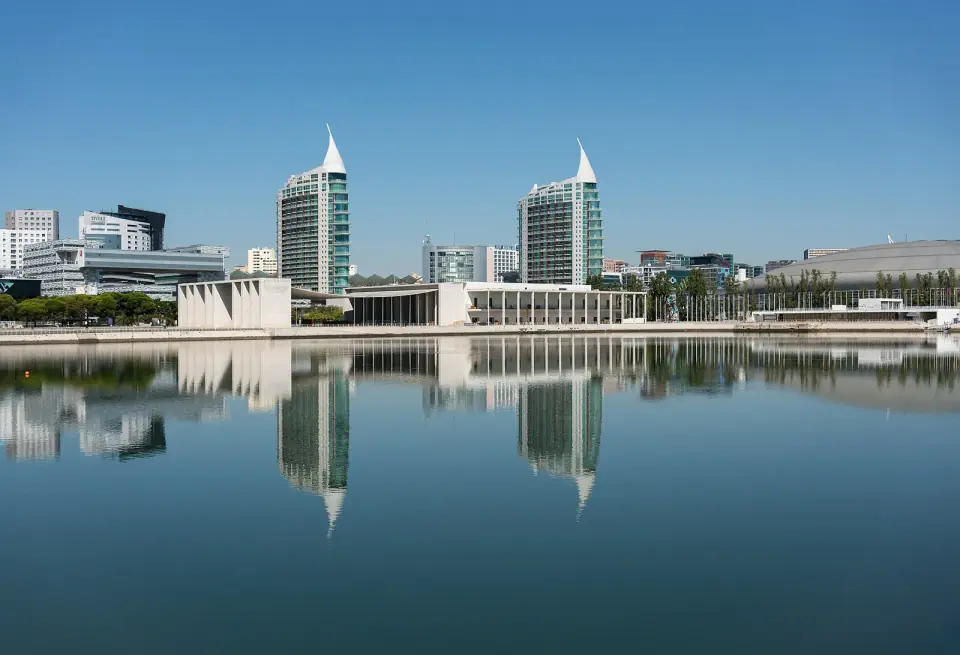
Expo '98 opens in Lisbon on the theme 'The Oceans, a Heritage for the Future,' celebrating the 500th anniversary of Vasco da Gama's voyage. The exposition transforms the eastern waterfront into the modern Parque das Nações neighbourhood.
Portuguese voters narrowly reject the decriminalisation of abortion in the country's first national referendum since the 1933 Estado Novo constitution. With turnout below the 50% threshold, the result is constitutionally non-binding, but the political debate it opens shapes a decade of family-law reform leading to the 2007 referendum that finally liberalises the law.
Expo '98 closes in Lisbon after 132 days and more than ten million visits. The world's fair left a lasting mark on the city: its once-derelict industrial riverside site became the Parque das Nações district, home to the Oceanário and Santiago Calatrava's Gare do Oriente.
The Swedish Academy announces that José Saramago has won the Nobel Prize in Literature, the first Portuguese-language writer to receive it, for work that 'with parables sustained by imagination, compassion and irony continually enables us once again to apprehend an elusory reality'.
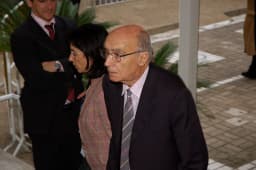 Long readJosé Saramago wins the Nobel Prize in Literature: 8 October 1998
The European Union fixes the irrevocable conversion rates for the euro, which launches the next day: one euro equals 200.482 Portuguese escudos. The escudo, created in 1911, carried on in notes and coins until euro cash arrived in 2002.
Amália Rodrigues, the queen of fado, dies at her home in Lisbon's Rua de São Bento aged 79. The government declares three days of national mourning, the parties suspend campaigning for the general election four days later, and in 2001 she becomes the first woman laid in the National Pantheon.
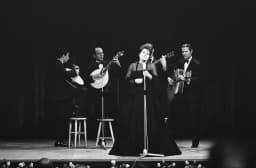 Long readAmália Rodrigues, the voice of fado, dies in Lisbon: 6 October 1999
António Guterres's Socialist Party wins the legislative election with exactly half the seats in parliament, 115 of 230, one short of an absolute majority, in a vote held days after the death of Amália Rodrigues had paused the campaign.
SATA Air Açores Flight 530M, a turboprop on the inter-island route from Ponta Delgada to Horta and Flores, flies into the slopes of Pico da Esperança on São Jorge in heavy rain and cloud, killing all 35 people on board. It remains the deadliest accident involving the BAe ATP and the worst in SATA's history.
At midnight, in a ceremony at the Macao Cultural Centre, Portugal hands Macau over to China, ending 442 years of Portuguese administration that began in 1557. Macau became a Special Administrative Region of China, promised its own way of life for 50 years under 'one country, two systems'.
Death in Lisbon of José Águas, aged 70. Born in Luanda and spotted in Lobito, he became Benfica's prolific centre-forward and captain, scoring 290 league goals and opening the scoring in both European Cup finals of 1961 and 1962 — lifting the trophy each time, just before Eusébio's era began.
Death of Marshal Francisco da Costa Gomes in Lisbon, aged 87. Career soldier, Chief of Staff of the Armed Forces and President of the Portuguese Republic from 1974 to 1976, he was — alongside António de Spínola — the senior military figure of the Carnation Revolution and the man who guided Portugal through the most turbulent phase of decolonisation and the transition to democracy.
UNESCO inscribes the Alto Douro Wine Region on its World Heritage List as an 'evolving, living cultural landscape'. Its steep schist terraces, carved by hand over centuries along the Douro and its tributaries, produce port wine in what in 1756 became the world's first officially demarcated wine region.
Portugal's banks and shops open for the first full business day of the euro. Notes and coins had gone into circulation at midnight on New Year's Day, and the escudo, the currency of the Republic since 1911, was withdrawn from use at the end of February.
The floodgates of the Alqueva dam on the Guadiana are closed, and the reservoir begins to fill. Covering some 250 square kilometres when full, it became the largest artificial lake in Western Europe, bringing irrigation, olive groves and vineyards to the parched Alentejo and drowning the old village of Luz, rebuilt nearby.
Death of José Travassos, one of Sporting's 'Cinco Violinos' (Five Violins), the forward line that ruled Portuguese football in the 1940s. Nicknamed 'Zé da Europa', in 1955 he became the first Portuguese player picked for a Rest of Europe XI, against Great Britain.
Portuguese legislative elections are held, won by the PSD under José Manuel Durão Barroso, who would later become President of the European Commission (2004–2014).
Portugal crash out of the World Cup in Incheon, beaten 1–0 by co-hosts South Korea after finishing with nine men. Striker João Pinto, sent off for a lunge on Park Ji-sung, punches the Argentine referee Ángel Sánchez in the stomach and is banned by FIFA for four months — an inglorious end for the 'Golden Generation' at its first World Cup.
The first line of the Metro do Porto, running from Senhor de Matosinhos to Trindade, is inaugurated by Prime Minister Durão Barroso. Part metro, part street-running tram, the light-rail network has since grown to six lines and some 85 stations.
José Mourinho's FC Porto win the UEFA Cup, beating Celtic 3–2 in Seville with a silver-goal winner from Derlei late in extra time. It is the club's first European final win since the 1987 European Cup and launches Mourinho's rise to global fame.
FC Porto inaugurate the Estádio do Dragão, built for Euro 2004, with a 2–0 friendly win over Barcelona. Coming on as a second-half substitute for the visitors was a 16-year-old Lionel Messi, making his first appearance for Barcelona's first team.
Lisbon's Yellow Line is extended north from Campo Grande to Odivelas, opening five stations — Quinta das Conchas, Lumiar, Ameixoeira, Senhor Roubado and Odivelas — and giving the fast-growing northern suburbs a direct Metro link to the city centre.
António de Sousa Franco, former finance minister and the Socialist Party's lead candidate for the European elections, dies of a heart attack in Matosinhos after a fraught campaign visit to the town's fish market, four days before the vote. Campaigning is suspended nationwide.
Death of Sophia de Mello Breyner Andresen in Lisbon, aged 84. The poet — first woman to receive the Camões Prize, in 1999 — was a luminous voice of 20th-century Portuguese literature, drawing on classical Greece, the sea and a deep ethical commitment to justice. Her remains are now interred in the National Pantheon.
Sprinter Francis Obikwelu wins the silver medal in the 100 metres at the Athens Olympic Games in 9.86 seconds, a European record and Portugal's first Olympic sprint medal.
Death in Matosinhos of Fernando Távora, the architect and teacher at the heart of the 'Porto School'. Álvaro Siza trained in his studio, and works such as his conversion of Guimarães's medieval Santa Marinha convent into a pousada (state-run historic hotel) showed how modern architecture could grow out of Portuguese tradition.
Aníbal Cavaco Silva, prime minister from 1985 to 1995, is elected President of the Republic in the first round with just over 50 per cent of the vote, becoming the first head of state since 1974 to come from the centre-right PSD.
A rare cold snap brings snow to Lisbon on 29 January — the city's first significant snowfall since February 1954 — dusting rooftops across the capital and blanketing much of central and northern Portugal.
In Portugal's second referendum on abortion, 59.2 per cent of voters back decriminalising terminations up to ten weeks of pregnancy. Turnout of 43.6 per cent left the result non-binding, but the Sócrates government legislated anyway, and the new law was ratified that April.
European leaders sign the Treaty of Lisbon in the Jerónimos Monastery at Belém, at the close of Portugal's presidency of the EU. Rescuing most of the failed European Constitution, it created a permanent President of the European Council and a stronger EU foreign-policy chief, and entered into force on 1 December 2009.
Cristiano Ronaldo is named FIFA World Player of the Year in Zurich after winning the Premier League and the Champions League with Manchester United — the first Portuguese winner since Luís Figo in 2001.
Sculptor Lagoa Henriques dies in Lisbon. His best-known work is the bronze Fernando Pessoa seated at a café table outside A Brasileira in the Chiado, unveiled in 1988 for the poet's centenary — the empty chair beside him has made it a favourite photo stop for visitors.
Raul Solnado, one of Portugal's most beloved comedians and actors and a defining figure of Lisbon's Parque Mayer theatre scene, dies in Lisbon aged 79.
Torrential rain unleashes flash floods and mudslides on Madeira, sending torrents of water, boulders and mud through Funchal and other towns. Funchal recorded 108 mm of rain in five hours, more than a normal February's total; 51 people were killed or left missing and around 600 lost their homes.
Pope Benedict XVI arrives in Lisbon for a four-day visit to Portugal, celebrating an open-air Mass on the Terreiro do Paço before travelling on to Fátima for the anniversary of the apparitions and ending his trip in Porto.
President Aníbal Cavaco Silva signs the law opening civil marriage to same-sex couples, making Portugal the sixth country in Europe and the eighth in the world to do so. On 7 June, Teresa Pires and Helena Paixão, whose 2006 court challenge began the fight, become the first same-sex couple to marry in Portugal, at a Lisbon registry office.
Death of José Saramago in Tías, Lanzarote, at the age of 87. The novelist, winner of the 1998 Nobel Prize in Literature — the only Portuguese-language writer ever to receive the award — was author of 'Memorial do Convento', 'O Evangelho Segundo Jesus Cristo' and 'Ensaio sobre a Cegueira'. His ashes are later buried beneath an olive tree outside the Casa dos Bicos, his Lisbon foundation.
Portugal thrash North Korea 7–0 in Cape Town at the World Cup in South Africa — the country's biggest-ever win at the tournament. The rout is a sweet echo of 1966, when Eusébio's four goals had hauled Portugal back from 3–0 down to beat the same opponents 5–3 in the quarter-finals in Liverpool.
Death in Lisbon of Matilde Rosa Araújo, aged 89, the teacher and writer who did more than anyone to give Portugal a modern literature for children. Winner of the Gulbenkian Foundation's Grande Prémio de Literatura para Crianças in 1980, she has a lusophone children's-book prize named after her.
José Mourinho is named the first FIFA World Coach of the Year at a gala in Zurich, after leading Inter Milan to a historic treble of Serie A, the Coppa Italia and the Champions League.
The 'Geração à Rasca' ('Struggling Generation') protest, organised on Facebook without parties or unions, brings more than 200,000 people onto the streets of Lisbon, Porto and other cities against job insecurity and austerity — the largest demonstrations in Portugal since the Carnation Revolution.
Prime Minister José Sócrates resigns after the Portuguese parliament rejects his government's fourth austerity package, triggering early elections and leading directly to Portugal's request for an international bailout from the EU and IMF.
FC Porto beat Sporting de Braga 1–0 in Dublin to win the Europa League, with Radamel Falcao heading the only goal. It is the first all-Portuguese final in UEFA competition history, between clubs barely 50 km apart.
The American surfer Garrett McNamara rides a wave of about 23.8 metres (78 feet) off Praia do Norte in Nazaré, a Guinness world record that put the fishing town's giant winter swells, funnelled by the Nazaré Canyon, on the global surfing map.
Fado is inscribed on UNESCO's Representative List of the Intangible Cultural Heritage of Humanity at a meeting in Bali. On the same date three years later, in 2014, the polyphonic cante alentejano of the Alentejo's choirs was added to the list too.
Guimarães, hailed as the 'cradle of the nation', opens its year as European Capital of Culture with a night of street spectacle in its medieval centre. Twelve months of concerts, exhibitions and new venues aimed to recast the old textile city as a cultural destination.
Soldiers seize power in Guinea-Bissau between the two rounds of a presidential election, arresting interim president Raimundo Pereira and front-runner Carlos Gomes Júnior. Portugal's former colony had never seen an elected president finish a full term, and the coup was condemned by Portugal and the Community of Portuguese Language Countries.
Death of José Hermano Saraiva, aged 92, the historian who became Portugal's best-loved television storyteller. A former Estado Novo education minister, he reinvented himself after 1974 with decades of RTP programmes such as 'Horizontes da Memória', strolling through towns and ruins and bringing the nation's past to life with theatrical gestures and an unmistakable voice.
Eusébio, the 'Black Panther', dies in Lisbon aged 71. Top scorer at the 1966 World Cup with nine goals as Portugal finished third, he won eleven league titles and five Portuguese cups in 15 seasons at Benfica and is revered as one of the greatest footballers of all time.
Lisbon's Estádio da Luz hosts the first Champions League final between two clubs from the same city. Real Madrid equalise in stoppage time through Sergio Ramos and beat Atlético Madrid 4–1 after extra time to claim their long-awaited tenth European Cup.
Former prime minister José Sócrates is detained at Lisbon airport on arrival from Paris in the 'Operação Marquês' corruption investigation, the first former prime minister of the democratic era to be arrested. He spent some nine months in preventive detention in Évora prison and has always denied wrongdoing.
Death of Manoel de Oliveira in Porto at age 106. He was the world's oldest active film director, with a career running from the silent short 'Douro, Faina Fluvial' in 1931 to 'O Velho do Restelo' in 2014, and a celebrated figure at Cannes, Venice and other international festivals.
Death of José Mariano Gago, the particle physicist who founded Lisbon's LIP laboratory and, as science minister in the 1990s and 2000s, launched the Ciência Viva programme and drove a rapid expansion of Portuguese research. Days later, labs and universities across the country stopped work for five minutes in his honour.
António Costa's Socialist minority government is sworn in, backed in parliament by the Left Bloc, the Communists and the Greens after the right-wing coalition that won the most seats was voted down. Nicknamed the 'geringonça' (contraption), the arrangement was the first of its kind since the revolution and lasted the full four-year term.
Law professor and long-time television commentator Marcelo Rebelo de Sousa is elected President of the Republic in the first round with 52 per cent of the vote. His informal style — selfies, sea swims and constant walkabouts — made him one of Portugal's most popular presidents.
Death of Francisco Nicholson, aged 77. Actor, revue writer and lyricist, he co-created and co-wrote 'Vila Faia' (1982), the first Portuguese telenovela, at a time when Brazilian soaps ruled the country's screens; he also co-wrote 'Oração', winner of the first Festival RTP da Canção in 1964.
Cristiano Ronaldo scores twice in a breathless 3–3 draw with Hungary in Lyon, becoming the first player to score at four European Championships. The result lets Portugal scrape into the Euro 2016 knockout rounds as one of the best third-placed teams without winning a group game — the unlikely start of a run that would end with the country's first major trophy.
Portugal win the UEFA European Championship final 1–0 against France at the Stade de France in Saint-Denis, with an extra-time strike by Éder. After Cristiano Ronaldo limps off injured early in the match, the team holds firm to claim Portugal's first major senior international title.
The United Nations General Assembly appoints António Guterres, former Portuguese Prime Minister and UN High Commissioner for Refugees, as Secretary-General by acclamation, following the Security Council's recommendation a week earlier. He took office on 1 January 2017.
Mário Soares dies in Lisbon aged 92. Jailed and deported under the dictatorship, he co-founded the Socialist Party, was prime minister in 1976–78 and 1983–85, signed Portugal's EEC accession treaty and served two terms as president. Hailed as the father of Portuguese democracy, he was given the first state funeral since 1951.
On the worst day of fires in Portugal's recorded history, hundreds of blazes fanned by winds drawn north by Hurricane Ophelia sweep the centre and north of the country. Between 48 and 51 people are killed, some 1,500 homes are destroyed or damaged, and the fires that began at Lousã and Arganil become the largest Portugal had then recorded.
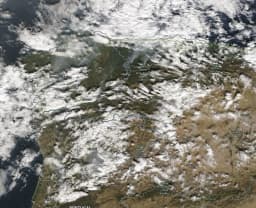 Long read15 October 2017: the day Ophelia's winds set central Portugal alight
Singer Madalena Iglésias dies in Barcelona aged 78. One of the great voices of 1960s Portuguese light song, she won the 1966 RTP Song Festival with the surf-tinged 'Ele e Ela' and represented Portugal at that year's Eurovision, before giving up the stage when she married in 1972.
Edmundo Pedro dies in Lisbon aged 99. First arrested as a teenager for helping organise a strike, he was sent with his father to the Tarrafal prison camp in Cape Verde, where he spent ten years as its youngest political prisoner; he later joined the 1962 Beja revolt and, after 1974, sat in parliament for the Socialist Party.
Cristiano Ronaldo scores a hat-trick in a 3–3 draw with Spain in Sochi, completing it with an 88th-minute free kick curled into the top corner. At 33 he becomes the oldest player to score a World Cup hat-trick and the first to score at eight consecutive major tournaments.
At a ceremony in Lisbon closing his Diamond Jubilee year, the Aga Khan formally designates the Henrique de Mendonça Palace on Rua Marquês de Fronteira as the Seat of the Ismaili Imamat, making the city the global headquarters of the Shia Ismaili Muslim community. Tens of thousands of Ismailis from around the world gather in Lisbon for the celebrations.
Death in Lisbon of Odette Ferreira, aged 93, the microbiologist who helped identify HIV-2. In 1985 she flew to the Pasteur Institute in Paris with patients' blood samples hidden in her coat to keep them warm, and as head of the national AIDS programme she launched the pharmacy needle exchange 'Diz Não a Uma Seringa em Segunda Mão' ('Say no to a second-hand syringe').
 Long readOdette Ferreira, HIV-2 and the blood sample carried in a coat
Death of Agustina Bessa-Luís in Porto, aged 96. Her 1954 novel 'A Sibila' made her one of the great voices of 20th-century Portuguese fiction; she went on to win the Camões Prize in 2004, and her long creative partnership with the director Manoel de Oliveira produced films such as 'Francisca' and 'Vale Abraão'.
Death from Covid-19 of Maria de Sousa, aged 80, one of Portugal's most distinguished scientists. Working in London in the 1960s she showed where T lymphocytes settle in the lymph nodes and coined the term 'ecotaxis'; back in Porto she built a leading research team and a pioneering graduate programme in biology.
Portugal and the Portuguese-speaking world celebrate the first World Portuguese Language Day, proclaimed by UNESCO the previous November. Spoken by more than 260 million people across four continents, Portuguese is among the most widely spoken languages on Earth; with the pandemic raging, the celebrations move largely online.
Sculptor João Cutileiro dies in Lisbon aged 83. He scandalised traditionalists with his boyish, unheroic statue of King Sebastião in Lagos, and later with his marble monument to the 25 April revolution at the top of Lisbon's Parque Eduardo VII, still one of the city's most argued-over landmarks.
Porto's Estádio do Dragão hosts the Champions League final, moved from Istanbul because of Covid-19 travel restrictions. Chelsea beat Manchester City 1–0 with a goal from Kai Havertz to win the trophy for the second time.
António Costa's Socialist Party wins an unexpected absolute majority in a snap legislative election — only the second in its history — called after his minority government's budget was voted down by its former left-wing allies.
Eunice Muñoz, the grande dame of Portuguese theatre, dies aged 93. Born into a family of travelling players, she made her debut at the Teatro Nacional D. Maria II at 13 and worked on stage, film and television for some 80 years, still performing in her nineties.
Death of Paula Rego in London, aged 87. Born in Lisbon in 1935 and settled in England, she became one of the great figurative painters of her time; her 'Abortion' series, painted after Portugal's 1998 referendum failed to liberalise the law, is credited with helping to shift opinion before the 2007 vote. The Casa das Histórias in Cascais is dedicated to her work.
Adriano Moreira dies aged 100, the longest-lived politician of Portuguese democracy. Briefly jailed in 1947 as a lawyer in the case of a general who died in prison, he later served Salazar as Overseas Minister in 1961–62, abolishing the 'indigenato' statute that had denied most Africans in the colonies citizenship, and after the revolution led the CDS.
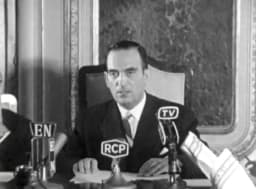 Long readAdriano Moreira (1922–2022): Salazar’s reformer in democracy’s parliament
Death in Lisbon of António Mega Ferreira, aged 73. A journalist, writer and translator, he led Lisbon's bid for the 1998 World Exposition and served as executive commissioner of Expo '98, the project that turned an industrial wasteland into today's Parque das Nações; he later ran the Centro Cultural de Belém.
Portuguese legislative elections are held, with the Aliança Democrática coalition led by Luís Montenegro winning the most seats, ending eight years of governance by the Socialist Party.
Death in Lisbon of the poet Adília Lopes, aged 64. Writing in a deceptively simple voice about cats, nuns, desire and her own schizoaffective illness, she became a cult figure, and her collected poems, 'Dobra', went through several expanded editions.
Death of Eduardo Gageiro in Lisbon, aged 90. The Sacavém-born photojournalist, who had a photograph on the front page of the 'Diário de Notícias' at 12, documented Portuguese life from the Estado Novo to democracy — and his images of the 25 April 1974 revolution became part of the country's visual memory.
Liverpool and Portugal forward Diogo Jota, 28, and his brother André Silva, a footballer with Penafiel, are killed when their car leaves the road and catches fire near Zamora in Spain. Jota had married Rute Cardoso, the mother of his three children, just eleven days earlier; Liverpool later retire his number 20 shirt.
Francisco Pinto Balsemão dies at Cascais aged 88. A member of the Estado Novo's reformist 'liberal wing', he founded the weekly 'Expresso' in 1973, co-founded the PSD after the revolution, served as Prime Minister from 1981 to 1983 and launched SIC, Portugal's first private television channel, in 1992.
Back to the full timeline of Portugal, with key moments, search and long reads.