

1974–1986
Revolution and democracy
On 25 April 1974 a coup by the Armed Forces Movement (MFA) ended the Estado Novo, opened the way to ending the colonial war and brought crowds onto Lisbon's streets to celebrate. A year later, on 25 April 1975, 91% of registered voters took part in the first truly universal elections in Portugal's history. The assembly they elected approved a new Constitution on 2 April 1976.
7 key moments · 58 in all
The Carnation Revolution (Revolução dos Cravos): The Armed Forces Movement overthrows the Estado Novo dictatorship in an almost bloodless coup. 'Grândola, Vila Morena' by José Afonso plays on radio as the signal; tanks roll into Lisbon; Prime Minister Marcelo Caetano surrenders at the Carmo Barracks. It ends 48 years of authoritarian rule and is celebrated annually as Freedom Day.
Three days after the Carnation Revolution, Socialist Party leader Mário Soares returns from exile in Paris to a jubilant reception in Lisbon, marking the beginning of a new democratic era for Portugal.
Five days after the Carnation Revolution, Communist Party leader Álvaro Cunhal flies home from exile in Paris to a huge crowd at Lisbon's Portela airport and goes straight to meet General Spínola. He had spent some 15 years in the regime's prisons, eight of them in solitary confinement, before a daring escape from Peniche fortress in 1960.
Just six days after the Carnation Revolution, Portugal celebrates its first free May Day in nearly half a century. Hundreds of thousands pour into Lisbon's streets, where the Socialist Mário Soares and the Communist Álvaro Cunhal, both just back from exile, march arm in arm — for the first and last time.
Eleven days after the Carnation Revolution, Francisco Sá Carneiro, Francisco Pinto Balsemão and Joaquim Magalhães Mota found the Partido Popular Democrático. Renamed the Social Democratic Party (PSD) in 1976, it became one of the two great parties of Portuguese democracy, producing prime ministers from Sá Carneiro to Cavaco Silva.
General António de Spínola is sworn in as President of the Republic in Lisbon, three weeks after the Carnation Revolution; the First Provisional Government under Adelino da Palma Carlos takes office the following day.
Less than three months after the Carnation Revolution, Vasco Gonçalves is sworn in by President António de Spínola as Prime Minister of the Second Provisional Government, replacing the conservative Adelino da Palma Carlos, whose first provisional cabinet had resigned earlier in the month. The shift to the left accelerates the most radical phase of the revolutionary period.
Three months after the Carnation Revolution, the Portuguese provisional government promulgates Law no. 7/74, which solemnly recognises the right of self-determination — including independence — for the peoples of the overseas territories. The act is the legal cornerstone of the decolonisation that would transform Africa and Portugal alike.
Portugal and FRELIMO sign the Lusaka Accord, by which Portugal recognises Mozambique's right to independence after a decade of colonial war; independence followed on 25 June 1975.
At Belém Palace, President António de Spínola signs the protocol by which Portugal formally recognises the independence of Guinea-Bissau, the first of Portugal's African colonies to have its independence recognised after the Carnation Revolution.
The planned 'silent majority' demonstration in support of President António de Spínola is thwarted as left-wing militants and soldiers erect barricades across Lisbon and the country. The failed conservative show of strength shifted the balance of the Portuguese revolution decisively leftward, and Spínola resigned two days later.
General António de Spínola resigns as President of Portugal, two days after the failure of the 'silent majority' demonstration, citing the country's leftward drift. General Francisco da Costa Gomes succeeds him as head of state, and decolonisation accelerates under his presidency.
The Alvor Agreement is signed in the Algarve between Portugal and Angola's three liberation movements, formally ending the Angolan War of Independence and setting 11 November 1975 as independence day. The transitional government it created soon collapsed, plunging Angola into a civil war that lasted until 2002.
A right-wing military coup attempt, supported by General António de Spínola, is defeated in Lisbon. The failed coup pushes the Portuguese Revolution sharply to the left, leading to the creation of the Council of the Revolution and the nationalisation of banks and major industries.
Portugal holds its first free elections in nearly 50 years: the Constituent Assembly election. Turnout reaches 91.7%. The Socialist Party under Mário Soares wins the most seats, marking a cornerstone of Portugal's transition to democracy.
Print workers occupy the Socialist-leaning newspaper 'República' and oust its editors, sparking the 'República Affair' that deepens the split between the Socialist Party and communist-aligned forces during the revolutionary period.
Portugal's Constituent Assembly — 250 deputies chosen on 25 April 1975 in the country's first free elections with universal suffrage — holds its opening session in São Bento. Given ninety days to write a new constitution, it needs ten tumultuous months of revolution; the Constitution it approves on 2 April 1976 is still in force.
Mozambique becomes independent from Portugal after nearly five centuries of Portuguese presence and a decade of liberation war. Samora Machel is sworn in as the first president of the People's Republic of Mozambique in Lourenço Marques (renamed Maputo), completing one of the most consequential decolonisations of the post-25 de Abril period.
Cape Verde becomes independent from Portugal after more than five hundred years of Portuguese presence. Aristides Pereira is sworn in as the first President of the new Republic of Cape Verde, completing another major chapter in the decolonisation that followed the Carnation Revolution.
São Tomé and Príncipe becomes independent from Portugal after five centuries of colonial rule, with Manuel Pinto da Costa of the MLSTP sworn in as the new republic's first President.
Portugal's Sixth Provisional Government takes office under Admiral José Pinheiro de Azevedo, steering the country through the turbulent final months of the post-revolutionary period.
Mário Soares and Álvaro Cunhal face each other on RTP in a debate lasting 3 hours, 40 minutes and 52 seconds, moderated by Joaquim Letria and José Carlos Megre. Cunhal's repeated 'Olhe que não, olhe que não' ('Look, it isn't so') passed into Portuguese folklore, and the clash became the template for televised political debate in the new democracy.
At 4.30 in the morning, soldiers of the 122nd Paratrooper Company blow up the Buraca transmitters of Rádio Renascença, silencing the Catholic station whose Lisbon studios had been occupied by its workers for months. Ordered by the government and the Council of the Revolution, the explosion began the station's return to the Church, which resumed normal broadcasts on 1 January 1976.
At a mass rally in Lisbon's Terreiro do Paço in support of his Sixth Provisional Government, Prime Minister Admiral José Pinheiro de Azevedo is interrupted when gas canisters go off in the crowd. His unflappable 'O povo é sereno' ('The people are calm'), and his assurance that it was only smoke, became one of the best-remembered lines of the revolutionary period.
At midnight in Luanda, Agostinho Neto of the MPLA proclaims the independence of the People's Republic of Angola as crowds cheer and soldiers fire into the air, ending nearly five centuries of Portuguese rule. Neto becomes the country's first president.
Tens of thousands of construction workers demanding a collective labour agreement surround the Constituent Assembly at São Bento, trapping the deputies and Prime Minister Pinheiro de Azevedo inside for some 36 hours until the government gives in to their demands. The siege marked the final phase of the revolution, ended by the events of 25 November.
Units loyal to the moderate wing of the Armed Forces Movement, with Lieutenant-Colonel Ramalho Eanes directing operations, put down an uprising by left-wing paratroopers who had seized air bases. A state of siege is declared in the Lisbon region, and the defeat of the radical left ends the revolutionary period and sets Portugal on course for parliamentary democracy.
Fretilin unilaterally proclaims the independence of the Democratic Republic of East Timor in Dili, with Francisco Xavier do Amaral as president. Nine days later Indonesia invaded, and the territory regained its independence only in 2002, after a 24-year occupation.
Nine days after Fretilin declared East Timor's independence, Indonesia launches a full-scale invasion of the former Portuguese colony with an assault on Dili. The occupation lasted 24 years; East Timor's truth commission later documented at least 102,000 conflict-related deaths between 1974 and 1999, most from hunger and disease.
The Constituent Assembly ratifies the Constitution of the Portuguese Republic, enshrining the democratic regime that followed the Carnation Revolution. It enters into force on April 25.
General Ramalho Eanes, Chief of Staff of the Army and architect of the 25 de Novembro 1975 intervention that ended the radical phase of the revolution, is elected first President of the Portuguese Republic under the new democratic constitution, winning more than 60% of the vote in the first round.
General António Ramalho Eanes, aged 41, is sworn in as President of the Republic after winning 61.6% of the vote in the first round — the first head of state elected by universal suffrage after the Carnation Revolution. The career soldier would serve two terms until 1986, overseeing the end of military tutelage over Portugal's new democracy.
The first Regional Government of the Azores, led by João Bosco Mota Amaral, takes office in Ponta Delgada, inaugurating the autonomous government of the archipelago under Portugal's new democratic constitution.
Portugal becomes the 19th member state of the Council of Europe, with Foreign Minister José Medeiros Ferreira signing the instrument of accession in Strasbourg — a milestone in the young democracy's return to the European fold.
Portugal holds its first democratic local elections, choosing 304 mayors and thousands of councillors and parish representatives. The Socialists win the most votes, about a third, and take Lisbon and Porto, though they tie with the PPD at 115 mayors each; abstention, at around 35%, is more than double that of the parliamentary election held that April.
Mário Soares's government formally applies for Portugal to join the European Economic Community, less than three years after the Carnation Revolution. Seen as the anchor of the young democracy, membership would follow on 1 January 1986.
TAP Flight 425, a Boeing 727 arriving from Brussels via Lisbon, overruns the short, rain-soaked runway at Funchal in Madeira and plunges onto the beach below, killing 131 of the 164 people on board. It remains the worst accident in TAP's history and led to the runway's later extension over the sea.
Formal negotiations for Portugal's accession to the European Economic Community open, some eighteen months after the application lodged by Mário Soares's government in March 1977. They concluded with the signing of the accession treaty in June 1985.
 Long readLuxembourg, 1978: Portugal opens its talks to join the EEC
Nicolau Lobato, president of Fretilin and first prime minister of the short-lived Democratic Republic of East Timor, is killed in an ambush by Indonesian special forces in the mountains south of Dili. Born in Portuguese Timor in 1946, he is honoured today as a national hero, and Dili's international airport bears his name.
Maria de Lourdes Pintasilgo is sworn in as Portugal's first female Prime Minister, forming the fifth constitutional government at the invitation of President António Ramalho Eanes. She remains the only woman to have held the office.
José Eduardo dos Santos, a Soviet-trained petroleum engineer, is sworn in as President of Angola, eleven days after the death of the country's first president, Agostinho Neto. He ruled for 38 years, through civil war and an oil boom, while his daughter Isabel became a major investor in Portuguese companies before facing corruption investigations.
Francisco Sá Carneiro is sworn in as prime minister at the head of the Aliança Democrática, the PSD–CDS–PPM coalition that had won the first outright parliamentary majority since the revolution. He governed for less than a year before dying in the Camarate plane crash on 4 December 1980.
Marcelo Caetano, last Prime Minister of the Estado Novo, dies of a heart attack in Rio de Janeiro aged 74, in exile in Brazil since the Carnation Revolution.
Prime Minister Francisco Sá Carneiro and Defence Minister Adelino Amaro da Costa are killed, with five others, when their Cessna crashes in Camarate seconds after taking off from Lisbon airport for an election rally in Porto. First ruled an accident, the crash has been the subject of ten parliamentary inquiries, some concluding it was a bomb — one of Portugal's most enduring political mysteries.
Death in Lisbon of Artur Paredes, aged 81. The Coimbra guitarist gave the 'guitarra de Coimbra' its own sound, distinct from the Lisbon guitar, and passed his art on to his son Carlos Paredes, who would become Portugal's most celebrated guitar virtuoso.
A Spanish traditionalist priest, Juan María Fernández y Krohn, lunges at Pope John Paul II with a bayonet at the Fátima shrine, where the Pope is marking the first anniversary of the 1981 Rome assassination attempt. The Pope continues the visit and Fernández y Krohn is convicted of attempted murder by a Portuguese court.
Adriano Correia de Oliveira, the Coimbra-trained singer whose ballads such as 'Trova do Vento que Passa' became anthems of resistance to the dictatorship, dies aged 40 in Avintes, Vila Nova de Gaia, the town where he grew up.
Cyclist Joaquim Agostinho dies in Lisbon, ten days after a dog ran into his path 300 metres from the stage finish at Quarteira while he led the Volta ao Algarve; he was not wearing a helmet. Twice third in the Tour de France and a stage winner on Alpe d'Huez in 1979, he is widely regarded as Portugal's greatest cyclist.
Carlos Lopes wins the Olympic marathon in Los Angeles in an Olympic record of 2:09:21, claiming Portugal's first ever Olympic gold medal at the age of 37.
Niki Lauda finishes second behind his McLaren team-mate Alain Prost at the Portuguese Grand Prix in Estoril, the circuit's first world championship race, and takes the Formula One title by half a point, still the narrowest margin in the sport's history.
Cristiano Ronaldo is born in Funchal, Madeira. The forward would win five Ballon d'Or awards and five Champions League titles, become the all-time leading goalscorer in men's international football, and captain Portugal to victory at Euro 2016.
Carlos Lopes wins the Rotterdam Marathon in 2:07:12, a world best that would stand for three years. Then aged 38, the runner from Vildemoinhos, near Viseu, had won Olympic gold in Los Angeles eight months earlier.
Ayrton Senna takes the first of his 41 Formula One victories in a torrential downpour at the Portuguese Grand Prix in Estoril, driving a Lotus and lapping every rival except second-placed Michele Alboreto.
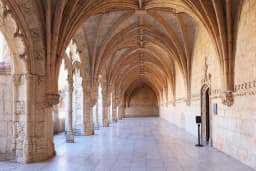
In the cloister of the Jerónimos Monastery in Lisbon, Prime Minister Mário Soares signs Portugal's treaty of accession to the European Communities; Spain signs its own in Madrid the same day. Both countries join on 1 January 1986, closing a decade of transition from dictatorship and opening the way to billions in structural funds.
The Multibanco network goes live with 12 cash machines in Lisbon and Porto. Portugal was one of the last countries in western Europe to adopt ATMs, but its shared interbank system, run by SIBS, grew into one of the world's most versatile, used for everything from withdrawals to paying bills and taxes.
Two trains collide head-on near Alcafache on the Beira Alta line and burst into flames. Officially 49 people died and 64 were never found; unofficial estimates put the toll at around 150, making it the worst railway disaster in Portuguese history.
The Social Democrats under Aníbal Cavaco Silva win the legislative election with 29.9 per cent of the vote, beginning a decade of PSD government; on the same date in 1991 Cavaco Silva renewed his absolute majority, the first time a single Portuguese party had done so.
Telma Monteiro is born in Lisbon. The most decorated judoka in Portuguese history, she won six European titles and four world silver medals before finally taking Olympic bronze in the -57 kg category at Rio 2016, at her fourth Games.
Back to the full timeline of Portugal, with key moments, search and long reads.