

Adriano Moreira (1922–2022): Salazar’s reformer in democracy’s parliament
He was jailed by Salazar’s regime, then became its Overseas Minister as the colonial war began, was purged by the revolution and returned as a vice-president of the democratic parliament. His century shows how Portugal got from empire to democracy, and why it still argues about the journey.
At a glance
- Adriano Moreira died on the morning of Sunday 23 October 2022, aged 100. He was born on 6 September 1922 in Grijó de Vale Benfeito, in the municipality of Macedo de Cavaleiros, Trás-os-Montes.
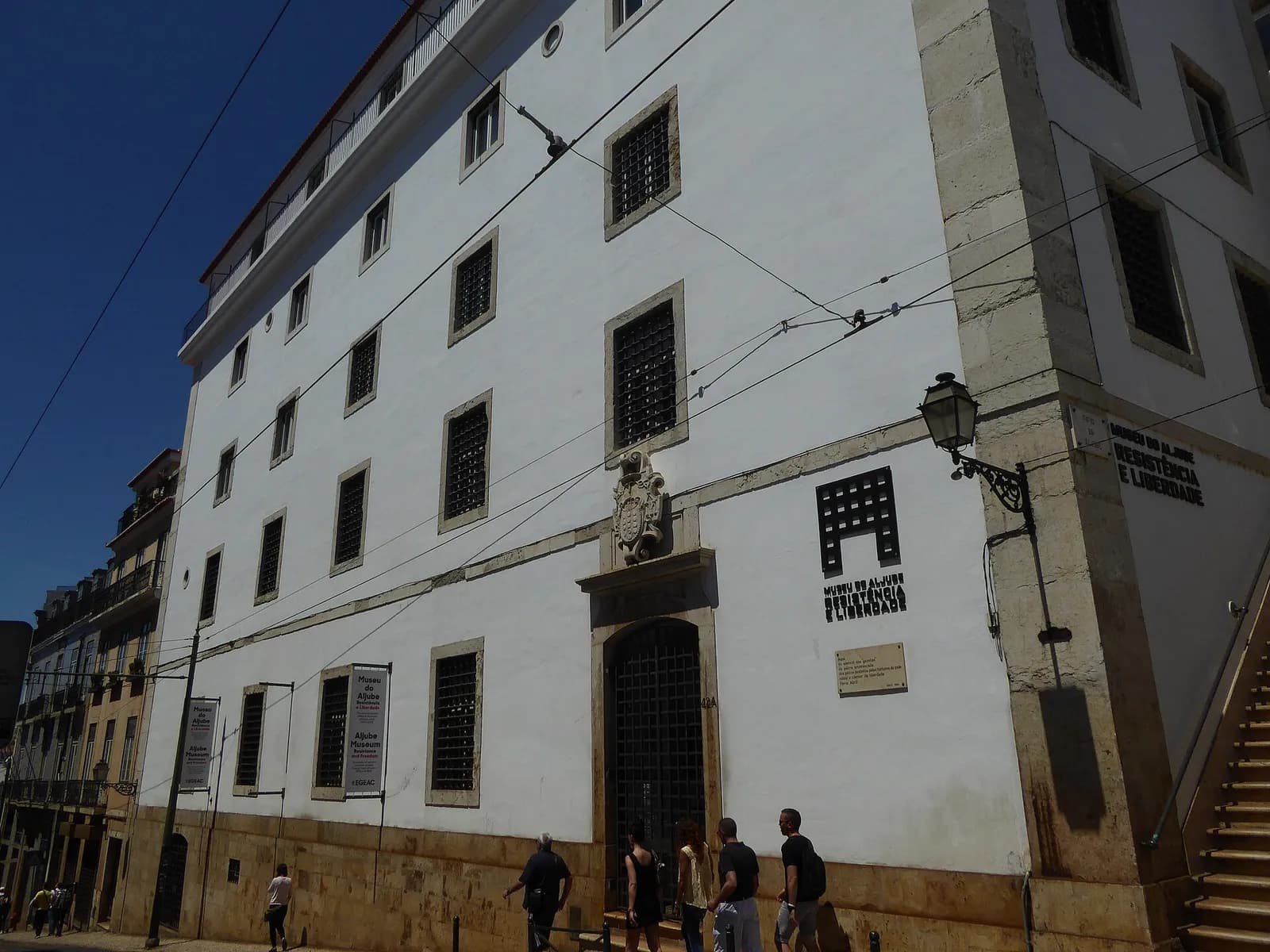
- As a young lawyer in the late 1940s he spent about two months in Lisbon’s Aljube prison over the case of a general who died in custody. There he met Mário Soares, then a young opponent of the regime.
- He was Salazar’s Overseas Minister from 13 April 1961 to 4 December 1962, as the colonial war began in Angola. On 6 September 1961 the government repealed the Estatuto do Indigenato, which had kept most Black Africans in Angola, Mozambique and Guinea out of Portuguese citizenship.
- Purged after the revolution of 25 April 1974, he stayed in Brazil from 1975 to avoid arrest, came home in 1977, joined the CDS and led it from 1986 to 1988. He was a deputy from 1980 to 1995 and Vice-President of the Assembleia da República from 1991 to 1995.
- Parliament’s mourning vote on 27 October 2022 passed, but the Communists and the Left Bloc voted against it, citing his part in the regime at the start of the colonial war.
A Sunday morning in October
Adriano Moreira died on the morning of Sunday 23 October 2022, seven weeks after his hundredth birthday. The Diário de Notícias broke the news, citing his family, and the CDS-PP, the party he had once led, confirmed it to the Lusa news agency.
By early afternoon President Marcelo Rebelo de Sousa read a short statement at the Palácio de Belém, his official residence. He said Moreira had “crossed two regimes”, and then listed the roles of a single life.
“For 100 years he was everything, or almost everything. Academic, teacher of civilians and soldiers, fighter for democracy, a reformer who was impossible under a dictatorship, yet who still repealed the statute of the indigenato, exile, returnee, president of a party, Vice-President of the Assembly of the Republic, Councillor of State.”
Few Portuguese lives covered as much ground. Moreira was jailed by António de Oliveira Salazar’s dictatorship in his twenties, served it as Overseas Minister when war broke out in Angola, was purged after the 1974 revolution and came back to sit for 15 years in the parliament of the new democracy. On his centenary Lusa called him the longest-lived politician in the history of Portuguese democracy.
His death reopened an old argument. Admirers remembered the minister who abolished the legal category of “native” in Portugal’s African colonies. Critics remembered a senior figure of a regime that went to war to keep those colonies.
An empire that called itself a nation
The Estado Novo (New State) was the dictatorship that grew out of a military coup in 1926 and was shaped by Salazar; it lasted until the revolution of 25 April 1974. It governed Angola, Mozambique, Guinea and the smaller colonies from Lisbon. The Colonial Act of 1930 declared that colonialism belonged to the “organic essence of the Portuguese Nation”.
After 1945, with the new United Nations pressing for decolonisation, Lisbon changed its vocabulary. A constitutional revision in 1951 renamed the colonies “overseas provinces” and the empire the “Portuguese Overseas”. The historian Fernando Tavares Pimenta calls this a change that was “above all aesthetic, that is, of terminology”.
“Individuals of the black race or their descendants who, having been born or habitually living there, do not yet possess the education and the individual and social habits presupposed for the full application of the public and private law of Portuguese citizens are considered natives of the said provinces.”
In the 1950s the regime found an intellectual defence in the work of the Brazilian sociologist Gilberto Freyre. His theory, which came to be called lusotropicalism, held that the Portuguese had a special talent for living and mixing with tropical peoples. The Overseas Minister Sarmento Rodrigues invited Freyre on a seven-month tour of the empire, from August 1951 to February 1952.
Historians are blunt about what the theory was used for. João Medina calls the idea that Portugal could not be racist or colonialist, because it was by nature multiracial and spread over several continents, a myth, and names Moreira among the academics and ideologues who voiced it. African nationalists rejected it early: the Angolan sociologist Mário Pinto de Andrade, a founder of the MPLA, challenged it in an article in 1955.
A young lawyer in Salazar’s prison
Moreira was born on 6 September 1922 in Grijó de Vale Benfeito, a village in the district of Bragança in the far north-east. His father was a police officer, his grandfather a miller. The family moved to Lisbon before he was two and settled in Campolide. He went to the Liceu Passos Manuel, entered the Lisbon law faculty at 16 and graduated in 1944.
In 1945 he signed a list of the MUD, the Movement of Democratic Unity, a post-war opposition movement that called for free elections. Soon afterwards he took on a case that put him on the wrong side of the regime.
General Marques Godinho, held on suspicion of plotting a coup against Salazar, died in prison. Moreira had petitioned for habeas corpus for him and for Admiral Mendes Cabeçadas, arguing that officers could not be held in the Júlio de Matos psychiatric hospital on the orders of the political police. RTP and the Diário de Notícias call it the first habeas corpus petition on record in Portugal. He also accused the War Minister, Fernando Santos Costa, of the voluntary homicide of the general.
He was then held in the Aljube prison in Lisbon for about two months. The Diário de Notícias says this followed his refusal, on grounds of professional secrecy, to tell the PIDE political police who had talked to him about the case. Viriato Soromenho-Marques, drawing on Moreira’s memoir, writes that the order came from Santos Costa.
In the Aljube he met Mário Soares, then a young opponent of the regime; RTP says the two shared a cell. “Until then I knew him only by name,” Moreira recalled in 1995, adding that they held opposite views. He was released on Salazar’s orders, and in his memoir he recalled the dictator’s words.
“Let the lad go; in this whole affair he was the only person who behaved with dignity.”
Teaching the empire
In 1950 Moreira joined the staff of the Escola Superior Colonial in Lisbon, the state’s school of colonial studies. It became the Instituto Superior de Estudos Ultramarinos (ISEU) in 1954 and is today the ISCSP, the Instituto Superior de Ciências Sociais e Políticas. He ran it from 1958.
His road to colonial policy ran through prisons. In 1953 the Overseas Minister, Sarmento Rodrigues, asked him to study the prison system in Angola and Mozambique. His thesis, O Problema Prisional do Ultramar, was published in 1954 and won a prize from the Lisbon Academy of Sciences. He gave the 80 contos of prize money to his mother, to rebuild the chapel in his home village.
In 1956 he founded and directed the Centre for Political and Social Studies of the state’s overseas research board. In 1957 the centre sent three study missions to the colonies to carry out direct surveys. According to the historian Cláudia Castelo, as summarised by João Alberto da Costa Pinto, the researchers found racism among Portuguese settlers, and proposed to re-educate the settlers already there and to select future ones more carefully.
In the late 1950s he also sat in Portugal’s delegation to the UN General Assembly in New York, as former colonies were becoming new member states. “There I could hear for the first time, in freedom, the voices of peoples who were treated as mute or as dispensable,” he later said. The philosopher Viriato Soromenho-Marques, an admirer, writes that the experience showed him how isolated Portugal was becoming, even among NATO allies.
Minister as the war began
In 1961 the empire caught fire. On the night of 3 to 4 February nationalists attacked prisons in Luanda to free political prisoners. On 15 March the UPA, a movement based in the Congo, launched an uprising in northern Angola that massacred white settlers and also mixed-race and African workers; Soromenho-Marques puts the dead at more than 5,000. In the Luanda slums, far-right whites organised by PIDE men killed Black and mixed-race residents.
In Lisbon the Defence Minister, General Botelho Moniz, prepared a coup to force a political way out of Africa. Salazar struck first. On 13 April 1961 the plotters’ dismissals appeared in the official gazette, and the same day Moreira, an under-secretary for overseas administration since 1960, replaced Rear Admiral Lopes Alves as Overseas Minister. He was 38. General Venâncio Deslandes went to Luanda as Governor-General and commander-in-chief.
Moreira travelled to Angola within days. In May 1961 he announced a policy of “progressive and irreversible autonomy” for the overseas provinces. On 6 September 1961 a decree-law repealed the Estatuto do Indigenato and gave all natives of the colonies Portuguese citizenship, which Pimenta calls “at least nominal”.
“I was Salazar’s minister, but I was the minister I was: I repealed the Estatuto do Indigenato and abolished compulsory crops in the colonies.”
| Date | Measure | What it meant | The limits |
|---|---|---|---|
| May 1961 | “Progressive and irreversible autonomy” announced | More power for colonial governments and local councils | The 1963 Overseas Organic Law kept power in Lisbon |
| 6 September 1961 | Estatuto do Indigenato repealed | Citizenship for all natives of the colonies; traditional property and local customs to be respected; free movement for all citizens | Electoral rolls were not widened for the November 1961 elections |
| September 1961 | Provincial settlement boards set up | Planned Portuguese settlement in Angola and Mozambique | The historian Amanda Palomo Alves links it to the regime’s lusotropicalist programme |
| 27 April 1962 | Rural Labour Code | Written to meet International Labour Organization standards; RTP says the ILO’s office called it the most advanced in Africa | Worried South Africa and angered employers in the colonies, according to Soromenho-Marques |
| 23 July 1962 | Estudos Gerais Universitários | First university studies in Angola and Mozambique | Created after Lisbon annulled Luanda’s own plan |
| 1961–1962 | Compulsory crops abolished | Ended the obligation on African farmers to grow set crops, by Moreira’s account | Rests on Moreira’s 1983 interview; our sources do not cite the decree |
Compiled from Pimenta (2014), Soromenho-Marques (2022), Alves (2021), RTP (2022) and Moreira’s 1983 interview as quoted by Lusa.
In words quoted by the Diário de Notícias in his obituary, the old statute “was the negation of citizenship” and “allowed savage abuses”. According to his memoir, cited by Pimenta, he also had the Angolan nationalist Agostinho Neto, held since June 1960, released, and invited the Mozambican Eduardo Mondlane to teach at the future university of Mozambique.
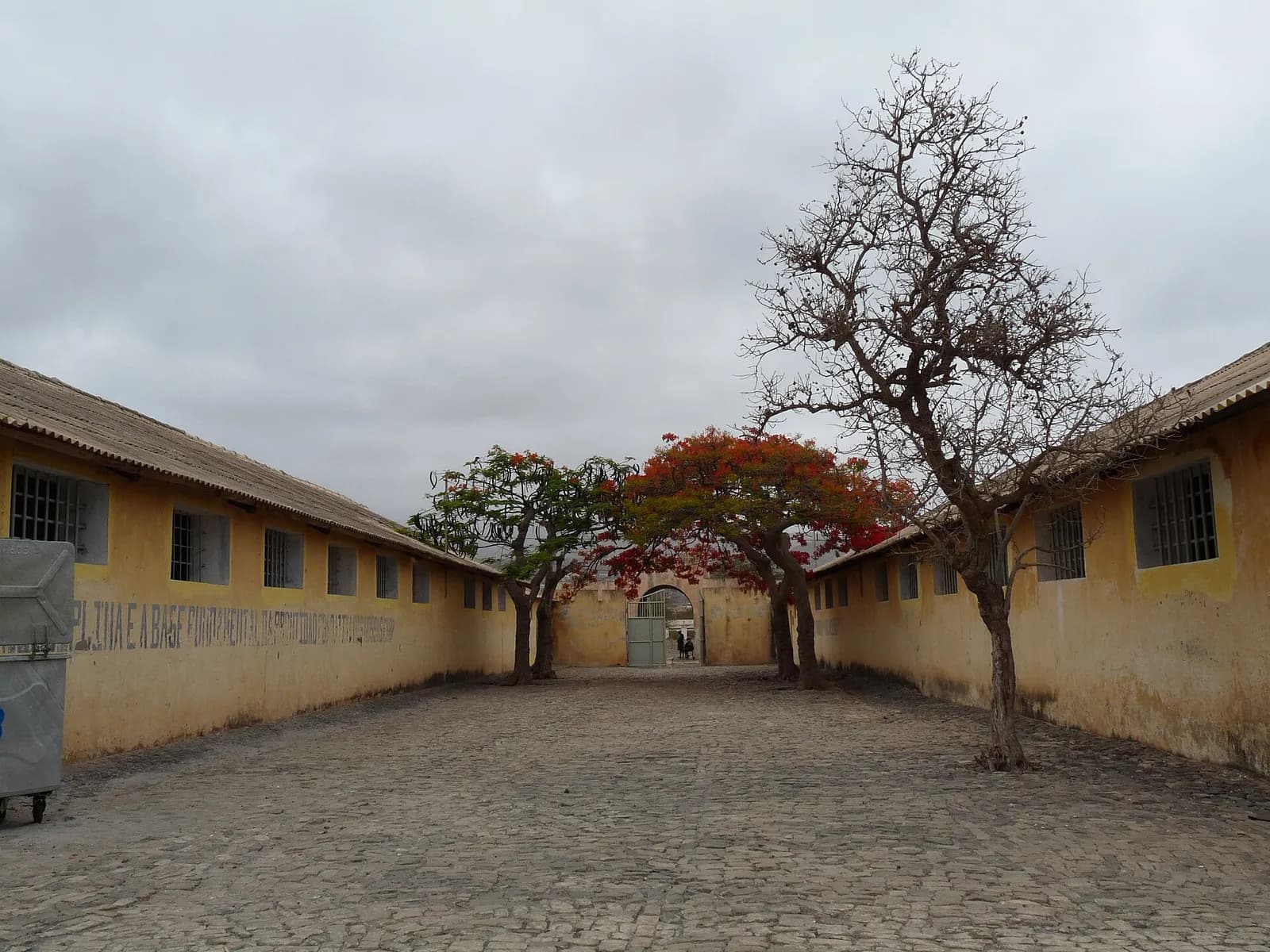
The reforms came with repression. In 1961, under Moreira’s ministry, the Tarrafal penal camp on Santiago, in Cape Verde, reopened as the Chão Bom “labour camp”. Tarrafal had held the regime’s political prisoners from 1936 until the mid-1950s; Medina says it closed in 1954, the Diário de Notícias in 1956. RTP gives Chão Bom room for 500 prisoners and adds a labour camp at Missombo, in Angola.
Critics hold Moreira personally responsible. Observador wrote in 2016 that he signed the reopening of Tarrafal, and quoted Domingos Abrantes, a Communist leader who had escaped from Caxias prison while Moreira was minister. In 2022 the Left Bloc said Moreira had decided to reopen Tarrafal and to open a camp at São Nicolau in Angola to hold independence fighters.
“He took some measures of enormous gravity, one of them the signing (he was minister, he could have refused) of the reopening of the Tarrafal camp, which was the most sinister fascist prison.”
“Your Excellency has just changed minister”
Resistance came from inside the regime. From late 1961 the “integrationists”, who wanted the colonies run as ordinary parts of Portugal, argued that the war had been won and the reforms were unnecessary. Big metropolitan and foreign companies defended their privileges. Salazar, Pimenta writes, was not insensitive to these arguments.
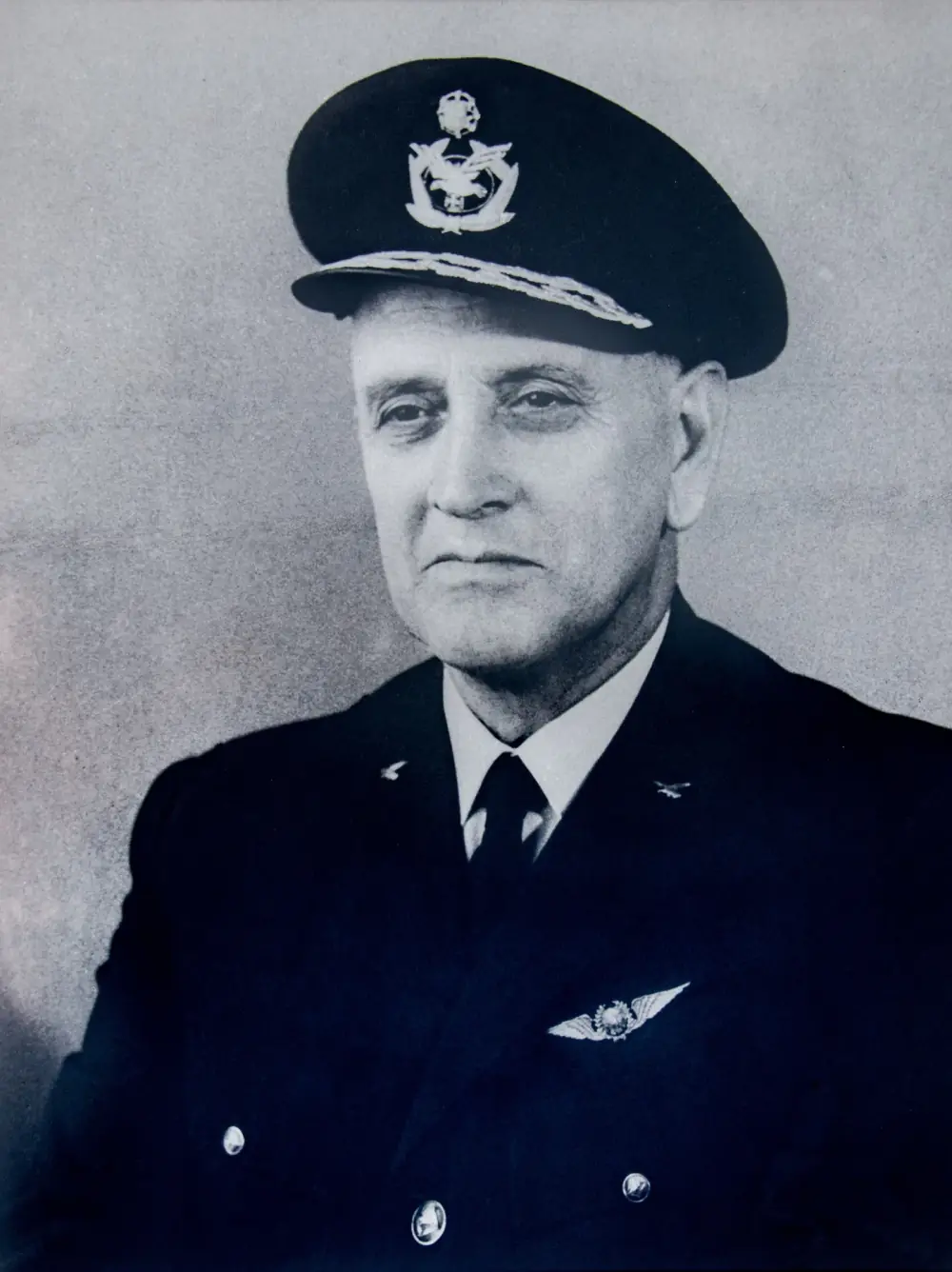
In Luanda, Deslandes governed as if Angola were already autonomous. He taxed the diamond company Diamang to pay for defence and had Angola’s Legislative Council approve university study centres without Lisbon’s authorisation. On 17 July 1962 Lisbon annulled the decree; six days later Moreira announced the Estudos Gerais Universitários to calm the colony. Deslandes was summoned to Lisbon and dismissed on 25 September 1962.
That autumn the Overseas Council in Lisbon debated a new Organic Law for the colonies. Under pressure from Angola, Moreira let three observers from the settlers’ business associations attend. Their demands for wide autonomy shocked the integrationists, who blamed his opening. In Pimenta’s reading, with the guerrillas contained and his authority over the army restored, Salazar decided the reforms had become unnecessary and divisive.
Moreira’s own account, which Soromenho-Marques repeats, is that Salazar asked him to change his African policy and he refused. On 4 December 1962 Commander Peixoto Correia replaced him. Many sources, including parliament’s mourning vote, give his term as 1961 to 1963.
“Your Excellency has just changed minister.”
Pimenta concludes that Moreira was aiming at a “neocolonial” political solution, like the one de Gaulle had found in French West and Equatorial Africa: growing self-government for the colonies, with white settlers given a larger share of power. Salazar, he writes, saw the reforms only as a way to buy time to win the war, while Moreira saw them as a way to end by political means a war he knew could not be won by arms.
Without him the reforms stalled. The new Organic Law of April 1963 kept power in Lisbon, and Angola’s electorate stayed tiny.
Registered voters in Angola after the 1963 reform
voters
Figures from Pimenta (2014), who takes them from a comparison of registered voters in Salazar’s archive. Angola had almost five million inhabitants in 1960, so by our calculation even the March 1964 roll covered only about 3 per cent of the population.
Show the data
| Registered voters | |
|---|---|
| 1963 | 90,412 |
| March 1964 | 153,472 |
Looking back, Moreira said: “I did what I could in that whole period, but it was very great toil, because it hit brutal interests; a structure was changed.” The Diário de Notícias adds that several scholars saw the changes as an attempt to bring the regime’s actions into line with its political discourse.
Purged, exiled, elected
Out of government, Moreira went back to teaching, and from 1965 he presided over the Lisbon Geographical Society. In 1968 he married Mónica Lima Mayer; they had six children, among them the Socialist deputy Isabel Moreira.
Critics also point to his record in academia. The Left Bloc’s 2022 declaration says that in 1962, while minister, he played an active part in the persecution of the historian Vitorino Magalhães Godinho, who was dismissed from the overseas institute after backing that year’s student protests and criticising Moreira’s role there.
The revolution of 25 April 1974 swept away the regime, and Moreira was purged from his official posts; RTP says the purge came with an arrest warrant. A year later, visiting Brazil on business, he learned from Admiral Pinheiro de Azevedo that the warrant was waiting for him in Lisbon during the “Hot Summer” of 1975, when the revolution swung furthest to the left.
He stayed, and after two hard months began teaching at the Catholic University of Rio de Janeiro. Asked later whether Brazil had left him bitter, he said: “No, I’m not one for resentments.”
He came home in 1977. President Ramalho Eanes had him reinstated at the University of Lisbon, and he joined the CDS, the Christian democratic party, at the invitation of Freitas do Amaral and others. In 1980 he was elected deputy for Bragança on the Democratic Alliance list, and then four more times, for Porto and Lisbon.
He led the CDS from 1986 to 1988 and again on an interim basis in 1991 and 1992, and was Vice-President of the Assembleia da República from 1991 to 1995. He left party politics in 1995 but not public life. Parliament elected him to the Council of State, the President’s advisory body, from 2015 to 2019.
The classroom remained his base. He was a founding member of the Portuguese Political Science Association, which calls him one of the founders of the teaching of political science and international relations in Portugal, and he taught strategy and geopolitics at military schools. “My life was the school, above all,” he told Lusa in 2012. “Political intervention was more a civic obligation.”
6 September 1922
Born in Grijó de Vale Benfeito, Macedo de Cavaleiros
1944
Graduates in law in Lisbon
1947
About two months in the Aljube prison; meets Mário Soares
One account dates the case to 1948.
1950
Joins the Escola Superior Colonial, later ISEU and today ISCSP
1960
Under-Secretary of State for Overseas Administration
Some sources give 1959.
13 April 1961
Becomes Overseas Minister after the failed Botelho Moniz coup
6 September 1961
The Estatuto do Indigenato is repealed
27 April 1962
Rural Labour Code published
4 December 1962
Replaced as minister by Peixoto Correia
1965
President of the Lisbon Geographical Society
25 April 1974
Revolution; he is later purged from his posts
1975
Stays in Brazil to avoid arrest and teaches in Rio de Janeiro
1977
Returns to Portugal and joins the CDS
1980
Elected deputy for Bragança
1986–1988
President of the CDS
1991–1995
Vice-President of the Assembleia da República
2015–2019
Member of the Council of State
June 2022
Grand Cross of the Order of Camões
6 September 2022
Turns 100
23 October 2022
Dies, aged 100
A divided farewell
His last year was full of honours. In June 2022 the President gave him the Grand Cross of the Order of Camões, and on his hundredth birthday Marcelo Rebelo de Sousa thanked him for his work for the armed forces, the Portuguese language and culture.
Tributes after his death came from across the spectrum. Augusto Santos Silva, the Socialist President of the Assembleia, wrote that democracy had made Moreira a deputy and party leader, and that he in turn had helped democracy “situate itself in the historical continuity of Portugal”. Ramalho Eanes said that, without fully believing in the Estado Novo’s creed, Moreira had agreed to be Salazar’s minister and produced reforms of great merit in the colonies.
Others were more guarded. Carlos César, president of the Socialist Party, described a man who, “after an influential collaboration with the previous regime”, had found his way to democratic Portugal and took an active, constructive part in it.
His wake was held at the Jerónimos Monastery in Lisbon from 20:00 on Monday 24 October, with a Mass there at noon the next day, followed by a funeral for the family only.
On 27 October parliament read a mourning vote that recalled his term as Overseas Minister of the Estado Novo alongside his years as a deputy. It passed with the votes of the PS, PSD, Chega, Liberal Initiative, PAN and Livre. The Communists and the Left Bloc voted against, and one Socialist deputy, Rui Lage, abstained. Lisbon’s council and municipal assembly split along similar lines.
The Communists wrote that it was not possible to erase his responsibilities as a minister of the fascist regime at the start of the colonial war. The Left Bloc accepted that his democratic and academic career deserved recognition, but said the vote failed a duty of memory.
“The Assembly of the Republic cannot pay tribute to that path without also recognising in Adriano Moreira the man who was responsible, at a critical moment in Portuguese colonial history, when the dictatorship was launching itself into a war that would last 13 years, for the choices of the Salazar regime.”
Rui Lage explained his abstention with his own family story. His father, a conscript officer, was detained in 1968 and accused of being an enemy of the government’s overseas policy. Lage wrote that his father’s suffering could not be blamed on Moreira, who had left office six years earlier, and that Moreira’s commitment to democracy was unequivocal. But he could not separate his vote from a judgement on the Estado Novo’s colonial rule.
Why he still matters
Moreira’s life shows the continuities between Portugal’s two regimes. A minister of the old regime became a vice-president of the new parliament, and he taught generations of students and officers under both.
The argument over his record is an argument over the empire. His admirers see a reformer who left rather than reverse the repeal of the indigenato. Soromenho-Marques calls his acceptance of a defeat to stay faithful to a principle “a sign of rare greatness”, and the former CDS leader Paulo Portas called him the only figure of the old regime with the vision to settle the colonial question peacefully.
His critics see reforms meant to protect the empire. Amanda Palomo Alves argues that Salazar appointed him partly to shield the regime from international criticism, and that wage gaps between Black and white workers in Luanda survived the end of the indigenato. The Communists and the Left Bloc point to the war that began on his watch and lasted until 1974, and to camps such as Chão Bom.
In 2011 the Cape Verdean historian Corsino Tolentino said time would tell whether Moreira had added value to society “or whether it was an evil that the system did and that he himself served and does not reject”. Yet at the ceremony where the University of Mindelo gave Moreira an honorary doctorate, Lusa quoted him saying the former minister was “completely absolved”.
On his centenary the President put the dilemma in one sentence: when the young minister tried to reform colonial policy and law, “for many, what he brought was too much rupture, and for many others, it arrived at least a decade late”. The split vote in parliament a few weeks later showed that the country has not settled the question.
FAQs
Who was Adriano Moreira?
A Portuguese lawyer, professor and politician (1922 to 2022). He was Overseas Minister under Salazar from April 1961 to December 1962, and after the 1974 revolution he led the CDS, sat as a deputy from 1980 to 1995 and was Vice-President of parliament from 1991 to 1995. He died on 23 October 2022, aged 100.
What was the Estatuto do Indigenato and when was it abolished?
It was the legal regime that classed most Black Africans in Angola, Mozambique and Guinea as “natives” without Portuguese citizenship, governed by customary law and with restricted movement. It was repealed on 6 September 1961, while Moreira was Overseas Minister, giving all natives of the colonies citizenship, at least on paper.
Why did Adriano Moreira leave the government?
His reforms angered the integrationist wing of the regime and powerful economic interests, and a clash between Lisbon and Angola’s Governor-General, Venâncio Deslandes, came to a head in 1962. By his own account Salazar asked him to change course and he refused. He was replaced on 4 December 1962.
Was Adriano Moreira a supporter of lusotropicalism?
Historians count him among the main academic voices of lusotropicalism, Gilberto Freyre’s idea that the Portuguese mixed easily with tropical peoples, which the regime used to defend its empire. Scholars such as João Medina call the idea a myth and a colonial alibi. Admirers such as Viriato Soromenho-Marques stress that his reforms rested on a belief in the unity of humankind and rejected white-minority rule of the Rhodesian or South African kind.
Why did some parties vote against the mourning vote for Adriano Moreira?
The Communist Party said his responsibilities as a minister of the dictatorship at the start of the colonial war could not be erased, and the Left Bloc said the vote failed to recognise them. The vote passed on 27 October 2022 with the support of the other parties, and one Socialist deputy abstained.
On the timeline
Open the timelineNearby moments from portugal in europe (1986–today).
António Costa's Socialist Party wins an unexpected absolute majority in a snap legislative election — only the second in its history — called after his minority government's budget was voted down by its former left-wing allies.
Eunice Muñoz, the grande dame of Portuguese theatre, dies aged 93. Born into a family of travelling players, she made her debut at the Teatro Nacional D. Maria II at 13 and worked on stage, film and television for some 80 years, still performing in her nineties.
Death of Paula Rego in London, aged 87. Born in Lisbon in 1935 and settled in England, she became one of the great figurative painters of her time; her 'Abortion' series, painted after Portugal's 1998 referendum failed to liberalise the law, is credited with helping to shift opinion before the 2007 vote. The Casa das Histórias in Cascais is dedicated to her work.
The death of Adriano Moreira
Death in Lisbon of António Mega Ferreira, aged 73. A journalist, writer and translator, he led Lisbon's bid for the 1998 World Exposition and served as executive commissioner of Expo '98, the project that turned an industrial wasteland into today's Parque das Nações; he later ran the Centro Cultural de Belém.
Portuguese legislative elections are held, with the Aliança Democrática coalition led by Luís Montenegro winning the most seats, ending eight years of governance by the Socialist Party.
Death in Lisbon of the poet Adília Lopes, aged 64. Writing in a deceptively simple voice about cats, nuns, desire and her own schizoaffective illness, she became a cult figure, and her collected poems, 'Dobra', went through several expanded editions.
Coming up in history
All long reads 25 October 1147The siege of Lisbon, 1147: how crusaders and a new king took the city
 26 October 1969Portugal's 1969 election: Caetano's first vote and the opposition it shaped
 27 October 1949Egas Moniz, the lobotomy and Portugal's first Nobel Prize
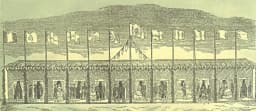 28 October 1856Portugal's first train: Lisbon to Carregado, 28 October 1856
18 sources
Archives, scholarship and reporting this article was checked against.
- 1
O Estado Novo português e a reforma do Estado colonial em Angola: o comportamento político das elites brancas (1961-1962) (Fernando Tavares Pimenta)História (São Paulo), vol. 33, n.º 2, 2014, pp. 250-272
- 2
Diário da Assembleia da República, I série, n.º 55 (plenary of 27 October 2022): Projeto de Voto n.º 182/XV/1.ª, de pesar pelo falecimento de Adriano Moreira, and declarations of voteAssembleia da República
- 3Adriano Moreira: um século português na vertigem do mundo (Viriato Soromenho-Marques)Diário de Notícias, 2022
- 4Morreu Adriano Moreira, um transmontano sem ressentimentosDiário de Notícias, 23 October 2022
- 5Morreu Adriano Moreira aos 100 anos (live coverage and reactions)Observador, 23 to 25 October 2022
- 6
Estatuto dos Indígenas Portugueses das Províncias da Guiné, Angola e Moçambique (decree-law of 20 May 1954), textFaculdade de Direito, Universidade Nova de Lisboa (reproduction)
- 7
Gilberto Freyre contestado: o lusotropicalismo criticado nas colónias portuguesas como álibi colonial (João Medina)Revista USP, n.º 45, 2000, pp. 48-61
- 8Adriano Moreira, de ministro do Estado Novo a líder do CDSRTP Notícias, 23 October 2022
- 9
Declaração do Presidente da República a propósito da morte do Professor Adriano MoreiraPresidência da República (archive of the Marcelo Rebelo de Sousa presidency), 23 October 2022
- 10
Adriano Moreira: 100 anos de um percurso dividido entre ditadura, democracia e ensino (Lusa)Sábado, 6 September 2022
- 11
Aquarela angolana: música e lazer na “Luanda Lusotropical” (1961-1970) (Amanda Palomo Alves)Diálogos (Universidade Estadual de Maringá), vol. 25, n.º 2, 2021, pp. 168-191
- 12
Gilberto Freyre e o Lusotropicalismo como ideologia do colonialismo português (1951–1974) (João Alberto da Costa Pinto)Revista UFG, Universidade Federal de Goiás, ano XI, n.º 6, June 2009
- 13Adriano Moreira e Domingos Abrantes: o ex-ministro de Salazar e o antigo preso político lado a ladoObservador, 19 March 2016
- 14
Adriano José Alves Moreira: deputy recordAssembleia da República
- 15
Professor Adriano MoreiraAssociação Portuguesa de Ciência Política, 24 October 2022
- 16Presidente condecora Adriano Moreira com Grã-Cruz da Ordem de CamõesDiário de Notícias, 7 June 2022
- 17
- 18
Museu do Aljube: Resistência e LiberdadeMuseu do Aljube, EGEAC, Lisbon
Image credits
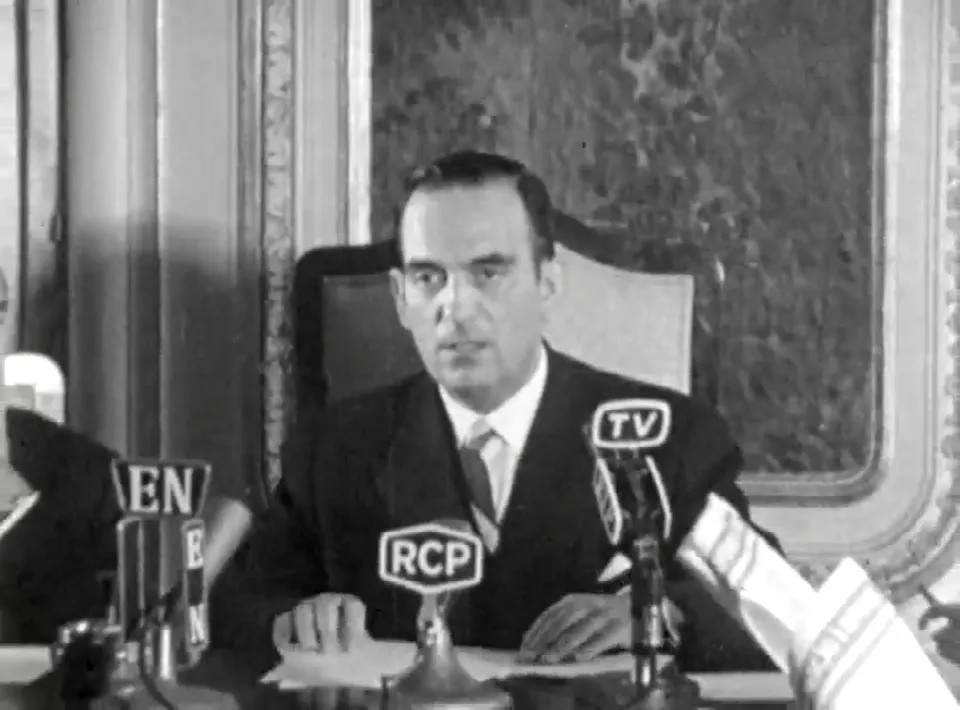
- Adriano Moreira as Overseas Minister at a televised press conference on 26 April 1962, in a still from the RTP archive. His Rural Labour Code was published the next day. Unknown author, Public domain, via Wikimedia Commons.
- The former Aljube prison in Lisbon, where Moreira and Mário Soares were held in the 1940s, photographed in May 2017. It is now the Museu do Aljube: Resistência e Liberdade. Ardfern, CC BY-SA 4.0, via Wikimedia Commons.
- The yard of the former Tarrafal camp on Santiago, Cape Verde, looking towards its gate, in June 2009. The camp reopened in 1961, under Moreira’s ministry, as the Chão Bom labour camp. Gagum, CC BY 2.0, via Wikimedia Commons.
- General Venâncio Deslandes, Governor-General of Angola from 1961 to 1962, in an official portrait dated 1968. Unknown author, Public domain, via Wikimedia Commons.
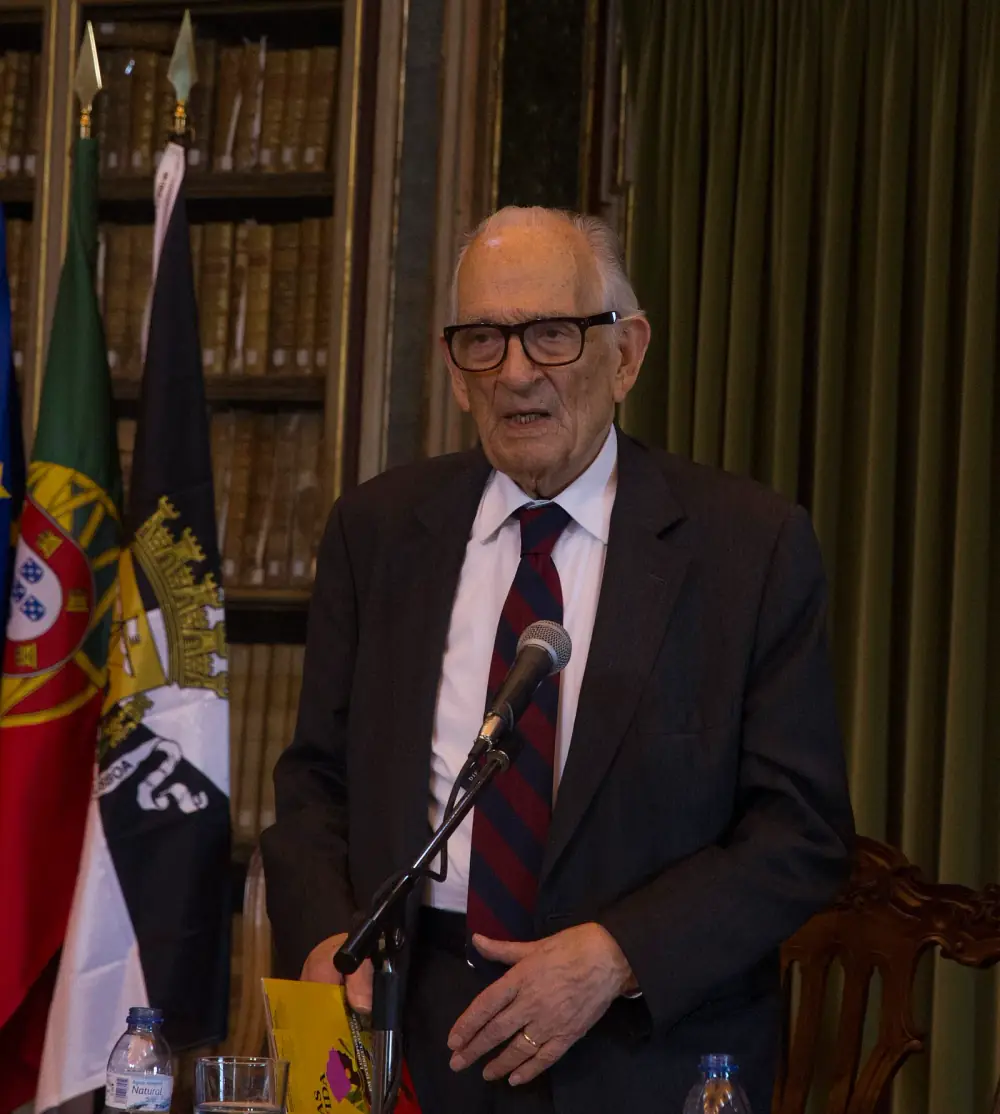
- Adriano Moreira speaking at a public event on 8 May 2014, aged 91. Instituto de Estudos Avançados em Catolicismo e Globalização, CC BY 2.0, via Wikimedia Commons.