

Fernando I dies in Lisbon, and the crisis of 1383–85 begins
The last king of Portugal's first dynasty left his throne to a daughter married to the King of Castile. Within two years Lisbon had risen, survived a siege and plague, and chosen a different king.
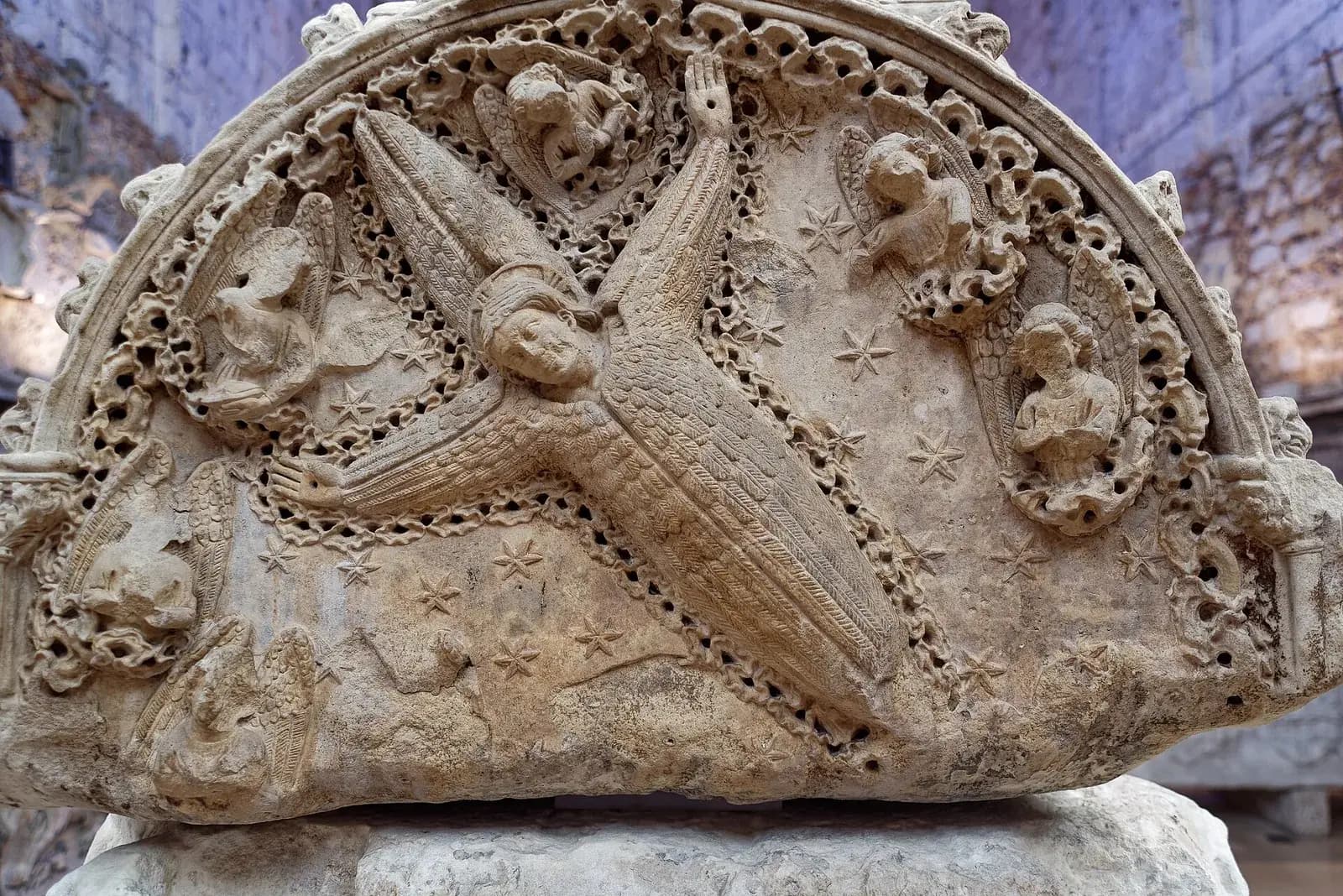
At a glance
- King Fernando I died in his palace in Lisbon on the night of Thursday 22 October 1383, according to the chronicler Fernão Lopes, leaving no son. A UK National Archives blog gives 23 October.
- Under the Treaty of Salvaterra de Magos of April 1383, his daughter Beatriz, not yet 12, had married Juan I of Castile, and his widow Leonor Teles became regent.
- On 6 December 1383 João, Master of the Order of Avis and Fernando's illegitimate half-brother, killed the queen's favourite, Count Andeiro, with his companions, and Lisbon rose for him.
- Juan I besieged Lisbon from May 1384; plague in his camp forced him to leave on 3 September. The Cortes of Coimbra chose the Master as King João I on 6 April 1385.
- João I beat the Castilians at Aljubarrota on 14 August 1385, sealed the Treaty of Windsor with England in 1386 and married Philippa of Lancaster in 1387.
A king carried home by night
In September 1383 King Fernando I was gravely ill and did not want to be seen. He had been staying at Almada, across the Tagus from Lisbon, and asked to be brought into the city after dark. Nobody opened a door or set a candle at a window as he passed, because an order had gone out forbidding it, and he was carried quietly to his palace.
He lay there for days, so changed that he no longer looked like the man who had once seemed a king among all men. That is how Fernão Lopes tells it, and almost every detail of these weeks comes from him: a royal chronicler who was commissioned in 1434 to write for the dynasty that replaced Fernando's line.
Dressed in the habit of Saint Francis, the king asked for the sacrament. When the articles of the faith were read to him, he answered that he believed them, then added a confession and wept, and everyone in the room wept with him.
“I believe all this, as a faithful Christian, and I believe too that He gave me these kingdoms to keep them in right and justice; and I, for my sins, did it in such a way that I shall give Him a very poor account of them.”
He died on the night of Thursday 22 October 1383. The next day his body was put on a bier covered in black cloth and carried by friars to the Franciscan friary at Santarém, with few mourners. Queen Leonor Teles did not go, saying she felt unwell. Lopes, no friend of the queen, adds that some said she feared what people would mutter, and that her absence made them talk more than her presence would have.
A handsome king and an empty treasury
Fernando, called o Formoso, the Handsome, had reigned since 1367. He was the ninth King of Portugal and the last of its first dynasty. He inherited a kingdom in fair shape and spent much of his reign fighting Castile, Portugal's much larger neighbour, in three wars that went badly.
During the second war a Castilian army reached Lisbon, and Fernando had a new wall built round the city between 1373 and 1375. The Cerca Fernandina was about 4,700 metres long, with 76 towers and more than 30 gates and posterns. In 1384 it helped Lisbon hold out against a Castilian siege.
The wars emptied the treasury, and repeated debasement of the coinage pushed up prices. After his death the leading men of Lisbon told the regent that his ruinous spending and his “unusable coins” had cost people most of their wealth, and that he had governed on the advice of foreigners.
His marriage caused open anger. Leonor Teles was already the wife of a nobleman, João Lourenço da Cunha, when Fernando took her. Lopes says some 3,000 armed Lisbon townsmen, led by a tailor named Fernão Vasques, marched on the palace to protest, but the king married her publicly anyway at the Hospitaller monastery of Leça, in the north.
Their daughter Beatriz was born in 1372. By the 1380s a Galician nobleman, João Fernandes Andeiro, known as Count Andeiro, was Fernando's leading diplomat and was widely said to be the queen's lover.
A daughter promised to Castile
Peace with Castile came in 1382, and Leonor, Andeiro and many nobles came to see a union of the two royal families as the best way to protect their interests. Juan I of Castile had been widowed in 1382, and Andeiro carried Fernando's offer of his daughter's hand to him. In March 1383 Juan's envoy, the Archbishop of Santiago, arrived at Salvaterra de Magos, on the Tagus, where Fernando was already ill, to settle the terms.
The Treaty of Salvaterra de Magos married Beatriz to Juan. The historian Bernardo Vasconcelos e Sousa dates it 2 April 1383; the Fundação Batalha de Aljubarrota, which runs the Aljubarrota battlefield centre, gives 6 April.
If Fernando died without a legitimate son, the crown would go to Beatriz, with Juan as her husband, and then to their children; only if that line failed would it pass to Juan and his heirs. Leonor would govern as regent until a son of Beatriz was over 14. The kingdoms were meant to stay separate, but many Portuguese read the terms as absorption by Castile.
Beatriz, under 12, was married at Elvas on 14 May and Badajoz on 17 May 1383. The treaty was approved by the Castilian Cortes at Valladolid in August and by the Portuguese Cortes at Santarém in September. By the end of October Fernando was dead.
| Claimant | Relationship to Fernando I | Basis of the claim | Objections raised at Coimbra, 1385 |
|---|---|---|---|
| Beatriz, born 1372 | Only surviving child, by Leonor Teles | Treaty of Salvaterra de Magos | Her mother was still married to João Lourenço da Cunha, so the royal marriage was void; her paternity was doubted; she and Juan followed the Avignon pope |
| Juan I of Castile | Son-in-law, and first cousin (their mothers were sisters) | Marriage to Beatriz and the treaty | He had broken the treaty by taking power himself, and was a schismatic who opposed Pope Urban VI |
| The Infante João | Half-brother, son of Pedro I and Inês de Castro | Nearest legitimate male relative, if Pedro had married Inês | No proof that Pedro ever married Inês; impediments to such a marriage; a town delegate added that he had come against Portugal on Castile's side |
| The Infante Dinis | Half-brother, son of Pedro I and Inês de Castro | The same as his brother | The same as his brother |
| João, Master of Avis | Half-brother, illegitimate son of Pedro I | No hereditary right; defender of the kingdom, then elected by the Cortes | Martim Vasques da Cunha's party wanted him only as regent until the Infante João was freed |
Objections as Fernão Lopes reports the speech of João das Regras, the Master's chief lawyer, and the debate that followed. They were arguments made for one side, written down by a chronicler working for that side's heirs.
Six weeks of regency
As the treaty said, Leonor took over as “governor and regent of the kingdoms of Portugal and the Algarve”. She left the palace where Fernando had died for another near the church of São Martinho, and received visitors in a room hung with mourning, weeping for her husband. Lopes says people did not forget her bad name.
At Juan's request, Leonor ordered towns to raise a banner for Beatriz with the customary cry, “Arraial, arraial, for Queen Dona Beatriz!”. In Lisbon the riders got as far as the cathedral, heard how angry the streets were and turned back. In Santarém an old woman answered the cry with one for the Infante Dom João, a furrier named Domingos Anes drew his sword, and the alcaide, the town's royal commander, fled into the castle dragging the banner while the crowd shouted “Long live the Infante Dom João!”.
That Infante, Fernando's half-brother, was out of reach. After killing his own wife, Maria Teles, Leonor's sister, on the strength of hints that he might then marry Beatriz, he had fled to Castile. When Fernando died, Juan I had him arrested, telling him it was not for anything he had done but for fear that some Portuguese would take him for their king.
“They are killing the Master!”
João, Master of the military Order of Avis, was Fernando's half-brother, an illegitimate son of King Pedro I, and was 25 by Lopes's count. On 6 December 1383 he rode to the queen's palace in Lisbon with about 20 companions in mail. Andeiro pressed him to stay and eat; the Master refused, then led the count by the hand into an outer hall and spoke to him quietly by a window.
The Master drew a long knife and struck Andeiro on the head. The wound was not fatal, and as the count staggered towards the queen's chamber Rui Pereira ran him through with a sword. The Master ordered the doors shut and sent his page galloping through the streets.
“They are killing the Master! They are killing the Master in the queen's palace! Help the Master, they are killing him!”
The cry was false, and planned. Lopes says the page did what had been arranged beforehand, and Álvaro Pais, a Lisbon ally of the Master, was already armed and waiting when he arrived. Crowds ran to the palace with firewood to burn the doors, until the Master showed himself at a window. Later that day a mob found the Bishop of Lisbon, Martinho, a Castilian from Zamora, in the cathedral tower, killed him and threw his body down.
Lopes is careful with his hero here. He insists the Master killed Andeiro only to avenge the dishonour done to his dead brother, not out of any wish to rule, and says he even had two ships made ready to take him to England afterwards.
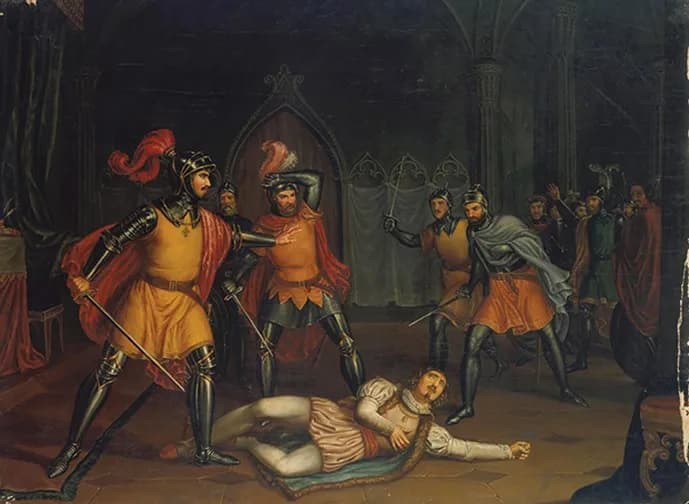
Leonor left Lisbon for Alenquer and turned down an offer that she marry the Master and govern with him. In December, at the monastery of São Domingos, he accepted the people's call to be “Regedor e Defensor do Reino”, regent and defender of the kingdom. His council's chancellor was a lawyer, João das Regras, and in Lisbon he took gifts and loans from the citizens to pay for war.
Elsewhere, most castle commanders stayed loyal to Leonor and Beatriz, but towns rose against them. In Beja, early in 1384, townsmen seized the castle, captured Admiral Lançarote Pessanha, who was on his way to bring the town over to Castile, locked him in the keep and then killed him. Évora, Estremoz and Portalegre followed.
A city under siege, an army under plague
Juan I was already in Portugal by January 1384 and entered Santarém on the 12th. There he made Leonor hand over the regency, breaking the treaty, and in February, after uncovering a plot against him, sent her as a prisoner to the convent of Tordesillas, where she stayed until her death.
On 6 April, at Atoleiros near Fronteira, the 23-year-old Nuno Álvares Pereira, the Master's commander in the Alentejo, beat a much larger Castilian force. The Fundação Batalha de Aljubarrota puts the Castilians at 5,000 and Nuno's men at 1,500; numbers for medieval armies are rarely precise.
The Castilian fleet began arriving off Lisbon on 26 May, and on 29 May Juan's army closed the siege, with his headquarters at Santos-o-Velho. On 18 July a Portuguese fleet from Porto, 17 naus (sailing ships) and 17 galleys, fought its way into the Tagus past a Castilian fleet of 40 naus and its galleys. It lost three naus, but the rest got their food ashore.
Lopes adds that within a week 21 more naus and three galleys joined Juan, making 61 naus and 16 galleys, not counting carracks. The Fundação Batalha de Aljubarrota gives those later totals as the Castilian strength in the battle.
It was not enough. Refugees from the countryside had crowded inside the walls, and Lopes describes wheat at four libras the alqueire, a dozen eggs at 12 soldos and people eating bread made from olive pulp. Poor people, prostitutes and Jews were pushed out of the gates as useless mouths; the Castilians at first fed them, then whipped them back.
“In the place where they used to sell wheat, men and boys went about scratching the earth, and if they found a grain of wheat they put it in their mouths, having no other food.”
Outside the walls plague, which had followed the Castilians since they entered Portugal, flared through the camp and the fleet. Lopes says 150 to 200 died on some days and that more than 2,000 of Juan's best men-at-arms were lost, among them the Master of Santiago and the Castilian admiral. Juan's brother-in-law Carlos of Navarre begged him not to tempt God by staying.
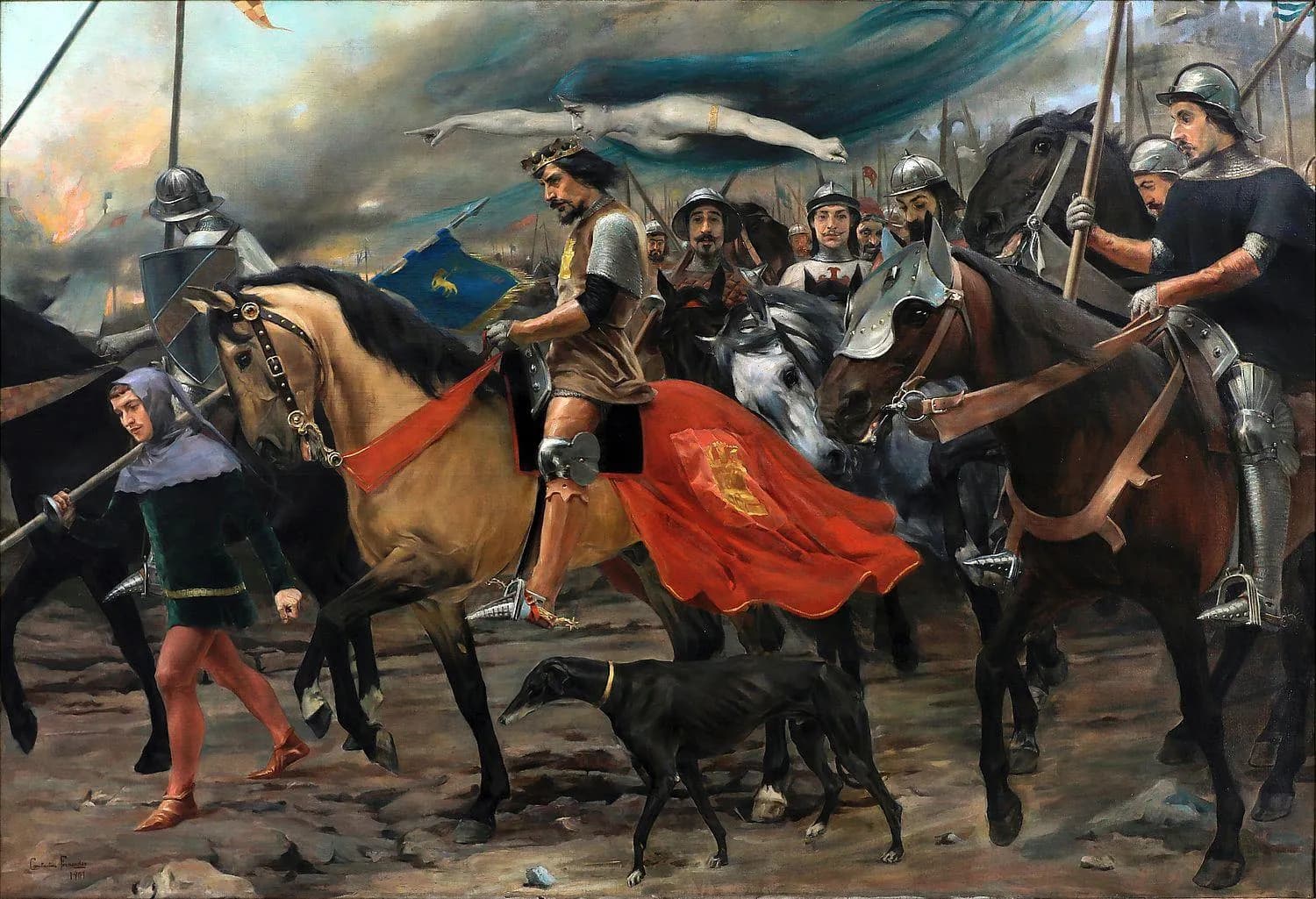
Juan gave up and left for Castile on 3 September 1384; his fleet sailed on 28 October. Lisbon held a procession of thanksgiving, and nobles, clergy and people swore to the Master as regent and defender. He summoned the Cortes, the assembly of the kingdom, to Coimbra.
The lawyer's case at Coimbra
The Cortes met at Coimbra from 3 March to 6 April 1385. João das Regras counted about fifty representatives of towns and cities there, besides nobles and clergy. They had to pay for the war and decide who should be king. The two main parties backed the Infante João, still a prisoner in Castile, and the Master; a few still spoke for Beatriz or Juan.
João das Regras answered them all. Lopes gives the speech at length, and admits he was working from what others had written down of it. Regras began by conceding that there were plenty of heirs: Juan, Beatriz, and the two sons of Pedro I and Inês de Castro. Then he set out to show that none of them could inherit.
“I want to show by living reasons and laws that these kingdoms are entirely vacant, and that none of those I have named should or can succeed to them.”
Beatriz was illegitimate, he argued, because her mother's first husband was alive when Leonor married Fernando, and gossip about Leonor made the girl's paternity doubtful. Juan had broken the treaty. The Church then had rival popes, and Juan and Beatriz obeyed the one in Avignon, not Urban VI in Rome, whom the Master's party followed. Nobody could prove that Pedro had married Inês, so her sons were illegitimate too.
To those who said so small and divided an assembly could not choose a king, Regras replied that if every cardinal but one died, that one could still elect a pope.
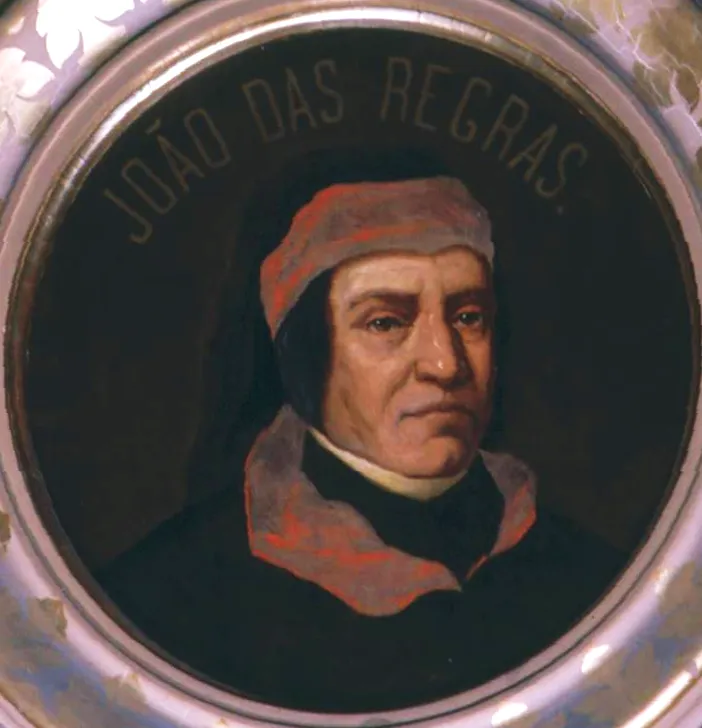
Arguments were not the only pressure. Nuno Álvares Pereira kept 300 well-armed squires in the city, which, the Fundação Batalha de Aljubarrota notes, helped shorten the debate. On 6 April 1385 the Master was proclaimed King João I, and the next day he made Nuno, then 24, constable, commander of the army. The parchment recording the acclamation, with ten wax seals, is in the Torre do Tombo national archive.
Aljubarrota, Windsor and Philippa
Juan came back. A Castilian raid into the Beira was crushed near Trancoso on 29 May 1385, and on 8 July the main army crossed the border at Almeida and marched by Coimbra and Leiria towards Lisbon, which the Castilian fleet had blockaded since April. At a council at Abrantes on 6 August, João I first favoured raiding Castile instead, but Nuno insisted on fighting, and the king joined him.
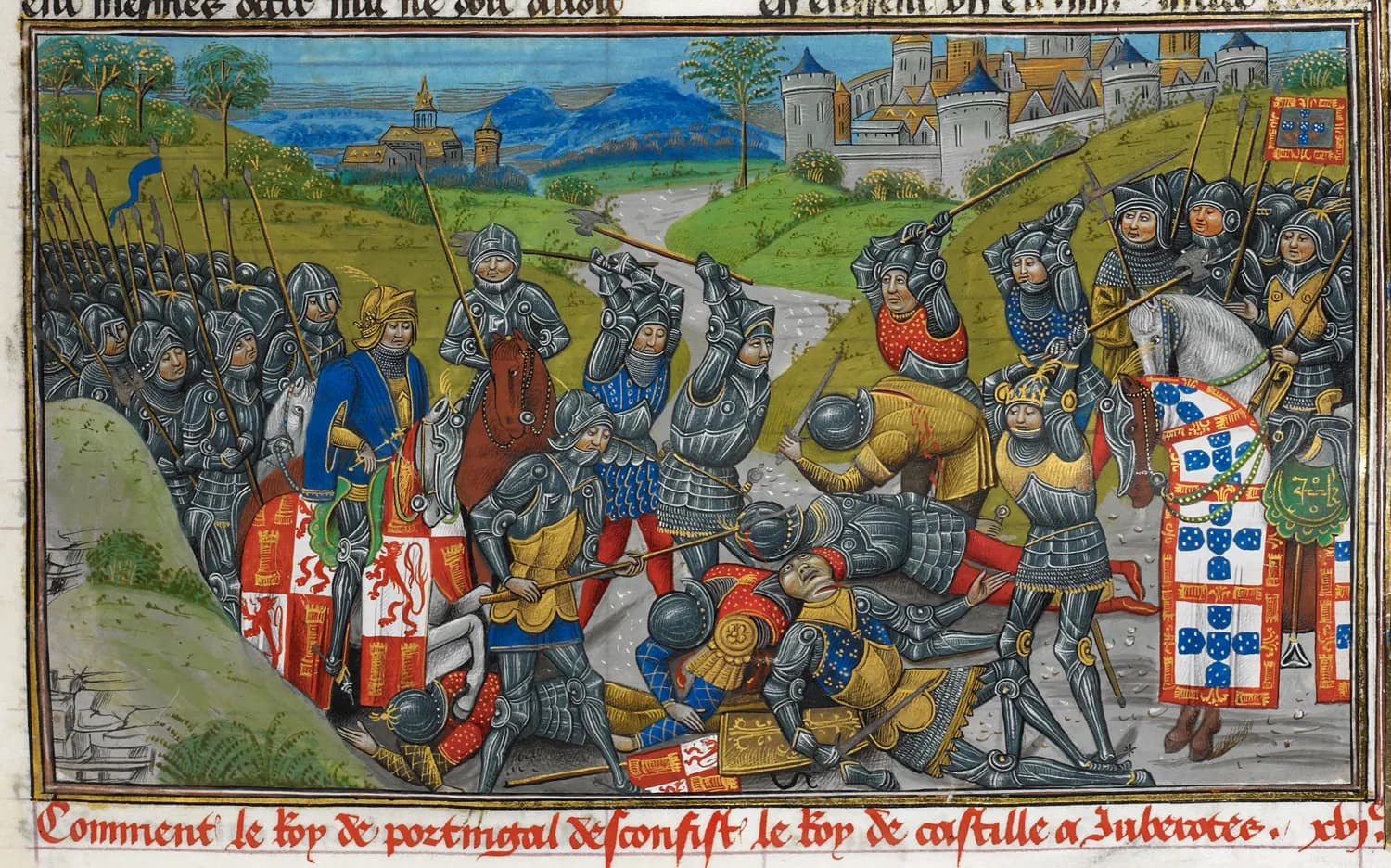
On 14 August 1385, on the plateau of São Jorge near Aljubarrota, the Portuguese dug ditches and pits across a narrow front and waited, with dismounted men-at-arms in the centre and crossbowmen and English archers on the wings. The Castilian attack began at about a quarter to six in the evening, led by French knights, and broke within about an hour. Juan fled to Santarém, then by sea to Seville.
England had helped from the start. In December 1383 the Master sent envoys to Richard II and to John of Gaunt, Duke of Lancaster, who claimed the Castilian crown through his wife, and some 800 Anglo-Gascon troops later fought for him. The Treaty of Windsor, dated 9 May 1386, made a perpetual league between the two kings and let their subjects trade and live in each other's kingdoms.
On 2 February 1387 João married Gaunt's daughter, Philippa of Lancaster, in Porto cathedral. The king rode through the night to get there, because the church season about to begin barred weddings until after Easter; the feast followed on 14 February. The alliance was renewed many times, including in a secret declaration of 1899, the subject of a separate Lisboeta article.
2 or 6 April 1383
Treaty of Salvaterra de Magos
Beatriz is promised to Juan I of Castile; Leonor Teles is to be regent.
14 and 17 May 1383
Beatriz married
At Elvas and then Badajoz.
22 October 1383
Fernando I dies in Lisbon
Leonor Teles becomes regent.
6 December 1383
Count Andeiro killed
The Master of Avis kills him in the queen's palace and Lisbon rises.
December 1383
Regent and defender
The Master accepts the title at São Domingos and sends envoys to England.
12 January 1384
Juan I at Santarém
He takes the regency from Leonor.
6 April 1384
Atoleiros
Nuno Álvares Pereira beats a larger Castilian force in the Alentejo.
29 May 1384
Siege of Lisbon closes
18 July 1384
Battle in the Tagus
The Porto fleet breaks through with food.
3 September 1384
Siege lifted
Plague drives Juan I back to Castile.
6 April 1385
Cortes of Coimbra elect João I
29 May 1385
Trancoso
A Castilian raid is beaten in the Beira.
14 August 1385
Aljubarrota
9 May 1386
Treaty of Windsor
2 February 1387
João I marries Philippa of Lancaster
In Porto cathedral.
The chronicler and his king
Almost everything above comes, directly or not, from one man. Fernão Lopes was born in the 1380s, too late to see the crisis himself, and kept the royal archive in the tower of Lisbon castle from 1418 to 1454. In 1434 King Duarte, João I's son, gave him a pension of 14,000 reais a year to write the chronicles of the kings of Portugal. No original survives; we read him in copies made from the late fifteenth century on.
Lopes declared that lying was far from his intention, and he did work from documents and from the testimony of people who had been there. But he was writing for the son of the man whose seizure of power he described. The historian Bernardo Vasconcelos e Sousa puts it plainly.
“João I, the founder of the second Portuguese dynasty, was an intruder from the outset, if not a usurper.”
Because João I had no hereditary right, Sousa argues, Lopes built his case on the support of the towns and on the speech of João das Regras. The bias shows in details: Lopes insists that no Portuguese, inside the city or among the prisoners, caught the plague that killed thousands of Castilians so close by. He also called the years after 1383 a “seventh age” of the world.
“In it, it seems, another new world arose and a new generation of people, because sons of men of low condition, whom there is no need to name, were made knights in this time for their good service and labour, calling themselves at once by new lineages and surnames.”
The other side was written too. Pero López de Ayala, chancellor of Castile, was captured at Aljubarrota and wrote the Castilian royal chronicle; Jean Froissart told the story for French and English readers. A doctoral thesis under way at the University of Porto reads the three side by side, rather than taking Lopes's version alone.
Why it still matters
Aljubarrota settled the question in the field. Some castles held out for Beatriz after the battle, and Castile never again gathered an army big enough to threaten the kingdom. Peace was signed at Ayllón, near Segovia, on 31 October 1411, and Portugal remained a separate kingdom under the House of Avis.
The alliance with England is still in force and is often called the oldest in the world. Lopes's chronicles, with their crowds, sieges and starving townspeople, rank among the classics of Portuguese literature as well as history.
FAQs
When did King Fernando I of Portugal die?
On the night of Thursday 22 October 1383, in his palace in Lisbon, according to the chronicler Fernão Lopes. A 2016 UK National Archives blog post gives 23 October. He was buried at the Franciscan friary in Santarém.
What was the crisis of 1383–85?
A succession war after Fernando I died without a son. A treaty gave the crown to his daughter Beatriz and her husband, Juan I of Castile, but João, Master of Avis, led a rising in Lisbon, survived a Castilian siege in 1384, was elected king at Coimbra in April 1385 and beat Castile at Aljubarrota that August.
Who was Count Andeiro?
João Fernandes Andeiro, a Galician nobleman, was Fernando I's diplomat, helped arrange the Treaty of Salvaterra and was said to be Queen Leonor Teles's lover. The Master of Avis and Rui Pereira killed him in the queen's palace in Lisbon on 6 December 1383.
Why did the Castilians lift the siege of Lisbon in 1384?
Lisbon's new walls held and a Portuguese fleet brought in food, but the main reason was plague in the Castilian camp and fleet, which Lopes says killed 150 to 200 men on some days. Juan I left on 3 September 1384.
Is Fernão Lopes a reliable source for 1383–85?
He used documents and witnesses and is the fullest source, but he was born after the events and wrote on a royal pension granted in 1434 by João I's son, with the aim of justifying the Avis dynasty. Historians compare him with the Castilian Pero López de Ayala and with Froissart.
On the timeline
Open the timelineNearby moments from crisis and the house of avis (1383–1415).
Fernando I and the 1383 crisis
Battle of Atoleiros: near Fronteira in the Alentejo, Nuno Álvares Pereira has his roughly 1,400 men fight on foot in a tight formation that breaks the charges of a Castilian army of some 5,000, mostly cavalry. The first pitched-battle victory of the 1383–1385 crisis, it showed that Castile could be beaten.
The Cortes of Coimbra proclaim João, Master of the Order of Aviz, as King João I of Portugal, ending the succession crisis and establishing the House of Aviz dynasty. Nuno Álvares Pereira is appointed Constable of the Kingdom.
A few hundred Portuguese men-at-arms, led by local nobles of the Beira, rout a larger Castilian force near Trancoso as it heads home laden with plunder from the sack of Viseu; six of its seven captains are killed. In the midst of the 1383–85 succession crisis, the victory is a morale-boosting prelude to Aljubarrota that August.
Coming up in history
All long reads 24 October 1885The Elevador da Glória: Lisbon's hill funicular, 1885 to 2025
 25 October 1147The siege of Lisbon, 1147: how crusaders and a new king took the city
 26 October 1969Portugal's 1969 election: Caetano's first vote and the opposition it shaped
 27 October 1949Egas Moniz, the lobotomy and Portugal's first Nobel Prize
16 sources
Archives, scholarship and reporting this article was checked against.
- 1
Chronica de el-rei D. Fernando (Fernão Lopes, Crónica de D. Fernando)Bibliotheca de Classicos Portuguezes, Lisbon, 1895 (digitised by Internet Archive)
- 2
- 3
Medieval Portuguese Royal Chronicles: Topics in a Discourse of Identity and Power (Bernardo Vasconcelos e Sousa)e-Journal of Portuguese History, vol. 5, no. 2, 2007
- 4
A Batalha de Trancoso (with the political background and a narrative of 1383 to 1385)Fundação Batalha de Aljubarrota, Centro de Interpretação da Batalha de Aljubarrota
- 5
- 6
Fernão Lopes, guardador das escrituras do Tombo (1418-1454): exhibition leafletArquivo Nacional Torre do Tombo, October 2018
- 7
A crise dinástica de 1383-1385 em Fernão Lopes, Pero López de Ayala e Jean Froissart: a construção de uma narrativa histórica (Rute Russo)Incipit 10: Workshop de Estudos Medievais da Universidade do Porto, 2021 (Faculdade de Letras da Universidade do Porto, 2022)
- 8
History's unparalleled alliance: the Anglo-Portuguese Treaty of Windsor, 9th May 1386The National Archives (UK), History blog
- 9
Crónicas de um Período de Interregno (1383-1385): como o “poboo meudo” bradou a sua voz pelo Mestre de Avis (Leandro Ribeiro Ferreira)eHumanista 29 (2014), pp. 550-576
- 10
King FerdinandCastelo de São Jorge (EGEAC, Lisbon City Council)
- 11
As sesmarias nas Ordenações do Reino (Tabir Dal Poggetto Oliveira Sueyoshi)Revista da Faculdade de Direito da Universidade de São Paulo, vol. 102, 2007
- 12
The Beginnings of the Anglo-Portuguese AlliancePortugal-UK 650
- 13
- 14
- 15
Mosteiro da BatalhaCultura Portugal (Government of Portugal)
- 16“Portugueses emocionam-se na Batalha por aqui estarem sepultados protagonistas maiores da nossa História”Diário de Notícias, 16 March 2025
Image credits
- A carved end of the tomb of Fernando I, now in the apse of the ruined Carmo church in Lisbon. The chronicler Fernão Lopes says the king was buried at the Franciscan friary in Santarém. Photographed in 2025. Jakub Hałun, CC BY 4.0, via Wikimedia Commons.
- The Death of Count Andeiro, painted by José de Sousa Azevedo around 1860, a Romantic view of the killing of 6 December 1383. Museu Nacional de Soares dos Reis, Porto. José de Sousa Azevedo (1830-1864), Public domain, via Wikimedia Commons.
- A Peste Obrigando os Castelhanos a Levantar o Cerco de Lisboa (The Plague Forces the Castilians to Lift the Siege of Lisbon), painted by Constantino Fernandes in 1901, shows Juan I leaving with the plague as a ghostly figure above. Museu de Lisboa. Constantino Fernandes, Public domain, via Wikimedia Commons.
- João das Regras as José Malhoa imagined him in 1889, on the ceiling of the great hall of Lisbon City Hall. José Malhoa, Public domain, via Wikimedia Commons.
- Aljubarrota in Jean de Wavrin's Chronique d'Angleterre, painted in Bruges around 1480; the heading reads “How the King of Portugal defeated the King of Castile at Aljubarrota”. British Library, Royal MS 14 E IV. Mestre de Viena e de Copenhague, da Ordem do Tosão de Ouro, Public domain, via Wikimedia Commons.