

Noite Sangrenta: the night a Portuguese prime minister was hunted down
A barracks revolt toppled António Granjo's government in a day. That night armed sailors and guards hunted down Granjo and two heroes of 1910, and no one has ever proved who sent them.
At a glance
- On 19 October 1921 GNR and navy units under Colonel Manuel Maria Coelho rose in Lisbon and forced Prime Minister António Granjo to resign the same day.
- That night armed groups of sailors, guards and civilians killed Granjo at the Arsenal da Marinha, and also Machado Santos, Carlos da Maia, Freitas da Silva and Colonel Botelho de Vasconcelos.
- Machado Santos and Carlos da Maia had been two of the leading figures of the revolution of 5 October 1910 that created the Republic.
- The killers rode in an army lorry, the 'camioneta fantasma', and their best-known leader was the corporal Abel Olímpio, 'o Dente de Ouro'.
- Abel Olímpio and others were convicted in 1923; the coup leaders were acquitted and nobody was ever convicted of ordering the killings.
A room on the first floor
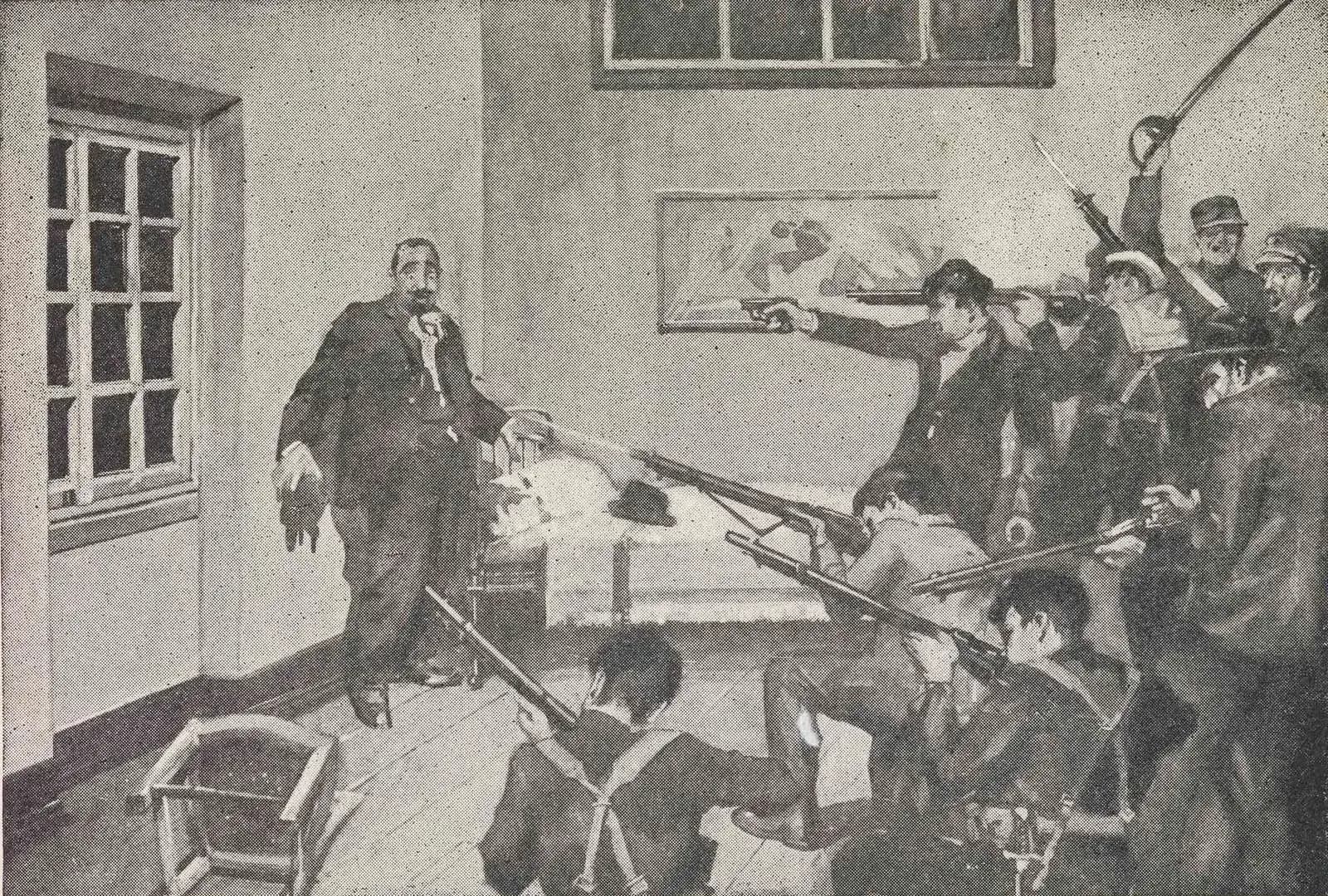
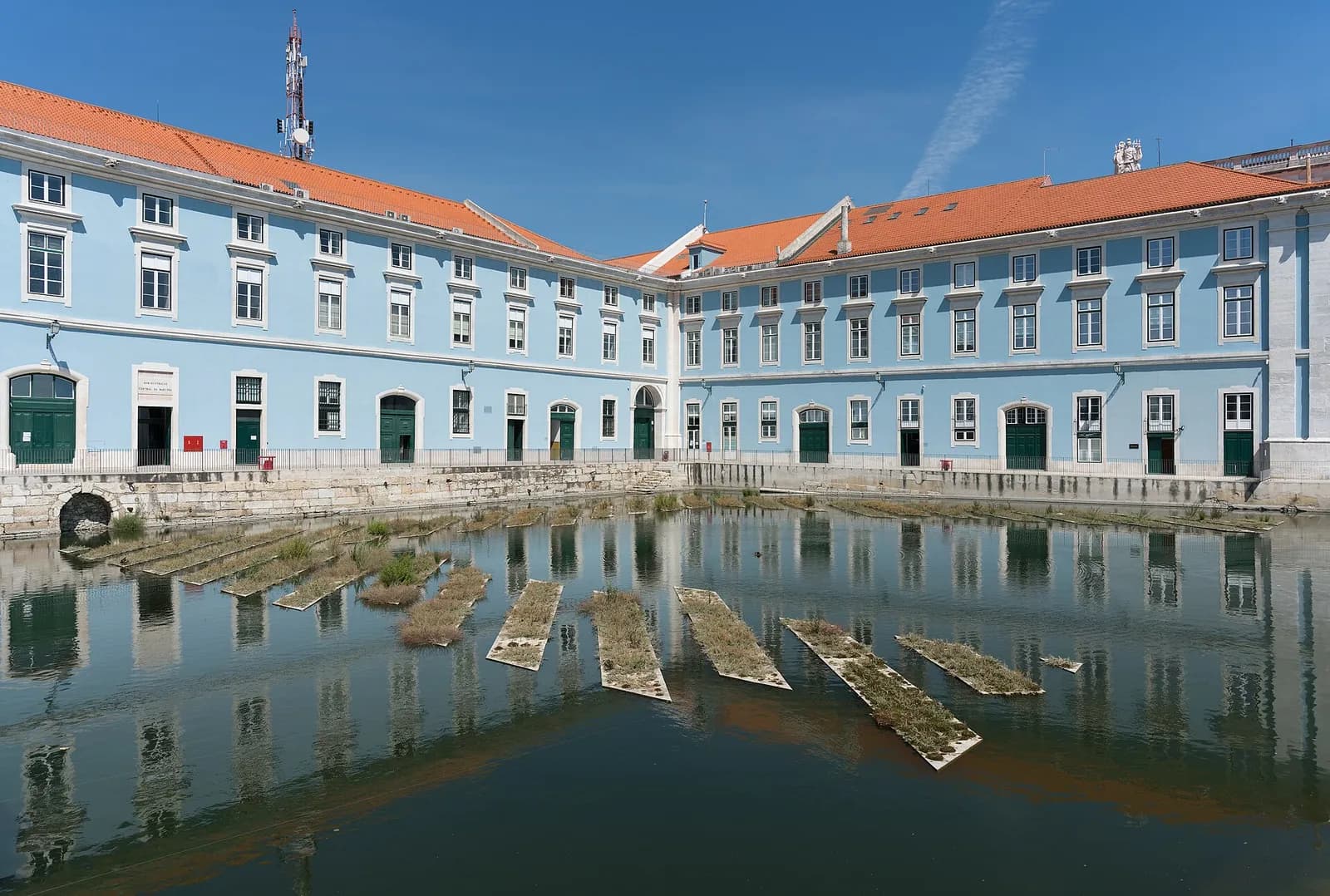
Late on 19 October 1921, a vehicle pulled up at the gate of the Arsenal da Marinha, the navy dockyard on the Lisbon waterfront. Inside was António Granjo, who that morning had still been prime minister of Portugal. An armed crowd pushed in behind him as the gate opened, jeering.
His captors took him to a room on the first floor, where he was to be held. According to the reconstruction printed by the Diário de Lisboa on the day of his funeral, Granjo faced the men and spoke his last words. Then they fired.
“I know what you want! Kill me, and you kill a good republican!”
The same paper reported that one of the killers then drove a sword through the dying man with such force that it stuck in the floorboards. Granjo was 39. By morning at least four more men had been killed, two of them naval officers who had helped bring down the monarchy eleven years before.
The Portuguese call it the Noite Sangrenta, the Bloody Night. It did not end the First Republic, which lasted until May 1926. But it showed how far the regime had lost control of its own armed men.
What you need to know first
Portugal became a republic on 5 October 1910, after an armed rising in Lisbon. The navy played a large part, though the work fell to a few junior officers, some sergeants and many sailors. The Republic was a parliamentary regime: Parliament elected the president, and the president appointed and dismissed governments.
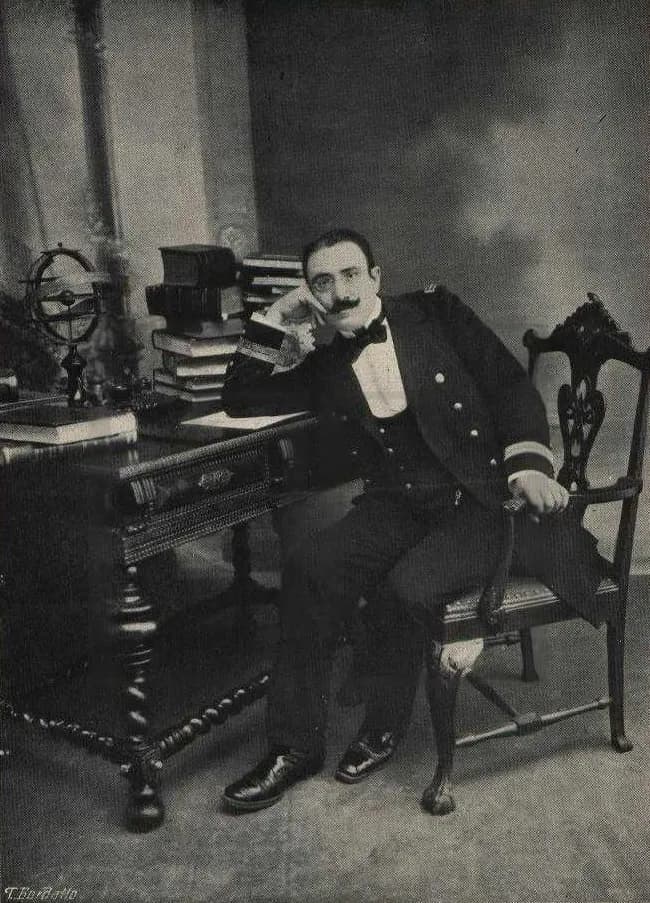
Two of the men killed in 1921 were heroes of that revolution. Machado Santos, then a junior officer in the navy's administrative branch, held out at the Rotunda, the circle at the top of the Avenida da Liberdade, with a handful of sergeants, soldiers and civilians, and forced the surrender of the monarchy's headquarters at Rossio. Carlos da Maia, another naval officer, came from the navy barracks at Alcântara and took control of the cruiser Dom Carlos on the night of 4 October.
The new regime never found its balance. In sixteen years voters went to the polls eight times, and presidents appointed 45 governments by the count of the historian A. H. de Oliveira Marques. Half of them lasted less than 93 days. Every year brought monarchist incursions and civil or military revolts.
Governments taking office each year, 1910–1925
governments
Each dated term in the Portuguese government's official list of heads of government is counted once, in the year it began; the revolutionary juntas of May 1915 and December 1917 are left out. That gives 49 terms. Historians who follow A. H. de Oliveira Marques merge some reshuffles and count 45 governments. The last republican government, which took office in December 1925, fell to the coup of 28 May 1926.
Show the data
| Governments taking office | |
|---|---|
| 1910 | 1 |
| 1911 | 2 |
| 1912 | 1 |
| 1913 | 1 |
| 1914 | 3 |
| 1915 | 6 |
| 1916 | 1 |
| 1917 | 2 |
| 1918 | 2 |
| 1919 | 4 |
| 1920 | 9 |
| 1921 | 6 |
| 1922 | 3 |
| 1923 | 2 |
| 1924 | 2 |
| 1925 | 4 |
In December 1917 Sidónio Pais, an army officer and former minister, seized power in a coup. His 'New Republic' lasted about a year. Machado Santos served him as minister of the interior and then of food supply, and Carlos da Maia as navy minister, until both resigned in June 1918. On the night of 14 December 1918 Sidónio was shot dead at the entrance to Rossio station by José Júlio da Costa, a young left-wing veteran.
In Sidónio's coup the navy had fought on the losing side. After a sailors' revolt in January 1918, hundreds of sailors were arrested and most were shipped off to the colonies. Those grudges lasted. Historians link the violence of 1921 to resentments held, above all in the navy and the GNR, against some leading republicans.
| Year | Men | What the figure is |
|---|---|---|
| 1911 | 4,991 | Planned strength in the founding decree |
| 1913 | 5,852 | Strength |
| 1919 | 18,956 | Planned strength after the May 1919 reform |
| 1921 | 14,341 | Strength, the highest figure given |
| 1922 | 12,205 | Planned strength after the reform of 13 March 1922 |
| 1926 | 9,787 | Strength after a further cut decreed by the military dictatorship in September 1926 |
Figures from Vaquero Martínez (2025), who takes the 1913, 1921 and 1926 strengths from Cosme (2016). Observador gives 9,627 men after the cuts made by António Maria da Silva's government.
The guard's political weight peaked in November 1920, when President António José de Almeida asked its chief of staff, Lieutenant-Colonel Liberato Pinto, to form a government. Pinto's fall a few months later pushed many GNR officers towards open revolt. A first rising in May 1921 came to nothing.
António Granjo was a lawyer from Chaves in the far north and a liberal, the leader of a party opposed to the dominant Democratic Party. He had already led a government for four months in 1920. On 10 July 1921 the liberals won the general election, with 76 deputies. It was the only time under the Republic that an opposition party won the most seats. Granjo took office again on 30 August. His government lasted 50 days.
19 October: a coup by day, killings by night
The revolt began early on 19 October. Its leader was Colonel Manuel Maria Coelho, a veteran of the republican rising of 31 January 1891, with the naval commander Procópio de Freitas and GNR officers including Major Cortês dos Santos and Captain Camilo de Oliveira. At 05:30 the GNR guns at the Rotunda and those of the cruiser Vasco da Gama fired to open the revolt.
There was little fighting, and no real bombardment of the city was needed. The GNR's commander could not get his men to fire on their comrades, and Coelho won over the sailors' corps and four warships. Granjo resigned, saying he had no means of resisting in Lisbon. President Almeida accepted the resignation but at first refused to appoint the rebels' government.
“Have me shot, have me arrested, have me exiled, but I will not dishonour myself.”
Lisbon was left for hours without a government. Warned that guards and sailors were coming for him, Granjo took refuge in the house of his neighbour Francisco Cunha Leal, a political rival. During the revolt about 300 armed men freed José Júlio da Costa, Sidónio's assassin, from the Miguel Bombarda mental hospital.
19 Oct, 05:30
The revolt opens
GNR artillery at the Rotunda and the guns of the cruiser Vasco da Gama fire. Almost no troops will fight for the government.
19 Oct, during the day
Granjo resigns
President Almeida accepts but appoints no new government. José Júlio da Costa is freed by an armed crowd.
19 Oct, evening
Granjo is taken
An armed group finds him at Cunha Leal's house, after a concierge gives him away. Both men are driven to the Arsenal da Marinha.
19 Oct, late evening
'The killing has begun'
Lieutenant Agatão Lança tells the president that the murders have started. Almeida gives in and appoints Colonel Manuel Maria Coelho head of government. Maltez dates the appointment to 22:45; Observador puts Lança's news at about 23:00.
Night
Deaths at the Arsenal
Granjo and Carlos da Maia are shot inside. Freitas da Silva, brought in a Guarda Republicana lorry, is shot at the gate. Cunha Leal is badly wounded but survives.
Around midnight
Machado Santos
Fetched from his home in Rua José Estêvão at about midnight, he is shot near Largo do Intendente after an argument with his captors.
Night
Further hunts
Colonel Botelho de Vasconcelos is killed. Groups drive to Seixal and Estoril looking for other names, among them the former Sidonist minister Tamagnini Barbosa and the financier Fausto de Figueiredo, without finding them.
21 Oct
Flight
The industrialist Alfredo da Silva, trying to leave the country, is attacked at Leiria by rioters who surround his train.
24 Oct
Granjo's funeral
The exact order and times of the killings are uncertain. The newspaper A Capital reported on 20 October that Granjo and Carlos da Maia were brought to the Arsenal together; other accounts have Granjo arriving with Cunha Leal and Carlos da Maia fetched later in the lorry. Luís Farinha, a historian of the period, puts Granjo's death a few hours before the lorry's rounds. Cunha Leal, hit three times, was saved by Lieutenant Agatão Lança.
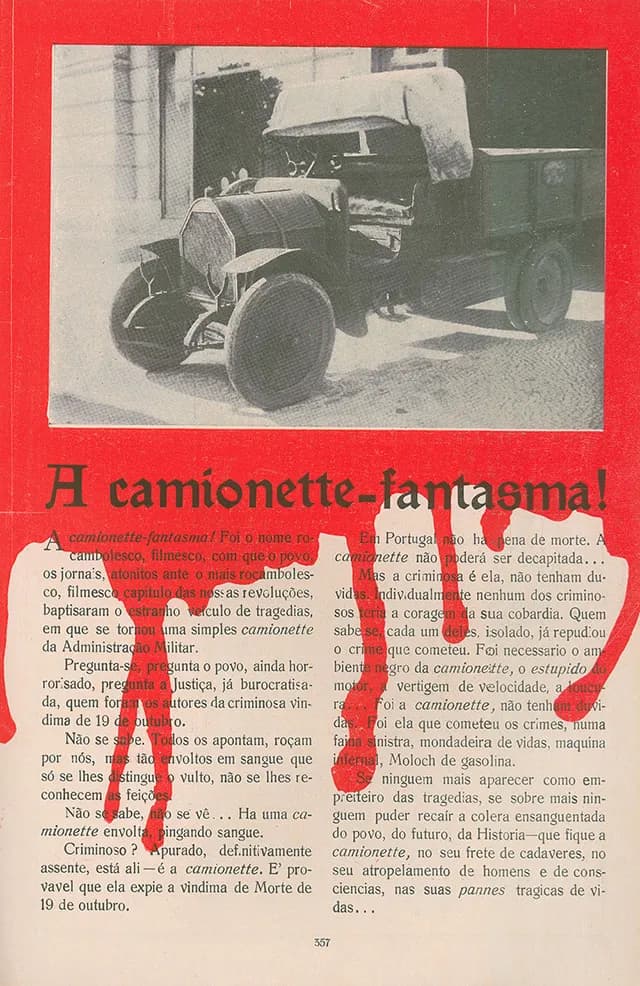
The vehicle that gave the night its legend was an ordinary army lorry. Observador reports that a lieutenant, Bento Mergulhão, handed it over, formally under the orders of a midshipman of the navy's administrative branch, Benjamim Pereira. It carried soldiers, sailors, GNR men and civilian revolutionaries, led by Corporal Abel Olímpio, nicknamed 'o Dente de Ouro', the Gold Tooth.
“The ghost lorry! That was the far-fetched, film-like name with which the people and the newspapers, astonished at the most far-fetched, film-like chapter of our revolutions, christened the strange vehicle of tragedies that a simple Military Administration lorry had become.”
| Name | Who he was | Where he was killed |
|---|---|---|
| António Granjo | Prime minister until he resigned that day; liberal leader | Inside the Arsenal da Marinha |
| José Carlos da Maia | Naval officer; a leader of 5 October 1910; Sidónio's navy minister | Arsenal da Marinha; Observador says he was shot in the back of the neck |
| Carlos Freitas da Silva | Naval commander; chief of staff to the outgoing navy minister (Observador: formerly Carlos da Maia's chief of staff) | At the Arsenal gate |
| António Machado Santos | Naval officer; the 'hero of the Rotunda' in 1910; a minister under Sidónio | At the Intendente, on the way to the Arsenal |
| Carlos Botelho de Vasconcelos | Colonel; a former collaborator of Sidónio Pais | Not stated in the sources used here |
Observador also reports that a taxi driver, Carlos Gentil, was lynched in the street after an informer denounced him for criticising the killings in a tavern. Farinha counts six dead in all. Cunha Leal was hit three times and survived.
The Gold Tooth, and the question nobody answered
Abel Olímpio is the one name everyone remembers. Parliament's account calls him a navy corporal, a cabo marinheiro, and a confidential government letter of December 1920, cited by the historian João Freire, names him as artillery corporal no. 2470, a conspirators' contact inside the navy. Some later accounts, such as Jaime Nogueira Pinto's, make him a GNR man. He commanded the lorry and its crew, and at his trial he offered clues about who was behind it.
The new government arrested the main suspects on 24, 26 and 27 October. A Special Military Court heard the case in 1922 and 1923, with the army officer Óscar Carmona as prosecutor. The men who did the killing received heavy sentences of prison and degredo, exile to the colonies. Abel Olímpio stayed in prison until February 1946, as did some of his companions.
Besides Abel Olímpio, Observador names another corporal, Manuel José Carlos, and a sergeant, Heitor Gilman, among the men who did the killing, and doubts they were the only ones. It also reports a scene at the sentencing: Abel Olímpio turned on one of the officers present, José de Freitas Ribeiro, and asked what moral authority he had to condemn them: had he not, in the revolt of May 1915, ordered Olímpio to murder a ship's captain?
The coup leaders fared differently. Coelho, Procópio de Freitas and Camilo de Oliveira were charged with negligence and acquitted, and charges against other officers were dropped. Carmona tried to contest the acquittals in 1923 and failed. Only on 2 September 1936 did a court give Benjamim Pereira, the midshipman nominally in charge of the lorry, one year in prison, for taking part in the crimes 'without criminal intent'.
Who sent the killers is still unknown. The press and later court testimony spoke of a 'cleansing list' of 180 politicians, senior officials and financiers, said to have been discussed in radical clubs. Farinha accepts that lists of this kind guided the killers; who drew them up is not known. Other names on the lists, such as the politicians António Maria da Silva and Álvaro de Castro, had to hide, and Silva fled the country.
All six dead had some link to Sidónio's regime, Farinha notes, which suggests revenge. Granjo's offence in radical eyes was to have beaten the Democratic Party at the polls; extremists had branded him a reactionary. Other theories pointed the opposite way. Supporters of the regime blamed a monarchist, clerical and business plot meant to discredit the Republic, and one 1929 account named a monarchist, a priest and 'money from Spain'.
Corporal Manuel José Carlos always maintained that officers had given the orders, and named them in court. In May 1926 Abel Olímpio gave Carlos da Maia's widow, Berta Maia, a revised confession blaming the priest, Padre Lima, but the case was not reopened. Freire could confirm only one documentary trace: the December 1920 letter names both Padre Lima and Abel Olímpio among men preparing a revolt.
Historians today stress the wider climate. Farinha finds no recognisable chain of command, arguing that would-be instigators existed in every political camp, and places the political responsibility on the coup leaders who created a power vacuum and on the authorities who failed to act. Observador's José Luís Andrade blames the rage of the mob, fed by the sailors' humiliation under Sidónio and stirred up by newspapers and agitators.
“The Bloody Night cannot be analysed on its own, in isolation. Whoever does so will find only darkness. It marks the high point of a colossal tide of hatred that has been rising, year after year, since long ago.”
Revulsion, and the road to 1926
The killings horrified opinion at home and abroad. Several men named to Coelho's cabinet refused to take office rather than be associated with the killers. Britain, France and Spain each sent a warship to the Tagus to protect their nationals, and the ships stayed 25 days. At Granjo's funeral on 24 October, Cunha Leal shared out the blame.
“The blood flowed from the mindlessness of the mob, the beast that all of us, myself included, have egged on, which runs loose, killing because killing is needed. We are all to blame! It is this damned politics that shames us and spatters me with mud.”
Coelho's government lasted until 5 November 1921. Carlos Maia Pinto and then Cunha Leal followed, before António Maria da Silva took office on 6 February 1922 and stayed, through reshuffles, until November 1923.
In the review Seara Nova, the essayist Raul Proença wrote that 'once again the most dangerous of utopias has driven this country into the epilepsy of disorder'.
On 2 March 1922 both chambers of Parliament honoured the dead and demanded the truth. The president of the Chamber of Deputies, Domingos Leite Pereira, told members that 'all of us bear some guilt'. Cunha Leal called for the death penalty to be restored; António Maria da Silva refused, saying it would answer the Gold Tooth's crime with another crime.
Silva's government also moved against the GNR. Army units were posted around Lisbon, and in the end troops marched into the city and disarmed the guard. A decree of 13 March 1922 abolished its artillery, cut its planned strength and reduced its Lisbon force from more than 11,000 planned men to fewer than 4,000.
5 October 1910
The Republic is proclaimed
December 1917
Sidónio Pais takes power in a coup
14 December 1918
Sidónio is assassinated at Rossio station
10 July 1921
Granjo's liberals win the general election
19–20 October 1921
Revolt and the Bloody Night
13 March 1922
Decree cuts the GNR down to size
1923
The killers are convicted; the coup leaders acquitted
28 May 1926
A military coup ends the parliamentary Republic
9 July 1926
General Óscar Carmona becomes head of government
The Republic lasted four and a half more years. On 28 May 1926 a military coup ended the parliamentary regime and opened a dictatorship. The prosecutor of 1923, Óscar Carmona, was head of government by July 1926.
Why it still matters
After 1926 the dictatorship used the Bloody Night as proof that the parliamentary Republic had meant chaos and that strong rule was needed. The argument came back during the 1945 election campaign. That year the priest Joaquim Alves Correia, who had heard Berta Maia's account of Abel Olímpio's testimony, wrote a newspaper article attacking the regime's use of the massacre; he was forced into exile in 1946.
The story has stayed in public memory. In 2010 a drama series about the night was filmed for RTP, based on Berta Maia's book, with Gonçalo Waddington as Abel Olímpio. At the centenary of the killings in 2021, newspapers again noted that the people who gave the orders were never identified.
The night also changed the GNR. A police force given artillery and a political mission had become one of the actors that made and unmade governments, and when its men and the sailors broke loose, neither the president nor the coup leaders stopped them. The 1922 reform set out to turn it into a rural police force.
FAQs
What was the Noite Sangrenta?
The Noite Sangrenta, or Bloody Night, was the night of 19 to 20 October 1921 in Lisbon. After a GNR and navy revolt forced Prime Minister António Granjo to resign, armed sailors, guards and civilians killed Granjo, Machado Santos, Carlos da Maia, Freitas da Silva and Colonel Botelho de Vasconcelos.
Who killed António Granjo?
Granjo was shot and stabbed inside the Arsenal da Marinha by a crowd of sailors and GNR soldiers led by Corporal Abel Olímpio, 'o Dente de Ouro'. Abel Olímpio and several others were convicted in 1923 and given heavy sentences; he was not released until 1946.
Who ordered the killings?
Nobody knows. The coup leaders denied involvement and were acquitted. Suspicions fell on radical republicans, on monarchist and clerical plotters, and on unnamed officers, but no one was ever convicted of giving the orders, and the case was not reopened when new testimony emerged in 1926.
What was the 'camioneta fantasma'?
The 'ghost lorry' was an ordinary army lorry used by the killers to drive around Lisbon and pick up their victims. The press of the time gave it the name, and it became the symbol of the night.
Did the Bloody Night end the First Republic?
Not directly. The Republic survived another four and a half years until the military coup of 28 May 1926. But the night discredited the regime, and the dictatorship that followed used it to argue that parliamentary rule had failed.
On the timeline
Open the timelineNearby moments from the first republic (1910–1926).
Birth of Artur do Cruzeiro Seixas in Amadora. A member of the dissident Lisbon surrealist group alongside Mário Cesariny, he joined the merchant navy in 1950 and settled in Angola, where his first solo shows caused a stir, before returning to paint, draw and write poetry — insisting he was not a 'painter' but 'a man who paints'. He died in 2020, weeks short of his 100th birthday.
Artur Agostinho is born in Lisbon. Famous as a football commentator on the state radio, the Emissora Nacional, he also acted in classic comedies such as 'O Leão da Estrela' (1947), emigrated to Brazil for lack of work in 1975 and returned to become a familiar face on television.
The Portuguese Communist Party (Partido Comunista Português, PCP) is founded at a meeting in Lisbon as the Portuguese section of the Communist International. Driven underground by the dictatorship for almost five decades, it is one of the oldest communist parties in Western Europe.
The Noite Sangrenta, 1921
Portugal's national football team plays its first official match, losing 3–1 to Spain in Madrid. The first win had to wait until June 1925, a 1–0 defeat of Italy.
Death in Lisbon of Anselmo Braamcamp Freire, a nobleman turned republican who was mayor of Lisbon from 1908 to 1913 and the first president of the Republic's Senate. A pioneer of rigorous genealogy, author of 'Brasões da Sala de Sintra' on the coats of arms in Sintra Palace's heraldic hall, he left his library and paintings to Santarém, where his house is now the municipal library.
Naval aviators Sacadura Cabral and Gago Coutinho take off from Lisbon in the Fairey III-D seaplane 'Lusitânia' on the first aerial crossing of the South Atlantic. Navigating with a sextant adapted by Coutinho for use in the air, they would reach Rio de Janeiro in June.
Coming up in history
All long reads 21 October 1520Magalhães reaches the Cape of the Virgins: 21 October 1520
 22 October 1383Fernando I dies in Lisbon, and the crisis of 1383–85 begins
 23 October 2022Adriano Moreira (1922–2022): Salazar’s reformer in democracy’s parliament
 24 October 1885The Elevador da Glória: Lisbon's hill funicular, 1885 to 2025
14 sources
Archives, scholarship and reporting this article was checked against.
- 1
Noite Sangrenta (outubro 1921)Assembleia da República
- 2
A "Noite Sangrenta", by Luís FarinhaEsquerda.net, 19 October 2021
- 3
A Marinha e a República, by João FreireLer História, 59 (2010)
- 4
La Guardia Civil en el espejo: el impacto del modelo gendármico español en la creación de la Guarda Nacional Republicana en Portugal, 1910-1926, by Sergio Vaquero MartínezHistoria y Política, 54 (2025), pp. 163–196
- 5
Contributo para a sistematização dum aparente caos político: o caso da Primeira República Portuguesa, by Kathleen SchwartzmanAnálise Social, vol. XVII (65), 1981
- 6
Chefes do Governo desde 1821República Portuguesa, Governo de Portugal
- 7A matança de Outubro. Há cem anos a República vivia a Noite Sangrenta, by José Luís AndradeObservador, 19 October 2021
- 8
O Essencial sobre Sidónio Pais, by António AraújoImprensa Nacional, 2025
- 9
António Joaquim GranjoCâmara Municipal de Chaves
- 10
1921 (Respublica: cronologia política), by José Adelino MaltezRespublica, Repertório Português de Ciência Política
- 11A camioneta-fantasma da I RepúblicaCorreio da Manhã (Domingo), 26 September 2010
- 12Camioneta-fantasma..., by Guilherme d'Oliveira MartinsDiário de Notícias, 25 October 2021
- 13'Noite Sangrenta' já em gravaçõesCorreio da Manhã, 2 July 2010
- 14
Rua do Arsenal, agora das lojas de bacalhau, testemunha da históriaVisit Lisboa (Turismo de Lisboa)
Image credits
- A postcard illustration from 1921 imagines the killing of António Granjo in a room at the Arsenal da Marinha. It is an artist's reconstruction, not a photograph (Casa Comum, Fundação Mário Soares). Unknown author, Public domain, via Wikimedia Commons.
- Machado Santos, the 'hero of the Rotunda', in the frontispiece of his 1911 book A Revolução Portuguesa, his own report on the revolution of October 1910. Unknown author, Public domain, via Wikimedia Commons.
- 'A camionette-fantasma!': page 357 of Ilustração Portuguesa, 12 November 1921, with a photograph of the lorry and red ink dripping over the article. Its Commons page dates it 12 October 1921, which cannot be right: the text describes the killings of 19 October. Unknown author, Public domain, via Wikimedia Commons.
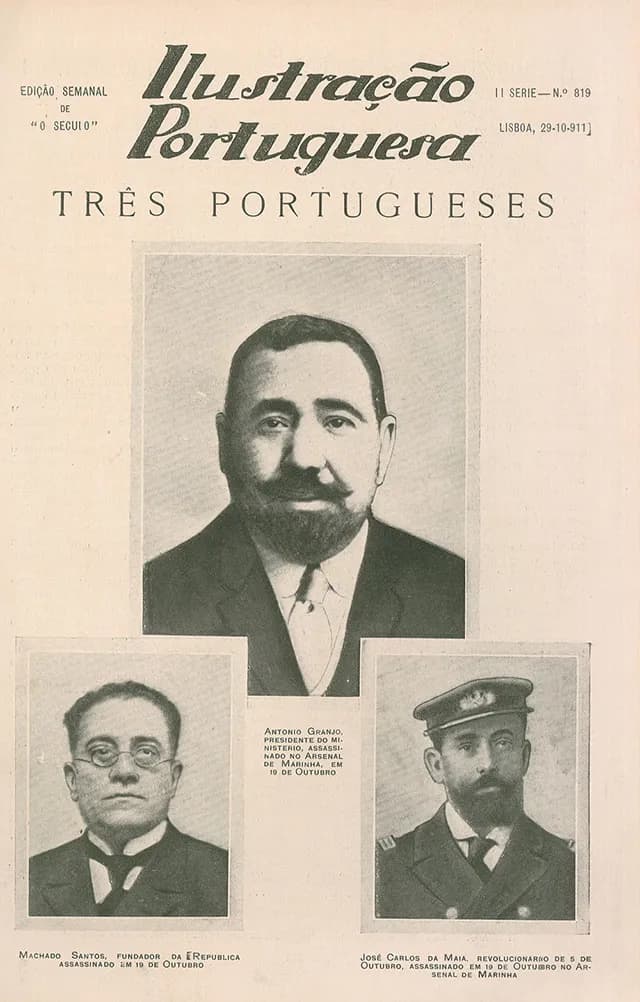
- 'Three Portuguese': the cover of Ilustração Portuguesa on 29 October 1921, with António Granjo at the top, Machado Santos at bottom left and José Carlos da Maia at bottom right. Unknown author, Public domain, via Wikimedia Commons.
- The Caldeirinha dock and buildings of the old Arsenal da Marinha at Cais do Sodré, photographed in 2020. The navy dockyard moved across the Tagus to Alfeite in 1939. Jules Verne Times Two, CC BY-SA 4.0, via Wikimedia Commons.